To cook perfect steaks with sous vide, start by selecting a high-quality cut, season it well, and vacuum seal it tightly. Set your immersion circulator to your desired doneness—around 129°F to 135°F for medium-rare—and cook for 1-2 hours. Finish by searing on a hot skillet to develop a flavorful crust. Mastering these steps will help you consistently achieve restaurant-quality results; continue exploring the process to perfect your technique.
Key Takeaways
- Select high-quality, well-marbled steaks and season or marinate evenly to enhance flavor and tenderness before sealing.
- Set the immersion circulator to the desired temperature (e.g., 129°F–135°F for medium-rare) for precise doneness.
- Vacuum seal the steak properly, ensuring no air pockets, and fully submerge it in the water bath for even cooking.
- Cook the steak for 1-2 hours, then finish with a hot sear in a skillet to develop a flavorful crust.
- Rest the steak briefly after searing, then slice against the grain for optimal tenderness and presentation.
Understanding the Basics of Sous Vide Technology

While it might seem complex at first, understanding the basics of sous vide technology is quite straightforward. The core idea involves vacuum sealing your food to remove air, which ensures even heat transfer and prevents water from touching the food directly. This process helps maintain the food’s moisture and flavor. Temperature control is the key to sous vide cooking; you set a precise temperature on your immersion circulator, and it maintains that temperature steadily throughout the cooking process. This consistency allows you to cook food perfectly without worry about overcooking or undercooking. By mastering vacuum sealing and precise temperature control, you can achieve restaurant-quality results at home, making sous vide an accessible and reliable cooking method. Additionally, understanding vetted equipment for sous vide is essential for ensuring safety and optimal results. Proper water circulation is also crucial to maintain an even temperature throughout the bath, ensuring consistent cooking results. Incorporating connected kitchen devices can further enhance your sous vide experience by providing real-time monitoring and control. A good understanding of temperature accuracy helps to troubleshoot and refine your cooking technique for perfect results every time.
Essential Equipment for Sous Vide Cooking
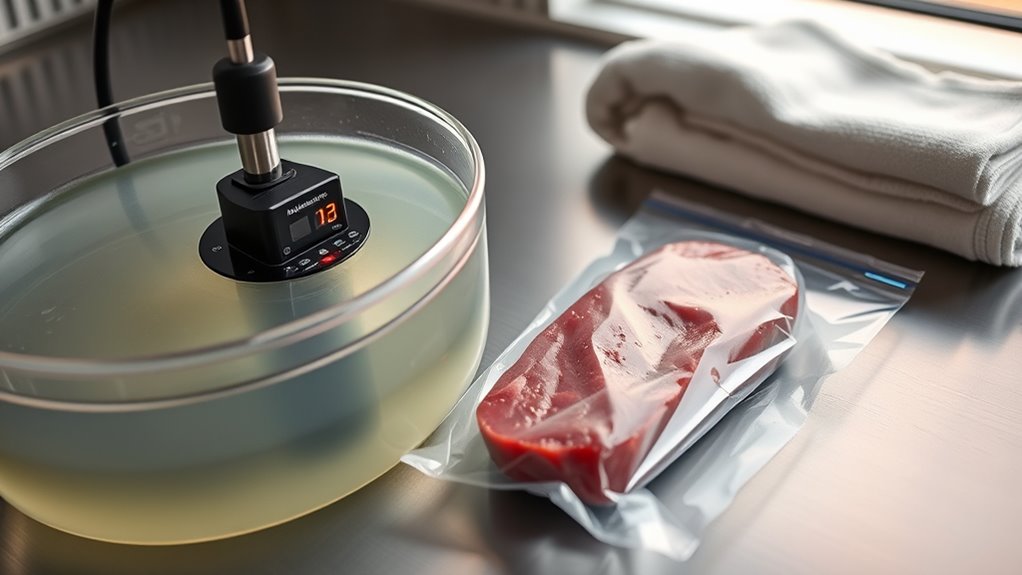
To get started with sous vide cooking, you’ll need some essential equipment that guarantees precise temperature control and proper food preparation. An immersion circulator is key; it heats and circulates water evenly, maintaining a consistent temperature throughout the cooking process. You’ll also need a vacuum sealer to remove air from the bags, ensuring even heat transfer and preventing water from seeping in. Investing in high-quality vacuum sealer bags or reusable silicone pouches helps keep your steak fresh and flavorful. While you can use other containers, a sturdy, heat-safe container for water is recommended. These tools work together to create an ideal environment for perfectly cooked steaks, making sous vide cooking straightforward and reliable. Incorporating connected kitchen technology can further enhance your precision and ease during the process. Utilizing energy-efficient appliances can also reduce your overall power consumption while achieving excellent results. Additionally, choosing reliable temperature sensors ensures your water bath remains at the desired temperature for optimal results. For added convenience, consider smart sous vide devices that allow remote monitoring and control for even greater precision.
Preparing Your Steak for the Water Bath
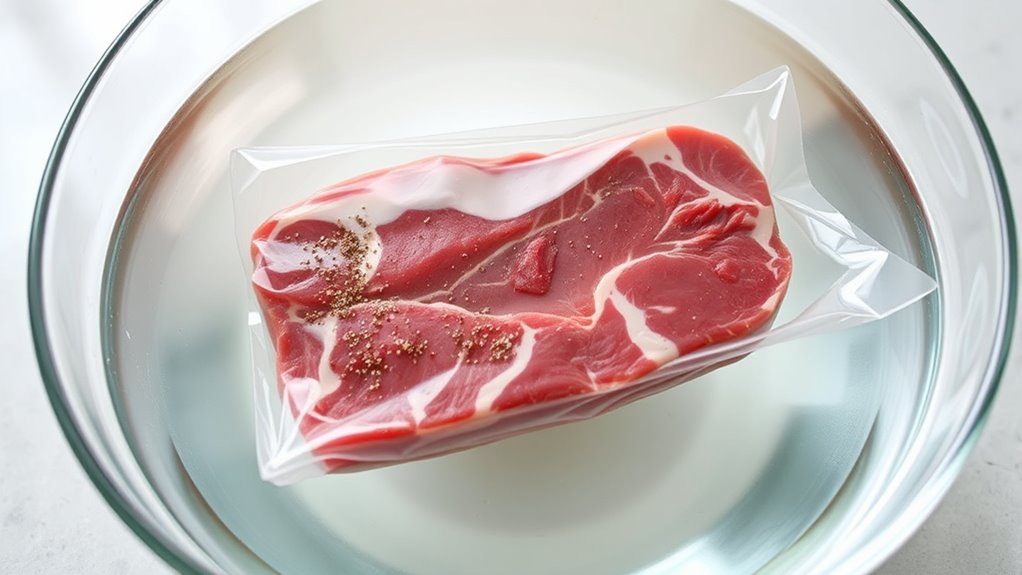
Before placing your steak in the water bath, it’s important to prepare it properly. First, choose a high-quality cut based on your preferred doneness and flavor. Marinating techniques can enhance tenderness and add flavor—use herbs, spices, or acids like vinegar or citrus. Confirm your steak is evenly seasoned and patted dry to promote proper sealing. Use the following table to guide your preparation:
| Step | Tips | Notes |
|---|---|---|
| Steak Selection | Opt for well-marbled, fresh cuts | For juiciness and flavor |
| Marinating Techniques | Keep marinate minimal; avoid excess liquid | Prevents water bath issues |
| Seasoning | Use salt, pepper, herbs, spices | Enhances taste |
| Pre-cooking Prep | Pat dry thoroughly before sealing | Ensures proper heat transfer |
Additionally, ensuring the steak is properly prepared can significantly improve the final texture and flavor of your sous vide steak. Proper meat handling and sanitation are essential for safety and quality. Using food safety practices, such as clean tools and proper storage, helps prevent contamination and spoilage. Maintaining good kitchen hygiene habits further supports safe food preparation. Being aware of breast cancer symptoms can also help in early detection and prevention of health issues related to diet and lifestyle.
Setting the Correct Temperature and Cooking Time
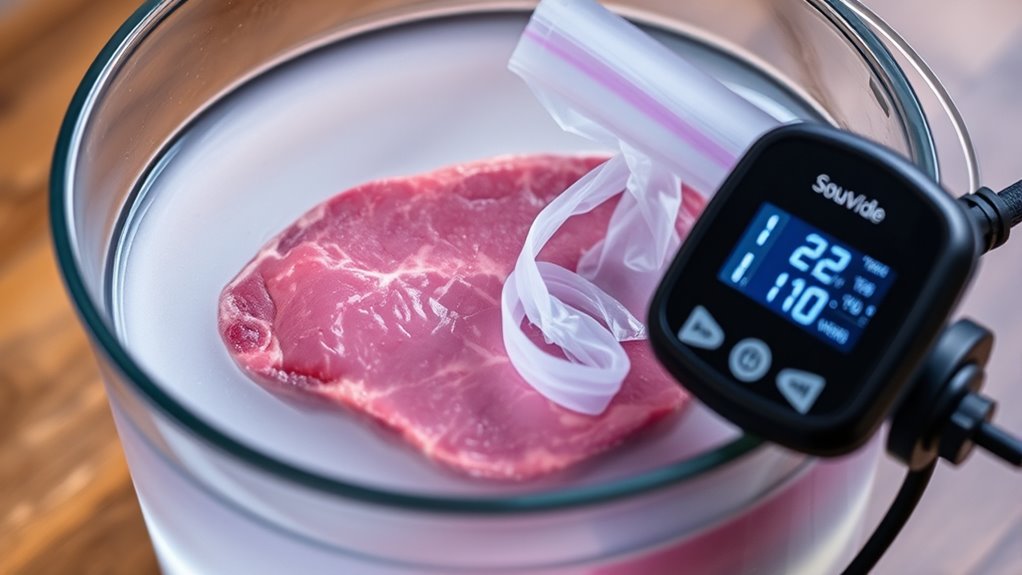
Getting the temperature and cooking time right is essential for perfectly cooked steak. Temperature precision ensures your steak reaches the desired doneness, whether rare or well-done, without guesswork. Use a reliable sous vide device to set the exact temperature needed, typically between 129°F and 135°F for medium-rare. Timing accuracy is equally important; most steaks need about 1 to 2 hours in the water bath, depending on thickness. Too short, and the steak may be undercooked; too long, and it might become mushy. Additionally, precise temperature control helps prevent overcooking and ensures consistent results. Proper temperature calibration of your device can further enhance accuracy. For optimal results, consider sizing and load‑planning tools to match your equipment and batch size. Regularly checking and replacing filtration filters can help maintain the quality of the water bath and prevent contamination. Monitoring the piercing and hygiene practices ensures your equipment stays clean, which is vital for safe cooking.
Sealing and Submerging Your Steak
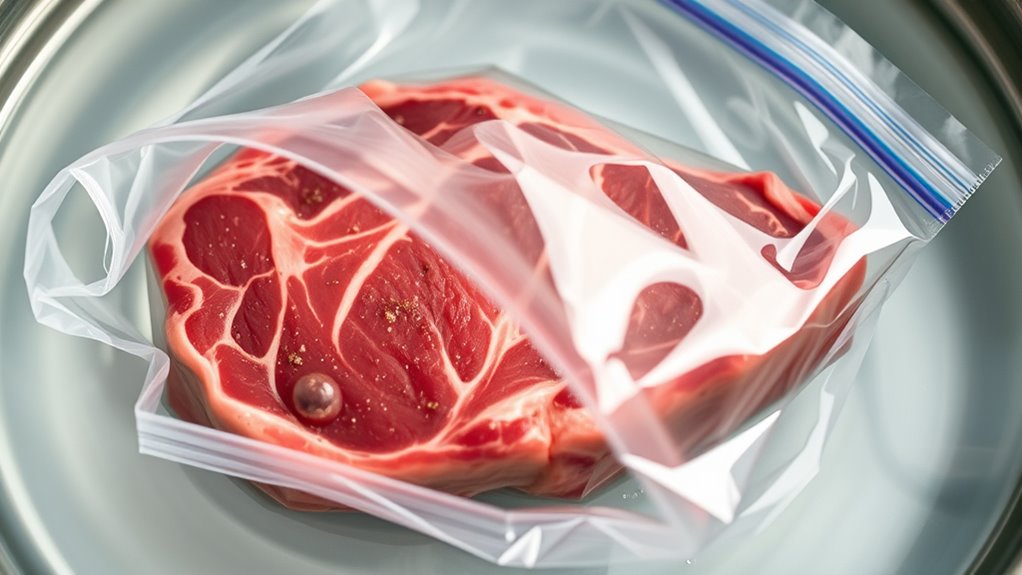
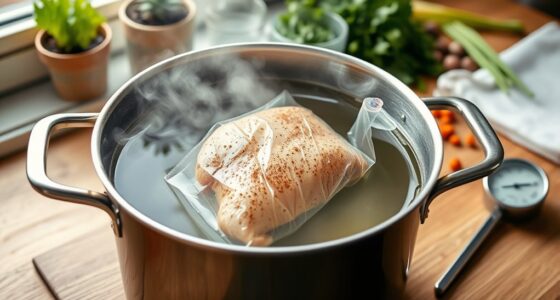
After setting the right temperature and time, the next step is to properly seal your steak to guarantee it cooks evenly. Use a vacuum sealer to remove air and create an airtight seal, which prevents water from entering and ensures even heat transfer during water immersion. Place the seasoned steak in a vacuum bag, then seal tightly. For added protection, double-bag if necessary. Submerge your sealed steak in the water bath, making sure it’s fully submerged and weighted down if needed. Maintain a steady water level to prevent floating. Here’s a quick reference:
| Step | Details |
|---|---|
| Vacuum sealing | Remove air for even cooking |
| Bag placement | Ensure the steak is flat and sealed |
| Water immersion | Fully submerge without air pockets |
| Weighting | Use a weight to prevent floating |
| Water level | Keep consistent for even heat transfer |
Additionally, monitoring water temperature is essential to achieve the perfect cook, aligning with the importance of maintaining precise temperature control during sous vide cooking. Employing proper water circulation can also help ensure uniform heat distribution throughout the bath. Incorporating the energy of pets can also elevate your cooking experience by reducing stress and improving focus during meal preparation. Being mindful of safety precautions is crucial when handling hot water and sealed bags to prevent accidents.
Finishing Touches: Searing and Serving

Once your steak has finished cooking in the water bath, it’s time to enhance its flavor and texture through searing. The finishing touches are vital for creating a beautifully browned crust that locks in juices and adds depth to your steak. Use a hot skillet, preferably cast iron, with a little oil to sear each side for about 1-2 minutes until you see a rich, caramelized crust. This step elevates the visual appeal and taste, making your steak irresistible. When it’s ready, let it rest briefly before slicing. For serving techniques, consider slicing against the grain for tenderness. Plate your steak confidently, perhaps with simple sides that complement its flavor. These finishing touches ensure your sous vide steak looks and tastes professional. Incorporating proper cooking techniques ensures you achieve restaurant-quality results every time.
Tips for Achieving Perfect Results Every Time
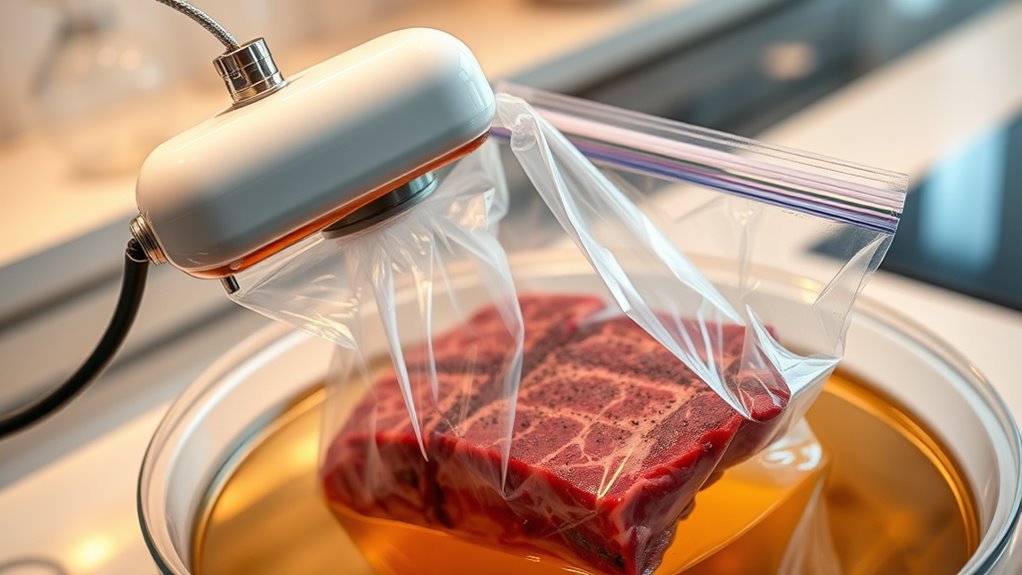
To consistently achieve perfect results with sous vide, paying attention to detail at every step makes a big difference. Start with good marinating techniques to enhance flavor infusion before cooking. Even a simple marinade can help tenderize and add depth to your steak. Keep your water temperature precise; small variations can affect doneness. Use high-quality vacuum-sealed bags to prevent leaks and guarantee even heat transfer. When seasoning, don’t overdo it—balance is key. After cooking, searing is essential for flavor and texture, but timing matters—sear just enough to develop a crust without overcooking. By mastering these tips, you’ll guarantee consistent, delicious results every time, with perfectly infused flavors and tender, juicy steaks.
Frequently Asked Questions
How Do I Store Sous Vide Equipment When Not in Use?
When you’re done with your sous vide equipment, store it in a cool, dry place to keep it in top shape. Follow storage tips like unplugging the device, cleaning the immersion circulator, and wrapping the cord neatly. Proper equipment maintenance, such as checking for any damage and ensuring all parts are dry, helps prolong its lifespan. This way, your sous vide tools stay ready for your next perfect cook.
Can I Cook Multiple Steaks at Once Without Affecting Quality?
Yes, you can cook multiple steaks at once without affecting quality if your sous vide setup has a large enough water bath and proper circulation. This allows for efficient batch cooking and guarantees even temperature distribution, promoting consistent doneness. Keep the steaks submerged to maximize flavor infusion. Just avoid overcrowding, which could hinder water circulation and compromise the quality of your steaks.
What Are Common Mistakes Beginners Make With Sous Vide Steak?
You might overcook your steak or misjudge the temperature if you’re new to sous vide. Avoid these common mistakes by carefully setting the right temperature and timing. Don’t rely solely on guesswork—use a reliable thermometer and follow recipe guidelines. Overcooking errors can ruin texture, and temperature misjudgments can lead to undercooked or overcooked results. Practice makes perfect, so keep experimenting and adjusting until you get it just right.
How Do I Adjust Cooking Times for Different Steak Thicknesses?
To modify cooking times for different steak thicknesses, focus on thickness adjustment and cooking time. For thicker steaks, increase the cooking time by about 50% to guarantee even doneness, while thinner cuts need less time. Use a reliable recipe as a guide, and always check the steak’s thickness before setting your timer. This way, you’ll achieve perfectly cooked steaks every time, regardless of size.
Is It Safe to Leave Sous Vide Cooking Unattended for Extended Periods?
Yes, it’s safe to leave your sous vide cooker unattended for extended periods, as long as you follow proper food safety and equipment maintenance. Make certain your device stays at the correct temperature to prevent bacterial growth. Regularly check the water level and clean your equipment after use. This way, you can enjoy perfectly cooked steaks without worry, knowing your food remains safe and your equipment stays in good condition.
Conclusion
Now that you’ve mastered the essentials, you’re ready to elevate your steak game with sous vide. By controlling temperature precisely, you can achieve consistent, restaurant-quality results—debunking the myth that perfect steak is only for professionals. Remember, patience and attention to detail make all the difference. With practice, you’ll discover that sous vide isn’t just a cooking method; it’s a science that transforms simple ingredients into extraordinary meals.