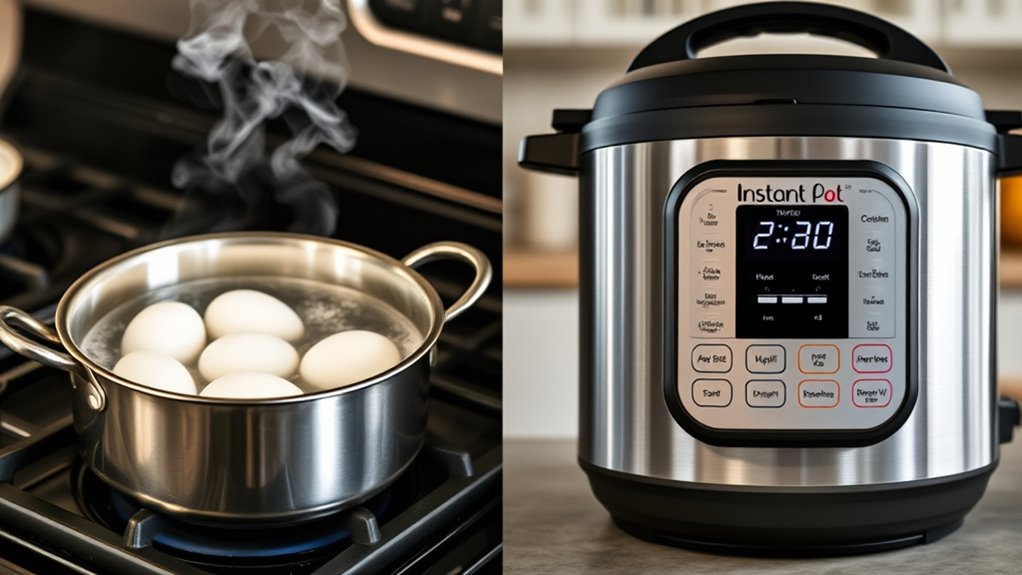

You can make perfect hard-boiled eggs using either the stovetop or Instant Pot method. For stovetop, cover eggs with cool water, boil, then let them sit for 9-12 minutes before transferring to an ice bath. The Instant Pot is quicker—just place eggs on a trivet, add water, and cook on high pressure for 5 minutes, followed by a natural release. Both methods yield delicious eggs; stick around to explore tips on peeling and storage!
Key Takeaways
- For stovetop method, boil eggs for 9-12 minutes depending on desired doneness, then cool in an ice bath for easy peeling.
- The Instant Pot method cooks eggs at high pressure for 5 minutes with a natural release, yielding perfectly cooked eggs.
- Use eggs that are over a week old for easier peeling; fresh eggs are harder to peel.
- Gently cracking the egg on a hard surface helps separate the membrane from the shell for easier peeling.
- Store hard-boiled eggs in their shells in the refrigerator for up to a week for optimal freshness.

Whether you’re prepping for a picnic or just craving a quick snack, making perfect hard-boiled eggs is simpler than you might think. The stovetop method is a classic approach that many people swear by. Start by placing your eggs in a single layer at the bottom of a pot. Cover them with cold water, leaving about an inch above the eggs. Turn on the heat and bring the water to a rolling boil. Once boiling, cover the pot and remove it from the heat. Let the eggs sit for about 9 to 12 minutes, depending on how well-done you prefer them. After the time’s up, transfer the eggs to an ice bath to stop the cooking process. This not only chills them but also makes peeling easier.
Making perfect hard-boiled eggs is easy: just boil, sit, and chill for easy peeling!
Now, if you’re looking to save time, the Instant Pot can be a game-changer. Place your eggs on the trivet inside the pot and add a cup of water. Seal the lid and cook on high pressure for five minutes. After that, allow for a natural release for five more minutes, then quick-release any remaining pressure. Just like with the stovetop method, transfer the eggs to an ice bath afterward. You’ll find that the Instant Pot yields incredibly easy-to-peel eggs, thanks to the steam built up during cooking.
When it comes to egg peeling tricks, freshness is key. Believe it or not, older eggs tend to peel more easily than fresh ones. If you can plan ahead, buy your eggs a week or so before you plan to boil them. Another trick is to gently tap the egg on a hard surface to create small cracks all over before peeling. This can help separate the membrane from the shell, making the process smoother.
After you’ve cooked and peeled your eggs, it’s essential to think about egg storage tips. If you’re not eating them right away, keep your hard-boiled eggs in their shells and store them in the refrigerator. They’ll last about a week this way. Once you peel them, store them in a sealed container with a damp paper towel to keep them from drying out. Remember to eat them within a couple of days for the best taste and texture.
For optimal results, consider the color accuracy of your cooking tools, as it can greatly enhance your overall cooking experience.
With these methods and tips, you’ll be able to enjoy perfectly hard-boiled eggs anytime you want!

Annie & Mia Design Electric Egg Cooker, All Stainless Steel 7 Egg Capacity egg boiler, 360W, Hard, Medium, Soft Boiled Egg Poacher, egg steamer, Multi-function, Auto Shut-Off Function, BPA-free
PURE STAINLESS STEEL INSIDE & OUT: Lid, egg tray, poaching/omelet bowl, and heating plate are food-grade 304 steel,…
As an affiliate, we earn on qualifying purchases.
As an affiliate, we earn on qualifying purchases.
Frequently Asked Questions
Can I Use Frozen Eggs for Hard Boiling?
You can’t use frozen eggs for hard boiling. When eggs freeze, their quality and shell integrity suffer, leading to a mess when you try to boil them. If you thaw frozen eggs using safe methods like refrigeration, they may work for other dishes, but not for hard boiling. Stick with fresh eggs for that perfect hard-boiled texture and taste. It’s best to avoid the complications that come with frozen eggs.
How Long Can I Store Hard-Boiled Eggs?
Hard-boiled eggs have a helpful storage duration of about one week in the refrigerator. To keep them fresh and flavorful, store them in their shells and place them in a covered container. Pairing proper refrigeration tips with timely consumption guarantees your eggs remain safe to eat. If you peel them, consume within a couple of days for the best taste. So, savor those eggs while they’re still scrumptiously satisfying!
What’s the Best Way to Peel Hard-Boiled Eggs?
The best way to peel hard-boiled eggs involves a few effective techniques. Start by cracking the shell gently all over, then roll the egg between your hands to loosen the shell. Submerging the egg in cold water can also help with egg shell removal, making it easier to slide the shell off. If you peel under running water, it’ll further aid in removing stubborn bits of shell. Give these methods a try for smoother results!
Are There Health Risks With Eating Undercooked Hard-Boiled Eggs?
Eating undercooked hard-boiled eggs can feel like dancing on the edge of a knife. You’re tempting fate with egg safety and nutritional risks. Salmonella lurks in raw eggs, potentially leading to foodborne illness. If you’re unsure about cooking times, it’s safer to let those eggs simmer a bit longer. Remember, the perfect hard-boiled egg isn’t just about taste; it’s about keeping your health intact, too! So, don’t cut corners!
Can I Add Seasoning While Boiling the Eggs?
You can’t add seasoning while boiling the eggs, but you can enhance their flavor afterward. Once they’re cooked and peeled, sprinkle on some salt, pepper, or your favorite seasoning options like paprika or garlic powder. For an extra twist, try marinating them in soy sauce or vinegar-based dressings. This way, you’ll boost the taste and enjoy delicious hard-boiled eggs that are anything but plain!

Stackable Egg Steamer Rack Holds 18 Eggs with Handles, Stainless Steel Instant Pot Trivet Fits 6qt/8qt Pressure Cooker, 2-in-1 with Skewers for Grilling
1.Heat Resistant Handle:The steamer rack trivet with handles is updated one with heat resistant silicone that makes it…
As an affiliate, we earn on qualifying purchases.
As an affiliate, we earn on qualifying purchases.
Conclusion
So, whether you’re channeling your inner stovetop chef or embracing the Instant Pot revolution, you’re now armed with the secrets to hard-boiled egg perfection. Just remember, the egg is a fickle friend—one minute it’s a masterpiece, the next, it’s a cracked disaster. But hey, who needs perfection when you can have a quirky breakfast conversation starter? So, go ahead and crack a few eggs—just not the ones you’ve lovingly cooked! Happy boiling!

Egg Piercer Tool for Hard Boiled Eggs – Stainless Steel Needle with Safety Lock – Prevents Cracking, Easy Peeling – Egg Pricker for Cooking, Boiling, Steaming – Kitchen Gadget & Egg Cooker Accessory
PERFECT PEEL & NO MORE CRACKING: No more messy, cracked eggshells in your boiling water! Our professional egg…
As an affiliate, we earn on qualifying purchases.
As an affiliate, we earn on qualifying purchases.

Utopia Home Egg Container With Lid and Handle for Refrigerator Organization- Pack of 2 – Clear Stackable Egg Holder for Kitchen or Pantry Organizers and Storage
14 Slots – The trays are sized 13.5 x 4.2 inches and 3 inches deep with 14 vacant…
As an affiliate, we earn on qualifying purchases.
As an affiliate, we earn on qualifying purchases.