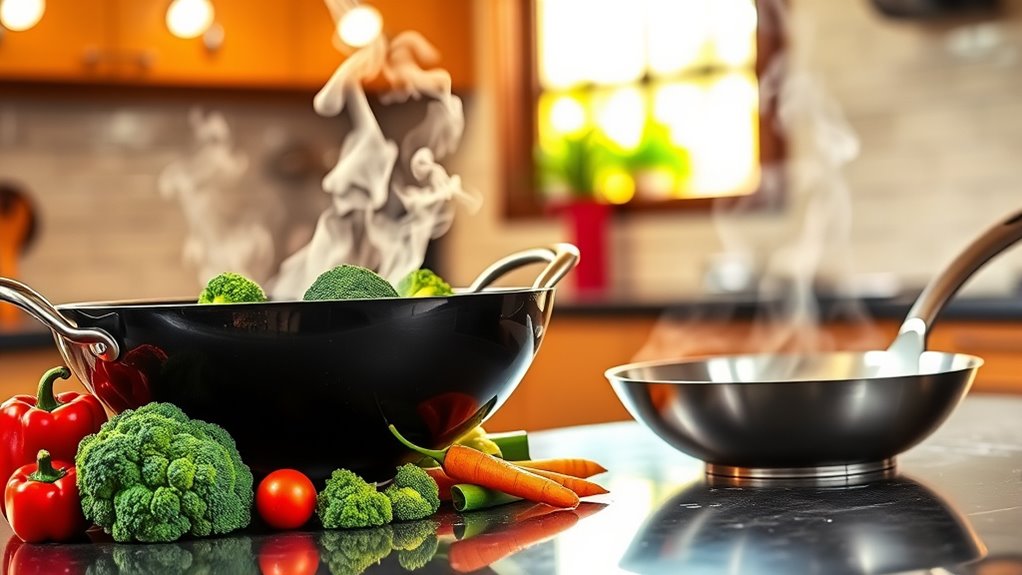
When it comes to stir-frying, a wok is definitely the better choice. Its high sides and rounded shape let you toss ingredients easily without spilling, while its ability to heat up quickly allows for excellent searing and even cooking. In contrast, a frying pan’s flat surface limits its stir-frying capabilities. If you’re looking for authentic stir-fry techniques, the wok will serve you best. Discover more details about these two kitchen essentials to enhance your cooking skills.
Key Takeaways
- Woks have high sides, allowing for easy tossing of ingredients without spilling, making them ideal for stir-frying.
- The rounded shape of a wok promotes even cooking and quick searing, which is essential for authentic stir-fry techniques.
- Woks offer excellent heat distribution and can reach high temperatures quickly, enhancing the stir-frying process.
- Frying pans have a flat surface that limits tossing, making them less suitable for high-heat stir-frying methods.
- While frying pans are easier to clean and maintain, woks require seasoning for optimal performance and a natural non-stick surface.
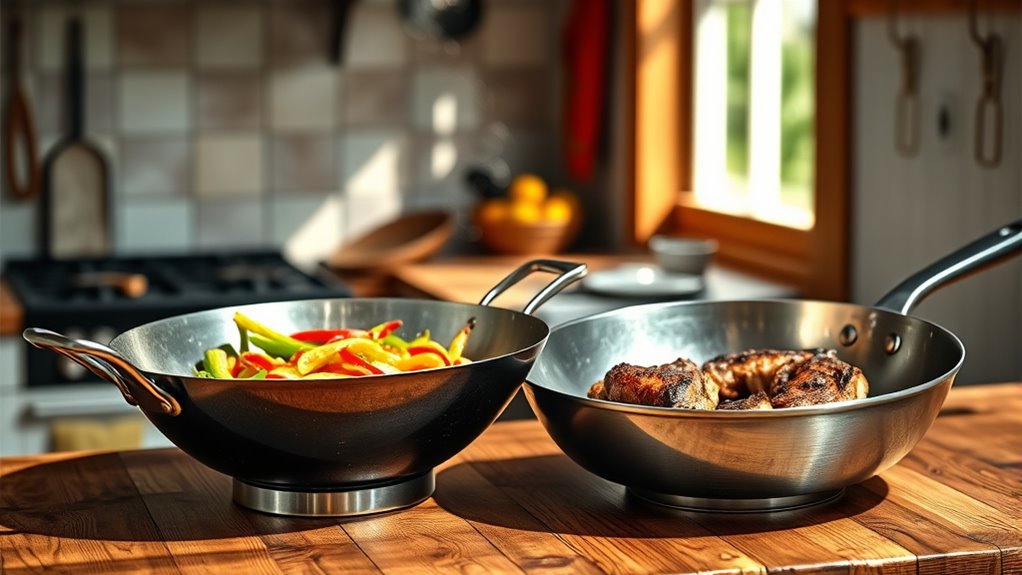
When you step into the kitchen, choosing between a wok and a frying pan can feel intimidating, especially if you’re aiming for that perfect dish. Both tools have their merits, but understanding their differences will help you make the best choice for stir-frying. A wok, typically made from carbon steel or cast iron, offers a unique shape that allows for high, quick heat and excellent heat distribution. This makes it ideal for stir-frying, where you want to sear your ingredients quickly while retaining their textures and flavors.
On the other hand, frying pans, often featuring a non-stick coating, provide a flat surface that excels in even cooking and frying. If you’re preparing dishes that don’t require the same level of high heat and fast cooking, a frying pan might be your go-to. However, when it comes to stir-frying, the shape of a wok wins out. The high sides of a wok allow you to toss and stir your ingredients without worrying about them spilling over the edge. This tossing technique helps to cook everything evenly and ensures that each piece is perfectly seared.
Frying pans excel at even cooking, but for stir-frying, a wok’s high sides ensure perfect tossing and searing.
When it comes to materials, carbon steel woks can develop a natural non-stick surface over time with proper seasoning. This means that while they might require a bit more maintenance than a non-stick frying pan, they offer superior cooking performance once seasoned. You’ll find that food slides off easily after a few uses, making clean-up a breeze. Just remember that carbon steel woks need to be seasoned to maintain that non-stick quality and prevent rust.
In contrast, frying pans with non-stick coatings are more convenient for beginners. They’re easy to clean and often require less oil, which can make meals a bit lighter. However, these coatings can wear out over time and may not withstand the high heat required for the best stir-fry results. If you’re planning to cook at high temperatures frequently, you may find that a carbon steel wok serves you better in the long run.
Ultimately, your choice between a wok and a frying pan depends on your cooking style and the types of dishes you love to prepare. If you’re passionate about stir-frying, investing in a quality carbon steel wok will elevate your cooking game. But if you’re looking for versatility and ease, a reliable frying pan with a non-stick coating might be the way to go.
Additionally, exploring the supernatural aspects of cooking can enhance your culinary experience, adding an element of mystery to your kitchen endeavors.
Frequently Asked Questions
Can I Use a Frying Pan for Traditional Asian Dishes?
Yes, you can definitely use a frying pan for traditional Asian dishes. While a wok’s materials allow for high heat and excellent stirring, a frying pan offers versatility for various cooking methods. Just make sure to adjust your technique; keep the heat high, and stir frequently to mimic a wok’s performance. With the right approach, you can still achieve delicious results in your Asian-inspired cooking. Enjoy experimenting with flavors!
How Do I Properly Season a Wok?
So you think you can just throw a wok in the cupboard and call it a day? Not quite! Start the seasoning process by washing your new wok with hot water and a scrubber to remove any factory coating. Dry it thoroughly, then heat it on medium-high, adding a thin layer of oil. Swirl it around, let it cool, and repeat a couple of times. This’ll guarantee proper wok maintenance and a non-stick surface ready for action!
What Are the Best Utensils for Cooking With a Wok?
To cook with a wok effectively, you’ll want the right wok accessories. A long-handled wooden spoon or spatula prevents heat transfer and protects your wok’s seasoning. Silicone utensils are great too, as they’re gentle on the surface. Avoid metal utensils to prevent scratching. Also, consider a bamboo steamer for versatile cooking. With the right utensil materials, you’ll elevate your stir-frying game and enjoy delicious, perfectly cooked meals every time!
Are Non-Stick Frying Pans Suitable for High-Heat Cooking?
Sure, you can use non-stick frying pans for high-heat cooking, if you enjoy playing a game of culinary roulette! However, their heat tolerance has serious limitations. Most non-stick coatings can start to break down at temperatures above 400°F, releasing harmful fumes. So, if you want to achieve that perfect sear, sticking with stainless steel or cast iron might be a safer bet. You’ll save yourself from a smoky kitchen disaster!
How Does the Shape of a Wok Affect Cooking?
The shape of a wok considerably influences your cooking. Its curvature allows for better heat distribution and quick, even cooking, making it ideal for stir-frying. You can push food up the sides to keep it warm while you cook the rest. In contrast, a flat pan may not deliver the same efficiency, as its flatness can lead to uneven heating and less effective tossing of ingredients. You’ll notice the difference when you cook!
Conclusion
In the battle of wok versus frying pan, it really boils down to your cooking style. If you crave that high heat and quick, even cooking, a wok’s your best buddy. But if you prefer versatility and ease, a frying pan might steal the show. Ultimately, it’s like choosing between a sports car and a trusty sedan—both get you where you need to go, but each brings its own flair to the journey. Happy cooking!