Wine fridges protect your bottles from heat and light by maintaining a consistently cool environment that stays between 45°F and 65°F, preventing temperature fluctuations that can harm the wine. They shield bottles from external heat sources like sunlight and household appliances, often with insulated walls and UV-resistant glass doors. Low-UV LED lighting also avoids light-induced damage, preserving aroma and flavor. To learn more about this protective environment, keep exploring how these features work together.
Listen free for 30 days with Audible
Thousands of audiobooks and originals — cancel anytime.
As an affiliate, we earn on qualifying purchases.
Key Takeaways
- Wine fridges maintain precise temperatures to prevent heat fluctuations that can damage wine.
- They use insulation and external shields to block heat sources like sunlight and household appliances.
- UV-resistant glass doors and LED lighting protect bottles from harmful light exposure.
- Vibration control features prevent disturbances that could accelerate spoilage or sediment movement.
- The environment is carefully controlled to extend wine lifespan and preserve quality from storage to serving.
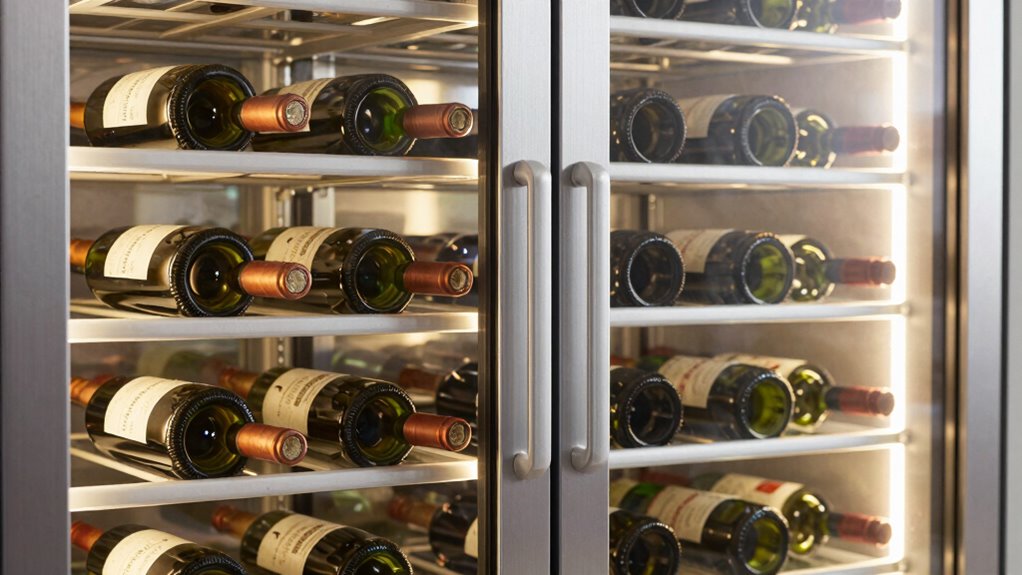
Wine fridges are essential tools for preserving the quality of your bottles. They’re specifically designed to create ideal conditions for wine storage, helping your collection age gracefully and retain its intended flavors. One of their key functions is maintaining precise temperature regulation, which is critical because fluctuations can cause your wine to expand and contract, leading to premature aging or spoilage. When you store wine in a regular refrigerator or in a warm, uncontrolled environment, you risk exposing it to temperature swings that can damage the delicate balance of flavors. Wine fridges keep the temperature steady, usually between 45°F and 65°F, which is perfect for long-term storage and immediate enjoyment alike. This consistent temperature prevents the wine from aging too quickly or developing off-flavors caused by heat stress. Additionally, advanced wine fridges often incorporate smart technology that allows for remote monitoring and adjustments, further enhancing the preservation process. Heat is one of the biggest enemies of wine preservation. High temperatures accelerate chemical reactions inside the bottle, which can result in loss of aroma, dulling of flavors, and eventual spoilage. Wine fridges shield your bottles from external heat sources, whether it’s sunlight streaming through windows or the warmth generated by household appliances. By controlling the environment, these fridges prevent the heat from reaching levels that could harm your wine. They often come with insulated walls and UV-resistant glass doors, which block out sunlight and protect your collection from light-induced damage. Light, especially ultraviolet rays, can cause wine to develop “light strike,” leading to undesirable changes in aroma and taste. A wine fridge’s specialized lighting, often LED-based, minimizes this risk because LEDs emit little to no UV radiation. In addition to temperature regulation, wine fridges are designed to create a stable environment that prevents vibrations, which can disturb sediment and interfere with the aging process. Their controlled environment ensures that your bottles aren’t subjected to the jostling and shaking that could compromise the wine’s clarity and flavor profile. Proper storage conditions are crucial for maintaining wine quality, and a wine fridge provides an optimal environment for this purpose. Creating a consistent environment is essential for extending the lifespan of your wine collection and ensuring each bottle ages as intended. Furthermore, the insulation and UV protection features of high-quality wine fridges contribute significantly to maintaining optimal storage conditions. For example, some models incorporate noise reduction features that help keep the environment quiet and undisturbed, further supporting proper aging. Overall, investing in a wine fridge isn’t just about convenience; it’s about safeguarding your investment and ensuring that every bottle maintains its integrity from the moment you acquire it to the moment you uncork it. With proper wine storage conditions provided by a quality wine fridge, you guarantee your bottles will stay protected from heat and light, allowing you to enjoy them at their best.
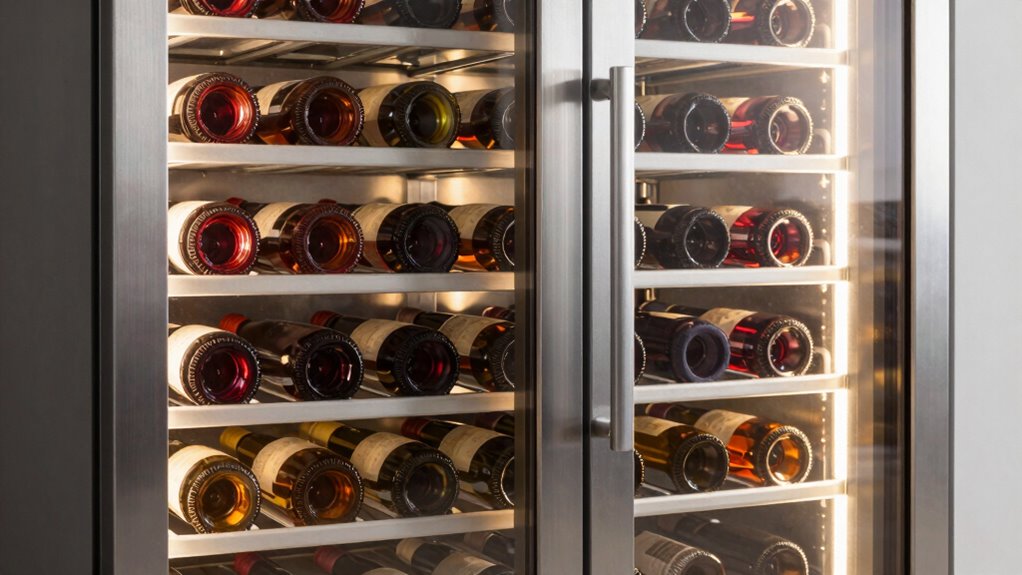
wine fridge with UV-resistant glass door
As an affiliate, we earn on qualifying purchases.
As an affiliate, we earn on qualifying purchases.
Frequently Asked Questions
Do Wine Fridges Require Regular Maintenance?
Yes, wine fridges do require regular maintenance to guarantee peak performance. You should check the temperature stability and calibrate the fridge periodically to keep it running accurately. Clean the vents and coils to prevent dust build-up, which can affect efficiency. Regularly inspect door seals for tightness, and defrost if needed. Proper maintenance helps maintain consistent conditions, protecting your wine from heat and light, and prolongs the life of your wine fridge.
Can Wine Fridges Be Used for Other Beverages?
Yes, you can use a wine fridge for other beverages, turning it into a versatile storage haven. Think of it as a multi-purpose fridge option, perfect for keeping your soda, juice, or craft beers at just the right temperature. While designed for wine, these fridges can be a handy alternative beverage storage solution, especially if you want to keep everything chilled without cluttering your main fridge.
Are Wine Fridges Energy-Efficient?
Wine fridges are generally energy-efficient because they have good insulation efficiency, which helps maintain a consistent temperature while using less power. Their design minimizes energy consumption by reducing the workload on the compressor. If you choose models with advanced insulation and energy-saving features, you’ll find that wine fridges can be a cost-effective option for preserving your bottles without considerably increasing your energy bill.
What Is the Ideal Humidity Level for Wine Storage?
Imagine your wine collection as a delicate garden; maintaining the right environment is key. The ideal humidity level for wine storage is around 60-70%. Proper humidity control keeps corks supple, preventing mold and evaporation. Too much moisture invites mold, while too little dries out corks. By keeping humidity balanced, you safeguard your bottles, preserve quality, and guarantee your wines age gracefully—an essential step for any wine enthusiast.
Do Wine Fridges Work Well in Humid Climates?
Yes, wine fridges work well in humid climates because they offer humidity control, helping maintain the ideal environment for your bottles. Many models adapt to different climates by regulating moisture levels, preventing mold and cork damage. By choosing a wine fridge with proper climate adaptation features, you guarantee your wine stays in perfect condition regardless of external humidity, providing a reliable storage solution in even the most humid environments.
temperature-controlled wine cooler
As an affiliate, we earn on qualifying purchases.
As an affiliate, we earn on qualifying purchases.
Conclusion
So, next time you marvel at your perfectly chilled wine, remember it’s not just about taste—it’s the fridge’s secret shield against heat and light. Ironically, while we often think of wine as delicate, it’s really the fridge that’s the true guardian, quietly fighting off the elements that threaten to turn your prized bottles into spoiled surprises. Cheers to technology’s subtle victories—your wine’s best friend, even if it’s just a fridge!
As an affiliate, we earn on qualifying purchases.
As an affiliate, we earn on qualifying purchases.
Fall Picks
fall essentials
As an affiliate, we earn on qualifying purchases.