🔍 Read the full analysis: Guanciale, Pancetta, Lardo: Italy's Cured Pork Fat Family Explained on Mad Tasting

Get kitchen gear delivered free — and shop member deals
- Fast, free delivery on millions of items
- Access to Prime Big Deal Days deals on October 6–7
- Prime Video, Amazon Music and more included
TL;DR
Guanciale, pancetta and lardo are all cured pork, but they come from the jowl, belly and back fat, respectively. That difference shapes their texture and use: guanciale is rendered for Roman pasta, pancetta works in many cooked dishes, and lardo is generally served in thin slices without cooking.
Guanciale is cured pork cheek or jowl, a cut with dense fat streaked with muscle. Mad Tasting’s guide describes it as a traditional choice for Roman pasta dishes including carbonara, amatriciana and gricia. The guide says that when heated gradually, the fat renders while the meat develops browned edges, creating a flavorful base for the pasta.
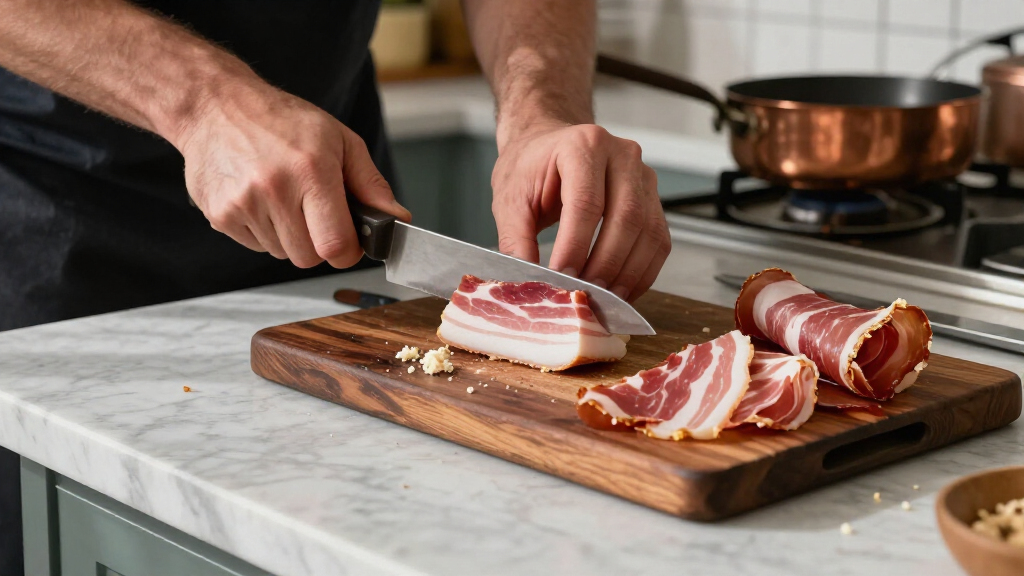
Pancetta is cured pork belly, with alternating layers of fat and lean meat. According to the guide, it is commonly sold flat or rolled and can be diced for pasta, soups, sauces and braises. The guide distinguishes classic Italian pancetta from bacon, which is typically smoked; that difference can make bacon’s smoke flavor more prominent in a dish.
Lardo is cured back fat, described by Mad Tasting as nearly pure fat and often seasoned with herbs. The guide says it is typically sliced very thin and served on bread or warm vegetables. Because it has little muscle to brown and can melt away under high heat, the guide says it is not a substitute for guanciale or pancetta in recipes that depend on rendered pork and browned pieces.
A field guide to Italy’s cured pork fats
Guanciale, Pancetta, Lardo
Three cured cuts, three distinct roles in the kitchen. Where the fat comes from shapes how it feels, cooks and tastes.
Jowl renders. Belly brings layers. Back fat is best sliced thin.
Cut determines character01 / The three cuts
Same cure family.
Different starting points.
All three are cured pork, but each comes from a different part of the animal. That changes its texture and what it contributes to a dish.
Guanciale
Cured pork cheek or jowl, with dense fat streaked through muscle. Its balance of fat and meat is suited to slow rendering and browned pieces.
Pancetta
Cured pork belly with alternating layers of fat and lean meat. It is commonly sold flat or rolled and can be diced for a range of cooked dishes.
Lardo
Cured back fat, often seasoned with herbs. With little muscle to brown, it softens and melts readily under high heat.
02 / From cut to plate
How the cut changes the dish
Choosing by cut helps set expectations for the texture, rendered fat and flavor a recipe will deliver.
Jowl brings fat and meaty streaks; belly has layers; lardo is nearly all back fat.
Render guanciale gradually, cook diced pancetta in dishes, or serve lardo in thin slices.
Pancetta can stand in for guanciale when needed, but the flavor and texture will differ.
03 / At a glance
Choose for the job
A practical comparison of the cuts, their behavior with heat and their most common kitchen roles.
| Cut | Source | Texture | Best fit | Heat behavior |
|---|---|---|---|---|
| Guanciale | Pork jowl | Fat streaked with muscle | Roman pasta; rendered base | Slow rendering; browned edges |
| Pancetta | Pork belly | Alternating fat and lean | Pasta, soups, sauces, braises | Dices and cooks in many dishes |
| Lardo | Pork back fat | Soft, nearly pure fat | Thin slices on bread or warm food | Can melt away under high heat |
About bacon: Both bacon and pancetta are typically belly cuts, but classic Italian pancetta is cured with salt and aromatics rather than smoked. Bacon’s smoke can become more prominent in a dish.
04 / Cooking cue
Let guanciale render gently
For the traditional Roman pasta role described in the guide, start cool and raise the heat gradually.
Fat first. Browning second.
Gradual heating gives the fat time to melt before the meat browns too quickly. The rendered fat can form a flavorful sauce base while the pieces develop browned edges and keep a tender center.
Pancetta can help, with a difference.
If guanciale is hard to find, pancetta is a practical alternative. It can make a satisfying dish, but its flavor and texture are not identical to the traditional Roman choice.
05 / Shopper’s note
Read the label. Ask how to serve it.
Availability and price vary by market. The guide offers no comparative prices or measurements.
Check the cut and curing style
Guanciale may be harder to find and cost more; pancetta is more widely available and adaptable. Ask the seller how the specific product is intended to be served.
Keep labels in perspective
The guide mentions DOP and IGP as topics for shoppers, but does not specify which products carry those protections or their requirements.
06 / Key questions
Quick answers
Traditional uses are useful guidance, though products, seasoning and cooking methods vary.
What is the main difference?
Guanciale is pork jowl, pancetta is pork belly, and lardo is cured back fat. Those cuts bring different textures and kitchen uses.
Can pancetta replace guanciale in carbonara?
It can be used when guanciale is unavailable, but the result will not have exactly the same flavor or texture.
Is pancetta the same as bacon?
No. Classic Italian pancetta is cured rather than smoked; bacon is typically smoked and can add a stronger smoke flavor.
How is lardo usually eaten?
Slice it very thin and serve on bread, crostini or warm vegetables. The guide does not recommend it as a frying substitute.
Why cook guanciale slowly?
Gradual heat lets the fat render before the meat browns too quickly, building a sauce base and browned pieces.
What does the guide leave open?
It provides no publication date, individual cook or producer citations, independent sourcing, or follow-up schedule.
Source: Mad Tasting. The guide describes traditional uses; it does not establish that every Roman cook uses guanciale or that pancetta cannot make a satisfying variation. Product, seasoning and cooking method affect the finished result.
Cut · cure · cooking
How the Cut Changes the Dish
Knowing which cut is in a recipe helps cooks anticipate the result. Mad Tasting’s guide says guanciale’s fat and meaty streaks contribute both rendered fat and chewy, browned pieces; belly-based pancetta brings a layered mix of fat and lean; and lardo’s soft back fat is suited to thin slices and gentle serving. Substituting one for another can change a dish’s texture and flavor, even when all three are cured pork.
The distinction also gives shoppers a practical choice. The guide says guanciale can be harder to find and may cost more, while pancetta is more widely available and adaptable. A cook who cannot source guanciale can use pancetta as a substitute, but should expect a different result rather than an identical Roman-style flavor.
Top picks for "guanciale pancetta lardo"
As an affiliate, we earn on qualifying purchases.
Three Cuts, Different Traditions
Mad Tasting’s guide connects the names to separate parts of the animal: guanciale comes from guancia, the Italian word for cheek; pancetta comes from the belly; and lardo refers to cured back fat. The guide says curing and seasoning can vary, but identifies the cut as the basic distinction.
The guide associates guanciale with Roman pasta dishes carbonara, amatriciana and gricia, and describes a slow-rendering method: start with a cool pan and raise the heat gradually so the fat melts before the meat browns too quickly. It says amatriciana also includes tomato and chili. The guide distinguishes pancetta from smoked bacon, while noting that pancetta itself can be rolled or left flat.
Details the Guide Does Not Establish
The supplied Mad Tasting material does not identify the guide’s publication date, cite individual cooks or producers, or provide independent sourcing for its culinary claims. It also mentions DOP and IGP labels as a topic for shoppers but does not specify which products carry those protections or what requirements apply to each. Availability and price vary by market; no comparative prices or measurements are given.
The guide presents traditional uses, but it does not establish that every cook in Rome uses guanciale or that pancetta cannot produce a satisfying variation. The degree of difference in a finished recipe will depend on the specific product, its seasoning and how it is cooked.
Choosing a Cut for Cooking
For a recipe that depends on the rendered fat and meaty pieces associated with Roman pasta, Mad Tasting’s guide recommends guanciale cooked slowly. If it is unavailable, the guide describes pancetta as a practical alternative, with a different flavor and texture. It presents lardo as a choice for thin slices over bread or warm food, rather than frying.
At the shop, check the product label for the cut and curing style, and ask the seller how the item is intended to be served. The guide offers no date for a follow-up or further reporting.
Key Questions
What is the main difference between guanciale, pancetta and lardo?
Mad Tasting’s guide says they come from different cuts: guanciale is pork jowl, pancetta is pork belly, and lardo is cured back fat. Those cuts give them different textures and cooking uses.
Can pancetta replace guanciale in carbonara?
Mad Tasting’s guide says pancetta can be used when guanciale is unavailable, but it will not produce exactly the same flavor or texture. The guide identifies guanciale as the traditional Roman choice.
Is pancetta the same as bacon?
Mad Tasting’s guide says both are made from pork belly, but classic Italian pancetta is cured with salt and aromatics rather than smoked. Bacon is typically smoked, which can add a stronger smoke flavor.
How is lardo usually eaten?
Mad Tasting’s guide says lardo is generally sliced very thin and served on bread, crostini or warm vegetables. It is not presented as a frying substitute for guanciale or pancetta.
Why cook guanciale slowly?
According to Mad Tasting’s guide, gradual heating lets the fat render before the meat browns too quickly. The resulting fat can form a base for pasta sauces, while the pieces retain a browned exterior and a tender center.
Source: Mad Tasting
Fall Picks
fall essentials
As an affiliate, we earn on qualifying purchases.