
The Genmitsu 4040-PRO MAX is a compact, corded 3-axis CNC router aimed at makers who want a more capable spindle and sturdy workholding in a desktop-scale machine. Its 710 W spindle, SBR16 X-axis linear rails, and T-track spoilboard give it a compelling setup for smaller cutting and engraving jobs. The main tradeoffs are a 16.1 × 15.9-inch work area and a 16.4 kg frame that is not especially convenient to move. It is worth considering for a dedicated small-shop machine, provided your projects fit its bed and you do not need frequent portability.

Get kitchen gear delivered free with Prime
- Fast, free delivery on millions of items
- Prime Video, Amazon Music and more included
- Member-only deals all year
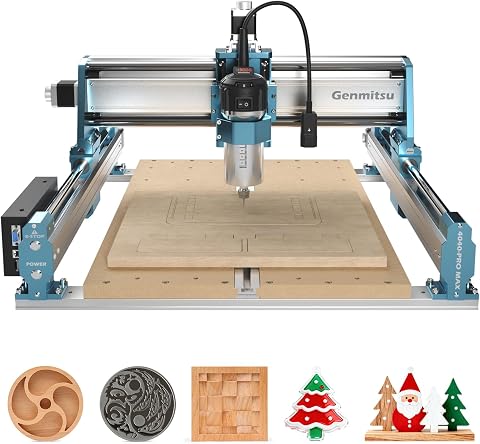
Genmitsu 4040-PRO MAX CNC Router Machine with 710W Spindle
- ✔ Power Source: Corded Electric
- ✔ Voltage: 110 V
- ✔ Horsepower: 0.95 hp
Why This Product Stands Out
The 4040-PRO MAX stands out through its combination of spindle power and workholding provisions. In the compact CNC category, a 710 W spindle gives makers more headroom for small cutting jobs than a machine designed mainly for light engraving. That can be useful when a small workshop wants one machine for both detailed signs and functional parts, though the rating alone does not establish what materials or cutting rates it can handle. The SBR16 rails on the X-axis are intended to guide the carriage with less unwanted movement. For users making repeated small parts or fine details, steadier guidance can help produce more consistent cuts when the stock, tool, and feeds are set up well.
The capability is bounded by a desktop-sized bed and 77 mm of Z travel. The machine suits small workshops making compact signs, fixtures, and components, but a larger-format router is a better fit for full-size sheets or tall stock. Its integrated dust plate and T-track spoilboard address practical workshop needs: the plate can help contain debris near the cutting area, while adjustable T-track positions let users clamp different workpiece shapes. That flexibility benefits makers who switch between panels, blanks, and parts; dust collection still depends on the user’s broader extraction setup.
Options for a longer Y axis or rotary work give owners a way to take on different jobs later, which may appeal to a maker whose interests are likely to expand. These are optional accessories rather than capabilities to assume are included. The base machine remains a three-axis router with a defined work envelope, so buyers should choose it for the projects the standard configuration can handle and treat upgrades as a possible later path.
Key Features and What They Mean
The 710 W spindle gives the router more power headroom for small cutting jobs than a machine intended chiefly for light engraving. This can benefit makers who want to cut parts and signs as well as engrave them, reducing the need to choose a separate machine for every type of compact job. For occasional shallow engraving, the added capability may have little practical value. Spindle power alone does not define material capacity: tool choice, feed rate, workholding, and machine rigidity still shape what a job can achieve.
The SBR16 linear rails on the X-axis guide the tool carriage as it moves across the work. Their more controlled guidance is intended to reduce unwanted movement, which can help preserve detail and make repeated small jobs more consistent. That outcome is most useful to users who care about controlled cuts on securely held stock, such as makers producing detailed parts or repeated components. It does not guarantee a specific tolerance or finish, and the product information specifies this rail arrangement on the X-axis only, so buyers should not assume every axis uses the same hardware.
The reinforced spoilboard with T-track gives users adjustable places to position clamps. This matters when changing between panels, blanks, and irregularly shaped components: clamps can be repositioned to suit the stock, helping keep it from shifting during a cut. Makers working with varied workpieces benefit most from that flexibility. They still need to place clamps clear of the toolpath.
The 410 × 405 × 77 mm work envelope helps buyers judge fit before purchasing. It accommodates many small signs, panels, and components in one setup, but rules out full-size work and limits tall stock. The integrated dust plate can help keep chips more contained around the cutting area, making cleanup easier, while suitable dust management is still needed. Optional Wi-Fi control may be convenient for users who want wireless access; the corded 110 V power setup is suited to a fixed workspace with compatible electrical service. Together, these features make the machine most useful to a small-shop buyer with compact projects, a secure bench, and a plan for managing dust.
Performance and Real-World Use
In day-to-day use, the 4040-PRO MAX is likely to suit a workbench or dedicated machine stand better than a setup that must be cleared after every job. At 16.4 kg, it can be moved, but frequent lifting and repositioning will take effort. The relatively compact footprint helps it fit in a small shop, although the operator still needs room for stock, clamps, tools, and dust management around the machine.
Setup quality and job planning will shape results as much as the advertised spindle rating. Stock needs secure clamping, toolpaths must respect the available travel, and the user should allow for the short Z clearance when choosing material thickness and tooling. The T-track offers flexibility, but clamping requires attention to the cutter path. The integrated dust plate can help contain debris near the cutting area; it does not remove the need to manage chips and dust during operation.
The machine’s upgrade path can add flexibility, but each extension or rotary module brings extra setup and cost considerations. Buyers who want an immediately larger workspace should compare a larger-format machine before purchasing. The available product details do not establish cutting speeds, supported materials, noise levels, or long-term durability, so those should not be inferred from the 710 W rating alone. The stated 30-day return guarantee is a limited warranty signal for anyone prioritizing longer coverage.
Who Should Buy This
Buy the Genmitsu 4040-PRO MAX if you are a maker, model builder, sign maker, or small-shop operator whose typical parts fit inside a 16-inch-square work area. It makes the most sense if you want more spindle power than a light-duty desktop engraver, value the X-axis rail design, and expect to use adjustable clamping for varied stock. A buyer with a permanent bench and a clear idea of projects that fit the 77 mm Z clearance can make good use of its compact format. The upgrade options are a further reason to choose it if you expect to add rotary work or more Y-axis capacity later.
Who Should Skip This
Skip this model if your routine work involves full-size panels, wide signs, or stock taller than its 77 mm Z clearance comfortably allows. A larger-format option such as the WolfPawn 6060 is a more relevant comparison when bed size and heavier-duty positioning matter more than a compact footprint. If you want to keep the machine portable between rooms or jobsites, its 16.4 kg weight makes it an inconvenient pick; compare a lighter or more portable design, including the FoxAlien Masuter 3S. Buyers who only need basic, light engraving may also find the spindle and upgradeable platform unnecessary; the Genmitsu 4040-PRO is a sensible comparison if its lower-capability configuration meets the work requirements.
Value for Money
The Genmitsu 4040-PRO MAX is worth its mid-range price for makers and small shops that will regularly use its 710 W spindle, X-axis linear rails, and adjustable T-track workholding on jobs that fit the roughly 16-inch-square bed. Those features give it practical value when you need a compact machine for more than light engraving and want flexible clamping for varied stock. It is poor value if your work often exceeds the bed or requires more Z clearance, since the standard machine cannot solve those limits; a larger-format router is a better use of the budget. It is also hard to justify for occasional shallow engraving, where a simpler, less capable machine may cover the work for less. The listed 30-day return guarantee is short, so buyers who value longer warranty coverage should compare terms before paying. Overall, it earns its price for regular small-format cutting and engraving, but not for workloads that outgrow its envelope or rarely use its added capability.
Genmitsu 4040-PRO MAX CNC Router Machine with 710W Spindle
The 4040-PRO MAX stands out through its combination of spindle power and workholding provisions . In the compact CNC category, a 710 W spindle gives makers more headroom for small cutting jobs than a machine designed mainly for light engraving.
Pros:
- The 710 W spindle gives the machine a substantial power rating for its compact class, making it better suited to demanding small-part work than a low-power engraving-focused setup.
- SBR16 linear rails on the X-axis are designed to guide movement with less vibration, supporting steadier cuts and cleaner detail when the work and tool setup are appropriate.
- The reinforced spoilboard and integrated T-track make it easier to clamp different stock shapes securely, which helps when changing between panels, blanks, and smaller workpieces.
- A 410 × 405 mm working footprint fits a useful range of signs, fixtures, and components without requiring a large workshop installation.
- The platform can be expanded with options such as Y-axis extensions and rotary modules, giving owners a route to adapt the machine as their projects change.
Cons:
- The 410 × 405 mm bed limits the dimensions of one-piece projects; larger signs, panels, or furniture parts may need to be split or handled on another machine.
- At 16.4 kg, the router is heavy enough to make regular setup and relocation inconvenient, despite its desktop-scale work area.
- The 77 mm Z-axis working height constrains stock thickness and tool clearance, so it is not a natural fit for tall workpieces.
- The listed warranty is a 30-day return guarantee, which offers a relatively short window for buyers seeking longer-term coverage.
Best for: Makers and small workshops machining signs, panels, and parts that fit within a roughly 16 × 16-inch bed.
Not ideal for: People making larger pieces, moving their router between workspaces often, or seeking a machine with a long warranty.
Bottom line: The Genmitsu 4040-PRO MAX is worth buying for a small workshop that needs a capable compact 3-axis router and routinely works on stock within its roughly 16-inch-square bed.
Frequently Asked Questions
Is the 710 W spindle enough for serious CNC work?
It is a substantial rating for a compact router and gives it a stronger basis for small cutting jobs than a light engraving machine. Actual results depend on the material, cutter, feed rate, and setup, so the rating alone does not define a safe or suitable cutting capacity.
Can it handle large signs or full-size panels?
The working area is 410 × 405 mm, or about 16.1 × 15.9 inches. That suits smaller signs and panels, but full-size work will not fit as one piece. Consider a larger-format router if that is a routine requirement.
Is the 4040-PRO MAX portable?
Its 16.4 kg weight makes occasional relocation possible but regular carrying inconvenient. It is a better fit for a workbench or fixed shop station than for frequent transport between locations.
Do the upgrade options come with the base machine?
The product description presents Y-axis extensions, rotary modules, and Wi-Fi control as optional additions. Confirm which components are included with the specific listing before comparing configurations or planning a workflow around an accessory.
Should I choose this or the Genmitsu 4040-PRO?
Choose the 4040-PRO MAX if its 710 W spindle, X-axis rail arrangement, and workholding setup match jobs you expect to do. Compare the 4040-PRO if you need a more basic machine and do not expect to benefit from the MAX model’s capability-focused features.
Final Thoughts
The Genmitsu 4040-PRO MAX is worth buying for a small workshop that needs a capable compact 3-axis router and routinely works on stock within its roughly 16-inch-square bed. Its strongest case is the mix of a 710 W spindle, X-axis linear rails, and flexible T-track clamping. Choose another model if your parts regularly exceed the work area, if you need more Z clearance, or if the machine must be moved often. For buyers whose projects fit the envelope and who value upgrade options, it is a considered choice; otherwise, a larger or lighter alternative will better match the work.
Fall Picks
fall essentials
As an affiliate, we earn on qualifying purchases.