TL;DR

Get kitchen gear delivered free with Prime
- Fast, free delivery on millions of items
- Prime Video, Amazon Music and more included
- Member-only deals all year
The familiar liquor-shop term “fifth” comes from a bottle that held about one-fifth of a U.S. gallon, or 757 milliliters. A federal requirement that took effect Jan. 1, 1980, shifted U.S. spirits bottles to metric sizes, replacing it with a 750-milliliter bottle—yet the name stuck.
A federal shift to metric bottle sizes that took effect on Jan. 1, 1980, replaced the traditional 757-milliliter liquor “fifth” with a standard 750-milliliter bottle, but shoppers kept using the old name. The history, recounted by VinePair, explains why the term still appears in everyday speech even though the bottle no longer holds exactly one-fifth of a gallon.
Before the change, a “fifth” referred to one-fifth of a U.S. gallon, approximately 757 milliliters. The federal requirement moved spirits bottle measurements to metric units, and the industry adopted a 750-milliliter size in place of the old fifth. The difference is about seven milliliters—small enough that the new bottle remained close to the familiar size.
The change also established other permitted bottle volumes: 50, 200 and 500 milliliters, along with 1 liter and 1¾ liters, according to VinePair. The article says liquor makers had begun moving toward metric sizes in 1976, before the requirement took effect, as the industry adjusted to the new measurements and tried to settle on names for them.
The old vocabulary did not disappear with the old bottle. “Fifth” survived as a familiar way to refer to a 750-milliliter bottle; “handle” is also used for a 1¾-liter bottle. Other proposed names, including “miniatures” or “flasks” for 200-milliliter bottles, did not produce a uniform system, VinePair reports.
Why the Old Bottle Name Endured
The story shows how everyday language can outlast a measurement change. “Fifth” remains useful as shorthand because the 750-milliliter bottle is close in size to the former 757-milliliter version, even though the name no longer describes its volume precisely. For consumers, the distinction matters most when comparing bottle sizes: the label’s metric amount, rather than the customary nickname, gives the exact quantity.
The episode also offers a small example of how regulation can reshape a familiar product without immediately replacing the habits built around it. The shift altered the numbers on bottles and the available sizes, but it did not settle what customers and workers would call those sizes. That naming gap helps explain why one old term survived while many alternatives failed to take hold.
Products Worth Considering
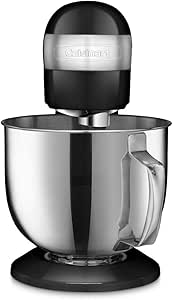
Cuisinart SM-50BK Stand Mixer, 5.5 Quart, 12 Speed, Onyx

Traeger Woodridge Pro Wood Pellet Grill and Smoker, 970 sq. in., WiFIRE

Le Creuset Enamemed Cast Iron Oval Dutch Oven, 5 qt., White/Crucible
As an affiliate, we earn on qualifying purchases.
The Four-Year Metric Changeover
According to VinePair, the metric shift was intended to make cross-border trade in spirits easier, and the Bureau of Alcohol, Tobacco, and Firearms had supported the move for years. The source says wine bottles had been required to convert to metric units in 1979, before the spirits change took effect the following January.
The change was phased in rather than appearing all at once: liquor companies began adjusting in 1976, and the new system became mandatory in 1980. As familiar sizes such as quarts, half-gallons and gallons gave way to metric volumes, industry groups and distillers floated different names. VinePair cites a 1976 New York Times interview with the then-president of the Distilled Spirits Council of the United States, who said the industry had sought uniform terminology but had not achieved it.
“There are myriad problems in this industry, and this is one of them. We wanted to have uniform nomenclature, but it doesn’t seem to be working out that way.”
— Then-president of the Distilled Spirits Council of the United States, quoted by The New York Times in 1976, as cited by VinePair
How Widely the Term Is Used
The source explains the term’s origin and continued use, but it does not establish how frequently consumers or liquor retailers use “fifth” today. It also does not provide survey data on public reaction to the change; its account of the uproar is historical reporting rather than a quantified measure of opinion. The exact regulatory text and its implementation details are not reproduced in the supplied material.
Read the Label, Not the Nickname
No further regulatory action is described in the source. For shoppers, the practical takeaway remains straightforward: check the bottle’s stated metric volume when comparing quantities. A bottle commonly called a fifth is 750 milliliters, not precisely one-fifth of a gallon; the familiar nickname persists as a holdover from the earlier size.
Key Questions
What does “fifth” mean when buying liquor?
Today it commonly refers to a 750-milliliter spirits bottle. The original fifth held about 757 milliliters, approximately one-fifth of a U.S. gallon.
Why did liquor bottle sizes change in 1980?
A federal requirement took effect on Jan. 1, 1980, shifting U.S. spirits bottle measurements to metric sizes. VinePair says the move was intended to ease international trade.
How much smaller is a 750-milliliter bottle than the old fifth?
The difference is about seven milliliters: the old bottle held approximately 757 milliliters, while the replacement held 750 milliliters.
What other bottle sizes came with the metric system?
The sizes listed in VinePair’s account are 50, 200 and 500 milliliters, plus 1 liter and 1¾ liters.
Did the industry settle on names for all the new sizes?
No single naming system took hold, according to VinePair. “Fifth” continued for the 750-milliliter bottle, while “handle” is used for a 1¾-liter bottle; other suggested terms did not become uniform.
Source: vinepair.com