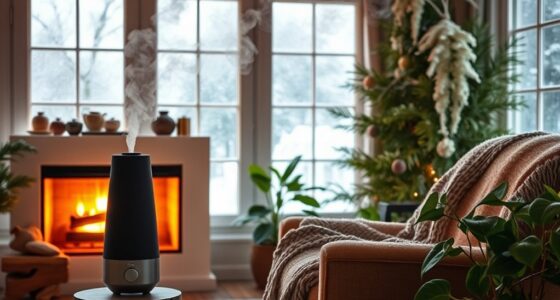
To get the best results from your air purifier, place it in a central spot with good airflow, avoiding corners and tight spaces. Keep it 2-3 feet away from walls and furniture to prevent obstruction. In the bedroom, position it near your bed but not directly on it. Be sure to check humidity levels and ensure the purifier’s sensors have a clear view of the room. For more tips on optimizing placement, explore additional insights.

Get kitchen gear delivered free with Prime
- Fast, free delivery on millions of items
- Prime Video, Amazon Music and more included
- Member-only deals all year
Key Takeaways
- Position the air purifier in a central room location to maximize airflow efficiency and pollutant capture.
- Keep it at least 2-3 feet away from furniture and obstacles to ensure optimal air circulation.
- In bedrooms, place the purifier near the bed on a nightstand for effective air quality monitoring while sleeping.
- Choose areas with frequent activity or cooking for models with air quality sensors to enhance performance.
- Regularly check and replace filters, ensuring easy access for maintenance to maintain optimal purification efficiency.
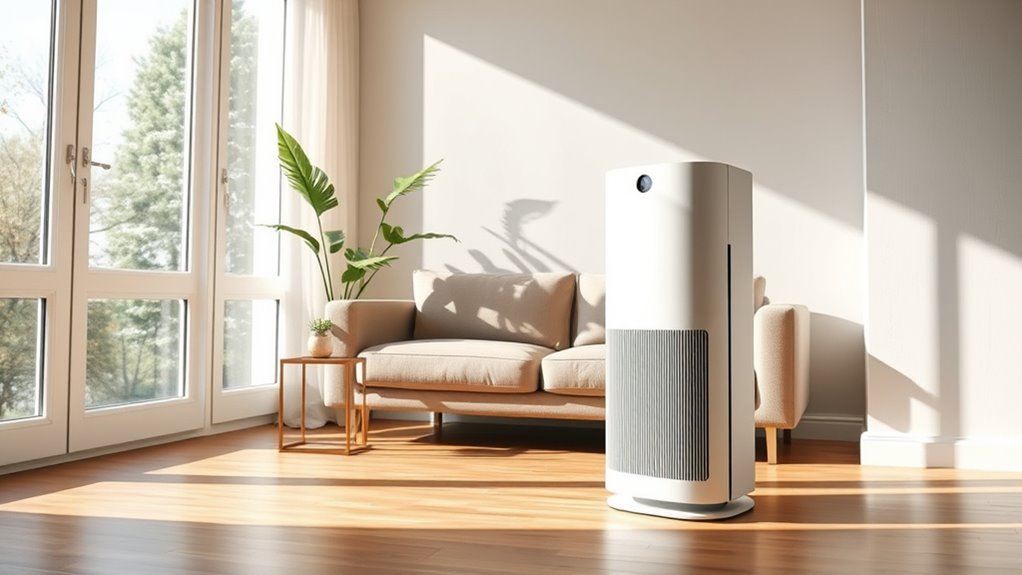
When you’re setting up your air purifier, it’s crucial to think about where you place it for maximum efficiency. The right location can markedly impact your air quality, ensuring that the device works effectively to filter out pollutants and allergens. Start by considering the size of the room. Ideally, you want to put the air purifier in a central location to allow for ideal airflow. If it’s too far from the source of pollutants, like dust or smoke, it won’t be as effective.
When setting up your air purifier, consider its placement for optimal airflow and effective pollutant removal.
Avoid corners and tight spaces; these can restrict airflow and reduce the device’s performance. Instead, aim for an open area where the air can circulate freely. If you have furniture, maintain a minimum distance of 2-3 feet between the air purifier and any obstacles. This way, the unit can draw in air from all directions and push out purified air effectively.
Next, think about the specific room’s purpose. If you’re placing the air purifier in a bedroom, position it near the bed but not too close—ideally on a nightstand or a nearby table. This way, you can enjoy cleaner air while you sleep without being too close to the device’s noise or airflow. In a living room, consider placing it near the main seating area, where you and your family spend most of your time.
Another factor to keep in mind is the type of air purifier you have. Some models come with features that allow them to sense air quality and adjust their settings accordingly. If your device has this capability, you can place it in an area where it can monitor air quality effectively, like a room with frequent activity or cooking. Additionally, the air you breathe significantly impacts your well-being, underscoring the importance of proper air purifier placement.
Regular device maintenance is also essential for keeping your air purifier running efficiently. Check and replace filters as recommended by the manufacturer. A clogged filter can drastically reduce its effectiveness, meaning poor air quality and a higher energy bill.
Finally, consider the humidity levels of your environment. If you live in a particularly humid area, you might want to place your air purifier in a room with lower humidity, as moisture can affect performance. Taking the time to choose the right spot for your air purifier will ensure you breathe cleaner air and maintain a healthier living space.
As an affiliate, we earn on qualifying purchases.
Frequently Asked Questions
Can Air Purifiers Eliminate Odors From Pets or Cooking?
Yes, air purifiers can effectively eliminate odors from pets and cooking. They’re designed to capture and neutralize pet odors through filtration, making your home smell fresher. For kitchen smell elimination, a purifier with a carbon filter can absorb cooking smells, ensuring your space stays inviting. Just place it in high-traffic areas or near sources of odor, and you’ll notice a significant difference in air quality and freshness throughout your home.
How Often Should I Replace My Air Purifier Filter?
You should replace your air purifier filter every 6 to 12 months, depending on usage and filter type. Think of it like changing your socks; you want fresh ones to keep things clean! To stay on top of maintenance, set a reminder on your phone for regular filter replacement. If you notice reduced airflow or increased odors, it’s time to swap it out sooner. Keeping your air fresh is worth the effort!
Do Air Purifiers Consume a Lot of Electricity?
Air purifiers generally don’t consume a lot of electricity. Most models have low power usage, often running on about 50 to 100 watts, depending on the size and features. If you’re concerned about energy consumption, look for energy-efficient units that have an Energy Star rating. Running your air purifier continuously can add to your electric bill, but the benefits to your indoor air quality usually outweigh the costs.
Are There Air Purifiers Safe for Children and Pets?
Imagine a castle where the air is as pure as a mountain breeze, safe for all its inhabitants. You’ll find child safe air purifiers and pet friendly air purifiers that keep your little ones and furry friends safe from harmful particles. These devices use HEPA filters and non-toxic materials, ensuring a healthy environment. So, you can breathe easy, knowing your loved ones are protected from allergens and pollutants in your royal abode.
Can I Use an Air Purifier in a Bathroom?
Yes, you can use an air purifier in a bathroom. It helps reduce bathroom humidity and improves air quality, especially in smaller spaces. To maximize its effectiveness, consider ventilation strategies like opening windows or using exhaust fans. Place the purifier near the source of moisture, such as the shower, to capture excess humidity and odors efficiently. Just guarantee it’s designed to handle the unique conditions of a bathroom for ideal performance.
air purifier with air quality sensors
As an affiliate, we earn on qualifying purchases.
As an affiliate, we earn on qualifying purchases.
Conclusion
To get the most out of your air purifier, place it in a central location, away from walls and furniture. This maximizes airflow and enhances its efficiency. While some might worry about noise, modern air purifiers are designed to operate quietly, allowing you to enjoy clean air without disruption. So, don’t hesitate to position your purifier where it works best; the benefits to your health and comfort far outweigh any minor distractions.
As an affiliate, we earn on qualifying purchases.
air purifier with replaceable filters
As an affiliate, we earn on qualifying purchases.
As an affiliate, we earn on qualifying purchases.
Halloween Picks
halloween
As an affiliate, we earn on qualifying purchases.