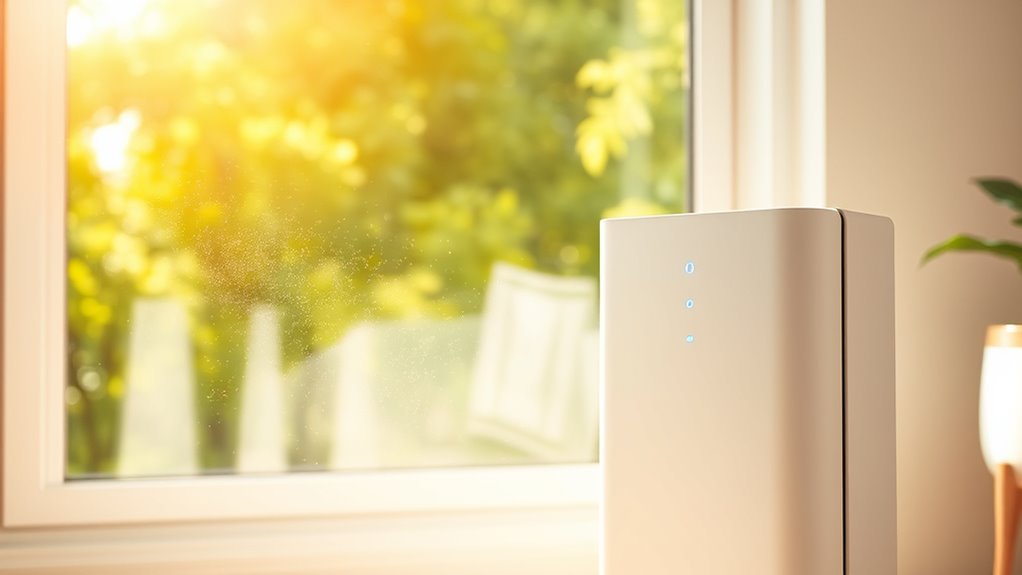

Air purifiers can help reduce airborne allergens like pollen, pet dander, and dust mites if they have high-quality filters like HEPA and are properly placed and maintained. While they’re effective at cleaning the air, they won’t eliminate all allergens or replace other allergy management strategies. Their success depends on factors like filter quality and regular upkeep. If you want a clearer picture of what’s possible, continue exploring how to get the best results.
Key Takeaways
- Air purifiers with HEPA filters effectively trap airborne allergens like pollen, dust mites, and pet dander.
- Combining HEPA and activated carbon filters improves allergen removal and odor reduction.
- Proper placement and regular maintenance enhance the effectiveness of air purifiers in allergy relief.
- They help reduce airborne allergens but do not eliminate allergens settled on surfaces or mold.
- Air purifiers are a helpful part of allergy management but should be combined with other environmental controls.
How Do Air Purifiers Work to Reduce Allergens?
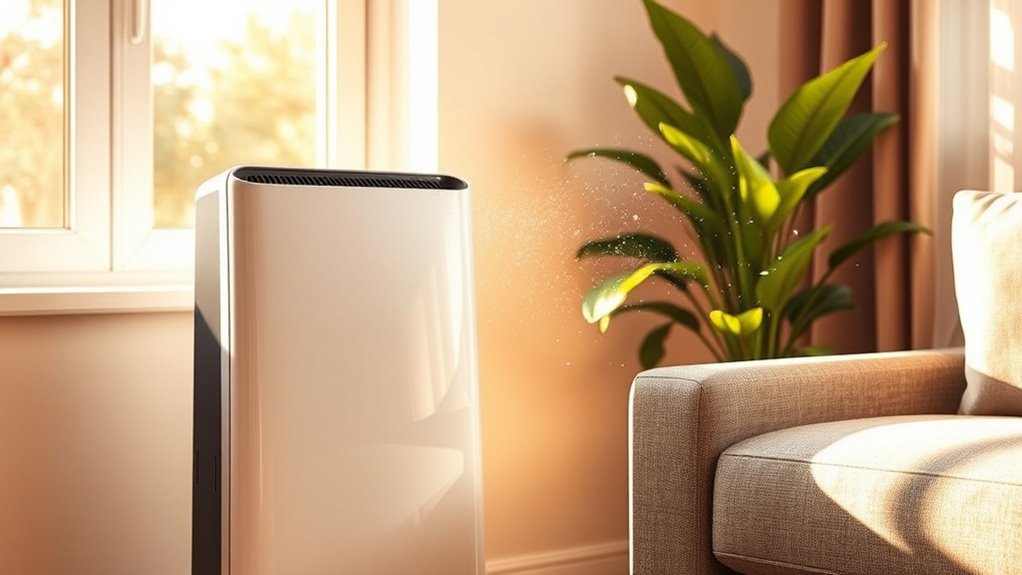
Air purifiers work by actively capturing and removing airborne allergens from the environment, making the air safer to breathe. They use filters, like HEPA filters, to trap particles such as pollen, dust mites, and pet dander. While they improve air quality, consider their noise levels; some models can be loud, which might be distracting, especially at night. Additionally, energy consumption varies between units—more powerful purifiers may use more electricity, affecting your utility bills. Choosing a device with quiet operation and energy-efficient features helps you get the benefits without inconvenience. Remember, the right settings and placement can optimize performance, ensuring your air purifier effectively reduces allergens while keeping noise and energy use manageable. Incorporating Free Floating elements into your space can also help reduce airborne allergens naturally. Understanding air purification technology can help you select the most effective unit for your needs, especially since air filtration effectiveness depends on factors like airflow rate and filter quality. Being aware of air quality indicators can further assist in monitoring your home’s environment to ensure optimal allergen reduction. For example, understanding filter maintenance requirements can prolong the lifespan and efficiency of your device.
Types of Air Purifiers Effective for Allergies

Choosing the right type of air purifier can substantially enhance your allergy relief efforts. For effective allergy control, look for models with HEPA filters, which trap airborne allergens like pollen, dust mites, and pet dander. Activated carbon filters also help by absorbing odors and chemical pollutants that can trigger sensitivities. The best air purifiers combine both filters for all-encompassing cleaning. Here’s a quick comparison:
| Feature | HEPA Filter | Activated Carbon | Combined System |
|---|---|---|---|
| Main Function | Trap airborne particles | Absorb odors & gases | Remove allergens & odors |
| Ideal For | Allergens, dust | Chemical sensitivities | Allergens + odors |
| Maintenance | Filter replacement | Filter replacement | Both filters replaced |
In addition, innovative European cloud servers are increasingly used to monitor indoor air quality, providing real-time data to optimize purification efforts. This advanced monitoring technology helps detect fluctuations in airborne particles, ensuring your environment remains healthier and more comfortable. This combo maximizes allergy relief, making your environment healthier.
Common Allergens That Air Purifiers Can Remove

Many common allergens that trigger allergy symptoms can be effectively reduced or eliminated with the right air purifier. Pet dander is a major allergen for many people, and air purifiers with HEPA filters can trap tiny particles released by cats, dogs, and other pets. If you suffer from pollen allergies, an air purifier can help remove airborne pollen grains, especially during peak pollen seasons. These allergens often settle in dust and circulate in the air, worsening allergy symptoms. Using an air purifier in key areas like bedrooms and living rooms can considerably lower the presence of pet dander and pollen, providing relief. Incorporating air purifier maintenance into your routine is essential to ensure optimal performance and allergen removal. Additionally, selecting a purifier with appropriate filter specifications is crucial for targeting specific airborne allergens effectively. Regularly replacing filters can prevent the buildup of trapped particles and maintain air quality, which is vital for allergy sufferers. Proper air filtration techniques can further enhance the removal of airborne allergens, making your indoor environment healthier. Keep in mind, though, for ideal results, choose a purifier designed to target these specific allergens and maintain it regularly.
The Limitations of Air Purifiers in Allergy Relief
Air purifiers can’t remove every allergen in your home, so you might still experience symptoms. Their effectiveness relies heavily on the quality of the filters you choose. Plus, they have limited impact on indoor mold, which can also trigger allergies. Additionally, understanding common repairs and proper maintenance can help improve indoor air quality by ensuring HVAC systems and filters are functioning optimally. Regularly replacing filters and scheduling HVAC maintenance are essential steps to maximize their benefits. Being aware of appliance testing and compatibility can also prevent issues that might compromise air quality and safety. Incorporating filter quality considerations into your maintenance routine can further enhance the effectiveness of air purifiers. Implementing simple organization strategies can further reduce dust and allergen buildup in your living spaces.
Air Purifiers Don’t Eliminate All Allergens
While air purifiers can reduce airborne allergens, they don’t eliminate every type of irritant in your environment. Dust mites, pet dander, mold spores, and pollen often settle on surfaces and aren’t fully captured by filters. You might notice that allergens lurking on furniture or carpets still trigger your symptoms. Additionally, some air purifiers produce noise, which can be distracting, especially if you plan to run them continuously. Energy consumption is another concern; running a purifier 24/7 can increase your electricity bill. Keep in mind that even the best devices have limits—air purifiers are helpful but not a complete solution. To effectively manage allergies, combine their use with regular cleaning and dust control.
Effectiveness Depends on Filtration Quality
The effectiveness of an air purifier largely depends on the quality of its filtration system. If your device uses a high-efficiency filter, it can trap smaller allergen particles, improving allergy relief. However, lower-quality filters may miss tiny particles, like pollen or pet dander, which are often less than 10 microns in size. Additionally, some purifiers produce noticeable noise, which can be distracting or bothersome, especially at higher fan speeds. The noise level can influence how often you run the purifier, directly impacting its ability to filter allergens continuously. Moreover, understanding air purifier limitations can help you set realistic expectations for allergy relief. Research indicates that filtration efficiency is crucial for effectively reducing airborne allergens and improving indoor air quality.
Limited Impact on Indoor Mold
High-quality filters can effectively trap small particles like pollen and pet dander, but they have limited impact on indoor mold. Mold spores often settle on surfaces or grow within hidden areas, making it difficult for air purifiers to remove them entirely. Support Breakfast Improving air quality for allergy sufferers requires more than just filtering the air—it involves controlling mold growth sources. Relying solely on air purifiers won’t substantially reduce mold-related allergy symptoms. To better manage mold, you should:
- Keep humidity levels below 50%
- Fix leaks and water damage promptly
- Clean mold-prone areas regularly
- Use dehumidifiers in damp spaces
- Selecting the right dog beds can support your pet’s comfort and health, especially if they have allergies or sensitivities.
While air purifiers help improve overall air quality, their effect on indoor mold is minimal, and addressing mold sources is essential for allergy relief.
Factors to Consider When Choosing an Air Purifier

Choosing the right air purifier involves considering several key factors to guarantee it effectively reduces allergens in your environment. First, assess the air purifier maintenance—look for models with easy filter replacements to ensure consistent performance. Regularly maintaining and replacing filters helps sustain the air quality over time. Noise levels also matter; opt for quieter units so they won’t disturb your daily activities or sleep. Consider your room size to select a purifier with adequate coverage. Here’s a quick comparison:
| Feature | Importance |
|---|---|
| Air purifier maintenance | Simplifies upkeep, keeps performance at its best |
| Noise levels | Ensures comfort during use |
| Room size | Matches your space for effective allergen removal |
Prioritizing these factors helps you choose an effective, hassle-free device suited to your needs. Additionally, understanding family photoshoot fails can remind you of the importance of preparation and patience in every aspect of your environment.
A good understanding of filter replacement frequency can also assist in planning maintenance schedules and ensuring ongoing air purity.
Proper Placement and Maintenance for Optimal Results
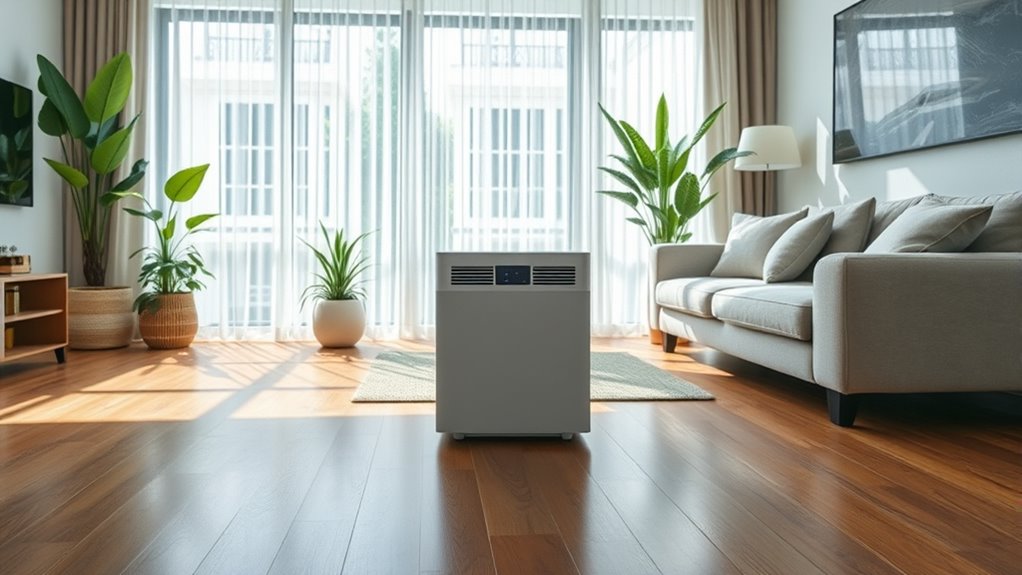
To get the most out of your air purifier, it’s essential to place it correctly and perform regular maintenance. Proper air purifier placement ensures ideal air circulation and allergen removal. Keep it in central locations away from obstructions and vents, ideally at ear level for better airflow. Establish a maintenance schedule to replace filters on time, preventing reduced efficiency. Regularly check for dust buildup and clean the exterior to maintain performance. Also, avoid placing it near sources of moisture or strong odors, which can affect operation. Additionally, understanding the navigation and mapping features of some advanced air purifiers can help optimize placement in your home. Using vetted technology can further enhance your air purifier’s effectiveness in removing allergens. By following these tips, you maximize your air purifier’s ability to improve indoor air quality. Remember, consistent maintenance and strategic placement are key to allergy relief. Your efforts will help create a healthier, allergen-free environment.
Additional Strategies to Manage Allergy Symptoms
In addition to proper placement and maintenance of your air purifier, adopting other strategies can further reduce allergy symptoms. First, dispel common air purifier myths—believing they eliminate all allergens is misleading; they’re most effective when combined with other measures. Regularly wash bedding and vacuum with a HEPA filter to remove dust mites and pet dander. Keep windows closed during high pollen seasons. Also, consult your doctor about allergy medication options, which can provide quick relief and complement your air purifier efforts. Avoid relying solely on air purifiers, as they aren’t a cure-all. Instead, combine these strategies for a *exhaustive* approach to allergy management, reducing exposure and alleviating symptoms more effectively.
Realistic Expectations: What Air Purifiers Can and Cannot Do

While air purifiers can considerably improve indoor air quality, it’s important to set realistic expectations about their capabilities. Many believe in air purifier myths that overstate their abilities, especially regarding allergen removal. Keep in mind that allergen particle size varies, and some tiny particles may bypass filters. Here’s what air purifiers can and cannot do:
- Reduce airborne allergens like pollen and pet dander
- Not eliminate all allergens on surfaces or in carpets
- Struggle with particles smaller than the filter’s efficiency range
- Require proper placement and maintenance for top-notch performance
Understanding these limitations helps you avoid disappointment and use your air purifier effectively. Remember, they are a helpful part of allergy management but aren’t a complete solution on their own.
Integrating Air Purifiers Into Your Overall Allergy Management Plan
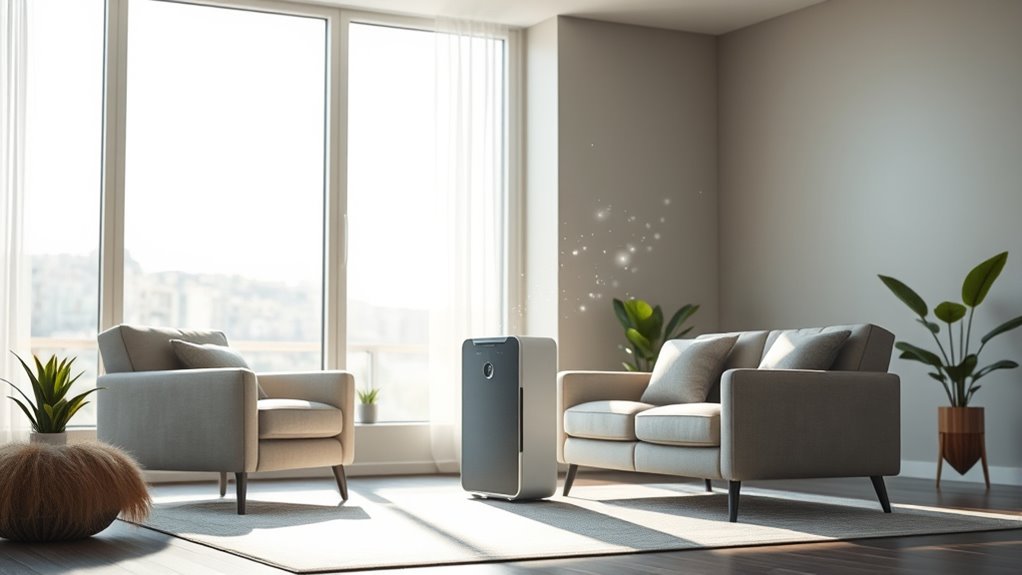
Incorporating air purifiers into your overall allergy management plan can considerably enhance your indoor air quality, but they work best when combined with other strategies. Understanding how air purifier technology targets allergy symptom triggers is key. Choose units with HEPA filters, which effectively capture pollen, pet dander, and dust mites. Regularly maintaining your air purifier guarantees it operates at peak performance. Additionally, reduce exposure by keeping windows closed during high pollen seasons and using dust-mite-proof bedding. Combining these measures with proper cleaning and controlling indoor humidity minimizes allergy triggers further. Remember, an air purifier isn’t a standalone solution but a valuable part of a thorough plan to improve comfort and reduce allergy symptoms indoors.
Frequently Asked Questions
Can Air Purifiers Completely Eliminate All Allergy Symptoms?
Air purifiers can’t completely eliminate all allergy symptoms because of their limitations. While they considerably reduce airborne allergens like pollen, pet dander, and dust, some allergens settle on surfaces or are too small to filter out fully. As a result, allergy symptom persistence is common, especially if you don’t combine purifiers with other allergy management strategies. Keep expectations realistic and maintain good cleaning habits for better relief.
Are Air Purifiers Effective Against Outdoor Allergens?
Yes, air purifiers can be effective against outdoor allergens by helping with outdoor allergen reduction and improving air quality inside your home. They trap pollen, mold spores, and other airborne particles brought in from outside, reducing your exposure. While they can’t eliminate all outdoor allergens, using a high-quality purifier with HEPA filters markedly boosts indoor air quality and can lessen allergy symptoms caused by outdoor allergens.
How Often Should Filters Be Replaced for Allergy Control?
You should replace your air purifier filters every 6 to 12 months for maximum allergy control. Regular filter maintenance ensures your device functions effectively, capturing airborne allergens like pollen, pet dander, and dust mites. Keep an eye on the filter’s condition—if it looks dirty or discolored, it’s time for a replacement. Following the recommended replacement frequency helps maintain clean indoor air and reduces allergy symptoms.
Do Air Purifiers Produce Ozone That Could Worsen Allergies?
Yes, some air purifiers produce ozone, which can worsen allergies. Ozone concerns arise because high ozone levels may irritate your lungs and increase indoor pollution. If you’re sensitive, choose models labeled “ozone-free” or with low ozone emissions. Always check product specifications and avoid air purifiers that generate significant ozone, especially in small or poorly ventilated spaces, to guarantee you’re not adding to indoor pollution or allergy symptoms.
Can Air Purifiers Help With Pet Dander Specifically?
Yes, air purifiers can help with pet allergies by reducing pet dander in your home. You should look for models with HEPA filters, as they effectively trap tiny dander particles. Using an air purifier consistently can improve air quality and lessen allergy symptoms, making it easier for you to breathe comfortably around pets. Regularly maintaining and replacing filters guarantees maximum pet dander reduction and allergy relief.
Conclusion
Ultimately, understanding air purifiers’ capabilities helps you harness their health-enhancing potential. While they can clear common contaminants and calm allergy symptoms, they can’t cure all. Combining careful selection, consistent cleaning, and thorough strategies creates a confident, comfortable environment. Remember, realistic expectations and regular maintenance maximize their magic. By blending these best practices, you build a balanced barrier, boosting your breathing ease and overall well-being every day.