Yes, boiling water can humidify a room by releasing steam and increasing moisture levels in the air. The hot water evaporates quickly, providing a temporary boost to dry indoor conditions. However, this method offers only short-term relief, and you’ll need to boil more water to maintain humidity. For a more consistent and efficient solution, there are better alternatives available. Stick around, and you’ll discover some effective options for managing dry air more effectively.
Key Takeaways
- Boiling water releases steam, increasing moisture levels and temporarily humidifying a room.
- The higher the water temperature, the faster the evaporation rate, enhancing humidity quickly.
- This method provides short-term relief but requires continuous boiling for sustained humidity.
- Alternatives like dedicated humidifiers maintain consistent humidity levels more effectively over time.
- Combining boiling water with bowls of water can boost moisture levels naturally in dry air.
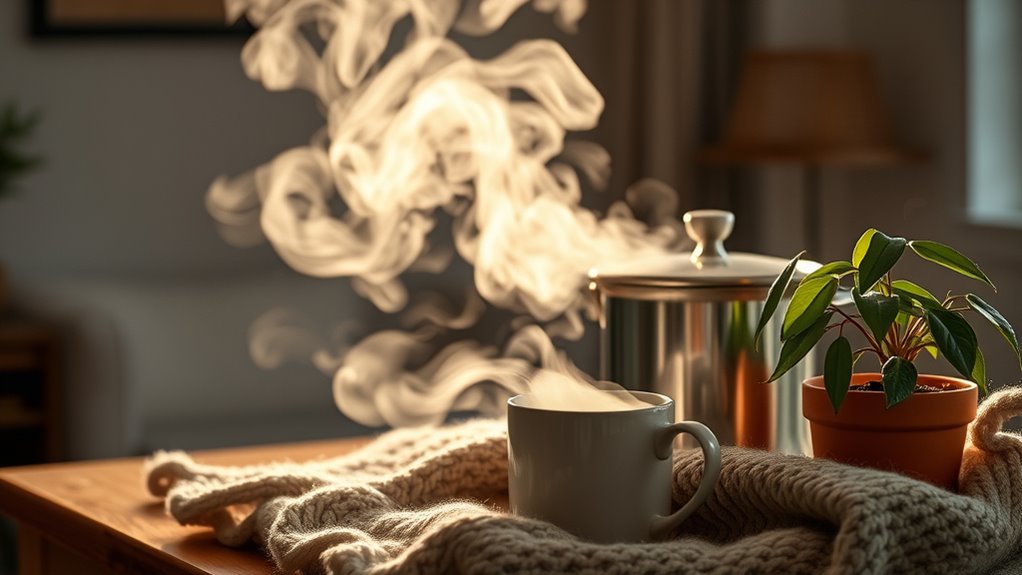
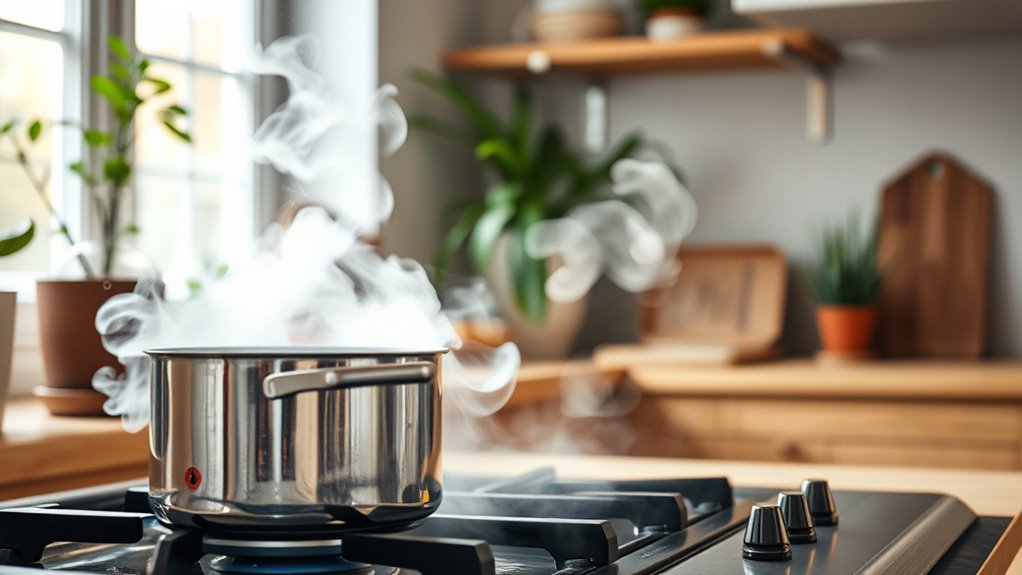
Have you ever wondered if boiling water can actually humidify a room? It’s a question that many people ask, especially during those dry winter months when your skin feels like sandpaper and your throat is scratchy. While you might not think of your stove as a humidifier, the simple act of boiling water can indeed help raise the humidity levels in your living space. When you boil water, it doesn’t just disappear; it transforms into steam and enters the air, increasing the moisture content around you.
Understanding how this process works can help you gauge its effectiveness. When you heat water, it evaporates at a certain rate—this is known as the evaporation rate. The hotter the water, the faster it evaporates. So, by boiling water, you’re essentially maximizing that evaporation rate, allowing more water vapor to enter the air. This added moisture can make a noticeable difference in your environment, especially if you’re dealing with particularly dry air.
Understanding the evaporation rate of boiling water helps maximize moisture levels, significantly improving dry air conditions.
However, boiling water isn’t the most efficient or long-term solution for humidifying a room. While it may provide immediate relief, the effects are temporary. Once the water has evaporated, the humidity levels will drop again, and you’ll need to keep boiling more water to maintain that moisture. This can become a tedious task, especially if you’re trying to keep a whole house humidified.
If you want to increase your humidity levels more consistently, consider using a dedicated humidifier. These devices are designed to release moisture into the air at a steady rate and can be adjusted based on your specific needs. They can also help maintain a comfortable humidity level over time, while boiling water only provides a quick fix. Additionally, utilizing smart gear can enhance your overall comfort and preparedness during dry conditions.
Another alternative is to place bowls of water near heat sources or on windowsills. As the water evaporates naturally, it will add moisture to the air without requiring constant attention. You might even consider combining this method with boiling water for a more significant impact.
best room humidifiers for dry air
As an affiliate, we earn on qualifying purchases.
As an affiliate, we earn on qualifying purchases.
Frequently Asked Questions
Can Boiling Water Damage My Home Appliances?
Boiling water can indeed damage your home appliances if you’re not careful. High temperatures can cause appliance safety issues, especially with plastic parts and seals that aren’t designed for extreme heat. Additionally, water damage might occur if steam or boiling water spills onto surfaces or into electrical components. To prevent these risks, always monitor the boiling process and make certain you’re using appliances specifically designed for high-temperature applications. Stay cautious to protect your home!
How Long Should I Boil Water for Humidity?
You should boil water for about 15 to 30 minutes to effectively raise humidity levels in your home. As the steam escapes, it helps create a more comfortable environment, leveraging evaporative cooling. Keep an eye on the water level, and refill as needed to maintain consistent humidity. Just remember, while this method can provide temporary relief, it’s essential to oversee your appliances and ensure they’re not adversely affected by prolonged boiling.
Is There a Safer Alternative to Boiling Water?
Absolutely, there’s a safer alternative to boiling water! Instead of risking burns or accidents, you can use steam diffusers or a humidifier. These devices add moisture to the air without the dangers associated with boiling water. Many modern humidifiers even include safety features, making them a reliable choice for maintaining humidity levels. Plus, they often come with adjustable settings, so you can easily control the amount of moisture in your space.
Can I Use Essential Oils With Boiling Water?
Yes, you can use essential oils with boiling water! Just add a few drops of your favorite oil to the water before it boils. This method enhances essential oil diffusion, allowing the aromatic benefits to fill the room. You’ll enjoy the calming scents while also increasing humidity. However, be cautious to prevent the oils from burning, and never leave boiling water unattended. Enjoy those aromatherapy benefits as you create a soothing atmosphere!
Does Indoor Humidity Affect Health and Comfort?
Yes, indoor humidity markedly affects your health and comfort. When humidity levels are too low, it can lead to dry skin, respiratory issues, and overall discomfort. Maintaining proper humidity can improve air quality, making it easier to breathe. You might also consider adding indoor plants, as they naturally release moisture into the air and help boost humidity levels. Keeping your space balanced will enhance your well-being and create a more comfortable environment.
portable humidifiers for home
As an affiliate, we earn on qualifying purchases.
As an affiliate, we earn on qualifying purchases.
Conclusion
In summary, boiling water can indeed humidify a room, much like a gentle rain refreshes a parched landscape. While it’s a quick fix for dry air, remember it’s not a long-term solution. Consider using a humidifier for consistent moisture, or try other methods like indoor plants or shallow bowls of water. By taking these steps, you can create a more comfortable environment and breathe easier, transforming your space into a cozy oasis.
water bowl humidifiers for dry rooms
As an affiliate, we earn on qualifying purchases.
As an affiliate, we earn on qualifying purchases.
electric humidifiers for indoor air
As an affiliate, we earn on qualifying purchases.
As an affiliate, we earn on qualifying purchases.