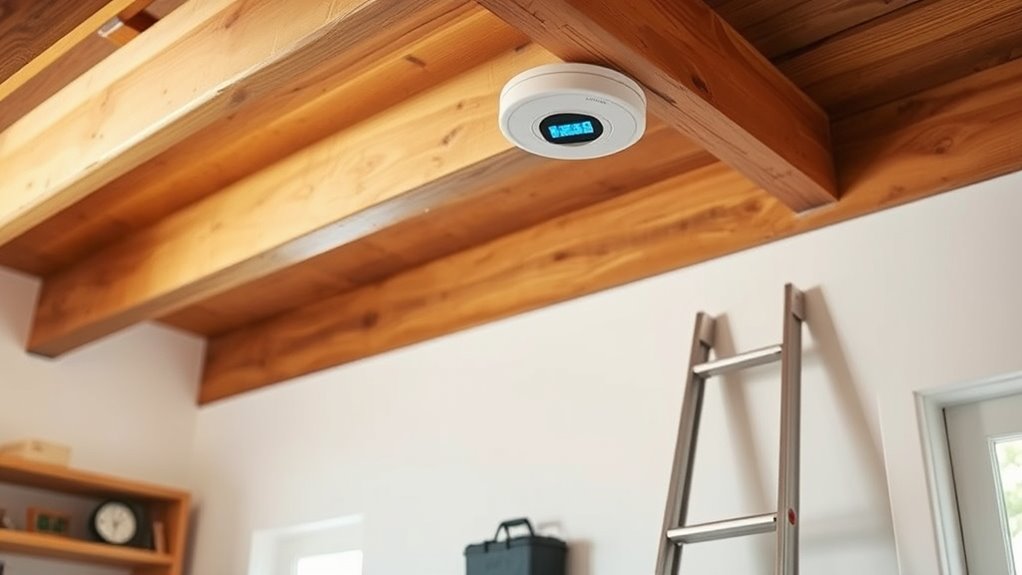

Carbon monoxide detectors are vital for your home safety. Install them near sleeping areas and on every level for the best coverage. Keep them close to fuel-burning appliances, but 15-20 feet away to avoid false alarms. Check batteries monthly and replace detectors every 5-7 years. Test them regularly to confirm they’re working properly. Proper placement and maintenance can save lives and provide peace of mind. There’s more to learn about guaranteeing your family’s safety.
Key Takeaways
- Install carbon monoxide detectors near sleeping areas and on every level of the home for comprehensive safety coverage.
- Position detectors 15-20 feet away from fuel-burning appliances to minimize false alarms while ensuring early detection.
- Check and replace batteries monthly, and record the installation date to track the detector’s lifespan of 5-7 years.
- Test detectors monthly by pressing the test button to ensure proper functionality and clean them regularly to prevent malfunctions.
- Follow manufacturer instructions for installation and maintenance, and replace detectors nearing the end of their lifespan for continuous protection.

Have you ever wondered how safe your home really is from hidden dangers? One of the most insidious threats you might face is carbon monoxide (CO), a colorless, odorless gas that can be deadly. Installing a carbon monoxide detector is essential for safeguarding your home and loved ones, but it’s not just about having one. You need to consider sensor placement and establish a maintenance schedule to guarantee it operates effectively.
First, let’s talk about sensor placement. You’ll want to install your carbon monoxide detector near sleeping areas, as this is where you and your family spend the most time. If the alarm goes off, it’s critical to wake up immediately. Placing the sensor on every level of your home is also a good practice, especially near bedrooms. If your home has fuel-burning appliances like gas stoves, heaters, or fireplaces, you should position the detectors close to these sources but at least 15 to 20 feet away to avoid false alarms. Remember, the goal is to have early detection without unnecessary triggers.
Next up is the maintenance schedule. Just having a detector isn’t enough; you need to keep it in peak working condition. Regularly check the batteries, ideally once a month. If your detector has a “low battery” warning, replace the batteries immediately. Many carbon monoxide detectors have a lifespan of about 5 to 7 years, so keep track of when you installed them. It’s a good idea to mark the installation date on the device itself or keep a record in your home maintenance log. When the time comes for replacement, don’t put it off. A faulty detector can give you a false sense of security.
You should also test your detectors monthly by pressing the test button, ensuring they’re functioning correctly. If you hear a beep or a chirp, you’re in the clear. If not, look into replacing the unit or checking the batteries. Additionally, air quality considerations are important to keep in mind since they can impact the overall safety of your living environment.
Frequently Asked Questions
How Often Should I Replace My Carbon Monoxide Detector?
You should replace your carbon monoxide detector every 5 to 7 years, depending on the model. Check the detector’s lifespan indicated on the packaging or in the user manual. It is crucial to establish a replacement schedule to guarantee your home’s safety. Don’t wait for it to malfunction; proactive replacement helps protect you and your loved ones from carbon monoxide risks. Regularly testing the device also contributes to its effectiveness.
Can I Test My Detector With a Candle?
You shouldn’t test your carbon monoxide detector with a candle. Candle testing can give inaccurate results, potentially compromising detector accuracy. Instead, use the test button on your device to verify it’s functioning properly. If you suspect a malfunction, it’s best to replace it. Remember, keeping your detector in good working order is vital for your safety, so always follow manufacturer guidelines for maintenance and testing.
Are There Different Types of Carbon Monoxide Detectors?
Yes, there are different types of carbon monoxide detectors, including battery-operated, plug-in, and hardwired models. Each type has its own detector placement requirements and maintenance schedules. Battery-operated detectors need regular battery checks, while plug-in models should be tested frequently to guarantee they work properly. Hardwired detectors often require professional installation but provide a consistent power source. Whichever type you choose, consistent maintenance is key to keeping your home safe from carbon monoxide.
What Should I Do if My Detector Goes Off?
If your detector goes off, don’t panic; it’s just doing its job, right? First, follow your safety procedures—evacuate the area immediately and get to fresh air. Call emergency services to check for carbon monoxide levels. Don’t assume it’s a false alarm; your safety’s at stake! Investigate the cause only after professionals declare it safe. Remember, a detector’s alarm response isn’t just noise; it’s a lifesaver in disguise.
Can Carbon Monoxide Detectors Be Interconnected?
Yes, carbon monoxide detectors can be interconnected, provided they meet interconnection standards and have wiring compatibility. This allows multiple detectors to communicate with each other, ensuring that if one detects carbon monoxide, all units will sound the alarm. Make sure to verify the manufacturer’s instructions for specific interconnection features. If you’re unsure about wiring compatibility, it’s a good idea to consult a professional to ensure everything’s set up safely and correctly.
Conclusion
In the same way a lighthouse guides ships through treacherous waters, a carbon monoxide detector guards your home from hidden dangers. Just like you wouldn’t sail into the fog without a beacon, don’t overlook the importance of proper placement and regular maintenance of your detector. Check it monthly, replace batteries as needed, and verify it’s installed in the right spots. By taking these simple steps, you’re not just safeguarding your family—you’re steering clear of disaster.