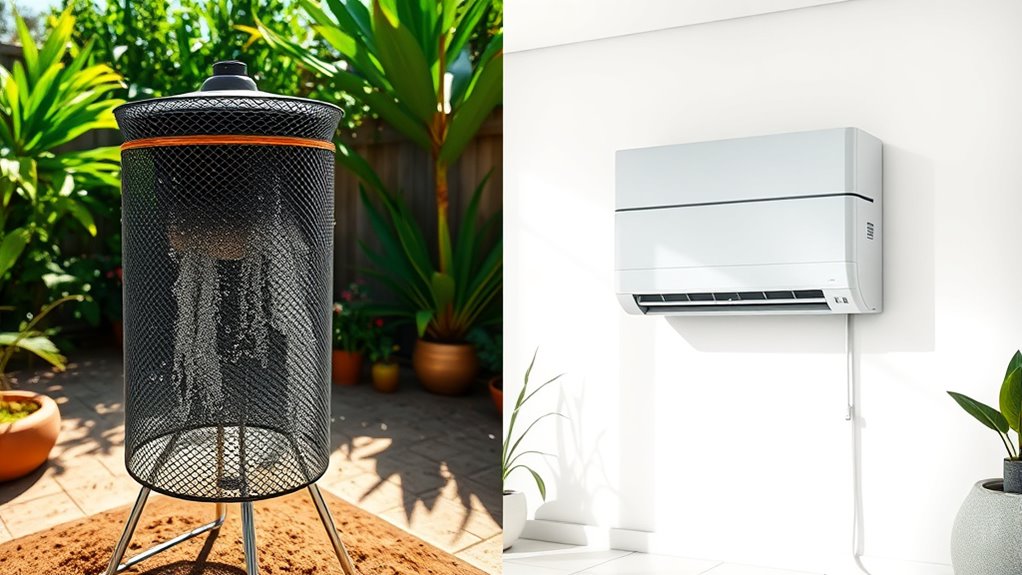

Evaporative coolers are energy-efficient and eco-friendly, making them great for dry climates since they add moisture and reduce energy costs. However, they don’t work well in humid areas, where air conditioners outperform them by controlling both temperature and humidity. While coolers require less maintenance and operate quieter, their effectiveness depends on your region’s weather. To choose the best system for your needs, understanding these pros and cons is key — more insights await you.
Listen free for 30 days with Audible
Thousands of audiobooks and originals — cancel anytime.
As an affiliate, we earn on qualifying purchases.
Key Takeaways
- Evaporative coolers are energy-efficient and eco-friendly, ideal for dry climates, but less effective in humid environments.
- Air conditioners provide reliable cooling and humidity control in humid regions but consume more energy and have higher operational costs.
- Evaporative coolers are generally cheaper to install and maintain, requiring less complex parts and regular filter cleaning.
- Air conditioners offer better temperature and humidity regulation, ensuring consistent comfort regardless of regional climate variations.
- The effectiveness of evaporative coolers depends heavily on low humidity, making them unsuitable for humid areas where air conditioners excel.
How Evaporative Coolers Function and Their Ideal Conditions

Evaporative coolers work by harnessing the natural process of water evaporation to lower indoor temperatures. When warm, dry air passes through damp pads, water evaporation occurs, absorbing heat and cooling the air. This process relies heavily on air humidity; it’s most effective in dry conditions because lower humidity allows water to evaporate faster. As air humidity increases, water evaporation slows down, reducing the cooler’s efficiency. You’ll find evaporative coolers perform best in arid climates where the air is dry and temperatures are high. In such environments, they can markedly lower indoor temperatures while adding moisture to the air, creating a more comfortable atmosphere. Additionally, the effectiveness of evaporative cooling is influenced by air humidity levels, which determine how efficiently water can evaporate and cool the air. European cloud innovation emphasizes sustainable solutions, highlighting the importance of choosing the right cooling method based on climate conditions. Moreover, proper maintenance practices are essential to ensure optimal performance and longevity of evaporative coolers. Proper installation techniques can also enhance their efficiency and prevent issues such as mold or mineral buildup. Regular water quality checks are recommended to prevent mineral deposits that can hinder performance. However, in humid conditions, their cooling ability diminishes because water evaporation becomes less effective.
The Energy Efficiency of Evaporative Coolers Compared to Air Conditioners

While both evaporative coolers and air conditioners aim to cool indoor spaces, evaporative coolers generally use less energy because they rely on simple water evaporation rather than compressor-based refrigeration. This results in significant energy savings and makes them more cost-efficient to operate, especially in dry climates. Evaporative coolers consume less electricity, reducing your overall energy bill while providing effective cooling. Their lower power usage also means less strain on your electrical system and a smaller carbon footprint. However, their energy efficiency can decline if humidity levels are high, as they work best in dry conditions. Overall, if you seek a more energy-efficient cooling solution with better cost efficiency, evaporative coolers are a compelling choice.
Cost Considerations for Installation and Operation

When considering the costs of cooling options, it’s important to compare both installation and ongoing expenses. Your choice impacts your budget in several ways:
- Installation costs vary for evaporative coolers and air conditioners, with cooling systems requiring different setup complexity.
- Pricing strategies influence upfront costs, with some providers offering discounts or financing options.
- Operating costs depend on energy consumption, where evaporative coolers typically save money over time.
- Warranty options can affect long-term expenses, covering repairs that might otherwise be costly. Additionally, selecting units with total-cost clarity can help you better understand the long-term financial implications.
- Proper sizing and load planning tools can optimize energy efficiency and reduce overall costs.
- Considering energy efficiency ratings during purchase can further reduce ongoing expenses and improve your cooling system’s performance.
- Understanding energy consumption patterns will assist in choosing a system that aligns with your usage habits, further enhancing cost savings. Implementing energy monitoring devices can provide real-time data to help manage and reduce energy use effectively.
Keep in mind that selecting a unit with good warranty coverage can reduce future costs. Additionally, understanding the pricing strategies available helps you make a smarter investment, balancing initial costs with ongoing savings.
Environmental Impact and Sustainability Factors

Considering the environmental impact and sustainability of cooling options is just as important as evaluating their costs. Evaporative coolers generally have a lower carbon footprint because they use less electricity and can be powered by renewable energy sources. They rely on water evaporation, which consumes minimal energy compared to traditional air conditioners. Additionally, their use of natural processes makes them a more eco-friendly choice for environmentally conscious consumers. Installing energy-efficient systems can further reduce overall environmental impact and optimize performance. Using renewable energy sources like solar power can significantly decrease the carbon emissions associated with cooling devices. Moreover, advancements in sustainable cooling technologies are making evaporative coolers even more environmentally friendly and efficient. Air conditioners, on the other hand, often use refrigerants that can harm the environment if not managed properly and tend to have a higher carbon footprint due to their energy demands. Choosing cooling systems that prioritize sustainability helps reduce your overall environmental impact. By opting for evaporative coolers or energy-efficient air conditioners compatible with renewable energy, you support a more sustainable future and contribute to reducing pollution and climate change. Additionally, selecting eco-friendly refrigerants when choosing air conditioning units further minimizes environmental harm.
Climate Suitability and Performance in Different Regions

Your choice between evaporative coolers and air conditioners depends heavily on your regional climate. High humidity can reduce evaporative cooler efficiency, while arid zones often see better performance with them. Understanding your area’s climate helps you select the most suitable cooling method for ideal comfort. Additionally, selecting a best heat pumpro can provide reliable heating and cooling solutions tailored to your environment. Factors such as climate suitability directly impact the overall effectiveness and energy consumption of your cooling system.
Humidity Impact on Efficiency
Humidity levels considerably influence the efficiency of evaporative coolers and air conditioners, making climate a key factor in choosing the right system. In dry environments, evaporative coolers excel by increasing indoor air quality through fresh airflow and reducing noise pollution. However, in humid regions, they lose efficiency and can worsen indoor humidity levels. Conversely, air conditioners perform better in high humidity, effectively removing moisture and maintaining comfort. Consider these points:
- Evaporative coolers work best in low humidity, boosting airflow and indoor air quality.
- High humidity diminishes evaporative cooler efficiency, possibly increasing noise pollution.
- Air conditioners are more effective in humid climates, controlling moisture and temperature.
- Both systems impact indoor air quality and noise levels, so regional climate influences their suitability.
- The climate suitability of each cooling system is essential for optimal performance and comfort.
- Understanding the climate conditions of your region can help determine the most energy-efficient and effective cooling solution.
- The environmental factors, such as humidity and temperature, play a crucial role in the overall performance of cooling systems.
- Recognizing the regional climate patterns can guide homeowners in choosing the most appropriate cooling technology for their environment.
- Proper system selection based on local climate conditions can lead to significant energy savings and enhanced comfort.
Regional Climate Compatibility
The effectiveness of evaporative coolers and air conditioners varies markedly across different regions, making climate a crucial factor in choosing the right system. In areas affected by regional drought, evaporative coolers excel because they use less water and energy. Conversely, in regions with high urban heat, air conditioners often perform better, providing consistent cooling despite intense heat. The table below highlights key regional factors:
| Climate Factor | Suitable Cooling System |
|---|---|
| Regional drought | Evaporative coolers |
| Urban heat | Air conditioners |
| Humid environments | Air conditioners |
| Dry climates | Evaporative coolers |
| Moderate climates | Both options, depending on needs |
Choosing based on regional drought levels or urban heat guarantees the best performance and efficiency. Additionally, understanding how regional climate compatibility impacts cooling system performance can help homeowners make more informed decisions.
Performance in Arid Zones
In arid zones, the choice between evaporative coolers and air conditioners hinges on their ability to adapt to extreme dryness. Evaporative coolers excel here because they add moisture to the air, improving indoor air quality and reducing dryness. However, they depend heavily on humidity levels and perform best when humidity is low. Conversely, air conditioners work well regardless of humidity, providing consistent cooling but often increasing noise pollution. Consider these points:
- Evaporative coolers boost indoor air quality by humidifying dry air.
- Air conditioners maintain stable temperatures but may generate more noise.
- Evaporative units are energy-efficient in dry climates, reducing operational costs.
- Air conditioners can handle higher humidity levels, but may impact indoor air quality if not maintained properly.
- When selecting between these cooling systems, understanding the climate conditions of your region is essential for optimal performance.
Maintenance Requirements and Longevity

While evaporative coolers generally require less maintenance than air conditioners, they still need regular upkeep to perform efficiently. You should plan on replacing filters periodically to keep airflow ideal and prevent mold growth. Unlike air conditioners, evaporative coolers typically have fewer complex parts, which helps lower repair costs. However, neglecting routine maintenance can lead to decreased efficiency and a shorter lifespan. For instance, ignoring mineral buildup or dirty pads can cause motor strain or damage, increasing repair expenses. Air conditioners usually demand more frequent filter replacements and professional inspections, which can be costly over time. Overall, evaporative coolers tend to have a longer lifespan with less intensive maintenance, but consistent care is essential to maximize their durability and performance.
Noise Levels and User Comfort

Evaporative coolers generally operate more quietly than air conditioners, making them a better choice if you value a peaceful environment. Their lower noise levels enhance user comfort, especially in bedrooms and living areas. Here are some key points:
- Evaporative coolers produce minimal noise, often just the sound of moving air.
- Air conditioners tend to generate more noise due to compressors and fans.
- Quieter operation means less distraction and better sleep quality.
- User comfort increases when noise levels are kept low, creating a more relaxing space.
- Additionally, local automation features in some evaporative coolers can help optimize operation and reduce unnecessary noise during off-peak hours.
If noise is a concern, evaporative coolers offer a significant advantage, helping you enjoy a calm, comfortable environment without constant background hum.
Frequently Asked Questions
Can Evaporative Coolers Be Used Effectively Indoors?
Yes, you can use evaporative coolers indoors effectively if you manage indoor humidity and ventilation properly. These coolers add moisture to the air, so they work best in dry environments. Make sure good ventilation to prevent excess humidity, which can cause mold or discomfort. Keep windows and vents open for fresh air circulation, and regularly monitor indoor humidity levels to maintain a comfortable, healthy indoor environment.
How Often Should Evaporative Coolers Be Cleaned?
Like tending a garden, your evaporative cooler needs regular care. You should clean it every 2-4 weeks, depending on usage and environment. Use gentle cleaning methods: wash the pads, wipe the exterior, and verify the water reservoir is free of debris. Regular maintenance frequency keeps your cooler functioning efficiently, prevents mold, and prolongs its lifespan. Think of it as nurturing your comfort, ensuring freshness flows effortlessly through every season.
Are There Health Risks Associated With Evaporative Coolers?
Yes, there are health risks associated with evaporative coolers if you don’t maintain them properly. Poor air quality can result from mold growth inside the unit, especially if it’s not cleaned regularly. Mold spores can trigger allergies or respiratory issues. To minimize risks, clean your cooler frequently, ensure proper ventilation, and replace filters as needed. Regular maintenance keeps your air healthy and safe to breathe.
What Are the Typical Lifespan Differences Between Coolers and Air Conditioners?
Imagine your cooler or air conditioner as a reliable companion, each with its own lifespan. Typically, evaporative coolers last 8-10 years with regular maintenance and are more energy-efficient, but may need more frequent upkeep. Air conditioners often endure 10-15 years, especially with professional servicing. Your choice depends on how often you maintain them and your desire for energy savings, shaping how long they serve you comfortably.
Do Evaporative Coolers Require Special Power Outlets or Wiring?
Evaporative coolers generally don’t need special power outlets, but you should check their power requirements and wiring compatibility before installation. Most units run on standard 120V outlets, making them easy to connect if your wiring is up to code. However, larger models or high-capacity units might demand more power or specific wiring, so it’s wise to consult an electrician to make sure your home’s wiring can handle the cooler’s power needs safely.
Conclusion
Choosing between evaporative coolers and air conditioners depends on your needs and environment. Like a trusted friend guiding you through a maze, understanding their pros and cons helps you make an informed decision. Remember, no single solution fits all—each has its own charm and challenges. So, weigh your options carefully, and let your choice cool your space efficiently and sustainably, turning your comfort into a masterpiece painted with knowledge and foresight.
Flea & tick season Picks
flea and tick prevention
As an affiliate, we earn on qualifying purchases.