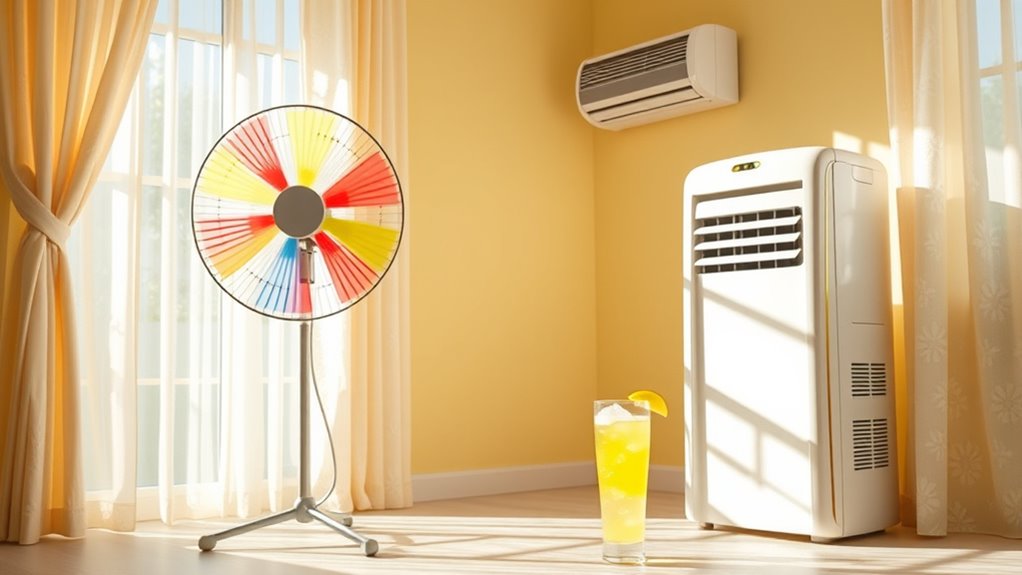

When you’re looking to beat the summer heat on a budget, fans are a fantastic choice. They use considerably less power than air conditioners, helping you save on your electricity bills. While fans create a nice breeze that makes you feel cooler, air conditioners provide serious cooling for larger spaces and extreme heat. However, if you want to save money and still stay comfortable, consider fans as your go-to option. There’s more to explore about your cooling options!
Listen free for 30 days with Audible
Thousands of audiobooks and originals — cancel anytime.
As an affiliate, we earn on qualifying purchases.
Key Takeaways
- Fans are energy-efficient and consume less power, leading to lower electricity bills during summer months.
- Fans create a wind-chill effect, making them effective for cooling in smaller spaces or moderate heat.
- Air conditioners provide significant cooling in extreme heat but tend to increase utility costs substantially.
- Fans are generally quieter than air conditioners, making them a better choice for comfortable environments.
- Budget considerations and personal comfort preferences are essential when choosing between fans and air conditioners.
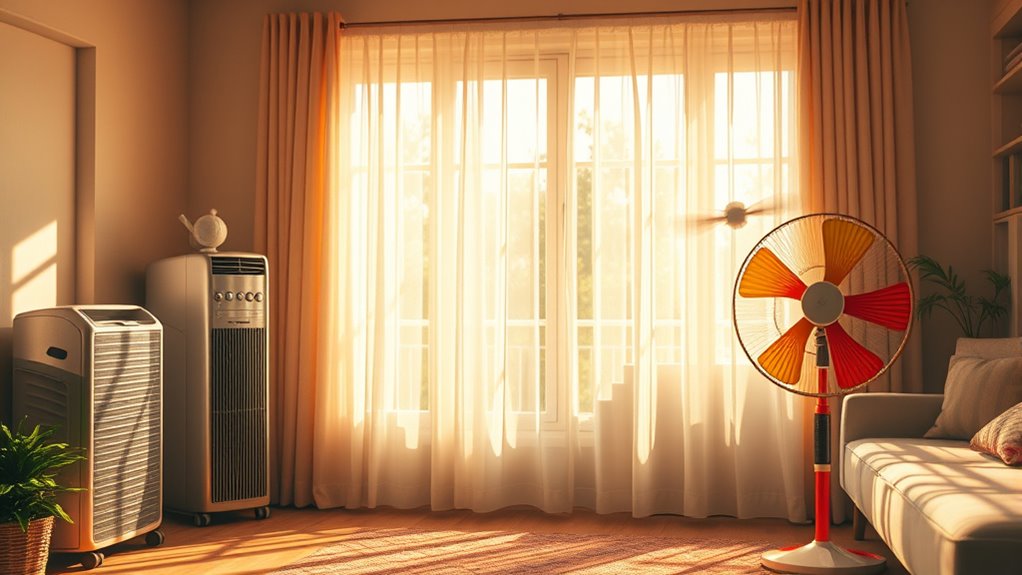
When it comes to beating the heat, you’ve probably found yourself torn between fans and air conditioners. Both options offer a way to stay cool, but they come with different benefits and drawbacks that can influence your choice. If you’re seeking a budget-friendly solution, you might lean toward fans, but if you’re looking for a more powerful option, air conditioning could be the way to go. Understanding the factors like energy efficiency and noise levels can help you make the right decision for your home.
Fans are often praised for their energy efficiency. They consume notably less power than air conditioners, which can keep your electricity bills lower during the hot summer months. When you run a fan, you’re mainly circulating the air, which can create a wind-chill effect, making you feel cooler without actually lowering the room temperature. This can be particularly beneficial in areas where humidity is a factor, as fans can help evaporate sweat and improve comfort levels. However, it’s important to note that fans work best in smaller spaces or when the temperature is only moderately high.
On the other hand, air conditioners provide a more dramatic cooling effect. If you’re dealing with extreme heat, an air conditioner can lower the temperature in a way that fans simply can’t. However, this increased cooling power comes at a cost. Air conditioners often have higher energy consumption, which can lead to hefty utility bills, especially if you’re using them frequently. Additionally, many models tend to be noisier than fans, which can be disruptive if you’re trying to relax or sleep. If noise levels are a major concern for you, look for units that advertise quiet operation to minimize disruption.
Ultimately, your choice may come down to your living situation and personal preferences. If you’re in a smaller space or an environment with moderate temperatures, a fan could be an ideal choice. Conversely, if you live in an area with sweltering heat or have a larger home that needs consistent cooling, investing in an air conditioner might be worthwhile despite the higher energy costs. Weighing these aspects against your budget and comfort needs will help you determine the best cooling solution for your summer. Additionally, being aware of the challenges of caregiving can guide you to make thoughtful decisions regarding comfort and well-being in your living environment.
As an affiliate, we earn on qualifying purchases.
Frequently Asked Questions
How Can I Maximize Airflow With My Fan?
To maximize airflow with your fan, focus on strategic fan placement. Position it near open windows to draw in fresh air or face it towards an interior doorway to circulate air throughout the room. For airflow optimization, guarantee there’s nothing blocking the fan’s path. You can also use multiple fans to create cross-ventilation, enhancing the cooling effect. Experiment with different angles and speeds to find what works best for your space.
Are There Energy-Efficient Fans Available?
Yes, there are plenty of energy-efficient fans available that come with energy-saving features and eco-friendly designs. When you choose a model with a high Energy Star rating, you can substantially reduce your electricity consumption. Look for fans with adjustable speeds and timers, which help optimize energy use. By selecting the right fan, you’ll not only stay cool but also contribute to a more sustainable environment while saving on your energy bills.
Can Fans Help Reduce Humidity Levels?
Yes, fans can help reduce humidity levels, although they aren’t as effective as dehumidifiers. By promoting air circulation, they assist in evaporating moisture from surfaces, which aids in fan humidity control. You’ll enjoy the dehumidifier benefits when using a fan alongside it, as the two can work together to create a more comfortable environment. So, if you’re looking for relief from sticky conditions, using a fan could really make a difference.
How Often Should I Clean My Air Conditioner?
You should clean your air conditioner at least once a year, but many experts recommend doing it every six months for maximum performance. Did you know that a dirty air conditioner can decrease efficiency by up to 15%? Regularly replace the filter and guarantee coil cleaning is done to maintain airflow and cooling efficiency. By staying on top of these tasks, you’ll not only stay cool but also save on energy bills!
What Are the Costs of Running a Fan Versus an AC?
When you compare costs, running a fan is considerably cheaper than an air conditioner. Fans consume less electricity, typically around 50 watts, while an AC can use over 2,000 watts. Plus, you won’t face installation expenses with a fan, as it’s easy to set up. If you want to save money, stick with fans for cooling. However, consider the comfort and efficiency of AC during the hottest days for a balanced approach.
quiet oscillating fans for bedroom
As an affiliate, we earn on qualifying purchases.
As an affiliate, we earn on qualifying purchases.
Conclusion
In the battle of fans vs air conditioners, fans can be your wallet’s best friend, bringing invigorating breezes without breaking the bank. While air conditioners may seem like the ultimate cooling champions, they can also drain your budget faster than a speeding bullet. So, embrace the simplicity of fans this summer; they’re a cool, cost-effective choice that’ll keep you comfortable without the hefty price tag. After all, who doesn’t want to feel like they’re lounging in an Arctic oasis?
portable air conditioners for small rooms
As an affiliate, we earn on qualifying purchases.
As an affiliate, we earn on qualifying purchases.
energy-saving window air conditioners
As an affiliate, we earn on qualifying purchases.
As an affiliate, we earn on qualifying purchases.
Flea & tick season Picks
flea and tick prevention
As an affiliate, we earn on qualifying purchases.