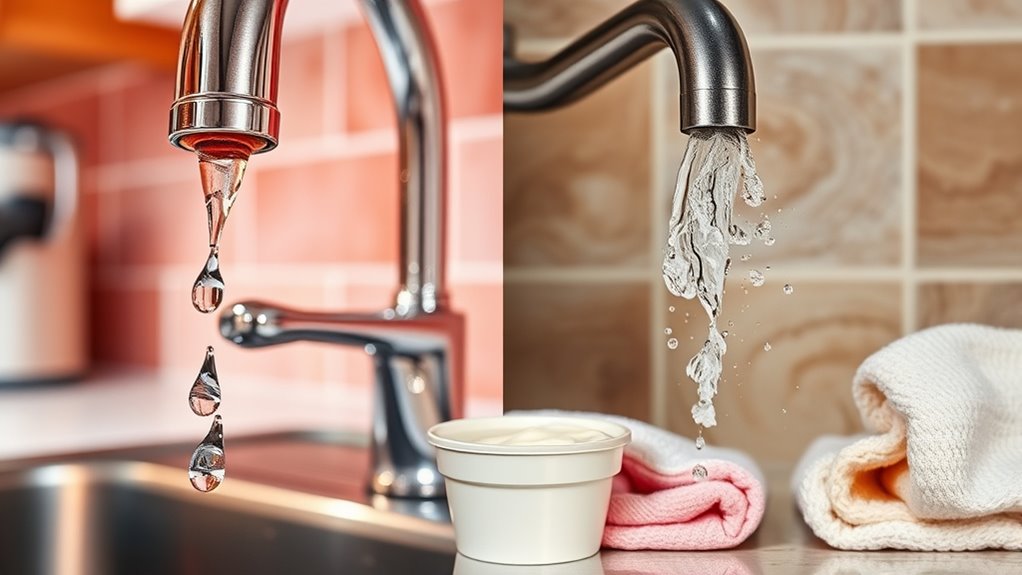

Hard water, loaded with minerals like calcium and magnesium, can lead to mineral buildup in your appliances, making them less efficient over time. You’ll notice this with longer cleaning cycles and increased detergent use. It can also leave your skin dry and your hair dull due to soap residue. On the other hand, soft water improves appliance performance and enhances your bathing experience. Want to know more about the benefits of soft water?
Key Takeaways
- Hard water causes limescale buildup, reducing the efficiency and lifespan of appliances like dishwashers and washing machines.
- Soft water enhances appliance performance, requiring less detergent and lowering maintenance costs.
- Hard water can leave skin feeling dry and hair looking dull due to mineral residue.
- Soft water improves skin health and makes hair more manageable, enhancing overall bathing experiences.
- Understanding water hardness aids in choosing appropriate cleaning products and maintaining home investments effectively.
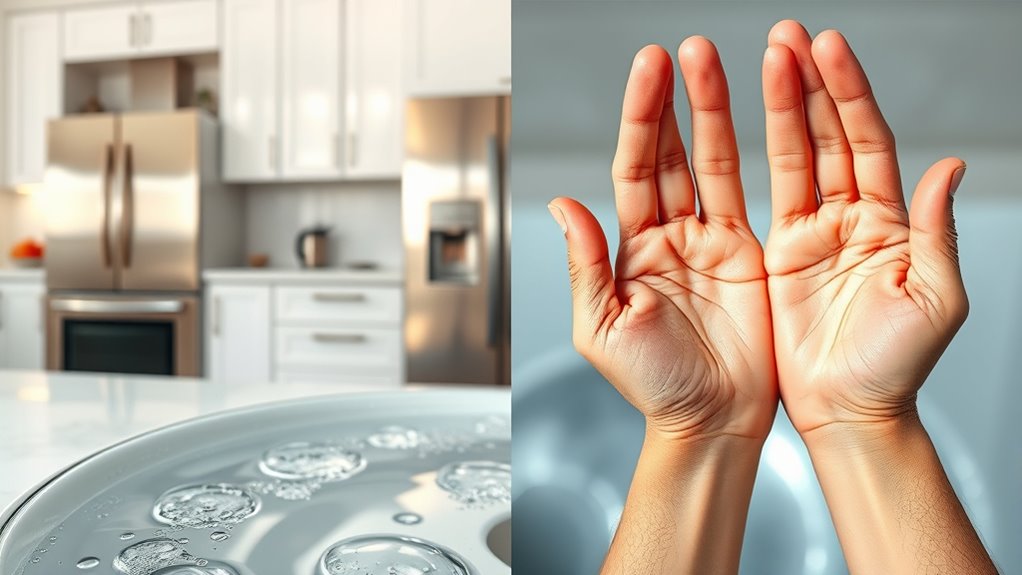
When you turn on your tap, have you ever wondered whether the water flowing from it is hard or soft? The difference matters more than you might think. Hard water contains high levels of minerals like calcium and magnesium, while soft water has fewer of these minerals. This distinction can profoundly impact your daily life, from the effectiveness of your cleaning products to the longevity of your appliances.
Understanding whether your tap water is hard or soft can significantly influence your cleaning efficiency and appliance lifespan.
If you’ve ever noticed a white, chalky residue on your faucets or showerheads, you’re likely dealing with limescale buildup. This occurs when hard water evaporates, leaving behind mineral deposits. Over time, this buildup can become a considerable nuisance, clogging your pipes and reducing the efficiency of your appliances. You might find that your dishwasher or washing machine isn’t functioning as well as it should, requiring longer cycles or more detergent to achieve the same results. This is because hard water interferes with soap efficiency, causing it to bind with the minerals instead of cleaning effectively. As a result, you may need to use more soap and spend extra time scrubbing surfaces—definitely not an ideal situation.
The impact of hard water extends beyond just cleaning. It can also affect your skin and hair. If you’ve noticed that your skin feels dry or that your hair doesn’t hold moisture as well, hard water could be the culprit. Soap doesn’t lather as easily in hard water, which means you might struggle to get a good wash. Instead of feeling clean and refreshed, you might feel like you’re still carrying a layer of soap residue. Switching to soft water can improve your bathing experience, leaving your skin feeling softer and your hair more manageable. Additionally, using hydrotherapy techniques can enhance your skin’s health and promote relaxation.
On the flip side, soft water can be a dream for your appliances. With fewer minerals to contend with, your washing machine can run more efficiently, and your dishware comes out spotless. You’ll use less detergent, saving both money and time. If you’re contemplating a water softener, it might be a worthwhile investment to protect your home from the long-term effects of hard water.
Ultimately, knowing whether your water is hard or soft can help you make informed decisions about cleaning products, skincare, and your home’s maintenance. So, the next time you turn on your tap, take a moment to consider the quality of the water flowing from it. It might just change how you approach your daily routines.
Top picks for "water hard soft"
Open Amazon search results for this keyword.
As an affiliate, we earn on qualifying purchases.
Frequently Asked Questions
Can I Drink Hard or Soft Water Safely?
Yes, you can drink both hard and soft water safely. Hard water contains minerals like calcium and magnesium, which are generally beneficial for your health. If you’re concerned about mineral content, consider using water filtration systems to reduce excess minerals or impurities. Soft water, on the other hand, has fewer minerals and is often gentler on appliances. Ultimately, it’s about personal preference and your specific health needs.
Does Hard Water Affect My Hair Color?
Yes, hard water can affect your hair color. The minerals in hard water can cause hair color fading and even lead to hair damage over time. When you wash your hair with hard water, the buildup can make it look dull and lifeless. To minimize these effects, consider using a chelating shampoo or a water softener, which can help restore vibrancy and protect your color-treated hair. Your locks deserve the best care!
How Can I Test My Water Hardness at Home?
You can test your water hardness at home using simple water testing methods. One of the easiest ways is to purchase a home testing kit, which usually includes test strips. Just follow the instructions, dip the strip in your water, and compare the color change to the provided chart. This will give you a clear idea of your water’s hardness level. Regular testing helps you manage any potential issues with hard water effectively.
Is Bottled Water Hard or Soft?
Bottled water’s like the celebrity of liquids—some are hard, some are soft, and they all flaunt their mineral content! Generally, most bottled water types lean towards soft, thanks to the filtration processes that strip away those pesky minerals. But, don’t be fooled! Some brands might still pack a punch with minerals, making them harder. So, next time you sip, ponder whether you’re indulging in the soft life or just a mineral-packed diva!
Can Pets Drink Hard Water Safely?
Yes, pets can generally drink hard water safely, but it’s important to keep an eye on their health. Hard water contains minerals like calcium and magnesium, which aren’t toxic but can lead to health issues if consumed in excess. It’s wise to make sure your pet stays hydrated with fresh water, as water toxicity from other sources can be a concern. Always consult your vet if you notice any changes in your pet’s health or behavior.
Conclusion
In the grand tale of your home, hard water plays the grumpy old wizard, casting spells of scale and wear on your appliances, while soft water dances like a gentle breeze, nurturing your skin and keeping your machines happy. Choosing between them is like choosing your allies in a quest: one may seem tough, but it’s the soft companion that truly cares for your castle. So, embrace the softness, and let your home flourish like a well-tended garden.