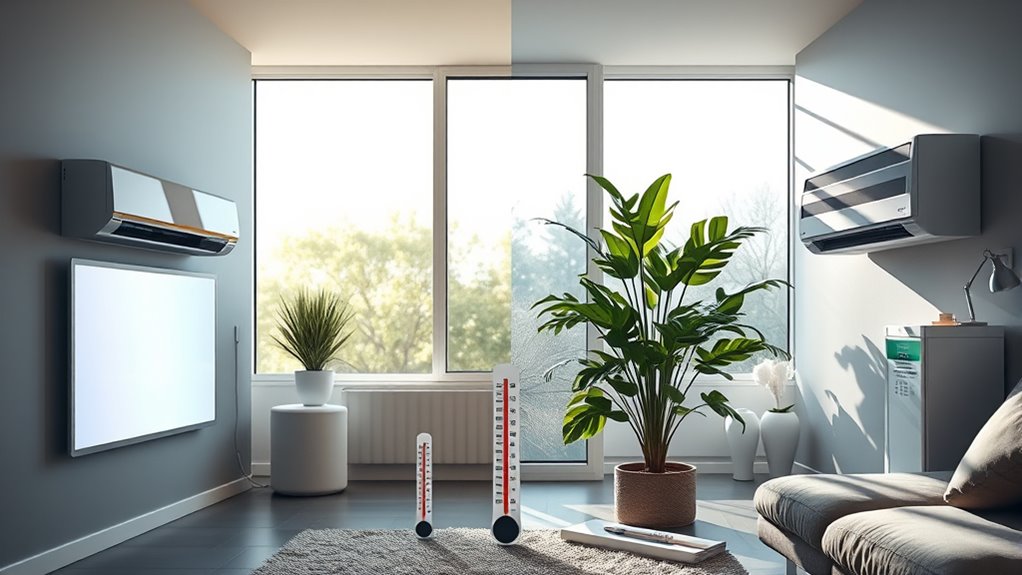

If you’re considering efficiency, inverter ACs are definitely the better option. They adjust their power based on your cooling needs, maintaining a consistent temperature while using less electricity. This leads to lower utility bills over time, especially in climates requiring constant cooling. Plus, inverter units operate more quietly and enhance overall comfort. In contrast, non-inverter ACs use more energy and create noticeable noise. Want to learn about the long-term savings and benefits they offer?
Key Takeaways
- Inverter ACs adjust power based on cooling needs, leading to lower energy consumption compared to fixed-speed non-inverter models.
- Over time, inverter ACs offer significant energy savings, especially in climates with consistent cooling demands.
- Although inverter ACs have a higher initial cost, they often lead to reduced utility bills and long-term financial benefits.
- Inverter models operate more quietly, enhancing comfort, particularly during nighttime use, compared to the noisier non-inverter units.
- Inverter ACs maintain consistent temperature control, reducing fluctuations and promoting better overall comfort and efficiency in the home.
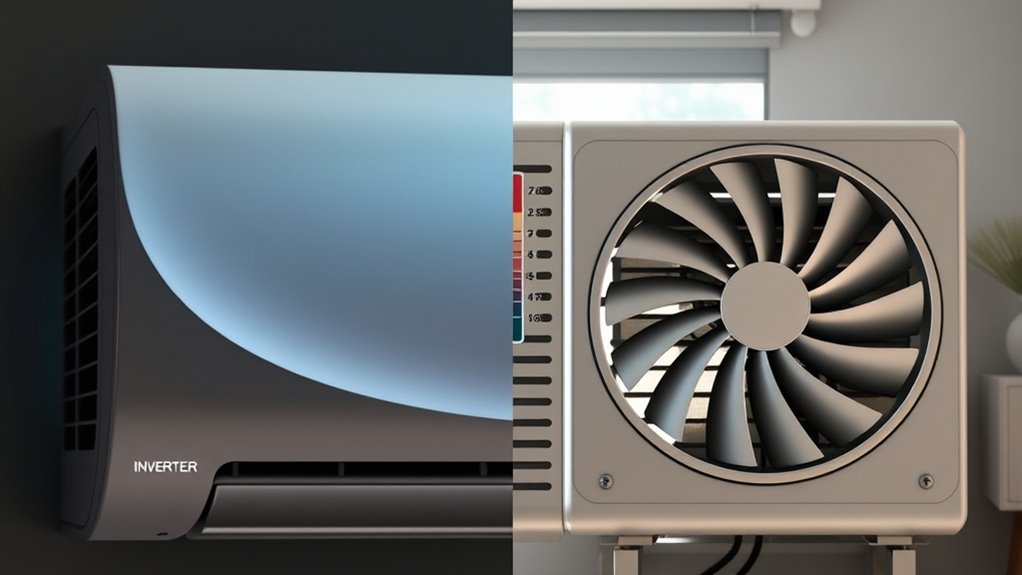
When you’re deciding between an inverter and a non-inverter AC, understanding their key differences can help you make an informed choice. The primary distinction lies in how they operate. Inverter ACs use a variable speed compressor that adjusts its power based on the cooling needs of your space. This means they can maintain a consistent temperature without frequently turning on and off. Non-inverter ACs, on the other hand, operate at a fixed speed. They turn on full blast when cooling is needed and shut off completely once the desired temperature is reached. This fundamental difference can profoundly impact your energy savings and overall comfort.
One of the most appealing advantages of inverter ACs is energy savings. Because they adjust their power output, they consume less electricity compared to non-inverter models. If you’re looking to reduce your utility bills, an inverter AC could be the better option. It’s particularly beneficial if you live in a climate where air conditioning is used consistently. Over time, the initial investment in an inverter AC often pays off through lower energy costs. You’ll likely notice a difference in your energy bills, making it a smart choice for budget-conscious homeowners. Additionally, exploring smart energy management can further enhance your overall efficiency and savings in your home.
Noise levels are another vital factor to consider. Inverter ACs tend to operate more quietly than non-inverter units. Since they don’t constantly switch on and off, the compressor runs at a lower speed, producing less noise. If you enjoy peace and quiet in your home, especially during the night, an inverter AC could be your best bet. Non-inverter ACs can be disruptive, as their compressor kicks in at full power, creating noticeable noise.
Frequently Asked Questions
How Do Inverter and Non-Inverter ACS Affect Electricity Bills?
Inverter and non-inverter ACs can substantially affect your electricity bills. Inverter models adjust their compressor speed to maintain temperature, leading to notable energy savings over time. On the other hand, non-inverter units turn on and off, causing higher energy consumption and costs. When you do a cost comparison, you’ll likely find that the initial investment in an inverter AC pays off with lower monthly bills, making it a smarter long-term choice.
Which Type of AC Is Better for Humid Climates?
For humid climates, an inverter AC is better. Its dehumidification capabilities enhance moisture control efficiency, allowing you to maintain a comfortable environment without excessive cooling. The inverter technology adjusts the compressor speed, effectively removing humidity while using less energy. You’ll notice improved comfort levels as it balances temperature and humidity more effectively than a non-inverter model. Investing in an inverter AC can markedly enhance your indoor air quality in humid conditions.
Can Inverter ACS Work Without a Stabilizer?
They say, “Better safe than sorry,” and that rings true for inverter ACs. While some models can handle voltage fluctuations without a stabilizer, it’s generally safer to utilize one. Without a stabilizer, you risk damaging your unit due to unexpected surges. So, check your inverter AC’s stabilizer compatibility before deciding. Investing in a stabilizer ensures your air conditioner operates smoothly and prolongs its lifespan. It’s a small price for peace of mind!
What Is the Average Lifespan of Each Type of AC?
The average lifespan of an inverter AC is around 15 to 20 years, while non-inverter models usually last about 10 to 15 years. You’ll find that inverter ACs tend to have better energy efficiency thanks to their variable speed compressors, which also contribute to higher component durability. If you maintain your AC properly, you can extend its life, ensuring you get the most out of your investment in comfort.
Do Inverter ACS Require More Maintenance Than Non-Inverter Models?
Inverter ACs don’t require considerably more maintenance than non-inverter models. Both types need regular cleaning and servicing to ensure efficient energy consumption. However, because inverter units have more complex technology, repair costs can be higher if something goes wrong. Staying on top of routine checks can help minimize issues and expenses. Ultimately, your choice should depend on your comfort and budget, rather than maintenance concerns alone.
Conclusion
In summary, choosing between an inverter and non-inverter AC comes down to your efficiency needs and budget. Inverter ACs can be up to 40% more energy-efficient, saving you money on electricity bills in the long run. Plus, did you know that they also operate more quietly? So, if you value a peaceful home environment along with energy savings, an inverter AC might just be the perfect fit for you. Enjoy your cool, comfortable space!