When choosing between a pitcher and under-sink water filter, consider your space, budget, and water quality needs. Pitchers are easy to use, affordable, and ideal for small households, but they need frequent filter replacements. Under-sink systems require more installation but offer higher capacity and better filtration for tackling specific contaminants. If you want reliable, long-term filtering tailored to your household, understanding these differences will help you make the right choice. Keep exploring to find your best option.
Key Takeaways
- Consider space, ease of installation, and daily handling when choosing between pitcher filters and under-sink systems.
- Match the filter’s contaminant removal capabilities with your water quality needs for safe, clean water.
- Evaluate cost, filter lifespan, and maintenance requirements to ensure long-term affordability and reliability.
- Prioritize high-quality, durable materials to extend filter life and maintain optimal water filtration.
- Assess household size and water usage to select a system that efficiently meets your daily water consumption.
Ease of Use and Convenience

When choosing a water filter, ease of use and convenience should be top priorities. You want a system that’s straightforward to set up and simple to operate daily. Look for filters with simplicity of installation, so you can get started without hassle or needing professional help. User friendliness also means intuitive design—clear instructions, minimal maintenance, and easy-to-replace parts. A filter that’s convenient saves you time and reduces frustration, especially if you plan to use it regularly. Whether you choose a pitcher or an under-sink system, prioritizing ease of installation and user-friendly features ensures your water filtration experience is smooth and hassle-free. This way, you enjoy clean water without unnecessary complications or delays. Being aware of potential manipulation tactics involved in marketing claims can help you make informed choices and avoid unnecessary stress. Additionally, considering ease of maintenance can prolong the lifespan of your system and keep it functioning effectively over time. Regularly checking your filter’s performance indicators can help maintain optimal water quality and prevent unexpected issues. To further enhance your experience, look for systems with smart features that can provide real-time status updates and maintenance alerts.
Filtration Effectiveness and Water Quality
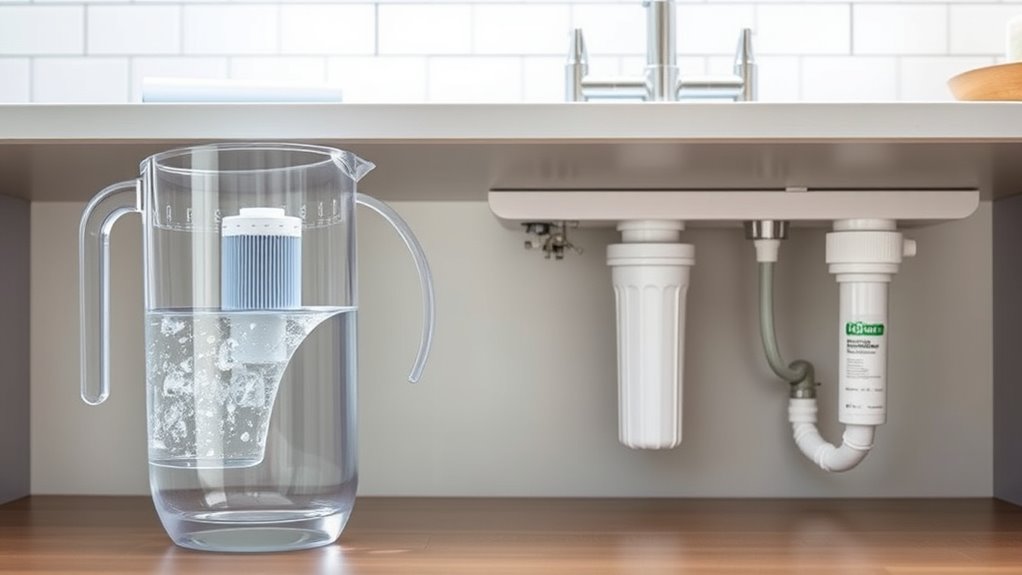
After ensuring your water filter is easy to use, it’s important to contemplate how well it actually improves water quality. A good filter should effectively remove contaminants like chlorine, lead, and bacteria while maintaining a balanced pH level. You want water that’s not only safe but also tastes fresh and clean. Pay attention to mineral retention; some filters strip away essential minerals like calcium and magnesium, which are important for health. The right system strikes a balance—reducing harmful substances without overly stripping beneficial minerals or disrupting the pH balance of your water. Proper water quality is essential for overall health and hydration. This guarantees you’re drinking water that’s both pure and nourishing. Additionally, selecting a filter with proven contaminant removal capabilities ensures optimal protection and water clarity. Understanding the filter’s performance through independent testing can help you choose the most effective system. An effective filter should also consider natural filtration methods that work in harmony with your local environment. Moreover, evaluating the filter lifespan can help you determine the long-term value and maintenance needs of your system. Ultimately, a filter’s effectiveness depends on its ability to deliver high-quality water that meets your health and taste preferences.
Cost and Maintenance Over Time
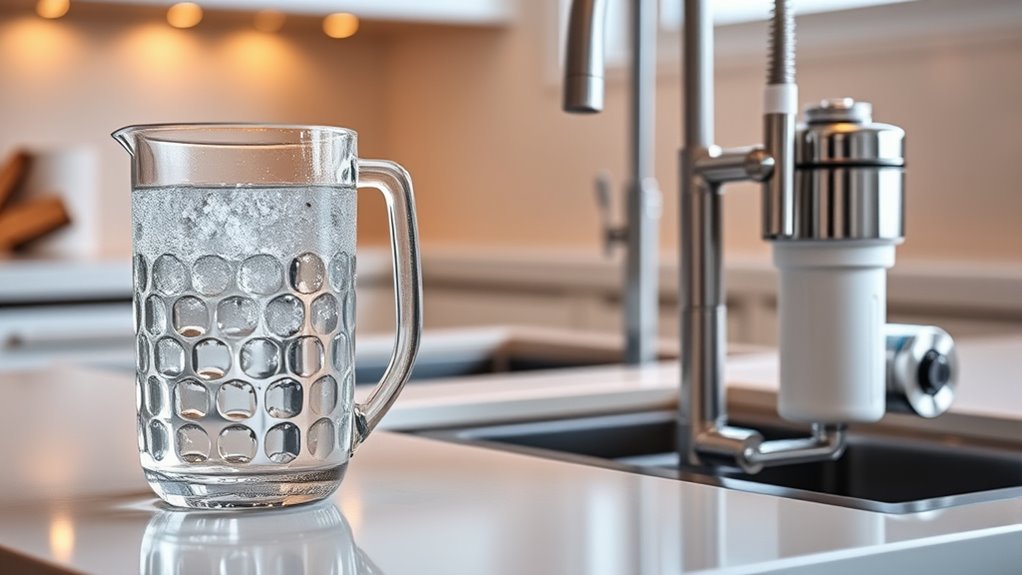
Considering the ongoing costs and upkeep is essential when choosing a water filter, as these factors can substantially impact your long-term satisfaction and budget. Budget considerations include filter replacement costs, maintenance supplies, and potential repairs. Pitcher filters usually have lower initial costs but require frequent replacements, increasing long-term expenses. Under-sink systems tend to have higher upfront prices but often feature longer-lasting filters, reducing ongoing costs. Regular maintenance, such as cleaning and replacing filters, is necessary to guarantee ideal performance and water quality. Additionally, understanding filter maintenance dos and don’ts can help you extend the lifespan of your system and avoid unnecessary expenses. Developing a routine for filter upkeep can further enhance efficiency and water quality. Properly managing filter lifespan by tracking usage and replacements is crucial for sustaining optimal performance. This awareness can lead to more efficient operation and better water quality over time. Furthermore, understanding family photoshoot fails can help you anticipate and prevent some common issues that might arise during installation or use. Being aware of filter efficiency can help you choose a system that maximizes performance while minimizing costs. By evaluating these long-term costs, you can select a system that fits your financial plan and minimizes unexpected expenses. Ultimately, understanding the ongoing maintenance requirements helps you make a more informed decision aligned with your budget considerations.
Installation and Space Requirements
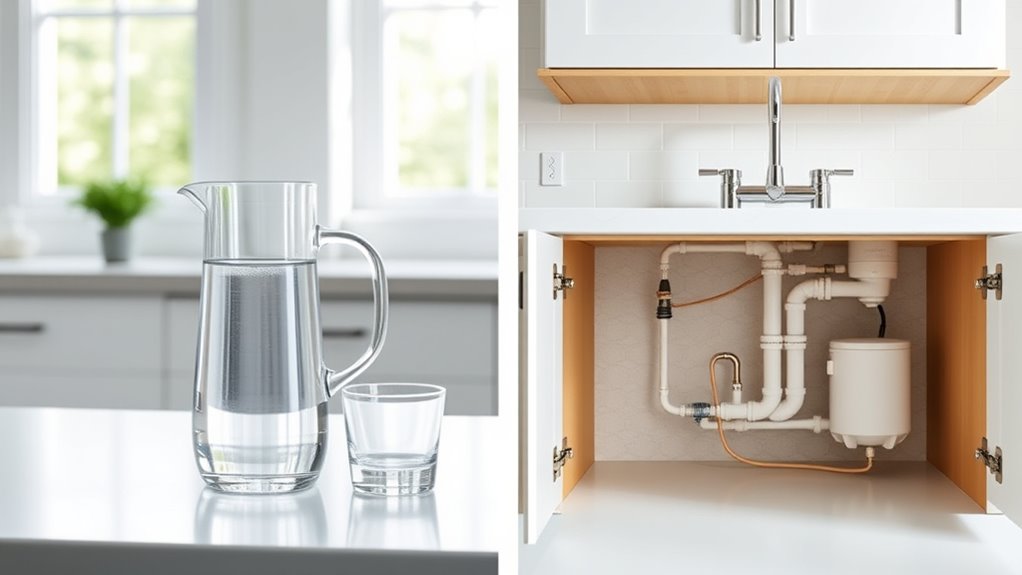
Have you checked whether your space can accommodate the water filter you’re considering? Installation complexity varies between pitcher and under-sink systems. Pitchers require minimal setup and can fit in any convenient spot, making them highly space-efficient. Under-sink systems need more space and involve plumbing connections, which can be more complex. Consider your available area and comfort with installation tasks. Additionally, evaluate ventilation considerations to ensure proper setup and maintenance. Proper installation procedures are essential for optimal performance and safety. It’s also helpful to assess your available space to determine which system best fits your needs and ensures easy access for maintenance. Be mindful of space limitations to prevent overcrowding and facilitate routine upkeep. Taking into account water flow requirements can also influence your choice and setup process.
Durability and Lifespan of Filters

Understanding how often you’ll need to replace your filter depends on its material quality and wear over time. Higher-quality materials generally last longer and sustain filtration efficiency better. Keep an eye on the manufacturer’s recommended replacement schedule to ensure your water stays clean and safe. Regularly monitoring filter performance can help you identify when it’s time for a replacement before issues arise. Additionally, the durability of filters influences how frequently replacements are necessary, especially in areas with higher contaminant levels. Recognizing filter lifespan based on material resilience can also guide maintenance routines.
Filter Replacement Frequency
Filter replacement frequency depends on how long your filter lasts before it needs to be replaced. Typically, your filter’s lifespan determines the replacement schedule, which varies based on usage and water quality. You should keep an eye on indicators like reduced flow rate or changes in taste. Regularly checking your filter’s lifespan helps avoid unexpected clogging or poor filtration. A pitcher filter might need replacement every 2-3 months, depending on use. Under-sink systems often have longer intervals but still require consistent maintenance. Additionally, water quality can significantly impact how often you need to replace your filter. Sticking to the recommended replacement schedule ensures your water remains clean and safe. Proper maintenance keeps your filter functioning efficiently, saving you money and hassle in the long run. Being aware of filter durability can help you plan replacements more effectively, ensuring optimal filtration performance. The filter material used also plays a role in how quickly the filter degrades over time.
Material Quality and Wear
The durability and lifespan of a water filter mainly depend on the quality of its materials. High material durability guarantees the filter can withstand constant use without degrading quickly. Wear resistance is vital because it determines how well the filter resists damage from repeated flow and cleaning. Filters made with durable plastics or high-quality ceramics tend to last longer and maintain their effectiveness over time. Cheaper materials may break down faster, reducing filter performance and requiring more frequent replacements. When choosing between pitcher and under-sink systems, consider the material quality used in each. A well-made filter with strong wear resistance will save you money and effort by lasting longer, guaranteeing you get reliable, clean water throughout its lifespan.
Suitability for Different Household Needs
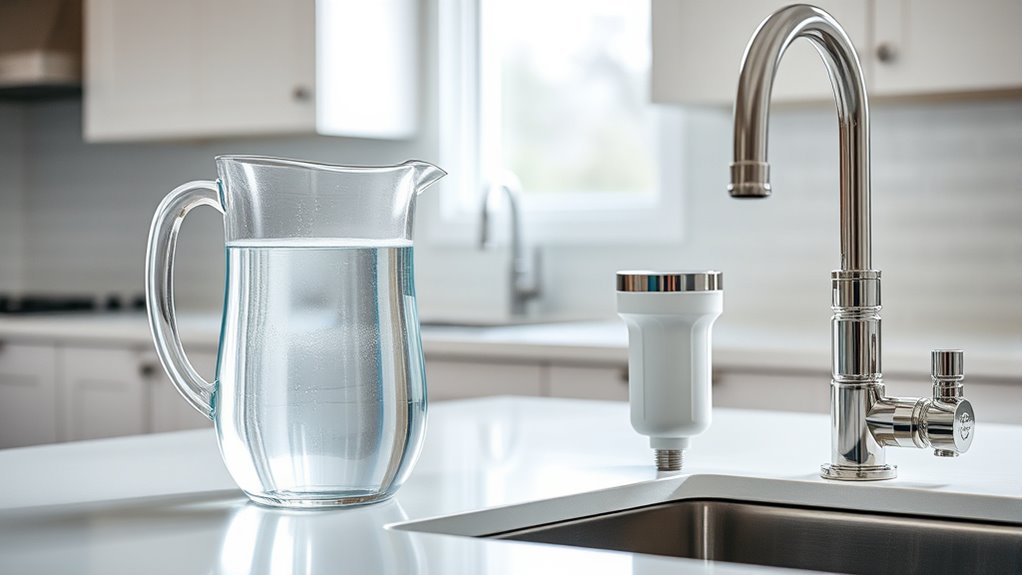
When selecting a water filter, you need to consider your household size to ensure it can handle your daily water consumption. Think about your water quality needs—if your water has specific contaminants, choose a filter designed to target them. Matching your filter to your household’s unique requirements guarantees safe, clean water for everyone.
Household Size Compatibility
Choosing a water filter that matches your household size guarantees you get enough clean water without unnecessary waste or expense. For a small family or single person, a pitcher filter often suffices, providing enough daily usage without excess. Larger households with multiple family members need a system that can handle higher daily usage and larger volumes.
- Small households: limited daily usage, compact pitcher filters are ideal
- Medium households: moderate daily usage, consider under-sink systems for convenience
- Large families: high daily usage, under-sink or whole-house filters ensure enough clean water for everyone
Matching your family size helps you avoid running out of filtered water or overpaying for unnecessary capacity. It ensures your household stays well-supplied with minimal waste.
Water Quality Requirements
Different households have varying water quality needs depending on their sources and usage. If your water has a low pH balance, you’ll want a filter that can neutralize acidity to prevent pipe corrosion and improve taste. Conversely, if mineral retention is important—for example, to preserve beneficial minerals like calcium and magnesium—you’ll need a system that maintains these elements while removing contaminants. Some filters are designed to target specific impurities, so assess whether you need to address chlorine, heavy metals, or bacteria. Consider your household’s health concerns and water source quality. Choosing a filter that balances pH and retains essential minerals guarantees your water is safe, healthy, and tailored to your household’s needs.
Frequently Asked Questions
Which Water Filter Type Is Better for Removing Specific Contaminants?
You’ll find that under-sink systems generally offer better contaminant removal due to their advanced filtration efficiency. They can target a wider range of contaminants like heavy metals, chemicals, and bacteria more effectively than pitchers. Pitcher filters are convenient and good for reducing common impurities like chlorine and sediments, but for specific or heavy contaminant removal, an under-sink system is usually the better choice.
Are There Any Health Risks Associated With Using Pitcher or Under-Sink Filters?
You’re unlikely to face health risks with pitcher or under-sink filters if you maintain them properly. Regular cleaning and timely filter replacements help minimize contamination risks and guarantee health safety. Neglecting these steps could lead to bacteria buildup or reduced filtration efficiency. So, stay vigilant, follow manufacturer guidelines, and you’ll enjoy safe, clean water without worrying about hidden risks. Proper upkeep is your best safeguard.
How Do Filter Replacement Intervals Vary Between Systems?
Your filter lifespan and replacement schedule depend on the system you choose. Pitcher filters typically need replacement every 40-60 gallons or about every 2-3 months. Under-sink systems often last longer, with filters needing replacement every 6-12 months or after filtering 1000 gallons. Regularly check your filter’s condition and follow the manufacturer’s recommended replacement schedule to guarantee ideal water quality and avoid any health risks.
Can These Filters Improve Taste and Odor Effectively?
Absolutely, these filters can substantially improve taste and odor if you stick to proper filter maintenance. Think of it as giving your water a fresh start; when you replace filters within their recommended lifespan, you guarantee contaminants and unpleasant smells are effectively removed. Neglecting filter lifespan diminishes performance, leaving your water less appealing. So, stay attentive to replacement schedules—your taste buds will thank you for it!
What Should I Consider When Choosing a Filter for Large Households?
When selecting a filter for large households, you should consider your household water needs and filter installation considerations. Opt for a system with a higher capacity to handle multiple users daily, ensuring consistent water quality. Also, evaluate installation ease—under-sink systems might require professional setup, while pitchers are portable. Prioritize filters that efficiently reduce contaminants and improve taste, providing reliable, clean water for everyone in your home.
Conclusion
Choosing between a pitcher and under-sink water filter might just be the most important decision you’ll make for your home’s health—it’s like selecting the crown jewel of your kitchen! Whether you want quick convenience or top-tier purification, your choice could turn your tap water into liquid gold. Don’t settle for less—pick the right filter and transform every sip into a revitalizing, life-changing experience. Your taste buds—and your health—deserve nothing less!