To cut down on dust beyond frequent cleaning, start by using HEPA air purifiers and ensuring proper ventilation with open windows and exhaust fans. Adopt a no-shoes policy inside and organize clutter into airtight storage to prevent dust buildup. Control humidity with dehumidifiers and moisture absorbers, and choose low-pile, washable fabrics for your furniture. Maintaining your HVAC system helps keep dust levels low—learn more tips to breathe easier soon.

Get kitchen gear delivered free — and shop member deals
- Fast, free delivery on millions of items
- Access to Prime Big Deal Days deals on October 6–7
- Prime Video, Amazon Music and more included
Key Takeaways
- Use high-quality HEPA air purifiers and maintain filters regularly to capture airborne dust particles effectively.
- Implement a no-shoes policy and organize belongings to prevent outdoor dirt from entering and settling indoors.
- Maintain indoor humidity levels between 40-50% with humidifiers and proper ventilation to inhibit dust mite proliferation.
- Choose low-pile, washable textiles and fabrics for furniture and curtains to minimize dust trapping and simplify cleaning.
- Ensure proper ventilation by opening windows, using exhaust fans, and scheduling duct cleanings to promote continuous airflow and dust removal.
Use Air Purifiers With HEPA Filters
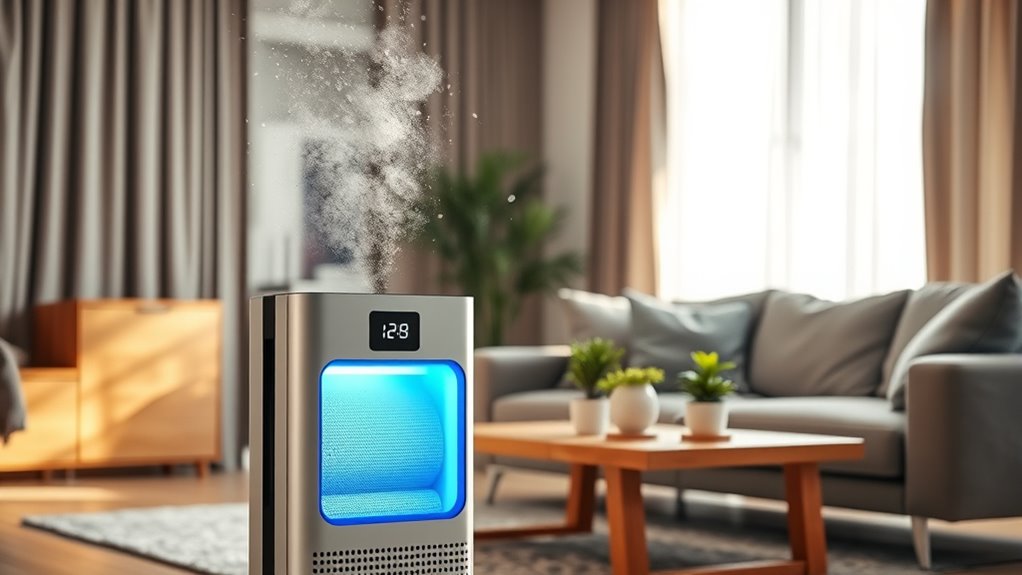
Using air purifiers with HEPA filters is one of the most effective ways to reduce dust in your home. HEPA filters capture tiny particles, including dust mites, pet dander, and allergens, improving air quality through air purification. By running these devices regularly, you prevent dust from circulating and settling on surfaces. Place air purifiers in high-traffic areas or rooms where you spend a lot of time to maximize their benefits. Make sure the filters are replaced as recommended to maintain ideal performance. Proper filter maintenance ensures ongoing effectiveness and prolongs the lifespan of your air purifier. This simple step complements your cleaning routine and helps you breathe easier, especially if you have allergies or respiratory issues. Incorporating the right air purification technology can further enhance dust reduction efforts in your home. To maximize efficiency, consider the air exchange rate, which determines how quickly your home’s air is refreshed and cleaned. Additionally, choosing an air purifier with a high CADR rating can help ensure optimal dust removal performance. Regularly opening windows to promote natural ventilation can also help reduce indoor dust levels and improve overall air quality.
Adopt a No-Shoes Policy Inside

Implementing a no-shoes policy inside your home can considerably reduce the amount of dust tracked indoors. Outdoor footwear often brings in dirt tracking, which settles as dust and worsens indoor air quality. To make it effective, consider these steps:
Reducing indoor dust by adopting a no-shoes policy improves air quality and cleanliness.
- Place a sturdy shoe rack or mat near the entrance so everyone can remove outdoor footwear easily.
- Encourage family and guests to leave their outdoor footwear at the door, preventing dirt from spreading.
- Provide comfortable indoor slippers or socks as alternatives, ensuring barefoot dust is minimized.
- Regularly clean and replace air filtration systems to further improve indoor air quality by removing residual dust particles.
Incorporate Moisture Control Strategies
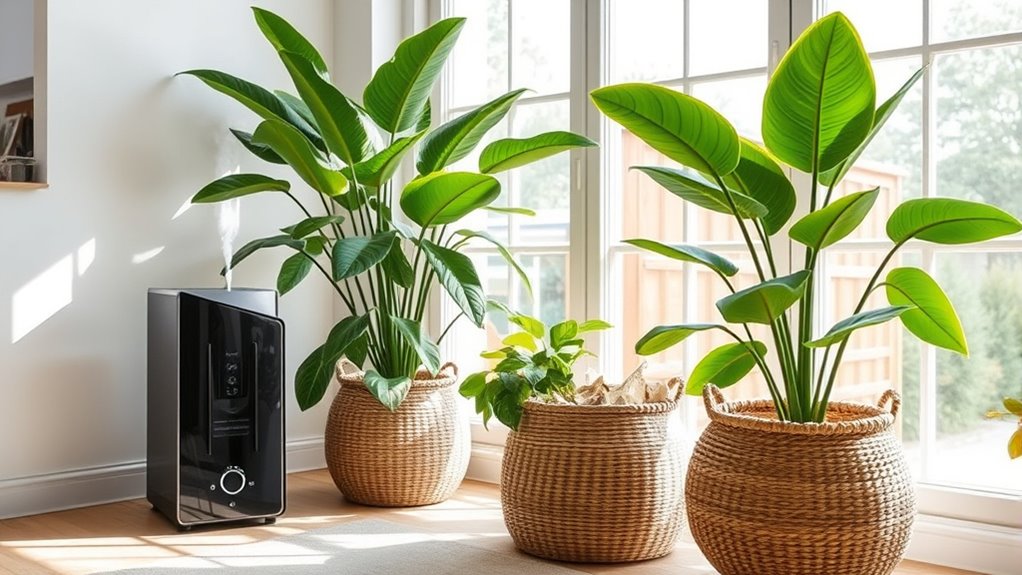
Keeping humidity levels balanced helps prevent dust buildup and mold growth. Use humidifiers regularly, fix leaks quickly, and make certain proper ventilation in your home. These moisture control strategies make it easier to maintain a cleaner, healthier environment. Additionally, ensuring your home has adequate power sources can support reliable operation of dehumidifiers and other moisture control devices. Proper electrical installation and safety are essential for preventing potential hazards when using these appliances. Incorporating HVAC system maintenance can further optimize humidity levels and indoor air quality, reducing dust accumulation more effectively. Regularly inspecting and maintaining ventilation systems helps ensure consistent airflow and moisture regulation throughout your home, supporting your inner wisdom for creating a healthier living space.
Use Humidifiers Regularly
Dry air can cause dust particles to become airborne more easily and settle quickly on surfaces, making it harder to keep your home dust-free. Using humidifiers regularly helps improve air quality and maintains ideal indoor humidity levels. When you add moisture to the air, dust particles cling together and fall out of circulation. To maximize their effectiveness, consider these tips:
- Set your humidifier to maintain indoor humidity between 40-50%, balancing comfort and dust control.
- Clean your humidifier often to prevent mold and bacteria from spreading.
- Use distilled or filtered water to avoid mineral deposits that can worsen dust issues.
- Incorporating humidifiers in your home can also help reduce the proliferation of dust mites and other allergens.
- Maintaining proper humidity levels can also improve respiratory health by reducing airborne irritants and allergens.
- Proper humidity levels can also support air quality management by minimizing airborne pollutants and promoting a healthier living environment.
Fix Leaks Promptly
Prompt leaks promptly to prevent excess moisture from seeping into your home, which can create ideal conditions for dust and mold growth. Regular leak detection is essential to catch small drips before they become major issues. Keep up with plumbing maintenance by inspecting pipes, fixtures, and appliances for leaks, especially in hidden areas. Fixing leaks quickly not only reduces moisture but also prevents water damage and mold development that can trap dust particles. Addressing leaks promptly limits the damp environments where dust mites thrive. By staying vigilant and maintaining your plumbing systems, you cut down on excess moisture that contributes to dust accumulation, making your home healthier and cleaner overall. Proper leak management is a simple yet effective step in dust reduction. Additionally, understanding the importance of refrigerant leaks in heat pump systems can help prevent additional moisture issues that promote dust and mold growth. Ensuring that your heat pump’s refrigerant levels are properly maintained can reduce humidity levels and prevent moisture buildup, further supporting a dust-free environment. Maintaining a dry environment through prompt leak repairs also supports the effectiveness of dehumidifiers and other moisture control devices, enhancing your home’s overall air quality. Regularly inspecting your home’s ventilation system is another crucial step to help control indoor humidity and prevent dust buildup.
Ventilate Properly
Proper ventilation is essential for controlling indoor moisture levels and reducing dust buildup. Good air exchange prevents excess humidity, which can lead to mold and dust accumulation. To optimize ventilation, consider these strategies:
- Install and regularly maintain ventilation systems like exhaust fans in bathrooms and kitchens.
- Use natural airflow by opening windows when weather permits, especially during activities that generate moisture.
- Ensure vents are unobstructed and working properly to promote continuous air exchange.
- Incorporate moisture control strategies such as using dehumidifiers or moisture absorbers to further reduce indoor humidity.
Choose Dust-Resistant and Easy-to-Clean Fabrics

Choosing washable materials and low-pile textiles helps keep dust at bay and makes cleaning easier. These fabrics resist trapping dirt and can be quickly refreshed with a simple wash. By selecting the right fabrics, you’ll reduce dust buildup and maintain a cleaner, healthier home. Incorporating easy-to-maintain fabrics into your decor can further simplify your cleaning routine and improve indoor air quality.
Opt for Washable Materials
Opting for washable materials is one of the easiest ways to keep dust under control. Choosing dust absorbing curtains allows you to wash away dust particles regularly, preventing buildup. Washable throw rugs are another smart choice; they trap dust and can be easily cleaned, reducing allergens. To maximize dust control, consider these options:
- Select curtains that are machine washable for quick cleaning.
- Use washable throw rugs in high-traffic areas to easily remove dust.
- Swap out delicate fabrics for materials that can withstand frequent washing without damage. Durable fabrics are also beneficial, as they resist wear and facilitate regular cleaning, further aiding in dust reduction. Additionally, opting for materials with dust-resistant properties can provide ongoing protection against dust accumulation.
Select Low-Pile Textiles
Selecting low-pile textiles makes it easier to keep dust at bay because these fabrics trap less debris and are simpler to clean. Opt for low pile textiles for your soft furnishings, such as rugs, carpets, and upholstery. These fabrics resist dust accumulation better than plush or shaggy options, reducing the amount of debris that settles in your home. Regularly vacuum or wipe down low-pile textiles to maintain a dust-free environment. Choosing furniture and curtains made from easy-to-clean fabrics also helps prevent dust buildup. Low pile textiles allow you to quickly remove dust with minimal effort, making your cleaning routine more effective. Additionally, selecting dust-resistant fabrics can further minimize dust accumulation and improve indoor air quality. Incorporating these simple changes can markedly improve indoor air quality and create a healthier living space, especially when combined with air filtration methods used by espionage agents to monitor environments covertly. Using low-maintenance fabrics can streamline your cleaning process and keep your home cleaner for longer.
Improve Ventilation and Airflow
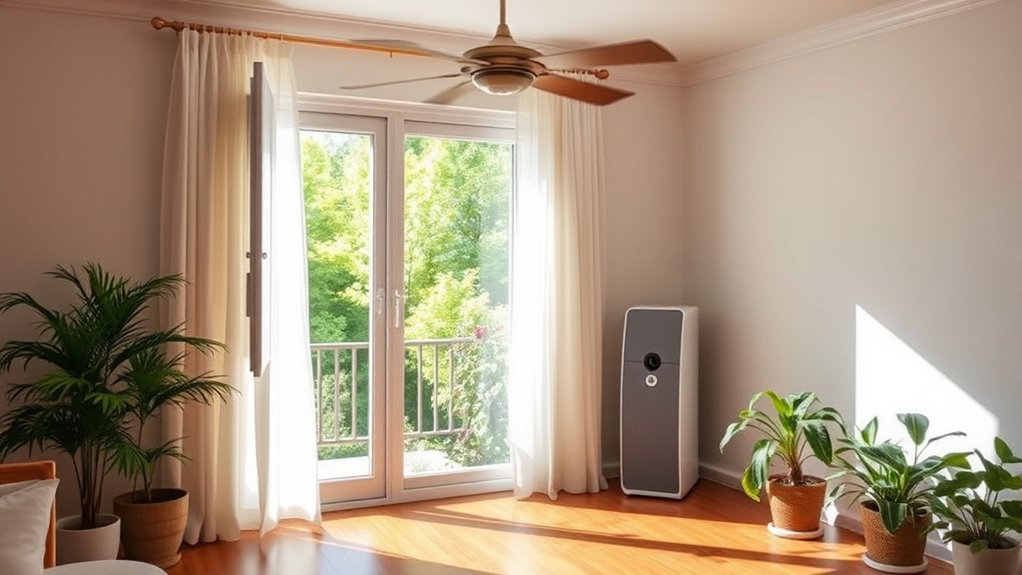
Improving ventilation and airflow is one of the most effective ways to reduce dust buildup in your home. Proper airflow patterns help carry dust particles away from surfaces and prevent stagnation. To optimize this, consider these steps:
- Ensure your ventilation systems are properly installed and functioning well, providing continuous fresh air exchange.
- Use exhaust fans in kitchens and bathrooms to vent dust and humidity outside.
- Open windows regularly to promote cross-ventilation, encouraging airflow patterns that push dust out and bring in cleaner air.
Regularly Maintain HVAC Systems
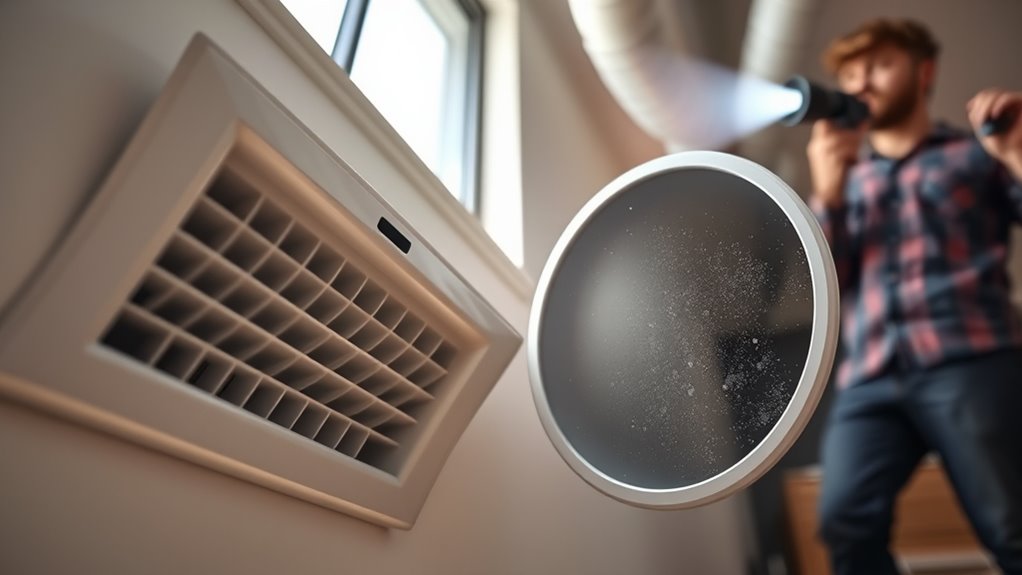
Regular maintenance of your HVAC system plays a vital role in keeping dust levels down. Regularly changing or upgrading your air filters ensures dust and allergens are captured efficiently. Consider air filter upgrades for better filtration, especially if you have allergies. Duct cleaning removes accumulated dust and debris that can circulate through your home. Schedule professional inspections at least once a year to identify issues early. Keep an eye on your vents and filters, replacing them promptly. Use the following table for quick ideas:
| Maintenance Task | Frequency | Benefits |
|---|---|---|
| Air filter upgrades | Every 3-6 months | Improved air quality |
| Duct cleaning | Annually or as needed | Less dust circulation |
| System inspections | Annually | Increased efficiency |
Minimize Clutter and Organize Storage Spaces
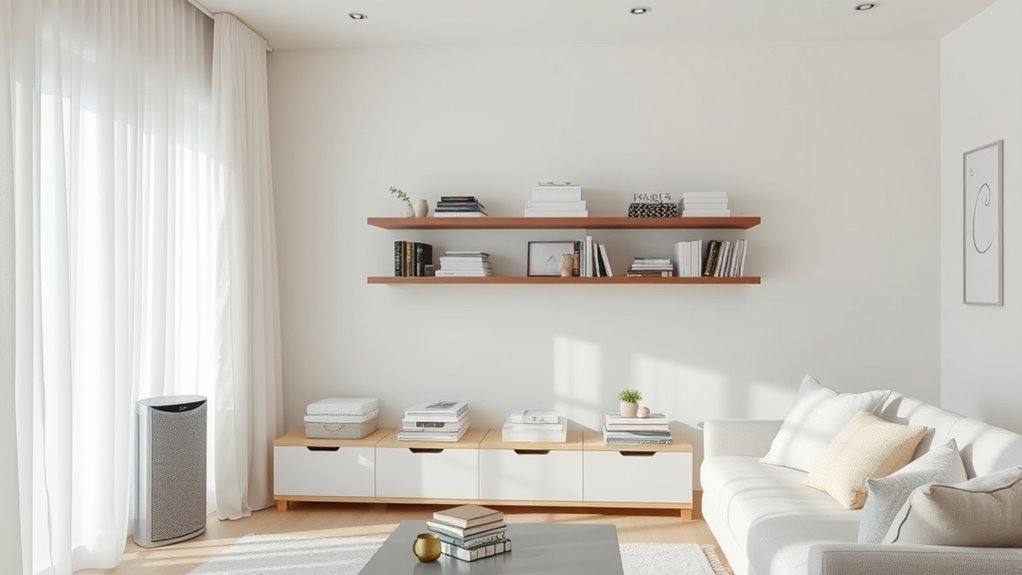
Have clutter and disorganized storage spaces ever contributed to an increase in dust in your home? When your belongings are scattered or poorly stored, dust has more places to settle and hide. To combat this, focus on effective storage solutions and decluttering techniques. Start by:
Disorganized storage invites dust; declutter and organize to keep your home cleaner and healthier.
- Sorting items and donating or discarding what you no longer need.
- Using clear, airtight containers to prevent dust accumulation.
- Creating designated storage spaces to keep belongings organized and off surfaces.
Frequently Asked Questions
Can Houseplants Help Reduce Indoor Dust Levels Effectively?
Yes, houseplants can help reduce indoor dust levels effectively. Their plant efficacy lies in dust absorption, as the leaves trap airborne particles. By choosing plants known for their air-purifying qualities, you can naturally improve your home’s air quality. Regularly watering and cleaning the leaves enhances their dust absorption, making them a beneficial addition to your efforts in creating a cleaner, healthier living environment.
Are Natural or Chemical Air Fresheners Better for Dust Control?
Natural air fresheners are better for dust control because their ingredients, like essential oils, can help neutralize dust particles without adding chemicals that worsen indoor air quality. Chemical air fresheners often contain synthetic fragrances and stabilizers that can contribute to dust buildup. By choosing natural options, you support dust particle neutralization and reduce airborne allergens, creating a cleaner, healthier environment in your home.
How Often Should I Replace Air Purifier Filters for Optimal Performance?
You should replace your air purifier filters according to the filter lifespan guidelines, typically every 3 to 6 months. Regular air purifier maintenance ensures peak performance and better dust control. Check your device’s manual for specific recommendations, as filter types and usage frequency can affect replacement intervals. Don’t wait too long—changing filters on schedule keeps your air clean and maintains your purifier’s efficiency.
Do Pets Significantly Increase Dust in the Home?
Pets definitely bump up the dust level in your home, like turning up the volume on a dust storm! Their pet dander and fur shedding float around, settling on surfaces and triggering allergies. Regular grooming, vacuuming with a HEPA filter, and keeping pets out of bedrooms can help. While you can’t eliminate pet dust entirely, these steps make your space much healthier and less dusty for everyone.
What Are the Best Materials for Allergy-Friendly Furniture?
For allergy-friendly furniture, choose hypoallergenic furniture made with allergy-friendly fabrics like tightly woven cotton, leather, or microfiber. These materials resist dust mites and allergens better than plush or fabric upholstery. You should also look for furniture with minimal crevices and removable covers for easy cleaning. By selecting hypoallergenic furniture, you create a healthier environment, reducing allergy triggers and making it easier to breathe comfortably at home.
Conclusion
By following these steps, you’ll turn your home into a fortress against dust, making it feel more invigorating and healthier. Think of it as giving your living space a gust of fresh air—literally! Small changes can create a big ripple effect, transforming your environment into a cleaner, more comfortable haven. So, take charge and let your home shine brighter than ever, free from dust’s sneaky grip. Your lungs will thank you for it!
Fall Picks
fall essentials
As an affiliate, we earn on qualifying purchases.