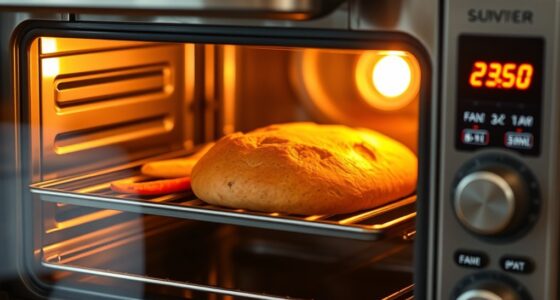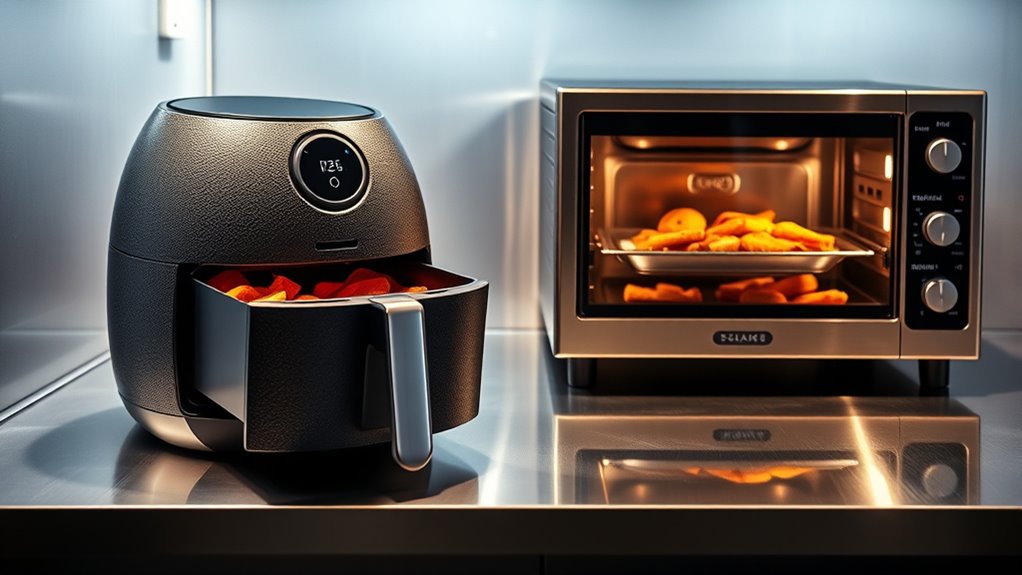

If you want faster, crispy results with less oil, an air fryer is your best bet, as it cooks quicker and delivers even, browning textures. Convection ovens are better for larger batches and more tender dishes but take longer to preheat and cook. For quick snacks and healthier choices, an air fryer wins, while for bigger meals, a convection oven might suit better. Want to explore which appliance suits your needs? Keep going to find out more.
Key Takeaways
- Air fryers excel at quick, even cooking with crispy textures and less oil, ideal for small to medium batches.
- Convection ovens offer larger capacity and better heat distribution for consistent results in bigger quantities.
- Air fryers preheat faster and cook more quickly, saving time and energy compared to convection ovens.
- Both appliances support healthy cooking, but air fryers produce crispiness with minimal oil, enhancing health benefits.
- Convection ovens are better suited for tender, moist dishes in larger volumes, while air fryers shine with quick, crispy foods.
Design and Capacity Differences
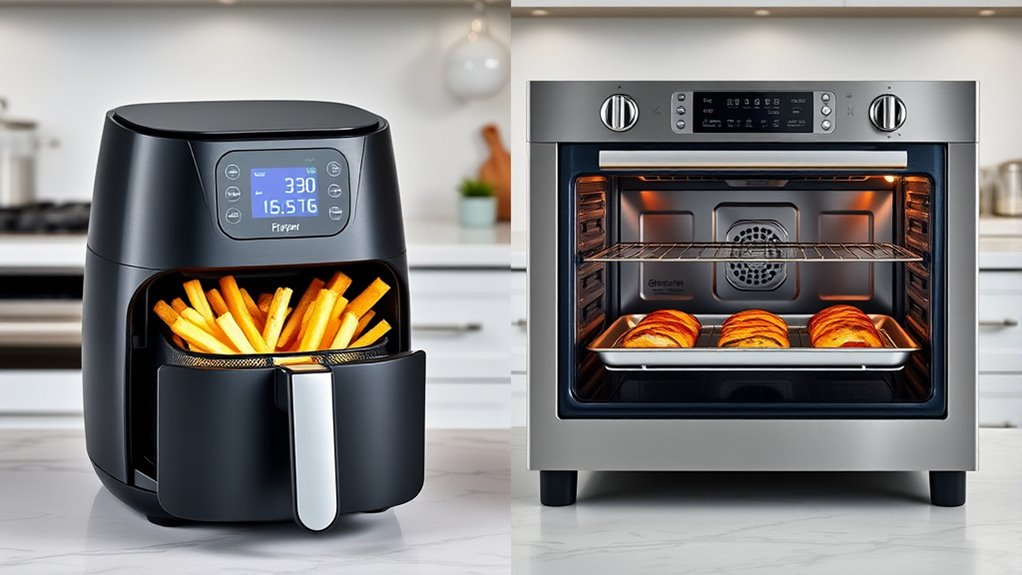
When comparing an air fryer and a convection oven, their design and capacity differences play a significant role in how you use them. An air fryer is compact, fitting easily on your countertop with sleek aesthetics that complement modern kitchens. Its small size makes it highly portable, so you can move it around or store it away when not in use. Conversely, a convection oven is larger, often built into the countertop or as a standalone unit, offering greater capacity for bigger batches. While it may not be as portable, its size allows for more versatile cooking. Your choice depends on your space and needs: if you prioritize aesthetics and easy handling, an air fryer suits best. If you need larger capacity, the convection oven provides more room for your culinary endeavors. Additionally, connected kitchen appliances can enhance your cooking experience by allowing you to monitor and control your appliances remotely. Moreover, understanding kitchen appliance sizes can help you make the best decision for your available space and cooking requirements, especially when considering appliance storage options to maximize your kitchen efficiency. Recognizing the energy efficiency of each appliance can also influence your choice, as it impacts both utility costs and environmental sustainability. For example, some models are designed with energy-saving features that further reduce electricity consumption.
Cooking Performance and Speed

When it comes to cooking performance and speed, you’ll notice differences in how quickly each appliance prepares your food. The quality of heat circulation plays a big role in achieving even cooking and crisp textures. Consider which device best meets your needs for efficiency and the desired food results. Additionally, modern kitchen technology features like smart sensors can further optimize cooking times and results. Proper ventilation and airflow within the appliance can also impact cooking efficiency and food quality. To ensure optimal performance, paying attention to appliance design and how it facilitates effective heat distribution can make a significant difference. Moreover, heat distribution consistency is essential for achieving uniformly cooked dishes across different recipes. Recognizing the importance of heat circulation can help in selecting the most suitable appliance for your cooking style.
Cooking Time Efficiency
Both air fryers and convection ovens are designed to cook food faster than traditional appliances, but they differ markedly in speed and efficiency. When it comes to cooking time, consider these factors:
- Preheating time: Air fryers typically heat up quickly, often in 3–5 minutes, while convection ovens may take 10–15 minutes.
- Cooking duration: Air fryers often reduce cooking times by 25-30% due to rapid air circulation, saving you time.
- Overall efficiency: Because of shorter preheating and cooking times, air fryers generally offer faster results for small to medium meals, making them more time-efficient for everyday use.
- Additionally, air circulation in air fryers is more intensive, which contributes to quicker cooking compared to traditional convection ovens. This enhanced air movement improves heat transfer, further reducing cooking times.
Heat Circulation Quality
The way heat circulates inside an appliance directly impacts how evenly and quickly your food cooks. In an air fryer, the compact size and powerful fan create focused airflow patterns that promote rapid, uniform heat distribution. This design allows for fast cooking times and minimizes cold spots. Conversely, convection ovens often have larger chambers with broader airflow, which can lead to slightly less consistent heat circulation but still provide good heat distribution across a larger space. The quality of heat circulation directly affects your cooking performance and speed, with the air fryer generally offering quicker results due to more concentrated airflow. Understanding these differences helps you choose the appliance that best matches your needs for efficient, even cooking.
Food Texture and Crispness
Food texture and crispness are key factors to consider when choosing between an air fryer and a convection oven. Air fryers excel at producing a crispy, evenly textured exterior in a fraction of the time it takes a convection oven. This quick crisping helps lock in food flavor while reducing the need for excess oil, making your meals healthier. When comparing the two, consider these points:
- Faster crispness: Air fryers achieve a crunchier texture quickly, ideal for crispy snacks and fried favorites.
- Oil reduction: Air fryers use little to no oil, enhancing food flavor without grease, unlike convection ovens which may require more oil for similar crispiness.
- Texture consistency: Air fryers deliver uniformly crisp results, while convection ovens might produce uneven browning depending on placement.
- Ease of use and cleaning are additional benefits, as air fryers often have simpler baskets that are easier to clean than larger convection oven surfaces.
Ultimately, if you prioritize speed, oil reduction, and consistent crispness, an air fryer is your best choice.
Food Quality and Texture
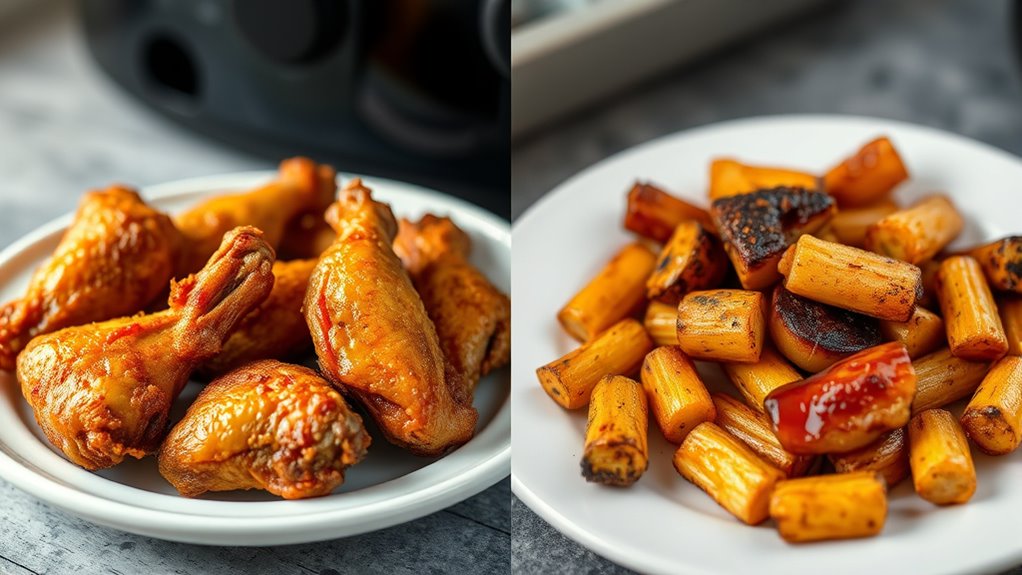
You’ll notice differences in how crispy and golden your food turns out, depending on whether you use an air fryer or convection oven. Both appliances aim for even cooking, but the texture of your dishes can vary markedly. Additionally, moisture retention levels influence how juicy or dry your food feels after cooking. Proper wood preparation and maintenance can also impact the cooking performance and results of these appliances. Using the right cooking techniques can further optimize texture and overall quality. Selecting the appropriate tip size for your airless sprayer can ensure a finer finish, much like choosing the right cooking method enhances food texture. Moreover, understanding how kitchen appliance design affects heat distribution can help in making better choices for achieving the desired food quality.
Crispy Exterior Results
When it comes to achieving a crispy exterior, both air fryers and convection ovens excel, but they deliver slightly different results. You’ll notice that the air fryer often produces a more uniformly crispy coating due to better batter adhesion and coating uniformity. To maximize this, consider these factors:
- Properly pat your food dry to improve batter adhesion.
- Use a light, even coating to prevent uneven crispiness.
- Preheat your appliance to ensure consistent heat distribution.
Air fryers tend to create a more compact, crunchier exterior because of rapid air circulation, while convection ovens might produce a slightly puffier finish. Both appliances can deliver crispy results, but your choice depends on the texture you prefer.
Even Cooking Distribution
While both air fryers and convection ovens use circulating hot air to cook food evenly, the way they distribute heat can influence the overall texture and quality of your dishes. An air fryer’s rapid air circulation provides focused, consistent heat, which promotes even cooking and crispiness, especially for small batches. Convection ovens, with their larger capacity and multiple heating elements, offer greater baking versatility, allowing you to cook larger quantities with uniform results. Both appliances provide excellent countertop convenience, making it easy to prepare meals without sacrificing quality. Heat distribution plays a crucial role in achieving optimal food texture and consistency. The presence of multiple heating elements in convection ovens enhances their ability to maintain even temperatures across larger cooking spaces, contributing to superior results for diverse recipes. Additionally, understanding cooking capacity helps determine which appliance suits your meal sizes and frequency of use. Your choice depends on your cooking needs: if you want quick, crispy results in smaller portions, an air fryer excels; for more diverse baking options and larger meals, a convection oven is ideal. Furthermore, energy efficiency can impact your overall kitchen costs and should be considered when selecting an appliance for regular use.
Moisture Retention Levels
Moisture retention plays an essential role in determining the texture and overall quality of your food when using either an air fryer or a convection oven. Proper moisture preservation ensures your dishes stay tender and flavorful. Here’s how each appliance performs:
- Air fryers excel at juiciness retention by circulating hot air quickly, sealing in moisture and creating crisp exteriors. Additionally, their rapid air circulation helps lock in natural juices, enhancing food quality.
- Convection ovens offer better moisture preservation during slow, even cooking, keeping dishes moist inside.
- Overall, if you want crispy exterior with retained juiciness, an air fryer is ideal. For tender, moist results in larger portions, a convection oven works better. Your choice depends on the texture you prioritize.
- Selecting the right appliance can also be influenced by moisture retention techniques, which help maximize the quality of your cooked dishes.
Ease of Use and Cleaning
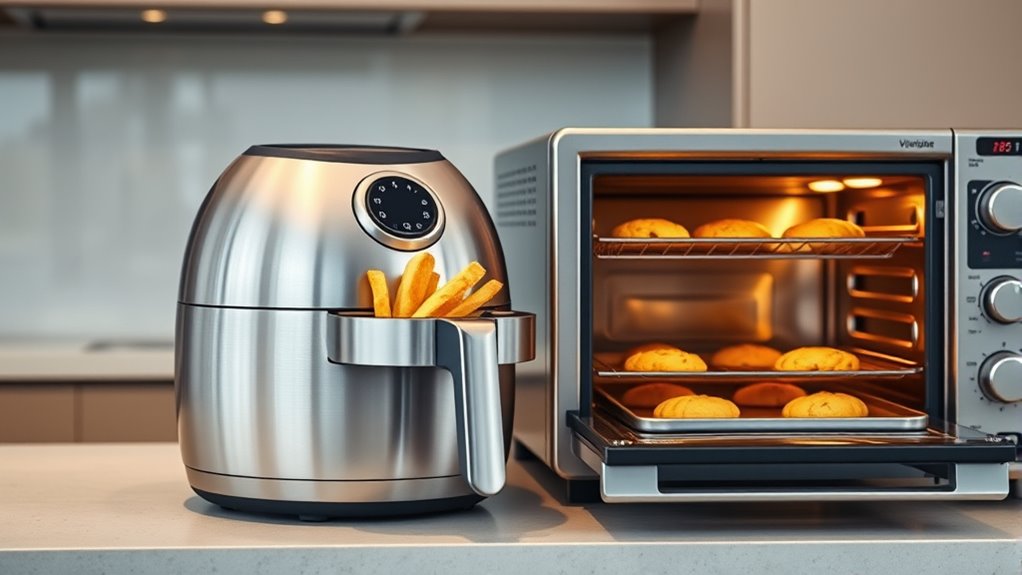
Both air fryers and convection ovens are designed for straightforward use, but they differ in how easy they are to operate and clean. Air fryers typically have simple user interfaces with one-touch controls, making them quick to learn and use. Cleaning routines are usually easier because most models have non-stick, dishwasher-safe parts that require minimal effort. Convection ovens, on the other hand, often feature more complex control panels, which can take some time to master. Their larger size means more surfaces to clean, but removable racks and drip trays simplify the process. Overall, if you prefer quick setup and minimal cleaning, an air fryer might be more convenient. However, convection ovens can still be manageable if you stay consistent with your cleaning routines. Additionally, the size and design of each appliance can influence how frequently and easily they can be maintained, and understanding appliance maintenance can help prolong their lifespan.
Healthier Cooking Options

When it comes to healthier cooking options, air fryers often have the edge because they use markedly less oil than traditional methods. This reduction helps you cut calories while still enjoying crispy textures. Plus, you can incorporate healthy fats, like olive or avocado oil, to boost nutritional value without excess oil. Additionally, air fryers offer greater ingredient flexibility, allowing you to cook a variety of vegetables, lean meats, or even fish with minimal fat. Here are some benefits:
Air fryers reduce oil use, promote healthy fats, and offer versatile cooking options for better nutrition.
- Less oil means lower fat intake.
- Maintains essential healthy fats for heart health.
- Versatile ingredient options promote balanced eating.
Energy Efficiency and Power Consumption
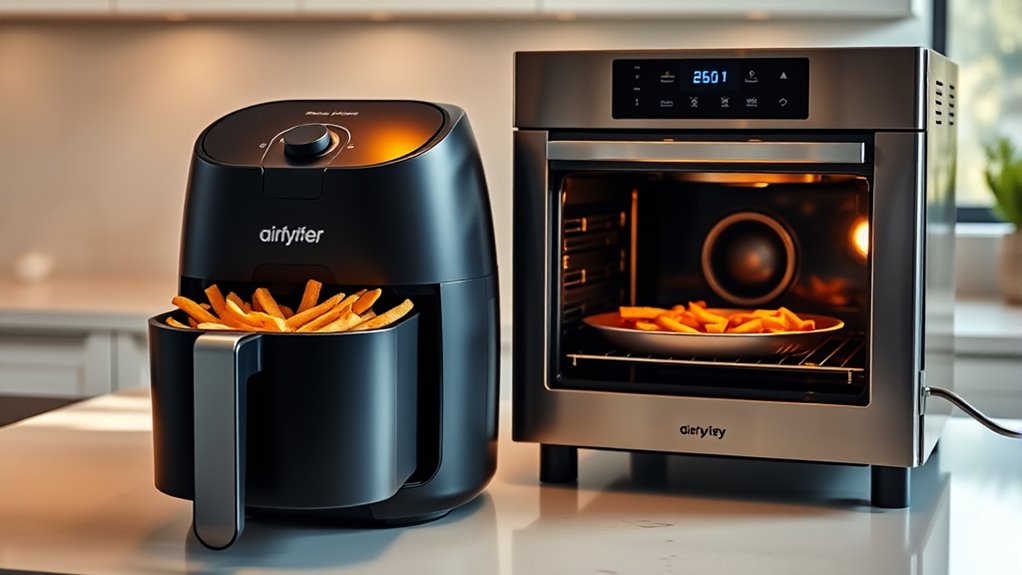
Energy efficiency is a key factor to contemplate when choosing between an air fryer and a convection oven, as it directly impacts your electricity bills and environmental footprint. An air fryer typically uses less energy because it heats up quickly and cooks food faster, reducing overall power consumption. Its compact size and targeted heating mean lower energy use compared to larger convection ovens, which often require longer cooking times and higher power to heat a bigger space. Conversely, convection ovens may have higher power consumption due to their size and longer operation times, but they can cook larger quantities at once. If saving energy is a priority, an air fryer offers a more efficient option, helping you cut down on electricity costs and minimize your environmental impact.
Cost and Value for Money
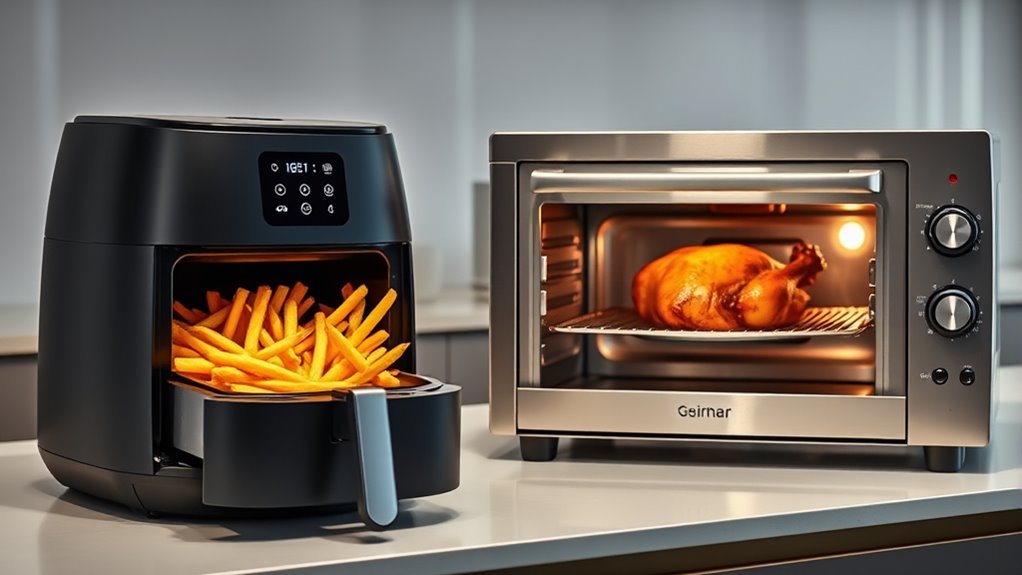
While an air fryer often has a higher upfront cost, it generally offers better value for money through faster cooking times and lower energy bills. When doing a price comparison, consider these points:
An air fryer offers long-term savings with quicker cooking and lower energy costs despite higher upfront expenses.
- Initial Price: Air fryers tend to be more expensive than convection ovens, but their quick cooking can save you time and electricity.
- Warranty Coverage: Many air fryers come with longer or more extensive warranties, reducing potential repair costs.
- Long-term Savings: Due to efficient heating and rapid cooking, you’ll likely see savings on energy bills over time.
Ultimately, although the initial investment might be higher, the combination of faster cooking, better warranty coverage, and energy savings makes the air fryer a cost-effective choice.
Choosing the Right Appliance for Your Kitchen

Choosing the right appliance for your kitchen depends on your cooking habits, space, and budget. If you value sleek kitchen aesthetics, pick a model that complements your style. Consider the user interface—whether you prefer digital controls or simple dials—since ease of use impacts your cooking experience. Space is also vital: a compact air fryer fits smaller counters, while a convection oven offers more capacity. Think about how often you’ll use it and what dishes you want to prepare. If quick, healthy snacks are your focus, an air fryer might be ideal. For versatile cooking and larger meals, a convection oven offers flexibility. Ultimately, selecting the right appliance enhances your kitchen’s look and makes everyday cooking more enjoyable.
Frequently Asked Questions
Can an Air Fryer Replace a Traditional Oven Entirely?
An air fryer can partially replace a traditional oven, but it might not handle large meals or baking needs. It’s more energy-efficient and saves kitchen space, making it perfect for quick snacks. However, for big batches or complex baking, a traditional oven still offers better versatility. You’ll find it useful for everyday tasks, but don’t expect it to completely replace your oven for all cooking.
Which Appliance Is Better for Baking Cakes and Pastries?
Honestly, if you’re aiming for cake baking and pastry perfection, a convection oven wins hands down. Sure, your air fryer might make crispy fries, but when it comes to delicate baked goods, it’s just not the same. The convection oven’s even heat and spacious interior give you better control, ensuring your cakes rise beautifully and pastries turn out flaky. So, if pastry perfection is your goal, stick with the trusty convection oven.
How Do Noise Levels Compare Between Air Fryers and Convection Ovens?
You’ll notice that convection ovens generally produce louder sound levels than air fryers during operation. The noise comparison shows that convection ovens tend to have a louder, more consistent hum due to their larger fans and heating elements, while air fryers operate more quietly with a softer sound level. If noise is a concern, an air fryer might be a better choice, especially for quiet kitchen environments.
Are There Specific Foods That Cook Better in One Appliance?
You’ll find that frozen foods and crispy snacks often cook better in an air fryer because it uses rapid air circulation to crisp up the exterior quickly. Convection ovens work well for larger meals or baked goods that need even heat, but they might not achieve the same crispness on frozen items. For ideal results with frozen foods and crispy snacks, go for the air fryer.
What Are the Maintenance Requirements for Each Appliance?
Maintaining your appliances means managing minimal messes with mindful cleaning routines to maximize component durability. For air fryers, regularly wipe the interior and clean the basket to prevent grease buildup. Convection ovens require periodic oven cleaning, including the fan and vents. Both appliances benefit from thorough towel-tough cleaning, ensuring they stay clean and efficient. Simple, consistent care keeps your cooking companions in top shape, ready for a deliciously durable performance every time.
Conclusion
Choosing between an air fryer and a convection oven is like picking the right brush for your masterpiece—you want the one that brings out the best in your cooking. Both have their strengths, so consider your kitchen space, cooking style, and what matters most to you. Whichever you choose, remember it’s not just about the appliance but how you use it to turn everyday ingredients into culinary art. Your perfect kitchen partner is waiting—grab it and start creating!