To calibrate your oven at home, start by gathering an oven-safe thermometer and preheat your oven to 350°F (175°C). Place the thermometer in the center of the oven rack, making sure it’s stable and away from hot spots. Allow the oven to fully heat, then check the thermometer’s reading. If it differs from the dial, adjust the oven temperature accordingly. For more detailed steps, continue exploring the process to ensure accurate baking results.
Key Takeaways
- Fully preheat your oven to 350°F using an oven-safe thermometer placed in the center at eye level.
- Wait 15-20 minutes after reaching temperature and record the thermometer’s reading for accuracy.
- Compare the thermometer reading with your oven dial setting; adjust the oven’s thermostat or calibration screw if discrepancies exist.
- Reheat and recheck the temperature after adjustments, repeating as necessary for consistent accuracy.
- Regularly verify and record calibration results to maintain precise oven temperature over time.
Gather the Necessary Supplies

Have you gathered everything you need before starting the calibration? Making sure you have the right supplies is essential for accurate results. You’ll need a reliable oven thermometer to check your oven’s temperature, as measuring accuracy varies across models. Grab some paper and a pen to record your readings. For calibration techniques, a digital or analog thermometer works best, but make sure it’s precise. You may also want a pair of oven mitts for safety when handling hot items. Double-check that your thermometer is functioning properly before starting. Having all these supplies ready helps streamline the process and minimizes errors. Proper preparation ensures your calibration will be effective, leading to more accurate cooking temperatures and consistent results in your oven. Additionally, understanding temperature calibration techniques can improve your overall cooking accuracy and safety, especially when using precise measuring tools for best results. Ensuring your oven’s temperature accuracy can also reduce energy consumption and extend appliance lifespan. Being familiar with oven performance can help you identify potential issues early and maintain optimal operation.
Preheat Your Oven to a Standard Temperature
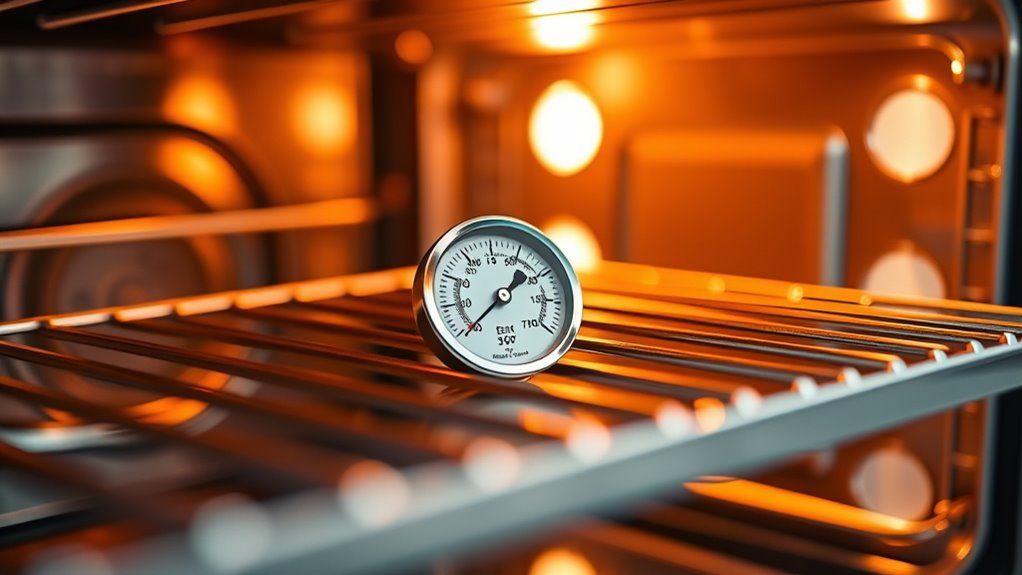
To begin the calibration process, set your oven to a standard temperature, typically 350°F (175°C). This assures consistency when testing for temperature accuracy and promotes oven safety during baking. Proper preheating is essential for reliable results and helps you understand how your oven performs with common baking techniques. Before starting, verify that your oven’s control dial is correctly adjusted, and avoid opening the door frequently during preheating to maintain temperature stability. Use an oven-safe thermometer to monitor the actual temperature. Here’s a quick reference:
| Step | Action | Tip |
|---|---|---|
| 1 | Set to 350°F | Standard for calibration |
| 2 | Preheat fully | Wait until indicator stops flashing |
| 3 | Avoid opening door | Maintain temperature consistency |
| 4 | Confirm temperature | Use a thermometer for accuracy |
Additionally, understanding the impact of cookies on website performance can help you navigate online tools more effectively. This process guarantees safer, more precise baking results. Proper calibration also ensures that your oven’s temperature settings are accurate, helping you achieve consistent baking outcomes every time. Regular calibration checks can also extend the oven’s lifespan by preventing overheating or uneven heating, ensuring your appliance remains reliable over time. Performing these checks periodically can also help detect potential issues early, saving you costly repairs in the future. Incorporating routine calibration into your maintenance schedule can further optimize your oven’s performance and longevity.
Place an Oven-Safe Thermometer Inside
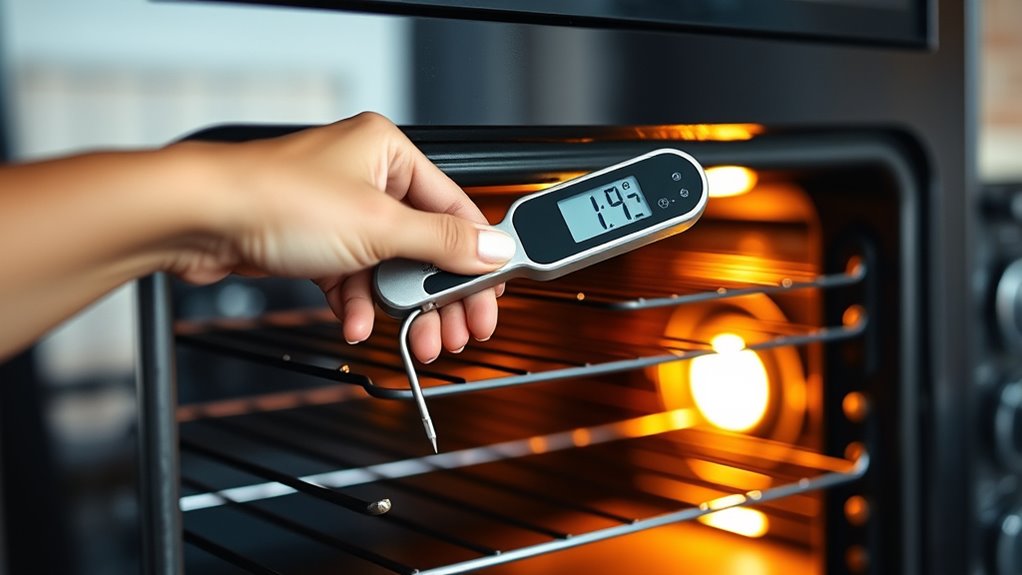
Choose a reliable oven-safe thermometer to guarantee accurate readings. Place it in the center of the oven rack for the most representative temperature. Make sure it’s secure so it doesn’t shift during the preheating process. Ensuring proper calibration can help maintain consistent cooking results and avoid temperature inaccuracies. When measuring, keep in mind that home energy management principles can influence your overall kitchen efficiency.
Select a Reliable Thermometer
A reliable oven thermometer is crucial for accurate calibration, so selecting the right one is a fundamental first step. You want a thermometer that’s oven-safe, able to withstand high temperatures without breaking or giving false readings. There are different thermometer types, including dial, digital, and infrared, each with pros and cons. Dial thermometers are durable and easy to read, while digital ones often provide quicker readings. Infrared thermometers are handy for quick checks but less ideal for continuous monitoring. Properly evaluating thermometer quality ensures accurate measurements and successful oven calibration. Selecting a thermometer with accurate temperature readings is essential to ensure your oven is properly calibrated for consistent cooking results. Additionally, choosing a thermometer with robust construction helps it endure frequent use and temperature fluctuations. Understanding temperature accuracy helps prevent under- or over-cooking your dishes.
Position in Center Rack
Placing your oven-safe thermometer in the correct position is crucial for an accurate temperature reading. The center rack usually provides the most consistent environment, helping you avoid hot spots or uneven heat that could compromise oven safety and your cooking techniques. To guarantee precision:
- Position the thermometer in the middle of the oven
- Keep it away from the walls or door
- Place it at oven eye level for easy reading
- Avoid placing it near vents or heating elements
- Use a stable, flat surface for accurate measurement
- Remember, consistent oven performance depends on proper thermometer placement, ensuring you achieve precise cooking results every time. Proper placement can also help identify issues like hot spots, which might affect cooking outcomes. Additionally, regularly calibrating your oven with an accurate thermometer can help maintain optimal cooking temperatures and improve your baking results. Ensuring the thermometer is properly positioned also minimizes the impact of heat distribution variability, which can vary between different oven models.
A well‑placed thermometer can also assist in detecting temperature fluctuations, allowing you to make necessary adjustments for even cooking.
Secure for Accurate Reading
To get an accurate temperature reading, you need to guarantee the thermometer is securely positioned inside the oven. Place the oven-safe thermometer on the center rack, ensuring it’s stable and not touching the oven walls or insulation. Proper placement helps prevent false readings caused by uneven oven insulation or hot spots. Always follow safety precautions when handling the thermometer to avoid burns or damage. Use oven mitts to carefully insert and remove it, especially if the oven is hot. Securing the thermometer correctly ensures it stays in place during calibration, giving you a precise measurement of the oven’s actual temperature. This step is crucial for accurate calibration, helping you avoid over- or under-cooking your food. Proper placement guarantees reliable readings every time. Additionally, understanding oven hot spots can help you position the thermometer more effectively for more consistent results. Being aware of hot spots allows for better placement to achieve more accurate readings across different areas of the oven.
Allow the Oven to Fully Heat

Make sure you let your oven preheat completely before testing its temperature. Wait until the indicator light signals that it’s reached the set heat. This guarantees your thermometer gives an accurate reading for proper calibration. Proper oven functioning depends on thorough preheating to ensure consistent results.
Preheat Completely Before Testing
Have you ever started baking only to find your baked goods aren’t cooking evenly? If so, you might not be allowing your oven to preheat completely. Ensuring your oven reaches the correct temperature is essential for oven safety and accurate cooking results.
Before testing, wait until the oven signals that it’s fully heated. This step guarantees the temperature is stable, which is crucial for accurate calibration.
- Use an oven thermometer for precise readings
- Avoid opening the door during preheat to maintain consistent heat
- Check that the oven indicator light is off before testing
- Confirm the oven’s heat distribution isn’t uneven
- Allow extra time for older ovens to fully preheat
Taking these steps assures your oven is safe and accurate, leading to better cooking outcomes.
Wait for Indicator Light
Waiting for the oven’s indicator light to turn off guarantees it has reached the proper temperature. This step is vital for accurate oven calibration. When the light goes out, your oven has achieved the set temperature, ensuring reliable results during testing. Keep in mind, some ovens have a single indicator light, while others have multiple. Use the following table to understand your oven’s indicator signals:
| Indicator Light Status | Oven State |
|---|---|
| Light ON | Heating up, not yet ready |
| Light OFF | Reached target temperature |
| Fluctuating | Temperature stabilizing |
| No Light | Manual calibration needed |
This process helps to guarantee your oven’s temperature accuracy, making your calibration more precise.
Read the Actual Temperature on the Thermometer
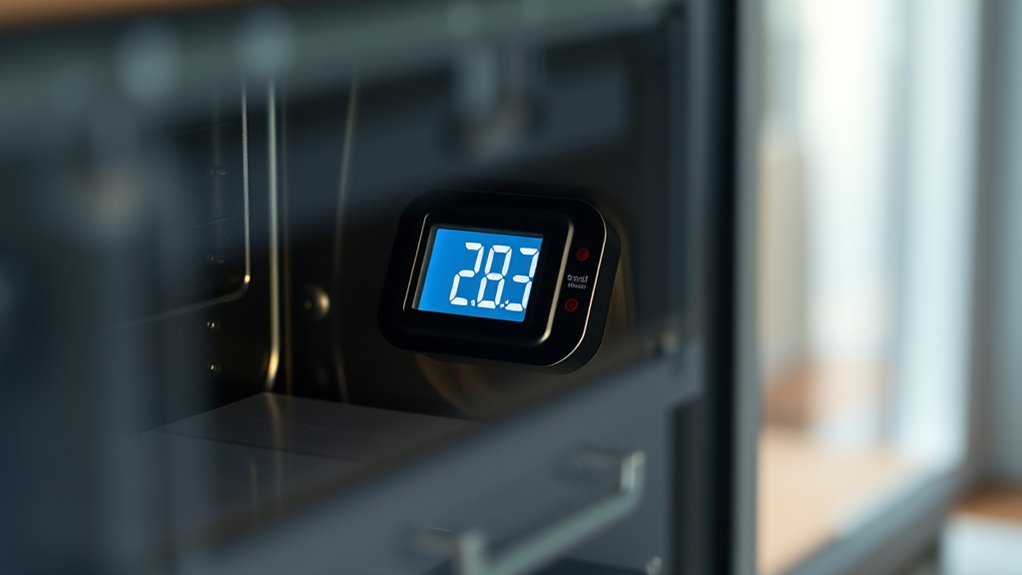
Ever wonder if your oven’s displayed temperature matches the actual heat inside? To find out, you need to read the actual temperature on the thermometer accurately. Place an oven-safe thermometer in the center of your oven, ideally at eye level. Wait for your oven to reach the set temperature, then check the thermometer reading. This step helps you assess the oven temperature and thermometer accuracy. Keep in mind, even a slight discrepancy can affect your baking.
Check your oven’s actual temperature with an oven-safe thermometer for better baking accuracy.
- Ensure the thermometer is placed in the middle of the oven
- Avoid opening the door during heating to keep the temperature stable
- Wait at least 15-20 minutes after reaching temperature
- Check the thermometer reading at eye level for accuracy
- Record your findings for future calibration steps
Compare the Thermometer Reading to the Dial Setting

You need to compare the thermometer reading to your oven’s dial setting to see if they match. Use a reliable thermometer to get an accurate measurement, then record and compare the readings. If there’s a discrepancy, adjust the oven dial accordingly to guarantee it heats properly.
Use a Reliable Thermometer
How can you be sure your oven’s temperature is accurate? Using a reliable thermometer is key. It guarantees you’re cooking at the right temperature, preventing undercooked or burnt food. To maintain oven safety and peak performance, check your thermometer regularly and calibrate as needed, especially if you notice inconsistent results. Here are some tips to ensure your thermometer’s reliability:
- Choose a digital or analog thermometer designed for oven use
- Avoid thermometers with a fragile or non-durable design
- Test the thermometer in boiling water for accuracy
- Replace batteries as needed for digital models
- Calibrate at least once a year or after moving the oven
A dependable thermometer helps you keep your oven calibrated properly and ensures safe, delicious results every time.
Record and Compare Readings
Once you have a reliable thermometer, it’s important to record its readings and compare them to your oven’s dial setting. This step helps you assess the temperature accuracy and determine if calibration techniques are needed. Preheat your oven to a specific temperature, such as 350°F, and note both the thermometer reading and the dial setting. Repeat this process at different temperatures to gather consistent data. Recording these readings allows you to identify discrepancies between the oven’s dial and actual temperature. Accurate comparisons are vital for effective calibration later on. Keep detailed notes of each reading, noting the differences, so you can decide if adjustments are necessary. This process ensures you have a clear understanding of your oven’s performance before making any calibration changes.
Adjust the Oven Dial
When your thermometer readings differ from your oven’s dial setting, adjusting the dial can help improve accuracy. Proper oven maintenance and consistent temperature settings are key for reliable cooking results. To adjust the dial effectively:
- Check if your oven has an adjustment screw or calibration feature.
- Use a screwdriver to turn the calibration screw clockwise or counterclockwise.
- Keep testing the temperature after each adjustment with your thermometer.
- Record the new setting to maintain temperature consistency.
- Repeat the process if necessary until the thermometer matches the dial reading closely.
Adjust the Oven Settings Accordingly

To make certain your oven bakes evenly, it’s essential to adjust the oven settings based on your calibration results. If your oven runs hot or cold, tweak the temperature dial or digital controls accordingly. Always prioritize oven safety by ensuring the appliance is turned off before making adjustments. When troubleshooting temperature issues, start by lowering or raising the set temperature in small increments, then recheck with your thermometer. Keep in mind that rapid adjustments can lead to inaccurate results, so make changes gradually. Properly calibrated oven settings help prevent undercooked or burnt food, saving you time and effort. Regular adjustments ensure consistent results and keep your oven operating safely and efficiently.
Recheck the Temperature After Calibration

After completing your initial calibration adjustments, it’s important to verify your oven’s temperature to guarantee accuracy. This accuracy check ensures your oven heats consistently and reaches the correct temperature. To do this, use an oven thermometer and compare its reading to your set temperature. Make sure to check the temperature at different points inside the oven for a thorough consistency verification. If discrepancies are found, readjust your calibration accordingly. Regularly rechecking the temperature helps maintain reliable results over time. Remember, even a small deviation can impact your cooking outcomes. Performing these steps ensures your oven’s temperature is precise, giving you confidence with every bake or roast. Keep these in mind for optimal performance and perfect results every time.
Repeat the Process if Necessary
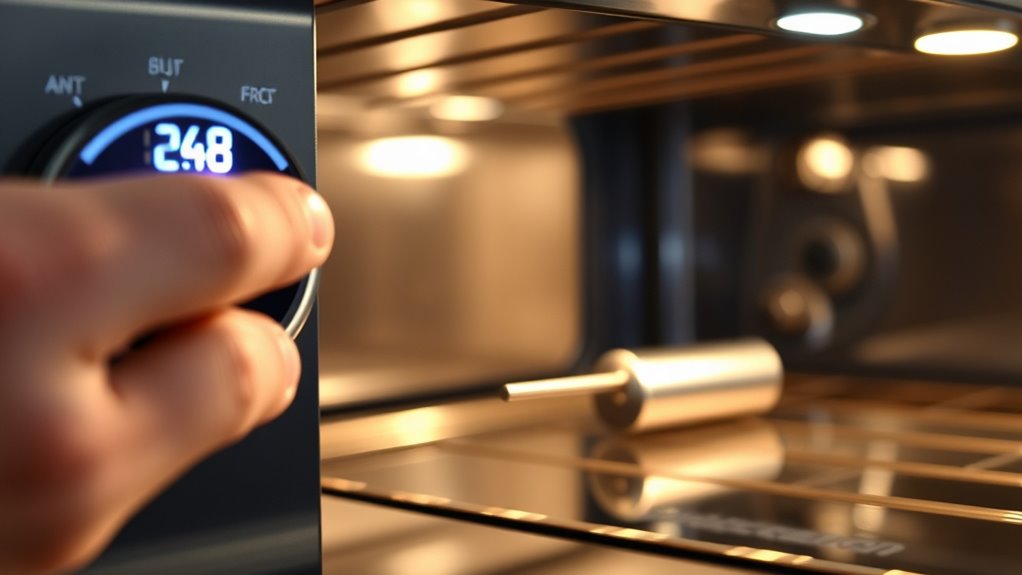
If your oven still doesn’t reach the correct temperature after initial calibration, it’s essential to repeat the process. Accurate oven maintenance guarantees better temperature accuracy and consistent cooking results. Repeating calibration helps account for any minor variations or inaccuracies. Consider the following steps:
| Step | Purpose |
|---|---|
| Check the thermometer | Verify its accuracy before recalibrating |
| Adjust the thermostat | Make precise adjustments as needed |
| Reheat and verify | Confirm temperature accuracy again |
| Keep records | Track adjustments for future reference |
Repeating calibration ensures your oven maintains proper temperature accuracy, leading to better baking and cooking outcomes. If needed, don’t hesitate to perform this process multiple times until your oven consistently reaches the desired temperature. Proper oven maintenance is key to reliable performance.
Maintain Your Thermometer for Accurate Future Readings
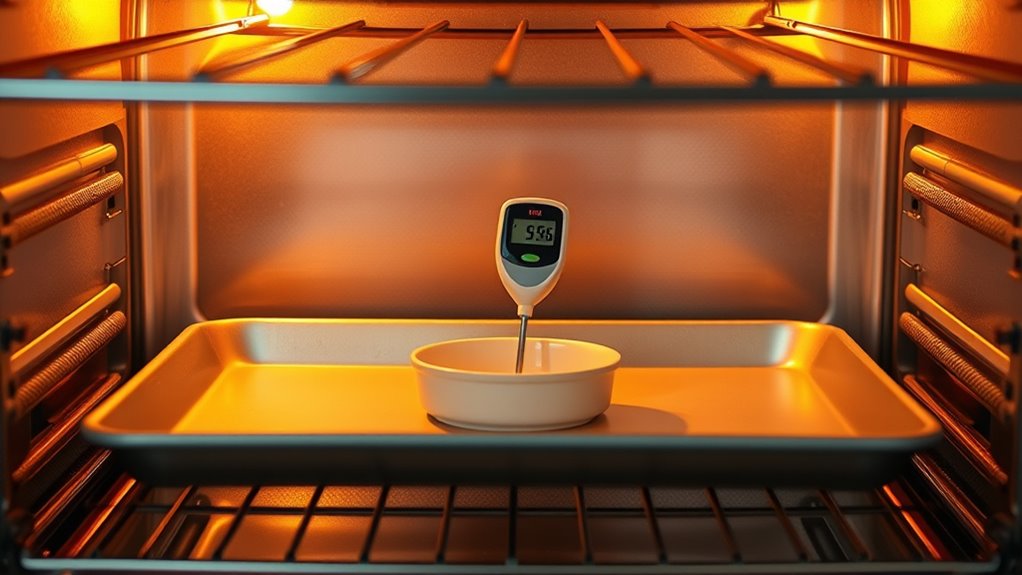
Maintaining your thermometer is essential for ensuring accurate temperature readings over time. Regular thermometer calibration keeps your oven maintenance on point, preventing inaccurate cooking results. To do this effectively, clean your thermometer after each use to avoid buildup. Store it in a safe, stable place to prevent damage. Check for any signs of wear or corrosion and replace if necessary. Periodically test your thermometer against boiling water or ice for consistency. Keep a log of calibration checks to identify any drifting readings. Proper maintenance ensures your thermometer stays reliable, saving you time and effort in the kitchen. Remember, a well-maintained thermometer is key to precise oven calibration and consistent cooking outcomes. Regular upkeep guarantees your oven heating remains accurate, supporting your culinary success.
Frequently Asked Questions
How Often Should I Calibrate My Oven?
You should calibrate your oven once a year or whenever you notice uneven cooking or temperature inaccuracies. Regular oven maintenance helps guarantee ideal temperature accuracy, which is vital for consistent results. If your oven’s temperature seems off, test it with an oven thermometer and calibrate if needed. Keeping up with calibration helps prevent overworking your appliance and improves cooking precision, making your kitchen tasks more reliable and efficient.
Can I Use a Smartphone Thermometer for Calibration?
Think of your smartphone thermometer as a tiny lighthouse guiding your recipe to perfection. Yes, you can use it for calibration, but keep in mind that calibration accuracy varies. While convenient, it might not be as precise as a dedicated oven thermometer. Use it as a helpful tool, but for best results, verify with a high-quality thermometer to guarantee your oven’s temperature is spot-on.
Will Calibrating My Oven Affect Cooking Times?
Calibrating your oven can affect cooking times, but it improves overall oven accuracy and temperature consistency. When you adjust the oven, it may run slightly hotter or cooler initially, so you might need to monitor recipes more closely. Once calibrated, you’ll notice more reliable cooking times and better results. Remember, small adjustments make a big difference in maintaining steady oven performance and ensuring your dishes turn out perfect every time.
What Should I Do if My Oven Temperature Fluctuates?
When your oven temperature fluctuates, don’t panic—think of it as an opportunity for oven repair. First, use an oven thermometer to check temperature accuracy. If discrepancies persist, consider calibrating your oven or calling a professional. Fluctuations can affect your cooking, but addressing them guarantees consistent results. Regular maintenance keeps your oven running smoothly, helping you avoid future issues and maintain precise control over your cooking process.
Is It Necessary to Calibrate an Oven With Digital Controls?
If your oven has digital controls, calibration isn’t always necessary, but it can improve accuracy. Digital ovens often have built-in calibration options, so you can adjust the temperature settings to match a thermometer’s reading. You should check if calibration is needed, especially if your baked goods aren’t turning out right. Regular calibration guarantees your digital control oven maintains consistent temperatures, making your cooking and baking more precise and reliable.
Conclusion
Think of your oven as a trusted compass guiding your culinary adventures. When you calibrate it, you’re fine-tuning this guide, ensuring every dish turns out just right. Keep your thermometer shining bright, like a lighthouse in your kitchen’s night. With each calibration, you’re restoring its true north, turning cooking into a seamless journey. Trust in your efforts, and watch your recipes reach their full potential, guided by an oven that always points true.