
When comparing induction cooktops and electric coil stoves, you’ll find key differences in energy efficiency, safety, temperature control, and cookware compatibility. Induction cooktops heat cookware directly, making them faster and safer, while electric coils can work with any cookware but may retain heat longer, posing a burn risk. Induction offers precise temperature adjustments but requires specific pots and pans. Consider your cooking habits, as each option has unique advantages that can shape your kitchen experience. Discover more about these differences and what fits best for you.
Key Takeaways
- Induction cooktops heat cookware directly using electromagnetic energy, making them faster and more energy-efficient than electric coil stoves.
- Safety is enhanced with induction cooktops since they only generate heat with compatible cookware, reducing burn risks.
- Induction provides precise temperature control, allowing quick adjustments for various cooking techniques, unlike slower electric coil stoves.
- Induction requires ferrous metal cookware, possibly necessitating new investments, while electric coils are compatible with most existing cookware.
- Choosing between induction and electric coils depends on energy efficiency, safety, temperature control, and cookware compatibility.
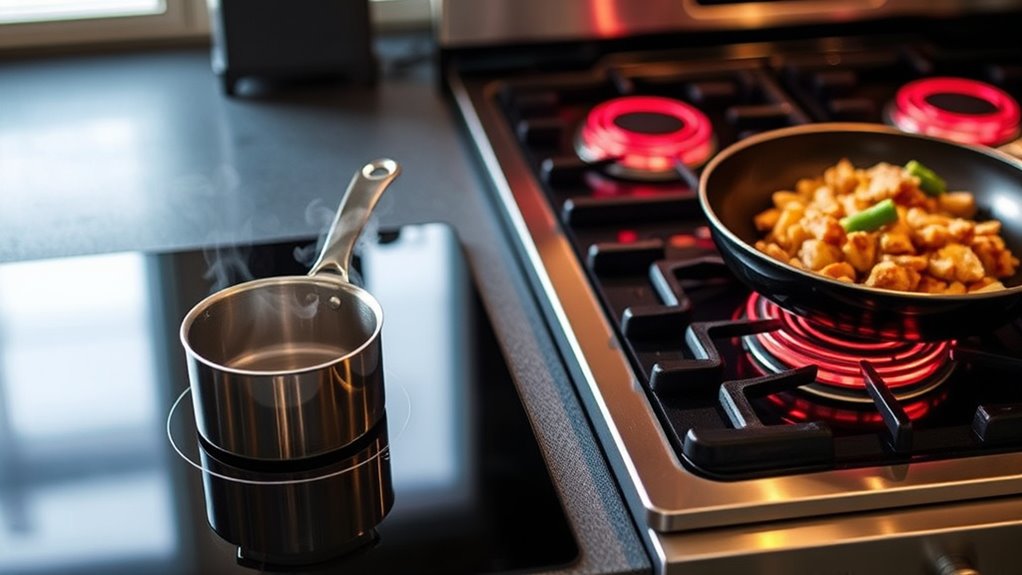
When you’re deciding between an induction cooktop and an electric coil stove, it’s vital to contemplate how each option fits your cooking style. Both types have unique characteristics that can profoundly impact your cooking experience. If you prioritize energy efficiency, induction cooktops stand out. They use electromagnetic energy to directly heat your cookware, meaning less energy is wasted compared to electric coil stoves, which heat the burners and then transfer that heat to your pots and pans. You’ll find that cooking with induction is not only faster but also more economical in the long run, as it can lead to lower energy bills. Additionally, modern smart appliances like induction cooktops often come with features that enhance your cooking experience.
Deciding between an induction cooktop and an electric coil stove hinges on your cooking style and energy efficiency preferences.
Another essential aspect to consider is safety features. Induction cooktops are designed with safety in mind. They only generate heat when compatible cookware is placed on them, reducing the risk of burns and accidental fires. This feature is particularly beneficial if you have young children or pets at home. In contrast, electric coil stoves can remain hot long after you’ve turned them off, which poses a greater risk of burns and accidents. If you’re looking for a safer cooking environment, induction might be the better choice.
When it comes to temperature control, induction cooktops provide precise adjustments at your fingertips. You can quickly switch from a simmer to a rapid boil, making it easier to execute various cooking techniques. Electric coil stoves, while functional, often take longer to adjust to temperature changes, which can sometimes lead to overcooking or uneven results. If you enjoy experimenting with different recipes and need that level of control, an induction cooktop will likely enhance your culinary skills.
However, don’t forget about the cookware requirement. Induction cooktops require ferrous metal pots and pans to work effectively, which means you might need to invest in new cookware if you don’t already have compatible options. On the other hand, electric coil stoves are compatible with virtually any type of cookware you own. If you’re looking for convenience and already have a set of pots and pans, sticking with an electric coil stove could save you the hassle of shopping for new gear.
Ultimately, both induction cooktops and electric coil stoves have their pros and cons. By weighing energy efficiency, safety features, and your cooking habits, you’ll find the perfect option that suits your lifestyle best.
Frequently Asked Questions
Can I Use Any Cookware on an Induction Cooktop?
No, you can’t use just any cookware on an induction cooktop. For cookware compatibility, it needs a magnetic base. You can easily check this by holding a magnet to the bottom of your pots and pans; if it sticks, you’re good to go! Stainless steel and cast iron are typically great options, while aluminum and glass won’t work. So, make sure your cookware is induction-ready before you start cooking!
How Do I Clean an Electric Coil Stove?
Cleaning an electric coil stove is a breeze, right? Just kidding! You’ll need some scrubbing tips and effective cleaning solutions. Start by unplugging the stove and letting it cool. Use a mixture of baking soda and water to create a paste; apply it to burnt-on spots. For stubborn stains, scrub gently with a non-abrasive pad. Wipe everything down with a damp cloth, and you’ll have your stove shining like new in no time!
Are Induction Cooktops Energy Efficient?
Yes, induction cooktops are highly energy efficient. They use electromagnetic energy to directly heat pots and pans, which means less energy consumption compared to traditional electric coil stoves. You’ll notice that they heat up faster and waste less power, making your cooking experience quicker and more efficient. By choosing an induction cooktop, you’re not just saving time but also enhancing your power efficiency, ultimately reducing your energy bills over time.
Do Electric Coil Stoves Take Longer to Heat?
Yes, electric coil stoves do take longer to heat up compared to induction cooktops. You’ll notice that while the coils can eventually reach high temperatures, their heating speed isn’t as efficient. This can lead to less temperature consistency during cooking. If you’re looking to sauté or boil quickly, you might find that electric coils require more patience, as they don’t respond instantly to adjustments like induction stoves do.
Is There a Significant Cost Difference Between the Two?
Absolutely, there’s a significant cost difference between the two! If you’re eyeing an induction cooktop, get ready to empty your wallet, as they can be a bit pricey. On the flip side, electric coil stoves are like the budget-friendly superheroes of the kitchen, offering a fantastic cost comparison for those tight on cash. In your affordability analysis, you’ll see that coil stoves win hands down when it comes to upfront expenses!
Conclusion
In the epic showdown of induction cooktops versus electric coil stoves, it’s clear you’re not just cooking; you’re releasing culinary magic! With induction’s lightning-fast heating and precise control, you’ll feel like a gourmet chef in a Michelin-star restaurant. Meanwhile, those trusty coil stoves might remind you of cozy family dinners, but let’s face it—they’re like the tortoises in a race against the speedy hares of modern cooking. So, if you want to revolutionize your kitchen, go induction!