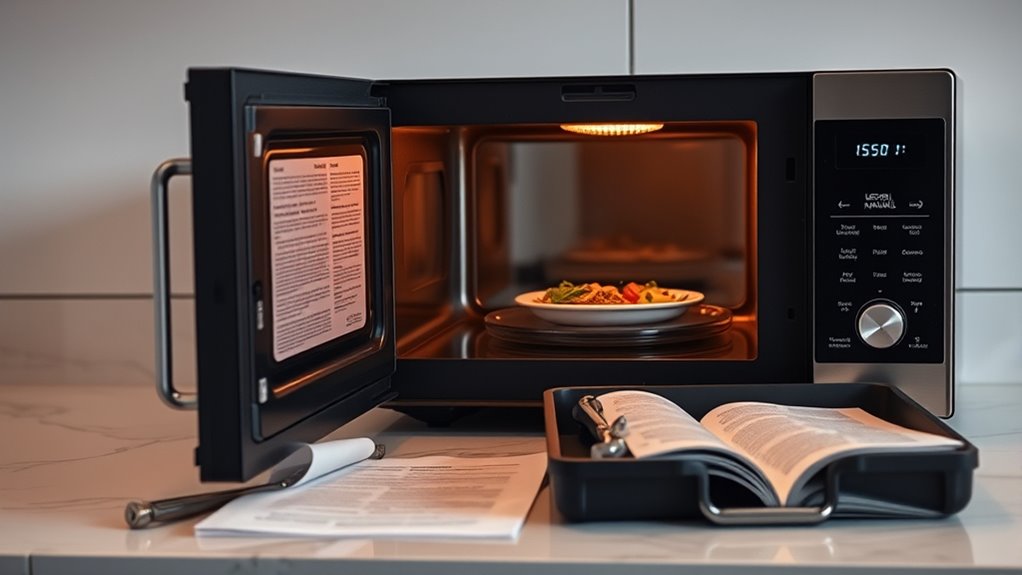

If your microwave isn’t heating food, start by checking the power supply; verify it’s plugged in and the outlet works. Inspect the door; it must close securely for the microwave to operate. Internally, issues like a faulty magnetron may require professional help. Regular cleaning can prevent malfunctions too. Sometimes it’s more practical to replace the unit entirely. Keep going to find out more about troubleshooting and when to call for help!
Key Takeaways
- Check if the microwave is plugged in and the power outlet is functional.
- Ensure the door is securely closed and the latch is not damaged.
- Inspect for internal issues like a malfunctioning magnetron; seek professional help if needed.
- Clean the microwave regularly to prevent debris buildup that can affect performance.
- If repairs are costly or ineffective, consider replacing the microwave for better efficiency.
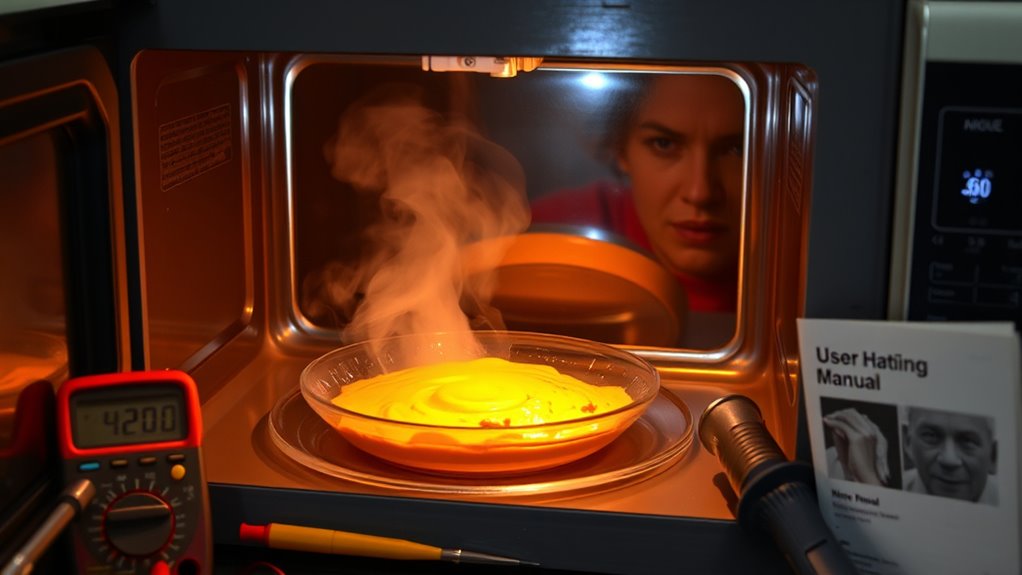
When your microwave isn’t heating food, it can be frustrating, especially if you’re in a hurry. You depend on that little appliance to warm up leftovers or cook a quick snack, so when it suddenly fails, it throws a wrench in your plans. Before you start panicking, let’s look at some common causes and fixes that might get your microwave back on track.
First, check if the microwave is plugged in properly. It sounds simple, but sometimes the cord can get jostled, especially if you’ve recently moved it or cleaned around it. Ensure it’s securely connected to the outlet. If the outlet is working fine—try plugging in another device to test it—you may need to dig deeper.
Check the microwave’s plug connection; it might be loose after moving or cleaning. Ensure the outlet works with another device.
Next, consider the door latch. Microwaves won’t operate if the door isn’t closed properly due to safety features. Open and close the door firmly, ensuring nothing’s blocking it. If the latch is broken or worn out, it could prevent the microwave from running. In this case, you might need a repair or replacement.
Another common culprit can be the microwave’s internal components. The magnetron, which generates the microwaves, might be malfunctioning. If that’s the case, don’t try to fix it yourself unless you’re experienced; it involves high voltage and can be dangerous. It’s best to call a professional for repairs, keeping microwave safety in mind.
You should also think about regular maintenance. Cleaning the microwave regularly not only helps maintain its performance but can prevent issues from arising. Wipe down the interior with a damp cloth and a mild detergent, and don’t forget to clean the microwave’s plate and any removable parts. It’s a simple maintenance tip that goes a long way in extending the life of your appliance.
If you’ve gone through these checks and nothing seems to work, it’s time to consider whether it’s worth investing in repairs or looking for a new microwave. Newer models often come with improved features and energy efficiency, which might make the switch worthwhile.
Frequently Asked Questions
Can a Microwave Explode if It’s Not Heating Food?
Yes, a microwave can potentially explode if it’s not heating food properly, but it’s rare. Ensuring microwave safety is vital for preventing such accidents. If you notice unusual noises or smells, it’s best to stop using it immediately. Regular maintenance can enhance your appliance’s longevity. Always follow the manufacturer’s guidelines and avoid placing metal objects inside, as that can spark and lead to dangerous situations. Stay safe while using your microwave!
How Long Should a Microwave Last Before Needing Repairs?
On average, a microwave lasts about 9 to 10 years before needing repairs. If you consider that a well-maintained appliance can offer great durability, it’s worth taking care of it. Regular cleaning and avoiding overloading can extend its lifespan. Keep an eye on performance—if it starts heating unevenly or making unusual noises, it might be time to consult a technician. Remember, proper use can considerably enhance your microwave’s longevity!
Is It Safe to Use a Microwave With a Broken Door?
No, it’s not safe to use a microwave with a broken door. A damaged microwave door can lead to safety concerns, including exposure to harmful radiation. If the door doesn’t close properly, it can compromise the appliance’s integrity. You should get it repaired or replaced before using it again. Prioritize your safety and avoid any risks associated with a malfunctioning microwave. Always verify your microwave is in good working condition for safe operation.
Can I Fix My Microwave Myself or Should I Call a Technician?
You’re staring at your silent microwave, wondering if you can turn this frustrating moment into a DIY repair adventure. If you’ve got some handy tools and a bit of knowledge, you might tackle minor issues yourself. However, if it’s complex, like electrical components, calling a professional service is wise. Don’t risk safety; sometimes, it’s better to let the experts handle it while you enjoy your warm meals without worry.
What Are the Signs That a Microwave Is About to Fail?
You’ll notice several warning signs when your microwave’s nearing the end of its lifespan. If it starts making unusual noises, like buzzing or humming, or if the door doesn’t close properly, it’s time to pay attention. Additionally, if your food isn’t heating evenly or takes longer than usual, that’s a red flag. Keep an eye on these issues, and don’t hesitate to contemplate a replacement if they persist.
Conclusion
If your microwave isn’t heating food, don’t panic; it’s often a simple fix. Check the door seal, inspect the fuse, or listen for the magnetron humming. Remember, “a stitch in time saves nine.” Addressing these issues promptly can save you from more significant problems down the line. With a little troubleshooting, you’ll have your microwave back in working order, ensuring you can enjoy your meals in no time!