When you’re cooking with a tagine, you get to explore traditional Moroccan flavors and create rich, complex dishes through slow cooking. The lid traps steam, ensuring moisture and tender textures in your meals. On the other hand, a slow cooker provides convenience, letting you prep your ingredients in the morning and forget about them until dinner. While both methods produce delicious results, they differ in flavor depth and cooking experience. If you’re curious about the finer points, keep going to learn more.

Get kitchen gear delivered free with Prime
- Fast, free delivery on millions of items
- Prime Video, Amazon Music and more included
- Member-only deals all year
Key Takeaways
- Tagine enhances traditional Moroccan flavors through slow cooking, while slow cookers offer convenience for quick, hassle-free meals.
- The conical lid of a tagine promotes even heat distribution, creating complex flavors, unlike the more straightforward slow cooker method.
- Tagines retain moisture effectively, resulting in tender dishes, whereas slow cookers require careful spice management for flavor depth.
- Using a tagine involves more traditional preparation, while slow cookers provide a set-it-and-forget-it operation for busy schedules.
- Choosing between a tagine and a slow cooker depends on whether you prioritize rich flavors or ease of use in cooking.
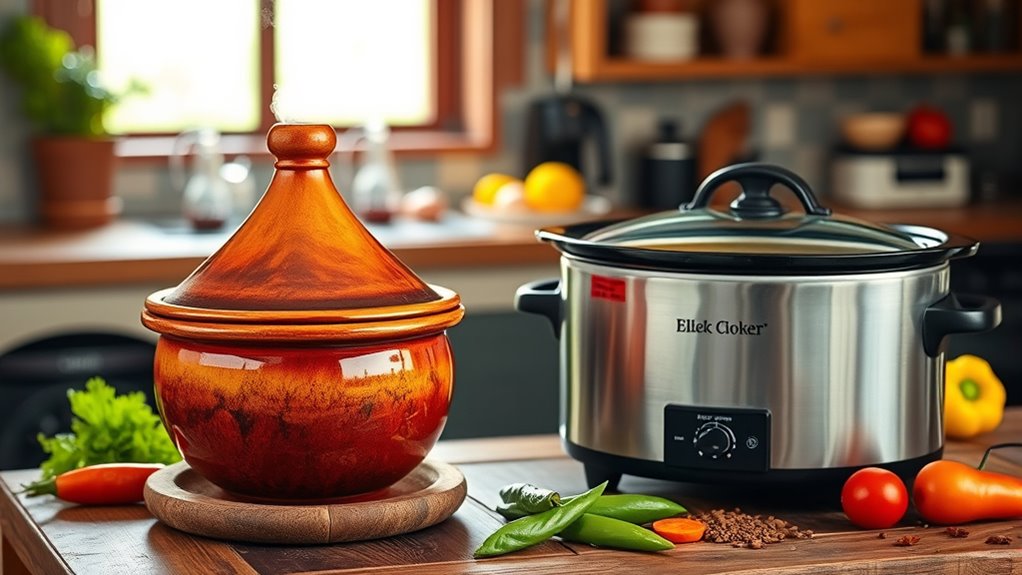
When you’re looking to create rich, flavorful dishes with minimal effort, you might wonder whether to reach for a tagine or a slow cooker. Both methods offer unique advantages, but they cater to different culinary experiences. A tagine, with its conical lid and clay construction, emphasizes traditional Moroccan flavors, while a slow cooker provides convenience and versatility for various dishes.
Using a tagine allows you to master the art of spice blending. The traditional design promotes even heat distribution, which helps to develop complex flavors as the ingredients meld together over time. This method is particularly effective for stews, tagines, and braises, where spices like cumin, coriander, and saffron can shine. The slow, steady cooking process enhances the depth of flavors, making each bite a delightful experience. You’ll find that the moisture retention in a tagine is impressive, as the unique lid traps steam, creating a self-basting effect that keeps your dish tender and juicy. This means you can achieve that melt-in-your-mouth texture without needing to constantly check on your food.
Using a tagine elevates your cooking, allowing for rich, complex flavors and tender, juicy dishes with minimal effort.
On the other hand, a slow cooker excels in its simplicity and convenience. You can throw in your ingredients in the morning, set the timer, and forget about it until dinner. It’s perfect for busy days when you don’t have time to fuss over your meal. While it doesn’t offer the same aesthetic appeal as a tagine, it compensates with its ease. The moisture retention in a slow cooker is also remarkable, as it creates a sealed environment that keeps your dishes moist. However, it might not allow for the same level of complex flavor development as a tagine, especially if you’re not mindful of your spice blending. Additionally, both methods can benefit from the use of waterwick pots, which help maintain consistent moisture levels for optimal cooking results.
Ultimately, your choice between a tagine and a slow cooker will depend on your cooking style and the flavors you’re hoping to achieve. If you’re keen on exploring the nuances of spices and want to immerse yourself in traditional cooking methods, a tagine is your best bet. But if you’re looking for a hassle-free way to enjoy a comforting meal at the end of a long day, a slow cooker might be just what you need. Either way, you’ll be creating delicious dishes with minimal effort, ensuring that every meal is a satisfying experience.
Products Worth Considering

Weber Searwood XL 600 Wood Pellet Smoker Grill, 36-Inch, Black

De'Longhi La Specialista Touch Semi-Automatic Espresso Machine with Grinder

Vitamix Touch & Go Advance 32-Ounce Bar Blender, White
As an affiliate, we earn on qualifying purchases.
Frequently Asked Questions
Can I Use a Tagine on an Electric Stovetop?
Yes, you can use a tagine on an electric stove, but you’ll need to take some precautions. Make sure your tagine has a flat base for even heat distribution. Start with low heat to avoid cracking the clay, gradually increasing it as needed. You might want to use a heat diffuser to help distribute the heat evenly across the bottom. This way, you’ll achieve the best cooking results without damaging your tagine.
Are Slow Cookers Energy Efficient Compared to Tagines?
Yes, slow cookers are generally more energy efficient compared to tagines. For instance, if you slow-cook a stew for eight hours, a slow cooker typically uses less energy than a tagine on an electric stovetop. This cooking efficiency means you can save on your energy consumption while enjoying delicious meals. By choosing a slow cooker, you’re not only saving time but also reducing your energy bills without sacrificing flavor.
What Types of Dishes Are Best for a Tagine?
A tagine’s perfect for cooking traditional recipes like Moroccan stews, braised meats, and vegetable dishes. The unique shape and material help lock in moisture, enhancing the tagine flavor. You’ll find that slow-cooked dishes, such as lamb with apricots or chicken with preserved lemons, turn out incredibly tender and flavorful. Just remember to keep the heat low and let your ingredients meld together for a truly authentic taste experience.
How Do I Clean a Tagine Properly?
To clean your tagine properly, start by hand-washing it with warm water and a soft sponge. If you’ve got stubborn stains, try soaking it in water for a few hours before scrubbing gently. Avoid harsh detergents or scouring pads. After cleaning, let it air dry completely. If it’s new, remember to season your tagine by rubbing it with oil and baking it for a couple of hours to enhance its non-stick properties.
Can I Cook Desserts in a Slow Cooker?
Yes, you can definitely cook desserts in a slow cooker! Many dessert recipes, like chocolate lava cake or bread pudding, turn out wonderfully in this appliance. The gentle heat creates moist, sweet dishes that are hard to resist. Just make sure to adjust cooking times and monitor the consistency. You’ll find that the slow cooker can be a fantastic tool for whipping up delightful desserts without much hassle! Enjoy experimenting!
Conclusion
In the end, both a tagine and a slow cooker have their strengths, so it really boils down to your cooking style. If you’re after rich, aromatic dishes with a touch of tradition, a tagine might be your best bet. But if convenience is key and you want to set it and forget it, the slow cooker is your friend. So, whether you stir the pot or let it simmer, you can’t go wrong with either choice!