TL;DR
Tumble dryers, electric ovens, washing machines and dishwashers can use substantial electricity, while appliances that produce heat or run for long periods are often the bigger household energy users. Experts say usage habits matter: run full loads, use eco settings and avoid heating more space than needed. The source cites a predicted 28% rise in the January 2027 energy price cap, but does not provide the underlying forecast or confirm that increase.
Heat-producing appliances, including tumble dryers and electric ovens, can account for significant electricity use, while devices running for long periods can add to household consumption, according to energy specialists quoted in a recent report. The advice comes as the report cites supplier predictions of a 28% rise in the January 2027 energy price cap, a forecast that is not confirmed in the material provided.

Get kitchen gear delivered free with Prime
- Fast, free delivery on millions of items
- Prime Video, Amazon Music and more included
- Member-only deals all year
The report lists tumble dryers at roughly 2 to 5.5 kilowatts, electric ovens at about 2 to 4 kilowatts, washing machines at 0.3 to 2.1 kilowatts and dishwashers at around 0.5 to 1.5 kilowatts. These are power figures, not the cost of a full cycle: actual electricity consumption depends on how long an appliance runs, its settings, its efficiency and how it is used.
Manan Shah, co-founder of Solar4Good UK, said appliances that generate heat are commonly among the costlier items to run. He named tumble dryers, electric ovens, electric showers and immersion heaters, and said older fridge-freezers can also add to bills because they operate for hours. A kettle draws considerable power while switched on, Shah said, but usually runs for only a short time.
Martyn Fowler, founder of Elite Renewables, illustrated how duration affects consumption: a 2,000-watt heater running for five hours uses 10 kilowatt-hours of electricity. He estimated that using it every evening could cost about £75 a month, although the actual cost depends on the electricity tariff and the number of days used.
Which Appliances Draw the Most Power?
Heat-producing and long-running appliances can use substantial electricity. Power ratings show the rate of use, while total consumption depends on run time and settings.
What Uses More Electricity?
Appliances that generate heat or operate for long periods can add more to household use.
Dryers and ovens
Tumble dryers and electric ovens have high power ranges while operating.
Fridge-freezers and heaters
Older fridge-freezers run for hours, and heaters can use significant energy over time.
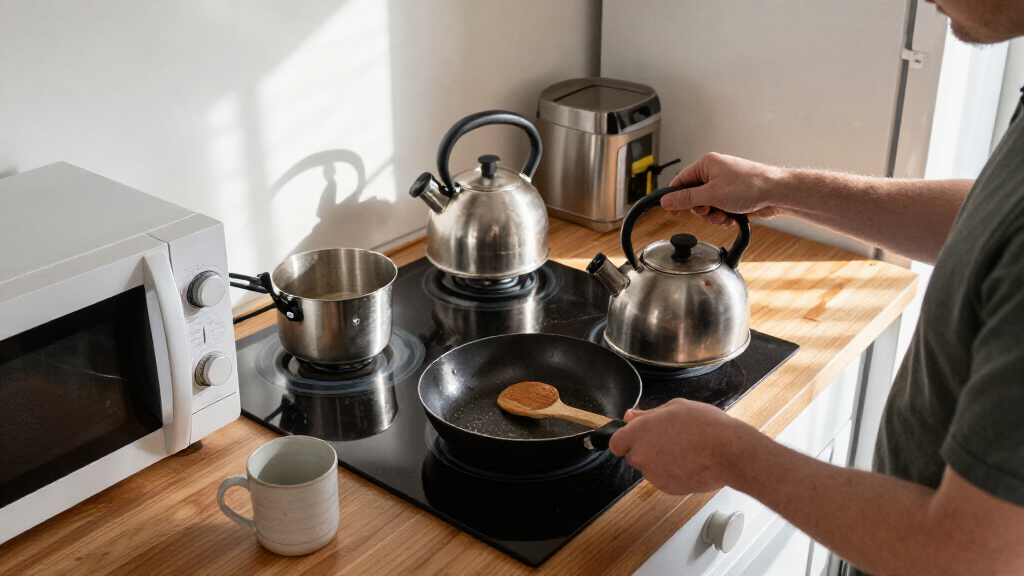
Kettles
A kettle draws considerable power while on, but usually runs briefly.
Power Is Not the Bill
Kilowatts describe the rate of electricity use; kilowatt-hours measure energy consumed over time.
The appliance’s kilowatt figure shows its power while operating.
Longer use generally means more electricity consumed; cycles and settings also matter.
The electricity unit rate affects the cost. The listed power ranges are not per-cycle cost estimates.
Practical Changes Before Winter
Focus on appliances used often and changes that reduce their energy use.
- Use eco settings on washing machines and dishwashers.
- Spin laundry well before tumble-drying.
- Consider a heat-pump dryer when replacing an old model.
- Address draughts and insulation in rooms that need frequent electric heating.
Where Household Electricity Goes
Knowing which appliances use power can help households focus on changes with a meaningful effect, rather than spending time on low-use devices. The main distinction is between an appliance’s power while operating and its total electricity use over time: a high-wattage kettle may run briefly, while a heater or fridge-freezer can use electricity across much longer periods.
The figures and examples are not a bill estimate for every home. Tariffs, appliance age, efficiency, cycle length and frequency of use all affect the result. Still, the experts’ advice points consumers toward usage patterns—particularly heating, drying and long-running appliances—as a more useful place to start than worrying about occasional, brief use of small electronics.
Products Worth Considering

Ninja Air Fryer XL, 6.5 Qt, 6-in-1, MaxCrisp, Dark Grey (AF181)

Ninja Foodi DZ401 DualZone XL Air Fryer, 10 Qt, 6-in-1, Grey

Vitamix 5200 Blender with 64 oz Container, Black
As an affiliate, we earn on qualifying purchases.
How Power Use Adds Up
The source report places the discussion against winter household costs and a predicted January 2027 price-cap increase attributed to forecasts from British Gas, EDF and E.ON. It supplies no links, publication date, forecast methodology or details of the suppliers’ estimates, so the 28% figure should be treated as a reported prediction rather than an announced change.
Appliance ratings in kilowatts describe the rate at which electricity is used at a given moment. Bills are generally based on energy consumed, measured in kilowatt-hours, and the amount charged per unit. A device rated at 2 kilowatts does not necessarily use 2 kilowatt-hours in every use; that depends on how long it operates and whether it cycles on and off. This is why the report’s appliance ranges cannot, by themselves, establish a household’s running costs.
“A 2,000-watt heater running for five hours will use 10kWh of electricity.”
— Martyn Fowler, founder of Elite Renewables
Forecasts and Costs Still Vary
The cited 28% price-cap rise is described as a prediction, not a confirmed decision. The supplied material does not specify which cap measure the percentage refers to, the forecast’s publication date, the assumptions behind it or whether all three named suppliers made the same estimate. No regulator announcement or independently verified forecast is included.
The appliance figures also lack consistent details about models, test conditions and cycle durations. The report gives power ranges, but not a standardised comparison of energy consumed per load. Fowler’s monthly heater estimate is based on a stated usage pattern, but the tariff used to calculate the £75 is not provided. Individual costs may differ substantially.
Practical Steps Before Winter
Households can start by checking which appliances run most often and reviewing their energy use against the unit rate on their electricity tariff. Fowler advises using washing-machine and dishwasher eco settings, which may take longer, and making sure laundry is spun well before it goes into a dryer. He also recommends considering a heat-pump dryer when replacing an old model, while noting that the source does not provide comparative test results or purchase costs.
For rooms that need frequent electric heating, Fowler suggests checking insulation and draughts rather than relying only on a portable heater. Consumers seeking to plan around the price cap should look for a confirmed announcement and its effective date; the supplied report does not establish when the January 2027 forecast will be verified or revised.
Key Questions
Which kitchen appliances are listed as high electricity users?
The report lists tumble dryers, electric ovens, washing machines and dishwashers. It also highlights electric heaters and older fridge-freezers, which can use electricity for long periods. Actual consumption depends on the model and how it is used.
Does a high kilowatt rating tell me the cost of using an appliance?
No. Kilowatts indicate the rate of electricity use, not the total cost. Total consumption depends on how long the appliance runs, and the cost depends on the electricity tariff. The report’s wattage ranges are not per-cycle cost estimates.
What did the report say about phone chargers and LED bulbs?
Fowler said charging a phone daily generally costs little over a year. He gave an example of a 10-watt LED bulb used for five hours consuming 0.05 kilowatt-hours; at the stated rate of 25p per kilowatt-hour, he put that at about 1.25 pence.
Is a 28% rise in the January 2027 price cap confirmed?
No. The source describes a 28% increase as a prediction attributed to energy suppliers. It does not include an official confirmation, forecast date or supporting methodology.
What changes do the experts recommend?
Fowler recommends using eco settings on washing machines and dishwashers, removing more water from laundry before tumble-drying, and considering a heat-pump dryer when replacing an appliance. He also suggests addressing draughts or insulation if a room requires frequent electric heating.
Source: idealhome.co.uk