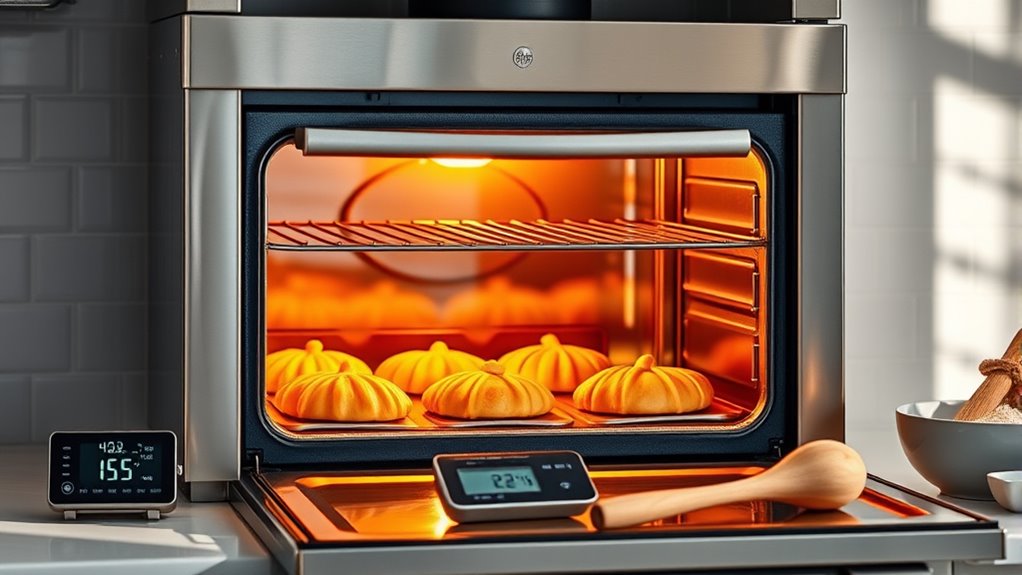

Preheating your oven is vital for achieving perfectly baked goods. It ensures even cooking, prevents undercooked centers or burnt edges, and activates ingredients like yeast for the right texture. Skipping preheating can lead to inconsistent results, such as cookies that don’t rise properly. However, there are exceptions, like slow-roasted dishes. Knowing when you can skip preheating can enhance your cooking skills. Stick around to discover more about when it’s okay to bypass this essential step.
Key Takeaways
- Preheating ensures even cooking, preventing undercooked centers and burnt edges for baked goods.
- Proper oven temperature activates ingredients like yeast, crucial for achieving the right texture.
- Skipping preheating can disrupt baking processes, leading to inconsistent results and wasted ingredients.
- Certain slow-roasted dishes can start in a cold oven, allowing flavors to develop gradually.
- Conventional ovens take 10-15 minutes to preheat; knowing this aids in effective baking planning.
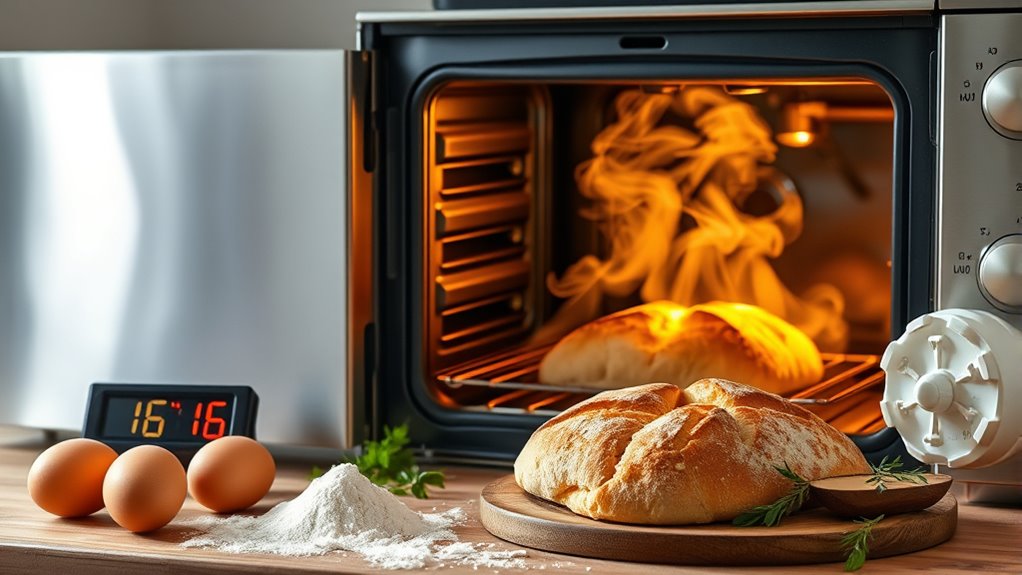
Preheating your oven is a crucial step that guarantees your dishes cook evenly and reach the right texture. When you don’t preheat, you risk throwing off the baking consistency, leading to unevenly cooked meals. Whether you’re making cookies, bread, or a casserole, starting with a properly heated oven ensures everything bakes as intended. If the oven temperature isn’t what it should be at the start of the cooking process, you can end up with undercooked centers or burnt edges.
Preheating your oven ensures even cooking and the perfect texture for your baked goods, preventing undercooked centers or burnt edges.
Think of your oven like a cooking partner. It needs to warm up before you start baking to create the ideal environment for your dish. Most recipes specify a certain oven temperature for a reason. This temperature reflects the conditions required for the ingredients to interact correctly. For instance, yeast needs warmth to activate properly, while cookies need the right heat to spread and rise. If you skip preheating, you might find that your cookies don’t turn out as expected, leading to frustration.
There are a few exceptions when you might skip preheating. For example, if you’re making a slow-roasted dish, such as a pot roast, you can start in a cold oven. The gradual increase in temperature allows the meat to tenderize beautifully and develop rich flavors. However, for most baking tasks, preheating is non-negotiable.
You’ll also want to be aware of the time it takes for your oven to reach the desired temperature. It can vary based on the oven’s make and model. If you’ve got a conventional oven, it generally takes about 10-15 minutes to preheat. In contrast, a convection oven might take a bit less time due to its fan circulation. Knowing how long to preheat can help you plan your baking more efficiently. Additionally, understanding your oven’s temperature calibration can help ensure optimal baking results.
Frequently Asked Questions
Can I Preheat My Oven While Preparing Ingredients?
Yes, you can preheat your oven while preparing ingredients. In fact, it’s a great way to save time! Just keep oven safety in mind—make sure you’re aware of the temperature inside the oven and don’t leave it unattended for too long. As you prep, consider how the ingredient temperature might affect cooking times. Once you’re ready, your oven will be hot and ready to cook your delicious meal efficiently.
How Long Does It Take to Preheat an Oven?
It usually takes about 10 to 15 minutes to preheat your oven, like lighting a candle before a grand feast. This step’s essential for baking consistency, ensuring your treats rise perfectly. Think of it as tuning a musical instrument—without proper oven performance, your recipes might miss their sweet notes. So, while you’re preparing ingredients, let the oven warm up, setting the stage for delicious results. Your patience will pay off in every bite!
Does Preheating Affect Baking Time?
Yes, preheating does affect baking time. When you preheat your oven, you guarantee the oven temperature is consistent from the start, which helps your baked goods rise and cook evenly. If you skip this step, you might end up with uneven baking, leading to longer overall cooking times or undercooked centers. For the best results, always give your oven time to reach the right temperature before popping in your treats.
What Temperature Should I Set for Preheating?
You should set your oven temperature according to the recipe you’re using, typically ranging from 350°F to 425°F for most baking. For proper preheating, give your oven about 10-15 minutes to reach the desired temperature before placing your dish inside. This ensures even cooking and helps achieve the best results. Always double-check your recipe to guarantee you’re setting the correct temperature for peak baking success.
Can I Use the Oven Light While Preheating?
Yes, you can use the oven light while preheating. It’s a safe way to monitor your food without opening the door, which helps preserve the temperature. Just remember that the oven light doesn’t provide heat, so it won’t help speed up preheating. Preheating safety is key; keep an eye on your dishes through the light to ensure they cook evenly. Enjoy your cooking without worry!
Conclusion
So, while it might seem like a minor detail, preheating your oven is the secret handshake to culinary success. It guarantees your dishes cook evenly and rise to their full potential, avoiding the heartbreak of a soggy bottom. However, if you’re in a pinch, there are certain times you can skip this step without sacrificing your masterpiece. Just remember, like a well-timed entrance, the right preparation sets the stage for a delicious outcome. Happy cooking!