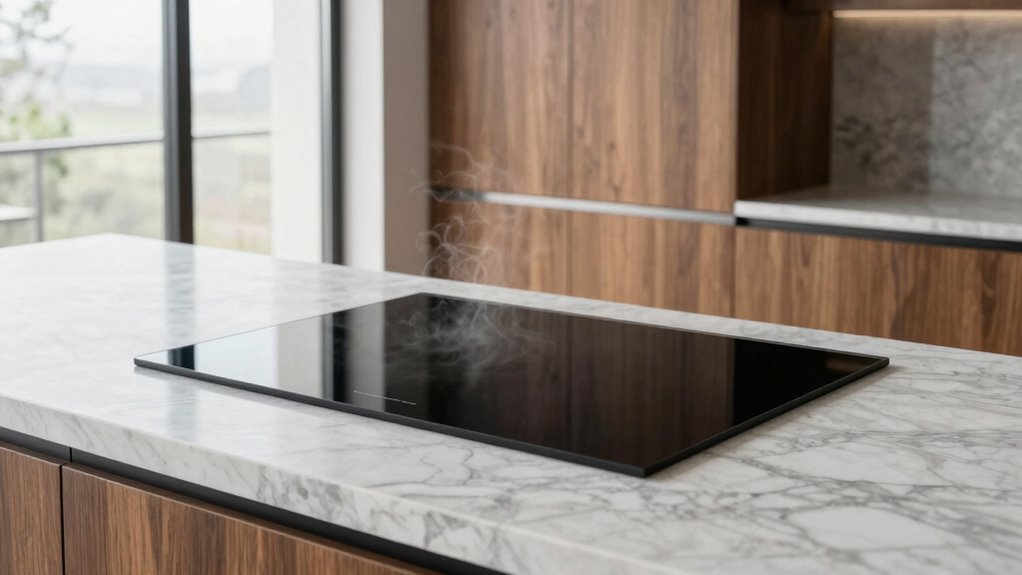

Downdraft cooktops are a sleek, modern solution for open kitchen designs. They pull smoke, steam, and odors downward through built-in vents, helping keep your space clean and unobstructed. This system works best when properly installed with straight, short duct routes and powerful fans. It’s a great choice if you want a minimalist look without sacrificing ventilation. Want to discover how to optimize your setup? Keep exploring for more tips and details.
Key Takeaways
- Downdraft cooktops vent smoke and odors downward, ideal for open kitchens where overhead hoods disrupt aesthetics.
- They use powerful fans and strategic ducting to ensure efficient removal of fumes directly at the cooktop level.
- Proper installation involves dedicated space, straight duct routing, and compatibility with open-plan layouts.
- These systems enhance modern kitchen aesthetics by reducing visual clutter and maintaining a sleek, minimalist look.
- Effective ventilation and maintenance access are essential for optimal performance in open kitchen designs.
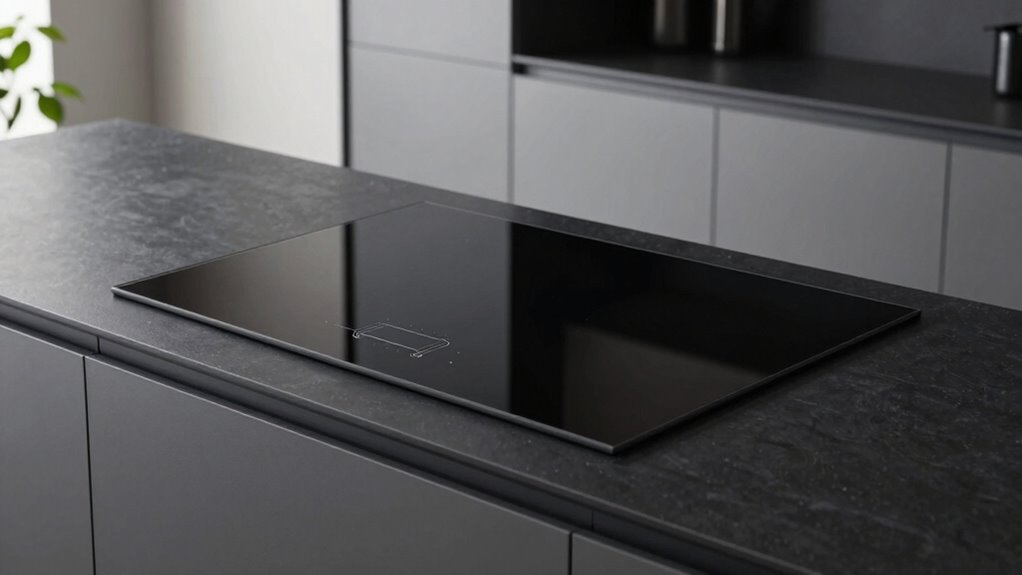
Ever wondered how to keep your kitchen air clean without installing a traditional range hood? That’s where downdraft cooktops come into play, offering a sleek solution especially suited for open kitchen designs. Unlike standard hoods mounted above your stove, downdraft systems pull smoke, steam, and cooking odors downward, venting them directly through your countertop or floor. This design can enhance the overall aesthetic, making your space feel more open and less cluttered. But to guarantee these systems work effectively, you need to contemplate both ventilation efficiency and installation considerations carefully.
Ventilation efficiency is critical when choosing a downdraft cooktop. Since these systems rely on pulling air downward, they must be powerful enough to capture fumes quickly and prevent them from spreading into your living space. High-quality downdrafts are equipped with strong fans and strategically placed vents to optimize airflow. You’ll want to pay attention to the airflow rate, typically measured in cubic feet per minute (CFM), ensuring it matches your cooking habits. A higher CFM means better extraction, which is especially important if you often cook with strong-smelling ingredients or high heat. Proper ducting is equally crucial; smooth, insulated ducts prevent loss of suction power and noise, maintaining both ventilation efficiency and comfort. Additionally, understanding the environmental impact of tissue paper can help you choose more sustainable kitchen materials and accessories. It’s also wise to consider the energy efficiency of the downdraft system to minimize electricity consumption over time. Ensuring proper duct design can further enhance performance and reduce operational noise, making your kitchen experience more pleasant. Furthermore, selecting a system with appropriate filtration options can help improve indoor air quality by capturing airborne particles and contaminants more effectively.
Installation considerations are equally important for successful integration into your open-plan kitchen. Unlike traditional hoods, downdraft cooktops require a dedicated space within your countertop or floor, which might involve structural modifications. You need to ensure your kitchen’s layout can accommodate the venting system without sacrificing cabinet space or aesthetic appeal. Placement is key; the cooktop should be positioned so the downdraft can effectively capture fumes without interfering with other appliances or the flow of your kitchen. Additionally, you’ll want to think about the routing of the ductwork—ideally, it should be as straight and short as possible to maximize performance and reduce noise. Power supply and maintenance access are other factors; make sure the installation allows for easy servicing and that the system’s power requirements align with your kitchen’s electrical setup. Proper planning during installation can significantly enhance the system’s longevity and performance.
downdraft cooktop with powerful fan
As an affiliate, we earn on qualifying purchases.
As an affiliate, we earn on qualifying purchases.
Frequently Asked Questions
How Energy-Efficient Are Downdraft Cooktops Compared to Traditional Hoods?
Downdraft cooktops are generally more energy-efficient than traditional hoods because they utilize direct ventilation, reducing the need for powerful fans. This improves ventilation efficiency, helping you save energy by requiring less power to operate. Plus, since they pull fumes directly downward, they often work faster at removing smoke and odors, further contributing to energy savings. Overall, they’re a smart choice if you want effective ventilation without high energy consumption.
Can Downdraft Systems Handle Heavy Cooking Fumes Effectively?
It’s no coincidence that downdraft systems can handle heavy cooking fumes effectively, especially when it comes to indoor air quality and odor control. These systems are designed to draw fumes downward, directly capturing them at the source. While they excel with moderate cooking, high-heat or greasy fumes might challenge them more. For intensive cooking, pairing with additional ventilation guarantees your kitchen stays fresh and odor-free.
Are Downdraft Cooktops Suitable for All Types of Kitchen Layouts?
Downdraft cooktops aren’t suitable for all kitchen layouts, especially those with limited space or specific kitchen aesthetics. They work best in open designs where user convenience is a priority, allowing for seamless integration without sacrificing style. If you value a sleek look and easy functionality, downdraft systems can be a great choice. However, for heavy cooking or tight spaces, traditional range hoods might offer better ventilation and efficiency.
What Are the Maintenance Requirements for Downdraft Ventilation Systems?
Think of your downdraft system as a garden that needs regular weeding; neglecting maintenance can clog it up. You should regularly clean and replace filters to guarantee efficient air purification. Also, check the ventilation system for debris or grease buildup, which can impair performance. Routine maintenance keeps your system functioning smoothly, preventing costly repairs and ensuring your kitchen stays fresh and safe.
Do Downdraft Cooktops Require Additional Installation Costs?
Yes, downdraft cooktops often require higher installation costs due to their increased installation complexity. You might need additional ductwork or structural modifications, which can add to your overall expenses. When considering cost considerations, factor in both the price of the unit itself and the labor involved in installation. While more costly upfront, many find the sleek, open design and space-saving benefits worth the investment.
built-in downdraft ventilation system
As an affiliate, we earn on qualifying purchases.
As an affiliate, we earn on qualifying purchases.
Conclusion
Incorporating a downdraft cooktop into your open kitchen design is like adding a refreshing gust—keeping your space clean and inviting. It seamlessly blends style with function, letting your cooking take center stage without sacrificing airflow or aesthetics. With its quiet, efficient operation, you’ll feel like a professional chef in your own home. So, embrace this sleek solution and let your kitchen breathe easily, turning your culinary space into a true masterpiece of design and practicality.
best downdraft cooktop for open kitchen
As an affiliate, we earn on qualifying purchases.
As an affiliate, we earn on qualifying purchases.
kitchen downdraft vent installation kit
As an affiliate, we earn on qualifying purchases.
As an affiliate, we earn on qualifying purchases.