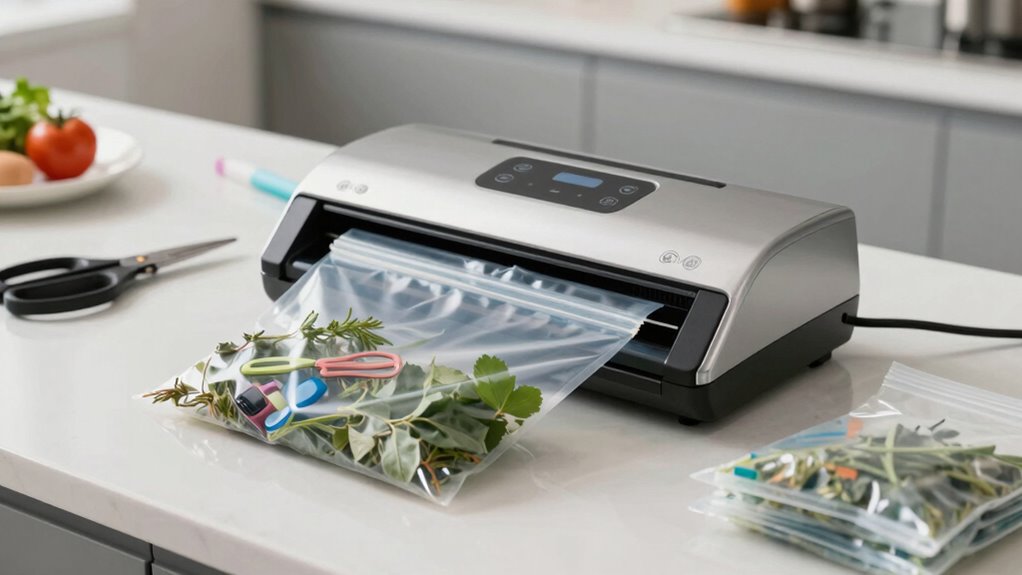
To use a vacuum sealer for more than food storage, start by choosing the right accessories like vented bags or canisters for liquids and delicate items. Place your items inside, seal tightly, and use the appropriate technique, ensuring a secure seal. You can also utilize accessories to organize small objects or protect valuables from moisture. Properly using your sealer expands its potential, and for more ideas on versatile uses, keep exploring how to maximize its capabilities.
Key Takeaways
- Use vented bags or accessories to release pressure safely when sealing non-food items or liquids.
- Rinse and dry accessories after use to maintain hygiene and prevent residue buildup.
- Utilize canisters or jars with adapters for storing liquids, delicate items, or small valuables securely.
- Adjust sealing settings based on item type to prevent damage and ensure a proper seal.
- Incorporate vacuum sealing for organizing, protecting valuables, or DIY projects beyond food preservation.

If you want to extend the shelf life of your food and keep it fresh longer, using a vacuum sealer is an effective solution. But did you know that a vacuum sealer isn’t just for preserving leftovers or bulk purchases? You can use it for a variety of culinary and practical purposes, especially when it comes to marinating techniques. By removing air from your bag, you allow marinades to penetrate meat, vegetables, or seafood more quickly and evenly. Just add your marinade and food into a vacuum-seal bag, then use your vacuum sealer to remove the air. This process creates a tight seal, trapping the marinade against the surface of your ingredients, which significantly reduces marinating time — sometimes from hours to just 30 minutes. It’s a simple way to boost flavor without extra effort or waiting.
To get the best results, consider investing in vacuum sealing accessories. These accessories can enhance your experience and expand the uses of your vacuum sealer. For example, vented bags allow you to release pressure without breaking the seal, which is helpful when you’re marinating. Rinsing and drying these accessories after each use keeps them hygienic and ready for the next task. Additionally, some vacuum sealers come with canisters or jars that work with special adapters, making it easier to store liquids or delicate items securely. Using the right accessories ensures you’re not limited to just sealing food; you can also store small items, craft supplies, or even keep important documents safe from moisture and air. Proper understanding of vacuum sealing techniques can also prevent potential mishaps and ensure optimal results with your equipment. Gaining knowledge about the role of technology in sealing efficiency can help you choose the best tools and accessories for your needs.
Understanding sauna safety tips and maintaining proper ventilation are essential to prevent heat-related illnesses and ensure a safe experience. Once you’ve mastered basic sealing, you can explore other ways to utilize your vacuum sealer beyond food storage. For instance, you can create portioned, pre-measured ingredients for recipes or freeze herbs and berries in small amounts for later use. The vacuum sealing process prevents freezer burn and dehydration, helping you save money and reduce waste. If you’re into DIY projects, you might also use your vacuum sealer to organize small items or protect important belongings. Additionally, knowing about proper storage can help you maximize the longevity of your sealed items, whether they’re food or other valuables. Just be sure to choose the correct vacuum sealing accessories designed for these purposes, as they’ll provide the best results and durability.
Frequently Asked Questions
Can I Use a Vacuum Sealer for Non-Food Items?
Yes, you can use a vacuum sealer for non-food items. It’s great for craft preservation and document protection, helping keep delicate items safe from moisture, dust, and air damage. Just make certain the items are suitable for vacuum sealing—use appropriate bags and avoid sealing anything that could be damaged by compression. This method extends the lifespan of your valuables, making it a versatile tool beyond just food storage.
Is It Safe to Vacuum Seal Electronics or Fragile Items?
Vacuum sealing electronics or fragile items isn’t safe because it risks damage or moisture exposure. The strong vacuum can crush delicate parts, and air removal might trap humidity, leading to corrosion. For electronics protection and fragile item safety, avoid vacuum sealing these items. Instead, use padded, moisture-resistant containers or specialized storage solutions designed for delicate equipment to guarantee they stay secure and undamaged during storage.
How Long Can I Store Non-Food Items Using a Vacuum Sealer?
Storing savvy saves space! You can store non-food items using a vacuum sealer for several years, depending on storage duration and material compatibility. Generally, plastics and durable materials hold up best, protecting items from dust, moisture, and decay. For sensitive or delicate objects, check their material compatibility first. Properly sealed, non-food items can stay secure, safe, and sound for extended periods, making your storage smarter and more streamlined.
Can Vacuum Sealing Prevent Mold on Non-Food Objects?
Vacuum sealing can help prevent mold on non-food objects by reducing moisture and oxygen, which are vital for mold growth. However, it doesn’t guarantee complete mold prevention, especially if the material isn’t compatible with sealing or if moisture is trapped inside. To maximize mold prevention, guarantee your objects are dry and compatible with your vacuum sealer. Proper sealing and material selection are key to keeping your items mold-free for longer periods.
Are There Specific Bags for Different Non-Food Materials?
Think of vacuum sealer bags like tailored suits—they come in different sizes and styles for specific needs. For non-food materials, you’ll want bags designed for durability and chemical resistance. Alternative sealing methods might be better for delicate fabrics. Always check material compatibility to prevent damage. I once sealed leather accessories with food-grade bags, which caused cracks. Using the right bags guarantees your items stay protected without harm.
Conclusion
Using a vacuum sealer isn’t just for food—you can also protect valuables, keep collectibles pristine, or even organize your wardrobe. Some might worry about the cost or complexity, but once you get the hang of it, it’s a simple way to extend the lifespan of many items. With a bit of practice, you’ll find endless ways to maximize your vacuum sealer’s benefits, proving it’s a versatile tool that’s well worth the investment in your home.