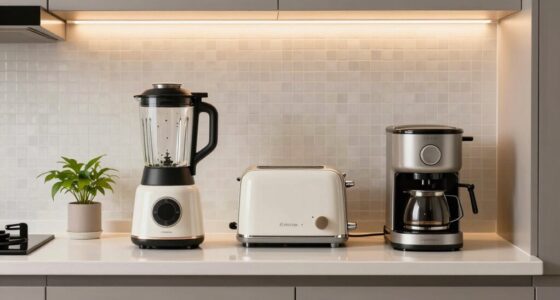
To prevent steam damage around your countertop appliances, make certain they’re placed on flat, heat-resistant surfaces with enough space for steam to escape. Keep appliances away from walls and cabinetry, and use splash guards or barriers to catch water droplets. Regularly inspect seals, hoses, and vents for wear or leaks, and clean appliances frequently. Proper ventilation and humidity control also help, reducing moisture buildup. Want smarter tips? Keep going to learn more.

Get kitchen gear delivered free — and shop member deals
- Fast, free delivery on millions of items
- Access to Prime Big Deal Days deals on October 6–7
- Prime Video, Amazon Music and more included
Key Takeaways
- Place appliances on flat, heat-resistant surfaces with adequate space for steam dissipation.
- Regularly inspect and maintain seals, hoses, and vents to prevent leaks and steam buildup.
- Use splash guards or protective barriers to shield sensitive surfaces from water droplets.
- Ensure proper kitchen ventilation with exhaust fans or windows to reduce moisture accumulation.
- Turn off and unplug appliances when not in use to prevent unnecessary steam escape.
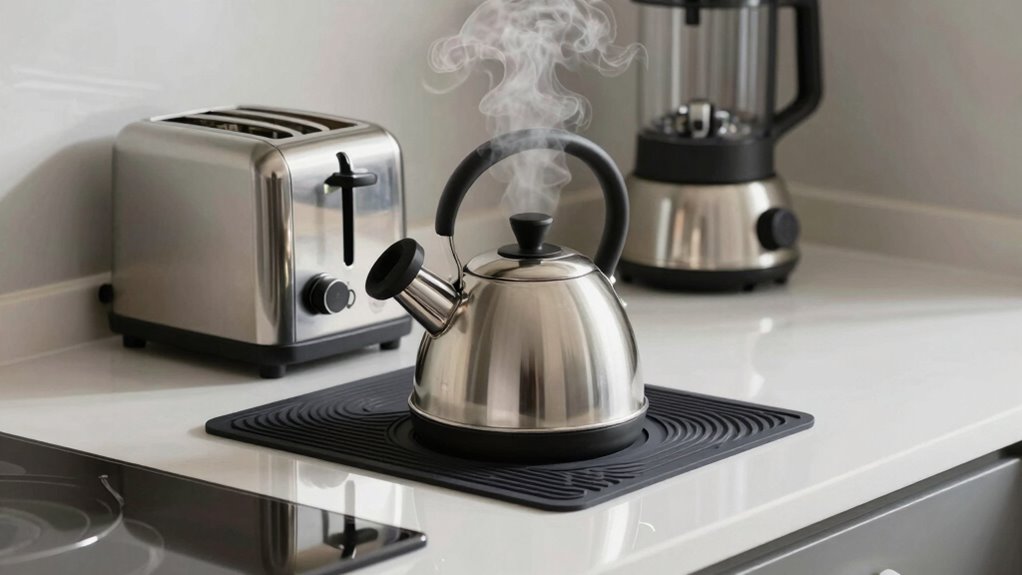
Steam damage can cause serious harm to your appliances and property if not properly managed. When dealing with appliances that produce steam, like kettles, coffee makers, or steam cleaners, you need to prioritize steam safety to prevent costly repairs and potential hazards. Proper appliance maintenance plays a vital role in keeping your kitchen safe and your appliances functioning at their best. Ignoring the importance of regular checks and proper setup can lead to steam buildup, which may weaken surfaces, warp materials, or cause water damage over time.
Prioritize steam safety and maintenance to protect your appliances and prevent property damage.
To prevent steam damage around your countertop appliances, start by ensuring they are placed on flat, heat-resistant surfaces that can handle moisture. Avoid positioning them too close to walls or cabinetry, as lingering heat and steam can damage paint, finishes, or wood. Creating enough space around these appliances allows steam to dissipate freely, reducing the risk of accumulation that could lead to damage. Additionally, always use appliances according to manufacturer instructions to guarantee safe operation and to maintain their longevity. Overfilling a steamer or kettle, for instance, can cause excess steam to escape unpredictably, increasing the chance of damage.
Regular appliance maintenance is essential for preventing steam-related issues. Check seals, hoses, and vents routinely to make sure they aren’t clogged, cracked, or worn out. A compromised seal can cause steam to escape in unintended directions, risking damage to nearby surfaces. If you notice any leaks or unusual steam release, address it immediately—don’t ignore these signs. Clean your appliances frequently to prevent mineral buildup, which can impair steam release mechanisms and cause uneven steam distribution. Properly maintaining your appliances not only prolongs their lifespan but also minimizes safety risks associated with steam. Additionally, understanding steam safety and how to manage steam emissions can further help in preventing damage. Incorporating proper ventilation strategies is also crucial to aid in the dissipation of steam and protect your household surfaces. A well-ventilated space reduces steam buildup, which is vital for preventing damage over time. Regular inspections can also help identify potential issues early before they lead to costly repairs or damage. Using humidity control devices, such as dehumidifiers, can help maintain optimal moisture levels and reduce overall steam effects in your kitchen.
In addition to routine checks, consider installing splash guards or protective barriers around your appliances. These can be simple clear acrylic panels or custom-fit shields that catch excess steam or water droplets before they reach sensitive surfaces. Always turn off and unplug appliances when they’re not in use, especially if you’ll be away for extended periods. This reduces the chance of accidental steam leaks or electrical issues that could lead to damage or fire hazards.
As an affiliate, we earn on qualifying purchases.
Frequently Asked Questions
Can Steam Damage Occur on All Types of Countertops?
Steam damage can occur on various countertop materials if exposed to excessive steam. Materials like laminate, wood, and certain composites are more vulnerable to damage from steam exposure, which can cause warping, discoloration, or delamination. However, more heat-resistant surfaces like granite, quartz, and solid surface materials typically resist steam better. To protect your countertops, avoid direct steam contact and use barriers or covers when using appliances that emit steam.
Are There Specific Appliances That Cause More Steam Damage?
Certain appliances, like steam irons, coffee makers, and humidifiers, cause more steam damage because they emit intense, localized moisture. You should use steam resistant materials around these devices and employ ventilation strategies, such as exhaust fans or open windows, to reduce moisture buildup. Proper protection and good airflow help prevent damage to your countertops, especially when dealing with high-moisture appliances that produce significant steam.
How Long Does It Take for Steam Damage to Appear?
Steam condensation can cause visible damage within a few months if you don’t take precautions. You might notice discoloration, warping, or corrosion around appliances, signaling compromised appliance safety. To prevent this, regularly wipe down surfaces, keep appliances dry, and use protective barriers. Prompt attention to early signs can extend appliance lifespan and guarantee safety, reducing the risk of costly repairs or replacements caused by steam damage.
Is Steam Damage Reversible Once It Occurs?
Steam damage isn’t typically reversible once it occurs because vapor exposure causes permanent changes to the surface. When steam cleaning, excessive vapor exposure can lead to warping, discoloration, or peeling. To avoid this, limit the duration and intensity of steam cleaning around your countertops. If damage does happen, you might need professional repairs or replacements, as the effects of steam are often long-lasting and difficult to undo.
Do Protective Coatings Prevent All Types of Steam-Related Harm?
Like the armor of a knight, protective coatings offer a barrier, but they don’t prevent all steam-related harm. While they provide some heat resistance, extreme or prolonged steam exposure can still cause damage. You must combine protective coatings with good practices to truly safeguard your surfaces. Think of coatings as a helpful shield, not an invincible one—so, always be cautious with steam around your appliances.
As an affiliate, we earn on qualifying purchases.
Conclusion
To protect your countertops from steam damage, always use splash guards or silicone mats, and wipe away moisture promptly. Did you know that excessive moisture can weaken countertop surfaces over time, leading to costly repairs? By taking these simple precautions, you can extend the life of your surfaces and keep your kitchen looking pristine. Remember, a little prevention goes a long way in maintaining your appliances and countertops for years to come.
As an affiliate, we earn on qualifying purchases.
As an affiliate, we earn on qualifying purchases.
Fall Picks
fall essentials
As an affiliate, we earn on qualifying purchases.