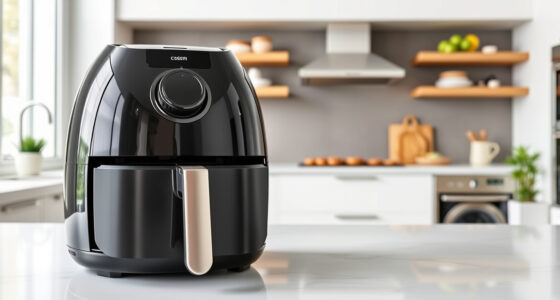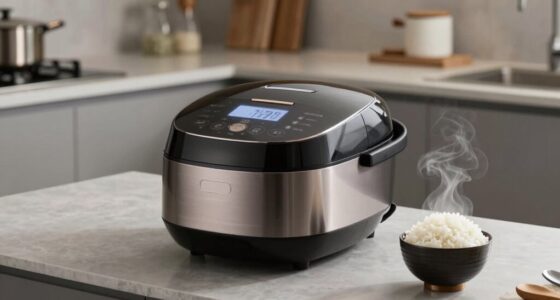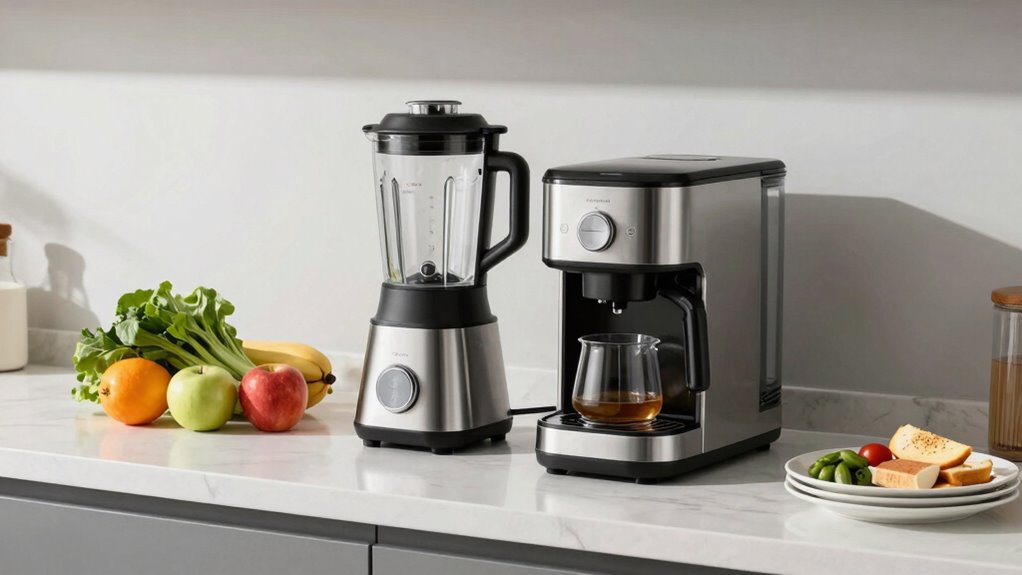

By pairing appliances efficiently, you minimize the number of dishes, utensils, and surfaces you need to clean afterward. Using devices like slow cookers and blenders together reduces the amount of cookware involved in food prep and finishing. Smart controls and coordinated functions also prevent overflows and burnt food, making cleanup faster. Plus, fewer steps and messes mean less time spent tidying up. Keep exploring to discover how better appliance pairing can make your kitchen chores even easier.

Get kitchen gear delivered free — and shop member deals
- Fast, free delivery on millions of items
- Access to Prime Big Deal Days deals on October 6–7
- Prime Video, Amazon Music and more included
Key Takeaways
- Combining appliances reduces the number of dishes and utensils needed, minimizing post-cooking cleanup.
- Coordinated devices streamline cooking steps, decreasing the chances of spills and overflows that require cleaning.
- Smart appliance integration allows for automated operation, preventing overcooking and messes.
- Multi-function appliances simplify meal prep, reducing the need for multiple pots, pans, and cleaning tasks.
- Efficient communication between appliances minimizes surface clutter and cleanup time.

Pairing appliances during meal preparation can considerably cut down on cleanup time and effort. When you choose appliances that work well together, you streamline your cooking process and reduce the number of dishes, utensils, and surfaces you need to clean afterward. For example, using a slow cooker alongside a blender allows you to prepare ingredients and finish multiple steps with fewer pots and bowls. This approach not only makes cleanup faster but also enhances your overall user convenience, making cooking less of a chore.
Pairing appliances simplifies cooking and reduces cleanup, making your kitchen tasks faster and more convenient.
One of the key benefits of better appliance pairing is improved energy efficiency. When your appliances are designed to complement each other, they often operate more effectively and consume less power. For instance, pairing a microwave with an oven can save energy by allowing you to cook multiple dishes simultaneously without overloading a single appliance. This efficiency reduces electricity bills and minimizes the environmental impact of your cooking habits. Additionally, appliances that are compatible or from the same brand often feature smart technology that further optimizes energy use, automatically adjusting power based on your needs.
Beyond energy savings, better appliance pairing simplifies your kitchen routine. When you select appliances that are easy to operate together, you spend less time figuring out multiple settings or switching between different devices. For example, a stove that connects with a smart timer can automatically turn off when a dish is ready, preventing overcooking and reducing the need for additional cleanup. These features not only save you time but also help you avoid messes caused by overflows or burnt food, making your entire cooking and cleaning process smoother. Incorporating smart technology integration further enhances this efficiency by allowing appliances to communicate and coordinate their functions seamlessly. Moreover, compatibility among appliances can lead to a more cohesive and intuitive kitchen environment, making daily routines more manageable. Effective appliance pairing can also help in reducing clutter and organizing your kitchen space more efficiently.
User convenience is another important aspect. When appliances are paired thoughtfully, they often integrate seamlessly, allowing you to manage multiple tasks from a single control point. A connected kitchen system, for example, lets you start your oven, monitor your refrigerator, and operate your dishwasher all through one app. This level of integration reduces clutter on your countertops and minimizes the hassle of juggling multiple devices. As a result, you’re free to focus more on preparing your meal than on managing a complex web of appliances. Additionally, smart technology can further enhance this convenience by providing real-time alerts and remote control options. Recognizing the benefits of energy-efficient appliances can also motivate you to select models that contribute to both environmental sustainability and cost savings.
Frequently Asked Questions
How Do Appliance Pairings Vary for Different Types of Cuisines?
You notice that appliance pairings vary for different cuisines because each culinary tradition relies on specific tools for ingredient compatibility and cooking methods. For example, Asian cuisines often combine rice cookers with steamers, while Mediterranean dishes pair ovens with mixers. By understanding these unique pairings, you streamline your cooking process, making cleanup quicker and more efficient, as appliances work together seamlessly to handle ingredients suited to each cuisine’s traditional techniques.
Can Smart Appliances Optimize Pairing for Faster Cleanup?
Think of smart appliances as your culinary orchestra, harmonizing through wireless connectivity to optimize pairing and make cleanup a breeze. They coordinate efficiently, reducing mess and saving time. With energy efficiency as their guiding compass, your appliances work smarter, not harder. This synergy streamlines processes, minimizes residual grime, and accelerates cleanup, turning a once-daunting task into a swift, almost effortless dance — all thanks to intelligent, connected technology.
Are There Specific Brands Better for Appliance Pairing?
Yes, some brands excel in appliance pairing due to better compatibility and seamless appliance integration. Brands like Samsung, LG, and Bosch often lead because they prioritize brand compatibility, ensuring their appliances work smoothly together. When you choose appliances from brands committed to open standards and compatibility, you’ll find easier pairing, faster setup, and more efficient cleanup. Picking the right brand makes your smart appliances work harmoniously, saving you time and effort.
How Does Countertop Space Impact Appliance Pairing Efficiency?
Imagine your countertop as a stage—space is essential for a smooth performance. When your countertop space is ample, appliance pairing becomes more efficient, reducing countertop clutter and enhancing workspace organization. You can seamlessly move between appliances, minimizing cleanup time and frustration. A well-organized surface helps you work faster, keeps your kitchen tidy, and makes meal prep feel less like a chore and more like an artful rhythm.
What Safety Considerations Exist When Pairing Multiple Appliances?
When pairing multiple appliances, you need to prioritize electrical safety by ensuring all devices are plugged into properly grounded outlets and using surge protectors if necessary. Check appliance compatibility to prevent overloads or damage. Avoid daisy-chaining power strips, and keep cords organized to prevent tripping hazards. Always unplug appliances before cleaning or adjusting to reduce risk, and consult the manufacturer’s guidelines for safety recommendations.
Conclusion
By pairing appliances thoughtfully, you can streamline your cleaning routine and save time. Imagine your dishwasher and sink working together, so dishes go straight from one to the other without piling up. This visual shows how strategic appliance placement minimizes mess and effort. When you optimize your setup, cleanup becomes quicker and less stressful, turning a chore into a smoother, more efficient process. Better pairing truly makes a noticeable difference in your daily routine.
Fall Picks
fall essentials
As an affiliate, we earn on qualifying purchases.