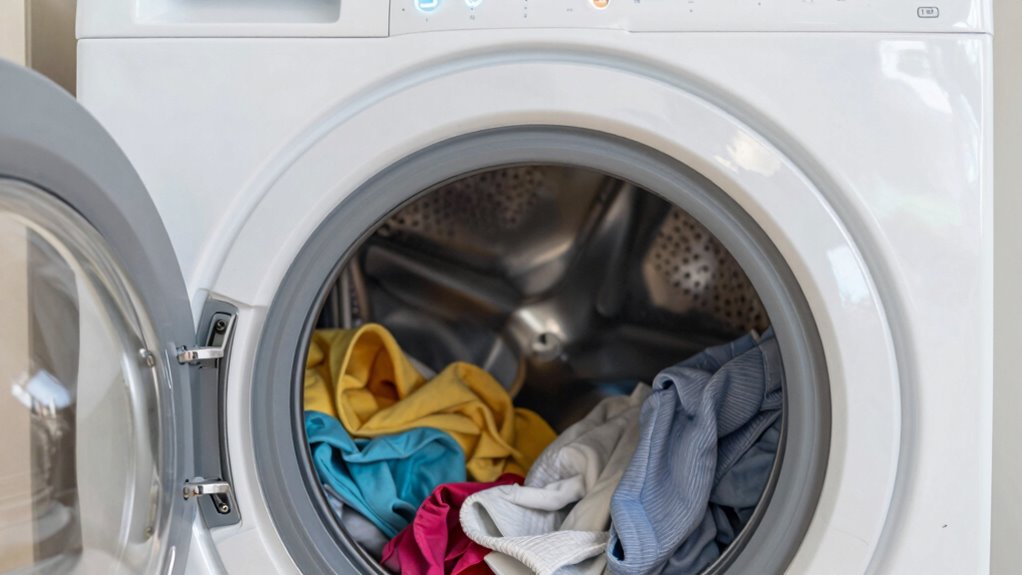

Capacity numbers on front-load washers can be misleading because they usually measure drum volume, not the actual laundry load you can wash effectively. Bigger drum space doesn’t always mean you can wash larger loads comfortably or efficiently. Overloading can hurt wash quality, while underloading wastes water and energy. To choose the right machine, you need to understand what these numbers really represent. If you keep exploring, you’ll discover how to pick the best fit for your needs.

Get kitchen gear delivered free with Prime
- Fast, free delivery on millions of items
- Prime Video, Amazon Music and more included
- Member-only deals all year
Key Takeaways
- Capacity measures drum volume, not laundry weight, so larger numbers don’t guarantee bigger loads.
- Overloading or underloading can affect wash quality and machine longevity, regardless of capacity.
- Larger capacity models often use more water and energy, not necessarily improving washing performance.
- Installation complexity and space requirements increase with higher capacity washers.
- Real-world reviews reveal that capacity numbers may not reflect actual efficiency or reliability.
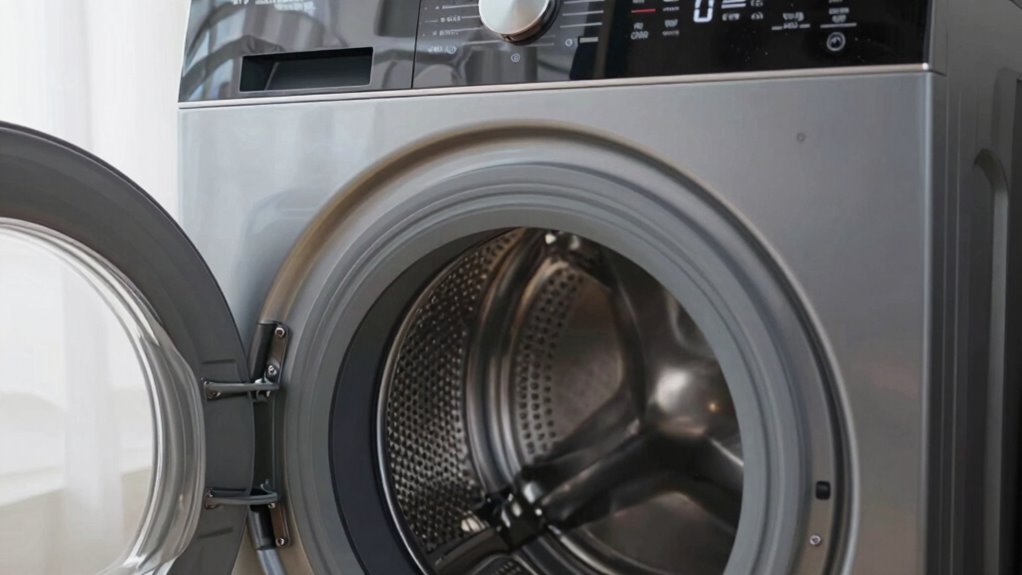
When choosing a front-load washer, understanding its capacity numbers is essential to guarantee it meets your laundry needs. The capacity, usually measured in cubic feet, is often presented as a straightforward indicator of how much laundry a machine can handle. However, these numbers can be misleading if you’re not aware of what they truly represent. Many consumers assume that a higher capacity means you can toss in larger loads, but in reality, the capacity figure doesn’t always correlate directly with how much laundry you can load. It’s more about the volume of the drum, not necessarily the weight of your laundry. This distinction is vital because overloading can impair washing performance and reduce the lifespan of your machine, while underloading might not maximize efficiency, especially when considering energy efficiency. Additionally, understanding how capacity relates to energy use can help you choose a model that saves on utility costs. Recognizing capacity limitations can also prevent issues with wash cycle effectiveness and machine durability. Being aware of how capacity impacts water consumption is equally important, as larger machines tend to use more water even if they do not necessarily wash more effectively. It’s also helpful to consider user reviews to gauge real-world performance and reliability of different capacity options. Knowing these considerations upfront helps you avoid surprises later on and guarantees your new washer functions efficiently without causing any inconvenience.
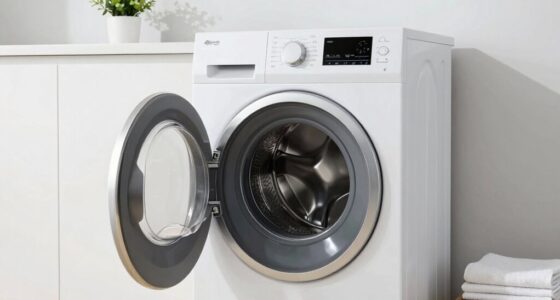
Understanding drum volume versus laundry weight is key to choosing the right front-load washer.
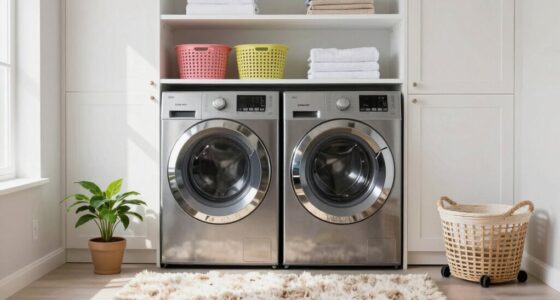
Installation considerations also play a role in understanding capacity. Larger machines may require more space and specific installation requirements, such as reinforced flooring or additional clearance for proper ventilation. You should measure your laundry area carefully and verify that the machine’s dimensions will fit comfortably, allowing for easy access and maintenance. Keep in mind that a larger capacity washer might need a more robust water supply and drainage setup, which could increase installation complexity and cost. Knowing these considerations upfront helps you avoid surprises later on and guarantees your new washer functions efficiently without causing any inconvenience.
front load washer capacity guide
As an affiliate, we earn on qualifying purchases.
As an affiliate, we earn on qualifying purchases.
Frequently Asked Questions
How Is Washer Capacity Measured Across Different Brands?
You’ll find that washer capacity varies across brands due to different measurement methods and capacity labeling standards. Some brands measure capacity based on the drum’s total volume, while others focus on the maximum load weight it can handle. This inconsistency can be confusing, so always check how each manufacturer measures capacity. Comparing these standards helps you select a washer that suits your laundry needs, avoiding surprises at home.
Do Larger Capacities Always Mean Better Washing Performance?
Larger capacities aren’t a magic wand for better washing. They can often lead to overloading, which hampers detergent efficiency and increases energy consumption. Think of your washer as a dance partner—you want enough space, but not so much that the dance suffers. Bigger isn’t always better; it’s about finding the right size that balances performance with efficiency, ensuring your clothes get clean without wasting resources.
Can Overloading a High-Capacity Washer Cause Damage?
Yes, overloading a high-capacity washer can cause damage. Overloading risks strain on the drum, motor, and suspension system, which can lead to mechanical issues over time. It also hampers washing performance and increases wear on clothes. To safeguard washer durability, always follow the manufacturer’s recommended load sizes. Properly loading your washer ensures it operates efficiently and helps prevent costly repairs caused by overloading.
How Does Load Size Impact Wash Cycle Times?
Ever wonder how load size impacts your wash cycle times? When you fill your washer, larger loads may extend cycle durations, affecting detergent efficiency and increasing energy consumption. Overloading can also lead to longer washes because the machine struggles to clean thoroughly. Conversely, smaller loads might finish quicker but can waste water and energy. Balance your load size to maximize cycle times, save energy, and guarantee your clothes come out spotless.
Are There Specific Laundry Types Suited for Smaller Capacity Washers?
Yes, smaller capacity washers are ideal for delicate or small loads, like lingerie or hand-wash items. They often lead to better detergent efficiency because you use less product, and the wash cycle can be more targeted. Additionally, these machines tend to have lower noise levels, making them perfect for quiet spaces or apartment living. Just keep in mind that larger loads might require a bigger machine for maximum performance.
best energy efficient front load washer
As an affiliate, we earn on qualifying purchases.
As an affiliate, we earn on qualifying purchases.
Conclusion
So, next time you’re choosing a front-load washer, don’t just chase the biggest number. Think of it as selecting a dance partner—you want one that moves in harmony with your laundry routine, not just one that seems to have the broadest shoulders. A little patience in understanding capacity will keep your laundry days smooth and stress-free, turning what could be a chore into a gentle waltz through your weekly chores.
washer drum volume vs load capacity
As an affiliate, we earn on qualifying purchases.
As an affiliate, we earn on qualifying purchases.
washer installation space requirements
As an affiliate, we earn on qualifying purchases.
As an affiliate, we earn on qualifying purchases.
Columbus Day / Indigenous Peoples' Day Picks
long weekend sales
As an affiliate, we earn on qualifying purchases.