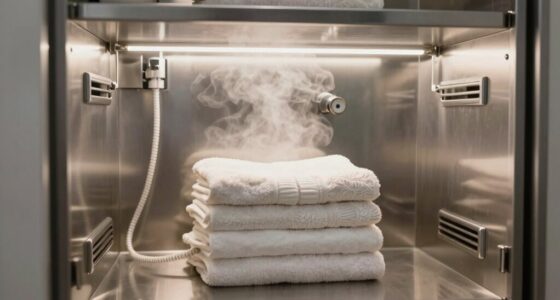
Heat pump dryers differ from traditional ones by using a refrigeration cycle to gently dry clothes, which lowers energy use and reduces costs. Unlike traditional dryers that rely on heating elements and vent external humid air, heat pump models work at lower temperatures and don’t need outside vents. This makes them more eco-friendly and better for your clothes. If you want to discover more about how these innovative dryers can save you energy and money, keep exploring the details.

Get kitchen gear delivered free with Prime
- Fast, free delivery on millions of items
- Prime Video, Amazon Music and more included
- Member-only deals all year
Key Takeaways
- Heat pump dryers use a refrigeration cycle to extract moisture, unlike traditional dryers that generate heat with heating elements.
- They operate at lower temperatures, taking longer to dry clothes but reducing energy consumption.
- Heat pump dryers do not require external venting, simplifying installation and improving indoor air quality.
- They consume about 50% less energy, leading to lower operating costs and environmental benefits.
- The gentle drying process extends clothing lifespan and minimizes heat damage compared to traditional dryers.

The key difference lies in how each type of dryer handles heat. Traditional dryers generate heat using heating elements, which consume a lot of electricity. They rapidly dry clothes but often at the expense of energy efficiency and increased operating costs. In contrast, heat pump dryers use a refrigeration cycle—similar to an air conditioner—to extract moisture from your clothes. This process takes longer but uses far less energy. Because they operate at lower temperatures, heat pump dryers also reduce wear and tear on fabrics, helping your clothes last longer and maintaining their quality over time.
Another advantage that stands out is the overall operating costs. Traditional dryers tend to be more expensive to run, especially if you have a large household or do laundry daily. Their high energy consumption drives up electricity bills, and they often require more maintenance due to the heat elements and venting systems. Heat pump dryers, however, consume about 50% less energy in some cases, which drastically cuts your monthly utility bills. While they may have a higher upfront cost, the savings on energy bills over the years often offset this initial investment.
Additionally, heat pump dryers are better for the environment. Because they use less energy, they reduce your carbon footprint, which aligns with efforts to combat climate change. Their gentle drying process also means less heat damage, leading to fewer damaged clothes and less need for replacements. Plus, since they don’t require venting outside, they are easier to install in places without external exhaust options, adding to their convenience. Furthermore, the energy-efficient design of heat pump dryers aligns with ongoing efforts to promote sustainable living and reduce energy consumption. Incorporating these dryers into your home can be a step toward sustainable living and environmental responsibility. A notable benefit is that they can contribute to improved indoor air quality, as they don’t vent hot, humid air outside. Additionally, their cost-effective operation makes them an attractive choice for long-term savings.
Products Worth Considering

Vitamix 64 oz Low-Profile Blender Container with SELF-DETECT, BPA-Free

KitchenAid Classic Series 4.5-Quart Tilt-Head Stand Mixer, Onyx Black

Breville Barista Express Espresso Machine with Built-In Grinder, Black Sesame
As an affiliate, we earn on qualifying purchases.
Frequently Asked Questions
Are Heat Pump Dryers Suitable for All Fabric Types?
Heat pump dryers are generally suitable for most fabric types, but you should consider fabric sensitivity and drying temperature. They work gently and use lower temperatures, making them ideal for delicate fabrics. However, for very delicate or heat-sensitive materials, you might need to choose a special setting or opt for traditional dryers. Always check the clothing care labels to confirm your fabrics dry safely with a heat pump dryer.
How Long Does a Typical Heat Pump Drying Cycle Take?
A typical heat pump drying cycle usually takes around 2 to 4 hours, which is longer than traditional dryers. However, this slower drying speed is a trade-off for better energy efficiency, helping you save on electricity bills. While it may take more time, you’ll benefit from gentle drying that protects fabrics and reduces energy consumption, making heat pump dryers a more eco-friendly choice despite the longer cycle duration.
Can Heat Pump Dryers Be Used in Humid Environments?
Yes, heat pump dryers can be used in humid environments, but you should consider humidity compatibility and installation factors. High humidity may reduce drying efficiency, so guarantee proper ventilation and adequate space around the unit. Some models are better suited for humid settings, so check specific product recommendations. Proper installation, including venting and drainage, helps optimize performance and prevents moisture buildup, making heat pump dryers a viable option even in damp conditions.
What Maintenance Do Heat Pump Dryers Require?
You need to regularly clean the dryer filters to keep your heat pump dryer running efficiently. Additionally, check refrigerant levels periodically, as low levels can affect performance. It’s also wise to inspect the vents and coils for dust or lint buildup. Proper maintenance guarantees your dryer operates smoothly, prolongs its lifespan, and maintains energy efficiency. Remember, routine upkeep is key to avoiding costly repairs and keeping your clothes dry effectively.
Do Heat Pump Dryers Impact Energy Bills Differently Over Time?
Imagine your energy bills shrinking like snow melting away—heat pump dryers impact your costs over time by offering better energy savings. They use less electricity, making them more cost-efficient than traditional dryers. As you run your laundry, you notice the steady decline in expenses, turning your laundry routine into a smarter, budget-friendly choice. Over months, this efficiency adds up, giving you more control over your household budget.
Conclusion
In summary, heat pump dryers stand out by saving space, sparing energy, and showcasing sustainability. Their clever cooling cycle conserves comfort and cuts costs, making them a smart, eco-friendly choice. If you’re seeking a stylish, savvy, and sustainable dryer, a heat pump dryer’s your best bet. Boost your laundry game with this brilliant, budget-friendly, and green gadget — because going green doesn’t have to be a gamble!