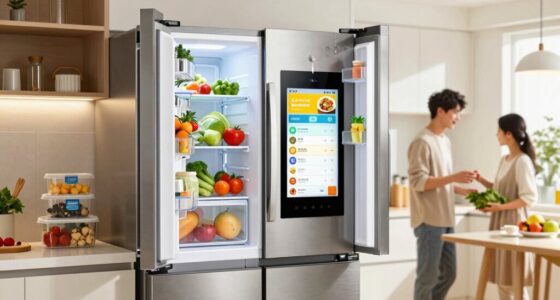
To match appliance power to your household needs, start by evaluating the core functions you require, like cooking or laundry, and choose appliances with appropriate capacity and wattage. Avoid overpowered units that waste energy or pose safety risks, and opt for energy-efficient models with high Energy Star ratings. Confirm your electrical system can handle the appliance’s demand and prioritize safety features. Continuing will help you learn how to make smarter choices for a balanced, safe, and eco-friendly home.

Get kitchen gear delivered free with Prime
- Fast, free delivery on millions of items
- Prime Video, Amazon Music and more included
- Member-only deals all year
Key Takeaways
- Assess household activity levels to determine necessary appliance capacity and wattage requirements.
- Prioritize energy-efficient appliances with appropriate power ratings for household tasks.
- Match appliance power to specific needs, avoiding overpowered units to save energy and reduce hazards.
- Consider appliance features and safety options to ensure proper and safe operation.
- Balance performance and efficiency by selecting appliances that meet demand without excess capacity.
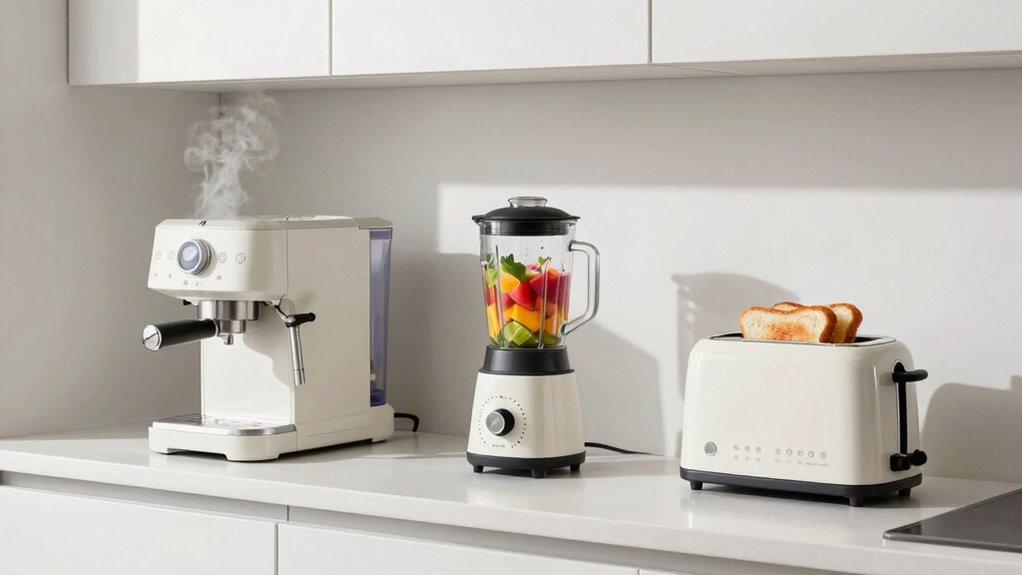
Are you unsure how to choose appliances that perfectly suit your household’s daily demands? It’s a common concern, and finding the right balance can make your home more efficient, safer, and cost-effective. The key lies in matching the power of appliances to your actual needs. Overpowered appliances can waste energy, increase safety risks, and inflate your utility bills, while underpowered ones might struggle to perform tasks properly. To get it right, you need to evaluate your household’s specific activities and usage patterns.
Start by assessing the core functions you require from each appliance. For example, if you frequently cook large meals, a high-capacity oven or stove with appropriate wattage is essential. On the other hand, if you only prepare small dishes or snacks occasionally, a smaller, less powerful appliance will do. When considering energy efficiency, look for appliances with high Energy Star ratings or similar certifications. These are designed to use power more effectively, reducing your household’s overall energy consumption and environmental impact. Choosing appliances that align with your actual needs ensures you don’t waste energy on overpowered units that barely get used to full capacity.
Assess your needs and choose energy-efficient appliances to optimize performance and reduce waste.
Safety considerations should also influence your choices. Overly powerful appliances may generate excess heat, pose electrical hazards, or create fire risks if not properly maintained or installed. Make sure your electrical system can handle the appliance’s power demands, and follow manufacturer guidelines for installation and use. For kitchens, consider safety features like automatic shut-offs or child locks, especially if you have young children. In laundry or utility areas, select appliances with built-in safety sensors to prevent overheating or electrical faults. Additionally, understanding appliance power and how it relates to your household needs can help you make more informed choices. A clear understanding of energy efficiency can guide you toward models that provide optimal performance with minimal energy waste. Being aware of power ratings can also help you compare appliances more effectively and choose those that match your household’s capacity. Moreover, researching long-term operational costs can help you select models that are affordable to run over time, not just at the point of purchase. Recognizing the significance of energy consumption can further refine your selection process, ensuring you prioritize models that balance power and efficiency effectively.
Another important aspect is understanding the appliance’s energy consumption relative to its power rating. Sometimes, a slightly less powerful appliance can perform just as well if it’s more energy-efficient. This not only conserves electricity but also extends the lifespan of the appliance, saving you money on repairs or replacements. When choosing between models, compare their wattage, features, and energy ratings. Opt for those that provide enough power for your needs without going overboard.
In the end, matching appliance power to your household demands is about balancing performance, safety, and efficiency. By carefully evaluating what you truly need, considering energy ratings, and paying attention to safety features, you can select appliances that serve you well without unnecessary waste or risk. This approach ensures your home runs smoothly, safely, and sustainably.
Energy Star rated household appliances
As an affiliate, we earn on qualifying purchases.
As an affiliate, we earn on qualifying purchases.
Frequently Asked Questions
How Do I Estimate My Household’s Total Energy Consumption?
To estimate your household’s total energy consumption, start by reviewing your utility bills to see your monthly energy use. Next, list all your appliances and note their wattages, then estimate how many hours each runs daily. Multiply wattage by hours used to find individual appliance energy consumption and sum these figures for an overall estimate. This appliance estimation helps you understand your energy habits and identify ways to save.
What Safety Precautions Should I Take When Installing Appliances?
Don’t put all your eggs in one basket when installing appliances. Prioritize installation safety by turning off power at the circuit breaker before beginning. Always guarantee proper electrical grounding to prevent shocks and electrical fires. Use the right tools, follow manufacturer instructions carefully, and double-check connections. If unsure, consult a licensed electrician. Taking these precautions safeguards your home and ensures your appliances operate safely and efficiently.
How Often Should I Upgrade or Replace Household Appliances?
You should consider upgrading or replacing your household appliances every 8-15 years, depending on their appliance lifespan and usage. Regularly assess their performance; if they become inefficient, costly to repair, or no longer meet your needs, it’s time for an upgrade. Keeping appliances up-to-date guarantees safety, energy efficiency, and reliability. Don’t wait until they break down completely—proactive replacement helps you save money and maintain a comfortable home.
Are Energy-Efficient Appliances Worth the Extra Initial Cost?
Yes, energy-efficient appliances are worth the extra initial cost because they often lead to long-term savings on your energy bills. Plus, they’re eco-friendly upgrades that reduce your household’s carbon footprint. While they might have a higher upfront price, they tend to have a longer appliance lifespan, meaning you won’t need to replace them as often. Overall, investing in energy-efficient appliances benefits both your wallet and the environment.
How Can I Reduce My Electricity Bill With Appliance Choices?
You can cut your electricity bill by choosing appliances with longer lifespans and better energy efficiency. Use an energy meter to monitor how much each device consumes, then prioritize energy-saving models. Avoid running appliances unnecessarily or during peak hours. Regular maintenance keeps appliances running efficiently, saving energy and money over time. Making informed choices helps reduce your overall electricity costs while extending your appliances’ lifespan.
safety features for kitchen appliances
As an affiliate, we earn on qualifying purchases.
As an affiliate, we earn on qualifying purchases.
Conclusion
So, next time you’re tempted to buy that mega-watt microwave or energy-sucking fridge, remember: your house doesn’t need a power plant, just a sensible appliance. Match your devices to your actual needs, not your ego or wallet. Otherwise, you’ll end up with more kilowatts than friends at your power-hungry dinner party. Save energy, save money, and maybe, just maybe, stop turning your home into a covert power station. Your wallet—and the planet—will thank you.
energy-efficient washing machines
As an affiliate, we earn on qualifying purchases.
As an affiliate, we earn on qualifying purchases.
high capacity ovens with appropriate wattage
As an affiliate, we earn on qualifying purchases.
As an affiliate, we earn on qualifying purchases.
Columbus Day / Indigenous Peoples' Day Picks
long weekend sales
As an affiliate, we earn on qualifying purchases.