To avoid overbuying small appliances, first evaluate if you really need them and how often you’ll use them. Designate storage spaces to keep clutter at bay and regularly assess if your gadgets are still useful. Set a budget and compare features to avoid impulse buys or overspending on unnecessary features. Focus on quality and essential functions rather than trends. Staying organized and mindful about your actual needs will help prevent clutter—if you’re interested, there’s more to discover.

Get kitchen gear delivered free — and shop member deals
- Fast, free delivery on millions of items
- Access to Prime Big Deal Days deals on October 6–7
- Prime Video, Amazon Music and more included
Key Takeaways
- Assess if the appliance is truly needed before making a purchase.
- Designate specific storage spaces to prevent clutter and duplicates.
- Regularly evaluate existing appliances for continued usefulness.
- Set a clear budget and prioritize essential, versatile gadgets.
- Stay informed about appliance trends and opt for quality over quantity.
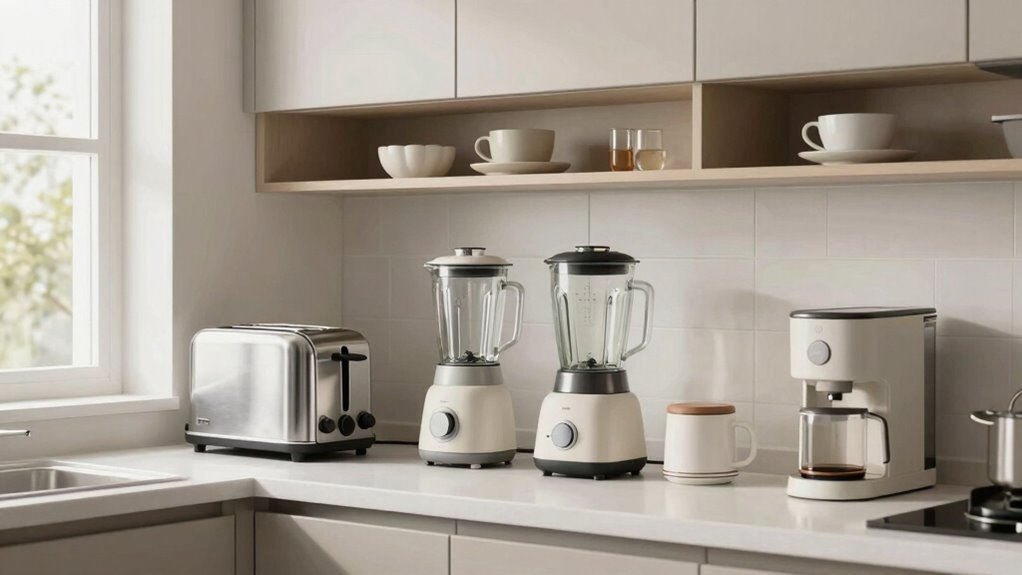
Many people end up cluttering their kitchens with small appliances they rarely use, but avoiding overbuying requires a bit of planning. Before adding a new gadget to your collection, ask yourself if it’s truly necessary. Will you use it regularly, or is it just a shiny new item that might sit unused on your countertop? This simple step helps prevent impulse purchases and keeps your kitchen organized. When considering new appliances, think about how they fit into your daily routines and whether they replace other tools you already own. If not, it’s probably best to skip it.
Ask yourself if a new appliance is necessary before making a purchase to avoid clutter and unnecessary tools.
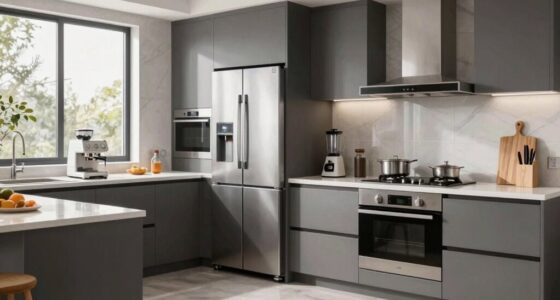
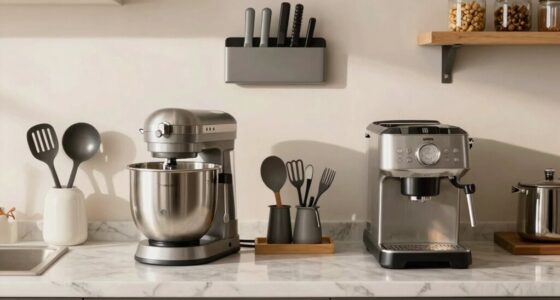
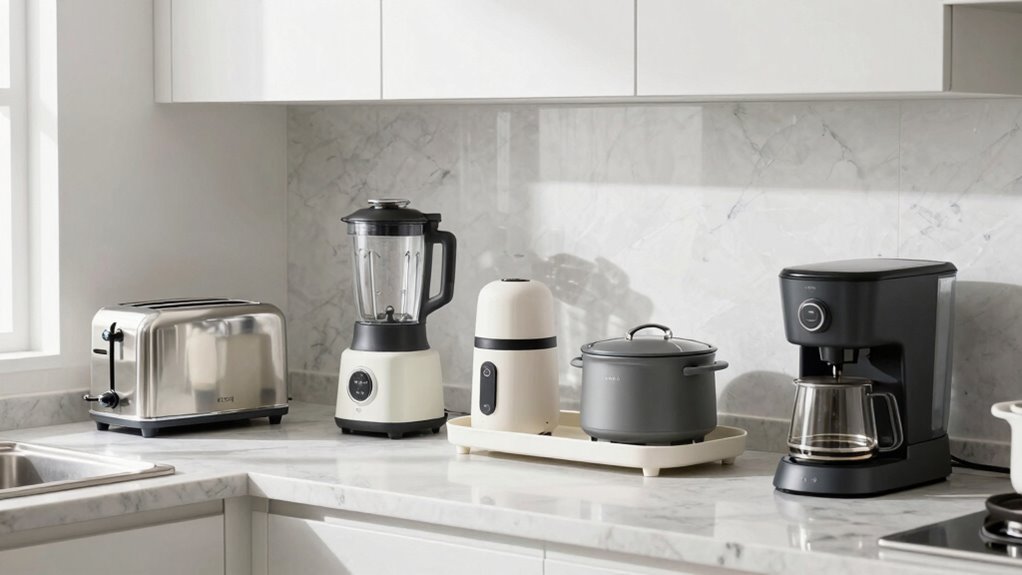
Good appliance storage plays a key role in maintaining a tidy kitchen. Designate specific spots for your appliances—either in cabinets, drawers, or on shelves—so they aren’t constantly taking up valuable countertop space. When appliances are stored properly, it’s easier to see what you have and resist buying duplicates. Remember, a clutter-free environment enhances kitchen organization, making it more functional and less stressful. If you find yourself frequently reaching for certain devices, consider investing in a dedicated storage solution to keep them accessible but out of sight when not in use.
Another way to prevent overbuying is to evaluate your existing appliances regularly. Do you still use the blender you bought five years ago? Is that popcorn maker still sitting in the back of a cabinet? Being honest about what you actually use helps you make smarter choices in the future. If an appliance isn’t serving a purpose, donate it or sell it. Clearing out unused gadgets creates space for the tools you genuinely need and ensures your kitchen remains organized and efficient. Additionally, understanding small appliance trends can help you distinguish between must-have essentials and passing fads. Being aware of current appliance lifespan expectations can also guide your purchasing decisions, ensuring you invest in durable, long-lasting items. Incorporating knowledge about product durability can further help you select appliances that stand the test of time. Moreover, researching energy efficiency can save you money and reduce your environmental impact over time. Regularly reviewing your gadgets can also help you stay updated on advancements in appliance technology, leading to smarter investments.
Setting a budget before shopping for new appliances can also curb unnecessary purchases. Stick to a list of essential items based on your cooking habits. When you’re shopping, compare features and prices to avoid buying the most expensive or “latest” model just because it looks appealing. Often, older or simpler versions work just fine and save you money. Remember, more appliances don’t necessarily mean a better kitchen—quality and necessity matter more.
Ultimately, the key to avoiding overbuying small appliances is mindfulness. Think about how each purchase fits into your lifestyle and storage capacity. Keep your kitchen organized by regularly *evaluating* what you have and how you use it. With a bit of planning and discipline, you can maintain a functional, clutter-free space that makes cooking and cleaning more enjoyable—without the frustration of excess gadgets piling up.
compact food processor for small kitchens
As an affiliate, we earn on qualifying purchases.
As an affiliate, we earn on qualifying purchases.
Frequently Asked Questions
How Do I Determine Which Small Appliances Are Essential?
You determine which small appliances are essential by focusing on your cooking habits and lifestyle. Think about appliance customization—choose items that truly enhance your daily routine. Budget planning also helps you prioritize. List necessary appliances first, like a blender or coffee maker, then see if additional gadgets fit your budget. Avoid impulse buys, and remember, investing in versatile, quality appliances often saves money and space long-term.
What Are Space-Saving Storage Solutions for Small Appliances?
Smart storage solutions simplify your space. Try stacking and storing small appliances vertically to save precious countertop space. Use sleek shelves or hanging hooks for easy access, and opt for countertop organization that keeps essentials within reach without clutter. Vertical storage solutions like wall-mounted racks or magnetic strips help maximize every inch. With clever organization, you keep your kitchen neat, nimble, and nicely navigable, preventing overbuying and promoting a clutter-free cooking environment.
How Can I Compare the Energy Efficiency of Different Appliances?
To compare the energy efficiency of appliances, look at their energy labels and efficiency ratings. Energy labels display crucial info like annual energy consumption, helping you identify more efficient options. Check the efficiency ratings, often marked with stars or numeric scores, to see which appliances use less power for the same task. Prioritizing higher-rated appliances saves you money on energy bills and reduces environmental impact.
Are There Eco-Friendly or Sustainable Small Appliance Options?
They say, “You are what you buy,” so choose wisely. You’ll find eco-friendly small appliances made from sustainable materials, like bamboo or recycled plastics. Look for sustainable brands committed to reducing environmental impact. These options often feature energy-efficient designs and eco-conscious manufacturing processes. By opting for these, you support a greener future and reduce your carbon footprint, making your kitchen both functional and environmentally friendly.
How Often Should I Replace or Upgrade My Small Appliances?
You should replace or upgrade your small appliances when they start showing frequent breakdowns or declining performance, even after routine appliance maintenance. Regularly check warranty considerations to determine if repairs are covered, saving you money. If repairs become costly or appliances become outdated, it’s time for an upgrade. Staying attentive to appliance condition and warranty terms helps you make smarter, eco-friendly choices that extend your appliance’s lifespan while reducing waste.
As an affiliate, we earn on qualifying purchases.
Conclusion
By staying mindful of your actual needs, you avoid clutter piling up like a forgotten spice jar in the back of your cabinet. When you resist the temptation to buy every shiny gadget, your kitchen stays organized and functional—kind of like how a well-placed utensil drawer makes cooking smoother. Remember, every appliance should serve a purpose, not just fill space. Keep your purchases intentional, and your kitchen will feel cozy, efficient, and truly yours.
multi-function countertop appliance
As an affiliate, we earn on qualifying purchases.
As an affiliate, we earn on qualifying purchases.
small appliance storage solutions
As an affiliate, we earn on qualifying purchases.
As an affiliate, we earn on qualifying purchases.
Evergreen bestsellers Picks
bestsellers
As an affiliate, we earn on qualifying purchases.