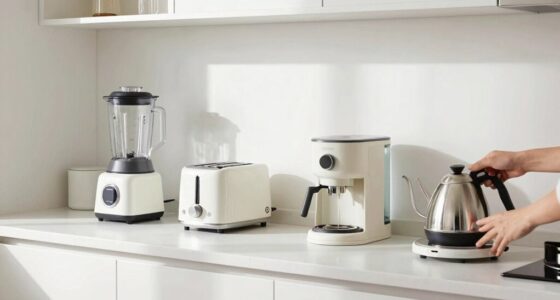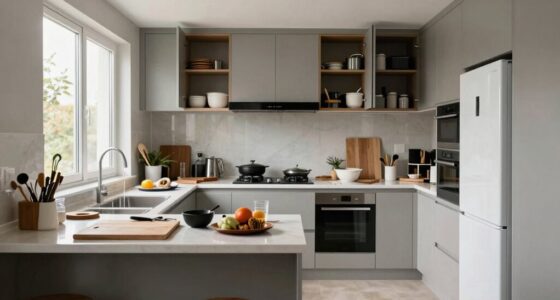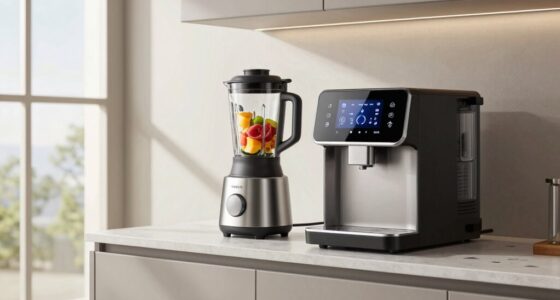
When choosing between built-in and freestanding appliances, consider your aesthetic preferences, installation ease, and budget. Built-ins give a sleek, seamless look and are more durable, but they cost more and take longer to install. Freestanding units are easier to move, usually cheaper, and add a casual vibe. Think about what matters most—long-term durability or flexibility—and explore further to find the perfect fit for your space.
Open a free Amazon Business account
Business pricing, bulk buying and tax-exempt orders.
As an affiliate, we earn on qualifying purchases.
Key Takeaways
- Consider your desired aesthetic: sleek, integrated look or versatile, statement pieces.
- Evaluate installation complexity and long-term maintenance ease.
- Assess durability and material quality for longevity and performance.
- Factor in your budget, including initial costs and potential future upgrades.
- Prioritize eco-friendliness and sustainability features aligned with your values.
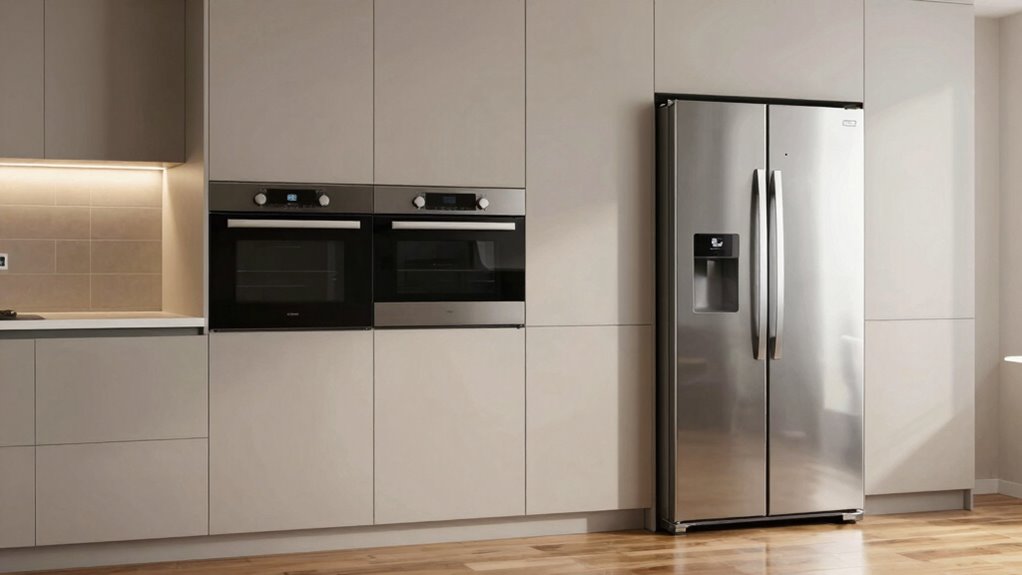
Choosing between these two styles also influences your kitchen’s overall aesthetic. Built-in appliances create a clean, modern look, making your space feel more streamlined and custom-designed. They blend seamlessly with cabinetry and can help maximize counter space. Freestanding appliances, however, often have a more traditional or casual vibe. They’re visually distinct and can act as statement pieces, giving your kitchen a more relaxed and versatile feel. Think about your design preferences and how much effort you’re willing to put into installation and maintenance. Additionally, because built-in appliances are often made with more robust materials, they tend to be more appliance durability**, which is an important consideration for long-term investment. Moreover, installation complexity can vary significantly between the two options, so consider how much time and effort you’re willing to dedicate during setup. It’s also worth noting that sustainability considerations** may influence your choice, especially if eco-friendly materials and energy efficiency are priorities for your home.
Furthermore, understanding the cost implications can help you make a more informed decision aligned with your budget. In the end, your decision should balance durability, installation complexity, and your desired aesthetic. If you want a sleek, long-lasting kitchen with a professional finish, built-in appliances are likely your best choice. But if you prioritize flexibility, ease of installation, and a more casual look, freestanding appliances could be the way to go. Weigh these factors carefully to create a kitchen that matches your style, needs, and budget.
As an affiliate, we earn on qualifying purchases.
Frequently Asked Questions
Are Built-In Appliances More Energy-Efficient Than Freestanding Ones?
Built-in appliances often offer better energy savings because they’re designed to fit seamlessly, reducing heat loss and improving efficiency. They also tend to have modern, eco-friendly features that lower environmental impact. Freestanding units can be less efficient due to gaps or poor insulation. So, if you’re focused on energy savings and minimizing environmental impact, built-in appliances are generally the smarter choice for your home.
Can I Upgrade Built-In Appliances Easily Later On?
Can you upgrade built-in appliances easily later on? It depends. Many built-in models now incorporate smart technology, making upgrades more feasible if the manufacturer offers firmware updates or modular components. However, upgrading hardware may be limited, and warranty coverage could be affected. Before installing, check if the appliance allows for future upgrades and clarify warranty details. Are you prepared to navigate these considerations to keep your kitchen tech current?
Do Built-In Appliances Require More Maintenance Than Freestanding?
Built-in appliances generally require more maintenance than freestanding ones because of their integration into your cabinetry and the need for precise installation. However, they offer better aesthetic integration, seamlessly blending with your kitchen design. Customization options are also wider, allowing you to tailor features to your needs. While maintenance might be slightly more involved, the sleek look and personalized setup often outweigh the extra care required.
What Are the Initial Installation Costs for Built-In Versus Freestanding?
Built-in appliances typically have higher initial installation costs due to their cost comparison and installation complexity. You’ll likely spend more on professional installation and custom cabinetry adjustments. Freestanding appliances usually cost less upfront since they’re easier and quicker to install, often fitting into existing spaces without extra modifications. So, if budget and simplicity matter, freestanding models offer a more affordable and straightforward initial setup.
How Does Appliance Size Impact Kitchen Layout Options?
Larger appliances can dominate your kitchen, limiting counter space and constraining layout flexibility. Smaller appliances, however, offer more freedom, allowing you to optimize your space for both function and flow. When choosing, consider how size impacts your design—bigger units may require custom cabinetry, while compact options fit seamlessly into various layouts. Ultimately, appliance size influences how open or contained your kitchen feels, shaping your overall cooking and living experience.
As an affiliate, we earn on qualifying purchases.
Conclusion
So, you’ve weighed the pros and cons, but the final decision isn’t quite clear yet. Will you go for the seamless look of built-in appliances, or embrace the flexibility of freestanding units? Remember, your choice could transform your space in unexpected ways. The right decision is just around the corner—are you ready to take the next step and discover what’s truly best for your home? The answer might surprise you.
As an affiliate, we earn on qualifying purchases.
As an affiliate, we earn on qualifying purchases.
NFL season / tailgating Picks
team gear
As an affiliate, we earn on qualifying purchases.