To match appliance power to your household needs, assess your daily usage and household size. Larger families typically require high-capacity appliances, while smaller households can opt for compact models. Check energy labels to choose efficient options, and avoid over- or underpowered appliances that waste energy or struggle with tasks. Properly matching your appliances can save money and extend their lifespan. Keep exploring to discover how better planning guarantees your home stays efficient and comfortable.

Get kitchen gear delivered free — and shop member deals
- Fast, free delivery on millions of items
- Access to Prime Big Deal Days deals on October 6–7
- Prime Video, Amazon Music and more included
Key Takeaways
- Assess household size, routines, and daily appliance usage to determine appropriate power requirements.
- Check appliance energy ratings to select models that match your household’s efficiency needs.
- Avoid overpowered appliances to prevent energy waste and reduce wear and tear on equipment.
- Consider future household changes to ensure appliances remain suitable over time.
- Match appliance capacity to household demands to optimize performance, longevity, and cost savings.
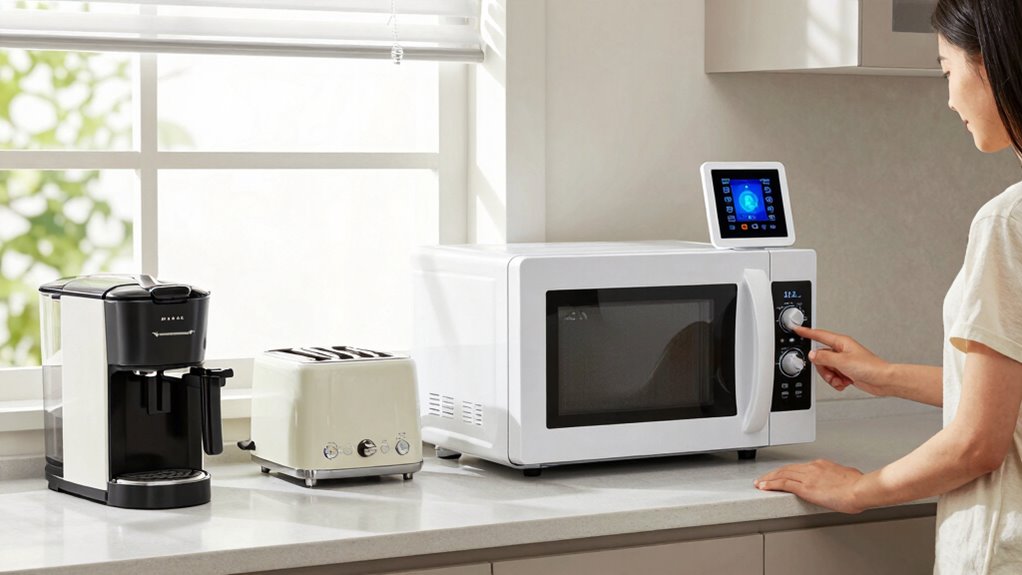
Choosing the right appliances for your home is crucial to meet your household’s needs efficiently. When you select appliances with appropriate power levels, you not only improve your daily comfort but also optimize energy efficiency and extend the appliance lifespan. Oversized appliances waste energy and wear out faster, while undersized ones struggle to handle your household’s demands, leading to frustration and potential damage.
To match appliance power to your household needs, start by evaluating your typical daily usage. Think about how many people live in your home, their routines, and the kind of tasks you perform regularly. For example, if you have a large family, a high-capacity refrigerator and a powerful washing machine make sense. But if you live alone or with a partner, smaller appliances might suffice. This helps you avoid overpaying for unnecessary power and reduces energy consumption, which directly contributes to better energy efficiency and lowers your utility bills.
Evaluate household size and routines to choose appliances that match your needs and optimize energy efficiency.
Next, consider the appliance’s specifications and energy ratings. Many modern appliances come with energy labels that indicate their efficiency levels. Appliances with higher energy efficiency ratings consume less power for the same performance, helping you cut costs and reduce environmental impact. Matching appliances to your household’s actual needs means choosing models with the right power output—not too powerful, not too weak. For instance, a microwave with excessive wattage for simple reheating is wasteful, while one with too little power may take longer and cause inconvenience.
It’s also crucial to think about the appliance’s lifespan. Properly matched appliances tend to last longer because they’re not forced to operate beyond their capacity. Overworking a high-powered appliance that’s too large for your needs can lead to quicker wear and tear, frequent repairs, or early replacement. Conversely, using a low-power appliance for demanding tasks can cause it to work harder than intended, reducing its lifespan. By selecting appliances with suitable power levels, you ensure they run smoothly over time and save money in the long run. Understanding the impact of energy consumption can also help you make more sustainable choices that benefit both your household and the environment, especially when considering appliances with energy-efficient features.
Additionally, being mindful of your household energy needs allows you to better plan for future changes, such as expanding your family or upgrading your home systems, ensuring your appliances remain well-matched over time. Not considering these factors might lead to energy waste or increased costs down the line. Overall, carefully matching appliance power to your household’s current and future needs ensures efficiency, cost savings, and longevity for your appliances, creating a more sustainable and comfortable living environment.
As an affiliate, we earn on qualifying purchases.
Frequently Asked Questions
How Often Should I Upgrade My Household Appliances?
You should consider upgrading your household appliances every 8-15 years, depending on their appliance maintenance and overall appliance lifespan. Regular maintenance extends their performance, but when appliances become outdated or inefficient, upgrading guarantees safety and energy savings. Keep an eye on signs like frequent repairs or declining performance, and replace appliances proactively to avoid inconvenience and higher energy costs, ultimately maintaining a comfortable and efficient home environment.
What Are Signs My Appliances Are Overpowered?
If your appliances seem to consume excessive energy, they might be overpowered. Signs include unusually high power consumption during power consumption analysis, increased energy bills, and rapid wear or shorter appliance lifespan. You should also notice frequent overheating or noise. Conduct regular power consumption analysis and compare it with manufacturer specifications. Overpowered appliances waste energy, so downgrading to appropriately powered units can improve efficiency and extend their lifespan.
Can Mismatched Appliances Increase Energy Bills?
Mismatched appliances can definitely hike up your energy bills. Did you know that inefficient appliances account for nearly 50% of household energy consumption? When appliances are overpowered or underpowered for your needs, they often work harder than necessary, wasting energy. By matching your appliances to your household’s actual needs, you improve efficiency and reduce unnecessary energy consumption, saving you money and helping the environment.
How Do I Determine the Right Appliance Size for My Home?
To determine the right appliance size for your home, start by evaluating your household requirements. Consider the appliance’s capacity to meet your daily needs without excess. For example, choose a washing machine with appropriate load capacity based on your family size. Check energy ratings and specs to ensure it matches your household demands. Properly matched appliance capacity helps you save energy, reduces costs, and ensures efficient operation tailored to your household.
Are Energy-Efficient Appliances Always the Best Choice?
Energy-efficient appliances often are a great choice because they save you money on energy bills and promote energy savings, but they aren’t always the best fit. You need to take into account appliance compatibility with your household’s needs and usage patterns. Sometimes, a less efficient model might better serve your specific requirements or household size, so weigh the benefits of energy savings against your actual appliance demands before making a decision.
As an affiliate, we earn on qualifying purchases.
Conclusion
By carefully matching your appliances’ power to your household needs, you not only save energy and reduce costs but also guarantee your appliances perform at their best. Don’t fall for the myth that bigger is always better; instead, choose appropriately powered devices that suit your lifestyle. When you understand your household’s actual energy demands, you create a more efficient, eco-friendly home. Trust the theory that mindful appliance choices lead to smarter, more sustainable living—your wallet and the planet will thank you.
As an affiliate, we earn on qualifying purchases.
energy rating labeled appliances
As an affiliate, we earn on qualifying purchases.
As an affiliate, we earn on qualifying purchases.
Fall Picks
fall essentials
As an affiliate, we earn on qualifying purchases.