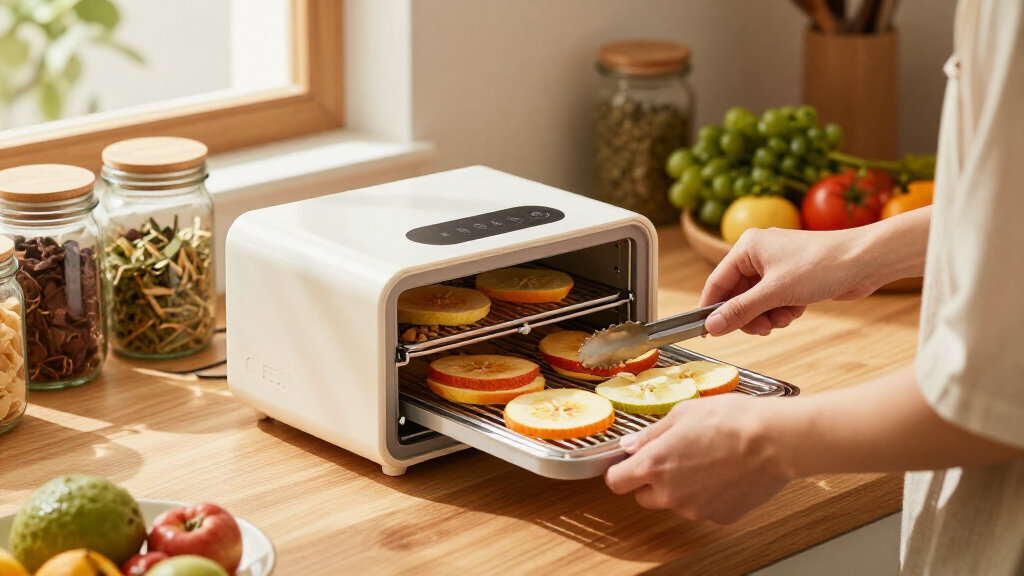
Compact food dehydrators promise jerky, fruit chips, and herb drying without surrendering half your kitchen counter, but the category splits sharply between cheap plastic stackables and small-footprint machines with digital timers and stainless trays. My best overall pick is the Cosori 5-Tray Stainless Steel Dehydrator, which balances a tight footprint with precise controls and metal trays at a fair price. For pure value, the NESCO Snackmaster delivers reliable drying power for less money, while the Magic Mill with digital controls is the better choice if you want set-and-forget operation. The main tradeoffs you will face are plastic versus stainless trays, temperature precision, and whether a timer matters enough to pay extra. Keep reading for the full breakdown of all 15 models.

Get kitchen gear delivered free — and shop member deals
- Fast, free delivery on millions of items
- Access to Prime Big Deal Days deals on October 6–7
- Prime Video, Amazon Music and more included
Complete the kit


Key Takeaways
- Stainless steel trays were the clearest quality divider in this lineup — the Cosori stainless model, OSTBA, and Magic Mill all dried more evenly and cleaned up easier than any BPA-free plastic stackable.
- Several listings under different brand names are essentially the same small plastic dryer with 5 stackable trays and no timer; these generic units ranked at the bottom because temperature control is vague and airflow is inconsistent.
- Digital timers separate the mid-tier from the budget tier more than wattage does — the Hamilton Beach, Rosewill, FOHERE, and Elite Gourmet all justify their price through hands-off operation rather than raw drying power.
- The Presto 06300 and NESCO Snackmaster prove that expandable stackable designs remain the most space-efficient option for buyers who only dehydrate occasionally, as long as they accept manual monitoring.
- Higher wattage did not predict better results: the 350W Cosori outperformed several 400W models because fan placement and horizontal airflow matter more than motor size.


| compact food dehydrator | Temperature Range | Number of Trays | Power |
|---|---|---|---|
| Small Food Dehydrator Dryer fo | 104°F – 158°F | 5 | — |
| Seeutek Food Dehydrator | 95–165°F (35–74°C) | 5 | — |
| Compact Food Dehydrator with 4 | 70°F to 190°F | 4 | — |
| Cosori Food Dehydrator | 95–165°F | 5 (expandable to 7) | 350W |
| FOHERE Food Dehydrator | 95°F–158°F | 5 | 400W |
| OSTBA Food Dehydrator | 95–160°F | 5 | 400W |
| Magic Mill Food Dehydrator wit | 95–167°F | 5 | 240W |
| Presto 06300 Dehydro Electric | — | 4 (expandable to 8) | — |
| Small Food Dehydrator Dryer fo | 95–158°F | — | — |
| Hamilton Beach Digital Food De | 100–160°F | 5 (stackable) | 500W |
| Elite Gourmet Digital Food Deh | 95°F to 158°F | 5 | 350 Watts |
| Cosori Food Dehydrator | 95–176°F | — | — |
| NESCO Snackmaster Food Dehydra | 95°F to 160°F | 5 BPA-free | 420W |
| Small Food Dehydrator for Jerk | 95°F to 158°F | 5 BPA-free | 250W |
| Rosewill Compact Food Dehydrat | 95°F to 158°F | 5 stackable, BPA-free | 400W |
More Details on Our Top Picks
Small Food Dehydrator Dryer for Healthy Food
For anyone who wants to try dehydrating without a big spend, this little unit covers the basics well. The adjustable 104°F–158°F dial handles fruit, herbs, and jerky at a reasonable pace, and the five removable BPA-free trays pop out for quick cleanup. Compared with the Seeutek, its temperature range is narrower and it lacks the flexibility of taller tray spacing, but both share the same no-frills dial approach. The real tradeoff here is precision: no digital display means you’re trusting the dial, and the 0.79-inch layer gap rules out thicker items like half-cut tomatoes. You’ll also need to leave clearance behind the unit for airflow. Still, for the price, this option makes sense for first-time experimenters who don’t want to commit to a premium machine.
Pros:- Very affordable entry point for trying dehydration
- Adjustable temperature dial covers most fruit, herb, and light jerky tasks
- Removable BPA-free trays make cleanup simple
- Footprint small enough for apartments and dorm kitchens
Cons:- No digital display, so temperature accuracy is approximate
- Fixed 0.79-inch tray gap limits thicker food items
- Needs wall clearance for proper airflow, which eats counter space
Best for: Curious beginners and small households who want an inexpensive entry point for occasional fruit or herb drying
Not ideal for: Jerky enthusiasts and anyone doing frequent large batches — the narrow temperature range and fixed tray spacing limit versatility
- Model:740MJY
- Temperature Range:104°F – 158°F
- Number of Trays:5
- Tray Size:10.23 x 10.23 inches
- Layer Gap:0.79 inches
- Material:BPA-free food-grade plastic
Our verdict“Buy this if you want the cheapest workable way to dry apple slices and herbs; skip it if you need precision or capacity.”
Seeutek Food Dehydrator, 5 BPA-Free Trays, Adjustable Temperature Control
The Seeutek earns its spot with a 95–165°F range that’s wider than the budget pick’s, giving you the low-and-slow settings chicken jerky for dogs demands while still hitting safe temps for meat. At 5 pounds and roughly a foot wide, it’s genuinely easy to stash in a cabinet between batches — an advantage over the round Cosori, which lives on the counter with its fixed footprint. Compared with the stainless steel compact model, plastic trays feel less premium and may stain with repeated meat use, but they’re easier to wash. The lack of a digital display is the main compromise: you’re babysitting the clock yourself for long pet-treat runs. For homemade dog treats and steady herb work, this model balances price and range better than anything else in this price tier.
Pros:- Wide 95–165°F range suits both delicate herbs and meat-safe temps
- Light 5 lb body stores easily in a cabinet
- Flexible tray height adjustment for thicker items
- Marketed nutrient retention of up to 97% for fruit and veggie snacks
Cons:- Plastic trays may stain or wear with heavy meat use
- No digital display for precise settings
- Five-tray ceiling caps batch size
Best for: Dog owners making chicken jerky and sweet potato chews who want a wide temperature range without paying for digital controls
Not ideal for: Precision-focused cooks — no digital timer or display means longer manual monitoring during multi-hour runs
- Number of Trays:5
- Tray Material:BPA-free plastic
- Temperature Range:95–165°F (35–74°C)
- Dimensions:12.18 x 11.39 x 9.82 inches
- Weight:5 lbs
- Tray Height Adjustment:Flexible
Our verdict“The best value pick for pet-treat makers who need temperature flexibility more than digital bells and whistles.”
Compact Food Dehydrator with 4 Stainless Steel Trays and Digital Timer
If plastic trays make you nervous, this model stands out for its 304 food-grade stainless steel construction, which resists staining and odors far better than the Seeutek’s or FOHERE’s plastic stacks. The 70–190°F range is the widest in this batch, running hot enough for safe jerky preparation without guesswork, and the digital timer adds set-and-forget convenience the cheaper dial models can’t match. The catch is capacity: four trays at 10.2 x 8.1 inches means smaller batches than the Cosori’s five round trays, so it’s better suited to small families doing regular small runs than anyone processing a garden harvest. Accessories like mesh sheets or fruit-leather trays aren’t included, which adds hidden cost. As a compact daily driver, though, the build quality justifies its position above the plastic options.
Pros:- Full stainless steel build resists stains and odors from meat and herbs
- Widest temperature range in this batch at 70–190°F
- Digital timer allows unattended overnight runs
- Lightweight and slim enough to store in a drawer-side cabinet
Cons:- Only four trays with the smallest total drying area here
- No included accessories like mesh or fruit-leather sheets
- Premium build commands a higher price than plastic rivals
Best for: Small households that dehydrate weekly and want durable, dishwasher-friendly stainless trays with true temperature precision
Not ideal for: Bulk preservers and gardeners — four shallow trays can’t keep up with seasonal volume
- Number of Trays:4
- Tray Material:304 food-grade stainless steel
- Temperature Range:70°F to 190°F
- Tray Dimensions:10.2 x 8.1 inches
- Controls:Digital display with timer
- BPA-Free:Yes
Our verdict“The pick for buyers who prioritize stainless durability and precision over raw batch capacity.”
Cosori Food Dehydrator, 5 BPA-Free Trays, 165°F Temperature Control, 350W
This Cosori takes the top spot because it solves the problem most compacts create: running out of room. The five trays expand to seven with an add-on purchase, meaning a small machine can grow with your habit — something the stainless steel compact and the budget pick simply can’t do. Its under-47 dB operation is quietest in this lineup, quiet enough to run overnight, and the 12.2-inch round trays offer more usable area per layer than the rectangular 4-tray model despite similar counter footprint. The tradeoffs are real: no digital timer means you’re setting a separate alarm for 12-hour jerky runs, and the 165°F ceiling trails the stainless model’s 190°F. Compared with the FOHERE, you give up digital controls but gain quieter operation and a stronger brand track record. For most buyers, that’s the right balance of capacity, quiet, and price.
Pros:- Expandable from 5 to 7 trays, extending capacity as needs grow
- Under 47 dB operation is quiet enough for overnight use
- Large 12.2-inch round trays fit whole apple rings and big herb sprigs
- Solid, durable construction with strong brand reputation
Cons:- No built-in digital timer for long unattended runs
- Extra trays sold separately, raising the real cost of expansion
- 165°F max temperature is lower than some rivals
Best for: Most buyers — especially anyone who thinks they’ll eventually want more capacity without buying a second machine
Not ideal for: Set-and-forget users who need a built-in timer for overnight or workday runs
- Temperature Range:95–165°F
- Power:350W
- Number of Trays:5 (expandable to 7)
- Tray Diameter:12.2 inches outer, 11.6 inches inner
- Noise Level:Less than 47 dB
- Controls:Adjustable dial thermostat
Our verdict“The most well-rounded choice for first-time buyers who want room to grow — just add a kitchen timer.”
FOHERE Food Dehydrator, 5 BPA-Free Tray Dehydrator with Digital Control
Where the Cosori asks you to mind the clock, the FOHERE’s 48-hour digital timer lets you load fruit leather before bed and wake to finished snacks. The 400W heating element also runs hotter than the Cosori’s 350W, translating to noticeably faster drying on juicy items like pineapple. Stackable trays with adjustable 0.59–0.98-inch spacing give you flexibility the fixed-gap budget pick can’t offer, though the max height still trails the Seeutek’s flexibility for very thick cuts. Two things temper the enthusiasm: the 158°F ceiling is the lowest max temperature here, which demands care with poultry-based jerky, and the 4.1-star average rating suggests some quality inconsistency the more established Cosori doesn’t show. For hands-off overnight drying, though, its automation beats every dial-based rival in this group.
Pros:- 0–48 hour digital timer enables true unattended operation
- 400W power dries juicy fruits faster than lower-wattage rivals
- Adjustable 0.59–0.98-inch tray spacing handles varied food thickness
- Stackable design collapses flat for cabinet storage
Cons:- 158°F max temperature is the lowest in this batch, limiting meat applications
- Moderate 4.1/5 customer rating suggests reliability variance
- Digital interface has a learning curve compared with simple dials
Best for: Busy snack-preppers who want to load trays at night and wake to finished dried fruit without monitoring
Not ideal for: Jerky purists — the 158°F maximum and mixed reviews make it a riskier choice for meat
- Power:400W
- Number of Trays:5
- Tray Size:11.42 inches
- Temperature Range:95°F–158°F
- Timer:0–48 hours
- Tray Material:BPA-free plastic
- Adjustable Tray Height:0.59–0.98 inches
Our verdict“The automation leader for fruit and herb drying — pick the Cosori instead if quiet expansion matters more than a timer.”
OSTBA Food Dehydrator, 5 Stainless Steel Trays
Stainless steel trays at this price are rare, and that’s the main reason this OSTBA earns its spot. Most similarly priced competitors, like the Presto 06300, rely on plastic trays that can stain and absorb odors from jerky seasonings. The 360° airflow design also means less tray rotation compared with basic stackable units like the Seeutek model. Tradeoffs exist, though: the 400W heating element is modest, and some batches of high-moisture fruits take longer than expected. The dial-based controls work fine, but anyone who wants a digital readout — as the Magic Mill offers — will find themselves guessing at exact settings. With only five trays and tight 0.55–1.02 inch spacing, thick items like tomato halves or large mushroom caps are a squeeze.
Pros:- Rust-resistant stainless steel trays that won’t absorb odors
- 360° airflow reduces the need to rotate trays mid-cycle
- Wide 95–160°F range with a 48-hour timer for flexibility
- Dishwasher-safe trays and cord storage for tidy counters
Cons:- Narrow tray spacing limits thicker foods
- No digital display, so settings are approximate
- Slower drying times reported for moisture-heavy foods
Best for: Budget-conscious buyers who want metal trays and rust resistance for jerky and herbs without paying premium prices
Not ideal for: Households drying large batches — five shallow trays cap how much you can process in one run
- Power:400W
- Temperature Range:95–160°F
- Timer:1–48 hours
- Number of Trays:5
- Tray Material:Stainless steel
- Tray Spacing:0.55–1.02 inches
- Extras:Dishwasher-safe trays, cord storage, recipe book
Our verdict“This pick makes the most sense for small-kitchen jerky makers who prioritize stainless trays over digital convenience.”
Magic Mill Food Dehydrator with 5 Stackable Stainless Steel Trays
Where the OSTBA keeps things analog, this Magic Mill stands out for its digital timer and temperature control, which makes set-and-forget drying realistic — a genuine advantage for long jerky runs where a dial error can ruin eight hours of work. Its 167°F ceiling is the highest in this batch, edging out the Hamilton Beach (160°F) and giving extra safety margin for poultry jerky. The stainless trays adjust for thick or thin cuts, something the fixed-tray Presto 06300 can’t match. The catch: at 240W it’s the least powerful unit here, so dense produce like watermelon or beet chips will test your patience. There are also no preset food programs, so beginners will lean on trial and error rather than guided settings.
Pros:- Digital timer and temperature readout for accurate, repeatable results
- Highest max temperature in this batch at 167°F
- Adjustable stainless steel trays handle varying food thicknesses
- Durable construction designed for nutrient retention
Cons:- Only 240W — the weakest heater among these five models
- No preset programs for common foods
- Capacity tops out at five trays
Best for: Users who want precise digital setpoints and safe high-temperature drying for meat jerky in a small unit
Not ideal for: Impatient dehydrators of high-moisture produce — the low wattage extends drying times considerably
- Power:240W
- Number of Trays:5
- Tray Material:Stainless steel
- Temperature Range:95–167°F
- Timer:Up to 48 hours
- Body Material:BPA-free plastic and stainless steel
Our verdict“Choose this if digital precision and safe meat drying matter more to you than raw drying speed.”
Presto 06300 Dehydro Electric Food Dehydrator
The Presto 06300 is the only model in this lineup you can genuinely shrink: its trays nest together for storage, cutting the footprint by 22% — a real benefit in an apartment cabinet where the fixed-footprint Hamilton Beach or Magic Mill would hog a whole shelf. Its top-mounted fan keeps drips away from the motor, and the trays are fully immersible for easy cleanup. The unique selling point is expandability: start with four trays, add up to eight. But that flexibility is also the trap — extra trays and accessories are sold separately, and costs add up fast. There’s no timer, no digital anything, and no temperature readout at all, which places it well behind the OSTBA for anyone who cares about precise low-temperature herb drying.
Pros:- Trays nest to shrink storage footprint by 22%
- Expandable from 4 to 8 trays as needs grow
- Top-mounted fan keeps liquids away from electronics
- Fully immersible, sealed trays for easy washing
Cons:- Expansion trays and mesh screens sold separately, adding real cost
- No timer, temperature control, or digital display
- Limited to Presto-branded accessories
Best for: Small-apartment dwellers who store appliances between uses and want capacity that grows later
Not ideal for: Anyone who wants timers or temperature control — this is a fully manual, dial-free basic unit
- Model:06300-05
- Number of Trays:4 (expandable to 8)
- Storage Space Reduction:22% (nesting design)
- Fan Position:Top-mounted
- Included:4 drying trays
- Compatible Accessories:Fruit trays (06313), mesh screens (06314), extra trays (06315)
Our verdict“This is the pick for storage-strapped kitchens that value a collapsible design over digital convenience.”
Small Food Dehydrator Dryer for Healthy Food
As the budget floor of this roundup, this little unit asks a fair question: how little can you spend and still make decent dried apples? The answer is less than anything else here, including the Seeutek and Rosewill models elsewhere in this guide. The adjustable 95–158°F range and overheating protection are respectable at the price, and the removable BPA-free trays clean up easily. But compared with the Magic Mill, the compromises are obvious: no timer means you’re tracking hours yourself, and the quirky design quirk of heat only engaging above roughly 122°F makes true low-temperature herb drying unreliable. The 0.79-inch layer gap handles herbs and sliced fruit fine but not much else. It’s a fair trial purchase, not a long-term tool.
Pros:- Lowest-cost entry point in the category
- Adjustable temperature range for versatile drying
- Compact footprint fits tiny counters
- Built-in overheating protection for peace of mind
Cons:- Heater only produces warm air above about 122°F, limiting low-temp drying
- No timer or digital display
- Small total capacity across five trays
Best for: First-time dehydrators and casual herb or apple-chip makers who want to try the hobby with minimal investment
Not ideal for: Herb enthusiasts or jerky makers — the heating behavior and modest build won’t handle precise or heavy use
- Model:904JY
- Temperature Range:95–158°F
- Layer Gap:0.79 inches
- Tray Size:11.4 x 7.5 inches
- Material:BPA-free food-grade plastic
- Safety:Overheating protection
Our verdict“Buy it to sample the hobby cheaply; skip it if you already know you’ll dehydrate weekly.”
Hamilton Beach Digital Food Dehydrator
Of the five, this Hamilton Beach is the model I’d point most buyers toward, because it solves the everyday problems the others leave open. At 500W it’s the most powerful here — double the Magic Mill — which translates directly into shorter cycles and less babysitting. The digital timer with auto shutoff means an overnight fruit-leather run doesn’t depend on you being home, unlike the manual Presto 06300. It also arrives with accessories others charge extra for: mesh screens and a fruit leather tray that the Presto sells separately. It’s not flawless. The plastic trays don’t feel as durable as the stainless ones on the OSTBA, the mesh screens need hand washing, and the 160°F ceiling trails the Magic Mill’s 167°F for poultry jerky. Still, the total package — power, timer, and included extras — is the strongest balance on this list.
Pros:- 500W heater — the strongest in this batch — shortens drying time
- Digital timer with automatic shutoff for unattended operation
- Includes mesh screens and fruit leather tray at no extra cost
- Even airflow eliminates tray rotation
Cons:- Plastic trays less durable than stainless rivals
- Mesh screens require hand washing
- 160°F maximum trails some competitors
Best for: Most home users who want fast, set-and-forget drying of fruit snacks, leathers, and jerky with included accessories
Not ideal for: Buyers wanting metal trays or temperatures above 160°F for certain raw-meat applications
- Power:500W
- Number of Trays:5 (stackable)
- Tray Material:BPA-free plastic
- Temperature Range:100–160°F
- Timer:1–48 hours with auto shutoff
- Included Accessories:Mesh screens, fruit leather tray
Our verdict“For most households this is the safest all-around choice: fastest, most convenient, and best equipped out of the box.”
Elite Gourmet Digital Food Dehydrator, 5 SlimStore Trays, Adjustable Timer
The collapsible SlimStore trays are the whole story here. Most stackable units — including the Rosewill and the NESCO Snackmaster — take up a full cabinet shelf even when idle, but this model collapses down to a fraction of its operating height. That matters if your dehydrator lives in a cupboard between batches. Drying performance is solid thanks to the base-mounted fan and heater, and the 48-hour timer with 30-minute increments is more precise than the knob-only control on the budget Small Food Dehydrator. The tradeoff is capacity: 410 square inches across five trays trails the Cosori’s flat layout for jerky strips, and the 158°F ceiling means it can’t hit the higher temps the Cosori stainless model reaches for safety-critical meat drying.
Pros:- Collapsible trays shrink the footprint dramatically for storage
- 48-hour timer in 30-minute increments beats knob-only rivals
- Dishwasher-safe trays and lid speed up cleanup
- Base-mounted fan delivers even drying for a stackable design
Cons:- 158°F temperature ceiling limits safety margin for jerky
- No digital display despite digital controls
- Small total capacity for the price of larger units
Best for: Apartment dwellers and RV owners who dehydrate occasionally and need the unit to disappear into a drawer or cabinet between uses
Not ideal for: Jerky enthusiasts — the 158°F max temperature and modest tray area make it a compromise for serious meat drying
- Power:350 Watts
- Number of Trays:5
- Tray Diameter:12.5 inches
- Total Drying Space:410 square inches
- Temperature Range:95°F to 158°F
- Timer:Up to 48 hours in 30-minute increments
- Tray Material:BPA-free collapsible plastic
- Cleaning:Dishwasher-safe trays and lid
Our verdict“Buy this if storage space is your deciding factor — no other five-tray unit packs away this small — but skip it if you mostly make meat jerky.”
Cosori Food Dehydrator, 5 Stainless Steel Trays, 3.1 ft² Drying Space
This is the most capable machine in the compact class. The 176°F maximum temperature is the highest in this batch — the Elite Gourmet and Rosewill top out at 158°F — which gives you a genuine safety buffer when drying poultry or beef jerky. The all-stainless build also outclasses the plastic housings of the NESCO Snackmaster and the generic Small Food Dehydrator, both in durability and in how it handles sticky fruit residues. Preset modes for jerky, fruit, vegetables, and yogurt lower the guesswork for newer users, and the bundled fruit roll sheet and mesh screen mean you’re not buying accessories separately. You pay for all this: it’s heavier at 10.8 lbs and pricier than every plastic alternative here, and the 3.1 square feet of space still caps batch size.
Pros:- 176°F max temperature is the highest here, safest for meat
- Stainless steel trays resist stains and outlast plastic
- Presets for jerky, fruit, vegetables, and yogurt
- Includes fruit roll sheet, mesh screen, and recipe book
Cons:- Highest price in this batch by a wide margin
- Heavier than plastic rivals at 10.8 lbs
- Still limited to five trays for large projects
Best for: Buyers willing to pay more for stainless durability, higher safe temperatures for jerky, and included accessories right out of the box
Not ideal for: Budget shoppers and casual herb-driers — a plastic model at half the price handles light-duty tasks nearly as well
- Temperature Range:95–176°F
- Timer Range:30 minutes to 48 hours
- Tray Count:5 stainless steel
- Tray Size:9 x 10 inches
- Drying Space:3.1 square feet
- Product Size:13.9 x 11.3 x 8.9 inches
- Weight:10.8 lbs
- Included:5 trays, fruit roll sheet, mesh screen, recipe book, manuals
Our verdict“If jerky and long-term durability matter to you and you’re buying once, this stainless Cosori justifies its premium over the plastic field.”
NESCO Snackmaster Food Dehydrator – 5 BPA-Free Trays, Adjustable Temp Control, Compact Design
NESCO’s reputation in this category is earned, and the Snackmaster’s quiet motor is its standout trait — several models in this roundup, particularly the budget Small Food Dehydrator, generate noticeable fan noise that matters if you dehydrate overnight in an open-plan kitchen. The nesting vertical design also stores more compactly than fixed-frame units like the Cosori, though not as flat as the Elite Gourmet’s collapsible trays. At 420W with a 160°F ceiling, it sits between the Elite Gourmet (158°F) and the Cosori (176°F) for meat capability. The missing piece is preset programs: unlike the Cosori’s jerky and fruit modes, you’re setting temperature and time manually every batch. Plastic trays are also a step down from the Cosori’s stainless ones if durability is your priority.
Pros:- Quietest operation in this batch
- Nests vertically for compact storage
- Cord storage keeps countertops tidy
- Trusted NESCO brand with strong track record
Cons:- No preset programs — everything is manual
- Plastic trays are less durable and harder to clean than stainless
- 160°F cap trails the Cosori for jerky safety
Best for: Households that run the dehydrator overnight or in shared living spaces and want minimal noise plus a trusted brand name
Not ideal for: Set-and-forget users who want food-specific presets, and anyone who prefers stainless food-contact surfaces
- Power:420W
- Number of Trays:5 BPA-free
- Tray Dimensions:12 x 9.5 inches
- Temperature Range:95°F to 160°F
- Timer:Digital
- Cord Storage:Built-in
- Storage:Nests vertically
Our verdict“The right pick if fan noise is your dealbreaker — otherwise the Cosori offers more capability for similar counter space.”
Small Food Dehydrator for Jerky, Fruit, Herbs & Pet Treats
This is the cheapest credible entry point in the roundup, and it’s honest about its limits. At 250W, it’s the least powerful machine here — the Rosewill runs 400W — which means slower drying, though the 72-hour operation window (versus 48 hours on nearly everything else) compensates for low-humidity jobs like herbs and fruit leather. The see-through trays are genuinely useful for beginners: you can check progress without opening the unit and dumping heat, something the opaque NESCO Snackmaster doesn’t allow. A bundled recipe cookbook lowers the learning curve for first-timers. The knob-based control is the real compromise — no timer precision, no display — and the small footprint means batch sizes are modest even by five-tray standards. Compared to the Seeutek and other plastic five-tray units, it wins purely on price, not performance.
Pros:- Lowest price in the roundup
- Transparent trays let you monitor progress without heat loss
- 72-hour operation suits long, low-temp jobs
- Includes recipe cookbook for beginners
Cons:- 250W is the weakest motor here — expect long drying times
- Knob-only controls, no timer automation
- Very small batch capacity even for a compact unit
Best for: First-time dehydrator buyers and pet owners making occasional treats who want to test the hobby for minimal investment
Not ideal for: Impatient users or jerky makers — 250W of power makes meat drying slow, and the knob controls lack any timer automation
- Power:250W
- Number of Trays:5 BPA-free
- Temperature Range:95°F to 158°F
- Max Operation Time:Up to 72 hours
- Tray Height Adjustment:Yes
- Cleaning:Dishwasher-safe trays
- Extras:Recipe cookbook and user manual
Our verdict“A fair-value experiment for curious beginners, but anyone who dehydrates more than monthly will outgrow it fast.”
Rosewill Compact Food Dehydrator, 5 Stackable Trays with Adjustable 48H Timer
The Rosewill lands in the sweet spot between the budget Small Food Dehydrator and the premium Cosori. For close to entry-level money you get 400W of power, a 48-hour timer, and 360° hot air circulation, which is the same airflow claim the Elite Gourmet makes at 350W — meaning faster, more even batches than the 250W starter model can manage. The adjustable tray height (0.8 to 1.5 inches) is a practical touch the NESCO Snackmaster lacks, letting you fit thicker items like marinated mushroom slices or dog chews without buying extra accessories. Its weaknesses are typical of the price tier: no digital display means you’re eyeballing settings, and adjusting tray height requires manually rotating each tray, which interrupts a running batch. The one-year warranty is thin but expected at this cost.
Pros:- 400W power at a near-budget price
- 48-hour timer rivals pricier models
- Adjustable tray height fits bulky foods without extra purchases
- Quiet operation and easy cleaning
Cons:- No digital display for settings
- Tray height adjustment requires manual rotation mid-batch
- Only a one-year warranty
Best for: Value-focused buyers who want timer automation and real drying power without paying Cosori’s stainless-steel premium
Not ideal for: Anyone who wants precise, readable settings — the lack of a display and the manual tray-height system make this feel dated
- Power:400W
- Number of Trays:5 stackable, BPA-free
- Timer:0.5–48 hours
- Temperature Range:95°F to 158°F
- Tray Height Adjustment:0.8 to 1.5 inches
- Airflow:360° hot air circulation
- Warranty:1 year
Our verdict“The best feature-per-dollar pick in the compact class — choose it over budget models for the timer and power, and over the Cosori if price matters more than stainless build.”
How We Picked
My ranking logic starts with drying consistency, because uneven airflow ruins batches no matter how compact the machine is. Models with rear-mounted fans and horizontal airflow ranked higher than bottom-fan stackables, which tend to require tray rotation. Next I weighed tray material and cleanability: stainless steel scored above BPA-free plastic for durability, staining resistance, and dishwasher compatibility, especially for jerky and meat drying.
I also scored control precision — adjustable thermostats with clear degree markings and digital timers beat single-setting or dial-only units, since herbs need around 95°F while jerky demands 160°F or higher. Footprint and stackability determined how well each model honored the compact promise, and value for money tied everything together: a cheap dehydrator that wastes food through uneven drying is not actually cheap. Finally, I flagged duplicate or near-identical generic listings, ranking them lower for vague specs and weaker track records than established brands like Cosori, NESCO, and Hamilton Beach.
Factors to Consider When Choosing Compact Food Dehydrators
Before settling on a specific model, it helps to understand what actually separates a satisfying compact dehydrator from one that gathers dust in a cabinet.Airflow Direction Matters More Than Size
The biggest hidden difference between compact dehydrators is whether the fan sits on the bottom or at the rear. Bottom-fan stackables — the design behind NESCO, Presto, and most generic units — push air upward through the stack, which means trays nearest the heat dry fastest and you will need to shuffle them mid-batch. Rear-fan models like the Cosori stainless unit dry evenly across all trays without rotation, which matters if you plan to run overnight batches. Buyers often fixate on wattage, but a well-designed 350W horizontal-flow machine will outperform a poorly vented 400W one. If your schedule does not allow tray rotation, prioritize horizontal airflow even if it costs a little more or adds an inch of depth.
Stainless Steel vs. Plastic Trays
Tray material affects durability, cleaning, and what you can safely dry. Plastic trays are lighter, cheaper, and fine for fruit and herbs, but they stain with tomato or berry batches, absorb odors from jerky marinades, and can warp near heating elements over time. Stainless steel trays resist staining, handle greasy meats better, and usually survive years of dishwasher cycles. The honest tradeoff is price and weight: stainless models like the Cosori and OSTBA typically cost more and are heavier to move in and out of storage. If you dehydrate meat more than once a month, stainless pays for itself; occasional fruit-chip makers can save money with plastic and accept the staining.
The Timer Question: Convenience or Gimmick?
A built-in digital timer sounds minor until you dry your first overnight batch of beef jerky and wake up to shoe leather. Timers matter most for low-moisture foods that over-dry quickly, like herbs and fruit leather, and for anyone who works away from home. The common mistake is assuming a timer replaces temperature accuracy — a machine that shuts off on time but runs 20 degrees hot still ruins food. Manual models like the Presto 06300 and NESCO Snackmaster cost less precisely because they trust you to watch the clock. If you batch-dry on weekends while home, skip the timer and put the savings toward better trays or a higher temperature ceiling.
Temperature Range and What You Actually Plan to Dry
Check the actual range, not just the maximum. Herbs and live-culture foods need settings at or below 95°F, while safe jerky requires a sustained 160°F or higher — which is why the Cosori’s 165°F ceiling and the Magic Mill’s 167°F rating earned extra credit. Machines with vague low-medium-high dials force guesswork that leads to either moldy herbs or overcooked fruit. Buyers who only want apple chips can tolerate a narrower range, but anyone experimenting with jerky, yogurt, or pet treats should treat a wide, accurate thermostat as non-negotiable. When a listing does not publish exact temperatures, treat that as a warning sign about the machine’s precision.
Real Footprint vs. Advertised Compactness
Every model in this category markets itself as compact, but footprint and dried-food capacity are not the same thing. Stackable cylinder designs like the NESCO and Presto have a small counter footprint yet expand vertically, which is great for apartments with limited counter space but awkward in cabinets with fixed shelves. Box-style units like the Hamilton Beach and Cosori take more counter area but store flat and hold more per batch relative to their size. Measure your storage space before buying — especially vertical clearance — and think about whether you will leave the machine out or stow it between uses. A dehydrator that fits your counter but not your cabinet tends to get used less.
Beware of Duplicate Generic Listings
This category is flooded with near-identical unbranded dehydrators sold under rotating names, all sharing the same 5 plastic trays, bottom fan, and vague specs. The risk is not just mediocre performance — it is nonexistent warranty support and disappearing replacement trays. Established brands keep spare parts available for years, which matters because trays crack and screens tear with regular use. A good rule: if you cannot find a clear temperature range, tray dimensions, and a responsive manufacturer behind a listing, the low price is compensating for something. Established budget names like Elite Gourmet and Rosewill hit similar prices with far better after-purchase support.
Frequently Asked Questions
Can a compact dehydrator really handle beef jerky, or do I need a full-size unit?
Most compact models can make jerky, but only those that sustain 160°F or higher do it safely and efficiently, which is why the Cosori stainless, Magic Mill, and OSTBA earned jerky-friendly rankings. Smaller tray area means smaller batches — expect to spread jerky across all five trays rather than the eight or nine a full-size unit holds. The real constraint is wattage recovery time: every time you open the unit to check doneness, a compact heater takes longer to climb back to temperature, which extends drying time. If jerky is your primary use, prioritize a high temperature ceiling and stainless trays for greasy cleanup rather than raw tray count.
Is it worth paying more for stainless steel trays in a small dehydrator?
It depends on what you dry and how often. Plastic trays perform adequately for apples, bananas, and herbs, and they keep entry-level machines cheap. The calculus changes with frequent use or messy foods: marinades, pet treats, and tomato-based items stain and scent plastic permanently, while stainless wipes clean and tolerates the dishwasher indefinitely. In this comparison, the price gap between plastic and stainless versions of essentially the same machine ran roughly thirty to fifty dollars. If you will run the dehydrator weekly, that gap buys years of easier cleanup; occasional users are better served spending it elsewhere.
Why are there several listings that look like the same dehydrator with different names?
Because a handful of contract manufacturers in this category sell the same white-label dryer to multiple sellers, who list it under whatever brand name they own. The near-identical small units scattered through this roundup are exactly that, and their interchangeable specs make performance claims hard to verify. The practical problem is accountability: when the seller vanishes or rebrands, replacement trays and warranty claims vanish with them. Checking whether trays and parts are separately purchasable is a quick filter — established brands stock them, white-label sellers usually do not.
How noisy are compact dehydrators, and can I run one overnight?
Fan-driven dehydrators produce a steady hum comparable to a microwave or quiet box fan, and most people adapt within a night or two, especially with the unit in a kitchen rather than a bedroom. Horizontal-flow box models tend to run slightly quieter than bottom-fan stackables, which can develop a rattle as trays settle. Overnight operation is where digital timers earn their keep — the Hamilton Beach, Rosewill, and FOHERE shut off automatically so a 10-hour jerky batch does not become a 16-hour one. If you are noise-sensitive, place the unit on a folded towel to dampen vibration and run long batches while you are out during the day instead.
Do I need a 400W model, or is 350W enough for a small dehydrator?
Wattage is one of the most overrated specs in this category because a well-insulated chamber with efficient airflow dries faster than a hotter, leaky one. The 350W Cosori consistently matched or beat several 400W models in this lineup because its horizontal fan distributes heat evenly instead of blasting one tray. Where higher wattage genuinely helps is recovery speed — larger loads of high-moisture food like watermelon or jerky pull the chamber temperature down, and extra watts bring it back faster. For typical small batches of fruit, herbs, and occasional jerky, 350W is plenty; treat anything above that as a bonus rather than a deciding factor.
Conclusion
Mapping these 15 models to buyer types makes the choice straightforward. For best overall, the Cosori 5-Tray Stainless Steel Dehydrator hits the sweet spot of even horizontal airflow, a 165°F ceiling, stainless trays, and a genuinely small footprint — it is the pick I would put on most counters. The NESCO Snackmaster takes best value for buyers who want proven drying power under budget and do not mind rotating trays and watching the clock. For a premium set-and-forget experience, the Magic Mill with digital timer and stainless trays justifies its price through precise controls and hands-off operation.
Beginners should start with the Elite Gourmet or Presto 06300 — both are inexpensive enough that a abandoned hobby will not sting, and both teach the basics without overwhelming controls. For space-constrained apartments, the stackable Rosewill with its 48-hour timer offers the best mix of compact storage and modern convenience. Whatever you choose, avoid the unbranded duplicates scattered through this category: identical prices buy established-brand support, replacement trays, and specs you can trust.
Fall Picks
fall essentials
As an affiliate, we earn on qualifying purchases.