
Choosing among AV receivers comes down to matching your speaker setup, HDMI needs, and room to the features you will use. I name the Denon AVR-X1800H my best overall pick for its seven-channel home theater focus, while the Onkyo TX-RZ50 stands out for larger, more ambitious systems and the Marantz NR1510 for spaces where a slim receiver matters. The lineup also includes stereo receivers, which suit music listening but do not replace a surround-sound home theater model. Channel count, room correction, connectivity, and the tradeoffs of refurbished or renewed units are the main differences to weigh. Read on for the full breakdown, buying advice, and recommendations by setup.

Get kitchen gear delivered free with Prime
- Fast, free delivery on millions of items
- Prime Video, Amazon Music and more included
- Member-only deals all year
Complete the kit



Key Takeaways
- The Denon AVR-X1800H is my best overall choice among the seven-channel home theater models; the renewed AVR-X1700H offers a similar channel-count direction but has a different purchase condition.
- The Onkyo TX-RZ50 is the lineup’s premium choice for buyers who want a more capable foundation for a larger system, while its added complexity is unnecessary for a basic setup.
- The Marantz NR1510 puts a slim chassis and five-channel layout ahead of expansion, making it a distinct fit for compact cabinets and simpler rooms.
- The Yamaha R-S202BL and Sony STRDH190 are stereo receivers for music-focused systems; neither is a substitute for the surround channels and home theater connections of the AV models.
- Several models appear in overlapping or condition-specific versions, including the Yamaha RX-V4A and Denon AVR-X1700H, so buyers should compare included features and refurbished or renewed status rather than relying on the model name alone.
| Marantz NR1510 Slimline 5.2 Channel AV Receiver with HEOS |  | Best Slimline AV Receiver | Channels: 5.2 | Power output: 50 W per channel | Video support: 4K | VIEW ON AMAZON | See Our Full Breakdown |
| Denon AVR-S570BT 5.2-Channel 8K AV Receiver |  | Best for 8K Gaming on a Simple Setup | Channels: 5.2 | Power output: 70 W x 5 | HDMI inputs: 4 HDMI 2.1 inputs | VIEW ON AMAZON | See Our Full Breakdown |
| Yamaha R-S202BL Stereo Receiver |  | Best for Two-Channel Listening | Channels: 2.0 | Output power: 85 W | Wireless connectivity: Bluetooth 4.1 + EDR | VIEW ON AMAZON | See Our Full Breakdown |
| Yamaha RX-V4A 5.2-Channel 80W AV Receiver (Certified Refurbished) |  | Best Refurbished Streaming Pick | Channels: 5.2 | Power output: 80 W | HDMI version: 2.1 | VIEW ON AMAZON | See Our Full Breakdown |
| Sony STRDH190 2-Channel Home Stereo Receiver with Bluetooth and Phono Inputs |  | Best for Vinyl and Simple Stereo | Model: STRDH190 | Channels: 2.0 | Output power: 100 W x 2 (8 ohms, 1 kHz) | VIEW ON AMAZON | See Our Full Breakdown |
| Denon AVR-X1700H 7.2ch 8K Home Theater Receiver (Renewed) |  | Best for HEOS Multi-Room Audio | Channels: 7.2 | Video support: 8K/60Hz and 4K/120Hz | Audio formats: Dolby Atmos, DTS:X, DTS Virtual:X, Dolby Atmos Height Virtualization | VIEW ON AMAZON | See Our Full Breakdown |
| Sony STR-DH590 5.2 Channel Surround Sound Home Theater Receiver |  | Best for a Simple 5.2 Setup | Channels: 5.2 | Total power: 725 watts | Output power: 145 watts | VIEW ON AMAZON | See Our Full Breakdown |
| Onkyo TX-RZ50 9.2-Channel THX Certified AV Receiver |  | Best for Advanced Room Correction | Surround configuration: 9.2 channels | Processing: Up to 11.2 channels | Certification: THX | VIEW ON AMAZON | See Our Full Breakdown |
| Denon AVR-X1700H 7.2-Channel AV Receiver, 80 W per Channel, HEOS Built-In |  | Best All-Round 7.2-Channel Pick | Channels: 7.2 | Power output: 80 W per channel | HDMI: 6 inputs, 1 output; 3 inputs specified as 8K | VIEW ON AMAZON | See Our Full Breakdown |
| Onkyo TX-NR5100 7.2-Channel 8K Smart AV Receiver |  | Best for Gaming Features | Channels: 7.2 | Video resolution: 8K | HDMI version: 2.1 | VIEW ON AMAZON | See Our Full Breakdown |
| Onkyo TX-NR6100 7.2-Channel THX Certified Network AV Receiver |  | Best for Zone 2 Home Theater | Channels: 7.2 | Amplifier power: 210 W per channel | Audio formats: Dolby Atmos, DTS:X | VIEW ON AMAZON | See Our Full Breakdown |
| Yamaha RX300A 5.2-Channel Home Theater AV Receiver with Dolby Atmos, 4K/120 and 8K/60 HDMI, and Bluetooth Multipoint |  | Best for Guided Setup and Gaming | Channels: 5.2 | Power output: 70 W | Supported speaker layout: Up to 3.1.2-channel | VIEW ON AMAZON | See Our Full Breakdown |
| Yamaha RX-V4A 5.2-Channel AV Receiver with MusicCast |  | Best for Music Streaming | Channels: 5.2 | HDMI version: 2.1 | Video support: 8K/60, 4K/120, 4K/60 | VIEW ON AMAZON | See Our Full Breakdown |
| Denon AVR-X1800H 7.2-Channel AV Receiver |  | Best Overall for a Growing Home Theater | Channels: 7.2 | Power output: 80 W x 7 | Video support: 8K/60Hz, 4K/120Hz, Dolby Vision, HDR10+ | VIEW ON AMAZON | See Our Full Breakdown |
| Yamaha RX-A2A AVENTAGE 7.2-Channel AV Receiver | 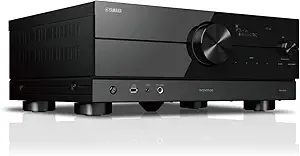 | Best Premium Feature Set | Channels: 7.2 | Video support: 8K/60, 4K/120, 4K/60 | Audio formats: Dolby Atmos, DTS:X | VIEW ON AMAZON | See Our Full Breakdown |
| av receiver | Channels | Video support | Audio formats |
|---|---|---|---|
| Marantz NR1510 Slimline 5.2 Ch | 5.2 | 4K | Dolby TrueHD, DTS-HD Master Audio |
| Denon AVR-S570BT 5.2-Channel 8 | 5.2 | 8K; HDR, HLG, Dolby Vision, HDR10+, Dynamic HDR | DTS-HD Master Audio, Dolby TrueHD |
| Yamaha R-S202BL Stereo Receive | 2.0 | — | — |
| Yamaha RX-V4A 5.2-Channel 80W | 5.2 | 8K/60Hz | — |
| Sony STRDH190 2-Channel Home S | 2.0 | — | — |
| Denon AVR-X1700H 7.2ch 8K Home | 7.2 | 8K/60Hz and 4K/120Hz | Dolby Atmos, DTS:X, DTS Virtual:X, Dolby Atmos Height Virtualization |
| Sony STR-DH590 5.2 Channel Sur | 5.2 | 4K HDR, HDCP 2.2 | — |
| Onkyo TX-RZ50 9.2-Channel THX | — | — | — |
| Denon AVR-X1700H 7.2-Channel A | 7.2 | — | Dolby Atmos, Dolby Atmos Height Virtualization, DTS:X, DTS Virtual:X |
| Onkyo TX-NR5100 7.2-Channel 8K | 7.2 | — | Dolby Atmos, DTS-HD Master Audio, DTS:X, Dolby TrueHD |
| Onkyo TX-NR6100 7.2-Channel TH | 7.2 | 8K | Dolby Atmos, DTS:X |
| Yamaha RX300A 5.2-Channel Home | 5.2 | 4K/120, 8K/60 | Dolby Atmos, DTS Virtual:X |
| Yamaha RX-V4A 5.2-Channel AV R | 5.2 | 8K/60, 4K/120, 4K/60 | Dolby TrueHD, Dolby Digital, DTS-HD Master Audio |
| Denon AVR-X1800H 7.2-Channel A | 7.2 | 8K/60Hz, 4K/120Hz, Dolby Vision, HDR10+ | Dolby Atmos, DTS:X, DTS Virtual:X, Height Virtualization |
| Yamaha RX-A2A AVENTAGE 7.2-Cha | 7.2 | 8K/60, 4K/120, 4K/60 | Dolby Atmos, DTS:X |
More Details on Our Top Picks
Marantz NR1510 Slimline 5.2 Channel AV Receiver with HEOS
The NR1510 is the space-saving pick for a compact home theater: its slimline chassis is easier to fit on a crowded shelf than the full-size Denon AVR-S570BT, while six HDMI inputs leave room for several video sources. HEOS streaming and Audyssey MultEQ add convenient music playback and room calibration, and the listed Dolby TrueHD and DTS-HD Master Audio support covers common lossless movie soundtracks. Its 50 watts per channel and 5.2-channel limit make it a better fit for a modest room than a high-output system or an expansion-ready setup. Compared with the Denon, it gives up 8K support and gaming features, but adds HEOS and a phono input. Choose it for a tidy, music-friendly setup; skip it if you want more headroom or surround channels.
Pros:- Slimline design suits tight AV cabinets and shelves
- Six HDMI inputs accommodate multiple connected sources
- HEOS provides built-in whole-home music streaming
- Audyssey MultEQ supports room calibration
Cons:- 50 watts per channel offers less output than the Denon AVR-S570BT’s 70 watts
- 5.2 channels limit expansion for larger surround systems
- Listed video support is 4K, without the Denon’s 8K and gaming features
Best for: Apartment and living-room buyers who need a slim receiver, several HDMI connections, and built-in music streaming
Not ideal for: Buyers planning a large theater, higher-output speakers, or a system with more than 5.2 channels
- Channels:5.2
- Power output:50 W per channel
- Video support:4K
- HDMI inputs:6
- Streaming platform:HEOS
- Calibration:Audyssey MultEQ
- Audio formats:Dolby TrueHD, DTS-HD Master Audio
- Additional connection:Phono input
Our verdict“Choose the NR1510 for a compact, streaming-ready 5.2 setup, provided its lower output and channel ceiling fit your room.”
Denon AVR-S570BT 5.2-Channel 8K AV Receiver
For a buyer building around a current game console or 8K display, the AVR-S570BT puts HDMI 2.1 gaming features ahead of network streaming. Its four 8K HDMI inputs pass through VRR, QFT, and ALLM, which help compatible systems deliver smoother play and responsive switching. The 70 watts across five channels give it more stated output than the slim Marantz NR1510, though both receivers stop at 5.2 channels. Bluetooth and an on-screen setup assistant keep the essentials accessible, but it lacks the Marantz’s HEOS platform and the Yamaha RX-V4A’s Wi-Fi streaming. HDR format support is broad, yet buyers who want built-in music services or a system that can grow beyond five powered channels should look higher in this roundup.
Pros:- Four HDMI 2.1 inputs support 8K video
- VRR, QFT, and ALLM address compatible gaming setups
- Supports HDR, HLG, Dolby Vision, HDR10+, and Dynamic HDR
- On-screen setup assistant helps guide installation
Cons:- Five powered channels limit surround-system expansion
- Bluetooth is the listed wireless music connection; no Wi-Fi streaming platform is specified
- Fewer HDMI inputs than the Marantz NR1510
Best for: Console gamers and 8K TV owners seeking HDMI 2.1 features in a straightforward 5.2-channel system
Not ideal for: Listeners who want built-in Wi-Fi music services or room to expand beyond five powered channels
- Channels:5.2
- Power output:70 W x 5
- HDMI inputs:4 HDMI 2.1 inputs
- HDMI output:1
- Video support:8K; HDR, HLG, Dolby Vision, HDR10+, Dynamic HDR
- Gaming features:VRR, QFT, ALLM
- Audio formats:DTS-HD Master Audio, Dolby TrueHD
- Wireless connectivity:Bluetooth
Our verdict“Pick the AVR-S570BT if 8K passthrough and gaming features matter more than Wi-Fi streaming or extra channels.”
Yamaha R-S202BL Stereo Receiver
The R-S202BL is the lineup’s dedicated stereo choice, built for listeners who want two speaker channels rather than a home theater. Its Bluetooth 4.1 makes phone streaming simple, and the selector for two speaker systems lets owners switch between setups without adding another receiver. That focus is its defining tradeoff: unlike the 5.2-channel Marantz NR1510, it has no surround processing or HDMI connections in the provided specifications, so it cannot serve as the hub for a TV-based theater. The listed 85-watt output and Yamaha Natural Sound positioning suit a straightforward music system, while its 20-inch depth calls for a generous shelf. Choose it for stereo speakers and uncomplicated playback; skip it if movies, surround sound, or video switching are central.
Pros:- Bluetooth 4.1 supports wireless playback from mobile devices
- Dedicated selector supports two separate speaker systems
- 85-watt output is specified for its two-channel design
- Brushed aluminum finish gives it a traditional hi-fi appearance
Cons:- 2.0-channel output does not provide surround sound
- No HDMI connections are listed for TV and video sources
- 20-inch depth may not fit shallow AV furniture
Best for: Music listeners who want a Bluetooth stereo receiver and the ability to switch between two speaker systems
Not ideal for: Home theater buyers who need HDMI switching, surround channels, or built-in Wi-Fi streaming
- Channels:2.0
- Output power:85 W
- Wireless connectivity:Bluetooth 4.1 + EDR
- Frequency response:10 Hz–100 kHz
- Dimensions:20″ D x 15″ W x 8″ H
- Input sensitivity (CD):500 mV / 47 kΩ
- Control method:Remote control
- Finish:Brushed aluminum
Our verdict“Choose the R-S202BL for a traditional Bluetooth stereo system, not as a receiver for a surround home theater.”
Yamaha RX-V4A 5.2-Channel 80W AV Receiver (Certified Refurbished)
The certified refurbished RX-V4A suits buyers who want broad wireless music options alongside a compact 5.2-channel theater. Its Wi-Fi, AirPlay 2, Spotify Connect, and MusicCast give it more ways to reach music than the Bluetooth-only Denon AVR-S570BT, and voice-assistant compatibility adds hands-free control. The listed 80-watt output and HDMI 2.1 with 8K/60Hz support also make it a more connected alternative to the Marantz NR1510, which is slimmer but tops out at 4K in the supplied data. The main tradeoffs are the refurbished condition and the five-channel ceiling; MusicCast multi-room playback also requires compatible additional speakers for other rooms. It fits buyers comfortable with refurbished hardware who value streaming flexibility over a larger theater layout.
Pros:- HDMI 2.1 supports 8K/60Hz video passthrough
- Wi-Fi, AirPlay 2, and Spotify Connect provide several streaming paths
- MusicCast supports compatible multi-room audio setups
- Works with Alexa, Google Assistant, and Siri
Cons:- Certified refurbished condition may not suit buyers seeking a new unit
- 5.2 channels constrain expansion compared with 7.2-channel options in the roundup
- Additional MusicCast speakers are needed for playback in other rooms
Best for: Streaming-focused buyers comfortable with a refurbished receiver for a 5.2-channel room and multi-room audio
Not ideal for: Buyers who require a new unit or plan to power more than five surround channels
- Channels:5.2
- Power output:80 W
- HDMI version:2.1
- Video support:8K/60Hz
- Connectivity:Wi-Fi 2.4/5 GHz, Bluetooth, AirPlay 2, Spotify Connect
- Multi-room platform:MusicCast
- Voice control:Alexa, Google Assistant, Siri
- Condition:Certified refurbished
Our verdict“Choose this RX-V4A if streaming and voice control are priorities and refurbished condition is acceptable.”
Sony STRDH190 2-Channel Home Stereo Receiver with Bluetooth and Phono Inputs
The STRDH190 is the clearest fit for a turntable-centered stereo system: its dedicated phono input avoids the need for a separate phono preamp when the record player needs one, and Bluetooth adds an easy route for phone audio. At 100 watts per channel, it has a higher stated stereo output than the Yamaha R-S202BL’s 85 watts, while both are 2.0-channel receivers with speaker switching for two pairs. The Sony’s A/B setup is useful for separate speaker pairs, but it does not turn the unit into a multi-channel theater receiver. It also lacks the HDMI connections found on the Marantz NR1510 and the Wi-Fi streaming listed for the Yamaha RX-V4A. Pick it for vinyl, radio, and straightforward stereo sources; skip it if your TV and surround system need one central hub.
Pros:- Dedicated phono input supports direct turntable connection
- Bluetooth enables wireless playback from phones and tablets
- A/B switching supports two speaker pairs or separate listening areas
- Low-profile 5.25-inch height fits many standard AV cabinets
Cons:- 2.0-channel design does not provide surround sound
- No HDMI inputs for connecting and switching video sources
- No Wi-Fi or advanced smart home integration is listed
Best for: Vinyl listeners building a compact stereo system with Bluetooth and the option to switch between speaker pairs
Not ideal for: TV-centered theater setups needing HDMI, surround sound, or network music streaming
- Model:STRDH190
- Channels:2.0
- Output power:100 W x 2 (8 ohms, 1 kHz)
- Connectivity:Bluetooth, phono, 4 stereo RCA inputs, 3.5 mm input, stereo RCA output
- Speaker impedance:6–16 ohms
- Height:5.25 inches
- Power requirement:AC 120 V, 60 Hz
- Included accessories:Remote, batteries, FM antenna
Our verdict“Choose the STRDH190 for vinyl and Bluetooth in a simple stereo setup, but look elsewhere for a home theater hub.”
Denon AVR-X1700H 7.2ch 8K Home Theater Receiver (Renewed)
I’d pick this renewed AVR-X1700H for a home theater that also needs to send music to other rooms. Its HEOS streaming, Wi-Fi, and AirPlay 2 give it more built-in listening options than the Bluetooth-focused Sony STR-DH590. Six HDMI inputs, Dolby Atmos, DTS:X, and 8K video support make it a capable hub for a growing setup. The tradeoff is its renewed condition, which may not suit buyers who want a new unit, and its single HDMI output offers less display flexibility than the Onkyo TX-RZ50’s three. I’d favor this model when whole-home audio matters alongside surround sound, but compare it with the new AVR-X1700H listing if condition is a deciding factor.
Pros:- HEOS, Wi-Fi, and AirPlay 2 support multi-room and wireless music playback
- Dolby Atmos and DTS:X support immersive surround speaker layouts
- Six HDMI inputs accommodate several connected sources
- 8K and select 4K/120Hz support suit newer displays and consoles
Cons:- Renewed condition may be unsuitable for buyers who want a new product
- One HDMI output limits connections to multiple displays
Best for: Home theater owners who want HEOS, AirPlay 2, and wireless music across multiple rooms
Not ideal for: Buyers who require a new receiver or need multiple HDMI outputs for more than one display
- Channels:7.2
- Video support:8K/60Hz and 4K/120Hz
- Audio formats:Dolby Atmos, DTS:X, DTS Virtual:X, Dolby Atmos Height Virtualization
- HDMI:6 inputs, 1 output
- Connectivity:Wi-Fi, Bluetooth, AirPlay 2, Ethernet
- Voice assistants:Alexa, Siri, Google Assistant
- Condition:Renewed
Our verdict“Choose this renewed Denon if multi-room HEOS streaming matters more than new condition or extra HDMI outputs.”
Sony STR-DH590 5.2 Channel Surround Sound Home Theater Receiver
The Sony STR-DH590 is the straightforward choice here for a conventional 5.2 system and 4K HDR sources. Its four HDMI inputs cover a modest collection of devices, while S-Force PRO can create a virtual surround effect when a buyer starts with only two speakers. That makes it an easier entry point than the 7.2-channel Denon AVR-X1700H, which offers Atmos, DTS:X, and network streaming. The Sony’s limits are clear: it has no built-in Wi-Fi, and its Bluetooth and Pandora options are lean beside the Denon’s HEOS ecosystem. Virtual surround also cannot replace separate surround speakers. I’d choose it for a simpler living-room system, not for someone building a more expandable or streaming-centered theater.
Pros:- 4K HDR pass-through with HDCP 2.2 supports compatible video sources
- S-Force PRO offers a virtual surround effect for two-speaker setups
- Bluetooth and Alexa compatibility provide basic wireless control and playback
Cons:- Four HDMI inputs may be limiting for device-heavy setups
- No built-in Wi-Fi and limited streaming options compared with the Denon AVR-X1700H
- Virtual surround does not provide the placement of a physical surround speaker system
Best for: First-time home theater buyers with a 4K HDR TV, a few HDMI sources, and a basic 5.2 speaker plan
Not ideal for: Buyers seeking Dolby Atmos, built-in Wi-Fi music services, or more than four HDMI inputs
- Channels:5.2
- Total power:725 watts
- Output power:145 watts
- HDMI:4 inputs, 1 output
- Video support:4K HDR, HDCP 2.2
- Connectivity:Bluetooth, coaxial, optical, RCA
- Impedance:6 ohm
Our verdict“Choose the Sony for a simple 4K HDR system with basic connectivity, and skip it if you want Atmos or richer streaming.”
Onkyo TX-RZ50 9.2-Channel THX Certified AV Receiver
For a theater where room acoustics and future speaker expansion matter, the Onkyo TX-RZ50 is the most ambitious pick in this batch. Its Dirac Live room correction gives buyers a way to tune sound for their space, while THX certification, 9.2-channel output, and processing up to 11.2 channels leave room to grow beyond the 7.2-channel Denon AVR-X1700H. Three HDMI outputs also suit systems with several displays better than either Denon here. That capability brings complexity: this is a large, heavy receiver, and its listing distinguishes 9.2-channel output from 11.2-channel processing, so buyers should match their planned speaker layout to the actual powered channels. Choose it for customization and expansion, not a compact or minimal setup.
Pros:- Dirac Live room correction can tailor sound to the listening space
- THX certification and 9.2-channel output suit dedicated theater systems
- Up to 11.2-channel processing provides room for system expansion
- Three HDMI outputs offer more display flexibility than the Denon AVR-X1700H
Cons:- The listed 9.2-channel output and 11.2-channel processing figures require careful speaker planning
- Its 36.1-pound weight and large dimensions demand substantial shelf space
- Advanced setup features may be unnecessary for buyers with a basic system
Best for: Home theater enthusiasts planning a larger speaker system who want room correction and multiple display outputs
Not ideal for: Buyers with limited cabinet space or a simple setup that will not use its room correction and expansion capacity
- Surround configuration:9.2 channels
- Processing:Up to 11.2 channels
- Certification:THX
- Room correction:Dirac Live
- HDMI:8 ports, 3 outputs
- HDMI bandwidth:40 Gbps
- Output wattage:120 watts
- Dimensions and weight:15.68 x 17.13 x 7.94 inches; 36.1 pounds
Our verdict“Pick the TX-RZ50 for a spacious, configurable theater that can benefit from Dirac Live and multiple HDMI outputs.”
Denon AVR-X1700H 7.2-Channel AV Receiver, 80 W per Channel, HEOS Built-In
This AVR-X1700H suits buyers who want one receiver to cover Atmos or DTS:X surround, modern gaming, and everyday wireless music. Its six HDMI inputs and eARC are useful for a mixed setup, while 8K/60Hz and select 4K/120Hz pass-through cover newer sources. Unlike the renewed AVR-X1700H in this roundup, this listing does not specify a renewed condition, which may make it the more appealing Denon option for buyers who prefer that distinction. It also offers more streaming flexibility than the Sony STR-DH590 through HEOS, Wi-Fi, and AirPlay 2. One limitation is that only three inputs are identified as 8K inputs; buyers with multiple high-bandwidth sources should check their connection needs before choosing it.
Pros:- Dolby Atmos and DTS:X support immersive audio formats
- Six HDMI inputs connect multiple sources
- HEOS, Wi-Fi, AirPlay 2, and Bluetooth provide varied wireless playback options
- VRR, ALLM, and select 4K/120Hz pass-through support compatible gaming devices
Cons:- Only three HDMI inputs are specified as 8K inputs
- Single HDMI output limits multi-display setups
Best for: Living-room theater owners who want Atmos, wireless streaming, and current console video features in a 7.2-channel receiver
Not ideal for: Buyers who need more than one HDMI output or more than three specifically identified 8K inputs
- Channels:7.2
- Power output:80 W per channel
- HDMI:6 inputs, 1 output; 3 inputs specified as 8K
- Video pass-through:8K/60Hz and select 4K/120Hz
- Audio formats:Dolby Atmos, Dolby Atmos Height Virtualization, DTS:X, DTS Virtual:X
- Wireless streaming:HEOS, Wi-Fi, AirPlay 2, Bluetooth
- Video features:VRR, ALLM, Dolby Vision, HDR10, HDR10+, HLG
- Audio return channel:eARC
Our verdict“Choose this Denon for a versatile 7.2-channel system that balances immersive audio, gaming support, and wireless music.”
Onkyo TX-NR5100 7.2-Channel 8K Smart AV Receiver
The Onkyo TX-NR5100 makes the most sense for a 7.2-channel system built around a recent console or gaming PC. Its HDMI 2.1 feature set includes 4K/120Hz, VRR, ALLM, and QFT, which addresses high-refresh gaming more directly than the Sony STR-DH590’s 4K HDR pass-through. Dolby Atmos and DTS:X support also give it a clearer path to immersive sound than that Sony. The supplied data is thinner on inputs, streaming services, and power than for the Denon AVR-X1700H, so I’d compare actual connection needs before choosing it for a source-heavy living room. eARC can return audio from TV apps, though the listing does not identify broader wireless music options. This is a focused gaming pick, with less evidence here of all-purpose connectivity.
Pros:- 4K/120Hz pass-through supports compatible high-refresh gaming sources
- VRR, ALLM, and QFT address variable frame rates and low-latency play
- Dolby Atmos and DTS:X support immersive audio
- eARC can return compatible high-bitrate audio from a TV
Cons:- The supplied specifications do not state HDMI input count or output count
- Wireless streaming services and Wi-Fi are not specified
- Power output is not listed, limiting direct comparison with the Denon AVR-X1700H
Best for: Console or PC gamers building a 7.2-channel system around compatible 4K/120Hz equipment
Not ideal for: Buyers who need detailed HDMI input counts, built-in multi-room streaming, or a clearly specified power rating
- Channels:7.2
- Video resolution:8K
- HDMI version:2.1
- Gaming features:4K/120Hz, VRR, ALLM, QFT
- Audio formats:Dolby Atmos, DTS-HD Master Audio, DTS:X, Dolby TrueHD
- Audio return channel:eARC
- Color:Black
Our verdict“Choose the TX-NR5100 when HDMI 2.1 gaming features lead your priorities and confirm its connections suit your equipment.”
Onkyo TX-NR6100 7.2-Channel THX Certified Network AV Receiver
The TX-NR6100 is a strong fit when a main theater and a second listening area need to share one receiver: its discrete Zone 2 audio and video can serve another room, while its 7.2-channel design supports Dolby Atmos or DTS:X in a 5.2.2 layout. Compared with the 5.2-channel Yamaha RX-V4A, it has room for height speakers and adds THX Select certification. Its listed 210 W per channel rating is substantial, though the supplied data does not specify measurement conditions, so it is not a direct basis for predicting performance against the Denon AVR-X1800H. Three 40 Gbps HDMI 2.1 inputs support 8K video, but buyers with several high-bandwidth devices may want more compatible inputs. Choose it for flexible room coverage; skip it if you only need a simple single-room setup.
Pros:- Supports Dolby Atmos and DTS:X in a 5.2.2 speaker layout
- Discrete Zone 2 audio and video can serve a second room
- Three 40 Gbps HDMI 2.1 inputs support 8K video
- THX Select certification provides a distinct theater-oriented feature
Cons:- Only three HDMI inputs are specified at 40 Gbps
- Its 7.2-channel layout does not offer the expansion of a 9.2-channel receiver such as the Onkyo TX-RZ50
Best for: Home theater owners who want a 5.2.2 Atmos setup and independent audio or video in a second room
Not ideal for: Buyers who need more than three 40 Gbps HDMI inputs or only want a basic receiver for one room
- Channels:7.2
- Amplifier power:210 W per channel
- Audio formats:Dolby Atmos, DTS:X
- Supported audio configuration:5.2.2 channels
- Video support:8K
- HDMI:HDMI 2.1, 40 Gbps (3 inputs)
- Certification:THX Select
- Zone support:Discrete Zone 2 audio and video
Our verdict“Pick the TX-NR6100 if you want Atmos height speakers and independent Zone 2 playback in one receiver.”
Yamaha RX300A 5.2-Channel Home Theater AV Receiver with Dolby Atmos, 4K/120 and 8K/60 HDMI, and Bluetooth Multipoint
The RX300A prioritizes approachable setup and current TV or gaming connections in a compact 5.2-channel system. Its included microphone and automatic room correction can help adjust sound for the room without making calibration a separate project, while guided setup and presets simplify everyday use. It supports 4K/120, 8K/60, VRR and ALLM, giving compatible consoles and displays the connections they need. Compared with Yamaha’s RX-V4A, this model specifies Dolby Atmos and DTS Virtual:X plus Bluetooth Multipoint; the older Yamaha spells out streaming services and AirPlay 2 instead. The tradeoff is limited expansion: the RX300A supports up to a 3.1.2 layout, while 7.2-channel options such as the Denon AVR-X1800H can accommodate a larger speaker system. Bluetooth Multipoint switches between two paired sources; it does not play both at once.
Pros:- Automatic room correction uses the included setup microphone
- Supports 4K/120 and 8K/60 video with VRR and ALLM
- Dolby Atmos and DTS Virtual:X support flexible layouts up to 3.1.2
- Bluetooth Multipoint can switch between two paired source devices
Cons:- 5.2-channel processing limits expansion compared with the Denon AVR-X1800H
- Bluetooth Multipoint switches sources rather than streaming from both simultaneously
Best for: New home theater owners with a compatible gaming display who want guided setup and automatic room correction
Not ideal for: Buyers planning a 7.1 or larger surround system, or those who need simultaneous Bluetooth playback from two devices
- Channels:5.2
- Power output:70 W
- Supported speaker layout:Up to 3.1.2-channel
- Audio formats:Dolby Atmos, DTS Virtual:X
- Video support:4K/120, 8K/60
- HDR formats:Dolby Vision, HDR10+
- HDMI features:eARC/ARC, ALLM, VRR
- Wireless connectivity:Bluetooth Multipoint for two source devices
- Room correction:Automatic, using included setup microphone
Our verdict“Choose the RX300A for guided setup and gaming-ready connections in a modest 5.2-channel system.”
Yamaha RX-V4A 5.2-Channel AV Receiver with MusicCast
The RX-V4A makes the most sense for a buyer who wants a straightforward surround system with a broad music-streaming mix. Wi-Fi, AirPlay 2, Bluetooth and MusicCast bring several ways to play music, and YPAO room calibration helps adapt the sound to the room. Its HDMI 2.1 support includes 8K/60 and 4K/120, so it can connect to newer displays and compatible gaming gear. Compared with the newer Yamaha RX300A, the RX-V4A lists AirPlay 2 and named music services, while the RX300A adds Bluetooth Multipoint and specifies Dolby Atmos. The RX-V4A remains a 5.2-channel receiver, so it cannot match the Denon AVR-X1800H’s 7.2-channel flexibility for a larger surround setup. It is a better fit for a compact system centered on streaming than for a theater you plan to expand.
Pros:- MusicCast, AirPlay 2, Wi-Fi and Bluetooth offer several music playback routes
- HDMI 2.1 supports 8K/60 and 4K/120 video
- YPAO automatic calibration adjusts sound for the listening room
- Voice control works with Alexa, Google Assistant and Siri via AirPlay 2
Cons:- 5.2 channels limit expansion compared with the 7.2-channel Denon AVR-X1800H
- The supplied specifications do not state power output
Best for: Listeners building a 5.2-channel theater who want MusicCast, AirPlay 2 and Wi-Fi music playback
Not ideal for: Home theater owners planning height speakers or a larger system beyond 5.2 channels
- Channels:5.2
- HDMI version:2.1
- Video support:8K/60, 4K/120, 4K/60
- Audio formats:Dolby TrueHD, Dolby Digital, DTS-HD Master Audio
- Video formats:Dolby Vision, Hybrid-Log Gamma, BT.2020
- Connectivity:Wi-Fi (2.4/5 GHz), AirPlay 2, Bluetooth, Spotify Connect
- Voice control:Alexa, Google Assistant, Siri (via AirPlay 2)
- Calibration:YPAO Automatic Room Calibration
Our verdict“Choose the RX-V4A if streaming flexibility matters more to you than adding height speakers or expanding beyond 5.2 channels.”
Denon AVR-X1800H 7.2-Channel AV Receiver
The AVR-X1800H earns its place as the most flexible all-rounder here by pairing 7.2-channel processing with current video connections and built-in multi-room streaming. It supports Dolby Atmos and DTS:X, and its six HDMI inputs include three dedicated 8K inputs for compatible sources. That gives it more room for connected gear than the Onkyo TX-NR6100’s three specified 40 Gbps inputs, while its HEOS, AirPlay 2, Wi-Fi and Bluetooth cover music across a home. The listed 80 W output suits many small and medium rooms, though buyers with inefficient speakers or a large listening space may want more headroom. Its two HDMI outputs and Zone 2 pre-outs add useful routing options, but this is not a 9-channel platform like the Onkyo TX-RZ50. Pick it for a versatile system that can grow within 7.2 channels.
Pros:- 7.2-channel processing supports Dolby Atmos and DTS:X
- Six HDMI inputs include three dedicated 8K inputs
- HEOS, Wi-Fi, Bluetooth and AirPlay 2 support multi-room streaming
- Two HDMI outputs and Zone 2 pre-outs add routing flexibility
Cons:- Listed output is 80 W per channel, which may not suit large rooms or demanding speakers
- Only three HDMI inputs are dedicated to 8K video
- 7.2-channel processing offers less expansion than the Onkyo TX-RZ50
Best for: Small- to medium-room theater owners who want Atmos, multiple HDMI sources and multi-room music
Not ideal for: Owners of large rooms or demanding speakers seeking more power, or buyers planning a system beyond 7.2 channels
- Channels:7.2
- Power output:80 W x 7
- Video support:8K/60Hz, 4K/120Hz, Dolby Vision, HDR10+
- Audio formats:Dolby Atmos, DTS:X, DTS Virtual:X, Height Virtualization
- Connectivity:Wi-Fi, Bluetooth, AirPlay 2, HEOS
- HDMI inputs:6 (3 dedicated 8K)
- HDMI outputs:2
- Special features:Audyssey EQ, Voice Control, Zone 2 Pre-Outs
Our verdict“Choose the AVR-X1800H for a flexible 7.2-channel theater with modern video and built-in multi-room streaming.”
Yamaha RX-A2A AVENTAGE 7.2-Channel AV Receiver
The RX-A2A is the premium pick for buyers who want a broad set of connections, music services and room adjustment in a 7.2-channel receiver. Its seven HDMI inputs and phono input make it unusually accommodating for a system with several sources or a turntable, while MusicCast, Wi-Fi and AirPlay 2 support varied listening habits. YPAO R.S.C. multipoint measurement can account for more than one listening position, a useful distinction from the RX-V4A’s standard YPAO calibration. It also supports Dolby Atmos, DTS:X, 8K/60 and 4K/120 with ALLM and VRR. The limitation is that only three HDMI inputs support 8K/4K120, so a collection of newer consoles and video sources could outgrow that subset. Like the Denon AVR-X1800H, it remains a 7.2-channel choice rather than a step up to 9 channels.
Pros:- Seven HDMI inputs and a phono input accommodate varied source equipment
- YPAO R.S.C. uses multipoint measurement for room calibration
- MusicCast, Wi-Fi, Bluetooth and AirPlay 2 support varied streaming options
- Supports Dolby Atmos, DTS:X, 8K/60, 4K/120, ALLM and VRR
Cons:- Only three HDMI inputs support 8K/4K120
- Sonos integration requires a separate Sonos Port
- 7.2 channels provide less expansion than the 9.2-channel Onkyo TX-RZ50
Best for: Enthusiasts with several HDMI sources, a turntable and multiple listening positions to calibrate
Not ideal for: Buyers who need more than three 8K/4K120 inputs or want a 9-channel system
- Channels:7.2
- Video support:8K/60, 4K/120, 4K/60
- Audio formats:Dolby Atmos, DTS:X
- Connectivity:HDMI (7-in/1-out), Wi-Fi, Bluetooth, AirPlay 2, Ethernet
- Gaming features:ALLM, VRR
- Room calibration:YPAO R.S.C. with multipoint measurement
- Streaming services:Spotify, Apple Music, Amazon Music HD, TIDAL, Pandora, Deezer, Qobuz, SiriusXM
- Voice control:Amazon Alexa, Google Assistant, Siri (via AirPlay 2)
- Inputs:Phono input included
Our verdict“Choose the RX-A2A if you value its source connections, phono input and multipoint calibration in a 7.2-channel system.”

How We Picked
I compared the 15 receivers by how well they serve different real-world setups: stereo music, straightforward surround sound, gaming and modern HDMI sources, compact installations, and more expandable home theaters. Channel count and supported connections shaped the shortlist because they determine which speaker layouts and source devices a receiver can accommodate. I also weighed features that affect day-to-day use, such as built-in streaming platforms, wireless connectivity, and room correction where specified.
The ranking gives priority to models that balance useful home theater capability with manageable setup and room to grow. Premium, higher-channel models rank well for buyers who can use their added capacity, but not simply because they have more features. Stereo-only receivers and slim five-channel models take distinct roles rather than competing directly with seven- or nine-channel units. I treated renewed and certified refurbished listings as condition-specific choices, since their appeal depends on the buyer’s comfort with that status as well as the receiver’s feature set.
Factors to Consider When Choosing Av Receivers
Before choosing a receiver, I would work backward from the system you plan to connect. A model with impressive capabilities can be a poor fit if it lacks the channels, HDMI connections, cabinet clearance, or setup tools your room requires. These factors help narrow the field without paying for capacity your system cannot use.
Match the channel count to your speaker plan
Count the speakers you intend to install now, then decide whether you are likely to add more. A stereo receiver serves two-channel music, while a five-channel AV receiver can anchor a basic surround setup. Seven-channel models give buyers more layout options, and a higher-channel receiver makes more sense when the room and speaker plan can use that headroom. A common mistake is buying by the largest channel number alone without checking which layouts the receiver supports. Another is choosing a five-channel model when extra surround or height speakers are already part of the plan. If you are not sure, write down the exact speaker arrangement before comparing receivers.
Check HDMI needs against every source
List the devices you will connect, such as a television, game console, streaming box, and disc player, then check the receiver’s HDMI inputs and supported video features. HDMI version labels do not tell the whole story: buyers should verify support for the resolution, refresh rate, and gaming functions their devices require. If a game console is central to the setup, confirm the specific passthrough capabilities rather than assuming a model described as 8K-ready covers every gaming need. Also check how the receiver connects to the television and whether your existing display supports the same features. Limited inputs can become a daily annoyance even when the receiver’s audio capability is a good match. Leave room for one future source if you expect your system to grow.
Decide whether stereo or surround is the real goal
AV receivers and stereo receivers solve different problems. A stereo model can be a sensible choice for a pair of speakers and music sources, especially when a phono input or Bluetooth is useful. It does not provide the same multichannel home theater platform as the surround-focused receivers in this roundup. Buyers sometimes choose a stereo model because it appears simpler, then discover they need a center channel or surround speakers for films. Conversely, a full AV receiver may add setup steps and connections that a two-speaker listening room will never use. Choose based on the system you want to hear, not on the word “receiver” in the product name.
Measure the cabinet and plan for ventilation
Receiver dimensions matter because these components need both physical clearance and space for airflow. Measure the shelf opening, including its height, depth, and any obstruction from doors, cables, or a rear panel. Slim models can suit shallow or low cabinets, but compact size usually comes with a more limited channel plan than larger theater receivers. Do not treat a close fit as adequate ventilation; heat needs a path out of the cabinet during extended viewing. Check the manufacturer’s placement guidance and leave room for cable bends behind the unit. If the receiver must sit in a closed cabinet, ventilation should be part of the installation plan.
Compare room correction and setup support
Room correction can help a receiver adapt sound to speaker placement and room acoustics, but the feature name alone does not tell you how useful it will be. Check which calibration system is included, what microphone or setup steps are required, and whether the options suit your willingness to adjust settings. A first-time home theater buyer may value a guided setup more than advanced manual controls. Experienced users may prefer more ways to fine-tune speaker levels and crossovers. Room correction cannot fix poor speaker placement or remove the need to match speakers sensibly. Think of it as an aid to setup, not a replacement for planning the room.
Weigh upgrade plans and purchase condition
Paying for extra channels or network features makes sense when you have a clear use for them, such as adding speakers or integrating music streaming. If your system will stay small, those capabilities may add setup complexity without changing what you hear. Also distinguish new listings from renewed or certified refurbished versions of the same model: the product name may be familiar, but the condition and included support can differ. Read the specific listing for what is included, the return terms, and any warranty details before deciding. Avoid assuming that two listings with the same model number have identical bundles or condition. A modest plan for future expansion can be useful, but speculative upgrades are a weak reason to buy a receiver that is harder to install today.
Frequently Asked Questions
Should I choose a stereo receiver or an AV receiver for a TV and two speakers?
If you plan to keep a two-speaker system for music and television audio, a stereo receiver such as the Yamaha R-S202BL or Sony STRDH190 may meet that goal. Check how you will connect the television, since stereo models differ from home theater receivers in their inputs and video handling. If you expect to add a center speaker and surround channels, choose an AV receiver with a channel plan that supports that upgrade. The key decision is whether two-channel listening is the finished system or just its starting point. Choosing for the intended setup avoids buying features you will not use or outgrowing the receiver early.
Is a seven-channel receiver worth choosing over a five-channel model?
A seven-channel receiver is useful when your planned speaker layout needs more channels or you want room to expand beyond a basic surround arrangement. It does not automatically improve a system that only uses two or five speakers. The Marantz NR1510 illustrates the appeal of a more compact five-channel direction, while models such as the Denon AVR-X1800H suit buyers looking toward a broader home theater setup. Check the supported speaker configurations, not only the headline channel count. If you have no space or plans for extra speakers, a simpler receiver may be easier to place and configure.
What should I verify before buying a receiver for a game console?
Start with the console’s output needs and the capabilities of your television, then confirm the receiver can pass the resolution, refresh rate, and gaming features you intend to use. Check the exact HDMI specifications for the receiver rather than relying on an “8K” label by itself. Count the inputs needed for the console, television, and other sources, and see how audio returns from the TV if some devices connect directly to it. The Yamaha RX300A listing calls out 4K/120 and 8K/60 HDMI, but buyers should still confirm the exact supported functions against their own devices. That check can prevent a receiver from becoming the bottleneck in a gaming setup.
Is a renewed or refurbished AV receiver a sensible choice?
It can suit a buyer who is comfortable checking condition and support details for an individual listing. This roundup includes renewed and certified refurbished versions alongside standard listings, so compare the condition designation as well as the feature set. Confirm what accessories are included, the return window, and the warranty or seller support that applies to that listing. A lower purchase cost should not be the only deciding factor if missing setup accessories or limited support would complicate installation. When certainty about condition matters most, compare against a new listing with clearly stated terms.
How do I choose between the Denon AVR-X1800H and the Onkyo TX-RZ50?
Start with the scale of your speaker system and the setup features you will actually use. The Denon AVR-X1800H is my overall pick for a broad home theater audience, while the Onkyo TX-RZ50 is positioned for buyers building a more ambitious, higher-capacity system. Added capability can be worthwhile when it matches your room, speakers, and expansion plans; it adds little if the setup will remain basic. Compare supported layouts, HDMI needs, room correction, and available connections against your equipment list. That makes the choice about system fit rather than assuming the more premium model is right for everyone.
Conclusion
For most buyers planning a surround-sound system, I recommend the Denon AVR-X1800H as best overall in this roundup. The Denon AVR-S570BT is a straightforward value-minded pick for buyers who want a simpler five-channel home theater setup, while beginners should choose the receiver whose channel plan and setup process best match their first speaker system. For a premium, more expandable theater, the Onkyo TX-RZ50 is the standout. Choose the Marantz NR1510 when a slim chassis is the deciding constraint, or the Yamaha R-S202BL or Sony STRDH190 for a music-first stereo system. Match the receiver to your speakers, sources, and room, then verify the listing’s exact condition and connections before buying.