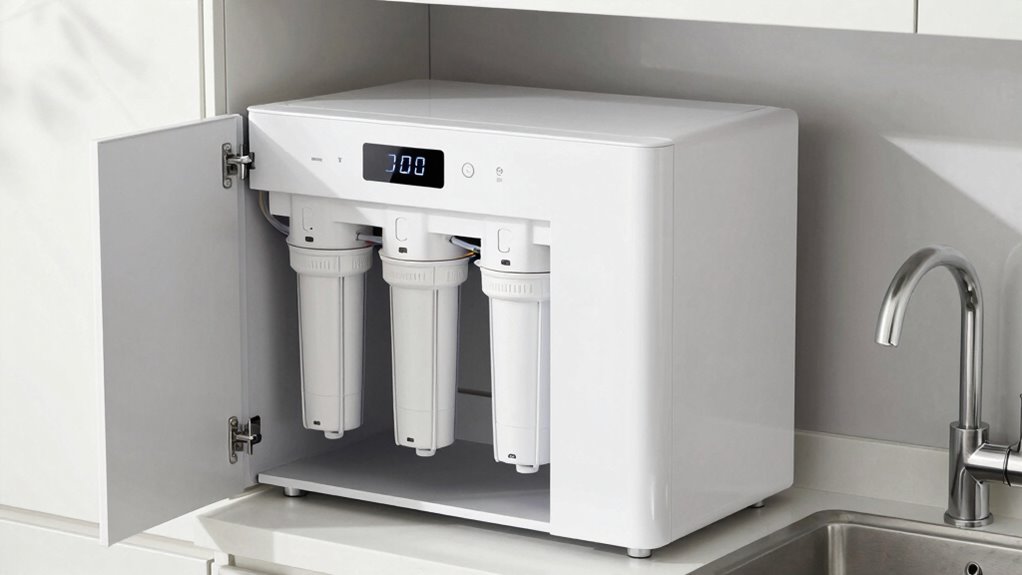
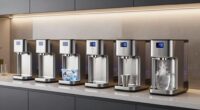
For a compact RO system in a small cabinet, my best overall pick is the Waterdrop G2: its tankless design can free up room otherwise taken by a storage tank. The WECO TINY-36 is a standout for shoppers prioritizing a compact system, while the iSpring RCC7AK-BN suits buyers who want a conventional tank-based setup with an alkaline stage. The main tradeoff is between cabinet space and installation flexibility: tankless models save storage room but need power and careful clearance checks, while tank systems occupy more space but use a familiar layout. Capacity, filter access, drain connections, and the space around existing plumbing also affect whether a unit will fit in practice. Read on for how I compare all 14 options and choose the right one for your cabinet.

Get kitchen gear delivered free with Prime
- Fast, free delivery on millions of items
- Prime Video, Amazon Music and more included
- Member-only deals all year
Complete the kit


Key Takeaways
- Tankless models lead for usable cabinet space, but their housings and filter access still need measured clearance; a narrow footprint alone does not guarantee an easy fit.
- The Waterdrop G2 and G3P600 offer different capacity priorities: both are tankless, while the G3P600’s stated 600 GPD capacity may better suit higher daily demand.
- Conventional tank-based options remain relevant: the iSpring RCC7AK-BN and FS-TFC use a familiar format, but buyers need room for the storage tank as well as the filters.
- Alkaline stages add complexity, not just a feature: models such as the WD-T4-A, G6A6, and RCC7AK-BN call for attention to replacement filters and their ongoing availability.
- Countertop RO solves a different space problem: the DREO avoids under-sink installation, but it uses counter space and does not serve buyers who specifically need an under-cabinet system.
| Ecoviva E8 800 GPD Tankless Reverse Osmosis Water Filtration System |  | Best Overall for a Small Cabinet | Filtration: 9-stage reverse osmosis | Daily capacity: 800 gallons | Dimensions: 16.5 × 5 × 12.2 inches | VIEW ON AMAZON | See Our Full Breakdown |
| Waterdrop G3P600 Tankless Reverse Osmosis Water Filter System, 600 GPD |  | Best for Certified Filtration Details | Filtration: 8-stage reverse osmosis | Daily capacity: 600 gallons | Dimensions: 18.12 × 5.67 × 17.72 inches | VIEW ON AMAZON | See Our Full Breakdown |
| DREO Countertop Reverse Osmosis Water Filter with Autofill Pitcher |  | Best for Renters and No-Drill Kitchens | Purification method: Reverse osmosis | Installation type: Countertop | Dimensions: 14.5 × 6.7 × 13.4 inches | VIEW ON AMAZON | See Our Full Breakdown |
| Ecoviva RO1000G Tankless 9-Stage Commercial Reverse Osmosis Water Filtration System |  | Best for High-Volume Use | Filtration: 9-stage reverse osmosis | Daily capacity: 1,000 gallons | Dimensions: 17.1 × 6.5 × 18.79 inches | VIEW ON AMAZON | See Our Full Breakdown |
| FS-TFC 5-Stage Reverse Osmosis Water Filter System, 100 GPD |  | Best Compact Pick Without a Power Outlet | Filtration: 5 stages | Purification method: Reverse osmosis | Maximum flow rate: 18 liters per hour | VIEW ON AMAZON | See Our Full Breakdown |
| iSpring RO10001F Tankless Reverse Osmosis Water Filter |  | Best for Very Low Cabinets | Dimensions: 17.7 × 7.1 × 10.3 in | Maximum flow rate: 0.69 GPM at 60 psi | Operating pressure: 15–60 psi | VIEW ON AMAZON | See Our Full Breakdown |
| Waterdrop G2 Tankless Reverse Osmosis Water Filtration System, 400 GPD |  | Best Value Tankless Fit | Dimensions: 17.3 × 5.9 × 14 in | Filtration: 7-stage reverse osmosis | Maximum production rate: 400 GPD | VIEW ON AMAZON | See Our Full Breakdown |
| iSpring RCC7AK-BN 6-Stage Alkaline Reverse Osmosis Water Filter System |  | Best No-Power Option | Dimensions: 15.5 × 16 × 18 in | System type: 6-stage reverse osmosis with alkaline remineralization | Certification: NSF/ANSI 58 | VIEW ON AMAZON | See Our Full Breakdown |
| Waterdrop WD-T4-A 10-Stage Tankless Reverse Osmosis Water Filter with Alkaline Mineralizer |  | Best for Two Water Options | Dimensions: 16.54 × 6.22 × 17.95 in | Filtration stages: 10 | Capacity: 450 gallons per day | VIEW ON AMAZON | See Our Full Breakdown |
| VIOMI Pure B6W 600 GPD Tankless Under-Sink Reverse Osmosis Water Filter |  | Best for Refrigerator Connections | Dimensions: 12.64 × 5.91 × 16.22 in | Filtration: 7-stage reverse osmosis | Flow rate: 600 GPD | VIEW ON AMAZON | See Our Full Breakdown |
| Ranein V600 Tankless Reverse Osmosis Water Filter System, 600 GPD |  | Best for Straightforward Tankless Capacity | Installation: Under sink | Dimensions: 15.8 × 5.1 × 14.8 in | Filtration: PP-carbon-RO; listing also describes six-stage alkaline filtration | VIEW ON AMAZON | See Our Full Breakdown |
| Waterdrop G6A6 Compact Alkaline Mineral Reverse Osmosis System, 600 GPD |  | Best Compact Mineralizing System | Installation: Under sink | Design: Tankless | Dimensions: 15.94 × 5.31 × 9.61 in | VIEW ON AMAZON | See Our Full Breakdown |
| WECO TINY-36 Compact 4-Stage Reverse Osmosis Water Filter System |  | Best Compact System with Storage Tank | Model: TINY-36 | Filtration: 4-stage reverse osmosis with TFC membrane | Dimensions: 15 × 5.5 × 9 in | VIEW ON AMAZON | See Our Full Breakdown |
| Ronaqua Compact 5-Stage Reverse Osmosis Water Filtration System with Booster Pump | 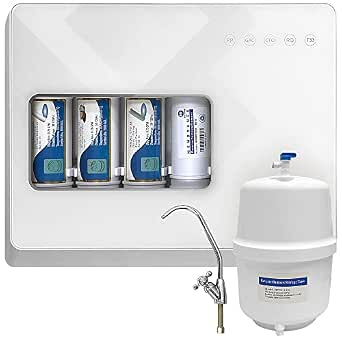 | Best for Flexible Installation and Low Pressure | Model number: RA-RO-50G-H08 | Filtration stages: 5 | Membrane capacity: 50 gallons per day | VIEW ON AMAZON | See Our Full Breakdown |
| compact ro system small cabinet | Dimensions | Pure-to-drain ratio | Filtration | Maximum flow rate |
|---|---|---|---|---|
| Ecoviva E8 800 GPD Tankless Re | 16.5 × 5 × 12.2 inches | 2.5:1 | 9-stage reverse osmosis | 48 milliliters per second |
| Waterdrop G3P600 Tankless Reve | 18.12 × 5.67 × 17.72 inches | — | 8-stage reverse osmosis | — |
| DREO Countertop Reverse Osmosi | 14.5 × 6.7 × 13.4 inches | 3:1 | — | — |
| Ecoviva RO1000G Tankless 9-Sta | 17.1 × 6.5 × 18.79 inches | 9:1 | 9-stage reverse osmosis | 0.7 GPM |
| FS-TFC 5-Stage Reverse Osmosis | 11.5 × 5 × 11.5 inches | — | 5 stages | 18 liters per hour |
| iSpring RO10001F Tankless Reve | 17.7 × 7.1 × 10.3 in | 3:1 | — | 0.69 GPM at 60 psi |
| Waterdrop G2 Tankless Reverse | 17.3 × 5.9 × 14 in | 1:1 | 7-stage reverse osmosis | 0.28 gpm |
| iSpring RCC7AK-BN 6-Stage Alka | 15.5 × 16 × 18 in | — | — | — |
| Waterdrop WD-T4-A 10-Stage Tan | 16.54 × 6.22 × 17.95 in | 2:1 | — | — |
| VIOMI Pure B6W 600 GPD Tankles | 12.64 × 5.91 × 16.22 in | 2:1 | 7-stage reverse osmosis | — |
| Ranein V600 Tankless Reverse O | 15.8 × 5.1 × 14.8 in | 2:1 | PP-carbon-RO; listing also describes six-stage alkaline filtration | 0.42 GPM |
| Waterdrop G6A6 Compact Alkalin | 15.94 × 5.31 × 9.61 in | 2:1 | — | — |
| WECO TINY-36 Compact 4-Stage R | 15 × 5.5 × 9 in | — | 4-stage reverse osmosis with TFC membrane | 0.75 gpm |
| Ronaqua Compact 5-Stage Revers | 18.5 × 4.5 × 14 in | — | — | — |
More Details on Our Top Picks
Ecoviva E8 800 GPD Tankless Reverse Osmosis Water Filtration System
The E8 earns my top spot for buyers who want high output without a storage tank: its 16.5 × 5 × 12.2-inch footprint is notably shallower than the Waterdrop G3P600’s listed dimensions, which can make a difference around plumbing and stored items. Its 800 GPD capacity and 48 mL-per-second maximum flow suit frequent filling, while the faucet’s TDS and filter-life displays reduce guesswork. The 2.5:1 pure-to-drain ratio also uses less drain water than the G3P600’s 2:1 ratio. The tradeoff is that this is not a no-installation option: it needs power and drilled faucet and drain holes. For a particularly tight cabinet, measure around the trap and shutoff valves rather than relying on the unit’s slim width alone.
Pros:- Narrow 5-inch width helps preserve cabinet space.
- 800 GPD capacity and 48 mL-per-second maximum flow support frequent dispensing.
- Smart faucet displays TDS and filter-life information.
- 2.5:1 pure-to-drain ratio is better than the G3P600’s listed 2:1 ratio.
Cons:- Requires a nearby electrical outlet under the sink.
- Installation calls for drilled faucet and drain holes.
- The listed dimensions still require clearance checks around existing plumbing.
Best for: Households that want a tankless under-sink system with high output, faucet-based water information, and a relatively narrow unit.
Not ideal for: Renters or buyers who cannot drill into the sink or countertop, or whose cabinet has no nearby electrical outlet.
- Filtration:9-stage reverse osmosis
- Daily capacity:800 gallons
- Dimensions:16.5 × 5 × 12.2 inches
- Pure-to-drain ratio:2.5:1
- Maximum flow rate:48 milliliters per second
- RO membrane:0.0001 μm
- Installation and power:Under sink, tankless; corded electric
- Filter life cycle:2 years
- Warranty:5 years
Our verdict“Choose the E8 if you want high-capacity tankless filtration in a narrow under-sink footprint and can accommodate its electrical and drilling requirements.”
Waterdrop G3P600 Tankless Reverse Osmosis Water Filter System, 600 GPD
The G3P600 is a strong fit when documented standards matter as much as saving cabinet space. Its listed NSF/ANSI 42, 58, and 372 certifications give buyers a clearer reference point than the product details supplied for the Ecoviva E8, while the smart faucet reports TDS and filter life. Tool-free filter changes can also simplify upkeep once the system is installed. Against the E8, however, the G3P600 is larger at 18.12 × 5.67 × 17.72 inches, produces less water per day, and has a less favorable stated 2:1 pure-to-drain ratio. It still removes the need for a storage tank, but “tankless” does not mean compact in every cabinet: check height and depth, and plan for an outlet.
Pros:- Lists NSF/ANSI 42, 58, and 372 certifications.
- Smart faucet displays TDS and filter life.
- Tool-free filter changes simplify routine replacement.
- Tankless format avoids reserving space for a storage tank.
Cons:- Larger listed dimensions than the Ecoviva E8, especially in height.
- 600 GPD capacity is lower than the E8’s 800 GPD and RO1000G’s 1,000 GPD.
- Requires under-sink electricity and a cabinet that fits its full dimensions.
Best for: Buyers who prioritize listed filtration certifications, simple filter changes, and a faucet that shows TDS and filter status.
Not ideal for: Owners of shallow or low-clearance cabinets, or households seeking the highest stated output and better drain-water efficiency in this group.
- Filtration:8-stage reverse osmosis
- Daily capacity:600 gallons
- Dimensions:18.12 × 5.67 × 17.72 inches
- Pure-water-to-drain ratio:2:1
- Flow rate:0.42 gpm
- Cup fill time:8 oz in 8 seconds
- Certifications:NSF/ANSI 42, 58, and 372; FCC; EU and UKCA standards
- Maximum supported TDS:1500 ppm
- Power:Corded electric
Our verdict“Pick the G3P600 if its listed certifications and tool-free filter changes matter more to you than the smallest footprint or highest capacity.”
DREO Countertop Reverse Osmosis Water Filter with Autofill Pitcher
The DREO is the easiest choice here for someone who cannot modify a sink cabinet: it sits on the counter, needs no under-sink installation, and comes with an autofill pitcher. That makes it a more flexible alternative to the Ecoviva E8 and Waterdrop G3P600, both of which require plumbing work and an outlet beneath the sink. Its built-in TDS meter, filter-life indicator, and self-cleaning feature keep basic monitoring on the unit. The compromise is capacity: the included pitcher holds 3 liters, so it does not offer the on-demand output of the 600–1,000 GPD under-sink systems. At 14.5 × 6.7 × 13.4 inches, it also claims counter space, and its filter is listed for about six months.
Pros:- Countertop setup avoids plumbing changes and drilled holes.
- Includes an autofill pitcher with a 3-liter capacity.
- Built-in TDS and filter-life indicators support routine monitoring.
- Filtration was tested by SGS against NSF/ANSI 58 standards.
Cons:- Uses counter space rather than fitting inside a cabinet.
- Six-month filter life means more frequent replacement than the E8’s listed two-year cycle.
- Pitcher capacity is less suited to heavy, continuous household demand.
Best for: Renters, apartment dwellers, and homeowners who want reverse osmosis without drilling or connecting an under-sink system.
Not ideal for: Households that need continuous high-volume dispensing or have very limited counter space.
- Purification method:Reverse osmosis
- Installation type:Countertop
- Dimensions:14.5 × 6.7 × 13.4 inches
- Weight:9.5 pounds
- Pitcher capacity:3 liters
- Pure-to-drain ratio:3:1
- Filter life:6 months
- Maximum supported water TDS:1200 ppm
- Included components:Water filter body, RO filter, autofill water pitcher
Our verdict“Choose the DREO if avoiding under-sink installation matters more than keeping the counter clear or getting high-volume on-demand output.”
Ecoviva RO1000G Tankless 9-Stage Commercial Reverse Osmosis Water Filtration System
The RO1000G is the capacity leader in this group, with 1,000 GPD, a stated 0.7 GPM flow rate, and a 9:1 pure-to-drain ratio. That combination suits a busy kitchen or small workplace better than the DREO’s 3-liter pitcher or the 600 GPD Waterdrop G3P600. Its alkaline filter and smart faucet add features the G3P600’s listed setup does not specify. The catch for a small-cabinet roundup is its size: at 17.1 × 6.5 × 18.79 inches, it is the tallest under-sink option among these five, so high output comes at the expense of cabinet clearance. Installation also requires two drilled holes and electricity. Check both the system’s dimensions and the space needed to service its filters before choosing it.
Pros:- Highest stated daily capacity in this group at 1,000 gallons.
- 0.7 GPM maximum flow supports quicker dispensing.
- 9:1 pure-to-drain ratio is substantially higher than the E8 and G3P600 ratios.
- Alkaline filter and faucet display with TDS and filter-life information.
Cons:- Tall 18.79-inch height can rule it out for low-clearance cabinets.
- Requires two drilled holes and a nearby electrical outlet.
- Maximum supported TDS is listed as 500 ppm, below the G3P600’s 1500 ppm.
Best for: Large households or small businesses that need fast, frequent dispensing and have a tall, adequately sized cabinet.
Not ideal for: Buyers with low-clearance cabinets, limited under-sink room, or no access to an electrical outlet and drilling.
- Filtration:9-stage reverse osmosis
- Daily capacity:1,000 gallons
- Dimensions:17.1 × 6.5 × 18.79 inches
- Maximum flow rate:0.7 GPM
- Pure-to-drain ratio:9:1
- Working pressure:80–130 psi
- Maximum supported TDS:500 ppm
- Installation and power:Under sink; standing or wall-mounted; corded electric
- Filter life cycle:12 months
Our verdict“Choose the RO1000G for high-volume use if your cabinet has the height, service access, and electrical connection it requires.”
FS-TFC 5-Stage Reverse Osmosis Water Filter System, 100 GPD
The FS-TFC takes a simpler route than the tankless systems: its 11.5 × 5 × 11.5-inch dimensions make it the smallest listed under-sink unit here, and its description says it operates without electricity. That can suit a cabinet where an outlet is unavailable, unlike the Ecoviva E8 and Waterdrop G3P600. It also includes four replacement filters, which gives buyers spares for future maintenance. The tradeoff is lower stated throughput: its flow is up to 18 liters per hour, far below the daily-capacity figures given for the tankless alternatives. Product information also conflicts on power, listing an AC source while saying electricity is not needed. I would verify that point before purchase and allow for a more involved DIY installation.
Pros:- Smallest listed under-sink dimensions among these five products.
- Description says it operates without electricity, unlike the tankless powered options.
- Includes four extra replacement filters and installation accessories.
- Supports a stated maximum flow of 18 liters per hour.
Cons:- Lower stated flow than the high-capacity tankless systems.
- Product details conflict on whether the system needs AC power.
- DIY installation may be challenging for buyers unfamiliar with under-sink plumbing.
Best for: Buyers with a tight under-sink space who prefer a small, conventional system and want included replacement filters.
Not ideal for: Households that need rapid high-volume dispensing, want tool-free maintenance, or need unambiguous power requirements before installation.
- Filtration:5 stages
- Purification method:Reverse osmosis
- Maximum flow rate:18 liters per hour
- Dimensions:11.5 × 5 × 11.5 inches
- Operating pressure:30–85 psi
- Maximum supported water TDS:500 ppm
- Filter life cycle:1 year
- Included extras:4 replacement filters and installation accessories
- Power information:Description says electricity-free; specifications also list AC power
Our verdict“Pick the FS-TFC if cabinet space and a potentially outlet-free setup matter more than high dispensing speed, after confirming its power requirements.”
iSpring RO10001F Tankless Reverse Osmosis Water Filter
The 7.1-inch height is the key reason I’d rank the iSpring RO10001F highly for a small cabinet: it leaves more vertical clearance than the Waterdrop G2, which stands 14 inches tall. Its tankless layout also avoids setting aside room for a storage tank, while the 0.69 GPM flow rate supports a more direct fill than the G2’s listed 0.28 gpm. The 3:1 pure-to-drain ratio is another advantage for buyers watching water waste, and leak detection plus timeout protection add safeguards under the sink. The tradeoff is that its 17.7-inch length still needs a careful cabinet measurement, and it needs a power connection. The all-in-one filter is rated for up to two years, but I’d check replacement-filter availability before choosing it.
Pros:- At 7.1 inches tall, it fits cabinets where taller tankless systems such as the Waterdrop G2 may not.
- Up to two years of stated filter life can mean fewer scheduled filter changes.
- The 3:1 pure-to-drain ratio uses less drain water than the Waterdrop G2’s 1:1 ratio.
- Leak detection and timeout protection add safeguards for an under-sink installation.
Cons:- Requires a corded electrical connection beneath the sink.
- Its 17.7-inch length may still conflict with plumbing or stored items in narrow cabinets.
- The replacement-filter model must be selected separately.
Best for: Households with low-clearance under-sink cabinets that have an electrical outlet and want a tankless system with a longer stated filter life.
Not ideal for: Renters or homeowners who cannot add an under-sink power connection, and buyers who need a system that does not require checking a specific replacement-filter model.
- Dimensions:17.7 × 7.1 × 10.3 in
- Maximum flow rate:0.69 GPM at 60 psi
- Operating pressure:15–60 psi
- Filter life:Up to 2 years
- Capacity:1,000 gallons
- Pure-to-drain ratio:3:1
- Power:Corded electric
- Contaminants reduced:Chlorine, heavy metals, PFAS, TDS, and other contaminants
Our verdict“Choose the RO10001F when cabinet height is your main constraint and you can provide power and verify the correct replacement filter.”
Waterdrop G2 Tankless Reverse Osmosis Water Filtration System, 400 GPD
I’d pick the Waterdrop G2 for a cabinet where width matters more than height: at 5.9 inches wide, it is narrower than the iSpring RO10001F, though its 14-inch height makes it a poor match for low-clearance spaces. The tankless design frees the cabinet from a storage tank, and the twist-and-pull filters are intended to make routine changes straightforward. Its listed 400 GPD capacity suits everyday household use, but the maximum faucet flow is 0.28 gpm, below the RO10001F’s 0.69 GPM listing. The 1:1 pure-to-drain ratio is less water-efficient than the iSpring’s 3:1 ratio. I’d also factor in the required electrical connection and countertop drilling: this is a more involved fit than a no-power, tank-based setup.
Pros:- The 5.9-inch width can suit narrow cabinet spaces.
- Tankless design leaves out the bulky storage tank.
- Twist-and-pull filters are designed for simpler filter replacement.
- Seven-stage filtration and a stated 400 GPD production rate support regular household use.
Cons:- Its 14-inch height makes it a poor choice for low-clearance cabinets.
- The 1:1 pure-to-drain ratio is less efficient than the iSpring RO10001F’s 3:1 ratio.
- Installation requires electricity and drilling holes.
Best for: Households with a narrow under-sink area, enough vertical clearance, and a willingness to drill for the faucet and provide power.
Not ideal for: Buyers with low cabinets, no accessible outlet, or a strong preference for a higher pure-to-drain ratio and faster listed faucet flow.
- Dimensions:17.3 × 5.9 × 14 in
- Filtration:7-stage reverse osmosis
- Maximum production rate:400 GPD
- Maximum flow rate:0.28 gpm
- Pure-to-drain ratio:1:1
- Operating pressure:14.5–87 psi
- Maximum supported TDS:300 ppm
- Certification:NSF/ANSI 372
Our verdict“Choose the G2 if your cabinet is narrow but tall enough, and accept its lower listed flow and 1:1 drain ratio for a slim tankless footprint.”
iSpring RCC7AK-BN 6-Stage Alkaline Reverse Osmosis Water Filter System
For a small cabinet with no electrical outlet, the iSpring RCC7AK-BN offers something the tankless RO10001F and Waterdrop G2 cannot: it operates without power. Its alkaline stage adds minerals after reverse osmosis, making it a better fit for buyers who want remineralized water rather than a purely filtered stream. I also value its NSF/ANSI 58 certification when comparing it with the listed NSF/ANSI 372 certification on the G2. The tradeoff is cabinet space: this system measures 15.5 × 16 × 18 inches and includes a storage tank, so it is not the most compact choice here. Its 75 GPD capacity and six-month filter cycle also suit a different buyer than those seeking high output and infrequent changes.
Pros:- Runs without an electrical connection, unlike the tankless iSpring RO10001F and Waterdrop G2.
- Alkaline remineralization adds minerals after RO filtration.
- NSF/ANSI 58 certified.
- Includes a brushed nickel faucet and storage tank.
Cons:- The 18-inch dimension and included tank demand substantial cabinet space.
- The stated filter life cycle is six months, requiring regular maintenance.
- Its 75 GPD capacity is far below the listed production rates of the tankless systems in this group.
Best for: Homeowners who want remineralized RO water, have no under-sink outlet, and can fit a storage tank and system in the cabinet.
Not ideal for: Buyers prioritizing a small cabinet footprint, a tankless design, or longer intervals between routine filter changes.
- Dimensions:15.5 × 16 × 18 in
- System type:6-stage reverse osmosis with alkaline remineralization
- Certification:NSF/ANSI 58
- Capacity:75 GPD
- Power:No power needed
- Filter life cycle:6 months
- Supported maximum TDS:750 ppm
- Included components:RO system, brushed nickel faucet, storage tank, extra tool set
Our verdict“Choose the RCC7AK-BN if you want a no-power, remineralizing system and have room for its tank; skip it when cabinet space is tight.”
Waterdrop WD-T4-A 10-Stage Tankless Reverse Osmosis Water Filter with Alkaline Mineralizer
The Waterdrop WD-T4-A earns its place for buyers who want both standard RO water and a separate alkaline, mineral-enhanced stream. That choice is more flexible than the iSpring RCC7AK-BN, which adds minerals through its alkaline stage rather than offering the two listed water options. Its tankless build avoids a storage tank, and the 2:1 pure-to-drain ratio is more efficient than the Waterdrop G2’s 1:1 ratio. The cabinet fit still needs scrutiny: at 17.95 inches tall, it is not suited to low-clearance spaces, even though its 6.22-inch width is modest. It also needs electricity and countertop drilling. Filter intervals vary by component, so I’d expect more than one maintenance schedule rather than treating the system as a single long-life filter.
Pros:- Provides separate standard RO-purified and alkaline mineral-enhanced water options.
- Tankless design avoids a storage tank under the sink.
- The 2:1 pure-to-drain ratio is better than the Waterdrop G2’s listed 1:1 ratio.
- Filter reminder lights and buzzer alerts can help track maintenance.
Cons:- At 17.95 inches tall, it may not fit low-clearance cabinets.
- Requires an electrical connection and drilled countertop holes.
- Filter replacement intervals differ by component, adding maintenance complexity.
Best for: Households that want a tankless system with a choice between standard RO and alkaline mineral-enhanced water, and have adequate cabinet height.
Not ideal for: Buyers with low under-sink clearance, no electrical outlet, or countertops they cannot drill for faucet installation.
- Dimensions:16.54 × 6.22 × 17.95 in
- Filtration stages:10
- Capacity:450 gallons per day
- Pure-to-drain ratio:2:1
- Water options:Standard RO-purified and alkaline mineral-enhanced
- Filter life:CF: 6 months; RO membrane: 24 months; CB: 12 months; alkaline mineralizer: 12 months
- Certification:NSF/ANSI 372
- Power and faucet installation:Electrical connection required; countertop drilling required
Our verdict“Choose the WD-T4-A if two water options matter more than low cabinet height and you can handle powered, drilled installation.”
VIOMI Pure B6W 600 GPD Tankless Under-Sink Reverse Osmosis Water Filter
The VIOMI Pure B6W stands out for buyers who want a tankless RO system to feed both the kitchen faucet and a refrigerator or ice maker. Its stated 600 GPD flow capacity and 2:1 pure-to-drain ratio make it a stronger throughput-and-efficiency combination than the Waterdrop G2’s 400 GPD and 1:1 ratio. Its dimensions—12.64 × 5.91 × 16.22 inches—are compact in width and length, though the 16.22-inch height still rules it out for some low cabinets. The listed NSF/ANSI 42, 53, 58, and 372 certifications distinguish it from the other models here, but buyers should check the exact claims and scope for their needs. App monitoring adds filter-life and water-quality tracking; installation needs power and drilling, and refrigerator tubing is not included.
Pros:- Supports refrigerator and ice maker connections.
- Its 600 GPD rating exceeds the Waterdrop G2’s listed 400 GPD.
- The 2:1 pure-to-drain ratio is more efficient than the G2’s 1:1 ratio.
- App controls monitor filter life, water quality, and consumption.
Cons:- Requires a corded electrical connection and drilled holes for installation.
- Refrigerator or ice maker tubing is not included.
- The 16.22-inch height may be too much for low-clearance cabinets.
Best for: Households that want tankless RO water for a sink and refrigerator or ice maker, with an outlet and suitable cabinet clearance.
Not ideal for: Buyers with low cabinets, no available outlet, or anyone expecting refrigerator hookup tubing to come in the box.
- Dimensions:12.64 × 5.91 × 16.22 in
- Filtration:7-stage reverse osmosis
- Flow rate:600 GPD
- Pure-to-drain ratio:2:1
- Certifications:NSF/ANSI 42, 53, 58, and 372
- Filter lifespan:PPC: 1 year; RO: 2 years
- Refrigerator compatibility:Compatible with refrigerator and ice maker connections
- Power:Corded electric
Our verdict“Choose the VIOMI Pure B6W if you need a compact-width tankless unit with refrigerator support and can supply the outlet, drilling, and separate tubing.”
Ranein V600 Tankless Reverse Osmosis Water Filter System, 600 GPD
The Ranein V600 suits a small cabinet better than a traditional tank system because its tankless 15.8 × 5.1 × 14.8-inch body leaves the storage tank out of the equation. Its stated 0.42 GPM flow and 2:1 pure-to-drain ratio make it a practical fit for regular kitchen use without the higher listed capacity claims of some alternatives. Compared with the Waterdrop G6A6, it has fewer clearly specified filtration stages and does not add minerals back, but its compact footprint and simpler feature set may appeal to buyers who want filtered water without extra mineral-filter maintenance. There is a documentation caveat: the listing describes both three-stage and six-stage filtration. The combined PP-carbon filter also has an eight-month replacement interval, so upkeep is more frequent than the G6A6’s stated RO-filter schedule.
Pros:- Tankless design avoids the cabinet space taken by a storage tank.
- Stated flow rate of up to 0.42 GPM supports everyday dispensing.
- 2:1 pure-to-drain ratio limits wastewater compared with systems using less favorable ratios.
- Rated noise level of 60 dB or less.
Cons:- The listing conflicts between three-stage and six-stage filtration descriptions.
- Combined PP-carbon filter is rated for only eight months.
- Requires a corded electrical connection.
Best for: Households with limited under-sink space that want a tankless RO unit, steady stated flow, and a 2:1 pure-to-drain ratio.
Not ideal for: Buyers who want consistent, clearly documented stage specifications, mineralized water, or fewer routine filter changes.
- Installation:Under sink
- Dimensions:15.8 × 5.1 × 14.8 in
- Filtration:PP-carbon-RO; listing also describes six-stage alkaline filtration
- Maximum flow rate:0.42 GPM
- Pure-to-drain ratio:2:1
- TDS reduction:Up to 95%
- Combined PP-carbon filter lifespan:8 months
- Weight:8.3 lb
Our verdict“Choose the V600 if cabinet space and a tankless layout matter more than mineralization or fully consistent filtration-stage documentation.”
Waterdrop G6A6 Compact Alkaline Mineral Reverse Osmosis System, 600 GPD
The Waterdrop G6A6 earns its place for buyers who want a small-cabinet RO system that does more than remove contaminants: its tankless 15.94 × 5.31 × 9.61-inch design also returns calcium, magnesium, sodium, and potassium to the water. The eight-stage setup and 0.0001 μm membrane give it a more elaborate treatment path than the Ranein V600, whose listing is inconsistent about stage count and does not specify mineral infusion. Its 2:1 pure-to-drain ratio is also a useful cabinet-kitchen tradeoff, pairing water savings with a compact installation. The costs of that extra functionality are recurring mineral-filter changes every six months and audible as well as visual reminders. Buyers who only want RO filtration may find the simpler Ranein less demanding to maintain.
Pros:- Compact tankless dimensions leave cabinet room for other supplies.
- Eight filtration stages and a 0.0001 μm membrane are specified.
- Adds calcium, magnesium, sodium, and potassium back to the water.
- Quick-change filters include visual and audible replacement reminders.
Cons:- Mineral filter has a six-month stated lifespan.
- Requires under-sink installation and cabinet access.
- Adds mineral-filter upkeep that the Ranein V600 does not specify.
Best for: Small-kitchen households seeking tankless RO filtration with added minerals and reminders for filter changes.
Not ideal for: Buyers who prefer the fewest consumables, do not want audible reminders, or need a system that avoids under-sink installation.
- Installation:Under sink
- Design:Tankless
- Dimensions:15.94 × 5.31 × 9.61 in
- Filtration stages:8
- RO membrane:0.0001 μm
- Maximum capacity:600 gallons per day
- Pure-to-drain ratio:2:1
- Filter lifespans:RO filter: 24 months; mineral filter: 6 months
- Mineral infusion:Calcium, magnesium, sodium, and potassium
Our verdict“Pick the G6A6 if mineralized water and filter reminders justify the added six-month mineral-filter replacement routine.”
WECO TINY-36 Compact 4-Stage Reverse Osmosis Water Filter System
The WECO TINY-36 is the odd one out among this group of compact picks: it includes a pressurized storage tank, so it needs more cabinet planning than the tankless Ranein V600 or Waterdrop G6A6. That tank can make sense for buyers who prefer stored purified water rather than a tankless layout, while the stated 1:1 purified-to-waste ratio compares favorably with the Ronaqua’s less-than-3-gallons-wastewater-per-gallon-purified figure. The four-stage TFC system is listed to reduce up to 99% of specified contaminants, and installation can be wall-mounted or floor-standing as well as under a sink. The tradeoff is a more involved conventional setup: the tank takes space, and filters and membrane need periodic replacement. Its listed 36-gallon tank capacity is unusually large, so verify that figure and fit before buying.
Pros:- Includes a pressurized storage tank, faucet, and installation accessories.
- Can be mounted under a sink, on a wall, or set on the floor.
- Listed 1:1 purified-to-waste ratio.
- Brushed nickel faucet is specified as lead-free.
Cons:- Storage tank takes cabinet space that tankless options such as the Waterdrop G6A6 avoid.
- Filters and membrane require periodic replacement.
- The listed 36-gallon tank capacity merits confirmation before purchase.
Best for: RV, boat, or home users who want a compact RO unit with a storage tank and flexible mounting options.
Not ideal for: Buyers with very restricted cabinet space who want a tankless system or a clearly modest storage footprint.
- Model:TINY-36
- Filtration:4-stage reverse osmosis with TFC membrane
- Dimensions:15 × 5.5 × 9 in
- Storage tank capacity:36 gallons (as listed)
- Maximum flow rate:0.75 gpm
- Purified-to-waste ratio:1:1
- Maximum supported water TDS:2000 ppm
- Installation options:Under sink, wall-mounted, or floor-standing
- Faucet:Brushed nickel, lead-free
Our verdict“Choose the TINY-36 if you specifically want stored RO water and flexible mounting, but confirm the unusually large stated tank capacity and available space.”
Ronaqua Compact 5-Stage Reverse Osmosis Water Filtration System with Booster Pump
Ronaqua is the most adaptable installation choice here, with support for under-sink, wall-mounted, or countertop placement. That flexibility helps when a small cabinet cannot accommodate a unit in its usual position, though it does not make the system especially light or slim: at 18.5 × 4.5 × 14 inches and 20 pounds, it is larger and heavier than the tankless Ranein V600. A booster pump may help maintain performance where water pressure varies, while the automatic flush valve and quick-change cartridges simplify routine upkeep. The main compromise is water efficiency: its drain figure is less than three gallons of wastewater per gallon purified, notably less favorable than the WECO TINY-36’s listed 1:1 ratio or the 2:1 ratios of the Waterdrop G6A6 and Ranein. It also needs a corded power connection.
Pros:- Three supported installation locations offer flexibility when under-sink space is awkward.
- Booster pump is intended to support performance across varying water pressure.
- Quick-change cartridges reduce the effort involved in filter replacement.
- Automatic flush valve is included.
Cons:- At 20 pounds and 18.5 inches long, it is bulkier than tankless alternatives such as the Ranein V600.
- Requires a corded electrical connection.
- Wastewater figure is less than three gallons per gallon purified, less favorable than the WECO TINY-36’s 1:1 ratio.
Best for: Homeowners with variable water pressure or unusual installation constraints who can provide power and space for a conventional RO unit.
Not ideal for: Buyers with a very small cabinet, no nearby electrical outlet, or a strong preference for a low-waste ratio.
- Model number:RA-RO-50G-H08
- Filtration stages:5
- Membrane capacity:50 gallons per day
- Dimensions:18.5 × 4.5 × 14 in
- Weight:20 lb
- Contaminant rejection:Up to 99% of listed contaminants
- Wastewater:Less than 3 gallons per gallon of purified water
- Installation options:Under sink, wall-mounted, or countertop
- Power:Corded electric
Our verdict“Choose Ronaqua when installation flexibility and a booster pump matter more than the smallest footprint or the lowest stated wastewater ratio.”

How We Picked
I ranked these systems for the specific challenge of fitting reverse osmosis under a small sink cabinet. The main factors were tankless or compact design, stated capacity, installation requirements, filter access, maintenance demands, and whether the format suits an under-sink setup. I also separated true cabinet-space solutions from alternatives that answer a different need, such as a countertop unit or a conventional system with a storage tank.
The ranking favors options that balance space savings with practical household use, rather than treating the highest stated capacity or longest stage count as an automatic win. Tankless models rank well when they reduce the space occupied by a separate tank, while compact conventional systems remain candidates when their footprint and installation plan fit the available cabinet. Because cabinet dimensions, plumbing, outlet access, and included fittings can vary by home, I treat product names and stated capacity as starting points—not proof that a unit will fit every small cabinet.
Factors to Consider When Choosing Compact Ro System Small Cabinet
A compact system can still be a poor fit if its filters cannot be changed in place or its connections crowd existing plumbing. I recommend treating cabinet clearance, installation needs, and future maintenance as one decision rather than shopping by product dimensions alone.
Measure the Working Space, Not Just the Empty Cabinet
Measure the cabinet’s clear width, height, and depth after accounting for the sink bowl, disposal, plumbing, and any shelf or support rail. Leave room to reach filter housings and turn or pull cartridges out; a unit that fits tightly may become frustrating at replacement time. Check where the water line and drain connection sit, since a short hose route may matter more than a small difference in the unit’s listed width. Note whether the cabinet door closes without pressing on tubing. A common mistake is measuring the cabinet before the sink is installed or ignoring the area occupied by a garbage disposal. If the layout is crowded, compare a tankless design with a countertop alternative rather than assuming every under-sink model is suitable.
Choose Tankless or Tank-Based Around Your Layout
Tankless systems can reclaim the space a separate storage tank would use, making them attractive for small cabinets. That benefit does not mean the unit is smaller in every direction, and tankless models commonly need a power connection. A tank-based system takes more cabinet volume but may suit homes where the existing setup or installation preferences favor stored water. Think about what else needs to remain under the sink, including cleaning supplies, bins, or a disposal. Do not compare only the filter body dimensions; account for the tank, tubing loops, and access needed for servicing. The better format is the one that leaves a workable installation and maintenance area, not simply the one with the smallest headline footprint.
Match Stated Capacity to Real Household Demand
Gallons-per-day figures help distinguish products, but they are not a direct promise of how quickly water will flow at every tap. Household demand depends on how much drinking and cooking water you use, how many people share the system, and whether you fill containers throughout the day. A high-capacity unit may be unnecessary for a small household, while a lower-capacity model could feel limiting in a busy kitchen. Check the manufacturer’s performance conditions and instructions rather than treating a capacity number as a universal measure. Consider whether you need water only at a dedicated faucet or also for frequent pitcher and bottle filling. Avoid paying for capacity that does not solve a real household need, especially if it adds installation or maintenance complexity.
Plan for Power, Drainage, and Installation
Before choosing an under-sink system, locate a suitable electrical outlet, the cold-water feed, and an accessible drain connection. Tankless units may require power, while a conventional system can still involve several tubing connections and a dedicated faucet. Confirm whether your sink or countertop has an available faucet opening, or whether drilling would be needed. Check the installation manual for required adapters, pressure conditions, and any restrictions on plumbing configurations. A compact unit can still demand professional installation if the cabinet is crowded or the drain route is awkward. Planning these details first helps prevent a space-saving purchase from turning into a difficult retrofit.
Compare Filter Replacement and Long-Term Upkeep
Filter stages alone do not tell you how easy or costly a system will be to maintain. Check which cartridges require replacement, their stated service intervals, whether each stage has a separate cartridge, and how easily you can obtain replacements. Alkaline or mineral stages add another maintenance item, so choose them for a specific preference rather than assuming more stages automatically mean better water for your household. Look for clear replacement instructions and enough room to service the unit without disconnecting surrounding plumbing. Ask whether the system signals filter changes or relies on a calendar reminder. A unit that fits today but is difficult to maintain may become a poor small-cabinet choice over time.
Treat Countertop and Commercial-Style Designs as Separate Use Cases
A countertop RO unit can avoid under-sink plumbing and cabinet crowding, but it occupies worktop space and may require refilling or handling a pitcher. That makes it a practical alternative for renters or kitchens where installation is not feasible, not a direct substitute for a permanently connected under-sink system. Commercial-style or high-capacity models may suit heavier use, yet their requirements and physical layout should be checked carefully for a residential cabinet. Decide whether you want a fixed faucet, a portable water supply, or a system that avoids installation altogether. One common mistake is calling every small-looking model “compact” without matching its format to the intended location. Choose by where the system will sit and how you will use it every day.
Frequently Asked Questions
Will a tankless RO system fit under every small kitchen sink?
No. Tankless designs remove the need for a separate storage tank, but the filter body still needs room, and the installation may need an electrical outlet and reachable plumbing connections. Measure around the sink bowl, disposal, and existing pipes rather than relying on cabinet exterior dimensions. Leave clearance to access and replace filters after installation. If the cabinet layout is unusually tight, compare the manufacturer’s installation diagram with your actual space before choosing a model.
Should I choose a 600 GPD system over a lower-capacity model?
Only if the higher stated capacity addresses your household’s water use. A larger capacity figure may appeal to a busy household that fills pitchers and bottles often, but it does not by itself establish better fit, easier installation, or lower upkeep. Check the stated performance conditions and the system’s other requirements. For a smaller household, cabinet dimensions, filter access, and replacement planning may matter more than extra capacity.
Can I install an under-sink RO system if there is no outlet inside the cabinet?
Some tankless systems need electrical power, so a missing outlet can rule out a particular model or require a suitable electrical solution. Do not run an extension cord through a damp or crowded cabinet as a shortcut. Check the installation manual to confirm power requirements before ordering. A non-electric tank-based design or a countertop unit may make more sense if adding a properly located outlet is not practical.
Is an alkaline stage worth choosing for a small-cabinet system?
An alkaline or mineral stage is a preference, not a requirement for making a system fit under the sink. It adds another cartridge or filtration step to track, so consider whether you specifically want that feature and can source its replacement filters. Compare the added maintenance with a simpler system that leaves fewer cartridges to manage. Cabinet fit still depends on the complete unit and service clearance, not on the stage count alone.
What should I choose if I rent or cannot modify the sink?
A countertop unit such as the DREO is the clearest fit among these options when under-sink installation is not practical, because it avoids a permanent plumbing connection. The tradeoff is that it takes counter space and has a different filling and dispensing routine from a dedicated-faucet system. Before buying, check its water-handling instructions and the space available near an outlet. If an under-sink option is still preferred, get permission for any faucet or plumbing changes and confirm the installation can be reversed.
Conclusion
For most buyers who need a small-cabinet setup, I would start with the Waterdrop G2 as the best overall because its tankless format avoids a separate storage tank without making capacity the only deciding factor. The FS-TFC is my value-oriented pick for shoppers who prefer a straightforward five-stage system and have room for a tank-based layout. For a premium, higher-capacity direction, compare the Ecoviva E8 and Waterdrop G3P600 against your household’s actual demand and installation needs. Beginners who want a familiar tank-style system can look first at the iSpring RCC7AK-BN, while accepting its larger cabinet footprint. For a truly compact under-sink alternative, investigate the WECO TINY-36; for renters or anyone avoiding plumbing changes, the DREO countertop system fits that separate need. My final check would be a cabinet measurement and filter-access plan before choosing any model.