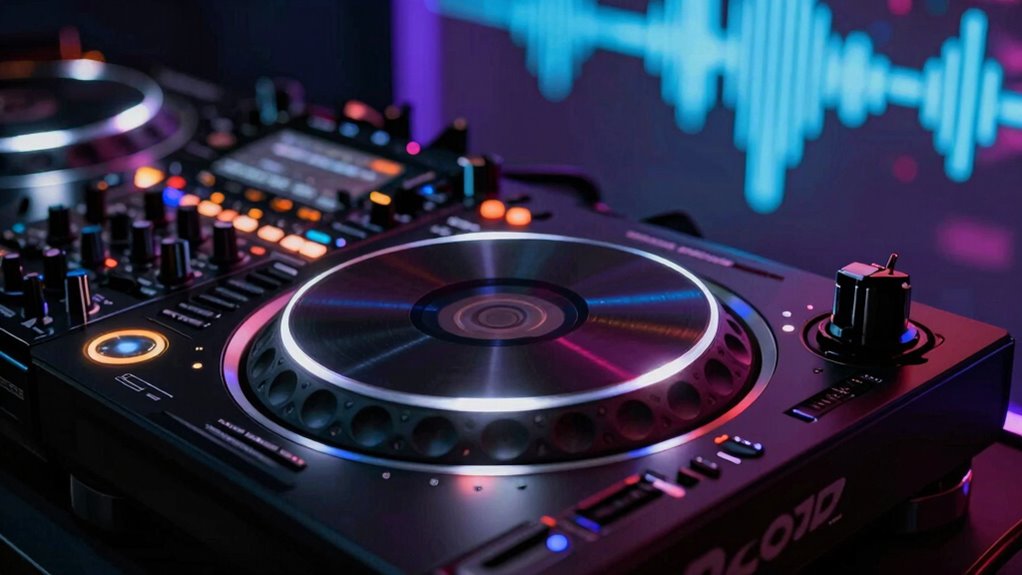
A DJ turntable for scratching needs responsive platter control, a setup that suits your style, and enough durability for regular practice. My best overall pick is the RANE ONE MKII for its motorized platters and all-in-one controller format; the RANE Twelve MKII stands out for a dedicated motorized deck, while the Numark PT01 Scratch is the portable choice for practicing away from a full setup. The central tradeoff is between the feel of a motorized platter, the flexibility of a conventional turntable, and the simplicity of a controller or portable unit. I also compare bundles and beginner-friendly options, since included accessories and setup requirements can change what makes sense. Read on for the full breakdown and a guide to choosing by budget, space, and scratching style.

Get kitchen gear delivered free — and shop member deals
- Fast, free delivery on millions of items
- Access to Prime Big Deal Days deals on October 6–7
- Prime Video, Amazon Music and more included
Complete the kit


Key Takeaways
- Motorized platters are the clearest fit for turntablists who want moving-platter feel: RANE ONE MKII and RANE Twelve MKII serve that preference, but the ONE MKII is a complete controller while the Twelve MKII is a dedicated control deck.
- A conventional direct-drive deck and a scratch controller are different purchases: PLX-500 and AT-LP120XUSB-BK are standalone turntables, while DDJ-REV1 and DDJ-REV5 are computer-based DJ controllers.
- Portable scratching favors practice access over full-system capability: the Numark PT01 Scratch options and Reloop Spin are easier to take along than full-size decks, but they do not replace a complete club-style setup.
- Bundles are not automatically better value: the REV1 bundle and portable-turntable bundles can reduce accessory hunting, but buyers should check whether each included item suits their intended setup.
- Price-free ranking differences come down to fit and capability: the broadest performance package leads, while dedicated control, beginner guidance, compact practice, and traditional turntable use each have more targeted picks.
| Pioneer DJ PLX-500 Direct-Drive Turntable |  | Best for Building a Home Vinyl Setup | Drive type: Direct drive | USB output: Records vinyl to a computer | Output: Phono/line | VIEW ON AMAZON | See Our Full Breakdown |
| Pioneer DJ DDJ-REV1 2-Deck Serato DJ Controller |  | Best Beginner Scratch Controller | Channels: 2 | Software compatibility: Serato DJ Lite | Connectivity: USB, auxiliary | VIEW ON AMAZON | See Our Full Breakdown |
| Numark PT01 Scratch Portable DJ Turntable |  | Best for Portable Scratch Practice | Speeds: 33 1/3, 45, 78 RPM | Power source: AC adapter or 6 D batteries (not included) | Connectivity: RCA outputs, 1/8-inch aux input, headphone output, USB interface | VIEW ON AMAZON | See Our Full Breakdown |
| Numark PT01 Scratch Portable 3-Speed Turntable with Scratch Switch |  | Best Portable Pick for Switch Customization | Playback speeds: 33⅓, 45, and 78 RPM | Power: AC adapter or six D batteries (not included) | Scratch switch: Adjustable and user-replaceable | VIEW ON AMAZON | See Our Full Breakdown |
| Pioneer DJ DDJ-REV1 2-Channel Scratch-Style DJ Controller Bundle |  | Best Scratch Controller Bundle | Inputs: 1 microphone input (1/4-inch TS jack) | Outputs: 1 master output (RCA); 1 headphone output (3.5 mm stereo mini jack) | USB: 1 USB Type-B port | VIEW ON AMAZON | See Our Full Breakdown |
| Pioneer DJ DDJ-REV5 2-Channel Scratch DJ Controller | 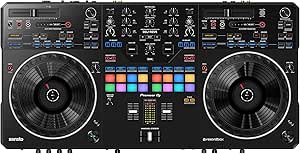 | Best Overall Scratch Controller | Brand: Pioneer DJ | Model: DDJ-REV5 | Channels: 2 | VIEW ON AMAZON | See Our Full Breakdown |
| Reloop Spin Portable Turntable System |  | Best Portable All-in-One | Brand: Reloop | Model: Spin (AMS-SPIN) | Type: Portable turntable system | VIEW ON AMAZON | See Our Full Breakdown |
| Numark PT01 Scratch Portable Turntable Bundle with Headphones |  | Best for Private Practice | Brand: Numark | Model: PT01 Scratch | Included items: Turntable, headphones | VIEW ON AMAZON | See Our Full Breakdown |
| Reloop RP-7 Professional 7” Turntable System |  | Best Premium 7-Inch Deck | Platter size: 7 inches | Drive type: Direct-drive | Motor: Brushless DC | VIEW ON AMAZON | See Our Full Breakdown |
| Audio-Technica AT-LP120XUSB-BK Direct-Drive Turntable |  | Best for Versatile Vinyl and Digitizing | Model: AT-LP120XUSB-BK | Drive type: Direct-drive | Motor: DC servo | VIEW ON AMAZON | See Our Full Breakdown |
| Hercules DJControl Inpulse T7 2-Channel DJ Controller Bundle with Accessories |  | Best for Scratch Beginners | Channels: 2 | Platter size: 7 inches | Audio resolution: 24-bit / 44.1 kHz | VIEW ON AMAZON | See Our Full Breakdown |
| RANE Twelve MKII Motorized DJ Turntable |  | Best for Full-Size Vinyl-Style Control | Platter: 12-inch motorized acrylic control disc | Platter speeds: 33 1/3 and 45 RPM | Motor torque: 5.0 kgf·cm | VIEW ON AMAZON | See Our Full Breakdown |
| RANE ONE MKII Motorized Serato DJ Controller |  | Best Premium All-in-One Controller | Channels: 2 | Platter size: 7.2 inches | Software: Serato DJ Pro | VIEW ON AMAZON | See Our Full Breakdown |
More Details on Our Top Picks
Pioneer DJ PLX-500 Direct-Drive Turntable
The PLX-500 is the most traditional scratching option in this group: a direct-drive record turntable with a familiar DJ layout, rather than a software controller or portable scratch deck. Its phono/line output gives you connection flexibility, while USB recording is useful if you also want to digitize records. Compared with the Numark PT01 Scratch, it is better suited to a stationary home setup, but gives up the PT01’s battery power, built-in speaker, and scratch switch. That makes the PLX-500 a more natural fit for learning on full-size records with compatible speakers, not for practicing anywhere at a moment’s notice. The main catch is that it is not a complete sound system: you may need a phono input or suitable monitors, and the supplied details do not specify scratch-focused adjustments or bundled audio gear.
Pros:- Direct-drive design provides a DJ-style platform for practicing with records.
- USB output supports recording vinyl to a computer.
- Phono/line output offers flexible connection options.
- Familiar DJ-style control layout is approachable for beginner DJing.
Cons:- Speaker setup may require a compatible phono input or separate monitors.
- Lacks the PT01 Scratch’s portable battery power and built-in speaker.
- The provided specifications do not list a dedicated scratch switch or included accessories.
Best for: Home vinyl DJs who want a direct-drive deck for beginner scratching and record playback, and already have compatible speakers or a phono input.
Not ideal for: Mobile scratch learners who need battery operation and a built-in speaker, or buyers seeking a bundled controller-and-software setup.
- Drive type:Direct drive
- USB output:Records vinyl to a computer
- Output:Phono/line
- Intended use:Home listening and beginner DJing
- Turntable type:DJ-style record turntable
- Speaker setup:Compatible phono input or monitors may be required
Our verdict“Choose the PLX-500 for a home vinyl setup with compatible audio gear; pick the PT01 Scratch if portability and self-contained practice matter more.”
Pioneer DJ DDJ-REV1 2-Deck Serato DJ Controller
The DDJ-REV1 is the clearest pick here for a beginner who wants to learn scratch techniques with digital tracks rather than handle vinyl records. Its battle-style layout, tall pitch faders, quick effect controls, and scratch routines put performance controls within easy reach, while Serato DJ Lite provides the software connection. Compared with the Pioneer DJ PLX-500, the REV1 offers a more direct route into laptop-based mixing, but it is a controller, not a record turntable. It also differs from the bundled DDJ-REV1 listing: this version is described as a compact controller without the laptop stand and headphones. Its two-channel, entry-level design keeps the learning setup focused, though you need a PC or Mac to use it and should not expect a standalone deck.
Pros:- Battle-style layout is arranged for scratching and open-format DJing.
- Tall pitch faders and quick effect controls support hands-on performance.
- Serato DJ Lite access is included.
- Compact 5-pound design is easier to carry than a full turntable setup.
Cons:- Requires a PC or Mac running the DJ software.
- Entry-level controller design is less suited to buyers seeking a standalone or full-size vinyl deck.
- This listing does not specify bundled headphones or a laptop stand.
Best for: New hip-hop, scratch, or open-format DJs who own a PC or Mac and want a compact, battle-layout controller for learning Serato DJ Lite.
Not ideal for: Vinyl-first scratch DJs, standalone users, or buyers who need a laptop, headphones, or speaker system included.
- Channels:2
- Software compatibility:Serato DJ Lite
- Connectivity:USB, auxiliary
- Compatible devices:PC, Mac
- Dimensions:10.6 x 20.7 x 2.33 inches
- Weight:5 pounds
- Color:Black
- Material:Stainless steel
Our verdict“Choose the DDJ-REV1 if you want an accessible laptop-based scratch controller; choose the PLX-500 if practicing on physical records is the priority.”
Numark PT01 Scratch Portable DJ Turntable
The Numark PT01 Scratch makes the most sense when portability matters more than the feel of a full DJ deck. Its built-in speaker, carrying handle, and AC or battery power let you practice without assembling a speaker setup, and the adjustable scratch slide switch accommodates either hand. USB recording and RCA, aux, and headphone connections add options beyond basic portable playback. Compared with the Pioneer DJ PLX-500, this Numark is easier to take out of the house but is a more compact, self-contained practice tool than a home turntable setup. The tradeoff is that its built-in speaker may not have enough output for a large space, and batteries are not included. Its support for 33⅓, 45, and 78 RPM also makes it more flexible for record playback than a scratch-only device.
Pros:- Portable carrying-handle design runs from an AC adapter or six D batteries.
- Adjustable scratch slide switch supports left- and right-handed use.
- Built-in speaker allows basic practice without separate speakers.
- USB, RCA, auxiliary, and headphone connections support recording and varied listening setups.
Cons:- Six D batteries are not included.
- Built-in speaker may be underpowered for large venues or louder practice.
- Compact portable format is less suited to buyers seeking a full-size home DJ deck.
Best for: Scratch learners who want to practice with records at home or away from an outlet, with a built-in speaker and simple carrying setup.
Not ideal for: DJs needing strong room-filling sound or the feel and connections of a full-size stationary turntable-and-monitor setup.
- Speeds:33 1/3, 45, 78 RPM
- Power source:AC adapter or 6 D batteries (not included)
- Connectivity:RCA outputs, 1/8-inch aux input, headphone output, USB interface
- Included accessories:Cartridge, removable slip-mat, protective dust cover
- Built-in speaker:Yes
- Scratch control:Adjustable scratch slide switch
- Portability:Built-in carrying handle
Our verdict“Pick the PT01 Scratch for flexible, portable record practice; choose the PLX-500 for a more conventional home turntable setup.”
Numark PT01 Scratch Portable 3-Speed Turntable with Scratch Switch
This PT01 Scratch listing earns a separate place for its specified user-replaceable, adjustable scratch switch, which gives tinkerers a way to change the control rather than settle for a fixed part. Like the other Numark PT01 in this roundup, it has three playback speeds, battery or AC power, a built-in speaker, and a carrying handle. Compared with the Numark PT01 Scratch Portable DJ Turntable, the most meaningful distinction in the supplied details is the replaceable switch and the clearly listed included AC adapter and USB cable—not a different core portable format. That makes this version appealing when switch serviceability and stated accessories matter. The same limits remain: batteries are not included, and its built-in speaker is better suited to personal practice than a large room. It is not a substitute for a full-size stationary deck like the PLX-500.
Pros:- Adjustable, user-replaceable scratch switch supports handedness preferences and switch replacement.
- Runs on the included AC adapter or six D batteries.
- Built-in speaker and carrying handle support portable practice.
- Three playback speeds and USB recording connection add playback and recording flexibility.
Cons:- Six D batteries are not included.
- Built-in speaker may not provide enough output for large spaces.
- Compared with the other PT01 listing, the core format is similar, so the replaceable switch and listed accessories are the main distinctions.
Best for: Portable scratch learners who value an adjustable, replaceable scratch switch and want an AC adapter and USB cable listed among the included accessories.
Not ideal for: Buyers seeking a large, room-filling speaker or a conventional full-size turntable for a fixed DJ booth.
- Playback speeds:33⅓, 45, and 78 RPM
- Power:AC adapter or six D batteries (not included)
- Scratch switch:Adjustable and user-replaceable
- Audio outputs:RCA and headphone
- Auxiliary input:1/8-inch with adjustable volume
- USB connection:Class-compliant connection for PC recording
- Included accessories:Cartridge, removable slip mat, dust cover, AC adapter, USB cable, and user guide
- Warranty:1 year
Our verdict“Choose this PT01 listing if a replaceable scratch switch and included AC and USB accessories are priorities; skip it if you need a full-size deck or powerful speaker.”
Pioneer DJ DDJ-REV1 2-Channel Scratch-Style DJ Controller Bundle
This bundle is for a laptop-based beginner who wants more of the supporting gear in one package. The DDJ-REV1 battle-style layout, large jog wheels, Lever FX, and Tracking Scratch features focus the controller on hands-on scratch and mix routines; the laptop stand and headphones make the setup more ready for a practice space than the standard DDJ-REV1 listing. Compared with the Numark PT01 Scratch, this is a software controller for digital tracks, not a portable turntable that plays records through a built-in speaker. The 24-bit/48 kHz soundcard and microphone input add useful setup details, but the listed software compatibility is Serato DJ Lite and the bundle does not remove the need for a laptop. Its size and weight also make it less convenient to carry than the compact standard REV1.
Pros:- Battle-style layout and large jog wheels are geared toward scratching and mixing.
- Lever FX and Tracking Scratch features support performance techniques.
- Bundle includes a laptop stand and headphones.
- Microphone input can be mixed into the master output.
Cons:- Requires a laptop and is listed for Serato DJ Lite.
- Only one microphone input is specified.
- At 15.5 pounds, the listed package is less portable than the 5-pound standard DDJ-REV1.
Best for: Beginning digital scratch DJs who have a compatible laptop and want a controller package that includes headphones and a laptop stand.
Not ideal for: Vinyl scratchers, laptop-free users, or mobile DJs who prioritize a light controller or broad software choice.
- Inputs:1 microphone input (1/4-inch TS jack)
- Outputs:1 master output (RCA); 1 headphone output (3.5 mm stereo mini jack)
- USB:1 USB Type-B port
- Soundcard:24-bit / 48 kHz
- Signal-to-noise ratio:103 dB
- Distortion:<0.005%
- Power:USB Type-B bus powered; 5 V, 500 mA
- Compatibility:Windows, macOS; laptop
- Included accessories:Laptop stand, headphones, polishing cloth
Our verdict“Choose this bundle for a laptop-based scratch setup with included headphones and stand; choose the standard DDJ-REV1 for a lighter, simpler controller.”
Pioneer DJ DDJ-REV5 2-Channel Scratch DJ Controller
The DDJ-REV5 is my strongest pick for scratch DJs who want a laptop-based setup with a more club-style control layout. Its full-size jog wheels and on-jog displays make cueing and tracking playback more direct than on the portable Reloop Spin, while the DJM-style mixer controls support a familiar hands-on workflow. Having both Serato DJ Pro and rekordbox compatibility without an additional license gives it more software flexibility than a dedicated vinyl turntable. The tradeoff is that this is a controller, not a platter-driven deck, so it may not suit someone who wants to practice directly on records. At 14 pounds, it is also less convenient to carry than the Spin or Numark PT01 Scratch. I’d choose it for a home or gigging setup built around software, not casual battery-powered scratching.
Pros:- Full-size jog wheels with displays make playback position easier to follow while cueing.
- DJM-style mixer controls provide a familiar layout for hands-on scratching.
- Works with Serato DJ Pro and rekordbox without additional software licenses.
- Performance pads support hot cues and samples.
Cons:- At 14 pounds, it is less portable than the Reloop Spin and Numark PT01 Scratch.
- Its controller-based jogs are not the same as scratching on a spinning vinyl platter.
- The battle-focused layout may be less suitable for DJs who prefer a different genre-oriented workflow.
Best for: Scratch and open-format DJs who want full-size jog wheels, a mixer-style layout, and a choice between Serato DJ Pro and rekordbox.
Not ideal for: Vinyl purists or highly mobile scratchers who want a self-contained, battery-powered turntable rather than a laptop controller.
- Brand:Pioneer DJ
- Model:DDJ-REV5
- Channels:2
- Supported software:Serato DJ Pro, rekordbox
- Connectivity:USB
- Connector:USB Type-C
- Compatible devices:Laptop, PC
- Weight:14 pounds
Our verdict“Choose the DDJ-REV5 if you want a feature-rich software controller for scratch and open-format sets, and skip it if you need a portable vinyl deck.”
Reloop Spin Portable Turntable System
The Reloop Spin makes portable record scratching more self-contained than the Numark PT01 Scratch: it adds Bluetooth streaming, an integrated speaker, and USB recording alongside its crossfader. The included 7-inch scratch vinyl and slipmat also give a new scratcher a ready-to-use starting point. Its 45 mm two-rail crossfader is the key practical advantage for cuts, while the three selectable speeds let it play more than one record format. Compared with the full-size Audio-Technica AT-LP120XUSB-BK, though, the Spin is built for portability rather than a traditional home-deck setup, and its speaker is best treated as a convenience rather than a room-filling sound source. Power is another catch: a supply, power bank, or rechargeable batteries are not included. I’d pick it for practice on the move, not as a substitute for a full-size scratch deck.
Pros:- Compact suitcase-style design with a handle makes it easy to carry.
- Built-in speaker and Bluetooth streaming offer flexible playback away from a full DJ rig.
- 45 mm two-rail crossfader is suited to scratch practice.
- Includes 7-inch scratch vinyl and a slipmat, plus USB MP3 recording.
Cons:- Power supply, power bank, or rechargeable batteries must be supplied separately.
- The compact format and built-in speaker are not a replacement for a full-size deck and external sound system.
- Its three-speed selection may not matter to scratchers focused on a single record format.
Best for: Scratchers who want a compact record player for outdoor practice, portable setups, and wireless playback without assembling separate speaker gear.
Not ideal for: DJs who need a full-size platter for standard 12-inch records, loud venue playback, or a ready-to-power package.
- Brand:Reloop
- Model:Spin (AMS-SPIN)
- Type:Portable turntable system
- Speeds:33⅓, 45, 78 RPM
- Crossfader:45 mm, two-rail technology
- Power options:5 V, 2 A USB supply, USB power bank, or rechargeable batteries (not included)
- Enclosure material:Stainless steel
- Included scratch accessories:7-inch slipmat and exclusive scratch vinyl
Our verdict“Pick the Reloop Spin for portable, feature-packed practice with small records, but choose a full-size deck for a conventional home or club setup.”
Numark PT01 Scratch Portable Turntable Bundle with Headphones
The Numark PT01 Scratch bundle is the straightforward choice here for private, unplugged practice: it pairs a battery-powered turntable with headphones, a built-in speaker, and the basic crossfader and pitch controls a beginner needs to start working on cuts. Unlike the Reloop Spin, it does not list Bluetooth streaming or USB recording, so the appeal is a simpler analog practice rig rather than extra playback and capture options. Its headphones are useful when a built-in speaker would disturb others, though the small speaker itself is unlikely to carry across a busy space. The PT01 also handles analog records only, so it offers less flexibility than the DDJ-REV5 for laptop-based digital sets. I’d favor this bundle when portability and private monitoring matter more than recording features or a professional-grade deck feel.
Pros:- Battery operation supports practice away from wall power.
- Included headphones make private monitoring possible without an added purchase.
- Built-in speaker allows basic playback without connecting external gear.
- Crossfader and pitch control provide useful fundamentals for scratch practice.
Cons:- Analog records are the only listed media type; there is no USB or digital input.
- The small built-in speaker may not be loud enough for larger spaces.
- Its portable construction may not match the durability or feel of a professional-grade deck.
Best for: New scratchers and mobile vinyl hobbyists who want an easy-to-carry analog practice deck with headphones included.
Not ideal for: DJs who need USB recording, digital inputs, a loud speaker for group use, or the feel of a professional full-size turntable.
- Brand:Numark
- Model:PT01 Scratch
- Included items:Turntable, headphones
- Power source:Battery or AC adapter
- Built-in speaker:Yes
- Crossfader:Yes
- Pitch control:Yes
- Media type:Analog vinyl records
Our verdict“Choose this PT01 bundle for portable analog practice with headphones included, but look to the Reloop Spin for Bluetooth and USB recording.”
Reloop RP-7 Professional 7” Turntable System
The Reloop RP-7 is the specialist choice for DJs whose scratching centers on 7-inch records. Its direct-drive brushless motor and stated 2.5 kg/cm torque are aimed at dependable cueing and rapid platter response, while the die-cast aluminum platter and damped, height-adjustable tonearm are designed around stable tracking. That makes it a more purpose-built 45s deck than the Audio-Technica AT-LP120XUSB-BK, which supports three speeds and USB digitizing but is not described as a dedicated 7-inch scratch system. The format focus is also the RP-7’s main limitation: it does not suit DJs who rely on standard 12-inch records. Cartridge setup calls for attention too, since the product data specifies a universal SME-compatible connection and notes that specific headshell cartridges are needed for optimal performance. I’d shortlist it for committed 45s scratch work, not general vinyl duties.
Pros:- High-torque direct-drive motor is designed for cueing and scratch response.
- Die-cast aluminum platter supports a solid, precision-oriented 7-inch setup.
- Height-adjustable VTA tonearm with internal rubber damping is tailored to stable tracking.
- Universal SME-compatible cartridge connection supports compatible headshell setups.
Cons:- The 7-inch platter limits use with standard 12-inch vinyl.
- Specific headshell cartridges are required for optimal performance.
- Its specialist 45s focus is less versatile than the three-speed AT-LP120XUSB-BK.
Best for: Experienced 45s DJs and vinyl scratchers who want a dedicated 7-inch direct-drive deck with high torque and adjustable tonearm height.
Not ideal for: DJs whose sets depend on standard 12-inch records or buyers seeking a general-purpose turntable with USB digitizing.
- Platter size:7 inches
- Drive type:Direct-drive
- Motor:Brushless DC
- Torque:2.5 kg/cm
- Platter material:Die-cast aluminum
- Tonearm:Straight copper with internal rubber damping
- Control:Quartz-controlled
- Cartridge connection:Universal, SME-compatible
Our verdict“Choose the RP-7 if you scratch primarily on 7-inch records and want a purpose-built deck, but choose a standard-size turntable for mixed-format vinyl.”
Audio-Technica AT-LP120XUSB-BK Direct-Drive Turntable
The AT-LP120XUSB-BK is the most flexible conventional vinyl deck in this group, with a direct-drive motor, three speeds, variable pitch, and a USB output for digitizing records. For scratch use, direct drive and pitch adjustment offer more relevant control than a basic playback-only turntable, while the S-shaped tonearm includes anti-skate. It is a broader all-purpose option than the 7-inch-focused Reloop RP-7, since it handles 33, 45, and 78 RPM records; the RP-7 is the more specialized pick for 45s scratchers seeking its high-torque design. The AT-LP120XUSB-BK is fully manual, so beginners should expect to manage cueing and playback themselves. Its RCA output also requires an external preamp or amplifier, adding equipment to the setup. I’d choose it for scratch practice combined with home listening and vinyl archiving, not for a plug-and-play portable rig.
Pros:- Direct-drive motor and variable pitch provide useful control for hands-on vinyl playback.
- 33, 45, and 78 RPM speeds cover a wider range of records than the Reloop RP-7.
- USB connectivity supports digitizing vinyl records.
- Includes an S-shaped tonearm with anti-skate and several setup accessories.
Cons:- Fully manual operation requires the user to manage cueing and playback.
- RCA output requires an external preamp or amplifier.
- It lacks the portable, self-contained practice features of the Reloop Spin and Numark PT01 Scratch.
Best for: Vinyl DJs and collectors who want one full-size direct-drive turntable for scratch practice, everyday listening, and USB record digitizing.
Not ideal for: Buyers who want automatic operation, a portable battery-powered setup, or a deck that can connect through RCA without external amplification.
- Model:AT-LP120XUSB-BK
- Drive type:Direct-drive
- Motor:DC servo
- Speeds:33, 45, 78 RPM
- Operation:Fully manual
- Connectivity:USB, RCA
- Tonearm:Balanced S-shaped with anti-skate
- Included accessories:USB cable, RCA cable, AC adapter, 45 RPM adapter, counterweight, felt mat, dust cover
Our verdict“Pick the AT-LP120XUSB-BK for a versatile full-size vinyl setup with digitizing, but choose the RP-7 for dedicated 7-inch scratch work.”
Hercules DJControl Inpulse T7 2-Channel DJ Controller Bundle with Accessories
The Hercules DJControl Inpulse T7 is a practical entry point for learning scratch technique on motorized platters. Its two 7-inch platters give beginners a moving surface to cue and manipulate, unlike the non-motorized controls on the Pioneer DJ DDJ-REV1. Beatmatch guides and an intuitive layout also help newcomers get started with mixing while they learn hand coordination. Unlike the RANE Twelve MKII, this is a complete two-channel controller with included DJ software rather than a dedicated control deck. Dual XLR and RCA master outputs make it easier to connect to different sound systems, and the included cables and cloth add convenience. The tradeoff is that its smaller platters do not match the feel of a full-size 12-inch control disc, and its 11-pound weight is less convenient than a compact starter controller.
Pros:- Two motorized 7-inch platters provide tactile control for practicing scratches
- Beatmatch guides and ergonomic controls make early mixing sessions more approachable
- Dual XLR and RCA master outputs support a range of speaker setups
- Includes Serato DJ Lite, DJUCED, and basic accessories
Cons:- Smaller platters feel less like full-size turntables than the RANE Twelve MKII’s 12-inch disc
- At 11 pounds, it is heavier than many entry-level digital controllers
- Bundled cables are basic and may not suit demanding professional setups
Best for: New scratch DJs who want motorized platters, guided mixing controls, and software in one two-channel setup.
Not ideal for: Scratch DJs seeking full-size 12-inch platter control or a lightweight controller for frequent travel.
- Channels:2
- Platter size:7 inches
- Audio resolution:24-bit / 44.1 kHz
- Software compatibility:Serato DJ Lite, Serato DJ Pro, DJUCED
- Master outputs:2 x XLR, 2 x RCA
- Headphone outputs:1/4-inch jack, 1/8-inch mini-jack
- Microphone input:1/4-inch balanced jack
- Dimensions:13.8 x 25.7 x 3.5 inches
- Weight:11 lbs
Our verdict“Choose the Inpulse T7 if you are learning to scratch and want motorized platters with beginner-friendly mixing tools in one controller.”
RANE Twelve MKII Motorized DJ Turntable
For scratch DJs who want a dedicated platter rather than an all-in-one controller, the RANE Twelve MKII offers a 12-inch motorized acrylic control disc with no tonearm or needle. That layout keeps the focus on hand control and software playback, while its 5.0 kgf·cm motor torque and selectable pitch ranges give experienced users room to tailor response. The OLED display and touch strip provide quick access to BPM and track control without taking a hand far from the platter. Compared with the Hercules DJControl Inpulse T7, the Twelve has a larger control surface but is not a complete two-channel mixing solution; it is designed to work with a separate mixer and compatible DJ software. It supports Serato DJ Pro, Traktor, and Virtual DJ, though buyers who want conventional vinyl playback should choose a tonearm turntable instead.
Pros:- 12-inch motorized control disc offers a full-size surface for platter manipulation
- Works with Serato DJ Pro, Traktor, and Virtual DJ
- OLED display and touch strip put track information and control within reach
- Adjustable platter speeds and pitch ranges suit different performance preferences
Cons:- Requires a separate mixer for a complete DJ setup
- No tonearm or needle, so it cannot play conventional vinyl records
- Its dedicated-control-deck format is less beginner-ready than the Hercules DJControl Inpulse T7
Best for: Experienced scratch DJs building a software-based setup around a separate mixer who prefer a full-size motorized control disc.
Not ideal for: Beginners seeking a complete controller, or vinyl collectors who need a tonearm and needle for playing records.
- Platter:12-inch motorized acrylic control disc
- Platter speeds:33 1/3 and 45 RPM
- Motor torque:5.0 kgf·cm
- Platter resolution:3600 ticks per revolution
- Pitch range:8%, 16%, or 50%
- Software compatibility:Serato DJ Pro, Traktor, Virtual DJ
- Connectivity:USB MIDI, RCA
- Warranty:1 year manufacturer
Our verdict“Pick the Twelve MKII if you already have a mixer and want a 12-inch motorized software-control platter rather than a conventional record player.”
RANE ONE MKII Motorized Serato DJ Controller
The RANE ONE MKII suits scratch DJs who want motorized platter response and performance tools integrated into a single two-channel controller. Its 7.2-inch platters with adjustable torque give you tactile control, while 16 multicolor pads and deep Stems integration support live edits that go beyond basic scratching. The 29 internal effects and channel filters add options without requiring a separate effects unit. Compared with the Hercules DJControl Inpulse T7, the RANE is built around a more advanced Serato DJ Pro performance workflow, but it gives up the Hercules model’s beginner-oriented beatmatch guidance and broader listed software compatibility. Its stainless-steel construction and 19.18-pound weight point toward a substantial home or club setup rather than a grab-and-go rig. Buyers also need to be comfortable with a Serato-centered system to access its intended feature set.
Pros:- Adjustable-torque motorized platters support tactile scratch performance
- Deep Stems integration enables real-time manipulation of track elements
- 16 multicolor pads and 29 internal effects expand performance options
- Stainless-steel construction and tactile faders suit demanding hands-on use
Cons:- At 19.18 pounds, it is cumbersome for frequent travel
- Full functionality depends on Serato DJ Pro
- Its 7.2-inch platters are smaller than the RANE Twelve MKII’s 12-inch control disc
Best for: Serato-focused scratch DJs who want motorized platters, hands-on Stems control, pads, and effects in a performance-ready controller.
Not ideal for: Traveling DJs prioritizing low weight, or buyers who want beginner guidance or flexibility across several DJ software platforms.
- Channels:2
- Platter size:7.2 inches
- Software:Serato DJ Pro
- Performance pads:16 multicolor backlit pads
- Internal effects:29
- USB connection:Dual USB Type B
- Dimensions:12.48 x 26.5 x 5 inches
- Weight:19.18 pounds
- Color and material:White; stainless steel
Our verdict“Choose the RANE ONE MKII if you want a feature-rich, Serato-focused scratch controller for a home studio or live setup and can accept its weight.”
How We Picked
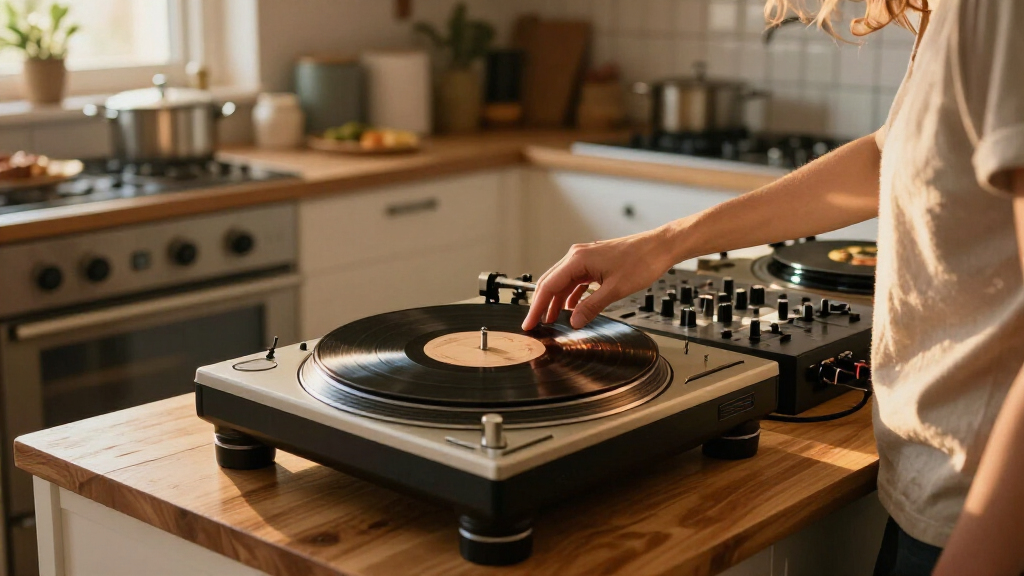
I ranked these 13 products by how well their format supports scratching, not by treating every item as the same kind of turntable. I looked at platter response and control feel, whether the unit is a standalone deck or requires a computer and other gear, how accessible it is for a beginner, and whether its design fits home practice, portable use, or performance. Build and maintenance needs mattered too: a full-size direct-drive setup offers a different ownership experience from a compact scratch system or a controller.
The RANE ONE MKII leads because its motorized platters and integrated controller design combine scratch-oriented feel with a broad performance setup. The RANE Twelve MKII ranks highly for buyers who want a dedicated motorized control surface, while conventional decks such as the Pioneer DJ PLX-500 and Audio-Technica AT-LP120XUSB-BK better suit buyers who specifically want a physical record-playing turntable. Portable systems and entry-level controllers rank for their intended use rather than being treated as substitutes for premium performance gear. Bundles are judged by fit and convenience, not by the mere presence of accessories.
Factors to Consider When Choosing Dj Turntable For Scratching
Before choosing, decide what you mean by a scratch setup: a record-playing turntable, a motorized digital control deck, a DJ controller, or a portable practice unit. Those categories can all support scratch techniques, but they differ in feel, extra equipment, and where they work best. These factors can help you avoid buying a capable product that does not match the way you plan to practice.
Choose the platter feel you want to practice on
A moving platter responds to hand movement in a way that many turntablists find familiar, while a non-motorized controller uses a different control surface and technique. If your priority is matching traditional vinyl-style hand movements, focus on motorized options such as the RANE ONE MKII or RANE Twelve MKII. A conventional direct-drive turntable is another route, but it needs the right mixer or interface and compatible records or control media for your intended workflow. Avoid choosing by the word “scratch” alone: a scratch-oriented layout does not necessarily mean a motorized platter. If possible, compare the physical interaction you expect before committing, since feel affects practice habits more than a long feature list.
Map out the entire signal chain before buying
A turntable is only one part of a working setup. You may also need a mixer, speakers or headphones, a computer, DJ software, and—in digital vinyl setups—compatible control records and an audio interface. Controllers such as the DDJ-REV1 and DDJ-REV5 combine many controls in one unit but rely on a computer-based workflow, while standalone decks leave more choices open and require more planning. A common mistake is to compare the deck alone with an all-in-one controller bundle without counting the extra equipment needed to use each. Sketch the connections and software you plan to use before choosing, and check compatibility rather than assuming components will work together.
Match the setup to your practice space and routine
Full-size decks call for stable surfaces, room for a mixer, and a setup that can stay assembled or be packed carefully. Portable options such as the PT01 Scratch models and Reloop Spin make short practice sessions easier to fit into a small space or take on the road, though their compact format is not equivalent to a standard performance rig. If you practice at home and intend to perform on a larger setup later, think about whether you want your practice controls to resemble that future system. Portability matters most when it changes how often you can practice; it matters less if the unit will rarely leave a desk. Check the physical footprint, power needs, and how you will transport and protect the equipment.
Spend on the feature that solves your actual limitation
Moving up to a premium unit makes sense when a specific limitation is holding back your work, such as wanting motorized control, more performance flexibility, or a more integrated setup. Extra controls and bundled accessories do not automatically improve scratch technique, especially for someone still learning timing and hand coordination. Beginners may get more from a straightforward controller or a portable practice unit than from a complex performance rig. Before paying for a bundle, list which included items you need and which you would replace. This keeps the decision focused on usable capability rather than a larger box of gear.
Separate beginner support from scratch performance
Learning tools, simplified layouts, and included software can make it easier to start, but they are different benefits from platter response and performance durability. A beginner should prioritize clear controls, an approachable setup process, and a format that supports regular practice. A more experienced scratch DJ may place greater weight on motorized feel, control layout, and integration with the rest of a performance system. Do not assume the most advanced unit will teach technique faster, or that a beginner-focused product will remain the best fit as your needs grow. Choose for the stage you are at while checking whether the setup can support the next step you realistically plan to take.
Check what maintenance and accessories the format demands
Traditional turntables involve physical records, a cartridge and stylus, and careful placement on a stable surface; these needs affect upkeep and transport. Digital controllers and motorized control decks reduce some record-handling demands but bring software, connection, and compatibility checks. Portable systems simplify where you can practice, yet included speakers, controls, or accessories may not match the sound or feel of a larger rig. Bundled headphones or add-ons are useful only if they suit your listening and setup needs. Check the included components and the manufacturer’s compatibility guidance before buying, especially when combining equipment from different formats.
Frequently Asked Questions
Should I buy a turntable or a DJ controller for scratching?
Choose a conventional turntable if you want a record-playing deck and are prepared to build the rest of the signal chain around it. Choose a controller if you want a more integrated computer-based setup with performance controls in one unit. The RANE ONE MKII narrows that gap by pairing a controller format with motorized platters, while the DDJ-REV1 takes a more accessible controller approach. Decide whether physical record handling or a more contained software workflow matters more to you before comparing individual features.
Do I need a motorized platter to learn scratching?
No, you can learn scratch timing and hand coordination with several kinds of equipment, but the feel is not identical across formats. A motorized platter more closely matches the moving-platter interaction that some turntablists want to practice. A portable scratch unit can provide a compact way to work on technique, while a controller may use a different control surface. If your goal is to perform on motorized decks, practicing on a similar format can make the practice experience more consistent.
Can I use the PLX-500 or AT-LP120XUSB-BK as a complete scratch setup?
They are standalone turntables, not complete DJ systems by themselves. You will need to plan for a mixer or compatible control workflow, monitoring, and any software or interface components your setup requires. Check the exact connections and supported accessories before purchase, rather than assuming that USB connectivity alone provides every DJ function. These decks make more sense for buyers who specifically want a conventional turntable and are comfortable assembling the surrounding setup.
Is a portable scratch turntable a sensible first purchase?
It can be a sensible choice if compact size and easy access will help you practice more often. The Numark PT01 Scratch options and Reloop Spin are aimed at portable use, not at replacing a full-size performance rig. Think of one as a practice tool or travel companion, then check whether its controls and sound setup fit your expectations. If you plan to move quickly to full-size decks, compare its practice feel with the system you expect to use later.
Which matters more for a beginner: a bundle or a simpler setup?
A bundle helps when its included accessories are compatible and cover needs you would otherwise have to solve separately. A simpler setup may be easier to understand and maintain if the bundle adds items you do not need. Compare the complete list of included components with your planned signal chain, including headphones, software, and connections. For a beginner, a clear route to practicing often matters more than the number of accessories in the box.
Conclusion
For the widest mix of scratch-focused platter feel and integrated performance controls, I recommend the RANE ONE MKII as best overall. The Numark PT01 Scratch is my best value-style fit for portable practice, while the DDJ-REV1 is the more approachable choice for beginners who want a controller workflow. For a premium dedicated control deck, choose the RANE Twelve MKII; for a conventional turntable setup, compare the PLX-500 and AT-LP120XUSB-BK based on your broader system needs. If compact practice is the priority, look at the PT01 models or Reloop Spin; if you want an advanced all-in-one controller, consider the DDJ-REV5 or RANE ONE MKII. The right pick depends on whether you value motorized feel, portability, a traditional deck, or a contained controller setup most.
Halloween Picks
halloween
As an affiliate, we earn on qualifying purchases.