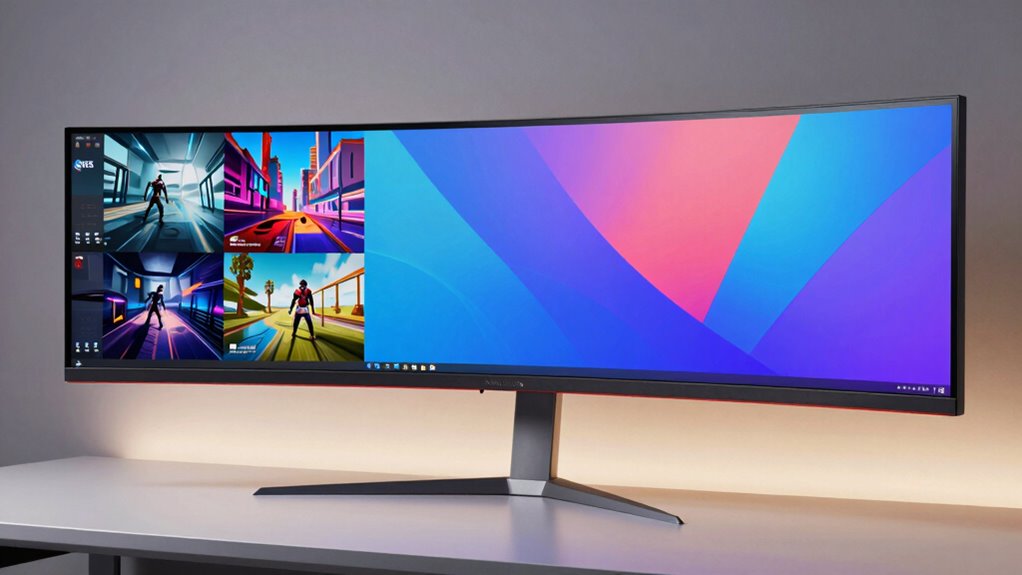

The best ultrawide monitors give you room for immersive gaming or side-by-side work, but screen size, refresh rate, resolution, and connectivity shape which one fits. I rank the Samsung 49-inch Odyssey G9 G91F as the best overall for its expansive dual-QHD gaming format, while the Dell S3425DW stands out for balanced everyday use and the Samsung ViewFinity S65UA for USB-C productivity. The tradeoff is clear: larger and faster displays can demand more desk space and stronger hardware, while more practical work monitors may give up gaming speed. Panel type, stand adjustments, and the ports you need also matter more than a headline refresh-rate figure alone. Read on for my full comparison and help choosing the right ultrawide for your setup.

Get kitchen gear delivered free with Prime
- Fast, free delivery on millions of items
- Prime Video, Amazon Music and more included
- Member-only deals all year
Complete the kit


Key Takeaways
The Samsung Odyssey G9 G91F is the most immersive pick in this group, but its 49-inch dual-QHD format needs a wide desk and a graphics setup capable of driving the full resolution.
The Dell S3425DW takes the balanced-use position: its 34-inch WQHD screen and 120Hz refresh rate suit both everyday work and casual gaming without stepping up to a super ultrawide.
Refresh rates vary widely among the 34-inch gaming options. Models listed at 200Hz or 240Hz target fast play, while 115Hz and 165Hz alternatives can make more sense when the rest of the setup does not need maximum speed.
USB-C and adjustable ergonomics are a separate kind of value. The Samsung ViewFinity S65UA combines USB-C, 100Hz, and a height-adjustable stand, making it a stronger productivity fit than gaming-first monitors with higher refresh rates.
Not every 34-inch ultrawide has the same sharpness. The LG 34U530A-W uses WFHD resolution, unlike the many WQHD options here, so buyers should weigh its IPS panel against the reduced pixel detail on a wide workspace.


| ultrawide monitor | Screen size | Resolution | Aspect ratio | Refresh rate |
|---|---|---|---|---|
| Samsung 49-inch Odyssey G9 Cur | 49 inches | 5120 × 1440 (DQHD) | 32:9 | 144Hz |
| Samsung 34-Inch Odyssey G5 Cur | 34 inches | 3440 × 1440 | 21:9 | 165Hz |
| Sceptre 34-inch Ultrawide Gami | 34 inches | 3440 × 1440 (UWQHD) | 21:9 | 115Hz |
| Samsung 34-inch ViewFinity S50 | 34 inches | 3440 × 1440 | 21:9 | 100Hz |
| DJiEX 34-Inch Ultrawide Curved | 34 inches | 3440 × 1440 (UWQHD) | 21:9 | 240Hz |
| Kado 2-Pack 34" Curved 1500R 1 | — | — | — | — |
| SANSUI 34-Inch Curved UWQHD Ga | — | — | — | — |
| Dell 34" Monitor S3425DW | — | — | — | — |
| Sceptre 34-inch Curved Ultrawi | — | — | — | — |
| Samsung Viewfinity S65UA Serie | — | — | — | — |
| Samsung 49" Business Curved Ul | 49 inches | 5120 x 1440 (Dual QHD) | 32:9 | 120Hz |
| Sceptre 34-Inch Curved Ultrawi | 34 inches | 3440 x 1440 (WQHD) | 21:9 | Up to 180Hz |
| LG 34U530A-W 34-inch UltraWide | 34 inches | 2560 x 1080 (WFHD) | 21:9 | 100Hz |
More Details on Our Top Picks
Samsung 49-inch Odyssey G9 Curved Gaming Monitor (G91F)
The 49-inch, 32:9 DQHD screen is the most expansive option here: its 5120 × 1440 resolution gives you the workspace of two side-by-side 16:9 displays without a center bezel. The 1000R curve wraps that width toward you, while 144Hz, 1ms response time, and FreeSync Premium Pro suit fast-paced gaming. Compared with the 34-inch Samsung Odyssey G5, this model offers much more horizontal room, but the G5 takes up less desk space and runs at a higher 165Hz refresh rate. DisplayHDR 600 is a stronger HDR specification than the HDR10 support listed for several 34-inch picks, though the source data does not establish that HDR performance will match dedicated high-end displays. Its main costs in practicality are its 45.18-inch width and 34.4-pound weight; check desk capacity before choosing it.
Pros:- 32:9 DQHD resolution creates a dual-screen-sized workspace without a center bezel.
- 1000R curve helps bring the unusually wide display into the viewer’s field of view.
- 144Hz refresh rate, 1ms response time, and FreeSync Premium Pro support responsive gaming.
- VESA DisplayHDR 600 provides a higher specified HDR tier than the HDR10-listed 34-inch models here.
Cons:- At 45.18 inches wide and 34.4 pounds, it demands substantial desk space and support.
- Its 144Hz refresh rate is lower than the 165Hz Samsung Odyssey G5 and 240Hz DJiEX.
- The 32:9 format may be poorly suited to games or content that do not support its full width.
Best for: PC gamers and multitaskers who want one panoramic display for immersive games, multiple open windows, and a desk wide and sturdy enough to support it.
Not ideal for: People with compact desks, lightweight monitor arms, or games and workflows that work better on a standard 16:9 screen.
- Screen size:49 inches
- Resolution:5120 × 1440 (DQHD)
- Aspect ratio:32:9
- Refresh rate:144Hz
- Response time:1ms (GtG)
- Panel and curvature:VA, 1000R
- HDR:VESA DisplayHDR 600
- Connectivity:DisplayPort, HDMI, USB
- Weight:34.4 lbs
Our verdict“Choose the Odyssey G9 if you want a dual-screen-sized gaming display and have the desk space to accommodate its width and weight.”
Samsung 34-Inch Odyssey G5 Curved Ultra-Wide Gaming Monitor
The 34-inch 3440 × 1440 display is a more desk-friendly way to get an ultrawide gaming view than the 49-inch Odyssey G9, and its 165Hz refresh rate gives it the highest specified rate among the established-brand 34-inch choices in this batch. The 1000R curve draws the screen edges inward, while FreeSync Premium can help reduce tearing with compatible hardware. Compared with the Samsung ViewFinity S50GC, the Odyssey G5 prioritizes gaming speed over office-oriented multitasking: it refreshes faster, while the S50GC offers picture-in-picture and picture-by-picture. The tradeoff is a listed 250 cd/m² brightness and 72 color-gamut figure, which may limit its appeal in bright rooms or for color-sensitive work. HDR10 is present, but it does not erase those panel limitations.
Pros:- 165Hz refresh rate supports fluid motion in compatible games.
- 3440 × 1440 resolution provides room for an ultrawide game view and side-by-side windows.
- 1000R curve and FreeSync Premium support an immersive, tear-reduced gaming experience.
- HDR10 support adds HDR compatibility.
Cons:- Listed 250 cd/m² brightness may be limiting in bright rooms.
- Listed 72 color-gamut figure is a drawback for color-sensitive creative work.
- Its 34-inch screen offers much less horizontal workspace than the 49-inch Odyssey G9.
Best for: PC gamers who want a curved 34-inch ultrawide with a high refresh rate and have a room where moderate screen brightness is sufficient.
Not ideal for: Users in brightly lit rooms, color-critical creators, or office workers who need picture-by-picture features or a larger selection of listed productivity tools.
- Screen size:34 inches
- Resolution:3440 × 1440
- Aspect ratio:21:9
- Panel and curvature:VA LCD, 1000R
- Refresh rate:165Hz
- Response time:1ms (MPRT)
- Adaptive sync:AMD FreeSync Premium
- Brightness:250 cd/m²
- Connectivity:DisplayPort, HDMI, 3.5mm audio
Our verdict“Pick the Odyssey G5 for a relatively compact ultrawide gaming setup where 165Hz matters more than brightness or broad productivity features.”
Sceptre 34-inch Ultrawide Gaming Monitor (E345W Series), 3440×1440, 115Hz, 103% sRGB, Built-in Speakers
The Sceptre E345W combines a 34-inch 3440 × 1440 screen with a 115Hz refresh rate, making it a practical middle ground between basic ultrawide office displays and faster gaming models. Its 103% sRGB coverage, built-in speakers, and Blue-Light Shift give it a broader everyday feature set than the Samsung Odyssey G5, whose 165Hz rate is better for players chasing quicker motion but whose listing does not include speakers. FreeSync also supports smoother play with compatible systems. The compromise is speed: 115Hz trails the Odyssey G5’s 165Hz and the DJiEX’s 240Hz, so competitive players have stronger alternatives in this group. Its VA panel may also show more motion blur than faster-response panel types, and built-in speakers are convenient rather than a replacement for dedicated audio.
Pros:- 3440 × 1440 resolution and 21:9 format provide ample room for games and side-by-side work.
- 115Hz refresh rate and FreeSync support smoother gameplay than a basic 60Hz display.
- 103% sRGB coverage is a useful stated color-gamut feature for general content work.
- Built-in speakers and Blue-Light Shift reduce the need for extra equipment and settings.
Cons:- 115Hz is slower than the Odyssey G5’s 165Hz and DJiEX’s 240Hz.
- VA panel response may produce motion blur in fast-moving scenes.
- Built-in speakers may not satisfy buyers seeking fuller, more detailed audio.
Best for: First-time ultrawide buyers who want a 34-inch gaming and multitasking screen with built-in audio and a stated wide sRGB gamut.
Not ideal for: Competitive gamers prioritizing the fastest refresh rates, or listeners who need speakers capable of filling a room with detailed audio.
- Screen size:34 inches
- Resolution:3440 × 1440 (UWQHD)
- Aspect ratio:21:9
- Refresh rate:115Hz
- Response time:1ms (BR) / 5ms (GtG)
- Panel type:VA
- Color gamut:103% sRGB
- Connectivity:2 × HDMI, 2 × DisplayPort
- Weight:9.7 lbs
Our verdict“Choose the Sceptre E345W if you want a versatile first ultrawide with built-in speakers and do not need a top-tier gaming refresh rate.”
Samsung 34-inch ViewFinity S50GC Ultra-WQHD Monitor
The ViewFinity S50GC uses its 34-inch, 3440 × 1440 workspace for more than a wider view: picture-in-picture and picture-by-picture let users arrange multiple sources on one screen. Those tools make it a more office-focused choice than the Samsung Odyssey G5, which is better suited to higher-refresh gaming with its 165Hz panel. The S50GC’s 100Hz refresh rate and FreeSync still support smoother everyday scrolling and casual play, while its matte finish and Flicker Free and Eye Saver features suit long work sessions. At 300 cd/m², its listed brightness also exceeds the Odyssey G5’s 250 cd/m². It gives up gaming speed to the G5 and DJiEX, and the provided specs list neither USB ports nor built-in speakers, so buyers may need separate audio and peripheral connections.
Pros:- 3440 × 1440 resolution and 21:9 aspect ratio support broad side-by-side work.
- Picture-in-picture and picture-by-picture help display multiple sources at once.
- 100Hz refresh rate and FreeSync support smoother everyday viewing.
- Matte finish, Flicker Free, and Eye Saver Mode are suited to extended desk sessions.
Cons:- 100Hz is well below the 165Hz Odyssey G5 and 240Hz DJiEX for fast gaming.
- No USB ports are listed, limiting direct connection of peripherals.
- No built-in speakers are listed, so audio may require external equipment.
Best for: Hybrid-office users who want a high-resolution ultrawide for multiple windows or video sources, plus light gaming and screen-comfort features.
Not ideal for: Competitive gamers seeking high refresh rates, or desk setups that depend on a monitor USB hub or integrated speakers.
- Screen size:34 inches
- Resolution:3440 × 1440
- Aspect ratio:21:9
- Refresh rate:100Hz
- Response time:5ms
- Brightness and contrast:300 cd/m²; 3000:1
- HDR:HDR10
- Ports:2 × HDMI 2.2, 1 × DisplayPort 1.2
- Multitasking features:Picture-in-picture, picture-by-picture
Our verdict“Choose the ViewFinity S50GC if multitasking and multiple video sources matter more than high-refresh gaming or built-in connectivity.”
DJiEX 34-Inch Ultrawide Curved Gaming Monitor (240Hz, UWQHD 3440×1440, VA Panel)
Among these 34-inch ultrawides, the DJiEX makes the clearest case for buyers who put 240Hz gaming first. Its 3440 × 1440 resolution keeps the wider 21:9 view, while a 1ms response-time specification and AMD FreeSync target responsive, tear-reduced play. The 4000:1 contrast ratio and 1500R curve add depth to dark scenes, and two HDMI plus two DisplayPort inputs make it easier to connect multiple sources than the Samsung ViewFinity S50GC, which lists only three video inputs. The tradeoff is a brand and feature profile centered on gaming: the provided data lists no USB hub or built-in speakers. Compared with the Samsung Odyssey G5, the DJiEX offers a much higher refresh-rate figure and brighter listed output, but its product data does not establish the same Samsung feature set or support level.
Pros:- 240Hz refresh rate is the highest listed among these five monitors.
- 3440 × 1440 resolution preserves detailed ultrawide gaming space.
- 4000:1 contrast ratio and 1500R curve support immersive, high-contrast viewing.
- Two HDMI 2.0 and two DisplayPort 1.4 inputs offer flexible source connections.
Cons:- No built-in speakers or USB hub are listed.
- The 240Hz refresh rate is most useful only when the connected system can produce high frame rates.
- The product data specifies a one-year warranty and does not detail broader support features.
Best for: PC gamers with hardware capable of driving high frame rates who want a 34-inch UWQHD curved display and multiple video inputs.
Not ideal for: Office users who need built-in speakers or a USB hub, and buyers who prefer a monitor from a more established brand in this lineup.
- Screen size:34 inches
- Resolution:3440 × 1440 (UWQHD)
- Aspect ratio:21:9
- Panel and curvature:VA, 1500R
- Refresh rate:240Hz
- Response time:1ms
- Brightness and contrast:350 cd/m²; 4000:1
- HDR and sync:HDR10; AMD FreeSync
- Connectivity:2 × HDMI 2.0, 2 × DisplayPort 1.4, 1 × audio out
Our verdict“Choose the DJiEX if maximizing refresh rate on a 34-inch ultrawide is your priority and you can supply your own audio and peripheral hub.”
Kado 2-Pack 34″ Curved 1500R 165Hz 1ms Ultrawide 3440×1440 WQHD Computer Monitor
The Kado package is the standout choice here for buyers who want two full 34-inch ultrawides, not just one broad workspace. Each screen delivers 3440 × 1440 resolution, so separate gaming, streaming, or work areas can remain spacious and sharp. The 165Hz refresh rate, 1ms response time, and FreeSync Premium also put both displays in gaming territory, unlike the more work-focused Samsung Viewfinity S65UA with its 100Hz refresh rate.
The catch is scale: two wide monitors demand substantial desk space and may need careful mounting. Kado lists LED but does not specify the panel subtype, leaving less clarity about image characteristics than the VA panels listed for the Sceptre C345B-QUT168. Choose this bundle for screen count and speed; skip it if you need a compact or clearly specified display.
Pros:- Two 34-inch, 3440 × 1440 ultrawide displays create an unusually expansive dual-screen workspace.
- 165Hz refresh rate and 1ms response time suit fast-paced gaming.
- FreeSync Premium helps reduce screen tearing during gameplay.
- VESA compatibility and HDMI and DisplayPort connections support flexible setup options.
Cons:- The pair requires substantially more desk space than any single-monitor option in this group.
- The panel subtype is not specified, making image characteristics harder to compare.
- Built-in speakers may not replace dedicated audio for gaming or media.
Best for: PC gamers and multitasking users with a large desk who want two matching 34-inch, high-refresh ultrawide displays.
Not ideal for: Small-desk users or buyers who need a specified IPS or VA panel type before choosing a monitor.
Our verdict“Choose the Kado bundle if you have room for two large ultrawides and want high-refresh gaming across both screens.”
SANSUI 34-Inch Curved UWQHD Gaming Monitor, 200Hz
Among these single-screen options, the SANSUI puts the most emphasis on gaming speed: its 200Hz refresh rate exceeds the 165Hz Sceptre C345B-QUT168 and the 120Hz Dell S3425DW. Paired with 1ms response time and FreeSync, that higher ceiling can make motion feel smoother for players whose PC can drive demanding games at high frame rates. Its 3440 × 1440 resolution also preserves the broad desktop and peripheral view that make a 21:9 ultrawide useful.
The Fast VA panel offers a stated 3000:1 contrast ratio, while the tilt-only stand limits positioning flexibility. Unlike the Dell, it has no built-in speakers; you will need headphones or external audio. This is a focused gaming pick rather than the most convenient all-purpose desk monitor.
Pros:- 200Hz refresh rate is the highest specified among these 34-inch options.
- 3440 × 1440 resolution combines ultrawide space with detailed gameplay.
- FreeSync and 1ms response time support smoother fast-action gaming.
- Two HDMI 2.1 ports and DisplayPort 1.4 provide multiple connection choices.
Cons:- No built-in speakers, unlike the Dell S3425DW and Sceptre C345B-QUT168.
- The stand adjusts for tilt only, limiting ergonomic positioning.
- Reaching 200Hz in demanding games calls for a capable graphics card.
Best for: Competitive PC gamers who want a 34-inch 3440 × 1440 ultrawide and can take advantage of refresh rates above 165Hz.
Not ideal for: Buyers who want integrated speakers, height adjustment, or a monitor primarily for USB-C laptop docking.
Our verdict“Pick the SANSUI if high-refresh PC gaming matters more than built-in audio or a more adjustable stand.”
Dell 34″ Monitor S3425DW – WQHD VA, 120 Hz, FreeSync Premium, Eye Comfort
The Dell S3425DW is the most balanced choice for someone splitting a desk between laptop work and gaming. Its USB-C connection supplies up to 65W of power, helping reduce cable clutter, while 3440 × 1440 resolution leaves room for side-by-side windows. The 99% sRGB and 95% DCI-P3 coverage give creative work a wider color range than the SANSUI’s listed specifications provide, and ComfortView Plus targets long-session eye comfort.
At 120Hz with FreeSync Premium, it is smoother than a basic office screen but falls short of the 165Hz Sceptre and 200Hz SANSUI for high-frame-rate gaming. The 0.03ms response-time claim is listed in the specs, but refresh rate remains the clearer point of comparison. Its 20.7-pound weight and limited ergonomic adjustments also make desk placement less flexible.
Pros:- USB-C provides video, data, and up to 65W of laptop power delivery.
- 99% sRGB and 95% DCI-P3 color coverage support vivid work and entertainment.
- ComfortView Plus is designed to reduce blue light while maintaining color accuracy.
- 120Hz refresh rate and FreeSync Premium add smoother motion for casual gaming.
Cons:- 120Hz is below the 165Hz Sceptre and 200Hz SANSUI for fast gaming.
- The 20.7-pound weight and large chassis can challenge smaller desks.
- Ergonomic adjustments are limited compared with a stand offering broader positioning options.
Best for: Laptop users who want one 34-inch ultrawide for office work, color-rich media, and occasional gaming through a single USB-C cable.
Not ideal for: Competitive gamers prioritizing refresh rates above 120Hz or buyers who need extensive stand adjustment on a compact desk.
Our verdict“Choose the Dell if USB-C laptop convenience and wide color coverage matter more than maximum gaming refresh rate.”
Sceptre 34-inch Curved Ultrawide WQHD Monitor (3440×1440), 165Hz Refresh Rate, DisplayPort x2, 99% sRGB, 1ms Response, Built-in Speakers, Machine Black (C345B-QUT168)
The Sceptre C345B-QUT168 delivers a useful mix of 165Hz gaming performance, 3440 × 1440 workspace, and built-in speakers without leaning as heavily into one specialty as the SANSUI or Dell. Its VA panel and 1500R curve suit immersive gaming, while 99% sRGB coverage also makes it capable for everyday creative and office tasks. Compared with the SANSUI, it gives up 35Hz at the top end but adds integrated audio; against the Dell, it favors faster gaming over USB-C laptop charging.
The dual HDMI and dual DisplayPort inputs offer connection flexibility, though the stand has limited ergonomic adjustment and the built-in speakers are modest. Its 280-nit brightness is also lower than the Dell’s 300 cd/m² and Samsung Viewfinity S65UA’s 350 cd/m², a factor for bright rooms.
Pros:- 165Hz refresh rate and 1ms MPRT response time support responsive gameplay.
- 3440 × 1440 resolution and 1500R curvature provide an immersive ultrawide view.
- 99% sRGB coverage suits general creative work and vivid entertainment.
- Two HDMI and two DisplayPort inputs offer flexible device connections.
Cons:- Limited ergonomic adjustment makes it harder to tailor screen height and position.
- Built-in speakers are modest compared with dedicated external audio.
- 280 cd/m² brightness is lower than the Dell S3425DW and Samsung Viewfinity S65UA.
Best for: Budget-conscious PC gamers who want a curved 34-inch ultrawide with a fast refresh rate, broad connectivity, and basic built-in audio.
Not ideal for: Laptop-first users seeking USB-C power delivery or people who need strong speakers and extensive stand adjustment.
Our verdict“Choose this Sceptre for a well-rounded gaming ultrawide with useful ports and built-in audio, provided its stand and speakers meet your needs.”
Samsung Viewfinity S65UA Series 34-Inch Ultrawide QHD Curved Monitor, 100Hz, USB‑C, HDR10 (1 Billion Colors), Height Adjustable Stand, TUV‑Certified Intelligent Eye Care (LS34A654UBNXGO), Black
The Samsung Viewfinity S65UA is the work-focused pick for buyers who want an ultrawide to simplify a laptop desk. Its USB-C port delivers up to 90W, more than the Dell S3425DW’s 65W, and the listed Ethernet connection adds another docking-style convenience. The height-adjustable stand and TUV-certified eye-care features support a more comfortable work setup, while the 34-inch, 21:9 screen gives documents and multiple windows room to sit side by side.
Its 100Hz refresh rate is adequate for everyday use and light gaming, but it trails the Dell’s 120Hz and the gaming-focused Sceptre’s 165Hz. The 1000R curve is more pronounced than the 1500R curves on those models, which may feel immersive to some and too curved to others. Samsung lists height adjustment, but not tilt or swivel.
Pros:- USB-C offers up to 90W power delivery for compatible laptops.
- Height-adjustable stand helps position the screen for a more comfortable work setup.
- HDR10 support and a stated 1 billion colors add visual range for supported content.
- Ethernet, DisplayPort, and HDMI broaden desk connectivity options.
Cons:- 100Hz refresh rate is below the Dell S3425DW, Sceptre C345B-QUT168, and SANSUI.
- The pronounced 1000R curve may not suit every workspace or viewing preference.
- Tilt and swivel adjustments are not specified, and the 16.8-pound monitor is relatively heavy.
Best for: Laptop-based professionals who want a height-adjustable ultrawide with high-wattage USB-C charging and a tidy desk connection.
Not ideal for: Competitive gamers seeking high refresh rates or buyers who prefer a gentler curve and broader stand adjustments.
Our verdict“Pick the Viewfinity S65UA if laptop charging, height adjustment, and work-friendly connectivity outrank high-refresh gaming.”
Samsung 49″ Business Curved Ultrawide Dual QHD Computer Monitor (LS49C954UANXZA)
The Samsung’s 49-inch, 32:9 Dual QHD display gives desk-based multitaskers room to keep several full-size work areas visible without stitching together two monitors. Its USB-C connection with 90W charging and built-in KVM are the main differentiators: connect a laptop, charge it, and switch control between two computers using one keyboard and mouse. Compared with the 34-inch LG 34U530A-W, this Samsung offers far more horizontal workspace and a smoother 120Hz refresh rate, but it needs a much larger desk and costs you the flexibility of a smaller screen setup. The 1000R curve helps bring the wide panel into view, though Picture-by-Picture mode disables 120Hz. Its 32.2-pound weight and the stated brightness-adjustment limitation above 200 lux also make placement and room lighting worth planning around.
Pros:- 49-inch Dual QHD workspace can replace a two-monitor setup for many multitasking workflows.
- USB-C delivers up to 90W power and simplifies laptop docking.
- Built-in KVM switches control between two connected computers with one keyboard and mouse.
- 120Hz refresh rate makes scrolling and supported gaming smoother than on the LG 34U530A-W.
Cons:- Large, heavy chassis needs substantial desk space and a sturdy support surface.
- 120Hz is unavailable in Picture-by-Picture mode.
- Eye-care brightness adjustment does not function in environments brighter than 200 lux.
Best for: Professionals who routinely work across two computers and want a single desk display with laptop charging and built-in KVM switching.
Not ideal for: People with shallow or lightweight desks, or buyers who need full 120Hz operation while using Picture-by-Picture mode.
- Screen size:49 inches
- Resolution:5120 x 1440 (Dual QHD)
- Aspect ratio:32:9
- Curvature:1000R
- Refresh rate:120Hz
- USB-C power delivery:90W
- Connectivity:USB-C, DisplayPort, 2x HDMI, USB, Ethernet
- Weight:32.2 lbs
Our verdict“Choose this Samsung if consolidating a two-computer work setup matters more than saving desk space.”
Sceptre 34-Inch Curved Ultrawide WQHD Monitor (C345B-QUT168)
For a gaming-focused 34-inch ultrawide, the Sceptre’s combination of 3440 x 1440 resolution, up to 180Hz refresh rate, and AMD FreeSync Premium makes fast play its clearest strength. The 21:9 format also gives more horizontal view than a conventional widescreen, while its 1500R curve keeps the panel’s edges closer to the viewing position. Compared with the office-oriented LG 34U530A-W, this Sceptre prioritizes motion speed and gaming features over USB-C laptop convenience and an adjustable stand. It also has a higher refresh ceiling than the LG’s 100Hz, but lacks a stated USB hub for peripherals. The listed 1ms MPRT response time and FreeSync support suit gaming, while built-in speakers and LED backcover lighting are extras rather than substitutes for a dedicated audio setup.
Pros:- Up to 180Hz refresh rate supports smoother motion in games that can reach high frame rates.
- 3440 x 1440 resolution offers detailed 21:9 gaming and room for side-by-side tasks.
- AMD FreeSync Premium helps reduce screen tearing with compatible systems.
- Two DisplayPort connections provide useful flexibility for desktop setups.
Cons:- No USB hub or USB-C connection is listed for docking peripherals or a laptop.
- At 9.16 kg, it needs a sturdy desk or suitably rated monitor arm.
- Built-in speakers may not meet the needs of buyers seeking fuller gaming audio.
Best for: PC gamers who want a 34-inch 3440 x 1440 curved screen with a high refresh rate and a compatible AMD graphics setup.
Not ideal for: Laptop-first workers who need USB-C docking or buyers who want built-in USB ports for peripherals.
- Screen size:34 inches
- Resolution:3440 x 1440 (WQHD)
- Aspect ratio:21:9
- Curvature:1500R
- Refresh rate:Up to 180Hz
- Response time:1ms MPRT
- Adaptive sync:AMD FreeSync Premium
- Connectivity:2x DisplayPort, HDMI, 3.5mm audio
Our verdict“Pick the Sceptre over the LG 34U530A-W if gaming refresh rate matters more than USB-C convenience and stand flexibility.”
LG 34U530A-W 34-inch UltraWide WFHD IPS Monitor
The LG 34U530A-W suits laptop users who want a straightforward 34-inch 21:9 workspace without stepping up to the Sceptre’s gaming-oriented 3440 x 1440 panel. Its USB Type-C connection simplifies connecting a compatible laptop, and the IPS panel’s wide viewing angles work well when the screen is shared across a desk. A height-, tilt-, and swivel-adjustable stand adds positioning flexibility that the supplied Sceptre specifications don’t list. The tradeoff is resolution: 2560 x 1080 spreads fewer pixels across a 34-inch screen than the Sceptre’s WQHD panel, so fine text and detailed images will look less sharp. Its 100Hz refresh rate is a step above basic 60Hz displays, but it cannot match the Sceptre’s 180Hz gaming focus. This is the more office-friendly choice, not the sharper or faster one.
Pros:- USB Type-C provides a convenient single-cable connection for compatible laptops.
- IPS panel offers wide viewing angles for shared desks and varied seating positions.
- Stand supports height, tilt, and swivel adjustments.
- 100Hz refresh rate and built-in Waves MaxxAudio speakers suit everyday desktop use.
Cons:- 2560 x 1080 resolution is less sharp at 34 inches than the Sceptre’s 3440 x 1440 panel.
- 5ms response time and 100Hz refresh rate are less suited to fast-paced gaming than the Sceptre’s gaming specifications.
- 1000:1 contrast ratio does not deliver the deeper blacks available from higher-contrast panel types.
Best for: Laptop users who want an adjustable 34-inch ultrawide for documents, browser windows, and everyday multitasking, with USB-C connectivity.
Not ideal for: Buyers who need crisp fine text at 34 inches or want high-refresh competitive gaming; the Sceptre provides higher resolution and a faster refresh ceiling.
- Screen size:34 inches
- Resolution:2560 x 1080 (WFHD)
- Aspect ratio:21:9
- Panel type:IPS
- Refresh rate:100Hz
- Response time:5ms
- Connectivity:HDMI, DisplayPort, USB Type-C
- Stand adjustments:Height, tilt, swivel
Our verdict“Choose the LG for laptop-friendly everyday work and adjustable ergonomics, but pick the Sceptre if sharper detail or faster gaming takes priority.”

How We Picked
I compared these monitors around the decisions that change how an ultrawide works in a real setup: screen size and resolution, panel type, refresh rate, connectivity, stand adjustability, and the intended balance of gaming and productivity. I gave weight to whether a specification offers a useful benefit, such as USB-C for a laptop desk or a higher refresh rate for fast games, rather than treating the biggest number as an automatic win. I also looked at practical fit: a 49-inch display can replace a multi-monitor layout, but it takes more room and asks more of the computer than a 34-inch screen.
The ranking favors products with a clear role and a useful mix of features for that role. The Odyssey G9 leads for buyers seeking a single, expansive gaming display; the Dell and ViewFinity models rank well for more balanced daily use and desk productivity. High-refresh 34-inch models follow for gaming-focused buyers, while less differentiated or lower-resolution options rank lower. Where product names or listings overlap, I treat the supplied specifications as the basis for comparison and avoid assuming unlisted features.
Factors to Consider When Choosing Ultrawide Monitors
Before choosing an ultrawide, match the display to your desk, computer, and daily tasks—not just the feature that looks most impressive on a listing. These decisions can prevent common mismatches, such as buying a high-refresh screen your computer cannot drive or choosing a wide panel that leaves text less sharp than expected.
Choose Screen Width and Resolution Together
A 34-inch 21:9 monitor and a 49-inch dual-QHD display serve different desk layouts, even if both are called ultrawide. The 34-inch format is easier to accommodate and typically provides a practical split between two windows; the 49-inch format offers a much broader continuous workspace. Check the monitor’s resolution alongside its dimensions, since a larger panel with more pixels does not automatically mean sharper text if those pixels are spread over more area. Measure desk width and depth, and account for the stand and viewing distance rather than measuring only the screen. A common mistake is to buy the widest option for multitasking without checking whether the desk can place it at a comfortable distance.
Match Refresh Rate to Your Games and Computer
Refresh rate matters most when motion clarity and responsiveness are a priority, especially in fast-paced games. A 200Hz or 240Hz display only pays off if your computer can produce a high frame rate at the monitor’s full ultrawide resolution. That workload can be demanding: the GPU must render more pixels than it would for a standard 16:9 screen. For mixed work and casual play, a more moderate refresh rate may offer a better balance than chasing the highest specification. Check that your graphics card and connection support the resolution and refresh rate you plan to use. If your frame rates are usually modest, prioritize panel quality, ergonomics, or connectivity instead.
Treat Panel Type as a Work-and-Play Tradeoff
VA and IPS panels can suit different priorities, so panel type should be judged alongside your tasks rather than as a standalone grade. The VA models in this roundup pair ultrawide formats with gaming-oriented refresh rates, while the LG WFHD option uses IPS and gives up resolution compared with the WQHD choices. Resolution affects how much fine detail and workspace you get; panel characteristics can influence how the image looks from different positions and during motion. Think about whether you spend more time reading, editing, watching, or gaming, then check independent details that matter to that use, such as viewing angles or color coverage. Avoid assuming that a fast refresh rate or a broad color claim alone makes a display suitable for color-critical work.
Check Ports Before Planning a Laptop Desk
Connectivity can determine whether an ultrawide simplifies your workspace or adds another adapter to it. USB-C, found on the Samsung ViewFinity S65UA in this lineup, can make a laptop connection more convenient, but confirm the exact capabilities you need rather than assuming every USB-C port supplies power or handles every video mode. Check whether the monitor has the right video inputs for your computer and whether you need several devices connected at once. A built-in USB hub or a one-cable setup can be more useful for office work than an extra gaming feature. Compare the monitor’s port list with your laptop and desktop before purchase, especially if you plan to switch between them.
Budget for Ergonomics and Desk Fit
Screen width changes how your desk feels, so assess stand adjustments and mounting options before settling on a size. Height adjustment can help align the display with your eye level, while a fixed-height stand may require a riser or monitor arm. Curvature can make a broad screen easier to view from a centered position, but it does not remove the need for enough desk depth or a comfortable viewing distance. Check the stand footprint, available VESA mounting details, and whether the monitor can sit where you need it. If the screen is for several hours of work each day, a suitable position and clear text may matter more than a small jump in refresh rate.
Decide Whether a Super Ultrawide Replaces Multiple Screens
A 49-inch dual-QHD monitor can create one continuous workspace for gaming or several open windows, but it is not automatically a better replacement for two monitors. Separate displays offer more flexibility in placement and can keep a video call or reference screen independent of your main workspace. A single broad panel removes the center bezel, though it also concentrates all content on one device and requires compatible software layouts. Consider whether your usual work benefits from one uninterrupted canvas or distinct screens with separate orientations. Also check application support: some games and older programs may not use the entire ultrawide area as expected. Choose the format that fits your routine, not just the largest screen you can fit on the desk.
Frequently Asked Questions
Is a 49-inch dual-QHD monitor a practical replacement for two monitors?
It can be a strong replacement if you want one continuous desktop without a bezel between windows. Its wide format suits side-by-side apps and games that support a very broad aspect ratio, but it needs a substantial desk and a computer able to drive its resolution. Two separate monitors may be easier to arrange when you want one screen in portrait orientation or need different devices on each display. Check the window management tools available on your computer, since splitting a single screen may take extra setup. For most buyers unsure about desk space, a 34-inch ultrawide is the less demanding starting point.
Will a 200Hz or 240Hz ultrawide improve gaming if my PC cannot reach that frame rate?
A high refresh rate can still provide headroom, but the benefit is limited when your system consistently renders far fewer frames. Ultrawide WQHD places a heavier load on a graphics card than standard 1080p, and a 49-inch dual-QHD display can be more demanding still. Check performance in the games you actually play at the monitor’s native resolution before paying extra for a faster panel. If your frame rate is the bottleneck, a more balanced monitor or a graphics upgrade may make more sense. For slower-paced games, resolution, contrast, and comfort may affect your experience more than peak refresh rate.
Should I choose WQHD or WFHD for a 34-inch ultrawide?
WQHD gives you more pixels across the wide screen, which generally means finer text and more room for detailed work. WFHD can be a fit when the lower resolution matches your needs or computer, but it gives up detail compared with the WQHD monitors in this roundup. Think about how close you sit and whether your day includes small text, spreadsheets, or image work. Also check your computer’s output capability and scaling preferences before deciding. If crisp text and extra desktop space are priorities, WQHD is the safer match at this screen size.
Is USB-C worth prioritizing over a higher refresh rate for a work monitor?
For a laptop-centered desk, USB-C may make daily setup simpler, particularly if the monitor supports the video and charging functions you need. The Samsung ViewFinity S65UA pairs USB-C with a height-adjustable stand, while its 100Hz refresh rate is less gaming-focused than the fastest options here. A higher refresh rate matters more if gaming or unusually smooth motion is a priority. Confirm the USB-C port’s specific capabilities in the product details, since port presence alone does not guarantee laptop charging. Choose based on your routine: fewer cables for work, or higher refresh for fast play.
What should I check before buying an ultrawide for a console?
Check the console’s supported resolutions and refresh rates against the monitor’s input specifications. Many ultrawides use a 21:9 aspect ratio, while console games may be designed for 16:9; the result can be side bars or a stretched image depending on the setup. Confirm which HDMI features the monitor supports and whether the console can output the mode you want at the target refresh rate. Look for the monitor’s aspect-ratio controls if you prefer a correctly shaped 16:9 image over filling the screen. If console compatibility is the main goal, verify support for your specific console and games before choosing an ultrawide.
Conclusion
For most buyers, I recommend the Samsung 49-inch Odyssey G9 G91F as the best overall when the priority is an expansive, gaming-first ultrawide and the desk and PC can support it. For a more balanced everyday screen, the Dell S3425DW is my best value-style pick, while the Samsung ViewFinity S65UA is the better choice for laptop productivity and USB-C convenience. Beginners should start with a 34-inch WQHD monitor rather than a 49-inch display, since it is easier to fit into a typical desk setup and avoids committing to super-ultrawide gaming straight away. For fast gaming, compare the DJiEX 240Hz and SANSUI 200Hz models with your computer’s real performance; for a two-monitor-like workspace, favor the 49-inch Samsung Business model or Odyssey G9. If fine text matters, I would favor WQHD over the LG WFHD option; if desk comfort matters most, give stand adjustment and available ports priority over peak refresh rate.
Columbus Day / Indigenous Peoples' Day Picks
long weekend sales
As an affiliate, we earn on qualifying purchases.