Protecting your investment in frozen foods requires more than just a glance at the door gauge. After comparing fifteen leading models, I found that the AcuRite Digital Wireless Refrigerator and Freezer Thermometer stands out as the best overall pick for its reliable local alert system and straightforward setup. For those seeking remote connectivity, the MOCREO WiFi Freezer Thermometer offers robust hub-based monitoring that works even if your home network drops momentarily, while the GoveeLife WiFi Refrigerator Thermometer provides excellent value with its dual-sensor capability. The main tradeoff in this category lies between local-only alarms that are simple but require you to be nearby, and smart WiFi monitors that send phone alerts but rely on stable internet connections. Continue reading to see which device aligns with your specific storage needs and technical comfort level.

Get kitchen gear delivered free with Prime
- Fast, free delivery on millions of items
- Prime Video, Amazon Music and more included
- Member-only deals all year
Complete the kit


Key Takeaways
- Hub-based systems like those from MOCREO and YoLink offer superior reliability compared to direct-to-phone Bluetooth models, as the hub handles connectivity even if the sensor loses temporary signal.
- Battery life varies drastically; models with LCD screens drain faster than those relying solely on app notifications, making screenless probes better for long-term, low-maintenance use.
- Sensor accuracy is not uniform; premium models maintain calibration within 0.5 degrees, while budget options may drift by 1-2 degrees, which matters when storing sensitive items like ice cream.
- WiFi range is the most common failure point; sensors placed deep in chest freezers or basements often require a mesh network or a hub with extended range capabilities.
- Alert customization is a key differentiator; advanced models allow separate thresholds for high and low temperatures, preventing nuisance alerts during normal defrost cycles.
| AcuRite Digital Wireless Refrigerator and Freezer Thermometer with Alarm |  | Best for Simple Local Monitoring | Model: 00515M | Display: LCD | Connectivity: Wireless | VIEW ON AMAZON | See Our Full Breakdown |
| MOCREO WiFi Freezer Thermometer with Digital Hub and Two Remote Sensors |  | Best for Data Tracking and Remote Alerts | Connectivity: 2.4 GHz Wi-Fi | Display: Digital LCD hub | Temperature range: -40°F to 158°F | VIEW ON AMAZON | See Our Full Breakdown |
| GoveeLife WiFi Refrigerator Thermometer 2-Pack with Gateway and LCD Display | 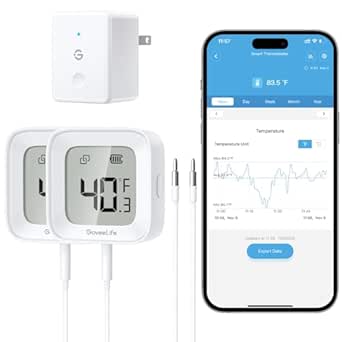 | Best for Two-Location App Monitoring | Set includes: Two sensors, Wi-Fi gateway, and LCD display | Temperature range: -40°F to 158°F | Accuracy: ±0.9°F / 0.5°C | VIEW ON AMAZON | See Our Full Breakdown |
| YoLink Freezer Temperature Sensor (YS8017) |  | Best for Long-Range, Long-Life Monitoring | Connectivity: LoRa | Wireless range: Up to 2,034 ft in open air | Temperature range: -4°F to 122°F | VIEW ON AMAZON | See Our Full Breakdown |
| GoveeLife WiFi Refrigerator Thermometer Sensor with Alarm and Gateway |  | Best Single-Sensor Kit with a Local Alarm | Model: Refrigerator Thermometer Lite (H5111) | Connectivity: 2.4 GHz Wi-Fi and Bluetooth | Temperature range: -40°F to 158°F | VIEW ON AMAZON | See Our Full Breakdown |
| GoveeLife Bluetooth Refrigerator Thermometer with LCD Display, 1-Pack |  | Best for Local Monitoring | Model: H5108 | Measurement range: -40°F to 158°F | Accuracy: ±0.9°F / ±0.5°C | VIEW ON AMAZON | See Our Full Breakdown |
| YoLink Freezer Thermometer and Hygrometer Kit, 3 Sensors with Hub | 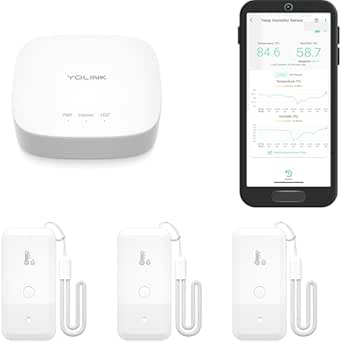 | Best for Long-Range Coverage | Included: 1 hub and 3 sensors | Connectivity: LoRa | Maximum range: Up to 2,034 feet in open air | VIEW ON AMAZON | See Our Full Breakdown |
| GoveeLife WiFi Refrigerator Thermometer with Gateway and LCD Display |  | Best Balanced Smart Monitor | Temperature range: -40°F to 158°F | Accuracy: ±0.9°F / 0.5°C | Connectivity: WiFi and Bluetooth; 2.4 GHz WiFi only | VIEW ON AMAZON | See Our Full Breakdown |
| MOCREO WiFi Refrigerator Thermometer with Freezer Alarm and 2 Sensors |  | Best for Immediate Local Alarms | Connectivity: Wi-Fi and Bluetooth | Probe Thickness: 0.9mm | Temperature Range: -40°F to 221°F | VIEW ON AMAZON | See Our Full Breakdown |
| MOCREO WiFi Remote Thermometer with Hub and Two Waterproof Sensors |  | Best for Versatile Environments | Temperature range: -4°F to 131°F | Accuracy: ±0.9°F | Wireless range: Up to 1640 ft (open air) | VIEW ON AMAZON | See Our Full Breakdown |
| LSNDRG Digital Freezer Thermometer with Alarm and 2 Probes |  | Best for Offline Reliability | Probe Count: 2 | Wireless Range: 330 ft | Temperature Range: -40°F to 140°F | VIEW ON AMAZON | See Our Full Breakdown |
| YoLink Freezer Temperature Sensor Kit, 3 Sensors with Hub |  | Best for Long-Range & Battery Life | Included Components: 1 Hub, 3 Sensors | Wireless Technology: LoRa | Open-Air Range: Up to 2,034 feet | VIEW ON AMAZON | See Our Full Breakdown |
| MOCREO WiFi Freezer Thermometer Alarm with 2 Wireless Sensors |  | Best for Data Logging & Expansion | Sensors Included: 2 Wireless Sensors | Max Sensor Capacity: 30 Sensors | Temperature Range: -40°F to 158°F | VIEW ON AMAZON | See Our Full Breakdown |
| TempPro TempAir Wireless Freezer and Refrigerator Thermometer with Alarm |  | Best for Instant Setup | Connectivity: 433MHz Radio Frequency | Wireless Range: Up to 80 ft | Temperature Accuracy: ±0.9°F | VIEW ON AMAZON | See Our Full Breakdown |
| GoveeLife WiFi Refrigerator Thermometer with Alarm, 2 Sensors and Gateway | 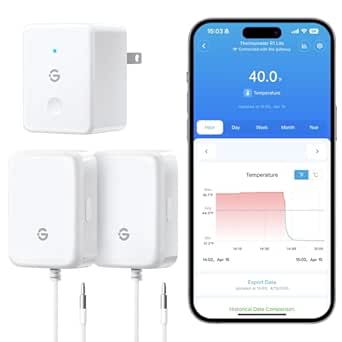 | Best for Smart Home Integration | Sensors Included: 2 | Gateway Capacity: Up to 10 Sensors | Response Time: 2 Seconds | VIEW ON AMAZON | See Our Full Breakdown |
| freezer alarm temperature monitor | Connectivity | Temperature range | Accuracy |
|---|---|---|---|
| AcuRite Digital Wireless Refri | Wireless | Up to 122°F | — |
| MOCREO WiFi Freezer Thermomete | 2.4 GHz Wi-Fi | -40°F to 158°F | ±0.9°F |
| GoveeLife WiFi Refrigerator Th | 2.4 GHz Wi-Fi and Bluetooth | -40°F to 158°F | ±0.9°F / 0.5°C |
| YoLink Freezer Temperature Sen | LoRa | -4°F to 122°F | — |
| GoveeLife WiFi Refrigerator Th | 2.4 GHz Wi-Fi and Bluetooth | -40°F to 158°F | ±0.9°F / ±0.5°C |
| GoveeLife Bluetooth Refrigerat | — | — | ±0.9°F / ±0.5°C |
| YoLink Freezer Thermometer and | LoRa | -4°F to 129°F (-20°C to 54°C) | — |
| GoveeLife WiFi Refrigerator Th | WiFi and Bluetooth; 2.4 GHz WiFi only | -40°F to 158°F | ±0.9°F / 0.5°C |
| MOCREO WiFi Refrigerator Therm | Wi-Fi and Bluetooth | -40°F to 221°F | ±0.9°F |
| MOCREO WiFi Remote Thermometer | Ethernet or 2.4 GHz Wi-Fi | -4°F to 131°F | ±0.9°F |
| LSNDRG Digital Freezer Thermom | Wireless RF (No Wi-Fi) | -40°F to 140°F | — |
| YoLink Freezer Temperature Sen | — | — | — |
| MOCREO WiFi Freezer Thermomete | 2.4 GHz Wi-Fi | -40°F to 158°F | ±0.9°F |
| TempPro TempAir Wireless Freez | 433MHz Radio Frequency | -40°F to 158°F | — |
| GoveeLife WiFi Refrigerator Th | 2.4 GHz Wi-Fi & Bluetooth | — | — |
More Details on Our Top Picks
AcuRite Digital Wireless Refrigerator and Freezer Thermometer with Alarm
The AcuRite 00515M is a straightforward choice for households that want separate freezer and refrigerator readings without relying on Wi-Fi or an app. Its two sensors send readings to a shared LCD, and programmable audible and visual alarms can alert you when temperatures pass your chosen limits. High- and low-temperature records help show whether a freezer warmed while nobody was watching. Compared with the GoveeLife WiFi Refrigerator Thermometer Sensor with Alarm and Gateway, this set is less useful when you need alerts away from home, but its local display and alarms avoid dependence on a network. The tradeoff is battery upkeep: the system needs seven AA batteries, and sensor batteries are not included. Cold conditions below -4°F may also call for lithium sensor batteries, which limits its fit for colder freezers.
Pros:- Two sensors monitor refrigerator and freezer temperatures on one display
- Programmable audible and visual temperature alarms
- High- and low-temperature records can reveal temperature changes between checks
- Display can stand on a counter, attach magnetically, or mount on a wall
Cons:- Requires seven AA batteries, and sensor batteries are not included
- Sensor operation below -4°F may require lithium batteries
- Does not offer remote app or email alerts
Best for: Households that want a local display and alarms for one refrigerator and one freezer, without app setup or Wi-Fi.
Not ideal for: People who need phone alerts while away, or owners of freezers that regularly run below -4°F and want to avoid checking battery compatibility.
- Model:00515M
- Display:LCD
- Connectivity:Wireless
- Temperature range:Up to 122°F
- Resolution:1°F
- Response time:500 milliseconds
- Power:Seven AA batteries required
- Included components:Digital display and two sensors
- Mounting options:Magnetic backing, wall keyhole, and foldout stand
Our verdict“Choose the AcuRite if you want simple, self-contained monitoring for a refrigerator and freezer and do not need remote alerts.”
MOCREO WiFi Freezer Thermometer with Digital Hub and Two Remote Sensors
For buyers who want more than an alarm, the MOCREO WiFi Freezer Thermometer combines two probe sensors with a hub that shows readings and trends locally. When temperatures leave a preset range, it can send app push notifications and email alerts, alongside an 80 dB hub alarm. CSV export is useful for keeping a temperature record, and support for up to 30 compatible sensors gives it more room to grow than the GoveeLife WiFi Refrigerator Thermometer 2-Pack with Gateway and LCD Display, which supports up to 10. The slim probe cables are designed to pass through door seals, helping keep the sensor inside while the hub stays outside. The tradeoffs are its 2.4 GHz Wi-Fi requirement and stated 230-foot sensor range only in open areas; its optional external probe is not included.
Pros:- Combines app, email, and 80 dB hub alerts
- Hub displays readings and temperature trends locally
- CSV data export is available without a subscription fee
- Supports up to 30 compatible BLE sensors
Cons:- Requires a 2.4 GHz Wi-Fi network
- The 230-foot sensor range is specified for open areas, not obstructed indoor spaces
- Optional external probe is not included
Best for: Freezer owners who want remote alerts, locally visible readings, exportable temperature history, and the option to add many compatible sensors.
Not ideal for: Buyers with only 5 GHz Wi-Fi, or anyone seeking a system that works without a hub or offers an included external probe.
- Connectivity:2.4 GHz Wi-Fi
- Display:Digital LCD hub
- Temperature range:-40°F to 158°F
- Accuracy:±0.9°F
- Resolution:0.1°F
- Response time:8 seconds
- Alerts:App push notifications, email, and 80 dB hub alarm
- Sensor capacity:Up to 30 compatible BLE sensors
- Open-area communication range:Up to 230 ft
Our verdict“Pick MOCREO if remote alerts and exportable temperature records matter more than a simpler, smaller sensor setup.”
GoveeLife WiFi Refrigerator Thermometer 2-Pack with Gateway and LCD Display
The GoveeLife WiFi Refrigerator Thermometer 2-Pack suits buyers who want app-based monitoring across two cold-storage locations and a local LCD for quick checks. Its sensors refresh readings every two seconds, while app alerts and two years of stored data make it easier to review temperature history after an excursion. That combination gives it a clearer history-focused role than the AcuRite Digital Wireless Refrigerator and Freezer Thermometer with Alarm, which records high and low readings but does not provide remote app monitoring. GoveeLife also includes holders, magnets, and lanyards for flexible sensor placement. Its biggest limitation as a freezer alarm is that the device itself does not sound an alarm; remote warnings rely on the app and gateway. It also needs 2.4 GHz Wi-Fi for remote alerts and supports up to 10 sensors per gateway, fewer than the MOCREO hub’s stated capacity.
Pros:- Two sensors support monitoring at separate locations
- Two-second response time and stated ±0.9°F accuracy
- Stores up to two years of data with graph viewing and export
- Includes holders, magnets, and lanyards for flexible placement
Cons:- The device itself does not sound an alarm
- Remote app alerts require the gateway and 2.4 GHz Wi-Fi
- Gateway supports up to 10 sensors, fewer than the MOCREO system’s stated 30
Best for: Households monitoring a refrigerator and freezer that want fast app updates, temperature graphs, and stored history.
Not ideal for: People who need a loud local alarm if a phone is unavailable, or homes without 2.4 GHz Wi-Fi.
- Set includes:Two sensors, Wi-Fi gateway, and LCD display
- Temperature range:-40°F to 158°F
- Accuracy:±0.9°F / 0.5°C
- Response time:2 seconds
- Connectivity:2.4 GHz Wi-Fi and Bluetooth
- Gateway range:Up to 197 ft / 60 m
- Sensor capacity:Up to 10 sensors
- Data storage:Up to 2 years
- Power:Four AAA batteries included
Our verdict“Choose this GoveeLife set if app alerts and long-term graphs for two locations matter more than a built-in audible alarm.”
YoLink Freezer Temperature Sensor (YS8017)
The YoLink YS8017 is a sensor-first option for buyers whose freezer is far from the router or who want long battery intervals. Its LoRa connection is specified for up to 2,034 feet in open air, and the included AA batteries are rated for up to five years. Temperature alerts arrive through the YoLink app as text, email, or push notifications, with Alexa temperature queries and IFTTT support for connected-home setups. Compared with the MOCREO WiFi Freezer Thermometer with Digital Hub and Two Remote Sensors, YoLink emphasizes wireless reach and battery life rather than a hub display, two included sensors, and CSV export. The key limitation is that a YoLink hub is required for full functionality, so this is not a ready-to-use standalone alarm. Its specified temperature range also starts at -4°F, unlike the colder-rated MOCREO and GoveeLife kits.
Pros:- LoRa wireless range specified up to 2,034 feet in open air
- Battery life rated for up to five years
- Customizable text, email, and push alerts
- Supports Alexa temperature queries and IFTTT
Cons:- Requires a YoLink hub for full functionality
- Temperature range starts at -4°F, limiting suitability for colder freezers
- A single sensor offers less multi-location coverage than the included two-sensor MOCREO and GoveeLife kits
Best for: Owners of a remote freezer who already use, or are willing to add, a YoLink hub and want long battery life with app alerts.
Not ideal for: Buyers who want an all-in-one kit, an onboard display with a local alarm, or monitoring below -4°F.
- Connectivity:LoRa
- Wireless range:Up to 2,034 ft in open air
- Temperature range:-4°F to 122°F
- Temperature accuracy:±0.36°F from 32°F to 129°F; ±0.72°F from -20°F to 32°F
- Resolution:0.1°F or 0.1°C
- Power:Two AA batteries included
- Battery life:Up to 5 years
- Hub required:Yes
Our verdict“Choose the YoLink sensor if long-range connectivity and infrequent battery changes outweigh the added hub requirement and single-sensor setup.”
GoveeLife WiFi Refrigerator Thermometer Sensor with Alarm and Gateway
For buyers who want a local warning as well as remote notifications, the GoveeLife H5111 pairs one sensor with a Wi-Fi gateway and an 80 dB buzzer. It adds app and email alerts, and its two-second response time with stated ±0.9°F accuracy suits routine freezer checks. Unlike the GoveeLife WiFi Refrigerator Thermometer 2-Pack with Gateway and LCD Display, which includes two sensors and data storage but no device alarm, this kit prioritizes audible warning over multi-location coverage and recorded history. A gateway can support up to 10 sensors, so buyers can expand later, though each added sensor is a separate purchase. The buzzer also has a usability wrinkle: it requires a manual button press to silence unless muted in settings. It needs 2.4 GHz Wi-Fi, and its indoor-use designation rules it out for outdoor monitoring.
Pros:- Three alert routes: app, email, and built-in 80 dB buzzer
- Two-second response time and stated ±0.9°F accuracy
- Gateway can support up to 10 sensors
- Includes magnetic and hanging placement accessories
Cons:- Requires a 2.4 GHz Wi-Fi network
- Buzzer requires a manual button press to silence unless muted in settings
- Only one sensor is included, and the kit is designated for indoor use
Best for: People who need one freezer monitored with both remote app or email alerts and a loud local buzzer.
Not ideal for: Households needing two sensors immediately, long-term data graphs, or monitoring outside an indoor setting.
- Model:Refrigerator Thermometer Lite (H5111)
- Connectivity:2.4 GHz Wi-Fi and Bluetooth
- Temperature range:-40°F to 158°F
- Accuracy:±0.9°F / ±0.5°C
- Response time:2 seconds
- Alarm volume:80 dB
- Power:Two AAA batteries included
- Sensor capacity:Up to 10 sensors per gateway
- Range:Up to 230 ft / 70 m
Our verdict“Pick the H5111 if a local buzzer is a priority and one included sensor is enough for your current setup.”
GoveeLife Bluetooth Refrigerator Thermometer with LCD Display, 1-Pack
This thermometer stands out for its local simplicity and immediate visibility. Unlike the GoveeLife WiFi Refrigerator Thermometer, which requires a gateway for remote alerts, this Bluetooth-only model relies on your phone being within 197 feet to sync data. It is an excellent choice if you primarily check temperatures in person and want a crisp LCD display on the unit itself. However, the lack of a built-in audible alarm means it cannot wake you up if a freezer fails while you sleep. It serves best as a passive monitor rather than an active safety guard.Pros:- Clear LCD display allows instant local readings without opening the app
- Fast 2-second response time provides quick temperature checks
- Two years of data storage and export capabilities are included
Cons:- No audible alarm on the device itself for local emergency alerts
- Remote monitoring requires a separate compatible gateway (sold separately)
- Bluetooth connection drops if the phone moves out of range or the app closes
Best for: Users who want a simple, low-cost local temperature readout without managing WiFi networks or gateways.
Not ideal for: People needing remote alerts or audible alarms, as it lacks a gateway and local buzzer.
- Model:H5108
- Measurement range:-40°F to 158°F
- Accuracy:±0.9°F / ±0.5°C
- Response time:2 seconds
- Bluetooth range:197 feet without gateway
- Power:2 AAA batteries, included
- Data storage:2 years
Our verdict“This pick makes the most sense for users who prioritize a clear local display and do not need remote notifications.”
YoLink Freezer Thermometer and Hygrometer Kit, 3 Sensors with Hub
This kit excels in range and battery life, offering up to five years on a single charge and a LoRa range of 2,034 feet. Compared to the MOCREO WiFi Refrigerator Thermometer, which relies on standard WiFi, YoLink’s LoRa technology penetrates thick walls and metal structures more effectively. The inclusion of humidity monitoring is a unique advantage for users concerned with moisture buildup. However, it lacks a physical display on the sensors, meaning you must always check the app. It is a robust solution for large properties but less convenient for quick glances.Pros:- LoRa technology provides exceptional range through walls and floors
- Up to five-year battery life significantly reduces maintenance
- Monitors both temperature and humidity for comprehensive environment control
Cons:- Sensors lack a local LCD display for quick visual checks
- SMS text alerts may have usage limits depending on the plan
- Alexa integration is limited to temperature queries, not humidity
Best for: Owners of large homes or outbuildings who need reliable long-distance monitoring without frequent battery changes.
Not ideal for: Users who prefer checking temperature directly on the device, as these sensors have no screens.
- Included:1 hub and 3 sensors
- Connectivity:LoRa
- Maximum range:Up to 2,034 feet in open air
- Temperature range:-4°F to 129°F (-20°C to 54°C)
- Temperature accuracy:±0.36°F from 0°C to 54°C; ±0.72°F from -20°C to 0°C
- Battery life:Up to 5 years
- Alerts:Text, email, and push notifications
Our verdict“This model is better suited to those who value extended battery life and long-range connectivity over local visibility.”
GoveeLife WiFi Refrigerator Thermometer with Gateway and LCD Display
This unit bridges the gap between local visibility and remote alerts. Unlike the GoveeLife Bluetooth Refrigerator Thermometer, this model includes a WiFi gateway, enabling true remote monitoring and push alerts regardless of your phone’s location. The LCD display remains a key benefit, allowing you to check temperatures without pulling out your phone. While the gateway range is limited to 131 feet, it covers most standard homes. It is a versatile option for those who want the best of both worlds: a readable screen and reliable app notifications.Pros:- Includes a WiFi gateway for reliable remote alerts and data logging
- On-device LCD display provides quick local temperature readings
- Wide measuring range handles both freezer and refrigerator environments
Cons:- Gateway has a limited range of 131 feet from the sensor
- Requires a 2.4 GHz WiFi network, which may not be available in all setups
- Setup involves configuring both the sensor and the gateway connection
Best for: Homeowners who want both a local display and reliable remote alerts via WiFi.
Not ideal for: Users with large properties where the gateway might be more than 131 feet from the freezer.
- Temperature range:-40°F to 158°F
- Accuracy:±0.9°F / 0.5°C
- Connectivity:WiFi and Bluetooth; 2.4 GHz WiFi only
- Gateway range:Up to 131 ft / 40 m
- Sensor capacity:Up to 10 sensors per gateway
- Display:Digital LCD
- Power:2 included AAA batteries
- Data storage:2 years
Our verdict“This option stands out for its balance of local display convenience and robust remote alert capabilities.”
MOCREO WiFi Refrigerator Thermometer with Freezer Alarm and 2 Sensors
This system prioritizes audible safety with an 80dB local buzzer on the hub, ensuring you hear an alarm even if your phone is silent. Compared to the YoLink Freezer Thermometer Kit, which relies solely on digital notifications, this MOCREO model offers a critical layer of redundancy. The ultra-thin 0.9mm probes are a standout feature, fitting easily through door seals without compromising the cold air barrier. While it requires 2.4GHz WiFi, the combination of app, email, and local sound alerts makes it a robust guardian against food spoilage.Pros:- Built-in 80dB buzzer on the hub provides immediate local audible alerts
- Ultra-thin 0.9mm probes minimize cold air leakage through door seals
- Pass-through outlet design saves wall space and keeps other sockets usable
Cons:- Requires a dedicated 2.4GHz WiFi network for operation
- Initial setup involves configuring multiple alert channels to prevent notification overload
- No local display on the sensors themselves for quick checks
Best for: Users who want a loud local alarm in addition to app notifications for maximum reliability.
Not ideal for: Those without a 2.4GHz WiFi network, as the hub does not support 5GHz bands.
- Connectivity:Wi-Fi and Bluetooth
- Probe Thickness:0.9mm
- Temperature Range:-40°F to 221°F
- Accuracy:±0.9°F
- Battery Life:2 years
- Hub Features:Pass-through outlet, 80dB alarm
- Sensor Capacity:Up to 30 sensors
- Compatibility:Alexa, iOS Critical Alerts
Our verdict“This pick makes the most sense for safety-conscious users who demand an audible alarm as a backup to digital notifications.”
MOCREO WiFi Remote Thermometer with Hub and Two Waterproof Sensors
This model distinguishes itself with IP66 waterproof sensors and Ethernet connectivity, offering stability that pure WiFi models sometimes lack. Unlike the GoveeLife WiFi Refrigerator Thermometer, which is strictly indoor-focused, this MOCREO system handles humid environments like wine cellars or outdoor sheds. The 95 dB hub alarm is louder than its sibling, providing a stronger local warning. While battery life claims apply best above freezing, the ability to use Ethernet ensures a stable connection in areas with poor WiFi coverage, making it a flexible tool for diverse monitoring needs.Pros:- IP66 rated sensors are splash-proof and suitable for humid or outdoor use
- Ethernet connectivity option provides a stable alternative to WiFi
- Loud 95 dB hub alarm ensures audible warnings are hard to miss
Cons:- Advertised battery life is guaranteed only for temperatures above 32°F
- Wireless signals may struggle with thick metal freezer doors
- No local LCD display on the sensors for direct reading
Best for: Users monitoring humid environments or those who prefer a wired Ethernet connection for reliability.
Not ideal for: Those monitoring deep freezers exclusively, as battery life specs are optimized for temperatures above 32°F.
- Temperature range:-4°F to 131°F
- Accuracy:±0.9°F
- Wireless range:Up to 1640 ft (open air)
- Sensor water resistance:IP66
- Alerts:App push notifications, email, and 95 dB hub beep
- Connectivity:Ethernet or 2.4 GHz Wi-Fi
- Sensor capacity:Hub supports up to 100 sensors
Our verdict“This model is better suited to versatile monitoring scenarios where humidity or connection stability is a concern.”
LSNDRG Digital Freezer Thermometer with Alarm and 2 Probes
This system stands out for its complete independence from Wi-Fi, making it ideal for locations with spotty internet or for users who distrust cloud connectivity. Unlike the MOCREO WiFi Freezer Thermometer Alarm, which relies on a stable 2.4 GHz network for remote alerts, the LSNDRG uses a dedicated wireless link between probes and the base unit, ensuring alerts fire even during internet outages. The 330-foot range is generous for most residential layouts, allowing you to place the display in a living area while monitoring a garage freezer. However, the tradeoff is a lack of remote access; if you leave your phone or home, you get no notification unless you are within line-of-sight of the receiver. It offers 24-hour min/max logging, which is helpful for spotting intermittent door-left-open issues, but requires manual review rather than automated email summaries. This is a robust, low-tech solution for those who prioritize local alert certainty over smartphone integration.
Pros:- Operates entirely offline without Wi-Fi or app dependency
- Monitors two distinct locations simultaneously with included probes
- Generous 330-foot wireless range for flexible placement
- Includes 24-hour high and low temperature memory
Cons:- No remote access via smartphone when away from home
- Requires four AAA batteries for the base unit
- Lacks data export capabilities for long-term analysis
Best for: Users in rural areas with unstable internet or those who prefer not to connect smart home devices to the cloud.
Not ideal for: People who travel frequently and need to check freezer status remotely via a smartphone app.
- Probe Count:2
- Wireless Range:330 ft
- Temperature Range:-40°F to 140°F
- Display Size:3.42-inch backlit LCD
- Power Source:4 AAA batteries
- Connectivity:Wireless RF (No Wi-Fi)
- Mounting Options:Wall, Magnetic, Stand
Our verdict“Choose this if you want a simple, reliable local alarm system that works without an internet connection.”
YoLink Freezer Temperature Sensor Kit, 3 Sensors with Hub
The YoLink kit is engineered for scale and endurance, utilizing LoRa technology to achieve a massive 2,034-foot open-air range. This far exceeds the GoveeLife WiFi Refrigerator Thermometer, whose 230-foot range is limited by standard Wi-Fi propagation and household interference. While GoveeLife offers faster response times, YoLink prioritizes battery efficiency, with sensors lasting up to five years on two AA batteries, compared to the typical two-year lifespan of Wi-Fi competitors. The system supports three sensors out of the box, making it cost-effective for monitoring a fridge, freezer, and a separate chest freezer in a basement. Alerts are versatile, supporting app pushes, emails, and texts, though SMS capabilities are limited compared to paid professional monitoring services. Alexa integration allows for voice queries, but it does not support triggering routines, which is a notable omission for heavy smart-home users. This is the strongest choice for large properties or users who want to minimize maintenance frequency.
Pros:- Extensive 2,034-foot LoRa wireless range
- Exceptional battery life of up to five years per sensor
- Includes three sensors and a hub in one package
- High temperature accuracy of ±0.36°F in standard ranges
Cons:- Does not support Alexa routine triggering
- SMS text alerts are limited in availability
- LoRa technology requires the specific YoLink hub
Best for: Owners of large properties, basements, or multiple freezers who need long-range coverage and minimal battery changes.
Not ideal for: Users who want to trigger smart home routines (like turning on lights) when a door is left open.
- Included Components:1 Hub, 3 Sensors
- Wireless Technology:LoRa
- Open-Air Range:Up to 2,034 feet
- Temperature Accuracy:±0.36°F (32°F to 129°F)
- Battery Life:Up to 5 years
- Alert Methods:App, Text, Email, Push
- Smart Home Integration:Alexa Queries, IFTTT
Our verdict“This kit is the best value for those needing to monitor multiple distant locations with minimal maintenance.”
MOCREO WiFi Freezer Thermometer Alarm with 2 Wireless Sensors
This option appeals to the analytical buyer who wants more than just an alarm. The MOCREO system supports up to 30 compatible sensors, offering significant headroom for expansion compared to the fixed two-sensor limit of the LSNDRG Digital Freezer Thermometer. A standout feature is the CSV data export capability, allowing users to download two years of temperature history for inspection or compliance purposes—a feature absent in most consumer competitors like the TempPro TempAir. The sensors are designed with thin cables to slide under door seals, ensuring accurate readings without pinching. However, the hub lacks an LCD display, meaning you cannot check current temperatures at a glance without opening the app. It relies solely on 2.4 GHz Wi-Fi, which may struggle in homes with congested 5 GHz networks. If you need a system that grows with your needs and provides hard data for troubleshooting, this is a strong contender.
Pros:- Supports up to 30 sensors for scalable monitoring
- Exports up to 2 years of data in CSV format
- Includes a loud 90 dB hub alarm for local alerts
- No subscription fee required for data storage
Cons:- Hub has no LCD display for local viewing
- Strictly limited to 2.4 GHz Wi-Fi connections
- App interface can be less intuitive than competitors
Best for: Tech-savvy users or small business owners who need to export temperature logs and expand sensor counts later.
Not ideal for: Users who want a physical display in their kitchen to see temperatures without pulling out their phone.
- Sensors Included:2 Wireless Sensors
- Max Sensor Capacity:30 Sensors
- Temperature Range:-40°F to 158°F
- Accuracy:±0.9°F
- Connectivity:2.4 GHz Wi-Fi
- Data Export:CSV (2 Years)
- Hub Alarm Volume:90 dB
Our verdict“Select this if you require detailed data logging and the ability to add many more sensors in the future.”
TempPro TempAir Wireless Freezer and Refrigerator Thermometer with Alarm
The TempPro TempAir removes all friction from the buying experience. Unlike the YoLink Freezer Temperature Sensor Kit, which requires hub configuration and app account creation, this unit arrives pre-paired and ready to display data within seconds. It uses a 433MHz radio frequency, which offers better wall penetration than Bluetooth but a shorter range (80 feet) than Wi-Fi or LoRa systems. This makes it perfect for a standard apartment kitchen where the freezer and receiver are in the same room. The receiver features a backlit LCD showing both fridge and freezer temps, max/min records, and battery status, providing immediate visibility without needing a smartphone. The transmitter uses a rechargeable lithium battery, reducing long-term waste compared to the AAA-dependent MOCREO sensors. However, the limited range means you cannot place the receiver in a distant bedroom. It is the simplest path to monitoring for users who value convenience over connectivity features.
Pros:- Pre-paired with zero setup or registration required
- Rechargeable transmitter reduces battery waste
- Clear backlit display for instant local readings
- Compact design fits easily in small kitchens
Cons:- Limited 80-foot wireless range
- No remote app monitoring or alerts
- Receiver still requires two AAA batteries
Best for: Renters or apartment dwellers who want a plug-and-play solution without dealing with Wi-Fi passwords or apps.
Not ideal for: Homeowners who want to monitor a garage freezer from their main living area due to the 80-foot range limit.
- Connectivity:433MHz Radio Frequency
- Wireless Range:Up to 80 ft
- Temperature Accuracy:±0.9°F
- Display Type:Backlit Digital LCD
- Transmitter Power:Rechargeable Lithium
- Receiver Power:2 AAA Batteries
- Temperature Range:-40°F to 158°F
Our verdict“This is the best choice for anyone who wants immediate temperature visibility without any technical setup.”
GoveeLife WiFi Refrigerator Thermometer with Alarm, 2 Sensors and Gateway
The GoveeLife system strikes a balance between speed and connectivity, offering a rapid 2-second response time that outpaces the slower update cycles of battery-optimized competitors like YoLink. This responsiveness is critical for catching temperature spikes caused by frequent door openings. The gateway supports up to 10 sensors, providing a middle ground between the limited two-sensor kits and the high-capacity MOCREO system. Alerts are delivered via app, email, and a local 80 dB buzzer, ensuring you are notified whether you are home or away. However, like most Wi-Fi devices, it is restricted to 2.4 GHz networks, which can be a hurdle in modern dual-band router setups. The lack of a local LCD display on the gateway means you are always dependent on your phone for current readings, unlike the TempPro which offers immediate visual feedback. It is an excellent choice for users already invested in the Govee smart home ecosystem who prioritize fast alerts over local display features.
Pros:- Fast 2-second data response time
- Gateway supports up to 10 sensors
- Combines app alerts with a local 80 dB buzzer
- Magnetic mounting options for easy installation
Cons:- No local LCD display on the gateway
- Limited to 2.4 GHz Wi-Fi only
- Buzzer must be physically muted at the device
Best for: Existing Govee smart home users who want fast, reliable remote alerts and have a 2.4 GHz Wi-Fi network.
Not ideal for: Users with 5 GHz-only Wi-Fi networks or those who prefer a physical display in their kitchen.
- Sensors Included:2
- Gateway Capacity:Up to 10 Sensors
- Response Time:2 Seconds
- Temperature Accuracy:±0.9°F
- Connectivity:2.4 GHz Wi-Fi & Bluetooth
- Max Range:230 ft
- Alarm Volume:80 dB
Our verdict“This is the optimal pick for smart home enthusiasts who want quick remote notifications and scalable sensor support.”

How We Picked
To rank these fifteen monitors, I focused on three core pillars: alert reliability, connectivity stability, and installation ease. Alert reliability was judged by the consistency of notifications relative to actual temperature spikes, ensuring that users aren’t bombarded with false positives during door openings or defrost cycles. Connectivity stability involved analyzing how each model handles network interruptions—specifically whether a WiFi disconnect results in a missed alert or a delayed one. I prioritized systems with local hubs or robust buffering capabilities over those that rely entirely on cloud servers, as the latter often fail during internet outages.
Installation ease was assessed by the complexity of pairing sensors and the physical form factor of the probes. I favored models with water-resistant probes and flexible mounting options, recognizing that freezers are harsh environments with moisture and condensation. Value was not determined by price alone but by the cost-per-sensor and the longevity of the battery life. Products requiring frequent battery changes or proprietary replacements were ranked lower than those using standard AA or AAA batteries or offering rechargeable options with clear charging indicators.
| freezer alarm temperature monitor | Accuracy |
|---|---|
| AcuRite Digital Wireless Refri | — |
| MOCREO WiFi Freezer Thermomete | ±0.9°F |
| GoveeLife WiFi Refrigerator Th | ±0.9°F / 0.5°C |
| YoLink Freezer Temperature Sen | — |
| GoveeLife WiFi Refrigerator Th | ±0.9°F / ±0.5°C |
| GoveeLife Bluetooth Refrigerat | ±0.9°F / ±0.5°C |
| YoLink Freezer Thermometer and | — |
| GoveeLife WiFi Refrigerator Th | ±0.9°F / 0.5°C |
| MOCREO WiFi Refrigerator Therm | ±0.9°F |
| MOCREO WiFi Remote Thermometer | ±0.9°F |
| LSNDRG Digital Freezer Thermom | — |
| YoLink Freezer Temperature Sen | — |
| MOCREO WiFi Freezer Thermomete | ±0.9°F |
| TempPro TempAir Wireless Freez | — |
| GoveeLife WiFi Refrigerator Th | — |
Factors to Consider When Choosing Freezer Alarm Temperature Monitor
Choosing the right monitor isn’t just about picking the one with the most stars; it’s about matching the technology to your home infrastructure and risk tolerance.
Connectivity: WiFi vs. Bluetooth vs. Local Hub
The most significant decision you will make is how the device communicates alerts. Bluetooth monitors are inexpensive and simple but only alert you if you are within roughly 30 feet of the freezer. This is suitable for a kitchen freezer you check daily but risky for a garage chest freezer. WiFi monitors send alerts to your phone anywhere in the world, offering peace of mind when you are away. However, they depend entirely on your home router’s stability. Hub-based systems (like Zigbee or proprietary RF) use a central hub that connects to your WiFi, while the sensors talk to the hub via radio frequency. This is often the most reliable option because the hub can buffer data if the internet goes down, and the sensors often have longer battery life than direct-WiFi models. If your freezer is in a basement or detached garage, a hub-based system with strong signal penetration is usually the safer bet than a direct WiFi sensor that might struggle with walls.
Sensor Placement and Probe Design
Not all sensors are created equal. Some are integrated into the main unit, meaning you must place the entire device inside the freezer. This is problematic if the device has a screen, as cold temperatures can drain batteries rapidly or damage LCD components. External probes with wired connections allow you to keep the display or hub outside the freezer while placing only the small, rugged probe inside. This design is generally more durable and easier to service. Look for probes with stainless steel tips and waterproof ratings (IP67 or higher) to withstand condensation and frost. If you are monitoring multiple freezers or different zones within a large walk-in, ensure the model supports multiple independent sensors that can be mapped to separate alert rules.
Alert Customization and Nuisance Prevention
A monitor that screams every time you open the freezer door is useless. The best models offer customizable thresholds and delay settings. For example, you should be able to set an alert to trigger only if the temperature rises above 0°F (-18°C) for more than 15 minutes. This delay prevents false alarms caused by briefly opening the door to grab a bag of peas. Check if the app allows you to set different high and low limits. A low-temperature alert is just as important as a high one, especially if you store items that freeze too hard and become unusable, such as certain fruits or doughs. The ability to silence alerts temporarily is also a practical feature for maintenance days.
Power Source and Maintenance
Consider how much maintenance you are willing to perform. Battery-powered sensors are flexible in placement but require periodic replacement. In cold environments, battery performance degrades, so lithium batteries often outperform alkaline ones. Some models use USB power, which is convenient but limits placement options to areas near an outlet. If you choose a battery-powered model, check if it supports low-battery alerts sent to your phone. A dead battery is the most common reason for a failed monitoring system. Rechargeable lithium-ion models are emerging but may have slower charging times in cold ambient temperatures if left outside the freezer to charge. Always verify that the manufacturer provides clear indicators for battery health.
App Usability and Data History
The app is your interface with the device. A clunky app can frustrate you into abandoning the system. Look for an interface that displays real-time graphs rather than just a single number. Historical data is invaluable for troubleshooting; if you notice a spike every Tuesday at 2 PM, you might realize it’s related to a specific usage pattern or a failing seal. Ensure the app supports multiple users if you have a family or roommates, so everyone receives critical alerts. Also, check if the data is stored locally or in the cloud. Cloud storage is convenient for remote access, but local storage via a hub ensures you can access logs even if the internet service provider has an outage.
Frequently Asked Questions
Do I need a WiFi connection for the alarm to work locally?
It depends on the architecture of the device. Most WiFi-only sensors require an active internet connection to send alerts to your phone; if your router fails, you may not receive notifications remotely, though some may still sound a local buzzer. Hub-based systems often have a local alarm capability on the hub itself, which can sound even if the internet is down, providing a critical safety net. Bluetooth models will alert locally via your phone if you are in range, regardless of internet status. If you live in an area with unreliable internet, prioritize a model with a local audible alarm or a hub that stores data offline.
How accurate are these consumer-grade monitors compared to lab equipment?
Most reputable consumer monitors boast an accuracy of ±1 to ±2 degrees Fahrenheit. For general food safety, this margin is acceptable because the danger zone for bacterial growth in frozen food is a sustained rise well above 0°F. However, if you are storing sensitive scientific samples or high-value culinary items that require precise temperatures, consumer devices may drift over time. Regular calibration against a known accurate thermometer is recommended once a year. For the average household freezer, the ±1° accuracy is more than sufficient to detect a compressor failure or a door left ajar.
Can I use one sensor for both my refrigerator and freezer?
Generally, no. Most sensors are calibrated for a specific temperature range. A refrigerator sensor might not read accurately in the deep cold of a freezer, and vice versa. Furthermore, the alert thresholds are different: refrigerators should stay below 40°F, while freezers should stay below 0°F. Some multi-channel monitors come with two distinct sensors that can be assigned to different devices, allowing you to monitor both with one app and hub. Always check if the product specifies ‘freezer-rated’ or ‘refrigerator-rated’ probes to ensure reliable readings in extreme cold.
What happens if the sensor falls off or gets buried in frost?
A sensor buried in thick frost or ice will read the temperature of the ice, not the air, which can lead to false negatives (the sensor thinks it’s cold enough when the air isn’t). Frost buildup can also insulate the probe, delaying its response time to a temperature rise. To mitigate this, use mounting clips that hold the sensor in the air space rather than resting it on the floor or walls. Some models offer ‘air probe’ designs specifically engineered to resist frost accumulation. Regularly clearing frost around the sensor is a simple maintenance step that ensures accuracy.
Are these monitors compatible with smart home ecosystems like HomeKit or Alexa?
Compatibility varies widely. GoveeLife and MOCREO models often support Alexa and Google Home, allowing you to ask for the temperature or set up routines (e.g., turn on a light if the freezer is open too long). YoLink typically uses its own app and hub, with limited third-party integration unless you use advanced automation bridges. If you already have a smart home setup, check the specific product page for ‘Works with Alexa’ or ‘HomeKit’ badges. Integration is convenient for voice control but should never be your only line of defense; always rely on the dedicated app’s push notifications as your primary alert method.
Conclusion
Selecting the right freezer alarm temperature monitor depends on your specific environment and connectivity preferences. For most users seeking a balance of reliability and ease of use, the AcuRite Digital Wireless remains the best overall choice due to its proven track record and simple local alert system. If you require remote monitoring and have a stable WiFi network, the MOCREO WiFi Freezer Thermometer is the best premium pick, offering robust hub-based connectivity that minimizes dropped alerts. For those on a budget who still want smart features, the GoveeLife WiFi Refrigerator Thermometer provides the best value, especially if you need to monitor two zones simultaneously. Beginners should lean toward the YoLink Freezer Temperature Sensor for its straightforward setup and minimal app complexity. Ultimately, prioritize models with local buffering and customizable thresholds to ensure your frozen inventory stays safe regardless of external conditions.