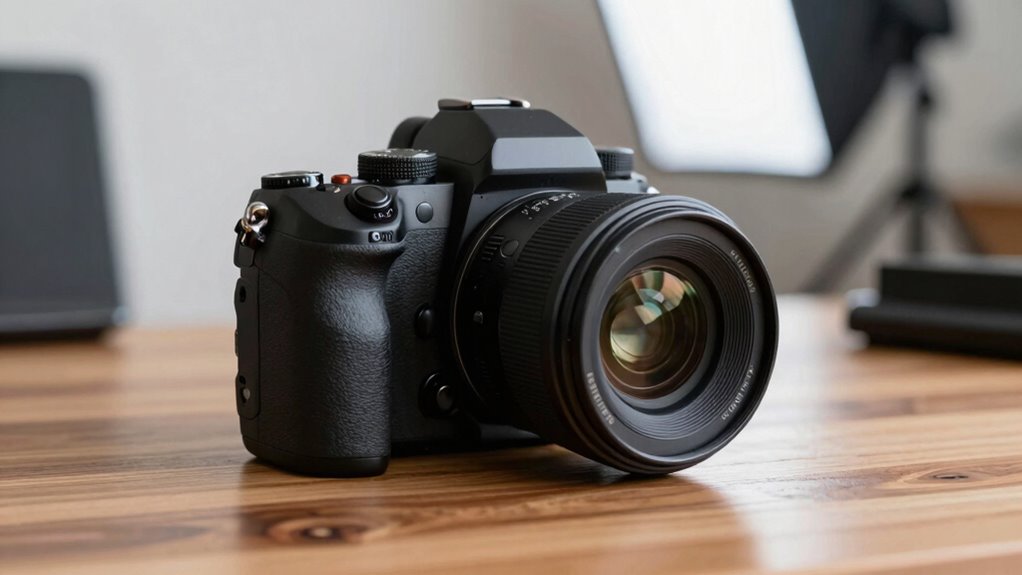

For professionals balancing photo and video assignments, I’d choose the Sony Alpha 7 V as the best overall option in this lineup, while the Canon EOS R6 Mark II stands out for a capable all-around workflow and the Nikon Z5 II for value-minded buyers. The right full-frame camera depends less on sensor size alone than on autofocus, video needs, handling, lens availability, and how well a body fits your existing kit. Newer hybrid models bring stronger tools for demanding work, while older and entry-oriented options can leave more room in a budget for lenses. This roundup also includes a DSLR, which may suit photographers with compatible EF lenses but carries a different workflow from mirrorless bodies. Read on for the full breakdown and the tradeoffs that separate these choices.

Get kitchen gear delivered free with Prime
- Fast, free delivery on millions of items
- Prime Video, Amazon Music and more included
- Member-only deals all year
Complete the kit


Key Takeaways
- The Sony Alpha 7 V is the most balanced professional pick here, while the Alpha 7 IV and a7 III are alternatives for buyers whose needs or existing Sony kit make an older generation more suitable.
- The Canon EOS R6 Mark II appears with and without a kit lens: the body-only version suits buyers who already own RF glass, while the bundled option gives newcomers a ready-to-use general-purpose zoom.
- Nikon’s Z5 II and Z 6II serve different priorities: the Z5 II is the value-oriented newer option, while the Z 6II may appeal to photographers seeking a more established midrange body.
- The Canon EOS RP and EOS R8 are the lighter, simpler Canon choices, but professionals should weigh their compactness against the more demanding workflows supported by the R6 Mark II.
- The Canon 5D Mark III is the sole DSLR, making it a specialized fit for EF-lens owners who prefer optical-viewfinder handling rather than the shared mirrorless direction of the other ten cameras.
| Canon EOS R6 Mark II Mirrorless Camera with RF24-105mm F4-7.1 IS STM Lens |  | Best Overall Hybrid Kit | Sensor: 24.2 MP full-frame CMOS | Image processor: DIGIC X | Continuous shooting: Up to 12 fps mechanical; up to 40 fps electronic | VIEW ON AMAZON | See Our Full Breakdown |
| Nikon Z 5 Full-Frame Mirrorless Camera |  | Best Value for Deliberate Still Photography | Sensor: 24.3MP full-frame CMOS | Lens mount: Nikon Z | Image stabilization: 5-axis sensor-shift | VIEW ON AMAZON | See Our Full Breakdown |
| Sony Alpha 7 V Full-Frame Mirrorless Camera Body |  | Best for High-Speed Hybrid Production | Sensor: 33MP partially stacked Exmor RS CMOS, full-frame | Processor: BIONZ XR2 | Continuous shooting: Up to 30 fps with AF/AE tracking | VIEW ON AMAZON | See Our Full Breakdown |
| Canon EOS R6 Mark II Full-Frame Mirrorless Camera (Body Only) |  | Best for Canon RF System Owners | Sensor: 24.2MP full-frame CMOS | Image processor: DIGIC X | Electronic continuous shooting: Up to 40 fps at 20MP | VIEW ON AMAZON | See Our Full Breakdown |
| Sony Alpha 7 IV Full-Frame Mirrorless Camera |  | Best for High-Resolution Hybrid Work | Sensor: 33MP full-frame Exmor R CMOS | Lens mount: Sony E | Video: Up to 4K 60p, 10-bit 4:2:2 | VIEW ON AMAZON | See Our Full Breakdown |
| Nikon Z5 II Full-Frame Mirrorless Camera |  | Best Value for Hybrid Professionals | Sensor: 24.5MP full-frame BSI-CMOS | Processor: EXPEED 7 | Lens mount: Nikon Z | VIEW ON AMAZON | See Our Full Breakdown |
| Canon EOS RP Full-Frame Mirrorless Camera (Body Only) |  | Best Compact Entry to Full Frame | Camera type: Mirrorless | Sensor: 26.2MP full-frame CMOS | Image processor: DIGIC 8 | VIEW ON AMAZON | See Our Full Breakdown |
| Canon EOS R8 Full-Frame Mirrorless Camera (Body Only) |  | Best for Fast Hybrid Shooting | Mount: Canon RF | Sensor: 24.2MP full-frame CMOS | Processor: DIGIC X | VIEW ON AMAZON | See Our Full Breakdown |
| Sony Alpha a7 III Full-Frame Mirrorless Camera Body, Black |  | Best for Dual-Card Workflow | Sensor: 24.2MP full-frame BSI CMOS | Lens mount: Sony E mount | ISO range: 50–204,800 | VIEW ON AMAZON | See Our Full Breakdown |
| Canon EOS 5D Mark III 22.3 MP Full-Frame DSLR Camera Body (Renewed) |  | Best Rugged DSLR for Canon EF Owners | Sensor: 22.3MP full-frame CMOS | Lens mount: Canon EF | Image processor: DIGIC 5+ | VIEW ON AMAZON | See Our Full Breakdown |
| Nikon Z 6II Full-Frame Mirrorless Camera |  | Best for Hybrid Photo and Video Work | Sensor: 24.5MP full-frame BSI CMOS | Autofocus: 273-point hybrid AF | Continuous shooting: Up to 14 fps | VIEW ON AMAZON | See Our Full Breakdown |
| full frame camera for professional | Sensor | Video | Continuous shooting | Autofocus |
|---|---|---|---|---|
| Canon EOS R6 Mark II Mirrorles | 24.2 MP full-frame CMOS | 4K 60p C-Log internal video | Up to 12 fps mechanical; up to 40 fps electronic | Dual Pixel CMOS AF II with up to 1,053 AF zones |
| Nikon Z 5 Full-Frame Mirrorles | 24.3MP full-frame CMOS | 4K UHD at 30p; 1080p at 60p | 4.5 fps | Eye detection for people, dogs, and cats |
| Sony Alpha 7 V Full-Frame Mirr | 33MP partially stacked Exmor RS CMOS, full-frame | 4K 120p | Up to 30 fps with AF/AE tracking | — |
| Canon EOS R6 Mark II Full-Fram | 24.2MP full-frame CMOS | Uncropped 4K up to 60 fps; Full HD up to 180 fps | — | — |
| Sony Alpha 7 IV Full-Frame Mir | 33MP full-frame Exmor R CMOS | Up to 4K 60p, 10-bit 4:2:2 | Up to 10 frames per second | 693-point hybrid autofocus |
| Nikon Z5 II Full-Frame Mirrorl | 24.5MP full-frame BSI-CMOS | 4K/60p; in-camera 12-bit N-RAW | Up to 30 fps | Detection for 9 subject types; detection down to -10 EV |
| Canon EOS RP Full-Frame Mirror | 26.2MP full-frame CMOS | 4K UHD | 5 fps | Dual Pixel CMOS AF |
| Canon EOS R8 Full-Frame Mirror | 24.2MP full-frame CMOS | Uncropped 4K up to 60 fps; Full HD up to 180 fps | Up to 40 fps | Dual Pixel CMOS AF II with subject detection |
| Sony Alpha a7 III Full-Frame M | 24.2MP full-frame BSI CMOS | 4K UHD 2160p | Up to 10 fps | — |
| Canon EOS 5D Mark III 22.3 MP | 22.3MP full-frame CMOS | Full HD 1080p | Up to 6 fps | 61-point AF, up to 41 cross-type points |
| Nikon Z 6II Full-Frame Mirrorl | 24.5MP full-frame BSI CMOS | 4K UHD, up to 60p | Up to 14 fps | 273-point hybrid AF |
More Details on Our Top Picks
Canon EOS R6 Mark II Mirrorless Camera with RF24-105mm F4-7.1 IS STM Lens
I’d put this kit first for professionals who need one camera for fast-moving stills and video, and want a lens ready to work straight away. Its 40 fps electronic burst shooting and subject detection give it a clear action advantage over the Nikon Z 5, while 4K 60p C-Log adds room for graded video work. The included RF 24-105mm covers useful everyday focal lengths, so it is a more complete starting point than the body-only Canon EOS R6 Mark II. That convenience comes with an optical compromise: the lens aperture narrows to f/7.1, limiting low-light flexibility and background separation compared with faster professional zooms. Dual UHS-II SD slots support a practical backup workflow, but buyers who already own RF glass may prefer the body-only version.
Pros:- Up to 40 fps electronic shooting suits unpredictable action.
- Subject detection covers people, animals, vehicles, aircraft, trains, and horses.
- Internal 4K 60p C-Log supports more flexible video grading.
- Included 24-105mm zoom provides a useful range for general assignments.
Cons:- The kit lens aperture varies from f/4 to f/7.1, limiting low-light use and subject separation.
- Flash photography requires an external flash.
- At 2.2 pounds, the camera-and-lens kit is less appealing for lightweight travel.
Best for: Working event and wedding photographers who need fast subject tracking, dependable card redundancy, and a versatile lens in one kit.
Not ideal for: Professionals who need a fast constant-aperture zoom for dim venues, or Canon RF owners who do not need another lens.
- Sensor:24.2 MP full-frame CMOS
- Image processor:DIGIC X
- Continuous shooting:Up to 12 fps mechanical; up to 40 fps electronic
- Autofocus:Dual Pixel CMOS AF II with up to 1,053 AF zones
- Included lens:RF 24-105mm F4-7.1 IS STM
- Video:4K 60p C-Log internal video
- Memory card slots:2 UHS-II SD slots
- Viewfinder:3.69-million-dot electronic viewfinder
- Weight:2.2 pounds
Our verdict“Choose this kit for a versatile professional hybrid setup with fast autofocus, provided the variable-aperture zoom fits your work.”
Nikon Z 5 Full-Frame Mirrorless Camera
The Nikon Z 5 earns its place as a more restrained, stills-first option for professionals who value stabilization and backup recording over speed. Its 5-axis in-body stabilization can help keep handheld shots sharp when subjects are still, while dual SD slots allow a straightforward backup workflow. Compared with the Canon EOS R6 Mark II, the Z 5 is far slower at 4.5 fps, so it is a poor fit for sustained action, but its 24.3MP sensor is well suited to portraits, landscapes, and slower-paced assignments. Eye detection supports people, dogs, and cats; the Canon offers broader subject recognition and faster bursts. The Z 5 also records 4K UHD at 30p, with clips limited to 30 minutes, so video-focused professionals should look elsewhere.
Pros:- 5-axis sensor-shift stabilization helps with handheld shooting.
- Dual SD slots support separate or backup recording.
- Eye detection recognizes people, dogs, and cats.
- Compact 1.3-pound body is lighter than the supplied Canon R6 Mark II kit.
Cons:- 4.5 fps continuous shooting is limiting for action and rapidly changing moments.
- 4K recording is limited to 30p and clips are capped at 30 minutes.
- Autofocus subject recognition is narrower than the Canon EOS R6 Mark II’s.
Best for: Portrait, landscape, and documentary photographers who want full-frame image quality, in-body stabilization, and dual-card backup for measured assignments.
Not ideal for: Sports and wildlife professionals who need high burst rates, broad subject tracking, or long uninterrupted video clips.
- Sensor:24.3MP full-frame CMOS
- Lens mount:Nikon Z
- Image stabilization:5-axis sensor-shift
- Autofocus:Eye detection for people, dogs, and cats
- Video:4K UHD at 30p; 1080p at 60p
- Continuous shooting:4.5 fps
- Memory card slots:2 SD slots
- Display:3.2-inch tilting touchscreen LCD
- Weight:1.3 pounds
Our verdict“Pick the Z 5 for stabilized, deliberate still photography and dual-card security, not for fast action or demanding video.”
Sony Alpha 7 V Full-Frame Mirrorless Camera Body
For professionals who need both resolution and speed, the Sony Alpha 7 V is the most advanced fit in this group. Its 33MP partially stacked sensor pairs with blackout-free shooting up to 30 fps with AF/AE tracking, giving it a stronger action-oriented feature set than the 10 fps Sony Alpha 7 IV. The 4K 120p option also gives video teams more room for slow-motion footage than the Canon EOS R6 Mark II’s 4K 60p. AI-based subject recognition and in-body stabilization further support demanding solo work. This capability comes with a steeper learning curve, and the provided details do not specify battery life, making it harder to plan long production days. Its E/FE mount gives buyers access to Sony’s compatible lens system, but this body is best for those prepared to work with its advanced controls.
Pros:- 33MP partially stacked sensor balances detail with high-speed readout.
- Blackout-free bursts reach 30 fps with AF/AE tracking.
- 4K 120p enables high-frame-rate video capture.
- AI subject recognition works alongside in-body stabilization.
Cons:- Advanced controls and features may take time to learn.
- Battery life is not specified in the supplied product details.
- Its high-speed video and tracking capabilities may be unnecessary for slower-paced work.
Best for: Hybrid professionals covering fast action and high-frame-rate video who can make practical use of 33MP files, advanced tracking, and 4K 120p.
Not ideal for: Photographers who want a simple, lower-complexity body or whose assignments do not call for high-speed bursts and slow-motion video.
- Sensor:33MP partially stacked Exmor RS CMOS, full-frame
- Processor:BIONZ XR2
- Continuous shooting:Up to 30 fps with AF/AE tracking
- Video:4K 120p
- Image stabilization:Sensor-shift and digital; up to 7.5-step central and 6.5-step peripheral
- ISO range:100–51200 standard; expandable for stills and movies
- Lens mount:Sony E, Sony FE
- Memory slots:2
- Weight:1.4 pounds
Our verdict“Choose the Alpha 7 V for professional assignments that benefit from 30 fps tracking and 4K 120p, rather than for a simpler general-purpose setup.”
Canon EOS R6 Mark II Full-Frame Mirrorless Camera (Body Only)
This body-only R6 Mark II is a strong choice for Canon professionals who already own RF lenses and want fast performance without duplicating a kit zoom. It shares the kit version’s 24.2MP sensor, 40 fps electronic shooting, and broad subject detection, so it is well suited to event, wildlife, and action work. Its uncropped 4K 60p video and vari-angle touchscreen also make it adaptable for video capture. Compared with the Sony Alpha 7 IV, it gives up resolution—the Sony offers 33MP—but the Canon’s higher electronic burst rate better suits decisive moments. The tradeoff is immediate: this package includes no lens, and professionals new to the RF system must budget for compatible glass. The listing also notes that full functionality can depend on compatible accessories.
Pros:- Electronic shooting reaches 40 fps at 20MP.
- Subject detection covers people, animals, vehicles, trains, and aircraft.
- Uncropped 4K recording reaches 60 fps.
- Vari-angle touchscreen and 120 fps-refresh electronic viewfinder support flexible framing.
Cons:- Body-only package does not include a lens.
- The 24.2MP sensor provides less resolution than the Sony Alpha 7 IV’s 33MP sensor.
- Some listed capabilities may depend on compatible accessories.
Best for: Canon RF system owners who need a fast full-frame body for action, events, and video, and already have compatible lenses.
Not ideal for: First-time full-frame buyers who need a lens in the box, or professionals who prioritize 33MP resolution over burst speed.
- Sensor:24.2MP full-frame CMOS
- Image processor:DIGIC X
- Electronic continuous shooting:Up to 40 fps at 20MP
- Video:Uncropped 4K up to 60 fps; Full HD up to 180 fps
- Display:3.0-inch vari-angle touchscreen, 1.62 million dots
- Electronic viewfinder:0.5-inch OLED, 3.69 million dots, 120 fps refresh rate
- Wireless connectivity:5 GHz Wi-Fi, Bluetooth 5
- Wired connectivity:USB Type-C
- Battery compatibility:Canon LP-E6NH, LP-E6N, and LP-E6
Our verdict“Choose this body if you already own Canon RF glass and want fast action performance without paying for another kit lens.”
Sony Alpha 7 IV Full-Frame Mirrorless Camera
The Sony Alpha 7 IV is the sensible pick for professionals who want more still-image detail than the 24.2MP Canon EOS R6 Mark II, without stepping up to the newer Alpha 7 V. Its 33MP sensor gives more room for cropping and large output, while 10-bit 4K 60p supports color grading for serious video projects. The 693-point hybrid autofocus and 5-axis stabilization make it a balanced tool for portraits, commercial work, and general video production. Compared with the Alpha 7 V, it is less geared to high-speed capture: its burst rate tops out at 10 fps, and the supplied specifications do not list 4K 120p. There is also no built-in flash, which matters for occasional fill light, and its 0.99 kg body is heavier than the newer Alpha 7 V.
Pros:- 33MP full-frame sensor supports detailed images and flexible cropping.
- 10-bit 4K 60p provides useful control for graded video.
- 5-axis sensor-shift stabilization helps with handheld shooting.
- 693-point hybrid autofocus covers a broad range of focus positions.
Cons:- 10 fps continuous shooting is slower than the Canon EOS R6 Mark II and Sony Alpha 7 V.
- No built-in camera flash.
- At 0.99 kg, it is heavier than the listed Alpha 7 V body.
Best for: Commercial, portrait, and hybrid professionals who value 33MP files and 10-bit 4K footage more than very high burst rates.
Not ideal for: Sports and wildlife photographers who need 30 fps tracking, or professionals seeking a lightweight body with built-in flash.
- Sensor:33MP full-frame Exmor R CMOS
- Lens mount:Sony E
- Video:Up to 4K 60p, 10-bit 4:2:2
- Image stabilization:5-axis sensor-shift
- Autofocus:693-point hybrid autofocus
- Continuous shooting:Up to 10 frames per second
- Shutter speed:30 seconds to 1/8000 second
- Display:3-inch tilting LCD, 1,036,800 dots
- Weight:0.99 kg
Our verdict“Pick the Alpha 7 IV for detailed stills and color-flexible 4K video when resolution matters more than top-tier action speed.”
Nikon Z5 II Full-Frame Mirrorless Camera
The Nikon Z5 II makes a strong case for professionals who need capable stills and video features without stepping up to a more specialized body. Its 24.5MP sensor, EXPEED 7 processor, and subject detection across nine subject types suit varied assignments, while stabilization rated up to 7.5 stops can help when working handheld. Compared with the older Nikon Z5, the Z5 II adds faster processing and more ambitious video options, including 4K/60p and in-camera 12-bit N-RAW. Its up-to-30-fps shooting also gives it more headroom for action than the Canon EOS RP. The tradeoff is that professionals who need backup media should look closely at slot configuration before buying; the supplied data does not specify it. There’s no built-in flash, and the display resolution is listed as 1920 × 1080.
Pros:- 24.5MP full-frame BSI-CMOS sensor paired with EXPEED 7 processing
- In-body stabilization rated up to 7.5 stops
- Autofocus detects nine subject types and works down to -10 EV
- 4K/60p video and in-camera 12-bit N-RAW recording
Cons:- No built-in flash
- Display resolution is listed as 1920 × 1080
- Memory card configuration is not specified in the supplied product data
Best for: Working photographers and hybrid shooters who want strong stabilization, modern subject detection, and advanced video recording in a Nikon Z body.
Not ideal for: Professionals who require confirmed dual-card backup, a built-in flash, or a higher-resolution screen.
- Sensor:24.5MP full-frame BSI-CMOS
- Processor:EXPEED 7
- Lens mount:Nikon Z
- Image stabilization:In-body, up to 7.5 stops
- Continuous shooting:Up to 30 fps
- Autofocus:Detection for 9 subject types; detection down to -10 EV
- Video:4K/60p; in-camera 12-bit N-RAW
- Display:3.2-inch articulating LCD; 1920 × 1080 listed resolution
- Weight:1.5 lbs
Our verdict“Choose the Z5 II for a versatile Nikon hybrid body with strong stabilization and advanced recording, but verify its card setup if client-work backup is a priority.”
Canon EOS RP Full-Frame Mirrorless Camera (Body Only)
The Canon EOS RP is the compact, straightforward choice here for professionals who want a light secondary body or are moving into full frame on a restrained kit. Its 26.2MP sensor, Dual Pixel autofocus, and articulating touchscreen cover general still photography and flexible framing. Compared with the more video-capable Canon EOS R8, the RP is slower at 5 fps and its supplied specs list 4K without the R8’s uncropped 4K/60p detail. That makes it less suitable for fast action or demanding video work, but its compact body may appeal for travel and backup duties. Canon RF lenses fit directly; existing EF and EF-S lenses need an optional adapter. The single card slot is a meaningful limitation for paid assignments where in-camera backup matters, and the RP’s feature set is modest beside newer professional-oriented bodies.
Pros:- Compact full-frame body with a 26.2MP sensor
- Dual Pixel autofocus
- Articulating touchscreen supports flexible framing
- RF mount, with EF and EF-S lens support through an optional adapter
Cons:- Single memory card slot limits in-camera backup options
- 5 fps continuous shooting is modest for action
- Supplied video specification lists 4K but not the R8’s uncropped 4K/60p
Best for: Canon users seeking a compact full-frame backup body for portraits, travel, and slower-paced assignments, especially if they already own RF lenses.
Not ideal for: Wedding and event professionals who need dual-card recording, fast bursts, or more advanced 4K video options.
- Camera type:Mirrorless
- Sensor:26.2MP full-frame CMOS
- Image processor:DIGIC 8
- Lens mount:Canon RF; EF and EF-S lenses supported with optional adapter
- Autofocus:Dual Pixel CMOS AF
- Video:4K UHD
- Continuous shooting:5 fps
- Memory card:Single SD/SDHC/SDXC slot, UHS-II
- Screen:3-inch articulating touchscreen LCD
Our verdict“Pick the EOS RP as a compact, simpler Canon full-frame body for slower assignments, not as a primary camera for fast-paced or backup-critical work.”
Canon EOS R8 Full-Frame Mirrorless Camera (Body Only)
The Canon EOS R8 is the speed-focused lightweight pick, pairing subject-detection autofocus with bursts up to 40 fps and uncropped 4K recording at up to 60 fps. That combination gives professionals a nimble option for action, events, and video-led work; the older EOS RP is a less capable alternative for fast subjects and high-frame-rate 4K. The vari-angle touchscreen and OLED viewfinder support different shooting positions, while Full HD recording reaches 180 fps for slow-motion clips. The main compromise is stabilization: no in-body image stabilization is specified, so handheld low-light stills and steady moving video may call for stabilized lenses or support. It is also a body-only purchase, and the supplied data does not list card-slot details—an item professionals should confirm when backup recording is part of their workflow.
Pros:- Up to 40 fps continuous shooting
- Dual Pixel CMOS AF II with subject detection
- Uncropped 4K video up to 60 fps
- Lightweight body with vari-angle touchscreen and OLED EVF
Cons:- No in-body image stabilization is specified
- Body-only package does not include a lens
- Memory card configuration is not specified in the supplied product data
Best for: Hybrid professionals who prioritize fast subject tracking, high burst rates, and uncropped 4K/60p in a lightweight Canon RF body.
Not ideal for: Photographers who rely on in-body stabilization for handheld low-light work or need confirmed dual-card backup for paid events.
- Mount:Canon RF
- Sensor:24.2MP full-frame CMOS
- Processor:DIGIC X
- Autofocus:Dual Pixel CMOS AF II with subject detection
- Viewfinder:0.39-inch OLED EVF, 2.36 million dots
- Screen:3-inch vari-angle LCD touchscreen, 1.62 million dots
- Video:Uncropped 4K up to 60 fps; Full HD up to 180 fps
- Continuous shooting:Up to 40 fps
- Connectivity:Wi-Fi, Bluetooth, USB, Micro HDMI
Our verdict“Choose the EOS R8 for a light, fast Canon hybrid setup, provided you can work around the lack of specified in-body stabilization.”
Sony Alpha a7 III Full-Frame Mirrorless Camera Body, Black
The Sony Alpha a7 III remains a practical professional choice for photographers who value a dependable workflow over the newest recording modes. Its two memory card slots offer a clear advantage over the single-slot Canon EOS RP when assignments call for simultaneous backup, and its 693 phase-detection plus 425 contrast-detection points provide broad autofocus coverage. With up to 10 fps shooting, in-body optical stabilization, and 4K UHD video, it handles a mix of stills and motion. Compared with the newer Nikon Z5 II, though, the a7 III’s supplied specs don’t list similarly advanced 4K/60p or in-camera N-RAW options. It is a less compelling choice for high-frame-rate video or buyers seeking the latest feature set. This is a body-only option, so budget planning should include compatible Sony E-mount glass.
Pros:- Two memory card slots support a more resilient workflow
- 693 phase-detection and 425 contrast-detection autofocus points
- In-body optical image stabilization
- Up to 10 fps continuous shooting and 4K UHD video
Cons:- Supplied video specifications do not list 4K/60p
- Body-only package does not include lenses
- Battery life varies by display and shooting mode
Best for: Event and portrait professionals who want dual-card storage, broad autofocus coverage, and stabilization in a Sony E-mount body.
Not ideal for: Hybrid shooters who need 4K/60p or advanced in-camera raw video, and buyers starting without Sony E-mount lenses.
- Sensor:24.2MP full-frame BSI CMOS
- Lens mount:Sony E mount
- ISO range:50–204,800
- Autofocus points:693 phase-detection and 425 contrast-detection
- Continuous shooting:Up to 10 fps
- Video:4K UHD 2160p
- Image stabilization:Optical
- Memory card slots:2
- Battery life:Approx. 610 shots with viewfinder or 710 shots with LCD
Our verdict“The a7 III suits professionals who value dual-card workflow and stabilized stills more than newer high-frame-rate video features.”
Canon EOS 5D Mark III 22.3 MP Full-Frame DSLR Camera Body (Renewed)
The Canon EOS 5D Mark III takes a different route from the mirrorless bodies in this list: it is a renewed DSLR built around a magnesium-alloy body, weather resistance, and an established Canon EF mount. Its 61-point autofocus system, with up to 41 cross-type points, and 6 fps shooting remain suited to controlled portraits, events, and still photography. Compared with the mirrorless Canon EOS R8, however, it lacks the listed subject-detection autofocus and high-frame-rate 4K; its video tops out at Full HD 1080p. That makes it a poor fit for current hybrid production, but an appealing option for professionals who already own EF lenses and prefer a traditional optical DSLR setup. Renewed condition adds another consideration: the included warranty and accessories help, but buyers should weigh that against choosing a newer mirrorless platform.
Pros:- Magnesium-alloy body with dust and weather resistance
- 61-point autofocus system with up to 41 cross-type points
- Canon EF mount suits photographers with an existing EF lens kit
- Shutter tested up to 150,000 cycles
Cons:- Video is limited to Full HD 1080p
- Renewed condition may not suit buyers seeking a new camera body
- No built-in flash
Best for: Canon EF professionals who want a rugged DSLR body for stills and can accept renewed condition and older video capabilities.
Not ideal for: Hybrid creators who need 4K video, mirrorless subject detection, or a new body with current-generation features.
- Sensor:22.3MP full-frame CMOS
- Lens mount:Canon EF
- Image processor:DIGIC 5+
- Autofocus:61-point AF, up to 41 cross-type points
- ISO range:100–25,600; expandable to 50–102,400
- Continuous shooting:Up to 6 fps
- Video:Full HD 1080p
- Body:Magnesium alloy with enhanced dust and weather resistance
- Condition:Manufacturer refurbished; includes original accessories and warranty
Our verdict“Choose the renewed 5D Mark III if you already own EF lenses and want a rugged DSLR for stills, but skip it for modern video-heavy work.”
Nikon Z 6II Full-Frame Mirrorless Camera
I’d choose the Nikon Z 6II for professional work that needs a capable stills camera and a solid 4K video tool in one body. Its 24.5MP BSI CMOS sensor favors low-light flexibility and manageable files over the higher resolution that can help with heavy cropping. Burst shooting reaches 14 fps, while in-body stabilization helps steady handheld shots with compatible lenses. Compared with the more entry-oriented Nikon Z 5, the Z 6II is better suited to fast action and demanding hybrid assignments; the Z 5 may make more sense for photographers who do not need the same speed. Dual card slots also give working shooters more recording flexibility. The tradeoffs are a 30-minute listed recording limit and the need for a separate adapter to use F-mount lenses.
Pros:- 24.5MP full-frame BSI CMOS sensor is designed for strong low-light performance
- Up to 14 fps continuous shooting suits action and event coverage
- Sensor-shift image stabilization helps with handheld shooting
- Dual CFexpress/XQD and UHS-II SD slots add recording flexibility
Cons:- Listed recording capacity is limited to 30 minutes
- F-mount lenses require a separately sold adapter
- 24.5MP resolution offers less room for heavy cropping than higher-resolution alternatives
Best for: Working event and editorial photographers who need fast bursts, stabilized handheld shooting, and 4K video in a full-frame body.
Not ideal for: Photographers who need high-resolution files for extensive cropping, long uninterrupted video takes, or immediate use of F-mount lenses without buying an adapter.
- Sensor:24.5MP full-frame BSI CMOS
- Autofocus:273-point hybrid AF
- Continuous shooting:Up to 14 fps
- Video:4K UHD, up to 60p
- Image stabilization:Sensor-shift
- Memory card slots:2: CFexpress/XQD and UHS-II SD
- Display and viewfinder:3.2-inch screen; electronic viewfinder
- Lens mount:Nikon Z
- Weight:1.4 lb
Our verdict“Choose the Z 6II if your professional assignments mix low-light stills, fast bursts, and 4K video, but skip it if long takes or high-resolution cropping are priorities.”

How We Picked
I ranked these cameras by how well they suit paid, repeatable work—not by sensor size alone. I weighed autofocus and shooting responsiveness, photo and video versatility, body handling, system and lens compatibility, and how much workflow flexibility each model offers. I also considered what the purchase includes: a kit zoom can make a camera usable straight away, while a body-only package is more compelling for professionals with lenses already in their system.
The order favors cameras that can cover varied assignments without forcing major compromises, which puts the Sony Alpha 7 V and Canon EOS R6 Mark II ahead of more specialized, older, or entry-oriented choices. That does not make the lower-ranked cameras poor tools: they may be better buys for a particular mount, workflow, or budget. I also separate duplicate configurations of the R6 Mark II by package fit rather than treating them as different camera bodies.
| full frame camera for professional | Lens mount |
|---|---|
| Canon EOS R6 Mark II Mirrorles | — |
| Nikon Z 5 Full-Frame Mirrorles | Nikon Z |
| Sony Alpha 7 V Full-Frame Mirr | Sony E, Sony FE |
| Canon EOS R6 Mark II Full-Fram | — |
| Sony Alpha 7 IV Full-Frame Mir | Sony E |
| Nikon Z5 II Full-Frame Mirrorl | Nikon Z |
| Canon EOS RP Full-Frame Mirror | Canon RF; EF and EF-S lenses supported with optional adapter |
| Canon EOS R8 Full-Frame Mirror | — |
| Sony Alpha a7 III Full-Frame M | Sony E mount |
| Canon EOS 5D Mark III 22.3 MP | Canon EF |
| Nikon Z 6II Full-Frame Mirrorl | Nikon Z |
Factors to Consider When Choosing Full Frame Camera For Professionals
Professional work puts pressure on the whole camera system, not just the body. I’d start with the assignments you take most often, then check how a camera’s controls, lenses, storage workflow, and video features fit the way you deliver work.
Match the camera to the work you actually book
A wedding photographer, studio portraitist, sports shooter, and commercial videographer can all call themselves professionals, yet they need different tools. Fast subject acquisition and dependable handling matter when a moment cannot be repeated; resolution, tethering, and lens choice can matter more for controlled studio work. Hybrid shooters should check recording formats, heat limits, audio connections, and how easily the camera changes between stills and video. A common mistake is buying around an impressive headline feature that rarely affects your assignments. Write down your three most frequent jobs and identify the camera functions that save time or prevent missed shots on each. If a body is excellent at a task you seldom do but awkward for your daily work, it is probably the wrong professional investment.
Budget for lenses and the full system
The camera body is only one part of the cost and weight you carry. Professional lenses, spare batteries, cards, lighting, and backup bodies can shape the working kit more than a small body-generation upgrade. Before changing mounts, check whether your current lenses adapt well, whether autofocus and stabilization behave as needed, and whether the lenses you plan to buy cover your assignments. A bundled zoom can be a practical starting point, but it may not replace a bright or specialized lens for low light, portrait work, or events. Compare the cost of completing a system, not just the price or feature list of one body. This matters especially when choosing between body-only and lens-kit versions of the same camera.
Treat autofocus and reliability as workflow tools
Autofocus affects more than keeper rate: it can reduce reshoots, help you work without an assistant, and free attention for directing a subject. Check how a camera handles the people, animals, vehicles, or other moving subjects you photograph, rather than assuming all subject detection performs the same way. For paid work, also look at ergonomics, button customization, battery planning, card options, and the availability of a backup body. A capable camera can still slow you down if essential controls are buried or your established process depends on features it lacks. Do not choose a body from specifications alone; consider the tasks you need to complete quickly under pressure. Reliable workflow often matters more than a modest gain in image quality.
Check video requirements before choosing a hybrid
“Hybrid” does not mean every camera is equally suited to every video job. Define the resolution, frame rates, recording duration, color workflow, audio setup, and delivery format your clients expect. Then check whether the camera’s recording limits and handling suit a full shoot, not just short clips. Stabilization can help with handheld footage, but it does not replace support gear or solve every movement issue. Also account for storage: higher-quality video can require faster cards, more capacity, and more time for transfers and backups. Buyers who mainly shoot stills should avoid paying for video features they will not use, while regular video work warrants checking the full recording pipeline before committing.
Weigh size, durability, and support against portability
A lighter body is easier to carry through long assignments, but compactness can come with compromises in grip, controls, battery capacity, or the way a camera balances with large lenses. Larger bodies may feel steadier and provide more direct access to settings, though the difference becomes tiring when paired with heavy glass. Consider how often you travel, shoot in difficult conditions, or work long days without a charging break. Professionals should also plan for maintenance, repair access, and a usable backup strategy; a camera that cannot be serviced conveniently can disrupt work regardless of its image quality. Check the body and lens combination as a complete working setup, not as a camera body in isolation. Portability pays off only when it does not undermine the handling your assignments require.
Choose an upgrade for a specific bottleneck
Replacing a camera makes the most sense when you can name the limitation that is costing time or work: missed focus, inadequate video options, slow handling, or a lens system that no longer fits your assignments. If the existing body already meets client needs, spending on lenses, lighting, storage, or backup equipment may improve your working kit more. Older models can remain suitable when their capabilities match a stable workflow, but age may affect the features and support you expect from a primary professional body. Before upgrading, compare the new camera’s practical gains against the learning time, accessories, and system changes it may require. Avoid treating the newest release as an automatic requirement for paid work. Buy for a real bottleneck, not a specification gap that has no effect on your deliverables.
Frequently Asked Questions
Should I choose the Canon EOS R6 Mark II with the kit lens or buy the body only?
I’d choose the kit version if you are entering the RF system and need a general-purpose zoom immediately; it makes the camera ready for everyday assignments without a separate lens decision. The body-only package is the cleaner fit if you already own compatible RF lenses or have a specific lens planned. Think about whether the included zoom covers the focal lengths and aperture range your paid work requires, rather than assuming a kit lens will be enough for every job. If you work in low light or need a specialized perspective, budget for another lens either way. The package choice should follow your current kit, not a belief that one configuration is a different camera.
Is an older full-frame camera still suitable as a professional’s main body?
It can be, provided its autofocus, handling, image output, and support options fit the work you deliver. The Sony a7 III, Nikon Z 6II, and Canon 5D Mark III represent different generations and system approaches, so compare them against your actual assignment demands rather than age alone. A DSLR such as the 5D Mark III may make sense if you already own EF lenses and prefer an optical viewfinder, but moving to mirrorless changes how you frame and use lenses. For a primary body, consider the consequences of missing features in your workflow and how you would handle a failure on a job. An older model is a sensible choice when it meets a defined need, not simply because its specifications seem adequate on paper.
Which option makes the most sense if I shoot both stills and video?
I’d begin by listing the video formats and recording behavior your clients require, then compare those needs with your stills workflow. The Sony Alpha 7 V and Canon EOS R6 Mark II are the strongest all-around starting points in this selection for buyers seeking one camera for varied assignments, while the Alpha 7 IV is another option for photographers already invested in Sony. A camera’s hybrid label alone does not tell you whether it will suit long takes, audio setups, or a demanding post-production process. Check recording limits, media needs, heat behavior, and the controls you use while shooting. If video is only occasional, a stills-first body may leave more of your budget for lenses and lighting.
Do I need to replace my lenses when switching to a full-frame mirrorless system?
Not always, but lens compatibility deserves careful checking before you change systems. Adapted lenses may preserve useful functions, yet autofocus behavior, stabilization, handling, and support can vary by lens and adapter combination. Make a list of the lenses you rely on for paid work and confirm that each has a practical path to the new body. Also compare the cost of adapting your current kit with the cost and weight of replacing it over time. If your existing lenses remain dependable and fit your assignments, an adapter can be a bridge; if they limit performance or create workflow friction, plan a gradual replacement.
Which camera should I choose as a first professional full-frame body?
I’d choose based on the type of paid work you are ready to take on and the system you can afford to build, rather than selecting the simplest body in isolation. The Canon EOS R8 and EOS RP are more approachable choices for buyers who value a lighter setup, while the R6 Mark II offers a broader all-around role for more demanding assignments. The Nikon Z5 II is a value-minded path for buyers interested in Nikon’s mirrorless system. Leave room in your budget for a suitable lens, spare batteries, storage, and a backup plan. If clients rely on your camera, ease of operation and dependable support matter as much as learning the basic controls.
Conclusion
For the broadest mix of professional stills and video work, I’d start with the Sony Alpha 7 V as best overall; choose the Canon EOS R6 Mark II as best all-around Canon option, with the kit-lens bundle for a new RF setup and body-only for existing lens owners. The Nikon Z5 II is my value pick for buyers seeking a newer Nikon mirrorless body without starting at the top of the lineup. For beginners moving into full frame, the Canon EOS R8 is the more modern compact choice, while the EOS RP suits simpler needs and buyers who prioritize a straightforward, lighter setup. For a premium, varied-work choice, the Alpha 7 V is the strongest fit in this group; for existing EF-lens owners who prefer DSLR handling, the Canon 5D Mark III is the specialized option. Match the body to your assignments and lens system, then spend the remaining budget on the tools that help you deliver consistently.