Among these NAS storage devices, I rank the Synology DS425+ as the best overall for buyers who want four drive bays and a mature file-management platform, while the UGREEN NAS DXP4800 Plus stands out for higher-performance hardware and the Synology DS223j for straightforward home backup. The right choice depends on how much storage growth you need, how comfortable you are managing a NAS, and whether you value software simplicity or stronger hardware more. Two-bay models keep a home setup simpler, while four-bay and hybrid-drive designs give you more room to expand. Some options arrive with storage installed, but many are diskless and need compatible drives purchased separately. Read on for the full breakdown of where each device fits and what you give up by choosing it.

Get kitchen gear delivered free with Prime
- Fast, free delivery on millions of items
- Prime Video, Amazon Music and more included
- Member-only deals all year
Complete the kit


Key Takeaways
- The Synology DS425+ is the most balanced all-rounder: its four bays offer more room to grow than the two-bay DS225+ or DS223j, while Synology’s software focus suits buyers who value manageable file sharing and backups.
- UGREEN’s DXP4800 models prioritize hardware flexibility: the DXP4800 Plus and DXP4800 GT target buyers who care more about processing and connectivity than choosing Synology’s established ecosystem.
- Two-bay NAS devices suit modest libraries, not every growth plan: the DS223j, AS1202T, and DXP2800 keep a setup compact, but leave fewer options for adding capacity than four-bay models.
- The LincStation N1 is the lineup’s unusual hybrid: two SATA bays plus four M.2 NVMe slots offer a different balance of bulk storage and solid-state capacity, but buyers should confirm their intended drives and workload fit the design.
- Preconfigured personal-cloud devices reduce setup work, not all tradeoffs: BeeStation and the 4TB LinkStation 220 come with storage, while diskless systems let buyers choose drives but require more planning and setup.
| Synology DiskStation DS223j 2-Bay NAS (Diskless) |  | Best for Straightforward Home Backups | Drive bays: 2 | Drive included: No | Backup support: Mac, PC, and mobile devices | VIEW ON AMAZON | See Our Full Breakdown |
| LincStation N1 6-Bay NAS Storage |  | Best for Apps and Fast Hybrid Storage | Processor: Intel N5105 quad-core, up to 2.9 GHz | Memory: 16GB RAM | Internal storage: 128GB eMMC | VIEW ON AMAZON | See Our Full Breakdown |
| Asustor Drivestor 2 Gen 2 AS1202T 2-Bay NAS Storage |  | Best Compact 2.5GbE NAS | Drive bays: 2 | Processor: Realtek RTD1619B quad-core, 1.7 GHz | Memory: 1GB DDR4 | VIEW ON AMAZON | See Our Full Breakdown |
| Synology DS225+ 2-Bay Diskless NAS | 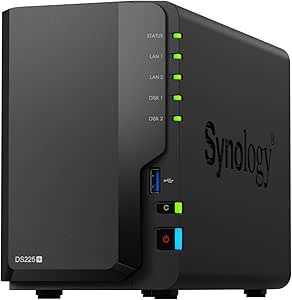 | Best Premium 2-Bay Synology | Drive bays: 2 | Maximum storage volume: 40TB | Listed transfer speed: Up to 282 MB/s | VIEW ON AMAZON | See Our Full Breakdown |
| Synology DS425+ 4-Bay Diskless NAS |  | Best for Expandable Synology Storage | Drive bays: 4 | Storage volume: 80TB | Network: 2.5GbE | VIEW ON AMAZON | See Our Full Breakdown |
| UGREEN NAS DXP4800 GT 4-Bay Network Attached Storage |  | Best for High-Speed, Expandable Workloads | Drive bays: 4 | Processor: AMD Ryzen Embedded R2514, 4 cores, 8 threads, up to 3.70GHz | Memory: 8GB DDR4, expandable to 64GB | VIEW ON AMAZON | See Our Full Breakdown |
| UGREEN DXP4800 Plus 4-Bay NAS |  | Best Value 4-Bay Feature Set | Drive bays: 4 | Processor: Intel 5-core CPU | Memory: 8GB DDR5 RAM | VIEW ON AMAZON | See Our Full Breakdown |
| Synology DS124 1-Bay Diskless NAS for Backup, File Sharing, and Home Surveillance |  | Best Simple Synology Entry Point | Drive bays: 1 | Drive configuration: Diskless | Operating system: Synology DiskStation Manager | VIEW ON AMAZON | See Our Full Breakdown |
| Yxk Zero1 2-Bay Desktop NAS for Home and Personal Storage (Diskless) |  | Best Compact Two-Bay Feature Set | Drive bays: 2 | Included drives: None | Network connectivity: 2.5GbE | VIEW ON AMAZON | See Our Full Breakdown |
| Synology BeeStation 4TB Personal Cloud Storage Device |  | Best Ready-to-Use Personal Cloud | Storage capacity: 4TB | Model: BST150-4T | Connectivity: Wired Ethernet | VIEW ON AMAZON | See Our Full Breakdown |
| BUFFALO LinkStation 220 4TB 2-Bay NAS |  | Best Ready-to-Use NAS with Drives Included | Model: LS220D0402 | Total storage: 4TB | Drive bays: 2 | VIEW ON AMAZON | See Our Full Breakdown |
| UGREEN DH2300 2-Bay NAS for Personal Storage and Phone Backup |  | Best for Simple Multi-Device Backups | Drive bays: 2 | Maximum capacity: Up to 64TB with compatible drives | Drives included: No | VIEW ON AMAZON | See Our Full Breakdown |
| UGREEN NAS DXP2800 2-Bay Diskless Network Attached Storage |  | Best 2-Bay NAS for Power Users | Drive bays: 2 HDD bays | Maximum storage: Up to 80TB | M.2 slots: 2 NVMe SSD slots | VIEW ON AMAZON | See Our Full Breakdown |
| LincStation E1 4-Bay NAS Storage, Diskless |  | Best Compact NAS with HDMI Output | Processor: Quad-core Cortex-A55, 2.0 GHz | Memory: 4GB DDR4 RAM | Internal storage: 64GB eMMC | VIEW ON AMAZON | See Our Full Breakdown |
| nas storage device | Drive bays | Warranty | Memory |
|---|---|---|---|
| Synology DiskStation DS223j 2- | 2 | 2 years | — |
| LincStation N1 6-Bay NAS Stora | — | 2 years | 16GB RAM |
| Asustor Drivestor 2 Gen 2 AS12 | 2 | 3 years | 1GB DDR4 |
| Synology DS225+ 2-Bay Diskless | 2 | 3 years | — |
| Synology DS425+ 4-Bay Diskless | 4 | 3 years | — |
| UGREEN NAS DXP4800 GT 4-Bay Ne | 4 | — | 8GB DDR4, expandable to 64GB |
| UGREEN DXP4800 Plus 4-Bay NAS | 4 | — | 8GB DDR5 RAM |
| Synology DS124 1-Bay Diskless | 1 | 2 years | — |
| Yxk Zero1 2-Bay Desktop NAS fo | 2 | — | — |
| Synology BeeStation 4TB Person | — | — | — |
| BUFFALO LinkStation 220 4TB 2- | 2 | 2 years, including hard drives | — |
| UGREEN DH2300 2-Bay NAS for Pe | 2 | — | 4GB RAM |
| UGREEN NAS DXP2800 2-Bay Diskl | 2 HDD bays | 2 years | 8GB DDR5 |
| LincStation E1 4-Bay NAS Stora | 2 SATA HDD/SSD bays and 2 M.2 NVMe 2280 slots | 2-year manufacturer warranty | 4GB DDR4 RAM |
More Details on Our Top Picks
Synology DiskStation DS223j 2-Bay NAS (Diskless)
The DS223j is the simplest fit here for buyers who want a central home for files and automated backups without paying for hardware aimed at heavier workloads. Its two bays support a private cloud, device syncing, and backups from Mac, PC, and mobile devices; it can also handle remote viewing from multiple IP cameras. Compared with the more capable Synology DS225+, this model is better framed as a basic storage and backup hub, not a feature-rich media or surveillance server. It also has fewer listed hardware details than the newer options in this lineup, so I would choose it for routine household storage rather than demanding multitasking. The main catch is that it is diskless: you need to buy and install drives before it can store anything.
Pros:- Automated backup support for Mac, PC, and mobile devices
- Private cloud storage, file sharing, and syncing in a two-bay enclosure
- Supports multiple IP cameras with remote viewing
- Two-year warranty and ongoing software updates
Cons:- Drives are not included, adding setup work and a separate hardware purchase
- Two bays offer less room to expand than the four-bay Synology DS425+
- Positioned for basic storage tasks rather than more demanding workloads
Best for: Households that want Synology software for shared folders and automated backups across computers and phones, without advanced NAS workloads.
Not ideal for: Buyers planning heavy media streaming, app workloads, or a larger camera system who would benefit from the DS225+ or a four-bay model.
- Drive bays:2
- Drive included:No
- Backup support:Mac, PC, and mobile devices
- Security camera support:Multiple IP cameras
- Warranty:2 years
- Storage use:Private cloud storage and file sharing
Our verdict“Choose the DS223j for everyday Synology backups and file sharing, but step up to the DS225+ if you need more capable media or surveillance features.”
LincStation N1 6-Bay NAS Storage
The LincStation N1 is the most workload-oriented pick in this group: its two 2.5-inch SATA bays pair with four M.2 NVMe slots, letting buyers combine capacity with fast storage for apps or cache. The Intel N5105, 16GB of RAM, and included Unraid Starter License make it a more natural fit for Docker, media transcoding, and hands-on storage configuration than the simpler Synology DS223j. Its 2.5GbE connection and HDMI output also give it more ways to connect to a network or display. That flexibility brings setup overhead, though: Unraid and Docker expect more technical involvement than a conventional home backup appliance. The two SATA bays also limit large-drive expansion compared with the four-bay Synology DS425+, while the NVMe slots serve a different storage role.
Pros:- Intel N5105 processor and 16GB RAM suit transcoding and Docker workloads
- Four M.2 NVMe slots alongside two SATA bays allow mixed storage configurations
- Includes an Unraid Starter License for flexible storage management
- 2.5GbE, 4K HDMI, USB-C, and USB-A connections broaden its uses
Cons:- Diskless design requires separate drive purchases before setup
- Unraid and Docker add a learning curve for first-time NAS owners
- Only two 2.5-inch SATA bays, limiting conventional hard-drive capacity
Best for: Technically confident home-lab users who want to run apps or transcode media while combining SATA storage with NVMe drives.
Not ideal for: Beginners seeking a simple appliance for automatic backups, or buyers who want several large SATA drives in one enclosure.
- Processor:Intel N5105 quad-core, up to 2.9 GHz
- Memory:16GB RAM
- Internal storage:128GB eMMC
- SATA bays:2 × 2.5-inch, up to 9.5 mm
- M.2 slots:4 × 2280 NVMe
- Network:2.5GbE Ethernet
- Video output:HDMI 2.0, 4K
- Operating system:Unraid Starter License included
- Warranty:2 years
Our verdict“Pick the N1 if you want an extensible app and media server and are comfortable managing Unraid, rather than a simple plug-in backup NAS.”
Asustor Drivestor 2 Gen 2 AS1202T 2-Bay NAS Storage
The Asustor AS1202T makes a case for buyers who want a compact two-drive NAS with faster-than-Gigabit networking, without moving into the more elaborate hardware of the LincStation N1. Its 2.5GbE port can help reduce transfer bottlenecks when the rest of the network supports that speed, and tool-free drive installation makes adding disks less fiddly. The small listed dimensions suit a desk or shelf where a larger four-bay unit such as the Synology DS425+ would take up more room. The tradeoff is its 1GB of DDR4 memory, which limits how comfortably it can handle multiple tasks at once. This is a practical file-sharing and backup device, not the pick for heavy apps or multitasking; drives are also sold separately.
Pros:- 2.5GbE networking can improve transfers on a compatible network
- Tool-free drive installation simplifies fitting disks
- Compact listed dimensions suit a crowded desk or shelf
- Three USB ports provide connections for external devices
Cons:- Drives are not included
- 1GB of DDR4 memory limits multitasking capacity
- Two bays provide less expansion room than the Synology DS425+
Best for: Home users with a 2.5GbE-capable network who want a small two-bay device for backups, shared files, and private cloud access.
Not ideal for: NAS owners who expect to run several demanding apps or services at once, since the 1GB of memory constrains multitasking.
- Drive bays:2
- Processor:Realtek RTD1619B quad-core, 1.7 GHz
- Memory:1GB DDR4
- Network interface:2.5GbE Ethernet
- USB ports:3
- Dimensions:3.94 × 3.94 × 3.94 inches
- Operating system:ASUSTOR Data Master (ADM)
- Warranty:3 years
Our verdict“Choose the AS1202T for compact, everyday NAS storage on a 2.5GbE network, but look elsewhere for heavier app workloads.”
Synology DS225+ 2-Bay Diskless NAS
The Synology DS225+ is the stronger two-bay choice for buyers who want more than basic backup and file sharing. Synology lists support for media streaming, automated backups, RAID redundancy, snapshots, and up to 30 IP cameras, giving it a broader role than the entry-level DS223j. Its compact tabletop enclosure also suits a home or small office that needs surveillance and file protection without dedicating space to a four-bay NAS. The stated transfer speed of up to 282 MB/s and maximum volume of 40TB offer useful reference points, but actual results depend on the drive and network setup. Compared with the four-bay DS425+, the DS225+ gives up expansion capacity; its two bays may be limiting as storage needs grow. It is diskless, so drives remain a separate purchase.
Pros:- Supports backups, snapshots, RAID redundancy, and media streaming
- Listed support for up to 30 IP cameras
- Compact tabletop enclosure for a home or small office
- Three-year warranty
Cons:- Diskless configuration requires separate drive purchases
- Two bays offer less expansion capacity than the Synology DS425+
- Listed transfer speed is an upper figure, not a guarantee of real-world throughput
Best for: Home offices and households that want Synology backups, snapshots, media streaming, or support for a larger IP-camera setup in a two-bay enclosure.
Not ideal for: Buyers expecting their storage library to grow substantially or wanting more drive bays for expansion, who should look at the DS425+.
- Drive bays:2
- Maximum storage volume:40TB
- Listed transfer speed:Up to 282 MB/s
- Surveillance support:Up to 30 IP cameras
- Backup and protection:Automated backups, RAID redundancy, and snapshots
- Dimensions:9.14 × 4.25 × 6.5 inches
- Drive configuration:Diskless
- Warranty:3 years
Our verdict“Choose the DS225+ for feature-rich Synology storage and surveillance in a compact two-bay format, unless you need the DS425+’s extra bays.”
Synology DS425+ 4-Bay Diskless NAS
The DS425+ is the clearest choice here when room to add drives matters more than keeping the enclosure to two bays. Its four bays and listed 80TB storage volume give it twice the stated capacity ceiling of the two-bay DS225+, while 2.5GbE, snapshots, access controls, and audit logs support a more substantial file-sharing setup. It also supports up to 30 IP cameras, matching the DS225+ on that stated limit. Compared with the LincStation N1, the DS425+ offers four conventional drive bays and Synology’s backup and management features, rather than a hybrid SATA-and-NVMe design aimed at apps and customization. The tradeoff is a larger, heavier enclosure and a diskless setup that requires four compatible drives for all bays. Its listed transfer speed is up to 278 MB/s, so buyers should not treat that figure as a guaranteed result.
Pros:- Four drive bays allow greater capacity and expansion than two-bay Synology models
- Built-in 2.5GbE networking
- Snapshots, access controls, and audit logs support file protection and administration
- Supports up to 30 IP cameras
Cons:- Diskless configuration means drives must be purchased separately
- Larger and heavier than the two-bay DS225+
- Listed transfer speed of up to 278 MB/s is not a real-world performance guarantee
Best for: Small offices, media libraries, and households planning a Synology storage pool that may need more capacity than a two-bay NAS can provide.
Not ideal for: Buyers who need only basic two-drive backup storage or who want NVMe slots and a more customizable app-focused system.
- Drive bays:4
- Storage volume:80TB
- Network:2.5GbE
- Listed transfer speed:Up to 278 MB/s
- Surveillance support:Up to 30 IP cameras
- Dimensions:8.78 × 7.83 × 6.54 inches
- Drive configuration:Diskless
- Warranty:3 years
Our verdict“Pick the DS425+ if you want four-bay Synology storage and room to grow; choose the DS225+ for a smaller, two-drive setup.”
UGREEN NAS DXP4800 GT 4-Bay Network Attached Storage
The DXP4800 GT is the strongest fit here for buyers who need network throughput and room to grow: its dual 10GbE ports and expandable memory suit large file transfers, multi-user work, and heavier applications better than the single-10GbE UGREEN DXP4800 Plus. The Ryzen Embedded processor, two M.2 slots, and support for Docker and virtual machines also give it flexibility beyond basic backup. Its SD card slot is a useful shortcut for copying media directly into shared storage. That capability comes with setup demands: drives are sold separately, Plex requires manual Docker setup, and ECC memory depends on a compatible upgrade. I’d choose it over the Synology DS124 for performance and expansion, but not for a simple, low-maintenance personal cloud.
Pros:- Dual 10GbE ports can support faster network transfers than the single 10GbE port on the DXP4800 Plus
- Expandable 8GB DDR4 memory and two M.2 slots allow added capacity for demanding workloads
- Supports Docker, virtual machines, and local surveillance
- SD card slot allows direct media backup
Cons:- No storage drives are included
- Plex requires manual installation and setup through Docker
- ECC memory support depends on purchasing a compatible upgrade
Best for: Small creative teams and technically confident home users moving large files over a 10GbE network and running containers or virtual machines
Not ideal for: First-time NAS buyers who want a simple backup appliance, or anyone unwilling to buy and configure drives and apps separately
- Drive bays:4
- Processor:AMD Ryzen Embedded R2514, 4 cores, 8 threads, up to 3.70GHz
- Memory:8GB DDR4, expandable to 64GB
- Networking:2 × 10GbE
- Maximum stated capacity:Up to 144TB
- M.2 slots:2
- Operating system:UGOS Pro
- Included drives:None
Our verdict“Choose the DXP4800 GT if fast networking and workload expansion matter more than a simple setup or included storage.”
UGREEN DXP4800 Plus 4-Bay NAS
The DXP4800 Plus brings a broad NAS feature set to a four-bay enclosure: RAID, automatic backups, remote access, Docker, and virtual machines make it a practical shared hub for a home or small office. Its combination of 10GbE and 2.5GbE gives buyers a faster-network option without requiring every device to use the highest-speed connection. Compared with the DXP4800 GT, it has one 10GbE port rather than two and uses an Intel five-core CPU, so the GT is the clearer pick for dual-link networking and heavier expansion. The Plus still offers a strong mix of connectivity and software support, but its 144TB headline capacity assumes compatible drives in RAID 0, and real transfer rates depend on the rest of the network. Drives are not included.
Pros:- Combines one 10GbE port with one 2.5GbE port
- Supports RAID, automatic backups, and remote access
- Docker and virtual machine support broaden its uses beyond file storage
- Works with Windows, macOS, Linux, iOS, and Android
Cons:- Hard drives or SSDs must be purchased separately
- The stated 144TB maximum assumes compatible drives in RAID 0
- Actual transfer speeds depend on network equipment and connected hardware
Best for: Households or small offices seeking a four-bay NAS for shared backups, remote access, and apps across Windows, macOS, Linux, and mobile devices
Not ideal for: Buyers who need dual 10GbE networking, included drives, or a capacity figure that does not depend on a RAID 0 configuration
- Drive bays:4
- Processor:Intel 5-core CPU
- Memory:8GB DDR5 RAM
- Ethernet:1 × 10GbE, 1 × 2.5GbE
- Additional storage:128GB SSD
- Maximum stated capacity:Up to 144TB with compatible drives
- Maximum stated transfer rate:1250MB/s
- Included drives:None
Our verdict“Pick the DXP4800 Plus for a capable four-bay NAS with mixed-speed networking, unless you specifically need the GT’s second 10GbE port.”
Synology DS124 1-Bay Diskless NAS for Backup, File Sharing, and Home Surveillance
The DS124 suits buyers who want a compact Synology device for centralized backups, remote file access, and home surveillance without stepping up to a multi-bay system. Its one-bay design is simpler than the two-bay Yxk Zero1 and far less expandable than either four-bay UGREEN model, which keeps the choice focused on personal file access rather than growing a large storage pool. Synology’s DiskStation Manager provides the platform for its backup and sharing features, while the small enclosure can fit beside a router or desktop. The main compromise is inherent in a single drive bay: this model lacks the multi-drive flexibility offered by the Zero1, and its diskless configuration means storage must be bought separately. I’d favor it for straightforward Synology software, not for capacity growth or drive redundancy.
Pros:- Supports automatic backup of photos and files from phones and computers
- Provides remote file access and sharing through a private cloud
- DiskStation Manager supports home surveillance features
- Compact enclosure is easier to place than the four-bay UGREEN models
Cons:- One drive bay limits expansion compared with the Yxk Zero1 and four-bay NAS options
- Diskless configuration requires a separate drive purchase
- Does not offer the multi-drive flexibility of a two- or four-bay system
Best for: Individuals or couples who want a compact Synology-based private file cloud for phone photos, computer backups, and basic home surveillance
Not ideal for: Households needing multiple drive bays, room to scale storage, or multi-drive redundancy
- Drive bays:1
- Drive configuration:Diskless
- Operating system:Synology DiskStation Manager
- Weight:1247g
- Dimensions:2.8 × 6.54 × 8.82 inches
- Enclosure material:Alloy steel
- Compatible devices:Desktop, laptop, server, smartphone
- Warranty:2 years
Our verdict“Choose the DS124 for a compact Synology file cloud and basic backup needs, but move to a multi-bay NAS if you expect storage to grow.”
Yxk Zero1 2-Bay Desktop NAS for Home and Personal Storage (Diskless)
The Yxk Zero1 is a compact two-bay alternative for people who want more than a single-drive personal cloud but don’t need a four-bay system. Its 2.5GbE connection, RAID modes, automated backups, and snapshot recovery cover everyday file sharing while adding ways to recover from mistakes. Compared with the Synology DS124, the second bay and snapshot feature give it more room for a multi-drive setup; compared with the UGREEN DXP4800 Plus, it trades bay count and 10GbE for a smaller, quieter home-oriented design. Docker support, encryption, and user permissions widen its role beyond basic storage. The drawbacks are clear: drives are not included, and installed drives determine capacity. Buyers who need four bays or higher-speed networking should look to the UGREEN options instead.
Pros:- 2.5GbE connectivity offers faster networking than standard gigabit Ethernet when the network supports it
- RAID modes, automated backups, and snapshot recovery add storage and recovery options
- Supports remote access from computers, phones, and web browsers
- Compact, quiet design includes thermal control and health monitoring
Cons:- Drives must be purchased separately
- Two bays provide less expansion room than the UGREEN four-bay models
- 2.5GbE is less capable than the 10GbE connectivity on both UGREEN DXP4800 models
Best for: Home users who want a quiet, compact two-bay NAS for shared photos, media, backups, and remote access with snapshot recovery
Not ideal for: Power users needing four drive bays, dual 10GbE, or a NAS with drives included
- Drive bays:2
- Included drives:None
- Network connectivity:2.5GbE
- Supported platforms:Windows, macOS, iOS, Android, web browsers
- Features:RAID modes, automated backups, snapshot recovery, Docker, encryption, user permissions
- Weight:2kg
- Design:Compact, whisper-quiet with thermal control and health monitoring
Our verdict“Choose the Zero1 for a compact two-bay home NAS with useful recovery tools, not for maximum capacity or high-speed professional networking.”
Synology BeeStation 4TB Personal Cloud Storage Device
The BeeStation is the easiest fit for buyers who want a personal cloud without choosing and installing NAS drives: it comes with 4TB of storage and is aimed at backing up photos, videos, and files across desktop and mobile devices. Guided setup and file syncing make it more approachable than the diskless DS124 or Yxk Zero1, both of which require a separate drive purchase. It can also gather backups from cloud services and external drives, and Mac users can use Time Machine. That simplicity means less flexibility than a traditional multi-bay NAS: Time Machine is limited to 2TB on this model, and its wired Ethernet connection requires placement near a network connection. I’d pick it for convenient personal storage, not for buyers who want a customizable multi-drive server.
Pros:- Includes 4TB of storage, unlike the diskless DS124 and Yxk Zero1
- Guided setup is designed to make personal cloud storage more approachable
- Supports photo backup, file sharing, and syncing across desktop and mobile devices
- Can collect backups from cloud services and external drives, with Time Machine support
Cons:- Time Machine allocation is limited to 2TB on the 4TB model
- Requires a wired Ethernet connection
- Offers less storage expansion flexibility than the four-bay UGREEN NAS devices
Best for: Non-technical households and solo users who want an included 4TB personal cloud for photos, file sharing, and device backups
Not ideal for: NAS users who want multiple drive bays, expandable capacity, wireless networking, or more than 2TB allocated to Time Machine
- Storage capacity:4TB
- Model:BST150-4T
- Connectivity:Wired Ethernet
- Hard drive form factor:3.5 inches
- Time Machine allocation:Up to 2TB
- Compatible devices:Laptop, smartphone, tablet
- Enclosure material:Metal
- Included backup software:3 years of Acronis True Image for one Mac, PC, or Windows device
Our verdict“Choose the BeeStation for straightforward personal cloud storage with included capacity, but choose a diskless multi-bay NAS for expansion and deeper customization.”
BUFFALO LinkStation 220 4TB 2-Bay NAS
The LinkStation 220 suits buyers who want a network backup device without choosing and installing drives separately: its two hard drives and backup software are included. Unlike the diskless UGREEN DH2300, it is ready for storage setup out of the box. Its RAID choices make the capacity tradeoff plain: RAID 1 leaves 2TB usable while mirroring data across the drives, whereas RAID 0 exposes all 4TB but gives up that redundancy. The subscription-free personal cloud and folder controls support straightforward sharing across Windows and supported Mac systems. This is a more fixed, basic package than the UGREEN DXP2800, which offers faster networking and expansion options, but the LinkStation includes a two-year warranty and 24/7 US-based support. Its main limits are modest mirrored capacity and Mac compatibility only through macOS 15.
Pros:- Includes two hard drives and backup software for a ready-to-configure setup
- Offers RAID 1 mirroring or RAID 0 access to the full 4TB
- Subscription-free personal cloud with folder access controls
- Two-year warranty covering the hard drives and 24/7 US-based support
Cons:- RAID 1 reduces usable capacity to 2TB
- RAID 0 uses all 4TB but does not provide drive mirroring
- Mac compatibility is limited to macOS 15 and earlier
Best for: Households wanting a drive-included NAS for basic computer backups and shared folders, without selecting disks separately.
Not ideal for: Mac users on versions newer than macOS 15, or buyers who need more than 2TB of mirrored usable space or faster networking.
- Model:LS220D0402
- Total storage:4TB
- Drive bays:2
- RAID modes:RAID 1 (2TB usable) or RAID 0 (4TB usable)
- Compatibility:Windows and macOS 15 and earlier
- Included:NAS server, network cable, software, and hard drives
- Warranty:2 years, including hard drives
- Support:24/7 US-based support
Our verdict“Choose the LinkStation 220 if you want a straightforward, drive-included NAS and can accept limited mirrored capacity.”
UGREEN DH2300 2-Bay NAS for Personal Storage and Phone Backup
The DH2300 is aimed at households that want one place for phone photos, computer files, and everyday media, with automatic backups across Windows, macOS, iOS, and Android. Its AI photo tagging and duplicate detection can make a growing photo library easier to sort, while two-factor authentication and encrypted transfers add security options. Compared with the BUFFALO LinkStation 220, the DH2300 offers broader stated device compatibility and room to grow to up to 64TB with compatible drives; unlike that Buffalo, it arrives without drives, so setup requires a separate disk purchase. Its 1GbE connection is suitable for routine home transfers, but it lacks the faster 2.5GbE networking of the UGREEN DXP2800. This model is deliberately limited to personal storage tasks: it does not support Docker or virtual machines, and it needs wired Ethernet unless you add a compatible USB Wi-Fi adapter.
Pros:- Supports automatic backups across Windows, iOS, Android, and macOS
- AI photo tagging and duplicate detection help organize image collections
- Includes two-factor authentication and encrypted transfers
- Supports up to 64TB with compatible drives
Cons:- Drives are not included and must be purchased separately
- Does not support Docker or virtual machines
- Wired Ethernet only; Wi-Fi requires an external USB adapter
Best for: Families or individuals who want automatic photo and file backups from phones and computers across several operating systems.
Not ideal for: NAS enthusiasts who want Docker or virtual machines, or anyone seeking built-in Wi-Fi or faster-than-1GbE networking.
- Drive bays:2
- Maximum capacity:Up to 64TB with compatible drives
- Drives included:No
- Memory:4GB RAM
- Network:1GbE wired Ethernet
- Transfer speed:Up to 125MB/s
- Compatible operating systems:Windows, iOS, Android, and macOS
- Wi-Fi:Not supported; external USB adapter required
- Unsupported features:Docker, virtual machines, and SAN Manager
Our verdict“Pick the DH2300 for straightforward, cross-device personal backups, but skip it if you want advanced NAS apps or wireless networking.”
UGREEN NAS DXP2800 2-Bay Diskless Network Attached Storage
The DXP2800 is the strongest fit here for a buyer who wants more than basic file sharing from a two-bay NAS. Its Intel N100 quad-core processor, 8GB DDR5 RAM, and 2.5GbE networking provide more headroom for demanding transfers and apps than the DH2300’s 1GbE, 4GB setup. Two M.2 NVMe slots add a faster-storage option alongside its two HDD bays, while support for Docker and virtual machines gives technically confident users room to run services beyond backups and media storage. It also supports AI photo organization and surveillance features. The tradeoff is that this is a diskless platform, so drives are an extra setup step, and its advanced functions may call for compatible equipment and configuration. Compared with the LincStation E1, the DXP2800 offers a named Intel processor and 8GB of memory, but no HDMI output is listed for direct display use.
Pros:- Intel N100 quad-core processor and 8GB DDR5 RAM
- 2.5GbE networking for faster transfers on a compatible network
- Two M.2 NVMe slots alongside two HDD bays
- Supports Docker, virtual machines, media server apps, and AI photo organization
Cons:- HDDs and NVMe SSDs are sold separately
- Advanced functions may require setup and compatible devices
Best for: Remote workers, creators, and technically confident home users who want 2.5GbE, NVMe expansion, and support for containers or virtual machines.
Not ideal for: Buyers seeking a ready-to-use NAS with drives included, or those who prefer simple backups without configuring advanced features.
- Drive bays:2 HDD bays
- Maximum storage:Up to 80TB
- M.2 slots:2 NVMe SSD slots
- Processor:Intel N100 quad-core
- Memory:8GB DDR5
- Networking:2.5GbE
- Drive status:Diskless; HDDs and SSDs sold separately
- Compatible operating systems:Windows, macOS, Android, and iOS
- Warranty:2 years
Our verdict“Choose the DXP2800 if you want a flexible, faster-networked two-bay NAS and are comfortable supplying drives and configuring its advanced features.”
LincStation E1 4-Bay NAS Storage, Diskless
The LincStation E1 takes a different route from the DXP2800: it pairs two SATA bays with two M.2 NVMe slots and adds HDMI 2.0 for native 4K video decoding. That mix suits a compact tabletop setup where a NAS may also connect directly to a display, rather than a buyer focused only on conventional hard-drive capacity. Its 2.5GbE port supports faster transfers than the DH2300’s 1GbE connection, and tool-free trays reduce friction when installing drives. LincOS uses local accounts without subscription fees. The capacity ceiling is listed as up to 76TB, but the enclosure is diskless, and only two of its four storage positions are SATA bays. Compared with the UGREEN DXP2800, the E1 adds HDMI output but has 4GB RAM rather than 8GB; buyers should weigh direct-display use against the DXP2800’s higher memory and named Intel processor.
Pros:- Combines two SATA drive bays with two M.2 NVMe slots
- 2.5GbE networking and HDMI 2.0 with native 4K video decoding
- Tool-free drive trays simplify installation
- Local LincOS accounts do not require subscription fees
Cons:- Diskless configuration means all drives must be purchased separately
- Only two SATA bays are available for conventional HDDs or SSDs
- 4GB RAM is less than the DXP2800’s 8GB
Best for: Home users who want a small tabletop NAS with 2.5GbE, mixed SATA and NVMe storage, and direct 4K HDMI output.
Not ideal for: Buyers who need several SATA hard-drive bays, included drives, or more memory for heavier multitasking.
- Processor:Quad-core Cortex-A55, 2.0 GHz
- Memory:4GB DDR4 RAM
- Internal storage:64GB eMMC
- Drive bays:2 SATA HDD/SSD bays and 2 M.2 NVMe 2280 slots
- Maximum storage capacity:76TB
- Network port:2.5GbE RJ45
- Video output:HDMI 2.0, native 4K video decoding
- Included drives:None; diskless
- Warranty:2-year manufacturer warranty
Our verdict“Choose the E1 if HDMI output and mixed SATA/NVMe storage matter more than having additional SATA bays or higher memory.”

How We Picked
I compared these NAS storage devices by how well their hardware, bay count, and intended setup match real household and small-office needs. I gave weight to capacity growth, drive flexibility, networking and processing capabilities where specified, backup and file-sharing use, and the amount of setup a buyer must take on. I also distinguished diskless enclosures from systems supplied with storage: an included drive can simplify the start, but it changes how much control the buyer has over capacity and replacement choices.
The ranking favors useful balance over headline specifications. The DS425+ leads for its blend of four-bay flexibility and approachable software; the UGREEN DXP4800 models rank well for buyers seeking stronger hardware options; compact two-bay systems fit simpler storage plans; and single-bay or preconfigured personal-cloud products serve narrower needs. I treat the BeeStation and LinkStation as convenience-focused choices rather than direct substitutes for expandable diskless NAS enclosures. Model details can vary by configuration, so I recommend checking drive compatibility, included storage, and software support before buying.
Factors to Consider When Choosing Nas Storage Devices
Choosing a NAS is less about collecting the biggest specification sheet and more about matching the device to your files, household, and willingness to manage storage. I would settle the following questions before choosing between compact two-bay units, expandable four-bay systems, and preconfigured personal-cloud options.
How Much Storage Growth Do You Expect?
Estimate the storage you need now, then think about how quickly photos, video, computer backups, and shared work files will accumulate. A two-bay NAS can be a sensible start for one household, but it offers fewer ways to expand internally than a four-bay model. More bays do not automatically mean more usable capacity: redundancy choices affect how much space remains available for files. Buyers often focus on the maximum number of drives and forget to plan for replacing or adding them later. If your library is stable and modest, a compact enclosure may avoid paying in space and complexity for unused capacity. If you expect several people or devices to contribute data, extra bays can make future growth less disruptive.
Decide Whether You Want to Choose Your Own Drives
Diskless devices let you select drive type and capacity, but they also make the buyer responsible for sourcing compatible drives and installing them. A model supplied with storage, such as the BeeStation or LinkStation 220 in this roundup, can make the first setup more direct. That convenience comes with less freedom to define the initial drive configuration, and included storage should not be mistaken for a backup plan. Check whether the quoted capacity is raw or usable, whether drives can be replaced, and what happens to your data during a drive failure. A common mistake is buying an enclosure first and discovering that the desired drives are unsupported or that installation is more involved than expected. Confirming the drive list and warranty terms before purchase can prevent a frustrating mismatch.
Match the Software Experience to Your Comfort Level
A NAS is a small server, so the software affects daily life as much as the enclosure does. Buyers who mainly want automatic photo uploads and shared folders should prioritize a clear setup flow and dependable apps over advanced configuration options. People planning user permissions, surveillance, media services, or several backup routines may value a broader software environment. A feature-rich interface can also mean more settings to maintain, so avoid buying on software breadth alone if you will not use it. Personal-cloud devices simplify some decisions but can offer less flexibility than a conventional NAS. Before choosing, list the tasks you need on day one and check whether the system supports them without add-on equipment or complicated workarounds.
Treat Drive Redundancy and Backup as Separate Decisions
Using multiple drives in a NAS can help keep files available after a drive problem, but redundancy is not the same as a backup. It will not protect against accidental deletion, theft, fire, malware, or damage to the entire device. Buyers often spend their full storage budget on the NAS and drives, then leave no copy elsewhere. Plan a second copy on an external drive, another NAS, or a trusted remote backup service for files that would be hard to replace. A single-bay unit can still serve as a useful shared destination, but it should not be the only home for important data. Decide which files need recovery protection before choosing the number of bays and allocating your budget.
Choose Networking for the Slowest Link in Your Setup
Faster NAS networking only helps when the rest of the connection can use it: the NAS port, router or switch, cabling, and client device all matter. A faster interface may improve large transfers between compatible equipment, but it will not make an older Wi-Fi connection behave like wired multi-gigabit networking. For routine document storage and phone backups, ease of access may matter more than maximum transfer speed. For large video files or several active users, check the whole network path rather than focusing on the NAS port alone. Also consider where the unit will sit and whether a wired connection is practical. Matching the NAS to existing network gear can be more sensible than paying for speed that requires a broader home-network upgrade.
Pay for Hardware Features You Can Actually Use
More memory, faster processors, NVMe slots, and display outputs can open up workloads beyond basic file storage, but they do not benefit every buyer equally. The LincStation N1’s combination of SATA bays and M.2 slots, for example, suits someone who has a clear plan for both kinds of storage rather than someone seeking the simplest photo backup. Higher-performance UGREEN models make more sense when the workload calls for their hardware strengths and the owner is prepared to configure them. For basic household backups, a simpler NAS may be easier to maintain and leave more room in the budget for reliable drives and a separate backup. Avoid paying for a feature solely because it sounds future-proof. Name the task it will improve, then verify the software and network can support that task.
Frequently Asked Questions
Should I choose a two-bay or four-bay NAS for a home photo library?
I would choose two bays if the library is modest, the number of users is small, and you are comfortable with a narrower path for future expansion. Four bays make more sense when several phones and computers will upload files or when the library is expected to grow for years. More bays can also give you more flexibility in arranging storage, but the usable capacity depends on the drive and redundancy setup. Do not treat extra bays as protection against every kind of data loss. Keep a separate copy of important photos regardless of the enclosure size.
Is a diskless NAS a better choice than one with storage included?
A diskless NAS is a better fit if you want to choose drive capacity and configuration yourself and are comfortable installing drives. A preconfigured device such as the BeeStation or LinkStation 220 can reduce the initial setup decisions for personal storage. Compare the included capacity with your needs, and check how easy it is to replace or expand storage later. With either type, confirm drive compatibility and warranty coverage before purchase. The included-drive option does not remove the need for a separate backup of files you cannot replace.
Can one of these NAS devices replace my cloud storage subscription?
A NAS can provide local file storage and access across devices, but it is not automatically a full replacement for a cloud service. Remote access, mobile uploads, sharing with others, and off-site recovery depend on the device’s software and your network setup. A NAS at home is also exposed to local risks such as power failure, theft, or damage. If you want cloud-like access without losing off-site protection, plan a separate remote backup or cloud copy. Check the specific apps and account features before assuming your preferred workflow is supported.
Do I need a multi-gigabit NAS connection for everyday backups?
Most routine document and phone backups do not require a multi-gigabit connection. Large video transfers, frequent workstation backups, or several active users may benefit more, but only when the router or switch, cabling, and client devices support the faster link too. Otherwise, the NAS may be capable of a speed your network cannot deliver. Consider whether your current setup is the bottleneck before choosing a model for networking alone. For many households, reliable automatic backups and an easy-to-use app matter more than peak transfer rates.
Is a single-bay NAS enough if I only need to back up one computer?
A single-bay device such as the Synology DS124 can suit one computer’s backup and basic file-sharing needs when compactness and simplicity matter. It gives you less room for internal expansion and does not provide the same multi-drive options as the two- and four-bay systems here. A drive problem can make a single copy unavailable, so keep another backup on a separate device or location. If you expect to add users, large media collections, or more services, a two-bay model may be a more flexible starting point. Choose based on the backup plan as well as the number of computers.
Conclusion
For most buyers seeking one well-rounded enclosure, I recommend the Synology DS425+ as the best overall pick: four bays give it more growth room than the compact Synology options, and its software-focused appeal suits shared household storage. The Synology DS223j is my best value-style choice for straightforward backups, while the UGREEN DXP4800 Plus is the best premium direction for buyers prioritizing stronger hardware capabilities. Beginners who want a more direct personal-storage setup should compare the Synology BeeStation with the UGREEN DH2300, keeping included storage and expansion needs in view. For a specific hybrid-storage need, the LincStation N1 stands apart with two SATA bays and four M.2 slots; the single-bay DS124 is a narrower fit for one-computer backups. Before deciding, check included drives, compatibility, network requirements, and how you will keep a separate copy of important data.