Handmade Japanese knives span precise kitchen gyutos, traditional folding knives, and compact fixed blades, so the right choice depends on how you plan to use and care for one. My best overall pick is the Masamoto KS 240 mm Gyuto for its focused role as a serious kitchen knife, while the Tojiro Professional 8.2-Inch VG10 stands out for buyers who want a more practical everyday chef’s knife. For pocket carry, the Higonokami Blue Paper Steel 90 mm offers a traditional, compact alternative. The main tradeoffs are cutting performance versus toughness, easy maintenance versus reactive steel, and a dedicated blade versus a multipurpose set. Read on for the full breakdown of all 15 options and how I’d match them to different buyers.

Get kitchen gear delivered free with Prime
- Fast, free delivery on millions of items
- Prime Video, Amazon Music and more included
- Member-only deals all year
Complete the kit



Key Takeaways
- The lineup serves two different jobs: most picks are kitchen knives, while the Higonokami, Minowe, and DRGSKL models are folding or fixed blades—not substitutes for a chef’s knife.
- The Masamoto KS and Tojiro Professional fill different kitchen roles: the Masamoto is the focused gyuto choice, while the Tojiro is a more approachable VG10 option for regular kitchen use.
- Steel claims alone do not settle the choice: VG10, SG2, and blue paper steel point to different sharpening and care expectations, so blade geometry, intended use, and maintenance matter too.
- Damascus patterns and wood handles are not performance guarantees: the Atumuryou, Emojoy, and Tenkumun Damascus models call for close attention to construction details and care, not appearance alone.
- Sets trade specialization for coverage: the Senken Tsunami set offers multiple knife types, while a single gyuto is a clearer fit for buyers who mainly need a capable all-purpose kitchen blade.
| DRGSKL Japanese Tanto Fixed Blade Knife with Wooden Sheath |  | Best for Outdoor Tanto Style | Knife style: Tanto | Blade material: D2 steel | Handle material: Walnut wood | VIEW ON AMAZON | See Our Full Breakdown |
| HOSHANHO 8-Inch Japanese High-Carbon Steel Chef’s Knife |  | Best for Everyday Kitchen Use | Blade length: 8 inches | Steel: 10Cr15CoMoV Japanese high-carbon steel | Hardness: 60 HRC | VIEW ON AMAZON | See Our Full Breakdown |
| Higo no Kami 10 Folding Pocket Knife, Brass Handle | 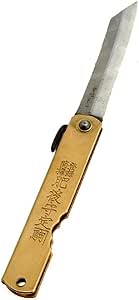 | Best Traditional Handmade Pocket Knife | Manufacturer: Nagao Seisakusho | Model: 10 | Blade length: Approximately 3 inches | VIEW ON AMAZON | See Our Full Breakdown |
| Higonokami Folding Knife with Blue Paper Steel Blade, 90 mm |  | Best Compact Blue Paper Steel Folder | Blade steel: Blue Paper Steel | Handle material: Brass | Folded length: 90 mm | VIEW ON AMAZON | See Our Full Breakdown |
| Masamoto KS Japanese Gyuto Chef’s Knife, 240 mm |  | Best Premium Handmade Kitchen Gyuto | Knife type: Gyuto | Blade length: 240 mm (9.5 inches) | Blade material: Gyokuhaku-ko Shirogami White Steel #2 carbon steel | VIEW ON AMAZON | See Our Full Breakdown |
| Atumuryou 8-Inch Japanese Damascus Chef Knife |  | Best for a Fine, Hard Edge | Blade length: 8 inches | Item length: 13 inches | Weight: 1.1 pounds | VIEW ON AMAZON | See Our Full Breakdown |
| Emojoy 8-Inch Damascus Steel Chef Knife with Olive Wood Handle |  | Best for a Giftable Kitchen Knife | Blade length: 8 inches | Blade construction: Forged, 67-layer Damascus steel | Steel composition: 0.98% carbon, 18% chromium | VIEW ON AMAZON | See Our Full Breakdown |
| Tenkumun 8-Inch Japanese Gyuto Chef Knife, VG-10 Damascus Steel |  | Best Lightweight Gyuto | Knife type: Gyuto chef knife | Blade length: 8 inches | Blade material: VG-10 Damascus steel | VIEW ON AMAZON | See Our Full Breakdown |
| Higonokami Folding Knife, Blue Paper Steel, 120 mm |  | Best Traditional Japanese Pocketknife | Blade material: Blue Paper Steel | Handle material: Brass | Folded length: 120 mm | VIEW ON AMAZON | See Our Full Breakdown |
| FAMCÜTE 8-Inch Japanese Chef Knife with Rosewood Handle |  | Best for a Traditional Handle | Blade length: 8 inches | Blade material: Five-layer 9CR18MOV high-carbon steel | Blade hardness: Up to HRC 62 | VIEW ON AMAZON | See Our Full Breakdown |
| Tojiro Professional Chef Knife, 8.2-Inch VG10 |  | Best Japanese-Made Everyday Chef Knife | Brand: Tojiro | Blade length: 8.2 inches (21 cm) | Item length: 14 inches | VIEW ON AMAZON | See Our Full Breakdown |
| Senken Tsunami 7-Piece Damascus Kitchen Knife Set |  | Best Complete Kitchen Set | Brand: Senken Knives | Set name: Tsunami | Number of pieces: 7 | VIEW ON AMAZON | See Our Full Breakdown |
| Tenkumun 210 mm Japanese Gyuto Chef Knife with SG2 Powder Steel Blade and Blue Wood Handle |  | Best for SG2 Steel Enthusiasts | Brand: Tenkumun | Model: 87000 | Blade material: SG2 powder steel | VIEW ON AMAZON | See Our Full Breakdown |
| DRGSKL Utility Fixed Blade Knife with Walnut Wood Sheath |  | Best for Outdoor Carry | Brand: DRGSKL | Blade material: D2 steel | Blade type: Straight edge | VIEW ON AMAZON | See Our Full Breakdown |
| Minowe Handmade Damascus Steel Folding Pocket Knife with VG10 Blade |  | Best Japanese-Steel Folding Knife | Brand: Minowe | Model: MI0668 | Blade length: 3.1 inches | VIEW ON AMAZON | See Our Full Breakdown |
| handmade japanese knife | Handle material | Blade material | Blade length |
|---|---|---|---|
| DRGSKL Japanese Tanto Fixed Bl | Walnut wood | D2 steel | — |
| HOSHANHO 8-Inch Japanese High- | Wood | — | 8 inches |
| Higo no Kami 10 Folding Pocket | Brass | Warikomi steel | Approximately 3 inches |
| Higonokami Folding Knife with | Brass | — | 9 cm |
| Masamoto KS Japanese Gyuto Che | Magnolia wood | Gyokuhaku-ko Shirogami White Steel #2 carbon steel | 240 mm (9.5 inches) |
| Atumuryou 8-Inch Japanese Dama | Stabilized wood and resin | Japanese VG-10 steel | 8 inches |
| Emojoy 8-Inch Damascus Steel C | Olive wood | — | 8 inches |
| Tenkumun 8-Inch Japanese Gyuto | Wood and resin | VG-10 Damascus steel | 8 inches |
| Higonokami Folding Knife | Brass | Blue Paper Steel | 12 cm |
| FAMCÜTE 8-Inch Japanese Chef K | Rosewood | Five-layer 9CR18MOV high-carbon steel | 8 inches |
| Tojiro Professional Chef Knife | Steel | Stainless steel | 8.2 inches (21 cm) |
| Senken Tsunami 7-Piece Damascu | Blue resin burl wood | Japanese VG-10 steel | — |
| Tenkumun 210 mm Japanese Gyuto | Wood | SG2 powder steel | 21 cm (210 mm) |
| DRGSKL Utility Fixed Blade Kni | Walnut wood | D2 steel | — |
| Minowe Handmade Damascus Steel | — | 67-layer Damascus steel with VG10 core | 3.1 inches |
More Details on Our Top Picks
DRGSKL Japanese Tanto Fixed Blade Knife with Wooden Sheath
This pick suits buyers who want a Japanese-style fixed blade for outdoor tasks, rather than a kitchen knife for daily food prep. Its pointed tanto profile and straight edge are geared toward controlled utility work, while the D2 steel blade is described as durable with good edge retention. The walnut handle and included wooden sheath give it a coordinated traditional look. Compared with the Masamoto KS Gyuto, this is a specialty outdoor tool, not an all-purpose food knife; the Masamoto is the clear fit for kitchen cutting. The tradeoff is limited sizing information: the blade length and weight are not specified, making handling harder to judge before purchase. D2 also calls for wiping and light oiling after use, so it favors owners willing to maintain the blade.
Pros:- D2 steel is described as durable with good edge retention
- Walnut handle has an ergonomic design
- Wooden sheath is included
- Tanto profile and straight edge are intended for outdoor use
Cons:- Blade needs cleaning and light oiling after use
- Blade length and knife weight are not specified
Best for: Outdoor users seeking a Japanese-style tanto with a wooden sheath for general utility tasks.
Not ideal for: Home cooks looking for a primary kitchen knife, or buyers who need blade dimensions and weight before choosing.
- Knife style:Tanto
- Blade material:D2 steel
- Handle material:Walnut wood
- Included component:Wooden scabbard
- Recommended use:Outdoor
- Manufacturer:DRGSKL
Our verdict“Choose this for a Japanese-style outdoor tanto with a wooden sheath, but pick the Masamoto KS Gyuto for kitchen work.”
HOSHANHO 8-Inch Japanese High-Carbon Steel Chef’s Knife
The HOSHANHO is the most approachable kitchen-focused choice in this group for cooks who want an 8-inch chef’s knife with a fine stated edge. Its 10Cr15CoMoV steel is heat treated to 60 HRC and hand sharpened to 13 degrees per side, a geometry intended to support clean slicing and precise chopping. A sloped bolster gives the hand room for a pinch grip, which can make routine prep feel more controlled. Compared with the Masamoto KS Gyuto, it offers a familiar Western-length chef’s knife format, while the Masamoto is a longer, lighter Japanese wa-handle gyuto made from non-stainless White Steel #2. HOSHANHO’s tradeoff is that care guidance for its high-carbon steel is not specified, and its exact blade length gives less reach than the Masamoto’s 240 mm blade.
Pros:- Hand sharpened to 13 degrees per side
- 8-inch blade suits chopping, slicing, and dicing
- Sloped bolster supports a pinch grip
- Heat treatment is described as improving corrosion and moisture resistance
Cons:- Care requirements for the high-carbon steel are not specified
- Shorter blade than the 240 mm Masamoto KS Gyuto
Best for: Everyday home cooks who want an 8-inch chef’s knife with a fine edge and a pinch-grip-friendly bolster.
Not ideal for: Buyers seeking a traditionally handled gyuto, a longer blade, or clear care instructions for the steel.
- Blade length:8 inches
- Steel:10Cr15CoMoV Japanese high-carbon steel
- Hardness:60 HRC
- Edge angle:13 degrees per side
- Handle material:Wood
- Blade finish:Matte
- Packaging:Gift box
Our verdict“Choose HOSHANHO for a straightforward 8-inch prep knife with a fine edge, while the Masamoto suits cooks wanting a longer traditional gyuto.”
Higo no Kami 10 Folding Pocket Knife, Brass Handle
This is the lineup’s strongest fit for buyers drawn to traditional handmade Japanese pocket knives. Made by Nagao Seisakusho, identified as the last remaining maker of the Higo no Kami trademarked knife, it pairs a roughly 3-inch Warikomi steel blade with a brass handle and a manual, non-locking folding format. Its Wharncliffe shape and flat edge suit compact utility work, while the slim 6.75-inch overall length keeps it distinct from the fixed-blade DRGSKL Tanto. The Higo no Kami is a more historically specific choice; the DRGSKL is oriented toward outdoor fixed-blade use and includes a sheath. This knife’s simplicity is also its compromise: there is no locking mechanism, and handmade construction can bring small variations. Hand washing is required, so it is not a carefree tool for wet or messy use.
Pros:- Made by Nagao Seisakusho, the last remaining Higo no Kami trademark maker
- Warikomi steel blade in a traditional folding design
- Compact 6.75-inch overall length with an approximately 3-inch blade
- Ambidextrous manual operation
Cons:- No locking mechanism to secure the blade open
- Handmade construction may result in small variations
- Hand wash only
Best for: Collectors and outdoor users who want a compact, traditional Higo no Kami made by Nagao Seisakusho.
Not ideal for: Anyone who requires a locking blade or wants a pocket knife that can be cleaned without hand washing.
- Manufacturer:Nagao Seisakusho
- Model:10
- Blade length:Approximately 3 inches
- Item length:6.75 inches
- Blade material:Warikomi steel
- Handle material:Brass
- Blade shape:Wharncliffe
- Care:Hand wash only
Our verdict“Choose this for a traditional handmade Japanese folder and its maker provenance, but skip it if you need a locking blade.”
Higonokami Folding Knife with Blue Paper Steel Blade, 90 mm
For buyers who want a compact Japanese folding knife with a named specialty steel, this Higonokami pairs a Blue Paper Steel blade with a brass handle in a light 1.44-ounce build. Its 90 mm folded length and 165 mm overall length make the dimensions unusually clear, unlike the DRGSKL Tanto, whose blade length and weight are not provided. Blue Paper Steel is described as wear-resistant with strong edge retention, but the traditional design has no locking mechanism: the user must hold the extended spine to keep the blade fixed. That makes it a different proposition from a modern locking folder and calls for deliberate handling. Compared with the Higo no Kami 10, this listing specifies blade thickness, weight, and Blue Paper Steel, while the other model highlights Nagao Seisakusho’s maker history and Warikomi construction.
Pros:- Blue Paper Steel is described as wear-resistant with strong edge retention
- Lightweight at 1.44 ounces
- Compact 90 mm folded length
- Brass handle and traditional folding design
Cons:- No locking mechanism; the extended spine must be held to keep the blade fixed
- Hand wash only
Best for: Buyers seeking a lightweight, compact Higonokami with Blue Paper Steel and clearly stated dimensions.
Not ideal for: Users who need a locking blade, prefer one-handed secure operation, or want a knife that can be washed without hand care.
- Blade steel:Blue Paper Steel
- Handle material:Brass
- Folded length:90 mm
- Full length:165 mm
- Blade length:9 cm
- Blade thickness:About 3 mm
- Weight:1.44 oz
- Country of manufacture:Japan
Our verdict“Choose this compact Higonokami for Blue Paper Steel and a light brass-handled build, provided a non-locking design suits your use.”
Masamoto KS Japanese Gyuto Chef’s Knife, 240 mm
The Masamoto KS is the most specialized kitchen choice here for cooks who value hand-finished Japanese carbon steel over low-maintenance care. Its forged White Steel #2 blade is sharpened, polished, and finished by hand, with a 240 mm length that gives experienced cooks room for long slicing strokes across meat, fish, vegetables, and fruit. At 6 ounces, it is notably light for its length; the D-shaped magnolia wa handle and water buffalo horn ferrule keep the build rooted in traditional Japanese form. Compared with the HOSHANHO 8-inch chef’s knife, the Masamoto offers more blade reach and a traditional handle, while HOSHANHO’s steel is described as treated for corrosion and moisture resistance. The Masamoto’s clear compromise is upkeep: it is not stainless and needs prompt, attentive care to guard against rust.
Pros:- Hand-sharpened, polished, and finished forged blade
- 240 mm blade handles broad prep and long slicing strokes
- Lightweight 6-ounce build
- D-shaped magnolia handle with water buffalo horn ferrule
Cons:- White Steel #2 blade is not stainless steel
- Requires care to protect the blade from rust
Best for: Experienced home cooks or professionals seeking a lightweight, long Japanese gyuto and willing to maintain carbon steel.
Not ideal for: Busy cooks who leave knives wet, want stainless steel, or prefer a shorter chef’s knife with less demanding care.
- Knife type:Gyuto
- Blade length:240 mm (9.5 inches)
- Blade material:Gyokuhaku-ko Shirogami White Steel #2 carbon steel
- Blade hardness:HRC 62–63
- Handle material:Magnolia wood
- Ferrule material:Water buffalo horn
- Handle shape:D-shaped Japanese wa handle
- Construction:Forged
- Made in:Japan
Our verdict“Choose the Masamoto for a long, light, hand-finished gyuto if you accept carbon-steel upkeep; choose HOSHANHO for a shorter everyday format.”
Atumuryou 8-Inch Japanese Damascus Chef Knife
The Atumuryou stands out for pairing a VG-10 core rated at 62 HRC with a hand-sharpened 12° edge. That acute edge is suited to precise slicing, while the 8-inch blade keeps it in familiar territory for everyday chef-knife work. Compared with the Emojoy, which has a broader 15° edge and softer 58 HRC rating, this knife prioritizes a harder, keener cutting profile over a less demanding setup. Its stabilized wood-and-resin handle is designed for a balanced grip, though the stated weight of 1.1 pounds may feel substantial during longer prep sessions. The listing gives no care guidance, so buyers should be ready to learn suitable cleaning and sharpening practices for a hard Japanese-style edge. I’d choose it for edge geometry, not low-maintenance convenience.
Pros:- VG-10 steel core with 67-layer Damascus cladding
- Hand-sharpened 12° edge favors precise slicing
- Stabilized wood-and-resin handle is designed for a balanced grip
Cons:- No care or maintenance instructions are provided
- The 1.1-pound listed weight may feel heavy during prolonged use
Best for: Home cooks who regularly make precise cuts and are comfortable caring for a hard, acute-edged chef knife.
Not ideal for: Beginners seeking detailed care instructions or cooks who prefer a lighter knife for extended prep.
- Blade length:8 inches
- Item length:13 inches
- Weight:1.1 pounds
- Blade material:Japanese VG-10 steel
- Steel hardness:62 HRC
- Cladding:67-layer Damascus
- Edge angle:12°
- Handle material:Stabilized wood and resin
- Construction:Forged
Our verdict“Choose the Atumuryou if a hard VG-10 core and acute edge matter more to you than lower-maintenance handling.”
Emojoy 8-Inch Damascus Steel Chef Knife with Olive Wood Handle
The Emojoy takes a more approachable route than the Atumuryou: its 58 HRC blade and 15° edge trade some of that knife’s harder, finer-cutting character for a less acute profile. The forged 67-layer Damascus construction and olive wood handle give it a traditional look, while the half-bolster design leaves the heel more accessible for sharpening. A wooden gift box and stated lifetime warranty make it a natural pick for someone choosing a present, rather than a knife solely for maximum cutting performance. The listing does not include care guidance, and the steel still calls for sensible cleaning and storage. I’d favor it over the Atumuryou when presentation and a less demanding edge profile matter more than a 12° edge or higher stated hardness.
Pros:- Forged 67-layer Damascus blade
- 15° edge and 58 HRC hardness offer a less acute profile than the Atumuryou
- Olive wood handle with half-bolster design
- Includes a wooden gift box and states a lifetime warranty
Cons:- No care or maintenance instructions are provided
- Its 15° edge is less acute than the Atumuryou’s stated 12° edge
Best for: Gift buyers and home cooks who want a forged Damascus chef knife with an olive wood handle and included presentation box.
Not ideal for: Cooks seeking a particularly acute edge or a harder-rated blade, or buyers who need explicit care instructions.
- Blade length:8 inches
- Blade construction:Forged, 67-layer Damascus steel
- Steel composition:0.98% carbon, 18% chromium
- Hardness:58 HRC
- Edge angle:15°
- Handle material:Olive wood
- Item length:33 cm
- Warranty:Lifetime
Our verdict“Pick the Emojoy for a presentable, traditionally styled chef knife with a stated lifetime warranty rather than the hardest or most acute edge in this group.”
Tenkumun 8-Inch Japanese Gyuto Chef Knife, VG-10 Damascus Steel
At a listed 7.04 ounces, this Tenkumun is the lightweight choice among the full-size chef knives in this batch. Its forged 8-inch gyuto blade uses VG-10 Damascus steel and is described as hand-ground and sharpened, giving buyers a Japanese-style profile without the Atumuryou’s listed 1.1-pound heft. The wood-and-resin handle adds a distinctive crystal-green look, though the description offers no hardness figure or edge angle, so buyers have less information for comparing sharpness and sharpening expectations. The hollow edge is also a detail worth checking against your preferred cutting and maintenance routine. I’d pick this over the Atumuryou for a lighter feel, but choose the Atumuryou if a stated 62 HRC hardness and 12° edge matter more than weight.
Pros:- Listed weight of 7.04 ounces is lighter than the Atumuryou’s stated weight
- Forged 67-layer VG-10 Damascus blade
- Hand-ground and sharpened edge is described as intended for precise cutting
- Wood-and-resin handle has a crystal-green color
Cons:- No hardness rating or edge angle is provided
- Limited care and maintenance guidance
- Hollow-edge details may not suit buyers seeking a clearly specified edge profile
Best for: Cooks who want a lightweight, full-size gyuto and value a hand-ground VG-10 blade over published hardness and edge-angle details.
Not ideal for: Buyers who need a specified hardness or edge angle before choosing, or who prefer a heavier-feeling knife.
- Knife type:Gyuto chef knife
- Blade length:8 inches
- Blade material:VG-10 Damascus steel
- Blade construction:Forged, 67-layer Damascus
- Blade edge:Hollow
- Handle material:Wood and resin
- Handle color:Crystal green
- Item weight:7.04 ounces
- Item length:13 inches
Our verdict“Choose this Tenkumun if low listed weight and a hand-ground gyuto appeal more than fully specified edge geometry.”
Higonokami Folding Knife, Blue Paper Steel, 120 mm
This Higonokami offers a different kind of handmade Japanese-knife appeal from the kitchen-focused Atumuryou and Emojoy: it is a traditional folding pocketknife with a Blue Paper Steel blade and brass handle. At 120 mm folded, it is sized for carrying, while the 220 mm open length and roughly 3 mm blade thickness give it more substance than a small, delicate folder. Its defining compromise is the absence of a locking mechanism; the user must keep a firm hold on the extended spine to hold the blade in position. That makes it less suitable for buyers wanting a modern one-handed lock or a kitchen prep knife. Among the folding options in this roundup, its stated Japanese origin and Blue Paper Steel make it a distinct traditional choice, but safe handling matters more here than decorative Damascus cladding.
Pros:- Blue Paper Steel blade is described as having high wear resistance and edge retention
- Traditional Japanese folding design
- Brass handle
- Compact 120 mm folded length
Cons:- No locking mechanism; the blade must be held in position by the user
- Requires a firm hold on the extended spine during use
- Outdoor-oriented folder is not a substitute for a chef knife
Best for: Collectors and experienced outdoor users seeking a traditional Japanese manual folder with a brass handle and Blue Paper Steel blade.
Not ideal for: People who require a locking blade, want a beginner-friendly folder, or need a knife for kitchen prep.
- Blade material:Blue Paper Steel
- Handle material:Brass
- Folded length:120 mm
- Full length:220 mm
- Blade thickness:Approximately 3 mm
- Blade length:12 cm
- Operation:Manual folding
- Locking mechanism:None
- Origin:Japan
Our verdict“Choose the Higonokami for traditional Japanese pocketknife character only if you are comfortable using a non-locking folder.”
FAMCÜTE 8-Inch Japanese Chef Knife with Rosewood Handle
The FAMCÜTE distinguishes itself through its octagonal rosewood handle and five-layer high-carbon blade, rather than the Damascus styling of the Atumuryou and Tenkumun. The handle shape gives buyers a traditional-looking alternative to their wood-and-resin grips, while the forged 9CR18MOV blade has a stated hardness of up to HRC 62. That hardness places it closer on paper to the Atumuryou than to the Emojoy, but the listing does not specify an edge angle or provide care and sharpening instructions. Its 8-inch blade suits general kitchen tasks, though the 36.5 cm overall length may take more storage space than a compact knife. I’d put this ahead of the Damascus options for someone drawn to rosewood and an octagonal grip, but not for anyone who needs detailed steel-care guidance before buying.
Pros:- Forged five-layer 9CR18MOV high-carbon steel blade
- Stated hardness of up to HRC 62
- Octagonal rosewood handle offers a distinct alternative to the resin handles on the Atumuryou and Tenkumun
Cons:- No care or sharpening instructions are provided
- No edge angle is specified
- The listing does not identify the blade as VG-10 or Damascus steel
Best for: Home cooks who prefer an octagonal rosewood handle and want a forged, full-size chef knife with a stated hardness of up to HRC 62.
Not ideal for: Buyers who want VG-10 or Damascus construction, need a specified edge angle, or expect included care instructions.
- Blade length:8 inches
- Blade material:Five-layer 9CR18MOV high-carbon steel
- Blade hardness:Up to HRC 62
- Blade edge:Plain
- Construction:Forged
- Handle material:Rosewood
- Handle shape:Octagonal
- Item length:36.5 cm
Our verdict“Choose the FAMCÜTE if a rosewood octagonal handle matters more to you than Damascus cladding or published edge geometry.”
Tojiro Professional Chef Knife, 8.2-Inch VG10
For a buyer who wants one full-size Japanese-made kitchen knife rather than a decorative set, the Tojiro Professional is the most direct fit here. Its 8.2-inch forged stainless-steel blade and plain edge suit the recurring jobs of slicing, chopping, and portioning, while the steel handle favors a practical, wipe-clean build over the wood or resin look of the Tenkumun 210 mm Gyuto. At 0.21 kg, the listed weight is also lighter than the Senken Tsunami set as a whole, though that is a set-to-knife comparison rather than a direct handling comparison. The tradeoff is limited detail: the product data gives no specific care instructions, and the steel handle may not appeal to cooks seeking a traditional wood grip. I’d choose this for straightforward kitchen utility, not handle character or a broad assortment.
Pros:- Handcrafted in Japan with forged construction
- 8.2-inch blade suits a wide range of everyday kitchen prep
- Stainless-steel blade and handle are presented as easy to maintain
- Plain edge supports conventional sharpening
Cons:- No specific cleaning or maintenance instructions are provided
- Steel handle may feel less traditional than the wood handle on the Tenkumun 210 mm Gyuto
- Single-knife purchase offers less task-specific variety than the Senken Tsunami set
Best for: Home cooks who want a Japanese-made, forged full-size chef knife with a simple stainless-steel build and no extra pieces to store
Not ideal for: Cooks who prefer a traditional wood handle, need care guidance, or want several specialized knives in one purchase
- Brand:Tojiro
- Blade length:8.2 inches (21 cm)
- Item length:14 inches
- Item weight:0.21 kg
- Blade material:Stainless steel
- Handle material:Steel
- Construction:Forged
- Origin:Japan
- Warranty:Lifetime
Our verdict“Choose the Tojiro if you want a Japanese-made forged chef knife for routine prep, and skip it if handle material or included care guidance is a priority.”
Senken Tsunami 7-Piece Damascus Kitchen Knife Set
The Senken Tsunami is the lineup’s broadest kitchen solution: seven knives cover jobs from bread slicing to fine paring, so it makes more sense for a household building out its tools than for someone replacing one chef knife. The forged VG-10 blades with 67-layer Damascus construction and stated 15° edges give the set a sharper, more specialized presentation than the single-blade Tojiro Professional, while seven fitted sheaths help with individual storage. That versatility comes with real costs in space and upkeep: the set weighs 4 pounds, and its product details do not spell out care requirements. Compared with the Tenkumun 210 mm Gyuto, this is less focused on choosing one main knife and more about having dedicated shapes ready. I’d pick it for a multi-knife kitchen, not a minimalist drawer or a buyer who wants one familiar workhorse.
Pros:- Seven included knives cover varied kitchen tasks
- Forged Japanese VG-10 steel with 67-layer Damascus construction
- 15° plain edges are specified for the blades
- Includes seven fitted sheaths and a gift box
Cons:- The full set weighs 4 pounds and requires storage for seven knives
- Care and maintenance requirements are not specified
- A larger assortment may be unnecessary for cooks who mainly need one chef knife like the Tojiro Professional
Best for: Cooks furnishing a kitchen who want a range of knife shapes, individual sheaths, and a coordinated set rather than a single chef knife
Not ideal for: Minimalist cooks with limited storage or buyers who want one primary knife and clear maintenance instructions
- Brand:Senken Knives
- Set name:Tsunami
- Number of pieces:7
- Included knives:2 chef’s knives, cleaver, bread knife, utility knife, santoku, paring knife
- Blade material:Japanese VG-10 steel
- Blade construction:67-layer Damascus, forged
- Blade edge:Plain, 15°
- Handle material:Blue resin burl wood
- Included accessories:7 custom-fit knife sheaths and a gift box
Our verdict“Choose the Senken Tsunami if you need a varied, ready-to-store kitchen set; pass if you prefer a single focused knife or have little storage space.”
Tenkumun 210 mm Japanese Gyuto Chef Knife with SG2 Powder Steel Blade and Blue Wood Handle
The Tenkumun 210 mm Gyuto stands apart from the lineup through its SG2 powder-steel blade, hand-sharpened edge, and single-knife focus. Its 21 cm length fits the familiar chef-knife role, while the forged build and wood handle give it a more traditional kitchen profile than the steel-handled Tojiro Professional. The product description names slicing, dicing, chopping, and mincing, making this a plausible main prep knife for someone who wants one versatile blade rather than the Senken Tsunami’s seven-piece spread. The tradeoff is incomplete buying information: no care guidance, warranty, or included accessories are listed, and the 1.1 lb stated weight may matter to cooks who prefer a lighter-feeling knife. I’d favor it for buyers drawn to SG2 and a hand-sharpened finish, but not for anyone choosing mainly on detailed ownership support.
Pros:- Forged SG2 powder-steel blade
- Hand-sharpened and polished edge
- 210 mm gyuto format handles several common prep tasks
- Blue wood handle offers a distinct alternative to the Tojiro Professional’s steel handle
Cons:- No care instructions or warranty details are supplied
- No accessories are included
- Listed weight is 1.1 lb, which may not suit cooks seeking a lighter knife
Best for: Experienced home cooks seeking a forged 210 mm gyuto with an SG2 powder-steel blade and a wood handle
Not ideal for: Buyers who need published care guidance, warranty details, accessories, or a clearly lightweight knife
- Brand:Tenkumun
- Model:87000
- Blade material:SG2 powder steel
- Handle material:Wood
- Blade length:21 cm (210 mm)
- Item weight:1.1 lb
- Item length:14 in
- Construction:Forged
- Included components:None
Our verdict“Choose this Tenkumun if SG2 steel and a hand-sharpened gyuto matter most, and look elsewhere if you need clearer ownership details or a lighter listed weight.”
DRGSKL Utility Fixed Blade Knife with Walnut Wood Sheath
This DRGSKL is the outlier in a roundup centered on handmade Japanese kitchen knives: its stated purpose is outdoor and everyday cutting, not food preparation, and its D2 blade is not described as Japanese steel. I’d include it only for readers whose interest extends from handcrafted knife styling to a separate utility tool. The walnut handle and matching sheath, silver fittings, and red marble details give it a more presentation-led look than the working kitchen focus of the Tojiro Professional or Tenkumun Gyuto. Unlike those kitchen knives, this model comes with explicit upkeep advice: clean and dry it after use, then apply a little oil. That means more maintenance, not less. It may suit an outdoor user who wants a fixed blade with a sheath, but buyers seeking a Japanese chef knife should skip it; it does not match that role.
Pros:- Handcrafted walnut handle and matching sheath
- D2 steel straight-edge blade
- Designed for outdoor and everyday cutting
- Sheath is included
Cons:- Product data does not identify it as Japanese-made or as a kitchen knife
- Requires cleaning, drying, and oiling after use
- Fixed-blade outdoor format is less suited to ordinary kitchen storage and prep than the Tojiro Professional
Best for: Outdoor users seeking a medium fixed blade with a walnut handle and included wooden sheath for general cutting tasks
Not ideal for: Cooks shopping specifically for a handmade Japanese kitchen knife or buyers unwilling to clean, dry, and oil a blade after use
- Brand:DRGSKL
- Blade material:D2 steel
- Blade type:Straight edge
- Handle material:Walnut wood
- Sheath material:Walnut wood
- Length:10 inches
- Size:Medium
- Recommended uses:Outdoor and everyday cutting
- Included components:Sheath
Our verdict“Choose this DRGSKL for outdoor utility and a wooden sheath, not as a substitute for a Japanese-made kitchen knife.”
Minowe Handmade Damascus Steel Folding Pocket Knife with VG10 Blade
The Minowe MI0668 is the pocket-carry choice here, not a compact kitchen knife: its 3.1-inch drop-point blade, liner lock, and one-handed opening system are aimed at outdoor tasks such as camping, hiking, fishing, and hunting. Its VG10 core with 67-layer Damascus steel gives it a Japanese-steel connection that the DRGSKL D2 fixed blade does not claim, while the resin-and-maple handle makes it a different proposition from the traditional folding Higonokami options elsewhere in the roundup. The liner lock and ceramic ball system support convenient deployment, but the stated right-hand orientation limits its fit for left-handed users. At 4.7 ounces, it is also a substantial pocket tool rather than an especially light carry. I’d choose it for outdoor portability and locking security, not for Japanese kitchen prep or a traditional Japanese folding-knife format.
Pros:- VG10 core with 67-layer Damascus construction
- Liner lock supports secure use
- Ceramic ball system supports one-handed opening
- Storage case is included
Cons:- Right-hand orientation limits use for left-handed buyers
- At 4.7 ounces, it may feel heavy for buyers seeking a light pocket knife
- Folding outdoor design does not serve the kitchen role of the Tojiro Professional
Best for: Right-handed campers, hikers, anglers, and hunters who want a locking folder with a VG10-core Damascus blade
Not ideal for: Left-handed buyers, kitchen-knife shoppers, or anyone seeking a traditional Japanese folding knife rather than a modern locking folder
- Brand:Minowe
- Model:MI0668
- Blade length:3.1 inches
- Overall length:7.1 inches
- Weight:4.7 ounces
- Blade material:67-layer Damascus steel with VG10 core
- Blade hardness:60 HRC
- Blade shape:Drop point
- Locking mechanism:Liner lock
Our verdict“Choose the Minowe for right-handed outdoor carry with a VG10-core blade and locking action, but not for kitchen use or left-handed operation.”

How We Picked
I compared these 15 handmade Japanese knife options by intended use first, separating kitchen gyutos and chef’s knives from pocket folders and fixed blades. For kitchen models, I weighed blade length and steel claims against the likely demands of daily prep, along with handle comfort, versatility, and the care reactive or high-hardness steels may require. For pocket and fixed blades, I focused on carry format, sheath or handle practicality, and whether the design makes sense for everyday utility rather than food preparation.
The ranking favors clear purpose, usable design, and credible buyer fit over dramatic materials or decorative finishes. That puts the Masamoto KS first as the most focused kitchen recommendation, with the Tojiro Professional close behind for buyers seeking a practical chef’s knife. Damascus models, a multi-piece set, and premium steel options serve narrower preferences; compact folders and fixed blades rank for their own use cases, not as kitchen competitors. Product names and stated materials alone cannot confirm how a knife was made, so I treat “handmade” as a buying claim to verify with the seller rather than proof of a particular process.
Factors to Consider When Choosing Handmade Japanese Knives
Before choosing among handmade Japanese knives, decide what kind of work the blade will do and how much upkeep you are willing to take on. A striking finish or premium steel can be appealing, but the useful comparison is how the knife fits your cutting habits, storage, sharpening skills, and daily routine.
Choose the knife type before comparing steel
A gyuto or chef’s knife is built for kitchen prep; a folding Higonokami or Minowe knife is a compact utility tool, and a fixed blade such as the DRGSKL models has a different carry and storage profile. These categories should not be ranked against one another by sharpness alone. A pocket knife may be convenient for light outdoor tasks but awkward and unsuitable for repeated kitchen chopping. Likewise, a long gyuto is a poor choice if you want a pocketable tool. Start with the task, then compare models within that use case.
Match blade length to your board and cutting style
An 8-inch chef’s knife or 210 mm gyuto suits many home cooks, while the Masamoto’s 240 mm blade gives more reach for larger ingredients and long slicing strokes. That extra length can feel unwieldy on a small board or in a crowded kitchen. Shorter blades offer more control for compact prep spaces, though they may require more strokes for larger foods. A common mistake is buying the longest blade available because it seems more capable. Choose a length that leaves room to move the tip and heel safely on your actual cutting surface.
Treat steel as a maintenance choice, not a score
Steel names such as VG10, SG2, and blue paper steel help frame expectations, but they do not tell the whole story of a knife’s cutting feel or durability. Harder, keen-edged blades can reward careful technique and sharpening while being less forgiving of twisting, bones, and frozen food. Some carbon steels can develop patina or rust if left wet, whereas stainless options may be easier for a busy household. Do not assume a premium steel means less care. Ask what sharpening method and routine the maker or seller recommends before buying.
Separate useful construction from decorative details
Damascus layers, polished finishes, and wood handles can make a knife distinctive, but they do not by themselves prove hand forging, edge quality, or long-term reliability. Check for specific information about the blade core, cladding, tang, handle attachment, and maker or production method. If those details are vague, treat the design as an aesthetic feature rather than a performance advantage. Wood handles also need sensible care and may feel different as they wear. Buyers who prioritize function should compare geometry, balance, and upkeep before paying attention to pattern or color.
Decide between one specialized knife and a set
A single gyuto can cover a broad range of kitchen tasks and is usually easier to store, sharpen, and learn than a collection of blades. A set such as the Senken Tsunami may suit someone who wants multiple knife formats at once, but unused pieces add clutter and may not match the quality or feel of a preferred standalone knife. Think through what you cut weekly rather than choosing by piece count. If most prep involves vegetables, proteins, and general slicing, a well-chosen chef’s knife may be enough. Add specialized blades only when a recurring task justifies them.
Verify what “handmade” means before buying
The word handmade can refer to different stages of production, from forging and grinding to handle fitting or final finishing. Product titles alone rarely tell you which steps were done by hand or where the work took place. Look for clear maker information, details about materials and construction, and a return policy that gives you room to resolve a mismatch. This matters especially for knives marketed with a Japanese style or Japanese steel, since those claims do not necessarily mean the knife was made in Japan. If provenance is central to your purchase, ask for specific documentation instead of relying on styling or naming.
Frequently Asked Questions
Does “Japanese knife” mean the knife was made in Japan?
Not necessarily. A Japanese-style profile, Japanese-named product, or Japanese steel does not establish where the knife was manufactured. If country of origin matters to you, check the maker’s stated location and product documentation rather than inferring it from the title. The roundup includes products with varied styles and formats, so the label alone is not enough to verify provenance. Ask the seller for a specific answer before purchase if origin is a deciding factor.
Is a handmade Japanese knife a good first chef’s knife?
It can be, but a first knife should fit your maintenance habits as much as your interest in craftsmanship. A straightforward chef’s knife such as the Tojiro Professional is a more practical starting point than a specialty folder or a premium-steel gyuto if you want one blade for regular prep. Learn basic sharpening and safe cutting technique before choosing a particularly hard or reactive blade. Avoid treating delicate edges as all-purpose tools for bones, frozen food, or prying. A well-maintained, suitable knife is more useful than a demanding one that stays in storage.
Should I choose VG10, SG2, or blue paper steel?
Choose by care needs and intended use rather than by steel name alone. VG10 appears on several kitchen and folding options here and can suit buyers seeking a stainless-oriented blade, while SG2 and blue paper steel appeal to buyers who are comfortable learning the specific sharpening and maintenance demands of those knives. The blade’s heat treatment, geometry, and construction also affect how it performs. If you are unsure, ask the seller whether the steel is stainless or reactive and what sharpening equipment is suitable. No steel removes the need for careful storage and correct use.
Can I use a Higonokami or fixed-blade knife for kitchen prep?
These knives are not direct substitutes for a gyuto or chef’s knife. Higonokami folders and compact fixed blades are designed around portability and utility, which can make them less comfortable or convenient for repeated chopping and larger ingredients. A folder also has a joint that needs care and cleaning, while a fixed blade may require a sheath and dedicated storage. For regular food preparation, choose a kitchen knife with an appropriate blade length and handle. Keep the pocket or fixed-blade options for tasks that suit their format.
How can I tell whether a Damascus knife offers more than a patterned finish?
Ask what the Damascus construction consists of and whether the seller identifies a separate core steel beneath the patterned layers. A visible pattern is primarily a design feature unless construction details support a functional claim; it does not automatically mean the edge is sharper or more durable. Look for clear information about the blade, tang, handle attachment, and care instructions. If those details are absent, compare the knife on practical qualities you can verify rather than assuming the pattern signals superior performance. This is especially useful when comparing several visually similar models.
Conclusion
For a dedicated kitchen knife, I’d choose the Masamoto KS 240 mm Gyuto as best overall for buyers who want a focused, long-bladed gyuto and have room for it. The Tojiro Professional VG10 is my best value-style practical pick for everyday cooking, while the Masamoto is the best premium-leaning choice for cooks seeking a more specialized gyuto. For beginners, I’d start with the Tojiro and a manageable sharpening routine rather than jumping straight to a demanding steel or a decorative set. For a specific need, choose the Higonokami 90 mm for compact traditional pocket utility, a DRGSKL fixed blade for a sheathed format, or the Senken Tsunami set if you genuinely need multiple kitchen knife types. Match the blade to the job first; then weigh steel, upkeep, and appearance.