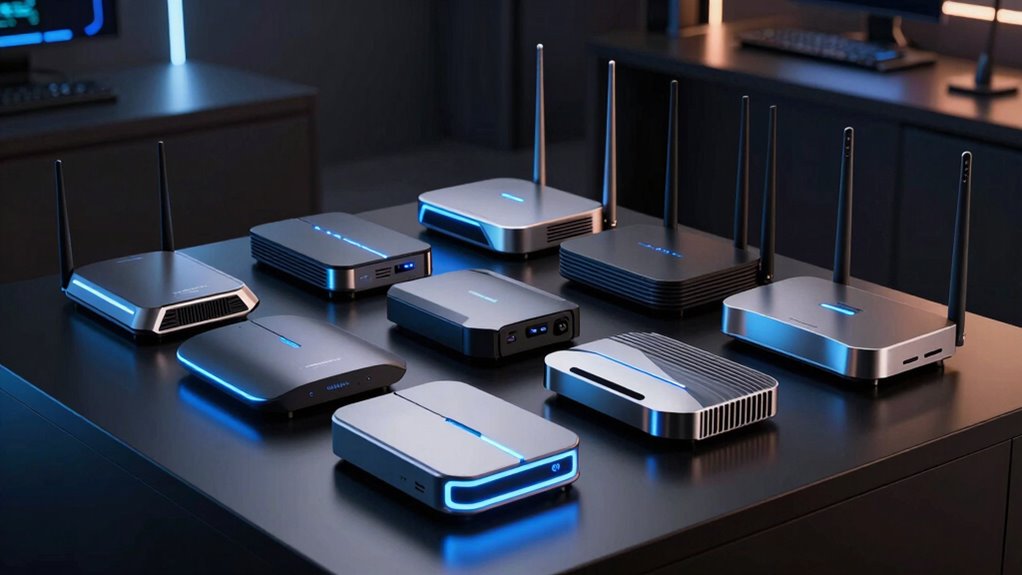

For most homes, I’d start with the GL.iNet GL-BE9300 Flint 3: its Wi-Fi 7 support, five 2.5Gbps ports, and VPN features make it a flexible high-end choice. The TP-Link Archer BE900 is a better fit for buyers seeking a feature-rich quad-band Wi-Fi 7 system, while the Synology RT6600ax stands out for detailed network controls. The main tradeoffs are whether newer Wi-Fi and faster wired connections justify a higher-end setup, and whether you need gaming tools, broad coverage, or simpler management more. A router’s capabilities matter only if your internet plan, client devices, and home layout can use them. Read on for the full comparison and a guide to choosing the right fit.

Get kitchen gear delivered free with Prime
- Fast, free delivery on millions of items
- Prime Video, Amazon Music and more included
- Member-only deals all year
Complete the kit


Key Takeaways
- Wi-Fi 7 is not the only measure of a high-end router: the Flint 3 pairs it with five 2.5Gbps ports and VPN features, while the Synology RT6600ax prioritizes network management on Wi-Fi 6.
- Quad-band models target demanding, busy networks: the TP-Link Archer BE900 and ASUS ROG Rapture GT-BE98 Pro offer more band capacity than dual-band options, but make most sense when many devices and compatible clients can use it.
- Gaming-focused routers trade simplicity for control: the ASUS ROG models add gaming-oriented features, while general-purpose picks may suit mixed household use better.
- Wired ports can matter as much as wireless speed: buyers with multi-gig internet, NAS storage, or wired access points should check port speeds and counts rather than choosing by a headline Wi-Fi figure.
- Older Wi-Fi generations still have a place: models such as the Archer AX73 and AXE75 may suit homes whose devices and internet connection cannot make practical use of Wi-Fi 7.
| GL.iNet GL-BE9300 Flint 3 Tri-Band Wi‑Fi 7 Router with 5×2.5 Gbps Ports and VPN |  | Best for VPN and Multi-Gig Networking | Wi‑Fi standard: Wi‑Fi 7 (802.11be) | Bands: Tri-band, including 6 GHz | Maximum wireless speed: Up to 9 Gbps | VIEW ON AMAZON | See Our Full Breakdown |
| ASUS ROG Rapture GT-AXE16000 Quad-Band WiFi 6E Gaming Router | 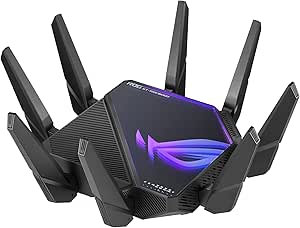 | Best Premium Quad-Band Gaming Router | Model: GT-AXE16000 | Wi‑Fi generation: Wi‑Fi 6E (802.11ax) | Frequency bands: 2.4 GHz, two 5 GHz bands, and 6 GHz | VIEW ON AMAZON | See Our Full Breakdown |
| NETGEAR Nighthawk RAXE300 Tri-Band WiFi 6E Router |  | Best for Straightforward Wi‑Fi 6E Coverage | Wi‑Fi generation: Wi‑Fi 6E | Bands: Tri-band, including 6 GHz | Maximum data rate: Up to 7.8 Gbps | VIEW ON AMAZON | See Our Full Breakdown |
| NETGEAR Nighthawk RS500 Tri-Band WiFi 7 Router |  | Best for Large, Device-Dense Homes | Wi‑Fi generation: Wi‑Fi 7 | Bands: Tri-band: 2.4 GHz, 5 GHz, and 6 GHz | Maximum data rate: Up to 12 Gbps | VIEW ON AMAZON | See Our Full Breakdown |
| TP-Link Archer AXE75 Tri-Band WiFi 6E Router |  | Best Entry to Tri-Band Wi‑Fi 6E | Wi‑Fi generation: Wi‑Fi 6E | Bands: Tri-band: 6 GHz, 5 GHz, and 2.4 GHz | Maximum data rate: Up to 5,400 Mbps | VIEW ON AMAZON | See Our Full Breakdown |
| TP-Link Archer AX73 AX5400 Wi-Fi 6 Router |  | Best Wi-Fi 6 Value | Wi-Fi generation: Wi-Fi 6 (802.11ax) | Frequency bands: Dual-band | Maximum data transfer rate: 5,378 Mbps | VIEW ON AMAZON | See Our Full Breakdown |
| TP-Link Archer BE900 Quad-Band Wi-Fi 7 Router |  | Best for Multi-Gig Power Users | Wi-Fi generation: Wi-Fi 7 | Frequency bands: Quad-band, including dual 5 GHz bands and a 6 GHz band | Maximum Wi-Fi speed: Up to 24.4 Gbps | VIEW ON AMAZON | See Our Full Breakdown |
| NETGEAR Nighthawk WiFi 7 Tri-Band Router, 9.3 Gbps, Coverage up to 2,500 sq. ft. | 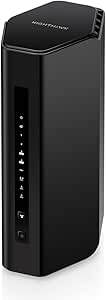 | Best for Straightforward Wi-Fi 7 Coverage | Wi-Fi standard: Wi-Fi 7 | Bands: 2.4 GHz, 5 GHz, and 6 GHz | Maximum speed: Up to 9.3 Gbps | VIEW ON AMAZON | See Our Full Breakdown |
| Synology RT6600ax Tri-Band Wi-Fi 6 Router | 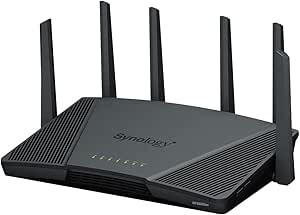 | Best for Network Control and Segmentation | Wi-Fi generation: Wi-Fi 6 | Frequency bands: Tri-band, including expanded 5.9 GHz spectrum | Combined wireless throughput: Up to 6.6 Gbps | VIEW ON AMAZON | See Our Full Breakdown |
| NETGEAR Nighthawk RS90 Dual-Band WiFi 7 Router |  | Best Entry Point to Wi-Fi 7 | Wi-Fi generation: Wi-Fi 7 (802.11be) | Frequency bands: Dual-band, 2.4 GHz and 5 GHz | Maximum data transfer rate: 3.6 Gbps | VIEW ON AMAZON | See Our Full Breakdown |
| ASUS RT-BE9700 Tri-Band WiFi 7 Router |  | Best Balanced Tri-Band Pick | WiFi standard: WiFi 7 (802.11be) | Frequency bands: Tri-band: 2.4 GHz, 5 GHz, and 6 GHz | Maximum data rate: Up to 9.7 Gbps | VIEW ON AMAZON | See Our Full Breakdown |
| TP-Link Archer BE600 Tri-Band Wi-Fi 7 Router |  | Best for Multi-Gigabit Home Networks | Wi-Fi standard: Wi-Fi 7 | Bands: Tri-band: 6 GHz, 5 GHz, and 2.4 GHz | Maximum combined bandwidth: Up to 9.7 Gbps | VIEW ON AMAZON | See Our Full Breakdown |
| TP-Link AXE16000 Quad-Band WiFi 6E Router (Archer AXE300) |  | Best for High-Capacity WiFi 6E | Wi-Fi generation: Wi-Fi 6E (802.11ax) | Maximum wireless speed: Up to 15.6 Gbps | Frequency bands: 6 GHz, two 5 GHz bands, and 2.4 GHz | VIEW ON AMAZON | See Our Full Breakdown |
| ASUS ROG Rapture GT-BE98 Pro WiFi 7 Quad-Band Gaming Router |  | Best Premium Gaming Router | Wi-Fi generation: WiFi 7 (802.11be) | Frequency bands: Quad-band, including dual 6 GHz bands | Maximum data transfer rate: Up to 30 Gbps | VIEW ON AMAZON | See Our Full Breakdown |
| ASUS RT-BE88U WiFi 7 Dual-Band Router |  | Best for Wired-First WiFi 7 Homes | Wi-Fi generation: WiFi 7 | Frequency band: Dual-band | Maximum data transfer rate: Up to 7,200 Mbps | VIEW ON AMAZON | See Our Full Breakdown |
| high end router | Coverage | Frequency bands |
|---|---|---|
| GL.iNet GL-BE9300 Flint 3 Tri- | Up to 2,000 sq. ft. | — |
| ASUS ROG Rapture GT-AXE16000 Q | — | 2.4 GHz, two 5 GHz bands, and 6 GHz |
| NETGEAR Nighthawk RAXE300 Tri- | Up to 2,500 sq. ft. | — |
| NETGEAR Nighthawk RS500 Tri-Ba | Up to 3,000 sq. ft. | — |
| TP-Link Archer AXE75 Tri-Band | — | — |
| TP-Link Archer AX73 AX5400 Wi- | Up to 2,000 sq. ft. | Dual-band |
| TP-Link Archer BE900 Quad-Band | — | Quad-band, including dual 5 GHz bands and a 6 GHz band |
| NETGEAR Nighthawk WiFi 7 Tri-B | Up to 2,500 sq. ft. | — |
| Synology RT6600ax Tri-Band Wi- | — | Tri-band, including expanded 5.9 GHz spectrum |
| NETGEAR Nighthawk RS90 Dual-Ba | Up to 2,000 sq. ft. | Dual-band, 2.4 GHz and 5 GHz |
| ASUS RT-BE9700 Tri-Band WiFi 7 | Listed as up to 2,750 square feet | Tri-band: 2.4 GHz, 5 GHz, and 6 GHz |
| TP-Link Archer BE600 Tri-Band | — | — |
| TP-Link AXE16000 Quad-Band WiF | — | 6 GHz, two 5 GHz bands, and 2.4 GHz |
| ASUS ROG Rapture GT-BE98 Pro W | Up to 3,500 square feet | Quad-band, including dual 6 GHz bands |
| ASUS RT-BE88U WiFi 7 Dual-Band | 3,000 square feet | — |
More Details on Our Top Picks
GL.iNet GL-BE9300 Flint 3 Tri-Band Wi‑Fi 7 Router with 5×2.5 Gbps Ports and VPN
The Flint 3 is the most compelling fit here for buyers who want current-generation wireless and more than basic router controls. Its Wi‑Fi 7 tri-band design and five 2.5 Gbps Ethernet ports offer more multi-gig wired flexibility than the NETGEAR Nighthawk RS500, which has only one 2.5 Gbps LAN port. Built-in WireGuard and OpenVPN support, with throughput listed up to 680 Mbps, also suits households that want VPN service on the router rather than individual devices. AdGuard Home filtering and Bark parental controls add useful network-level tools. The tradeoff is a steeper learning curve: its Linux-based feature set can be complex, and the supplied details call for a firmware update during initial setup. Its 1 GB of RAM may also constrain heavy plugin use.
Pros:- Tri-band Wi‑Fi 7 with advertised speeds up to 9 Gbps
- Five 2.5 Gbps Ethernet ports provide substantial multi-gig wired capacity
- WireGuard and OpenVPN support with listed throughput up to 680 Mbps
- AdGuard Home and Bark add network filtering and parental-control options
Cons:- Advanced controls can be difficult for less technical users
- A firmware update is required during initial setup for optimal performance
- The 1 GB of RAM may limit demanding custom plugin workloads
Best for: Tech-comfortable households that want Wi‑Fi 7, several multi-gig wired connections, and router-level VPN and DNS filtering.
Not ideal for: Buyers who want a simple plug-and-play router or plan to run many demanding custom plugins; setup and 1 GB of RAM may be limiting.
- Wi‑Fi standard:Wi‑Fi 7 (802.11be)
- Bands:Tri-band, including 6 GHz
- Maximum wireless speed:Up to 9 Gbps
- Ethernet ports:5 × 2.5 Gbps
- VPN support:WireGuard and OpenVPN, up to 680 Mbps
- Coverage:Up to 2,000 sq. ft.
- Memory and storage:1 GB DDR4 RAM; 8 GB eMMC
- Antennas:4 retractable
Our verdict“Choose the Flint 3 if you want Wi‑Fi 7 paired with unusually flexible multi-gig ports and built-in VPN tools, and are comfortable with a more hands-on setup.”
ASUS ROG Rapture GT-AXE16000 Quad-Band WiFi 6E Gaming Router
The ROG Rapture GT-AXE16000 makes the most sense for demanding homes that can use its quad-band layout, including two 5 GHz bands and a 6 GHz band. That extra band capacity gives compatible devices more room to connect, while two 10 Gbps WAN/LAN ports stand apart from the largely 1 Gbps wired ports on the NETGEAR Nighthawk RAXE300. AiMesh support also gives buyers a path to extend coverage with compatible ASUS routers. Its advertised 16,000 Mbps figure is a combined headline rate, not a guarantee for one device, and the router is still Wi‑Fi 6E rather than Wi‑Fi 7 like the Flint 3 or RS500. The large fixed-antenna design and premium feature set are excessive for households with ordinary broadband and few high-demand devices.
Pros:- Quad-band Wi‑Fi 6E includes two 5 GHz bands and a 6 GHz band
- Two 10 Gbps WAN/LAN ports support high-speed wired connections
- AiMesh support allows expansion with compatible ASUS routers
- 2 GB of installed RAM and parental-control and internet-security features
Cons:- Wi‑Fi 6E is an older generation than the Wi‑Fi 7 Flint 3 and RS500
- The advertised 16,000 Mbps is a combined rate rather than a single-device speed
- Twelve fixed antennas make for a substantial, less discreet router
Best for: Gaming households and advanced network users with many compatible devices, multi-gig wired equipment, and a need for quad-band capacity.
Not ideal for: Buyers seeking the newest Wi‑Fi generation, a compact router, or straightforward networking for modest broadband and a small number of devices.
- Model:GT-AXE16000
- Wi‑Fi generation:Wi‑Fi 6E (802.11ax)
- Frequency bands:2.4 GHz, two 5 GHz bands, and 6 GHz
- Advertised data transfer rate:Up to 16,000 Mbps
- Ports:Two 10 Gbps WAN/LAN ports and one 2.5 Gbps WAN port
- Antennas:12 fixed
- Installed RAM:2 GB
- Mesh support:ASUS AiMesh
Our verdict“Pick the GT-AXE16000 when quad-band capacity and 10 Gbps wired links matter more than having Wi‑Fi 7.”
NETGEAR Nighthawk RAXE300 Tri-Band WiFi 6E Router
The Nighthawk RAXE300 is a less elaborate choice than the ASUS ROG Rapture GT-AXE16000: it keeps the 6 GHz band and tri-band design, but skips the ASUS model’s two 10 Gbps ports and fourth band. Its listed coverage of up to 2,500 sq. ft. and capacity for up to 40 devices suit a busy home that wants Wi‑Fi 6E without a larger gaming-focused feature set. Setup and management run through the Nighthawk app, while the 2.5 Gbps port gives one wired connection more headroom than its four 1 Gbps ports. The limitation is its place in this high-end group: the Flint 3 and RS500 bring Wi‑Fi 7, and the RAXE300’s Ethernet options are modest by comparison. It also needs a separate modem and is specified for U.S. use.
Pros:- Tri-band Wi‑Fi 6E includes a dedicated 6 GHz band
- Listed coverage reaches up to 2,500 sq. ft. for up to 40 devices
- Nighthawk app provides a clear setup and management route
- One 2.5 Gbps Ethernet port offers a faster wired option than its 1 Gbps ports
Cons:- Wi‑Fi 6E trails the Wi‑Fi 7 capabilities of the Flint 3 and RS500
- Only one 2.5 Gbps port; the remaining four Ethernet ports are 1 Gbps
- Requires a separate modem and is designed for U.S. use
Best for: U.S. households with a separate modem that want app-managed Wi‑Fi 6E coverage for several dozen devices.
Not ideal for: Buyers who need Wi‑Fi 7, multiple multi-gig wired connections, or a router compatible with use outside the United States.
- Wi‑Fi generation:Wi‑Fi 6E
- Bands:Tri-band, including 6 GHz
- Maximum data rate:Up to 7.8 Gbps
- Coverage:Up to 2,500 sq. ft.
- Supported devices:Up to 40
- Ethernet ports:4 × 1 Gbps and 1 × 2.5 Gbps
- Processor:1.7 GHz quad-core
- Setup and management:Nighthawk app
- Modem requirement:Separate modem required
Our verdict“Choose the RAXE300 for app-managed Wi‑Fi 6E and broad stated coverage, but look to the Flint 3 or RS500 for Wi‑Fi 7 and stronger multi-gig networking.”
NETGEAR Nighthawk RS500 Tri-Band WiFi 7 Router
The Nighthawk RS500 is the lineup’s straightforward Wi‑Fi 7 pick for a larger, device-heavy home: its stated coverage reaches 3,000 sq. ft., with support for up to 120 devices. That gives it more listed reach and device capacity than the Flint 3, though the Flint offers five 2.5 Gbps Ethernet ports and router-level VPN support that the RS500’s port selection does not match. The RS500 instead pairs tri-band Wi‑Fi 7 with a 2.5 Gbps WAN and one 2.5 Gbps LAN port, plus app-based management and USB 3.0. It is a more approachable fit for buyers who do not need the Flint’s networking tools. The compromises are limited multi-gig LAN capacity and the need for a separate modem or gateway; NETGEAR Armor also requires a subscription after its trial.
Pros:- Tri-band Wi‑Fi 7 with advertised speeds up to 12 Gbps
- Listed coverage up to 3,000 sq. ft. and support for up to 120 devices
- Includes a 2.5 Gbps WAN port, a 2.5 Gbps LAN port, and USB 3.0
- App-based management, built-in security features, and automatic firmware updates
Cons:- Only one 2.5 Gbps LAN port; three other LAN ports are 1 Gbps
- Requires a separate modem or gateway with an RJ45 Ethernet port
- NETGEAR Armor requires a subscription after the 30-day trial
Best for: Households with many connected devices and a separate modem that want Wi‑Fi 7 and broad stated coverage with app-based management.
Not ideal for: Buyers who need several multi-gig wired LAN connections, router-level VPN features, or a modem built into the device.
- Wi‑Fi generation:Wi‑Fi 7
- Bands:Tri-band: 2.4 GHz, 5 GHz, and 6 GHz
- Maximum data rate:Up to 12 Gbps
- Coverage:Up to 3,000 sq. ft.
- Maximum connected devices:Up to 120
- Ethernet ports:1 × 2.5 Gbps WAN, 1 × 2.5 Gbps LAN, and 3 × 1 Gbps LAN
- Processor:2.0 GHz quad-core
- USB port:USB 3.0
- Internet service requirement:Separate modem or gateway with an RJ45 Ethernet port
Our verdict“The RS500 suits large, device-dense homes seeking Wi‑Fi 7 and app-led management, but the Flint 3 is better for VPN features and multiple multi-gig wired devices.”
TP-Link Archer AXE75 Tri-Band WiFi 6E Router
The Archer AXE75 is the most restrained route into tri-band Wi‑Fi 6E in this group. Its combined speed rating of 5,400 Mbps is below the RAXE300’s 7.8 Gbps and far behind the Wi‑Fi 7 Flint 3, but the AXE75 adds a 6 GHz band, EasyMesh support, and VPN server and client options. That mix is useful for households that want newer-band access and the option to expand coverage without paying for a more elaborate router. Its main ceiling is wired networking: the listed LAN bandwidth is 1 Gbps, unlike the multi-gig ports on the Flint 3, RAXE300, and GT-AXE16000. A 1.0 GHz dual-core CPU and 512 MB of RAM also signal a more modest platform. Most internet providers require a separate modem.
Pros:- Tri-band Wi‑Fi 6E includes a 6 GHz band
- EasyMesh compatibility supports expansion with compatible devices
- VPN server and client support includes OpenVPN, PPTP, and L2TP
- WPA3 security and TP-Link HomeShield network protection are included
Cons:- Listed LAN bandwidth is limited to 1 Gbps, with no multi-gig port specified
- Its 5,400 Mbps combined rating is below the RAXE300 and Wi‑Fi 7 options
- A separate modem is required for most internet service providers
Best for: Households moving to tri-band Wi‑Fi 6E that want EasyMesh expansion and VPN options, without needing multi-gig Ethernet.
Not ideal for: Buyers with multi-gig internet or wired devices, or those seeking Wi‑Fi 7 performance and higher-end processing capacity.
- Wi‑Fi generation:Wi‑Fi 6E
- Bands:Tri-band: 6 GHz, 5 GHz, and 2.4 GHz
- Maximum data rate:Up to 5,400 Mbps
- Band speeds:6 GHz: 2,402 Mbps; 5 GHz: 2,402 Mbps; 2.4 GHz: 574 Mbps
- CPU and RAM:1.0 GHz dual-core; 512 MB
- Antennas:8 fixed
- Ports:5; listed LAN bandwidth is 1,000 Mbps
- VPN support:OpenVPN, PPTP, and L2TP
- Mesh compatibility:EasyMesh
Our verdict“Pick the AXE75 for a comparatively modest Wi‑Fi 6E setup with mesh and VPN options, not for multi-gig wired networking or Wi‑Fi 7.”
TP-Link Archer AX73 AX5400 Wi-Fi 6 Router
The Archer AX73 is the practical pick for buyers who want a capable high-end home router without stepping up to Wi-Fi 7. Its Wi-Fi 6, dual-band design and OFDMA/MU-MIMO support help share capacity across many connected devices, while six antennas and stated coverage of up to 2,000 square feet suit a typical household. Compared with the Synology RT6600ax, it offers fewer advanced network-management tools and lacks tri-band capacity, but adds a USB 3.0 port for shared storage or media. OneMesh gives you a route to compatible coverage expansion, though it is not the same flexibility as choosing any mesh system. The main tradeoff is its Gigabit Ethernet ports: they limit wired multi-gig upgrades, and advertised wireless speeds are not a guarantee of real-world throughput.
Pros:- Wi-Fi 6 with OFDMA and MU-MIMO helps serve multiple active devices.
- Six antennas and stated coverage up to 2,000 sq. ft. fit many homes.
- USB 3.0 port supports connected storage and media sharing.
- OneMesh support allows expansion with compatible devices.
Cons:- All Ethernet ports are Gigabit, limiting multi-gig wired networking.
- Dual-band design has less capacity separation than tri-band alternatives such as the Synology RT6600ax.
- A separate modem is required for most internet providers.
Best for: Households with many Wi-Fi 6 devices that want strong everyday wireless capacity, USB sharing, and a path to OneMesh expansion.
Not ideal for: Buyers with multi-gig internet or wired devices who need Ethernet ports faster than Gigabit, or shoppers seeking Wi-Fi 7.
- Wi-Fi generation:Wi-Fi 6 (802.11ax)
- Frequency bands:Dual-band
- Maximum data transfer rate:5,378 Mbps
- Maximum 5 GHz connection speed:4.8 Gbps
- Coverage:Up to 2,000 sq. ft.
- Antennas:6 fixed antennas
- Ports:5 total, including 1 USB 3.0 port
- Mesh support:TP-Link OneMesh
Our verdict“Choose the Archer AX73 for a feature-rich Wi-Fi 6 home network, but look elsewhere if you need multi-gig Ethernet or newer Wi-Fi 7 support.”
TP-Link Archer BE900 Quad-Band Wi-Fi 7 Router
The Archer BE900 is the most connection-rich choice in this group for buyers building around fast wired gear as well as Wi-Fi 7 clients. Its quad-band radios, 16 streams, and 320 MHz channels provide substantial wireless headroom, while two 10 Gbps and four 2.5 Gbps Ethernet ports can connect a demanding home lab, NAS, and multi-gig devices without relying on a switch right away. Compared with the NETGEAR Nighthawk WiFi 7 Tri-Band Router, the BE900 has more bands and a much broader collection of high-speed ports, but that capacity makes most sense in a network ready to use it. It needs a separate modem, and EasyMesh expansion is not compatible with TP-Link Deco systems. Its headline wireless speed is a combined maximum, not a promise for a single device.
Pros:- Quad-band Wi-Fi 7 with 16 streams and support for 320 MHz channels.
- Two 10 Gbps and four 2.5 Gbps Ethernet ports support demanding wired setups.
- Two USB ports provide additional connection options.
- EasyMesh-compatible devices can extend coverage.
Cons:- Its high wireless and wired capacity may go unused on ordinary broadband plans.
- Requires a separate modem for most internet providers.
- Does not work with Deco mesh Wi-Fi systems.
Best for: Power users with multi-gig internet, wired NAS or workstation gear, and newer Wi-Fi 7 devices who can make use of numerous high-speed ports.
Not ideal for: Buyers with basic broadband, mostly Gigabit wired devices, or an existing TP-Link Deco mesh system they want to extend.
- Wi-Fi generation:Wi-Fi 7
- Frequency bands:Quad-band, including dual 5 GHz bands and a 6 GHz band
- Maximum Wi-Fi speed:Up to 24.4 Gbps
- Channel width:320 MHz
- Streams:16
- Ethernet ports:2 × 10 Gbps, 4 × 2.5 Gbps, 1 × 1 Gbps
- USB ports:2
- Mesh compatibility:EasyMesh
Our verdict“Pick the Archer BE900 when your network can use its unusually extensive multi-gig port selection and quad-band Wi-Fi 7 capacity.”
NETGEAR Nighthawk WiFi 7 Tri-Band Router, 9.3 Gbps, Coverage up to 2,500 sq. ft.
This Nighthawk makes a strong case for buyers who want a tri-band Wi-Fi 7 upgrade without the Archer BE900’s quad-band complexity. It covers the 2.4, 5, and 6 GHz bands, supports up to 100 devices, and has a stated coverage area of up to 2,500 square feet. The 2.5 Gigabit WAN and two 2.5 Gigabit LAN ports provide a useful step beyond standard Gigabit connections, while app-based setup and automatic firmware updates keep routine management accessible. Compared with the NETGEAR Nighthawk RS90, this model adds a 6 GHz band, higher stated speed, and more room for connected devices; the RS90 is the simpler dual-band alternative. The tradeoff is less wired capacity than the BE900, and its coverage estimate can shrink with walls and interference. Armor protection becomes subscription-based after its trial.
Pros:- Tri-band Wi-Fi 7 includes 2.4, 5, and 6 GHz bands.
- Two 2.5 Gigabit LAN ports and a 2.5 Gigabit WAN port support multi-gig links.
- Stated coverage reaches up to 2,500 sq. ft. and support extends to 100 devices.
- Nighthawk app management and automatic firmware updates simplify upkeep.
Cons:- Offers fewer high-speed wired ports than the quad-band Archer BE900.
- Requires an existing modem or gateway.
- NETGEAR Armor requires a subscription after the 30-day trial.
Best for: Households moving to Wi-Fi 7 that want 6 GHz access, app-based management, and coverage for a busy home without needing extensive 10 Gbps wiring.
Not ideal for: Power users who need multiple 10 Gbps Ethernet connections, or buyers who do not want to manage a separate modem or a subscription security add-on.
- Wi-Fi standard:Wi-Fi 7
- Bands:2.4 GHz, 5 GHz, and 6 GHz
- Maximum speed:Up to 9.3 Gbps
- Coverage:Up to 2,500 sq. ft.
- Supported devices:Up to 100
- WAN port:1 × 2.5 Gigabit Ethernet
- LAN ports:2 × 2.5 Gigabit Ethernet; 2 × 1 Gigabit Ethernet
- Management and security:Nighthawk app, automatic firmware updates, 30-day NETGEAR Armor trial
Our verdict“Choose this Nighthawk for an accessible tri-band Wi-Fi 7 upgrade with useful multi-gig ports, rather than a router built for extensive 10 Gbps wiring.”
Synology RT6600ax Tri-Band Wi-Fi 6 Router
The RT6600ax earns its place through software depth rather than the newest Wi-Fi generation. Synology Router Manager supports network segmentation, multiple SSIDs, parental controls, threat prevention, and VPN connections, giving households and small offices more ways to separate devices and manage access than a basic router interface. Its tri-band Wi-Fi 6 design and configurable 2.5GbE WAN/LAN port also make it more flexible than the dual-band Archer AX73, particularly when one faster wired connection matters. The compromise is that it remains a Wi-Fi 6 router while several alternatives here offer Wi-Fi 7, and the provided specifications do not break down throughput by band. The 2.5GbE port is configurable, not an addition to multiple multi-gig LAN ports, so buyers planning a large high-speed wired network may prefer the Archer BE900.
Pros:- Synology Router Manager offers network segmentation and support for up to five separate networks.
- Includes parental controls and threat-prevention features.
- VPN options support remote desktop and site-to-site tunneling.
- Configurable 2.5GbE WAN/LAN port adds flexibility over the Archer AX73’s Gigabit-only connections.
Cons:- Uses Wi-Fi 6 rather than the Wi-Fi 7 standard found in several alternatives.
- Only one configurable 2.5GbE port is specified, limiting multi-gig wired expansion.
- Wireless throughput is given as a combined figure, without per-band detail.
Best for: Technically confident households and small offices that want separate networks, VPN options, parental controls, and configurable access policies.
Not ideal for: Buyers whose priority is Wi-Fi 7, multiple multi-gig LAN connections, or simple plug-and-go networking with little configuration.
- Wi-Fi generation:Wi-Fi 6
- Frequency bands:Tri-band, including expanded 5.9 GHz spectrum
- Combined wireless throughput:Up to 6.6 Gbps
- Ethernet ports:5
- WAN/LAN port:Configurable 2.5GbE
- Networks:Up to 5 separate networks with VLAN segmentation and multiple SSIDs
- VPN:Remote desktop and site-to-site tunneling
- Operating system:Synology Router Manager
Our verdict“Choose the RT6600ax for network management, segmentation, and VPN features; choose a Wi-Fi 7 alternative if wireless generation is your main priority.”
NETGEAR Nighthawk RS90 Dual-Band WiFi 7 Router
The RS90 is the clearest fit for buyers who want to move to Wi-Fi 7 without paying for extra bands they may not use. It is a dual-band model with speeds up to 3.6 Gbps, stated coverage of up to 2,000 square feet, and support for as many as 50 devices. A 2.5 Gigabit WAN port can accept a faster internet connection, while four Gigabit LAN ports handle wired consoles, TVs, or computers. Compared with the tri-band NETGEAR Nighthawk WiFi 7 Router, the RS90 gives up the 6 GHz band, higher stated speed, and broader device capacity, so it is better suited to a smaller or less demanding network. The tradeoff is real: it has no 6 GHz option, and the LAN ports remain Gigabit. A separate modem or gateway is also required.
Pros:- Wi-Fi 7 support offers a newer wireless standard in a dual-band configuration.
- 2.5 Gigabit WAN port accommodates a multi-gig internet connection.
- Four Gigabit LAN ports connect wired home devices.
- App-based management and built-in security features support routine network upkeep.
Cons:- Dual-band design lacks the 6 GHz band offered by the tri-band Nighthawk alternative.
- Four LAN ports are limited to Gigabit Ethernet.
- Requires a separate modem or gateway, and NETGEAR Armor requires a subscription after its 30-day trial.
Best for: Households seeking a straightforward Wi-Fi 7 router for up to 50 devices, with a 2.5 Gigabit WAN connection and mostly Gigabit wired equipment.
Not ideal for: Large or device-dense homes that need tri-band capacity, 6 GHz Wi-Fi, or faster-than-Gigabit wired LAN connections.
- Wi-Fi generation:Wi-Fi 7 (802.11be)
- Frequency bands:Dual-band, 2.4 GHz and 5 GHz
- Maximum data transfer rate:3.6 Gbps
- Coverage:Up to 2,000 sq. ft.
- Maximum connected devices:Up to 50
- Processor:Quad-core 2.0 GHz
- WAN and LAN ports:1 × 2.5 Gigabit WAN; 4 × 1 Gigabit LAN
- Security protocols:WPA2, WPA3
Our verdict“Pick the RS90 as a relatively simple Wi-Fi 7 step-up for a moderate-size network, but choose a tri-band model if you need 6 GHz or more capacity.”
ASUS RT-BE9700 Tri-Band WiFi 7 Router
The ASUS RT-BE9700 makes the most sense for households that want current WiFi 7 features without moving to a bulky gaming-focused flagship. Its tri-band design, 320 MHz channels, and Multi-Link Operation give compatible devices room to use newer WiFi capabilities, while AiMesh can extend coverage with compatible ASUS gear. Compared with the dual-band ASUS RT-BE88U, it adds a dedicated 6 GHz band; compared with the ASUS ROG Rapture GT-BE98 Pro, it is a less specialized choice with a lower stated wireless ceiling. The tradeoff is wired capacity: its listed LAN bandwidth is 1,000 Mbps, limiting its appeal for homes built around multi-gigabit local transfers. Coverage figures also vary in the supplied information, so I would not choose it based on the maximum area claim alone.
Pros:- Tri-band WiFi 7 with 320 MHz channels and Multi-Link Operation
- AiMesh support offers a path to expand coverage with compatible ASUS devices
- Includes VPN features, parental controls, and subscription-free AiProtection security
- USB tethering supports 4G LTE and 5G mobile connections
Cons:- Listed LAN port bandwidth is limited to 1,000 Mbps
- Stated coverage varies between 2,500 and 2,750 square feet
- WiFi 7 gains depend on compatible client devices
Best for: Households upgrading to WiFi 7 that want tri-band operation, ASUS mesh expansion, and built-in network tools without a gaming-router focus.
Not ideal for: NAS users and multi-gigabit wired-network owners who need LAN ports faster than the listed 1,000 Mbps.
- WiFi standard:WiFi 7 (802.11be)
- Frequency bands:Tri-band: 2.4 GHz, 5 GHz, and 6 GHz
- Maximum data rate:Up to 9.7 Gbps
- Band data rates:2.4 GHz: up to 1,032 Mbps; 5 GHz: up to 2,882 Mbps; 6 GHz: up to 5,764 Mbps
- Ports:6
- LAN port bandwidth:1,000 Mbps
- Memory:256 MB flash; 1 GB DDR4 RAM
- Coverage:Listed as up to 2,750 square feet
Our verdict“Choose the RT-BE9700 for a feature-rich tri-band ASUS WiFi 7 network, but skip it if multi-gigabit wired LAN is a priority.”
TP-Link Archer BE600 Tri-Band Wi-Fi 7 Router
The TP-Link Archer BE600 earns its place through a practical mix of tri-band WiFi 7 and unusually strong wired connectivity for this group. Its port selection includes a 10 Gbps WAN/LAN port and four 2.5 Gbps ports, giving fast broadband, wired PCs, and a NAS more room than the gigabit LAN listed for the ASUS RT-BE9700. The advertised 9.7 Gbps wireless bandwidth and support for up to 120 devices also suit busy homes, while the Tether app provides a straightforward route to network management. Unlike the quad-band ASUS ROG Rapture GT-BE98 Pro, the BE600 does not add a second 6 GHz band or gaming-specific positioning. Its central compromise is that full WiFi 7 performance requires compatible devices, and some HomeShield security or parental-control features may involve subscription terms.
Pros:- Tri-band WiFi 7 with advertised combined bandwidth up to 9.7 Gbps
- One 10 Gbps and four 2.5 Gbps Ethernet ports support fast wired devices
- Rated to support up to 120 devices across coverage of up to 2,600 square feet
- Includes VPN client and server support, QoS, guest networks, and AP mode
Cons:- Full WiFi 7 performance depends on compatible client devices
- Some HomeShield security and parental-control features may require a subscription
- Does not offer the dual-6-GHz quad-band design of the ASUS ROG Rapture GT-BE98 Pro
Best for: Households with multi-gigabit broadband, several wired devices, and a mix of newer wireless clients that want a managed TP-Link setup.
Not ideal for: Buyers seeking a quad-band gaming router or those who want every security and parental-control feature without checking HomeShield terms.
- Wi-Fi standard:Wi-Fi 7
- Bands:Tri-band: 6 GHz, 5 GHz, and 2.4 GHz
- Maximum combined bandwidth:Up to 9.7 Gbps
- Maximum band speeds:6 GHz: 5,765 Mbps; 5 GHz: 2,882 Mbps; 2.4 GHz: 1,032 Mbps
- Coverage and device capacity:Up to 2,600 square feet; up to 120 devices
- Ethernet ports:1 × 10 Gbps WAN/LAN; 1 × 2.5 Gbps WAN/LAN; 3 × 2.5 Gbps LAN
- USB:USB 3.0
- Processor:Quad-core CPU
Our verdict“Pick the Archer BE600 if multi-gigabit wired ports matter as much as tri-band WiFi 7, and check HomeShield terms before relying on its extra controls.”
TP-Link AXE16000 Quad-Band WiFi 6E Router (Archer AXE300)
The TP-Link Archer AXE300 is the specialist pick for buyers who value multiple high-throughput bands and fast wired links more than having the newest WiFi generation. Its quad-band WiFi 6E layout provides one 6 GHz band, two 5 GHz bands, and 2.4 GHz, with an advertised aggregate rate of 15.6 Gbps. That makes it a different proposition from WiFi 7 models such as the TP-Link Archer BE600: the AXE300 has substantial band capacity and dual 10 Gbps WAN/LAN ports, but it does not support WiFi 7 features. The eight retractable antennas and quad-core processor suit demanding networks with many active connections. On the other hand, its advanced layout can be more router than an ordinary household needs, and the two 10 Gbps ports cannot both serve as WAN connections simultaneously.
Pros:- Quad-band WiFi 6E offers four radio bands, including two 5 GHz bands
- Two 10 Gbps WAN/LAN ports support high-speed wired links
- Eight retractable antennas and a quad-core CPU target demanding connected homes
- Includes VPN client and server support, QoS, and WPA3
Cons:- WiFi 6E rather than WiFi 7, unlike the Archer BE600 and other newer-generation picks
- The two 10 Gbps ports cannot both be used as WAN simultaneously
- Large, advanced design may be excessive for typical home workloads
Best for: Power users with WiFi 6E clients, multi-gigabit wired equipment, and heavy concurrent streaming, gaming, or file-transfer workloads.
Not ideal for: Buyers who want WiFi 7 compatibility, a simple setup, or a compact router for routine home internet use.
- Wi-Fi generation:Wi-Fi 6E (802.11ax)
- Maximum wireless speed:Up to 15.6 Gbps
- Frequency bands:6 GHz, two 5 GHz bands, and 2.4 GHz
- Band rates:6 GHz: 4,804 Mbps; 5 GHz-1: 4,804 Mbps; 5 GHz-2: 4,804 Mbps; 2.4 GHz: 1,148 Mbps
- Ports:Two 10 Gbps WAN/LAN combo SFP+/RJ45; one 2.5 Gbps WAN/LAN; four Gigabit LAN
- Antennas:8 retractable antennas
- Processor:Quad-core CPU
- Security:WPA/WPA2/WPA3; VPN server and client support
Our verdict“Choose the Archer AXE300 for extensive WiFi 6E band capacity and dual 10 Gbps connectivity, not for WiFi 7 compatibility or a simple setup.”
ASUS ROG Rapture GT-BE98 Pro WiFi 7 Quad-Band Gaming Router
The ASUS ROG Rapture GT-BE98 Pro is the most specialized high-end choice here: a quad-band WiFi 7 router built around gaming features, extensive wired connectivity, and a high stated wireless ceiling. Its dual 6 GHz bands and Multi-Link Operation set it apart from the tri-band ASUS RT-BE9700, while two 10G and four 2.5G ports give gaming PCs, consoles, and network storage faster wired options. Game acceleration and mesh support add flexibility for a dedicated gaming setup that may later need broader coverage. The tradeoff is that its 30 Gbps headline is an aggregate maximum, not a promise to any one device, and actual results depend on clients and the home environment. Compared with the Archer BE600, it is more gaming-focused and offers an extra 6 GHz band, but that specialization may be unnecessary for general browsing and streaming.
Pros:- Quad-band WiFi 7 includes dual 6 GHz bands and Multi-Link Operation
- Two 10G and four 2.5G Ethernet ports support a fast wired gaming setup
- Game acceleration targets lower-latency traffic handling
- Eight antennas, mesh networking, VPN, and parental controls add flexibility
Cons:- The 30 Gbps figure is a combined maximum, not an expected single-device speed
- Large external-antenna design and gaming features may exceed ordinary home needs
- Real-world speed and coverage vary with client devices and the home environment
Best for: Serious gaming households with WiFi 7 clients, several multi-gigabit wired devices, and a need for game traffic controls.
Not ideal for: Buyers with ordinary browsing and streaming needs, limited space for a large external-antenna router, or no compatible WiFi 7 clients.
- Wi-Fi generation:WiFi 7 (802.11be)
- Frequency bands:Quad-band, including dual 6 GHz bands
- Maximum data transfer rate:Up to 30 Gbps
- Ethernet ports:2 × 10G; 4 × 2.5G
- Antennas:8 external antennas
- RAM:2 GB
- Coverage:Up to 3,500 square feet
- Features:Multi-Link Operation, game acceleration, mesh networking, VPN, parental controls
Our verdict“Choose the GT-BE98 Pro for a gaming-focused WiFi 7 network with extensive multi-gigabit ports, but skip its extra capacity if your household has modest demands.”
ASUS RT-BE88U WiFi 7 Dual-Band Router
The ASUS RT-BE88U takes a wired-first route to high-end networking: it pairs WiFi 7 with an extensive selection of fast ports, including 10G SFP+, 10G WAN/LAN, and four 2.5G connections. That makes it a strong fit for a household connecting a NAS, access points, and multi-gigabit broadband, particularly when wireless coverage is only part of the plan. Its dual-band design is the key compromise. Unlike the tri-band ASUS RT-BE9700 or TP-Link Archer BE600, it has no 6 GHz band, so it gives up that dedicated band for compatible clients. In return, it offers substantial wired capacity and AiMesh support. The stated 7,200 Mbps wireless rate is below the tri-band ASUS options, so I would favor this model for its Ethernet layout rather than maximum wireless bandwidth.
Pros:- 10G SFP+, 10G WAN/LAN, and four 2.5G ports suit a wired-heavy network
- WiFi 7 support with up to 7,200 Mbps wireless transfer rate
- AiMesh support can extend the network with compatible ASUS devices
- Includes AiProtection Pro, VPN support, and parental controls
Cons:- Dual-band design lacks the 6 GHz band found on the RT-BE9700 and Archer BE600
- Advertised wireless rate is lower than the tri-band WiFi 7 options in this group
- Advanced network features may take setup and ongoing management
Best for: Wired-heavy households with a NAS, multi-gigabit broadband, or several fast Ethernet devices that also want WiFi 7 and ASUS mesh support.
Not ideal for: Homes prioritizing tri-band WiFi 7, a 6 GHz client band, or the highest advertised wireless throughput in this group.
- Wi-Fi generation:WiFi 7
- Frequency band:Dual-band
- Maximum data transfer rate:Up to 7,200 Mbps
- Wired capacity:Up to 34 Gbps
- Ports:1 × 10G SFP+; 1 × 10G WAN/LAN; 4 × 2.5G; 4 × 1G
- Processor:Quad-core 2.6 GHz 64-bit
- Coverage:3,000 square feet
- Security:WPA3; AiProtection Pro
Our verdict“Choose the RT-BE88U when multi-gigabit wired connectivity is the priority, and choose a tri-band model if you want a 6 GHz WiFi band.”

How We Picked
I compared these routers by the capabilities that change daily use: Wi-Fi generation and band configuration, wired port speeds and counts, network management, gaming or VPN features, and the likely demands of the household. I also looked at the practical tradeoffs behind headline specifications. A fast radio does little for a home whose devices are older or whose internet connection is slower, while a strong port selection can matter to users with multi-gig broadband or wired equipment.
The ranking favors models that combine useful performance potential with flexibility across common home setups. The Flint 3 leads for its mix of Wi-Fi 7, multiple 2.5Gbps ports, and VPN support; the Archer BE900 and ROG GT-BE98 Pro stand out for buyers with more demanding, multi-device needs. Models with older Wi-Fi or fewer bands rank lower for future-facing performance, but remain relevant when their feature set better matches a buyer’s network. Each choice has a drawback, so I treat specialized gaming tools, advanced controls, and newer wireless standards as advantages only for people who will use them.
Factors to Consider When Choosing High End Routers
High-end routers are easy to overbuy: impressive wireless specifications do not automatically improve every home network. I’d match the router to the devices, wired connections, household layout, and level of network control you actually need.
Match Wi-Fi generation to your devices
Wi-Fi 7 is most useful when your client devices also support it and your network has workloads that can benefit from the newer generation. A Wi-Fi 7 router can still serve older phones and laptops, but those clients do not gain Wi-Fi 7 capabilities just because the router has them. Check the wireless standards supported by your computers, phones, televisions, and consoles before paying for a newer radio. If most of your devices are Wi-Fi 6 or older, a capable Wi-Fi 6 or 6E model may be a more balanced fit. Think of a router as part of a system: the broadband plan and client hardware set limits too. This helps avoid buying specifications that remain unused.
Count wired ports and check their speeds
A router’s Ethernet connections can be more important than its peak wireless figure if you use a NAS, desktop workstation, wired access point, or multi-gig broadband. Count the ports you need before choosing, and check each port’s speed rather than assuming every jack supports the same rate. A fast WAN port paired with slower LAN ports may not suit a setup built around fast local transfers. Buyers also commonly overlook the need for a switch when several wired devices share one room. A switch can add connections, but it adds another device and does not raise the router’s port speed. Choose around your actual wired layout and near-term plans.
Choose bands for congestion, not as a status symbol
More bands can give a router more capacity to distribute traffic, which may help in a busy home with many active devices. That does not mean every quad-band router will outperform every tri-band model in every room. The benefit depends on the client mix, the layout, interference from nearby networks, and how the router manages traffic. A dedicated band can be useful for separating traffic, but only when the router’s configuration and the household’s devices make that separation practical. Do not confuse a larger combined speed figure with the speed a single device will receive. Prioritize the number and type of clients you need to serve at once.
Plan for coverage and backhaul
Router placement and building materials can limit coverage more than a premium specification can overcome. Thick walls, multiple floors, and long distances between rooms can weaken a wireless signal, even from a powerful standalone router. For a large or irregular home, think about whether wired access points or a mesh system will solve the layout better than buying a single router with more bands. If you add wireless nodes, backhaul—the connection between the router and those nodes—affects how much capacity remains for client devices. Ethernet backhaul can be a useful option when cables are available. Map where you need reliable service before choosing a model based on a claimed coverage area.
Decide how much control you want
Router software can shape the experience as much as wireless hardware. VPN support, guest networks, parental controls, traffic rules, and device monitoring are useful only if they are accessible and fit the way you manage a home network. Advanced controls can give technical users greater flexibility, but they may add setup and maintenance work for someone who wants a simple connection. Check which features are built into the router and whether any depend on external services or extra configuration. Also think about how often you are willing to review settings and update the network. The best interface is the one you can comfortably maintain, not the one with the longest feature list.
Pay for capacity you can put to work
A premium router earns its place when it addresses a real constraint: overloaded wireless capacity, multi-gig wired transfers, specialized gaming needs, or advanced network control. If your internet plan and client devices cannot use the added capacity, the extra specification may not change everyday performance. On the other hand, replacing a router can be a longer-term purchase, so planned upgrades to broadband or devices may justify some headroom. Avoid choosing solely by a model’s generation or combined speed label; compare the ports, bands, software, and layout fit as a package. For many buyers, a less elaborate router with the right connections and management tools is the more sensible high-end choice.
Frequently Asked Questions
Should I choose Wi-Fi 7 if most of my devices are still Wi-Fi 6?
Not automatically. Wi-Fi 7 routers can connect to older Wi-Fi devices, but those devices continue to use the features supported by their own hardware. The upgrade may still make sense if you expect to add Wi-Fi 7 clients soon or need a particular router feature, such as multi-gig connectivity. If neither applies, compare a Wi-Fi 6 or 6E model’s ports and management tools before committing to newer wireless hardware. Your internet plan and wired network also affect whether a Wi-Fi 7 upgrade changes your day-to-day experience.
Is a quad-band router a better choice than a tri-band router for a busy home?
It can be, but the band count alone does not settle the choice. Quad-band models such as the Archer BE900 and ASUS ROG GT-BE98 Pro are aimed at networks that can make use of additional capacity across many active devices. A tri-band router may be a better match when the device mix is more modest or when its wired ports and software suit your setup better. Check which bands your clients support and how you plan to distribute traffic. A home with weak placement or poor backhaul may benefit more from fixing coverage than from adding another band.
What wired ports should I look for with multi-gig internet or a NAS?
Start by checking the speed of both the WAN port that connects to your modem and the LAN ports used by your devices. A multi-gig internet plan needs a WAN connection capable of handling that link, while fast local transfers also depend on the NAS and the client having suitable Ethernet connections. Count how many devices need direct wired connections, since you may need a switch if the router has too few ports. The Flint 3’s five 2.5Gbps ports illustrate why port count can be a meaningful differentiator. Confirm the full port layout in the manufacturer’s specifications before buying.
Will one high-end router cover a large or multi-story home?
It depends on the building, router placement, and where you need a reliable signal. A router’s coverage claim cannot account for every wall, floor, or source of interference in a particular home. Before replacing your current router, try to identify dead zones and whether central placement is possible. If distant rooms still need service, wired access points or a mesh setup may be a better answer than choosing a more elaborate standalone router. When adding nodes, consider how they connect back to the main router, since backhaul affects available capacity.
Is a gaming router worth choosing if only one person plays online?
It may be worthwhile if that player will use its gaming controls or if the router also fits the household’s wider needs. Gaming-oriented features can help manage traffic priorities, but they do not replace a stable broadband connection or eliminate every source of latency. Compare the router’s ports, wireless bands, and general network tools with a non-gaming model before paying for specialized controls. If the household also values VPN support or advanced network management, a different feature set may matter more. For a single player with a simple setup, reliable wired Ethernet may offer more practical value than a gaming-focused interface.
Conclusion
I’d choose the GL.iNet GL-BE9300 Flint 3 as the best overall for its balance of Wi-Fi 7, five 2.5Gbps ports, and VPN capability. For a more cost-conscious setup, the TP-Link Archer AX73 is my best-value direction when Wi-Fi 6 is enough; it avoids paying for newer standards your devices may not use. The TP-Link Archer BE900 is my best premium pick for buyers who can use its quad-band Wi-Fi 7 capacity, while the NETGEAR Nighthawk RS90 is a simpler entry point for someone who wants Wi-Fi 7 without stepping up to a quad-band flagship. For specialized needs, choose an ASUS ROG model for gaming-oriented controls, the Synology RT6600ax for detailed network management, or the Flint 3 for VPN features and multi-gig ports. The right high-end router is the one whose capacity and controls match your network, not simply the one with the largest specification sheet.
Columbus Day / Indigenous Peoples' Day Picks
long weekend sales
As an affiliate, we earn on qualifying purchases.