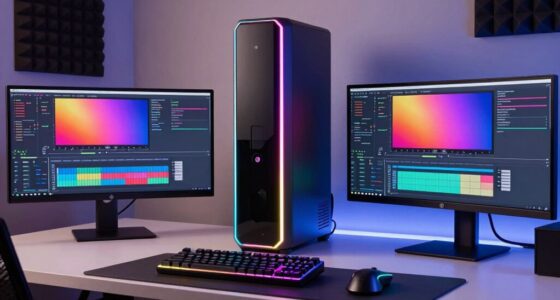
Choosing the right Mac Pro for enterprise IT deployments involves balancing performance, scalability, and manageability. The best overall pick is the Apple Mac Studio with M3 Ultra for its unmatched processing power and expandability. The Mac mini with M4 offers a compact, cost-effective solution, while the Apple 16-inch MacBook Pro with M5 Max excels for mobile workforces. The main tradeoffs include portability versus raw power, and upfront costs versus long-term value. Continue reading for a detailed breakdown of each option and which best suits your enterprise needs.

Get kitchen gear delivered free — and shop member deals
- Fast, free delivery on millions of items
- Access to Prime Big Deal Days deals on October 6–7
- Prime Video, Amazon Music and more included
Complete the kit

Key Takeaways
- Performance consistency across multiple models makes Apple a reliable choice for enterprise deployments.
- Higher RAM and storage options are critical for large-scale IT applications and multitasking.
- Mobility-focused models like the MacBook Pro are ideal for remote teams but may sacrifice some expandability.
- The Mac Studio offers exceptional power in a fixed form factor, suitable for dedicated workstations.
- Cost-effective options like the Mac mini can serve smaller teams or secondary deployment points without sacrificing core performance.



| mac pro for enterprise it deployment | Processor | Memory | Storage | Display |
|---|---|---|---|---|
| Apple 2021 MacBook Pro with M1 | Apple M1 Max 10-Core CPU | 64 GB RAM | — | — |
| Mac mini with M4 10-core CPU a | M4 10-core CPU and GPU | 24GB | 1TB SSD | — |
| Apple 14-inch MacBook Pro with | Apple M5 Max 18-core CPU | 36GB | 4TB SSD | 14.2-inch Liquid Retina XDR |
| Apple MacBook Pro Laptop with | M5 Max, 18-core CPU | 64GB | 2TB SSD | 16.2-inch Liquid Retina XDR |
| Apple 14-inch MacBook Pro with | — | — | — | — |
| Apple 16-inch MacBook Pro with | Apple M5 Max 18-core CPU | 128GB | 2TB SSD | 16.2-inch Liquid Retina XDR |
| Apple MacBook Pro Laptop with | M5 Pro or M5 Max | 48GB | 2TB SSD | 16.2-inch Liquid Retina XDR |
| Apple MacBook Pro Laptop with | M5 Max, 18-core CPU, 40-core GPU | 128GB | 2TB SSD | 16.2-inch Liquid Retina XDR |
| Apple 14-inch MacBook Pro with | Apple M5 Pro Chip | 48GB | 1TB SSD | 14-inch Retina |
| Apple Mac Studio | M3 Ultra, 28-Core CPU | 256GB | 2TB SSD | — |
More Details on Our Top Picks
Apple 2021 MacBook Pro with M1 Max Chip, 14-inch, 64GB RAM, 2TB SSD, Silver (Renewed)
This renewed 14-inch MacBook Pro stands out for delivering robust performance with the M1 Max chip, making it suitable for demanding enterprise tasks that require mobility. Compared to the larger MacBook Pro models, it offers a more portable form factor while still packing high-end specs, though it sacrifices some expandability and comes in generic packaging. Its 64GB RAM and 2TB SSD ensure smooth multitasking and fast data access, critical for enterprise workflows. The main tradeoff is that it’s not Apple certified as new, and accessories may not be original, which could impact long-term reliability. Still, for mobile enterprise users who need power without the bulk, this model hits a compelling sweet spot.
Pros:- High-performance M1 Max chip with 10-core CPU and 24-core GPU
- Large 64GB RAM supports heavy multitasking and virtualization
- Fast 2TB SSD enables quick data access and storage flexibility
- Renewed product quality inspected by Amazon-qualified suppliers
Cons:- Not Apple certified as new, which may impact warranty and reliability
- May arrive in generic packaging with non-original accessories
Best for: Enterprise IT teams needing portable yet powerful laptops for remote management and field deployment
Not ideal for: Organizations requiring maximum expandability or certified new hardware, due to potential reliability concerns and limited upgrade options
- Color:Silver
- Hard Drive Size:2 TB
- Operating System:Mac OS
- Processor:Apple M1 Max 10-Core CPU
- Graphics:24-Core GPU
- Display Size:14 inches
- Memory:64 GB RAM
Our verdict“This MacBook Pro is ideal for enterprise users who need a portable powerhouse with top-tier specs, accepting some reliability and packaging tradeoffs.”
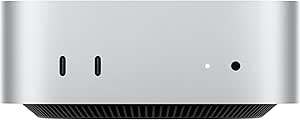
Mac mini with M4 10-core CPU and 10-core GPU, 24GB Memory, 1TB Storage
This Mac mini excels as a compact, cost-effective node in enterprise IT deployments, especially for server, automation, or edge computing scenarios. Its small footprint makes it ideal for rack-mounted or space-constrained environments, while the M4 chip delivers surprisingly strong performance for handling management tasks, automation scripts, or small virtual environments. Unlike the larger MacBook Pros, it’s less suited for high-end creative workflows but offers excellent connectivity with multiple ports, including Thunderbolt and Ethernet. The main tradeoff is limited upgradeability; once configured, hardware changes are restricted. Compared to the MacBook Pro options, it sacrifices portability and raw performance for space efficiency and lower cost, making it a solid choice for dedicated infrastructure roles.
Pros:- Compact 5×5 inch form factor fits easily into server racks or desks
- Powerful M4 chip with 10-core CPU and GPU for multitasking and automation
- Multiple connectivity options including Thunderbolt, HDMI, and Ethernet
- Seamless integration with Apple ecosystem for management
Cons:- Limited upgrade options due to its compact design
- No dedicated graphics card option for intensive graphical tasks
- Higher price for high-end specs can be a concern
Best for: Enterprise IT teams deploying edge servers, automation nodes, or small-scale virtual environments in limited spaces
Not ideal for: Teams needing portable, high-performance laptops for on-the-go tasks or demanding creative workloads
- Processor:M4 10-core CPU and GPU
- Memory:24GB
- Storage:1TB SSD
- Color:Silver
- Form Factor:Mini desktop
- Operating System:macOS
Our verdict“This Mac mini is well-suited for enterprise infrastructure roles demanding a small, powerful, and versatile computing node, with some flexibility tradeoffs.”
Apple 14-inch MacBook Pro with M5 Max Chip, 36GB RAM, 4TB SSD, Space Black
This 14-inch MacBook Pro with the M5 Max chip offers exceptional processing power with an 18-core CPU and 32-core GPU, making it suitable for enterprise workloads involving large data sets, AI, and intensive simulations. The 36GB RAM supports substantial multitasking and virtualization, while the 4TB SSD provides ample storage for large datasets and applications. The Liquid Retina XDR display enhances visual accuracy, essential for creative workflows integrated into enterprise tasks like design or media processing. Compared to the M1 Max-powered model, this one pushes performance further at a premium price, and its weight and size may limit portability for mobile deployment. It’s an excellent choice for on-premises workstations or high-end mobile workstations within enterprise environments.
Pros:- Powerful M5 Max chip with 18-core CPU and 32-core GPU
- Large 36GB RAM supports complex multitasking and AI workloads
- High-capacity 4TB SSD for storing large datasets and applications
- Exceptional Liquid Retina XDR display for visual accuracy
Cons:- Premium price limits accessibility for some budgets
- Heavy and relatively bulky for frequent portable use
- Limited configurable options at release
Best for: Creative enterprise teams and AI specialists needing top-tier mobile workstation performance
Not ideal for: Organizations looking for budget-friendly or lightweight options for general use
- Display:14.2-inch Liquid Retina XDR
- Processor:Apple M5 Max 18-core CPU
- GPU:32-core GPU
- Memory:36GB
- Storage:4TB SSD
- Battery Life:Up to 24 hours
Our verdict“This MacBook Pro is ideal for enterprise users who need a mobile yet high-performance workstation for demanding creative or data tasks, accepting portability and price tradeoffs.”
Apple MacBook Pro Laptop with M5 Max, 18-core CPU, 40-core GPU, 16.2-inch Liquid Retina XDR Display, 64GB Memory, 2TB SSD, Space Black
This 16.2-inch MacBook Pro with the M5 Max chip offers exceptional power with an 18-core CPU and 40-core GPU, designed for enterprise professionals engaged in AI development, large-scale data analysis, or high-end creative work. Its 64GB unified memory ensures smooth handling of complex workflows, while the 2TB SSD provides fast access to large files. The expansive Liquid Retina XDR display enhances visual clarity for detailed tasks. The device’s size and weight make it less suited for frequent travel but ideal as a mobile workstation for intensive enterprise tasks. Compared to the 14-inch models, this variant emphasizes raw power and screen real estate, with a tradeoff in portability and higher cost.
Pros:- Extremely powerful M5 Max chip with 18-core CPU and 40-core GPU
- 64GB unified memory supports complex multitasking and AI workloads
- Large 16.2-inch Liquid Retina XDR display for detailed visuals
- Versatile port array including Thunderbolt 5, HDMI, SDXC
Cons:- Heavy and large, less portable for frequent travel
- Premium price may limit widespread deployment
- Limited upgradeability post-purchase
Best for: Enterprise AI, deep learning, or multimedia teams requiring maximum processing and graphical capability in a portable form factor
Not ideal for: Small teams or organizations prioritizing lightweight devices or budget constraints
- Display:16.2-inch Liquid Retina XDR
- Processor:M5 Max, 18-core CPU
- GPU:40-core GPU
- Memory:64GB
- Storage:2TB SSD
- Ports:Three Thunderbolt 5, HDMI, SDXC
Our verdict“This MacBook Pro suits enterprise professionals demanding maximum computational and graphical power on the move, with size and cost as tradeoffs.”
Apple 14-inch MacBook Pro with M5 Max Chip, 64GB RAM, 4TB SSD, Space Black (2026)
This 14-inch MacBook Pro with the M5 Max chip is tailored for enterprise power users needing a portable workstation with maximum specs. Its 18-core CPU and 40-core GPU deliver top-tier performance for AI, data analytics, or intensive creative workflows. The 64GB RAM and 4TB SSD ensure large datasets and applications run smoothly, while the Liquid Retina XDR display offers exceptional clarity for visual tasks. Its long battery life supports extended workflows, and the 96W power adapter enables quick charging. Compared with the 14-inch M1 Max model, this variant emphasizes raw performance, though its weight and cost might limit frequent portability. It’s a strong choice for demanding enterprise roles that require mobility without compromise.
Pros:- High-performance M5 Max chip with 18-core CPU and 40-core GPU
- Large 64GB RAM supports heavy multitasking and AI applications
- Exceptional Liquid Retina XDR display with high brightness and contrast
- Long battery life up to 24 hours for extended use
Cons:- Heavy and large for frequent portability
- Premium price point may be prohibitive for some budgets
- Limited configurability at launch
Best for: Enterprise professionals needing a portable yet ultra-powerful device for AI, data, or creative workloads
Not ideal for: Organizations prioritizing budget over high-end specs or lightweight designs
Our verdict“This MacBook Pro is best suited for enterprise users requiring maximum processing power in a portable form, accepting size and cost as tradeoffs.”
Apple 16-inch MacBook Pro with M5 Max Chip, 128GB RAM, 2TB SSD, Space Black (2026)
This 16-inch MacBook Pro stands out as the most capable portable option for enterprise IT deployments that demand high performance and mobility. Its M5 Max 18-core CPU and 40-core GPU deliver exceptional processing power, surpassing even the M5 Pro in the MacBook lineup, making it ideal for intensive tasks like virtualization, large-scale data processing, or complex simulations. The large 128GB RAM and 2TB SSD ensure ample multitasking headroom and storage, while its stunning Liquid Retina XDR display provides crisp visuals for detailed work. However, this model’s premium price and weight may limit deployment in scenarios prioritizing portability or budget constraints. Compared with the Mac Studio, this offers more mobility at a significant cost and size premium. The battery life supports all-day use, but the high-end build and limited configuration options could challenge large-scale procurement.
Pros:- Exceptional processing power with M5 Max chip for demanding workloads
- Large 128GB RAM and 2TB SSD for extensive multitasking and storage
- Vivid Liquid Retina XDR display enhances visual clarity
- Long battery life supports all-day mobility
Cons:- High price may be prohibitive for large-scale deployment
- Heavy and large, reducing portability in some use cases
Best for: IT teams needing a portable, high-performance machine capable of handling demanding enterprise applications on the go
Not ideal for: Organizations on strict budgets or requiring lightweight, easily portable devices for field deployment
- Processor:Apple M5 Max 18-core CPU
- GPU:40-core GPU
- Memory:128GB
- Storage:2TB SSD
- Display:16.2-inch Liquid Retina XDR
- Battery Life:All-day
Our verdict“This MacBook Pro excels for enterprise users needing top-tier performance combined with portability, despite its premium cost.”
Apple MacBook Pro Laptop with M5 Pro, 16.2-inch Display, 48GB RAM, 2TB SSD, Space Black
This MacBook Pro offers a compelling balance of power and portability, featuring the M5 Pro or M5 Max chip for fast, AI-optimized workflows. Its 16.2-inch Liquid Retina XDR display rivals the premium visual quality of the 16-inch model, making it suitable for graphics-intensive tasks. The 48GB RAM and 2TB SSD provide ample capacity for multitasking and large datasets, while its suite of ports—including Thunderbolt 5 and HDMI—reduces the need for adapters in enterprise environments. Compared to the 16-inch MacBook Pro with the M5 Max, this model sacrifices some RAM capacity but gains a more compact form factor. It’s best suited for users who value seamless Apple ecosystem integration and portability but may find its limited upgrade paths a drawback. This model is less ideal for deployments requiring extensive expansion or customization.
Pros:- Powerful M5 Pro/Max chip with AI capabilities
- High-quality Liquid Retina XDR display
- Multiple versatile ports for enterprise peripherals
- Seamless Apple ecosystem integration
Cons:- Limited RAM compared to larger models, potentially restricting heavy multitasking
- Premium price and weight may limit deployment flexibility
Best for: Enterprise professionals who need high performance in a portable, well-connected device with seamless Apple integration
Not ideal for: IT departments requiring extensive port options or higher RAM configurations for complex virtualized environments
- Processor:M5 Pro or M5 Max
- Display:16.2-inch Liquid Retina XDR
- Memory:48GB
- Storage:2TB SSD
- Ports:Three Thunderbolt 5, MagSafe 3, SDXC, HDMI, Headphone jack
- Battery Life:All-day
Our verdict“This laptop suits enterprise users seeking a portable yet powerful device with excellent connectivity and ecosystem benefits, at a higher price point.”
Apple MacBook Pro Laptop with M5 Max, 16.2-inch Display, 128GB Memory, 2TB SSD, Space Black
This model features the next-generation M5 Max chip with an 18-core CPU and 40-core GPU, positioning it as a top contender for intensive enterprise tasks such as large-scale data analysis, AI modeling, or virtualization. Its 16.2-inch Liquid Retina XDR display offers exceptional visuals, comparable to the other high-end MacBook options. The 128GB RAM and 2TB SSD provide substantial capacity for multitasking and large datasets, and the inclusion of Thunderbolt 5 ports ensures high-speed connectivity. While its high price and weight limit portability, this model’s raw computational power makes it ideal for deployment in environments where workstation-class performance is essential. Compared with the Mac Studio, this offers mobility but at a significant size and cost premium.
Pros:- Unmatched CPU and GPU power with M5 Max chip
- Large 128GB RAM and fast SSD storage
- High-quality display with excellent visual fidelity
- Supports multiple high-resolution displays
Cons:- Very high price limits broad deployment
- Heavy and less portable compared to smaller models
Best for: Enterprise professionals requiring maximum on-the-go processing power for complex workloads
Not ideal for: Organizations prioritizing lightweight, low-cost devices or those needing extensive peripheral expansion
- Processor:M5 Max, 18-core CPU, 40-core GPU
- Display:16.2-inch Liquid Retina XDR
- Memory:128GB
- Storage:2TB SSD
- Ports:Three Thunderbolt 5, MagSafe 3, SDXC, HDMI
- Wireless:Wi-Fi 7, Bluetooth 6
Our verdict“This MacBook Pro is designed for enterprise users needing portable, workstation-level performance, accepting the tradeoff of size and cost.”
Apple 14-inch MacBook Pro with M5 Pro Chip, 48GB RAM, 1TB SSD, Space Black
The 14-inch MacBook Pro with the M5 Pro chip offers a compelling blend of mobility and power. Its 48GB RAM and 1TB SSD make it suitable for demanding workflows, and its sleek Space Black design enhances professional aesthetics. The Retina display ensures sharp visuals, while its lightweight form factor helps staff and field teams stay productive away from the office. It shares many performance characteristics with larger models but is less equipped in terms of RAM and storage, which could be limiting for very large datasets or virtualization. Compared with the 16-inch models, this is less ideal for heavy multitasking but excels in scenarios where portability is paramount. This device is best suited for enterprise users needing a portable device with serious performance, but not the highest storage capacity.
Pros:- Powerful M5 Pro chip with high CPU and GPU cores
- Sleek, lightweight design for portability
- High-quality Retina display
- Fast 1TB SSD storage
Cons:- Limited RAM and storage compared to larger models
- Premium price for a compact device
Best for: Mobile enterprise professionals who need high performance in a lightweight, portable device
Not ideal for: Teams managing extensive virtual environments or large datasets on a single device
- Processor:Apple M5 Pro Chip
- Display:14-inch Retina
- Memory:48GB
- Storage:1TB SSD
- Weight:Less portable than 16-inch models
- Battery Life:All-day
Our verdict“This MacBook Pro provides a portable yet powerful solution for enterprise users who value mobility without sacrificing too much performance.”
Apple Mac Studio, M3 Ultra with 28-Core CPU, 60-Core GPU, 256GB Storage
The Mac Studio with M3 Ultra offers unmatched raw processing and graphics power in a compact form factor, ideal for enterprise environments focused on high-end creative work, simulation, or large-scale data processing. Its 28-core CPU and 60-core GPU outperform the MacBook Pro models in raw speed and graphics, making it suitable for tasks that require sustained, intensive computation. The 256GB memory and 2TB SSD support large datasets and complex workflows. Its extensive connectivity options, including Thunderbolt 5 and 8K display support, make it highly versatile for enterprise deployment. The main tradeoff involves its fixed configuration, which lacks upgradeability, and its higher price. Compared to the MacBook Pro line, it sacrifices portability for maximum performance. This makes it ideal for dedicated workstations in enterprise labs or creative departments.
Pros:- Extremely powerful CPU and GPU with M3 Ultra chip
- Supports multiple high-resolution displays
- Large 256GB unified memory for demanding multitasking
- Extensive connectivity for professional peripherals
Cons:- High price and fixed configuration limit flexibility
- Designed as a desktop, not portable
Best for: Enterprise creative teams and professionals needing maximum processing power in a fixed, desktop form factor
Not ideal for: Organizations requiring mobile solutions or flexible hardware configurations
- Processor:M3 Ultra, 28-Core CPU
- GPU:60-Core GPU
- Memory:256GB
- Storage:2TB SSD
- Display Support:Up to 8K resolution, 8 displays
- Connectivity:Thunderbolt 5, USB 3, HDMI 2.1, 10Gb Ethernet
Our verdict“This Mac Studio suits enterprise environments needing dedicated, high-performance workstations with maximum graphics and processing capacity.”

How We Picked
In selecting these products, I prioritized performance benchmarks, expandability, and manageability that matter most in enterprise environments. Durability, ease of deployment, and compatibility with enterprise management tools also played key roles. Devices were ranked based on their processing power, memory capacity, storage options, and overall value for large-scale deployments, balancing high-end features against cost and maintenance considerations.Factors to Consider When Choosing Mac Pro For Enterprise It Deployments
When choosing a Mac Pro for enterprise IT, several factors should influence your decision. Performance needs, scalability, management ease, and budget constraints all play vital roles. Understanding these aspects helps ensure you select a device that remains effective over time and integrates seamlessly into your existing infrastructure.Performance and Processing Power
Enterprise deployments often demand high processing capabilities to run complex applications, virtual machines, or large datasets. Prioritize models with the latest Apple silicon chips, such as the M5 Max or Ultra, which deliver significant power boosts. Opting for higher-core CPUs and GPUs ensures smoother multitasking and future-proofing, but be aware that this often comes with increased costs and potentially more power consumption.
Memory and Storage Scalability
Ample RAM and fast storage are essential for handling multiple enterprise applications simultaneously. Look for configurations with at least 32GB of RAM, ideally more for intensive workloads. Storage capacity should match your data needs, but also consider the ease of upgrading or managing storage remotely, especially for larger deployments where data security and redundancy are critical.
Portability vs. Fixed Deployment
Deciding between portable MacBook models and fixed units like the Mac Studio hinges on your team’s mobility needs. Laptops offer flexibility but may lack the expandability of desktops. Fixed units typically provide better thermal management, easier upgrades, and centralized management, making them preferable for dedicated workstations in data centers or server rooms.
Management and Compatibility
In enterprise settings, ease of deployment and ongoing management are vital. Ensure the devices support remote management tools and are compatible with your existing enterprise security protocols. Devices with Apple Silicon generally integrate well with MDM solutions, but confirm compatibility with your specific management infrastructure to avoid future complications.
Cost vs. Long-Term Value
While high-end models come with a hefty price tag, they often provide better longevity and performance headroom, reducing the need for future upgrades. Smaller organizations or secondary deployment points may find budget options like the Mac mini sufficient, but be cautious about potential upgrade limitations and the need for additional peripherals or accessories which can add to the total cost.
Frequently Asked Questions
Can I upgrade the RAM or storage on these Mac models after purchase?
Most recent Mac models, especially those with Apple Silicon, do not support user upgrades for RAM or storage. For enterprise deployments, it’s crucial to select configurations with sufficient RAM and storage upfront, considering future needs. If upgradeability is essential, look for models designed with modular components, though options are limited in the latest Macs.
Are these Macs compatible with enterprise management systems?
Yes, all current Mac models with Apple Silicon integrate well with common enterprise management tools like MDM solutions and security protocols. Apple has improved management capabilities, making it easier for IT teams to deploy, configure, and maintain large fleets of Macs across different locations, reducing administrative overhead.
Which Mac is best for remote or mobile enterprise teams?
The MacBook Pro models, especially the 16-inch with M5 Max or the 14-inch with M5 Max, are best suited for remote teams needing powerful mobile workstations. They combine high performance with portability, but consider the tradeoff of less expandability compared to desktops. For maximum flexibility, ensure battery life and durability meet your remote work demands.
How important is GPU power in enterprise Mac deployments?
GPU performance becomes critical for tasks like 3D rendering, video editing, and data visualization in certain enterprise applications. Models with higher-core GPUs, such as the M5 Max, provide significant acceleration for these workloads. However, if your primary tasks are office productivity or database management, integrated GPUs may suffice, and you can prioritize CPU and memory instead.
Should I prioritize the latest chip models over older ones?
Latest chips generally offer better performance, efficiency, and future-proofing, but they often come at a higher cost. For enterprise deployments, investing in the newest hardware can reduce future upgrade cycles and improve management consistency. However, if budget constraints are tight, slightly older models with comparable specs might still meet your needs effectively.
Conclusion
For most enterprise buyers, the Apple Mac Studio with M3 Ultra stands out as the best overall choice, thanks to its unmatched processing power and expandability. Smaller teams or those on tighter budgets will find the Mac mini with M4 a compelling value, capable of supporting core enterprise functions without overextending costs. If mobility is a priority, the 16-inch MacBook Pro with M5 Max offers a powerful, portable solution, ideal for remote or field-based teams. For organizations seeking a high-performance, dedicated workstation, the Mac Studio makes a compelling case, while those needing simple yet reliable deployment should consider the Mac mini or earlier-generation models. Tailor your choice based on your specific performance, manageability, and budget considerations to best support your enterprise goals in 2026.
As an affiliate, we earn on qualifying purchases.Fall Picks
fall essentials