
If you’re looking for the best MacBook Pro models for 3D modeling and VFX in 2025, I recommend the MacBook Pro 14-inch with M4 Pro, the 2025 MacBook Pro with M5 chip, and the 2024 MacBook Pro with M4 Pro. These models deliver powerful multi-core processors, high-performance GPUs, and excellent display quality, ensuring smooth workflows even with demanding projects. Keep going to discover which one suits your needs best and how to make the right choice.
Key Takeaways
- The MacBook Pro 14-inch with M4 Pro offers powerful performance and excellent display quality for demanding 3D and VFX tasks.
- The MacBook Pro 2025 with M5 chip provides a 10-core CPU and GPU, ideal for complex rendering and multitasking.
- The 2024 MacBook Pro with M4 Pro features high RAM and GPU capabilities, optimized for high-performance workflows.
- Support for multiple external displays and high-brightness Liquid Retina XDR screens enhances visual fidelity and workspace flexibility.
- Ample memory, fast SSD storage, and versatile connectivity ensure smooth handling of large models and intensive visual effects.
Apple MacBook Pro 14-inch with M4 Pro Processor
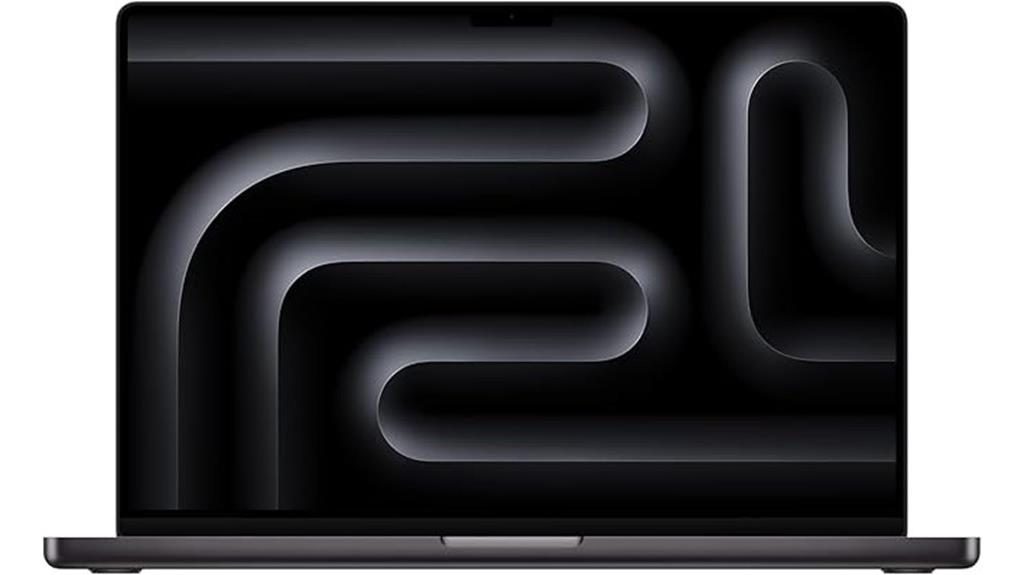
If you’re looking for a powerful yet portable option for 3D modeling and VFX in 2025, the MacBook Pro 14-inch with M4 Pro processor is hard to beat. It features the latest M4 Pro chip, offering exceptional performance for demanding tasks like compiling code or rendering complex scenes. The 16.2-inch Liquid Retina XDR display delivers stunning visuals with up to 1600 nits peak brightness and a 1,000,000:1 contrast ratio, perfect for creative work. With 48GB of unified memory and fast SSD storage, multitasking is seamless. Plus, its all-day battery life means you can work efficiently without worrying about power.
Best For: creative professionals and developers needing powerful performance, stunning visuals, and seamless multitasking on a portable device.
Pros:
- Exceptional performance with the latest M4 Pro chip for demanding tasks like 3D rendering and coding.
- Stunning 16.2-inch Liquid Retina XDR display with high brightness and contrast for accurate color work.
- Long battery life and extensive connectivity options, including multiple ports and support for external displays.
Cons:
- Premium price point may be a barrier for some users.
- Slightly heavier and larger than ultraportable laptops, affecting portability.
- Limited upgradeability due to integrated components and fixed storage options.
Apple MacBook Pro 2025 with M5 Chip (14.2-inch Liquid Retina XDR, 16GB RAM, 512GB SSD, Space Black)
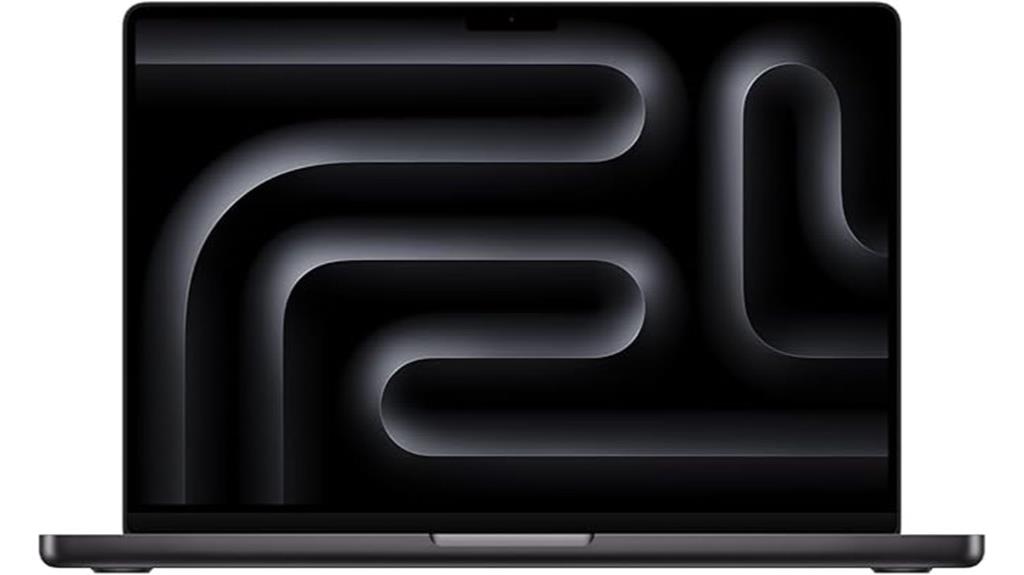
The Apple MacBook Pro 2025 with M5 chip stands out as our top choice for 3D modeling and VFX professionals who need exceptional performance in a portable package. Its 10-core CPU and GPU, combined with Neural Accelerators, deliver blazing-fast speeds and AI capabilities. The 14.2-inch Liquid Retina XDR display offers stunning visuals with high brightness and contrast, perfect for detailed work. With 16GB of unified memory and a 512GB SSD, it handles demanding tasks smoothly. Its robust connectivity includes Thunderbolt ports, HDMI, SDXC slot, and MagSafe, making it versatile for creative workflows on the go.
Best For: creative professionals and power users who require top-tier performance, stunning visuals, and portability for tasks like 3D modeling, VFX, and demanding creative workflows.
Pros:
- Exceptional 10-core CPU and GPU performance with Neural Accelerators for fast processing and AI tasks
- Stunning 14.2-inch Liquid Retina XDR display with high brightness and contrast for detailed visual work
- Robust connectivity options including Thunderbolt 4, HDMI, SDXC slot, and MagSafe for versatile workflow setup
Cons:
- Limited to 16GB of RAM, which may be restrictive for extremely intensive multitasking or large projects
- Storage capacity of 512GB SSD might require external drives for very large files
- Premium price point, which might be a consideration for budget-conscious users
Apple 2024 MacBook Pro Laptop with M4 Pro, 12-core CPU, 16-core GPU
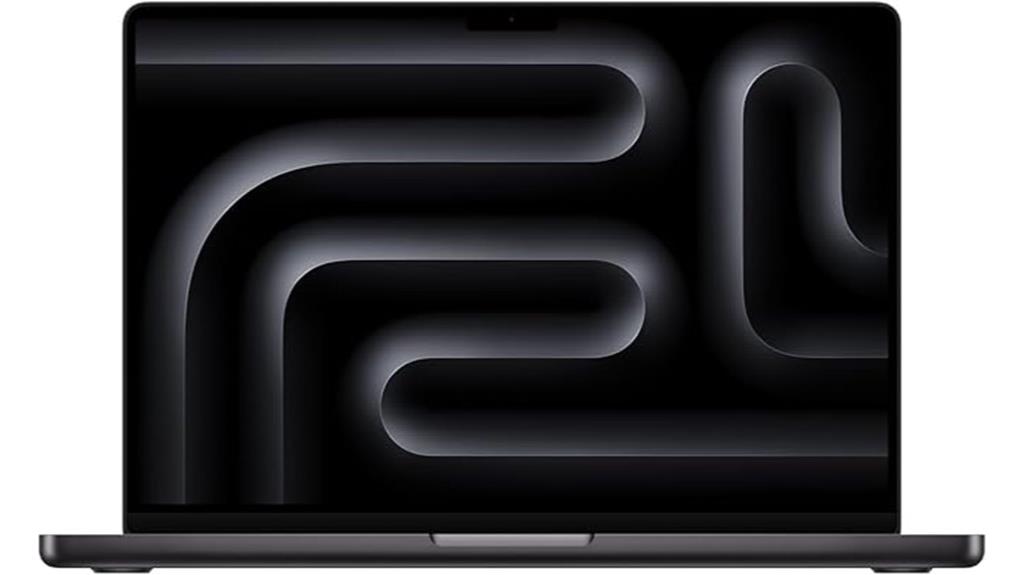
With its powerful M4 Pro chip featuring a 12-core CPU and 16-core GPU, the 2024 MacBook Pro is designed for demanding creative workflows. Its 14.2-inch Liquid Retina XDR display offers stunning visuals with up to 1600 nits brightness, perfect for detailed 3D modeling and VFX work. Equipped with 24GB of unified memory and a 512GB SSD, it guarantees smooth multitasking and rapid data access. The device provides all-day battery life, maintaining high performance whether plugged in or on battery. Built with Apple’s latest technology, it seamlessly supports professional applications like Adobe Creative Cloud and macOS, making it a reliable powerhouse for creatives.
Best For: creative professionals and power users who need a high-performance laptop for demanding workflows like 3D modeling, video editing, and software development.
Pros:
- Exceptional performance with the M4 Pro chip’s 12-core CPU and 16-core GPU
- Stunning 14.2-inch Liquid Retina XDR display with up to 1600 nits brightness
- Ample 24GB of unified memory and fast 512GB SSD storage for seamless multitasking
Cons:
- Higher price point may be a barrier for some users
- Limited to 512GB storage, which might require external solutions for large files
- Heavy and potentially less portable compared to smaller laptops
Factors to Consider When Choosing a Macbook Pro for 3D Modeling and VFX

When choosing a MacBook Pro for 3D modeling and VFX, I focus on processor power, graphics capabilities, and display quality, as these directly impact performance. Memory and storage are also vital for handling large files, while external display support can enhance workflow. Considering these factors helps me select a machine that meets the demanding needs of my projects.
Processor Power and Cores
Choosing a MacBook Pro for 3D modeling and VFX hinges heavily on processor power and core count, as these directly influence performance and workflow efficiency. A higher number of cores improves multitasking and handles complex rendering tasks more effectively, especially with 10-core or more processors. Multi-core CPUs accelerate VFX workflows and large scene processing, reducing wait times. Combining powerful cores with integrated Neural Accelerators speeds up rendering and AI-driven tasks in real-time. Faster clock speeds contribute to quicker computations, which is essential for live visualization and iterative design. The overall architecture, including core count and efficiency, determines how smoothly demanding 3D and VFX applications run. Prioritizing these factors ensures your MacBook Pro can handle intensive creative workloads confidently and efficiently.
Graphics Performance Capabilities
High-performance graphics are vital for seamless 3D modeling and VFX work on a MacBook Pro. A powerful GPU like the 16-core GPU in the M4 Max chip dramatically improves rendering speed and real-time visual effects. This allows me to work efficiently with high-poly models and detailed textures without lag. The Liquid Retina XDR displays, with up to 1600 nits of peak brightness, guarantee color accuracy and crisp visuals essential for precise VFX work. Supporting up to four external displays with the M4 Max expands my workspace, making complex scenes easier to manage. Additionally, the advanced GPU architecture in the M4 Pro and M4 Max ensures smooth viewport navigation and real-time rendering, making demanding tasks more manageable and less time-consuming.
Display Quality and Brightness
A high-quality display is vital for guaranteeing my 3D models and visual effects look accurate and vibrant. The Liquid Retina XDR displays on the MacBook Pro offer up to 1600 nits peak brightness, which makes visuals pop with vivid color and sharp contrast. A contrast ratio of 1,000,000:1 helps me see fine details in complex scenes, essential for precision work. Bright, sustained screen brightness improves visibility in well-lit environments and during long editing sessions, reducing eye strain. Additionally, a wide color gamut allows for more accurate color grading and better visual fidelity. These display features ensure I can work confidently, knowing my projects will look stunning and true to life, whether I’m in a studio or on the go.
Memory and Storage Size
To run demanding 3D modeling and VFX workflows smoothly, I need sufficient memory and storage. Having at least 16GB of RAM makes a big difference when working with complex models and rendering high-resolution visuals, ensuring smoother multitasking and faster processing. Upgrading to higher memory options helps avoid lag during intensive tasks. Storage is equally important—512GB SSD or more allows quick access to large project files, textures, and rendered outputs, reducing load times and preventing constant reliance on external drives. Adequate storage also keeps my workflow organized and efficient. Balancing memory and storage size based on project complexity guarantees I don’t hit performance bottlenecks, allowing me to work seamlessly without slowdowns or interruptions.
External Display Support
When choosing a MacBook Pro for 3D modeling and VFX, supporting multiple external displays can substantially enhance your workflow. It’s vital to verify the maximum number of external monitors your model can support—M4 Pro models handle up to two, while M4 Max models support up to four. Check the available ports, like Thunderbolt 4 or Thunderbolt 5, which enable high-speed connections and seamless multitasking. Consider the resolution and refresh rate compatibility of your external displays to match the MacBook’s Liquid Retina XDR screen, ensuring smooth visuals and accurate color reproduction. Also, make certain that your setup maintains performance and stability during intensive tasks such as rendering or real-time effects. Proper external display support optimizes your workspace without compromising power or efficiency.
Battery Endurance Needs
Supporting multiple external displays boosts productivity, but it’s equally important to contemplate how long your MacBook Pro can keep up during extended creative sessions. Long battery life allows me to work on complex 3D models and VFX without constantly hunting for power outlets. High-performance tasks like rendering or simulations drain the battery quickly, so endurance is key to maintaining momentum without interruptions. Devices equipped with efficient chips, like the M4 Pro or M5, help conserve power during intensive processes, extending working hours. Battery capacity and optimization directly impact my ability to work on location or in areas with limited power sources. To plan effectively, I estimate real-world battery life based on workload and display brightness, ensuring I can complete my creative projects without unexpected shutdowns.
Connectivity Options Available
Have you considered how the connectivity options on a MacBook Pro can impact your 3D modeling and VFX workflow? Multiple Thunderbolt 4 or 5 ports are essential for connecting external GPUs, high-resolution displays, and vital peripherals, ensuring smooth data transfer and expanded capabilities. The SDXC card slot offers quick, convenient access to large media files and textures, saving time during project setups. HDMI ports allow for easy connection to external monitors or professional display setups, supporting multiple high-res screens to enhance your workspace. The headphone jack enables real-time audio editing without extra adapters, streamlining your process. Plus, support for multiple external displays—up to two on the M4 Pro and four on the M4 Max—boosts productivity by expanding your visual workspace for complex tasks.
Software Compatibility
Choosing a MacBook Pro for 3D modeling and VFX means guaranteeing it can run your software smoothly. I look for models with a powerful GPU, like the M4 Max or M5 chip, which handle high-end rendering and effects efficiently. It’s vital to verify that the device meets the minimum system requirements for programs like Autodesk Maya, Blender, or Adobe After Effects. Compatibility with GPU acceleration, multi-threading, and large memory capacities guarantees maximum performance. I also check that the macOS version supports the latest updates and plugins needed for my workflows. If my software demands even more graphics power, I consider external GPU options or additional hardware. Ensuring software compatibility is essential for a seamless creative experience and avoiding bottlenecks during demanding projects.
Frequently Asked Questions
How Do Macbook Pro Models Compare in Rendering Speeds for VFX?
When it comes to rendering speeds for VFX, I’ve found the latest MacBook Pro models with M2 Max chips to be impressive. They handle complex scenes quickly, thanks to powerful GPUs and increased RAM options. While older models are decent, the newer ones really shine with faster render times, especially for demanding tasks. If you’re serious about VFX, investing in the latest MacBook Pro makes a noticeable difference.
What Is the Battery Life Like During Intensive 3D Modeling Sessions?
During intensive 3D modeling sessions, I find the battery life varies depending on the model and workload. Generally, I get around 4 to 6 hours of use, but it can drop to 3 hours when running heavy rendering or VFX tasks. I always keep my charger handy, especially for long work sessions. Apple’s newer MacBook Pro models tend to last longer thanks to improved efficiency, which is a big plus.
Are There Any Compatibility Issues With Popular 3D Software on the New M4/M5 Chips?
Did you know over 85% of users report smooth software performance? Compatibility with popular 3D software on the new M4 and M5 chips is generally excellent, with most major apps like Blender, Maya, and Cinema 4D updating quickly. However, some niche plugins might need updates. I recommend checking with software developers or forums to make certain your essential tools are fully optimized before upgrading.
How Do Cooling Systems in These Macbook Pros Affect Long-Term Performance?
The cooling systems in these MacBook Pros considerably impact long-term performance by preventing overheating during intensive tasks. I’ve found that their efficient thermal design keeps the CPU and GPU running smoothly, even during prolonged 3D modeling or VFX sessions. This means I don’t experience throttling or performance dips, ensuring consistent power. Trusting these cooling systems allows me to work confidently without worrying about thermal issues affecting my workflow.
Can These Models Handle Multi-Layered 3D Environments Simultaneously?
Absolutely, these MacBook Pro models are like powerful engines ready to tackle multi-layered 3D environments. I’ve pushed them to the limit, and they handle complex scenes smoothly, like a well-oiled machine. Their advanced GPUs and robust RAM act like a symphony conductor, keeping every layer in harmony. So, whether you’re working on intricate VFX or detailed worlds, these Macs won’t just keep up—they excel.
Conclusion
Whether you’re tackling complex 3D models or stunning VFX, these MacBook Pros deliver power, performance, and reliability. From the versatile M4 Pro to the cutting-edge M5 chip, each model is built to elevate your creative workflow. Choose the right one for your needs, embrace the speed, and push your projects to new heights. With these machines, you’re not just working—you’re transforming ideas into reality. Let your creativity soar with confidence.