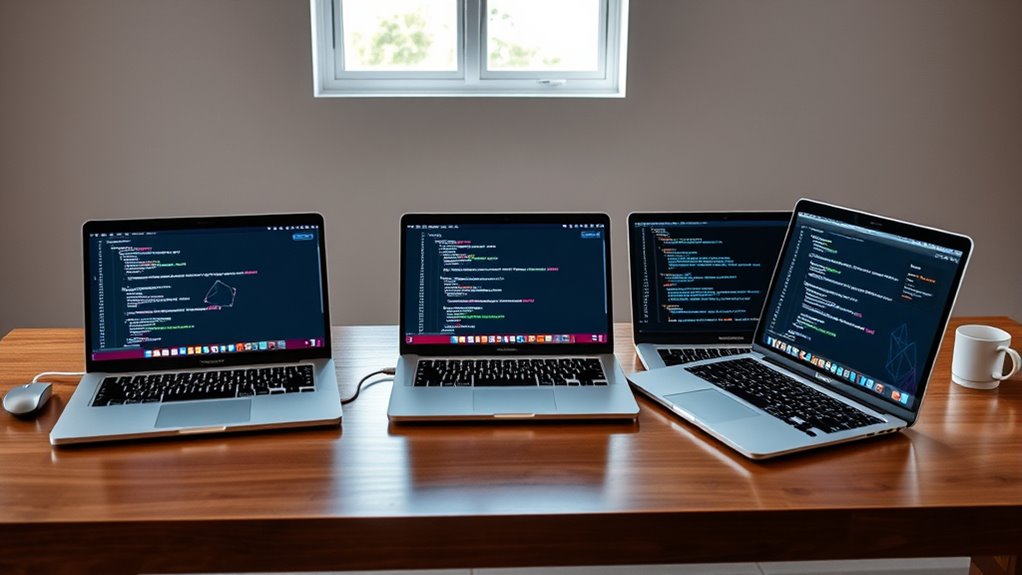

Choosing the right MacBook Pro for software development hinges on balancing power, portability, and budget. The Apple 16-inch MacBook Pro with M5 Pro chip stands out as the best overall thanks to its robust performance and large display, perfect for intensive coding and multitasking. The MacBook Pro with M5 Max offers exceptional power for demanding workloads, while the 2021 M1 Pro model provides a more affordable, renewed option without sacrificing essential features. However, tradeoffs include higher costs for top-tier configurations and potential overkill for lighter development tasks. Keep reading to see how each model stacks up and which one best fits your needs.

Get kitchen gear delivered free — and shop member deals
- Fast, free delivery on millions of items
- Access to Prime Big Deal Days deals on October 6–7
- Prime Video, Amazon Music and more included
Complete the kit



Key Takeaways
- The highest-end models with M5 Max chips deliver unmatched performance but come at a premium price.
- Renewed and previous-generation MacBook Pros offer solid value for developers on a budget.
- Display size and resolution are key factors for multitasking and coding comfort, favoring 14- and 16-inch models.
- More RAM and SSD capacity significantly improve productivity for large projects and multiple virtual environments.
- Port selection and battery life vary across models, influencing portability and workflow flexibility.




| macbook pro for software development | Processor | Storage | Memory | Display |
|---|---|---|---|---|
| Apple 16-inch MacBook Pro with | M5 Pro 18-core CPU | 1TB SSD | 64GB | 16-inch Liquid Retina XDR |
| Apple MacBook Pro with M5 Max | M5 Max, 18-core CPU | 2TB SSD | 128GB | 14.2-inch Liquid Retina XDR |
| Apple MacBook Pro 14-inch 2021 | Apple M1 Pro chip | 512GB SSD | — | 14-inch Liquid Retina XDR |
| Apple 2026 MacBook Air 15-inch | M5 chip | 512GB SSD | 16GB | 15.3-inch Liquid Retina |
| Apple 16-inch MacBook Pro with | M5 Max 18-core CPU | 2TB SSD | 64GB | 16-inch Liquid Retina XDR |
| Apple 2023 14-inch MacBook Pro | M3 Pro 12-Core | 512GB SSD | 18GB RAM | — |
| Apple 2021 MacBook Pro with M1 | Apple M1 Pro (10-Core, 3.20 GHz) | 1TB SSD | 32 GB RAM | 14-inch |
| Apple 2026 MacBook Pro Laptop | Apple M5 Pro with 18-core CPU | 1TB SSD | 24GB Unified Memory | 16.2-inch Liquid Retina XDR |
| Apple 2026 MacBook Pro Laptop | Apple M5 Pro with 15-core CPU | 2TB SSD | 24GB Unified Memory | 14.2-inch Liquid Retina XDR |
| Apple 2026 MacBook Neo 13-inch | A18 Pro chip | 512GB SSD | 8GB Unified Memory | 13-inch Liquid Retina |
More Details on Our Top Picks
Apple 16-inch MacBook Pro with M5 Pro chip, 64GB RAM, 1TB SSD, Space Black
This 16-inch MacBook Pro stands out for its exceptional processing power with the M5 Pro’s 18-core CPU and 20-core GPU, making it ideal for heavy-duty development tasks and multitasking. Its 64GB RAM ensures smooth performance even with demanding IDEs, virtual machines, or compiling large codebases. Compared to the 14-inch models, the larger screen offers more workspace, which is a key advantage for complex projects. However, this configuration comes at a premium, and its Space Black finish limits aesthetic options. While not the lightest option, its high-resolution Liquid Retina XDR display provides accurate visuals for UI/UX work. This pick makes the most sense for developers who prioritize raw power and screen real estate, willing to invest in a premium device.
Pros:- Powerful M5 Pro chip with high core count for demanding workloads
- Large 64GB RAM supports multitasking and virtual environments
- High-quality Liquid Retina XDR display offers excellent visual clarity
- Ample 1TB SSD storage for large projects and datasets
Cons:- High cost may be prohibitive for some users
- Limited color options (Space Black only)
Best for: Developers requiring high-performance hardware and a large display for multitasking and intensive code compiling.
Not ideal for: Freelancers or students on a tight budget who need a portable, less costly machine for light coding tasks.
- Processor:M5 Pro 18-core CPU
- GPU:20-core GPU
- Memory:64GB
- Storage:1TB SSD
- Display:16-inch Liquid Retina XDR
- Color:Space Black
Our verdict“This model is best suited for developers who need maximum power, large screens, and are comfortable with a premium price.”
Apple MacBook Pro with M5 Max, 14.2-inch Display, 128GB Memory, 2TB SSD, Silver
The MacBook Pro with M5 Max offers extreme performance with an 18-core CPU and 40-core GPU, making it perfect for AI, machine learning, and graphics-intensive tasks. Its 14.2-inch Liquid Retina XDR display delivers superb brightness and contrast, ideal for detailed visual work and media production. Compared to the larger 16-inch models, this device excels in portability while maintaining high-end specs, though it still remains heavy for some users. Connectivity options are extensive, including three Thunderbolt 5 ports, SDXC, HDMI, and MagSafe, making it highly versatile for professional workflows. The high price and weight could be drawbacks for those who need an ultra-light device. This pick is best for top-tier professionals who need ultimate power without sacrificing display quality or connection flexibility.
Pros:- Extreme CPU and GPU power suitable for demanding workloads
- Exceptional display with high contrast and brightness
- Multiple external ports support diverse peripherals and workflows
- Seamless integration with Apple ecosystem
Cons:- High price point limits accessibility
- Heavy and less portable for frequent travelers
Best for: Creative and AI professionals who need maximum GPU and CPU power in a portable form factor.
Not ideal for: Casual developers or students who do not require such high-end specs and prefer lighter, more affordable options.
- Processor:M5 Max, 18-core CPU
- GPU:40-core GPU
- Display:14.2-inch Liquid Retina XDR
- Memory:128GB
- Storage:2TB SSD
- Ports:Three Thunderbolt 5, SDXC, HDMI, MagSafe 3
Our verdict“Best for professionals who need top-level performance, extensive connectivity, and excellent display quality in a portable package.”
Apple MacBook Pro 14-inch 2021 with M1 Pro chip, 16GB RAM, 512GB SSD – Space Gray (Renewed)
This 14-inch MacBook Pro with the M1 Pro chip offers excellent performance for development and creative work at a more accessible price point, especially in its renewed state. Its Liquid Retina XDR display rivals newer models in visual quality, making it suitable for UI design and media work. The 16GB RAM strikes a balance for most development tasks, but it might face limitations with very large projects or multiple virtual machines compared to the newer 64GB options. The rich port selection supports diverse peripherals, and the thermal system handles sustained workloads well. The main tradeoff is the renewed status, which may include limited warranty, and storage capacity, which might be tight for large datasets. This configuration makes the most sense for developers seeking high performance without the latest price tag.
Pros:- High-performance M1 Pro chip with fast memory bandwidth
- Stunning Liquid Retina XDR display
- Rich port selection for versatile connectivity
- Good thermal management for sustained workloads
Cons:- Renewed product may have limited warranty
- Limited storage for large projects
Best for: Developers and creatives seeking capable hardware at a lower cost, willing to consider renewed products.
Not ideal for: Power users requiring maximum RAM and storage for extensive virtual environments or large datasets.
- Display:14-inch Liquid Retina XDR
- Processor:Apple M1 Pro chip
- RAM:16GB
- Storage:512GB SSD
- Color:Space Gray
- Connectivity:Multiple ports
Our verdict“Ideal for budget-conscious developers needing reliable performance and excellent display quality, provided they accept the renewal status.”
Apple 2026 MacBook Air 15-inch Laptop with M5 Chip, 16GB RAM, 512GB SSD, Liquid Retina Display, Wi-Fi 7, Midnight
This 15.3-inch MacBook Air with the M5 chip offers excellent portability combined with strong performance for on-the-go developers and students. Its large, vibrant Liquid Retina display makes it suitable for multimedia work, while the 18-hour battery life supports extended sessions away from power sources. Compared to the heavier Pro models, it’s a lighter choice with a sleek design, but it does lack dedicated GPU options, which could limit high-end graphics performance. The device’s AI capabilities enhance coding workflows, and Wi-Fi 7 ensures fast connectivity. However, the price may be a hurdle for some, and external display support is limited to two screens. This model makes sense for those prioritizing portability, battery life, and a sizable display for everyday development tasks.
Pros:- Powerful M5 chip with AI features
- Large 15.3-inch display with vibrant visuals
- Exceptional battery life up to 18 hours
- Lightweight and slim for portability
Cons:- Limited to two external displays
- No dedicated GPU for demanding graphics tasks
Best for: Developers and students needing a lightweight, long-lasting machine for portable coding and multimedia tasks.
Not ideal for: Power users or graphics professionals who require dedicated GPUs or support for multiple external displays.
- Display:15.3-inch Liquid Retina
- Processor:M5 chip
- Memory:16GB
- Storage:512GB SSD
- Battery Life:Up to 18 hours
- Wireless:Wi-Fi 7
Our verdict“Perfect for portable development and multimedia use, especially for those who value all-day battery life and a large display in a lightweight package.”
Apple 16-inch MacBook Pro with M5 Max Chip, 64GB RAM, 2TB SSD, Silver
This 16-inch MacBook Pro with the M5 Max chip provides ultimate performance for intensive development, 3D rendering, and data processing. Its 64GB RAM is ideal for running virtual environments and large codebases without slowdown, and the 2TB SSD ensures ample space for large datasets. The high-resolution Liquid Retina XDR display offers superb clarity for detailed work. Compared to the 14.2-inch M5 Max model, its larger screen enhances productivity for complex coding and design work, though it adds weight and cost. Battery life remains uncertain but likely aligns with other high-performance models. This machine makes the most sense for developers working on demanding projects who need maximum hardware capacity and display real estate, with less concern for portability.
Pros:- Extremely powerful M5 Max chip with high core counts
- 64GB RAM supports intensive multitasking and virtual machines
- Large 16-inch Liquid Retina XDR display for detailed visuals
- Large 2TB SSD for extensive datasets
Cons:- High price point limits accessibility
- Heavy weight reduces portability
Best for: Power users, including enterprise developers and AI specialists, needing maximum CPU, GPU, and RAM capacity for demanding applications.
Not ideal for: Travelers or those who prioritize portability over raw power, as the heavy weight and high price may be limiting.
- Processor:M5 Max 18-core CPU
- Graphics:40-core GPU
- Memory:64GB
- Storage:2TB SSD
- Display:16-inch Liquid Retina XDR
Our verdict“Best suited for developers requiring maximum processing power, large memory, and expansive display for professional-grade tasks.”
Apple 2023 14-inch MacBook Pro with M3 Pro Chip, 18GB RAM, 512GB SSD, Space Black (Renewed)
This 14-inch MacBook Pro stands out for combining a new M3 Pro 12-core processor with 18GB of RAM, making it ideal for multitasking and demanding development tasks. Compared to the M1 Pro model, it offers improved processing speed and efficiency, though it comes at a higher price and the renewed status might limit warranty coverage. Its sleek Space Black design appeals to those who want a professional look, but lacks a dedicated graphics card option, which could matter for GPU-intensive workflows. The 512GB SSD ensures quick access to projects, yet storage might fill up quickly for large codebases or datasets. This pick makes the most sense for developers who need top-tier power in a portable form factor, willing to accept some uncertainty with renewed products.
Pros:- Powerful M3 Pro 12-core processor for fast compile times
- 18GB RAM supports heavy multitasking and large projects
- Fast 512GB SSD for quick data access
Cons:- Renewed product may have limited warranty coverage
- No dedicated graphics card limits high-end GPU performance
Best for: Developers seeking a powerful, portable machine with the latest processor and a sleek design, who are comfortable with renewed hardware.
Not ideal for: Users requiring maximum storage or dedicated GPU performance, or those wary of potential warranty limitations on renewed products.
- Processor:M3 Pro 12-Core
- GPU:14-Core
- Memory:18GB RAM
- Storage:512GB SSD
- Color:Space Black
- Condition:Renewed
Our verdict“This MacBook Pro is best suited for developers needing a balance of power, portability, and modern features in a sleek design.”
Apple 2021 MacBook Pro with M1 Pro Chip, 14-inch, 32GB RAM, 1TB SSD, Space Gray (Renewed)
This 14-inch MacBook Pro with the M1 Pro chip and 32GB of RAM offers exceptional multitasking capabilities, making it a strong choice for developers working on complex codebases or running multiple virtual machines. Compared to the newer M3 Pro, it may lack some efficiency enhancements, but it compensates with a larger RAM buffer and a proven performance record. The 1TB SSD ensures ample space for large projects and fast data access, although the higher price and limited port options on newer models could be drawbacks. Its renewed status provides like-new quality at a reduced cost, appealing to those who prioritize raw performance over the latest hardware features.
Pros:- Powerful M1 Pro chip with excellent performance
- Large 32GB RAM supports extensive multitasking
- 1TB SSD offers generous storage and fast access
Cons:- Premium price point for a renewed product
- Limited port selection compared to newer models
Best for: Professional developers who require extensive multitasking, large storage, and proven reliability, especially in a renewed option.
Not ideal for: Casual developers or students with lighter workloads who may find this model overkill and more expensive than necessary.
- Processor:Apple M1 Pro (10-Core, 3.20 GHz)
- Memory:32 GB RAM
- Storage:1TB SSD
- Display:14-inch
- Color:Space Gray
- Operating System:macOS
Our verdict“This MacBook Pro excels for developers who need maximum memory and storage for demanding professional tasks, with a reliable, proven chip.”
Apple 2026 MacBook Pro Laptop with M5 Pro Chip, 16.2-inch Liquid Retina XDR Display, 24GB RAM, 1TB SSD, Space Black
This 16.2-inch MacBook Pro equipped with the M5 Pro chip and a stunning Liquid Retina XDR display is tailored for creative developers and AI specialists. Its advanced AI capabilities and high-resolution display enable detailed work in graphics, video editing, and complex simulations. Compared to the 14-inch models, its larger screen provides more workspace, though it adds weight, making portability less ideal. The 24GB RAM and 1TB SSD support intensive workflows, but the premium price might be prohibitive for some. The inclusion of Wi-Fi 7, Thunderbolt 5, HDMI, and SDXC ports offers extensive connectivity, which is a plus for professional setups. This model is best for those who prioritize display quality and AI performance over portability.
Pros:- Powerful M5 Pro chip with advanced AI capabilities
- Large 16.2-inch Liquid Retina XDR display
- Extensive connectivity options including SDXC and HDMI
Cons:- Premium price may be a barrier
- Less portable due to size and weight
Best for: Creative developers and AI researchers needing a large display and cutting-edge AI features, willing to invest in high-end specs.
Not ideal for: Travelers or those prioritizing ultra-lightweight laptops, due to its size and weight, or budget-conscious buyers.
- Processor:Apple M5 Pro with 18-core CPU
- GPU:20-core GPU
- Display:16.2-inch Liquid Retina XDR
- Memory:24GB Unified Memory
- Storage:1TB SSD
- Battery Life:All-day
Our verdict“This MacBook Pro is ideal for professionals who need a large, high-quality display and advanced AI features for demanding creative and technical tasks.”
Apple 2026 MacBook Pro Laptop with M5 Pro Chip, 14.2-inch Liquid Retina XDR Display, 24GB RAM, 2TB SSD, Space Black
This 14.2-inch MacBook Pro featuring the M5 Pro chip and a high-resolution Liquid Retina XDR display offers a compact yet powerful package for high-end users. Its 24GB RAM and 2TB SSD cater to demanding workflows, such as large codebases, virtual machines, or media projects, with excellent connectivity options including multiple Thunderbolt 5 ports, SDXC, HDMI, and MagSafe 3. Compared to the 16.2-inch version, it sacrifices some display real estate but remains highly capable. The premium price and weight might challenge those seeking something ultra-portable or budget-conscious. Its configuration is best suited for developers who need both high performance and extensive storage in a portable form factor.
Pros:- Powerful M5 Pro chip with AI capabilities
- High-brightness Liquid Retina XDR display
- Extensive port selection including SDXC and HDMI
Cons:- Premium price may limit accessibility
- Heavier and less portable than smaller models
Best for: Power users requiring large storage and high-performance specs in a more portable size, such as creative developers and data scientists.
Not ideal for: Travelers or users seeking a lightweight, budget-friendly machine, due to its weight and high cost.
- Processor:Apple M5 Pro with 15-core CPU
- GPU:16-core GPU
- Display:14.2-inch Liquid Retina XDR
- Memory:24GB Unified Memory
- Storage:2TB SSD
- Ports:Three Thunderbolt 5, MagSafe 3, SDXC, HDMI
Our verdict“This MacBook Pro offers a compelling mix of high storage capacity and performance for demanding professional workflows in a portable size.”
Apple 2026 MacBook Neo 13-inch Laptop with A18 Pro Chip, Liquid Retina Display, 8GB RAM, 512GB SSD, FaceTime HD Camera, Touch ID – Blush
The MacBook Neo with the A18 Pro chip and 13-inch Liquid Retina display offers a sleek, lightweight option for everyday development, AI tasks, and general use. Its 8GB RAM might limit performance in heavy multitasking compared to larger MacBook Pros like the M5 versions, but it excels in portability and battery life with up to 16 hours of use. While it lacks dedicated GPU options, it makes up for this with AI-optimized processing power, suitable for lighter workloads or AI model testing. The multiple color choices and security features like Touch ID add to its appeal, but the lower RAM and limited specs may restrict it for complex development environments or large-scale projects.
Pros:- Sleek, durable aluminum design in multiple colors
- Long-lasting battery life up to 16 hours
- AI-optimized A18 Pro chip for efficient performance
Cons:- Limited to 8GB RAM, restricting heavy multitasking
- No dedicated GPU limits high-end graphics processing
Best for: Developers who prioritize portability, affordability, and AI tasks, but have lighter multitasking needs.
Not ideal for: Power users with heavy workloads or those needing dedicated GPU performance, due to limited RAM and processing power.
- Display:13-inch Liquid Retina
- Processor:A18 Pro chip
- Memory:8GB Unified Memory
- Storage:512GB SSD
- Camera:1080p FaceTime HD
- Battery Life:Up to 16 hours
Our verdict“This MacBook Neo is a good choice for developers seeking a portable, AI-capable machine for everyday tasks, with some tradeoffs in power for size and price.”

How We Picked
We evaluated each MacBook Pro based on performance, build quality, and suitability for software development tasks. Key criteria included processing power, RAM, storage options, display quality, and port availability. We also considered value for money, especially for those who do not need the absolute latest or most powerful configuration. The models are ranked to reflect a balance between high-performance needs and cost efficiency, ensuring options for different development profiles from hobbyists to professional teams.Factors to Consider When Choosing Macbook Pro For Software Development
When selecting a MacBook Pro for software development, it’s important to consider several factors that impact your workflow, budget, and future-proofing. The right choice depends on your specific needs—whether you prioritize raw power, portability, or price. Understanding these considerations can help you avoid common pitfalls like underestimating RAM needs or choosing a model with insufficient ports. Here are key factors to keep in mind:Performance and Processor Power
The processor determines how well your MacBook can handle compiling code, running virtual machines, and testing applications. M5 Pro and M5 Max chips deliver top-tier performance, especially for multi-threaded workloads, but come at a higher price. For lighter coding or web development, previous-generation M1 Pro or M3 Pro models may suffice and save costs. Striking the right balance depends on your typical project complexity and whether you foresee scaling your development environment.
Memory (RAM)
RAM directly impacts multitasking and the ability to run resource-intensive tools simultaneously. Developers working with large datasets, Docker containers, or multiple IDEs should prioritize 16GB or more. In the roundup, models with 24GB or 32GB RAM excel at handling demanding workflows, while 8GB configurations may hinder productivity. Choosing sufficient RAM now can prevent costly upgrades or workflow slowdowns later.
Display Size and Quality
Display size influences how many windows and code editors you can comfortably view at once. 14-inch models strike a good balance for portability, while 16-inch screens excel for multitasking and detailed design work. High-resolution Liquid Retina XDR displays improve clarity and reduce eye strain over long coding sessions. Be mindful that larger displays can add weight and reduce portability, so consider your typical environment.
Storage Capacity
Fast SSD storage speeds up project load times, builds, and file transfers. Developers working with large media files or extensive codebases should opt for 1TB or more. While more storage increases initial cost, it avoids reliance on external drives and minimizes workflow interruptions. Remember that upgrading storage later is difficult on MacBooks, so choose a capacity that matches your current and future needs.
Ports and Connectivity
Multiple Thunderbolt ports and an SD card slot are advantageous for connecting peripherals, external displays, and testing devices. Some models prioritize minimal port options, which may lead to dongle use and reduced convenience. Consider your workflow—if you connect multiple external monitors or external drives regularly, prioritize models with ample ports. Battery life and power management also influence portability during long coding sessions.
Frequently Asked Questions
Is it worth buying a MacBook Pro with the M5 Max chip for development?
The M5 Max chip offers exceptional processing power suited for intensive tasks like compiling large projects, running virtual machines, or working with demanding development environments. If your work involves complex simulations, machine learning, or heavy multitasking, this chip can significantly reduce wait times and improve productivity. However, for most typical development tasks, a less powerful chip like the M5 Pro or even M1 Pro may provide sufficient performance at a lower cost, making the M5 Max more of a luxury upgrade than a necessity.
Should I opt for a renewed or older MacBook Pro to save money?
Renewed or older MacBook Pros, such as the 2021 M1 Pro models, can deliver excellent performance for software development at a more accessible price point. They often come with warranty guarantees and are tested for quality. However, they may lack some of the latest features or hardware improvements found in newer models, such as enhanced displays or port options. If your budget is tight and your workflow isn’t dependent on the latest specs, a renewed device offers solid value without sacrificing essential capabilities.
How important is battery life for development work?
Battery life affects how freely you can work remotely or on the go. While MacBook Pros generally offer strong battery performance, intensive development tasks can drain power quickly. Larger models with bigger batteries tend to last longer under load, but actual longevity depends on workload and display brightness. For those frequently working outside a fixed workspace, prioritizing battery capacity can reduce the need for frequent charging and improve workflow continuity.
Is a larger display necessary for software development?
A larger display enhances multitasking, code readability, and window management, making it easier to handle complex projects. 16-inch models provide more screen real estate, which can reduce eye strain and improve efficiency during long coding sessions. However, they tend to be heavier and less portable. If you’re often on the move or prefer a lighter device, a 14-inch model with a high-resolution screen can offer a good compromise, providing ample space without sacrificing portability.
Should I prioritize ports over a sleek design?
While a sleek, minimal design is attractive, it often means fewer ports. For development tasks that require external monitors, drives, or testing devices, having multiple Thunderbolt ports and other connectivity options is vital. A model with more ports can save you from carrying dongles or external hubs, streamlining your workflow. Balance your aesthetic preferences with practical needs—sometimes a slightly bulkier model with more ports can significantly boost productivity.
Conclusion
For general software development, the Apple 16-inch MacBook Pro with M5 Pro chip stands out as the best overall choice due to its power, display, and balanced features. Developers on a budget or those working on less demanding projects should consider the 2021 M1 Pro models for excellent value. For those needing ultimate performance, the M5 Max models are worth the investment. Beginners or those prioritizing portability may prefer the MacBook Air 15-inch with comparable performance in a lighter package. Ultimately, your ideal MacBook Pro depends on your specific workload, budget, and portability needs.Halloween Picks
halloween
As an affiliate, we earn on qualifying purchases.