For most home theater buyers, I’d start with the Polk Audio Monitor XT12: its 12-inch driver makes it a strong all-around choice for adding weight to movie effects. The Klipsch R-120SW is a larger-driver alternative for listeners who want a more forceful presentation, while the Yamaha NS-SW100BL suits a smaller room or a more restrained setup. The main tradeoff is between deeper, more room-filling bass and the space, placement flexibility, and setup effort a larger subwoofer demands. Room size, connections, and how well the sub blends with your speakers matter as much as driver size. Read on for my full comparison and guidance on choosing the right fit.

Get kitchen gear delivered free with Prime
- Fast, free delivery on millions of items
- Prime Video, Amazon Music and more included
- Member-only deals all year
Complete the kit


Key Takeaways
- The Polk Monitor XT12 is my best overall pick because its 12-inch format offers a useful balance of home-theater impact and broad system compatibility; a larger subwoofer is not automatically the best fit for every room.
- The Klipsch R-120SW and R-12SW stand out for buyers seeking bigger-scale bass, while their cabinet size makes them less appealing for tight spaces or discreet setups.
- Compact models serve a different job: the Klipsch R-8SW and BESTISAN 6.5-inch SW65D are easier to fit, but small drivers have less headroom for the lowest, loudest movie effects.
- Several options cluster around 10 inches, including the Polk PSW10, Sony SA-CS9M2, Yamaha NS-SW100BL, and multiple Klipsch models; connection options, placement, and system matching help separate them.
- Convenient features do not replace room setup: a subwoofer can sound boomy or weak if placed poorly, so leave time to adjust its position, crossover, and level.
| Klipsch Synergy Black Label SUB-120 12-Inch Front-Firing Subwoofer |  | Best for Full-Size Home Theater Rooms | Driver: 12-inch front-firing spun-copper Cerametallic woofer | Power output: 200 watts continuous; 400 watts dynamic | Amplifier: All-digital | VIEW ON AMAZON | See Our Full Breakdown |
| BESTISAN SW65D 6.5-Inch Powered Home Audio Subwoofer |  | Best Compact Pick for Small Rooms | Model: SW65D | Woofer: 6.5-inch side-firing | Frequency response: 35–200 Hz | VIEW ON AMAZON | See Our Full Breakdown |
| Klipsch R-100SW 10-Inch Subwoofer |  | Best for Receiver-Based Fine-Tuning | Woofer diameter: 10 inches | Amplifier power: 150 watts continuous; 300 watts peak | Frequency response: 32–120 Hz (-3 dB) | VIEW ON AMAZON | See Our Full Breakdown |
| Rockville Rock Shaker 10-Inch Black Powered Subwoofer for Home Theater |  | Best for High-Output Wired Setups | Woofer diameter: 10 inches | Power output: 300 watts RMS; 600 watts peak | Amplifier: Class D | VIEW ON AMAZON | See Our Full Breakdown |
| BESTISAN Powered 8-Inch Down-Firing Subwoofer |  | Best Beginner-Friendly Compact Add-On | Model: SW65C | Driver: 8-inch down-firing | Maximum output power: 60 watts | VIEW ON AMAZON | See Our Full Breakdown |
| Polk Audio PSW10 10″ Powered Subwoofer | 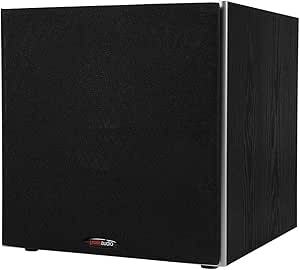 | Best for Small-to-Mid-Size Rooms | Woofer diameter: 10 inches | Amplifier power: 50 watts RMS / 100 watts dynamic | Frequency response: 40–160 Hz (-3 dB) | VIEW ON AMAZON | See Our Full Breakdown |
| Klipsch Synergy Black Label Sub-100 10-Inch Front-Firing Subwoofer |  | Best 10-Inch Pick for Receiver-Based Setups | Driver size and type: 10-inch front-firing spun-copper Cerametallic woofer | Continuous power: 150 watts | Dynamic power: 300 watts | VIEW ON AMAZON | See Our Full Breakdown |
| Klipsch R-120SW Subwoofer |  | Best for More Powerful Movie Bass | Woofer diameter: 12 inches | Frequency response: 29–120 Hz | RMS power: 200 watts | VIEW ON AMAZON | See Our Full Breakdown |
| Polk Audio Monitor XT12 12-Inch Powered Subwoofer, Black |  | Best for Flexible System Matching | Woofer diameter: 12 inches | Amplifier: 100-watt Class A/B | Bass response: Down to 24 Hz | VIEW ON AMAZON | See Our Full Breakdown |
| Yamaha Audio 10″ 100W Powered Subwoofer – Black (NS-SW100BL) |  | Best for Controlled Bass and Convenient Adjustments | Woofer diameter: 10 inches | Power output: 100 watts | Dimensions: 18.85 × 20 × 18.6 inches (D × W × H) | VIEW ON AMAZON | See Our Full Breakdown |
| Sony SA-CS9M2 10-Inch Active Subwoofer |  | Best for Balanced, Compact Home Theater Bass | Woofer diameter: 10 inches | Maximum output power: 230 watts | Enclosure: Bass reflex | VIEW ON AMAZON | See Our Full Breakdown |
| Klipsch Reference R-8SW 8-Inch Surround Subwoofer |  | Best for Small Rooms | Woofer diameter: 8 inches | Maximum output power: 150 watts | Woofer orientation: Down-firing | VIEW ON AMAZON | See Our Full Breakdown |
| Klipsch R-12SW 12-Inch 400W Subwoofer |  | Best for High-Impact Movie Bass | Woofer diameter: 12 inches | Amplifier power: 400 watts | Frequency response: 29–120 Hz | VIEW ON AMAZON | See Our Full Breakdown |
| BESTISAN 8-Inch Powered Subwoofer with DSP |  | Best for Flexible System Matching | Woofer diameter: 6.5 inches (listed in specifications) | Amplifier power: 80 watts | Peak output power: 120 watts | VIEW ON AMAZON | See Our Full Breakdown |
| subwoofers for home theater | Dimensions | Weight | Woofer diameter | Warranty |
|---|---|---|---|---|
| Klipsch Synergy Black Label SU | 21.3 × 17.7 × 23.7 inches (H × W × D) | 36.4 pounds | — | 3 years parts and labor |
| BESTISAN SW65D 6.5-Inch Powere | 12.5 × 6.3 × 12.6 inches | 9.2 pounds | — | — |
| Klipsch R-100SW 10-Inch Subwoo | 14.5 × 12.5 × 16.4 inches | 26 pounds | 10 inches | 5 years on woofer; 2 years on amplifier |
| Rockville Rock Shaker 10-Inch | 18.9 × 18.3 × 14.6 inches (D × W × H) | 20 pounds | 10 inches | 1 year limited |
| BESTISAN Powered 8-Inch Down-F | 9.3 × 9.3 × 13 inches | 10.4 pounds | — | — |
| Polk Audio PSW10 10" Powered S | 17 × 14.25 × 14.5 inches (D × W × H) | 11.8 kg | 10 inches | — |
| Klipsch Synergy Black Label Su | 14 × 12.5 × 15.7 inches (H × W × D) | 25.5 pounds | — | 5 years parts and labor |
| Klipsch R-120SW Subwoofer | — | — | 12 inches | — |
| Polk Audio Monitor XT12 12-Inc | — | — | 12 inches | — |
| Yamaha Audio 10" 100W Powered | 18.85 × 20 × 18.6 inches (D × W × H) | 26.5 pounds | 10 inches | 2-year limited |
| Sony SA-CS9M2 10-Inch Active S | 18.7 × 14.8 × 17.4 inches | 9.45 kg | 10 inches | 1 year |
| Klipsch Reference R-8SW 8-Inch | 15.75 × 11.75 × 13.25 inches | 15 pounds | 8 inches | 1 year |
| Klipsch R-12SW 12-Inch 400W Su | 20.01 × 20.01 × 17.7 inches | — | 12 inches | 2 years |
| BESTISAN 8-Inch Powered Subwoo | 11.4 × 10 × 10.2 inches | 5.52 kg | 6.5 inches (listed in specifications) | — |
More Details on Our Top Picks
Klipsch Synergy Black Label SUB-120 12-Inch Front-Firing Subwoofer
The Klipsch SUB-120 earns this spot for buyers who want a larger driver and substantial output for movie soundtracks. Its 12-inch front-firing Cerametallic woofer and 200 watts of continuous power give it more scale on paper than the 10-inch Klipsch R-100SW, making it the better fit for a room where compactness is not the priority. It connects to almost any AV receiver, so setup can stay straightforward with a wired theater system. The tradeoff is its substantial footprint: at nearly two feet deep, it needs more placement room than the R-100SW or either compact BESTISAN model. I would also plan for a separate connection cable, since one is not included. Choose it for room-filling impact, not discreet placement.
Pros:- 12-inch front-firing woofer is suited to larger-scale movie bass
- 200 watts continuous and 400 watts dynamic power
- Compatible with almost any AV receiver
- Removable grille and contemporary black finish
Cons:- Large cabinet needs considerable floor and placement space
- Connection wires are not included
- Wired-only design offers no wireless placement flexibility
Best for: Home theater owners with a larger room, a compatible AV receiver, and space for a full-size subwoofer cabinet.
Not ideal for: Apartment listeners or buyers with tight placement space who need a small cabinet or wireless setup.
- Driver:12-inch front-firing spun-copper Cerametallic woofer
- Power output:200 watts continuous; 400 watts dynamic
- Amplifier:All-digital
- Connectivity:Wired; compatible with almost any AV receiver
- Dimensions:21.3 × 17.7 × 23.7 inches (H × W × D)
- Weight:36.4 pounds
- Included items:Subwoofer and power cord
- Warranty:3 years parts and labor
Our verdict“Choose the SUB-120 if your theater room can accommodate a large cabinet and you want a 12-inch driver rather than the more compact Klipsch R-100SW.”
BESTISAN SW65D 6.5-Inch Powered Home Audio Subwoofer
The BESTISAN SW65D is the space-saving choice in this group: its 6.5-inch side-firing woofer and cabinet measuring just 12.5 × 6.3 × 12.6 inches are easier to fit beside a TV stand than the Klipsch SUB-120 or Rockville Rock Shaker. Its RCA, AUX, LFE, and high-level connections also make it more adaptable to mixed systems than a subwoofer with only a receiver-style input. That flexibility does not make it a substitute for a larger theater sub, though. Compared with the 10-inch Klipsch R-100SW, the smaller driver is better suited to adding low-end presence in a compact room than delivering forceful impact at higher playback levels. The stated input-signal guidance of 850 mV or less also calls for attention to source compatibility.
Pros:- Compact cabinet suits limited floor space
- RCA, 3.5 mm AUX, LFE, and high-level speaker inputs
- High-level speaker output supports compatible system connections
- Wood bass-reflex enclosure with a bottom port
Cons:- 6.5-inch woofer is less suited to large-room theater impact than the 10- and 12-inch options
- Input signal guidance specifies a maximum of 850 mV
- Not water resistant
Best for: Small-room TV and home theater owners who need a compact wired subwoofer with several connection options.
Not ideal for: Viewers seeking strong, room-filling movie impact or planning to use a high-level input above the specified signal guidance.
- Model:SW65D
- Woofer:6.5-inch side-firing
- Frequency response:35–200 Hz
- Enclosure:Wood bass-reflex cabinet with bottom port
- Inputs:RCA, 3.5 mm AUX, LFE, and high-level speaker input
- Output:High-level speaker output
- Dimensions:12.5 × 6.3 × 12.6 inches
- Weight:9.2 pounds
- Recommended input signal:850 mV or less
Our verdict“Pick the SW65D when limited space and connection flexibility matter more than the bigger-room output potential of the Klipsch R-100SW.”
Klipsch R-100SW 10-Inch Subwoofer
The Klipsch R-100SW is a sensible middle ground for a conventional receiver-based theater: its 10-inch front-firing woofer and 150 watts continuous power offer a more substantial foundation than the 6.5-inch BESTISAN SW65D, without demanding the room space of the SUB-120. The adjustable low-pass crossover and 0°–180° phase control give buyers useful tools to blend bass with their main speakers and account for placement. Its 32–120 Hz response range is specified at -3 dB, making the bass range clear on paper. Compared with the Rockville Rock Shaker, the R-100SW has less listed peak power, but its smaller cabinet may be easier to place. It is still a 26-pound wired unit, and it offers no Bluetooth or wireless connection.
Pros:- 10-inch front-firing spun-copper woofer
- 150 watts continuous and 300 watts peak power
- Adjustable low-pass crossover and phase control
- RCA line-level and LFE inputs for receiver connection
Cons:- At 26 pounds, it is less convenient to move than the BESTISAN compact models
- No wireless or Bluetooth connectivity
- Less peak power than the Rockville Rock Shaker’s stated 600 watts
Best for: Home theater buyers with an AV receiver who want a manageable 10-inch subwoofer and controls for system integration.
Not ideal for: Listeners who need wireless connectivity, a very light cabinet, or the larger driver and power figures of the SUB-120.
- Woofer diameter:10 inches
- Amplifier power:150 watts continuous; 300 watts peak
- Frequency response:32–120 Hz (-3 dB)
- Inputs:RCA line-level and LFE
- Phase control:0°–180°
- Dimensions:14.5 × 12.5 × 16.4 inches
- Weight:26 pounds
- Warranty:5 years on woofer; 2 years on amplifier
Our verdict“Choose the R-100SW for a receiver-based theater where crossover and phase adjustments matter more than wireless convenience or maximum listed power.”
Rockville Rock Shaker 10-Inch Black Powered Subwoofer for Home Theater
For buyers who put listed amplifier output and connection choices ahead of a compact footprint, the Rockville Rock Shaker is the standout here. Its 300-watt RMS Class D amplifier and 10-inch woofer give it a higher stated continuous output than the Klipsch R-100SW, while RCA and high-level inputs can accommodate different wired systems. Volume, crossover, and phase adjustments help tailor the sub to a room and speaker setup. The cost of that flexibility is physical bulk: its 18.3-inch width and 18.9-inch depth make it much harder to tuck away than the R-100SW or BESTISAN SW65D. The frequency-response figure extends to 20 Hz, but buyers should weigh that spec alongside room size and placement rather than assuming it will suit every theater.
Pros:- 300 watts RMS and 600 watts peak output
- Class D amplifier with adjustable volume, crossover, and phase
- RCA line and high-level inputs and outputs
- MDF enclosure with vinyl finish and detachable foam grille
Cons:- Large cabinet can be difficult to place in a small theater room
- No wireless or Bluetooth connectivity
- One-year limited warranty is shorter than the Klipsch R-100SW’s stated driver and amplifier coverage
Best for: Home theater owners seeking a high-output, adjustable wired subwoofer and who have room for a broad floor-standing cabinet.
Not ideal for: Small-room buyers or anyone needing a compact, wireless subwoofer that can be moved easily.
- Woofer diameter:10 inches
- Power output:300 watts RMS; 600 watts peak
- Amplifier:Class D
- Frequency response:20–200 Hz
- Connectivity:RCA line in/out and high-level speaker in/out
- Enclosure:MDF with vinyl finish
- Dimensions:18.9 × 18.3 × 14.6 inches (D × W × H)
- Weight:20 pounds
- Warranty:1 year limited
Our verdict“The Rock Shaker suits buyers who want higher stated continuous power and extensive wired controls, provided they can accommodate its wide cabinet.”
BESTISAN Powered 8-Inch Down-Firing Subwoofer
The BESTISAN SW65C is a straightforward add-on for a modest home theater built around a soundbar or separate speakers. Its 8-inch down-firing driver and compact 9.3 × 9.3 × 13-inch cabinet occupy less space than the Klipsch R-100SW, while RCA, AUX, LFE, and high-level connections give it more hookup options than many basic subwoofer setups. A coaxial cable is included, which reduces the chance that a new owner will need to source that accessory separately. Its stated maximum output is 60 watts, far below the listed output of the Rockville Rock Shaker and the Klipsch models, so I would treat it as a modest bass extension rather than a pick for forceful theater effects. It also needs main speakers or a soundbar and is not recommended for direct pairing with high-power amplifiers.
Pros:- Compact floor-standing cabinet fits smaller setups
- Down-firing 8-inch driver adds bass without a front-facing driver
- RCA, AUX, LFE, and high-level speaker connections
- Coaxial cable included
Cons:- 60-watt maximum output is modest beside the Rockville Rock Shaker and Klipsch R-100SW
- Requires separate main speakers or a soundbar
- Not recommended for direct pairing with high-power amplifiers
Best for: First-time home theater owners adding modest bass to a compact soundbar or speaker system with wired connections.
Not ideal for: Buyers seeking high-impact movie bass, a standalone speaker system, or a subwoofer for direct connection to a high-power amplifier.
- Model:SW65C
- Driver:8-inch down-firing
- Maximum output power:60 watts
- Connectivity:RCA, AUX, LFE, and high-level speaker input and output
- Dimensions:9.3 × 9.3 × 13 inches
- Weight:10.4 pounds
- Mounting type:Floor standing
- Included accessory:Coaxial cable
Our verdict“Choose the SW65C for an uncomplicated, compact bass addition to a modest soundbar or speaker system, not for maximum cinema impact.”
Polk Audio PSW10 10″ Powered Subwoofer
The Polk Audio PSW10 suits a home theater where a compact 10-inch subwoofer is a better fit than a large cabinet. Its 50-watt RMS amplifier and stated 40–160 Hz response add low-frequency support for films and TV, while the adjustable crossover helps blend it with the main speakers. Line- and speaker-level inputs also make it easier to pair with different existing systems than the Klipsch Sub-100, which is described as requiring an AV receiver, processor, or preamp. The tradeoff is scale: this is aimed at small-to-mid-size rooms, not a large space where stronger output may be preferable. It also has no wireless connection listed, so placement depends on a wired setup.
Pros:- Compact cabinet is suited to small-to-mid-size rooms.
- Line- and speaker-level inputs support varied system connections.
- Adjustable 80–160 Hz crossover helps match the subwoofer to speakers.
- 50 watts RMS and a stated 40–160 Hz response provide bass support for everyday home theater.
Cons:- May lack output for large rooms.
- No wireless connectivity is listed.
- Its 10-inch driver and 50-watt RMS amplifier offer less headroom than the 12-inch Klipsch R-120SW.
Best for: Home theater owners with a small-to-mid-size room who want a compact subwoofer and flexible line- or speaker-level connections.
Not ideal for: Owners of large rooms or listeners seeking wireless placement, since its stated output and wired connections limit those uses.
- Woofer diameter:10 inches
- Amplifier power:50 watts RMS / 100 watts dynamic
- Frequency response:40–160 Hz (-3 dB)
- Crossover:Continuously variable, 80–160 Hz
- Dimensions:17 × 14.25 × 14.5 inches (D × W × H)
- Weight:11.8 kg
- Connections:Line-level and speaker-level inputs
Our verdict“Choose the PSW10 for a wired home theater in a small-to-mid-size room; pick a more powerful model for a larger space.”
Klipsch Synergy Black Label Sub-100 10-Inch Front-Firing Subwoofer
The Klipsch Sub-100 is a straightforward choice for a receiver-based home theater that needs a wired, front-firing 10-inch subwoofer. Its 150 watts of continuous power give it more stated amplifier headroom than the Polk Audio PSW10’s 50 watts RMS, which may suit movie playback when stronger bass presence is the priority. The spun-copper Cerametallic driver and all-digital amplifier distinguish its hardware, while the removable grille lets the front-facing driver remain covered or exposed. This model is less accommodating if the system lacks an AV receiver, processor, or preamp; the Polk’s line- and speaker-level input options offer more flexibility. No connection wires are included, and the listed specifications do not give a frequency-response range, so buyers have less detail for judging its lowest-bass reach.
Pros:- 150 watts continuous and 300 watts dynamic power are specified.
- Front-firing 10-inch spun-copper Cerametallic driver.
- All-digital amplifier is built into the subwoofer.
- Five-year parts-and-labor warranty is listed.
Cons:- Requires an AV receiver, processor, or preamp.
- Connection wires are not included.
- No frequency-response range or wireless connectivity is listed.
Best for: Home theater owners with an AV receiver or processor who want a wired 10-inch subwoofer with more stated continuous power than the Polk PSW10.
Not ideal for: Buyers without a receiver, processor, or preamp, or those who need included connection wires or published frequency-response figures.
- Driver size and type:10-inch front-firing spun-copper Cerametallic woofer
- Continuous power:150 watts
- Dynamic power:300 watts
- Amplifier:All-digital
- Dimensions:14 × 12.5 × 15.7 inches (H × W × D)
- Weight:25.5 pounds
- Connectivity:Wired
- Warranty:5 years parts and labor
Our verdict“Pick the Sub-100 if your receiver-based system needs a wired 10-inch subwoofer with 150 watts of continuous power.”
Klipsch R-120SW Subwoofer
For buyers who want a larger step up in home theater bass, the Klipsch R-120SW pairs a 12-inch high-excursion driver with 200 watts RMS and a stated response down to 29 Hz. That combination makes it a stronger fit for room-filling movie effects than the 10-inch Polk Audio PSW10, though Polk’s smaller cabinet may be easier to place in a compact room. The built-in digital amplifier means there is no need for a separate subwoofer amp, and the remote control allows level adjustments from the listening position. Its floor-standing size asks for more space, and the connection is wired RCA rather than wireless. The Monitor XT12 lists bass response down to 24 Hz, so buyers prioritizing the deepest stated extension may prefer that Polk model instead.
Pros:- 12-inch high-excursion woofer and 200-watt RMS amplifier.
- Frequency response is specified down to 29 Hz.
- Built-in digital amplifier needs no separate subwoofer amplifier.
- Remote control supports convenient level adjustments.
Cons:- Large floor-standing cabinet may be difficult to place in a small room.
- RCA wired connectivity is listed, with no wireless option.
- The Polk Monitor XT12 has a lower stated bass-response limit of 24 Hz.
Best for: Movie-focused home theater owners with floor space for a 12-inch subwoofer who want a built-in amplifier and remote level control.
Not ideal for: Small-room buyers with limited placement space, or listeners who prioritize wireless setup or the lowest stated bass extension.
- Woofer diameter:12 inches
- Frequency response:29–120 Hz
- RMS power:200 watts
- Peak power:400 watts
- Amplifier:Built-in digital
- Connectivity:RCA wired
- Enclosure material:Wood
- Control:Remote
Our verdict“Choose the R-120SW for stronger movie playback in a room that can accommodate its 12-inch floor-standing cabinet.”
Polk Audio Monitor XT12 12-Inch Powered Subwoofer, Black
The Polk Monitor XT12 stands out for home theater owners who need flexibility in how a subwoofer connects and blends into a system. Its RCA, LFE, and 5-way binding-post connections give it a broader set of hookup options than the Klipsch R-120SW, which lists RCA connectivity. The adjustable crossover and 0/180 phase control also help tailor integration to speaker placement and room layout. Polk specifies bass response down to 24 Hz, lower than the R-120SW’s stated 29 Hz, but its 100-watt Class A/B amplifier is rated below the Klipsch’s 200 watts RMS. That makes the XT12 a stronger choice for connection flexibility and stated extension than for maximum amplifier headroom. It is wired only, so it will not suit a wireless-placement plan.
Pros:- 12-inch woofer with bass response specified down to 24 Hz.
- RCA, LFE, and 5-way binding-post connections support varied setups.
- Adjustable 80–160 Hz crossover and 0/180 phase control aid system matching.
- Braced MDF cabinet is designed to reduce resonance.
Cons:- 100-watt Class A/B amplifier has less stated power than the Klipsch R-120SW’s 200-watt RMS amplifier.
- Wired connectivity only; wireless operation is not listed.
- No water resistance is specified.
Best for: Home theater owners who want multiple wired connection options and controls for matching a subwoofer to their speakers and room.
Not ideal for: Buyers seeking wireless placement or prioritizing higher stated amplifier power over connection flexibility and bass extension.
- Woofer diameter:12 inches
- Amplifier:100-watt Class A/B
- Bass response:Down to 24 Hz
- Crossover range:80–160 Hz
- Phase control:0/180
- Enclosure material:MDF
- Connectivity:RCA, LFE, and 5-way binding posts
- Wireless:No
Our verdict“Choose the Monitor XT12 if connection options and room-matching controls matter more to your system than maximum amplifier power.”
Yamaha Audio 10″ 100W Powered Subwoofer – Black (NS-SW100BL)
The Yamaha NS-SW100BL takes a different approach from the higher-output 12-inch Klipsch R-120SW: it pairs a 10-inch woofer and 100 watts of power with Yamaha’s Twisted Flare Port and Advanced YST II technologies. That makes it a candidate for buyers seeking controlled bass in a home theater that also handles music, rather than maximum room-filling output. Its remote adds convenient listening-position adjustments, a feature not listed for the Polk Audio PSW10. Yamaha describes the cabinet as compact, though its stated 20-inch width and 18.85-inch depth still call for a placement check. The supplied data lists a 230-volt input, so buyers should confirm it matches their power supply. Bluetooth is not listed, and its 10-inch driver is a less substantial choice than the R-120SW for larger-room impact.
Pros:- Twisted Flare Port and Advanced YST II technologies are specified.
- 100-watt output and a 10-inch woofer suit home theater and music setups.
- Remote control allows convenient adjustments.
- Two-year limited warranty is listed.
Cons:- Listed dimensions are 20 inches wide and 18.85 inches deep, which may challenge tight placements.
- The listed 230-volt input may not suit every power supply.
- No Bluetooth or wireless connectivity is specified.
Best for: Home theater and music listeners who want a 10-inch powered subwoofer with remote adjustment and Yamaha’s port and bass-control technologies.
Not ideal for: Buyers seeking wireless connectivity, a smaller footprint than the listed dimensions suggest, or stronger output for a large room.
- Woofer diameter:10 inches
- Power output:100 watts
- Dimensions:18.85 × 20 × 18.6 inches (D × W × H)
- Weight:26.5 pounds
- Input voltage:230 volts
- Mounting type:Floor-standing
- Control:Remote
- Warranty:2-year limited
Our verdict“Choose the Yamaha for a wired home theater and music setup that values remote control and its stated bass technologies over larger-driver output.”
Sony SA-CS9M2 10-Inch Active Subwoofer
The Sony SA-CS9M2 is a sensible middle ground for a home theater that needs more low-end weight than a small 8-inch model can provide, without stepping up to a 12-inch cabinet. Its 10-inch reinforced driver and bass-reflex enclosure are intended to add movie impact while keeping bass controlled, and the listed 230-watt maximum output gives it more headroom on paper than the Klipsch R-8SW’s 150 watts. That makes Sony the more versatile fit for mixed movie and music use in a modest room. The tradeoff is limited connection information: unlike the R-12SW, which specifies both line-level and LFE inputs, Sony lists coaxial connectivity without further detail. Its dimensions are also substantial enough that buyers should check placement rather than assume “compact” means unobtrusive.
Pros:- 10-inch driver offers a useful size step up from compact 8-inch options
- Bass-reflex enclosure is designed to limit unwanted noise
- Vibration-reduction design targets tighter bass reproduction
- Includes an RCA cord
Cons:- Connectivity details are limited compared with the Klipsch R-12SW’s specified LFE and line-level inputs
- 230 watts is listed as maximum output power, so direct amplifier comparisons may not be like-for-like
- Its stated dimensions require more placement room than the compact description may suggest
Best for: Home theater owners with a modest-sized room who want a 10-inch driver for both movie effects and music, but do not need the larger footprint of a 12-inch subwoofer.
Not ideal for: Buyers who need clearly documented LFE or receiver connections, or who want the stronger stated amplifier output and adjustment controls of the Klipsch R-12SW.
- Woofer diameter:10 inches
- Maximum output power:230 watts
- Enclosure:Bass reflex
- Connectivity:Coaxial
- Dimensions:18.7 × 14.8 × 17.4 inches
- Weight:9.45 kg
- Mounting:Shelf or floor
- Warranty:1 year
Our verdict“Choose the Sony for a 10-inch home theater subwoofer with noise-conscious enclosure design, but skip it if connection details are a deciding factor.”
Klipsch Reference R-8SW 8-Inch Surround Subwoofer
For a compact theater room where a large cabinet would dictate the layout, the Klipsch R-8SW prioritizes placement flexibility over deep, high-output impact. Its 8-inch down-firing woofer and small footprint make it easier to position than the 12-inch Klipsch R-12SW, while the specified RCA and LFE inputs make receiver hookup clearer than on the Sony SA-CS9M2. The all-digital amplifier and down-firing design suit a system that needs discreet support for TV and movie sound rather than room-shaking effects. That restraint is also its main limitation: with 150 watts of maximum output and a smaller driver, it is less suited to large rooms or viewers seeking strong action-movie impact. The one-year warranty is another modest point beside the R-12SW’s two-year coverage.
Pros:- Compact cabinet allows more flexible placement than larger models such as the Klipsch R-12SW
- Down-firing 8-inch woofer suits a discreet room setup
- RCA and LFE inputs are specified for home theater connections
- All-digital amplifier
Cons:- Smaller driver and 150-watt maximum output limit its appeal for large rooms and high-impact playback
- One-year warranty is shorter than the Klipsch R-12SW’s two-year warranty
- Not water resistant
Best for: Apartment and den owners building a home theater in a small room, especially those who need a compact subwoofer with specified LFE connectivity.
Not ideal for: Owners of large rooms or viewers who want forceful deep-bass impact; the 8-inch driver and 150-watt maximum output are a more restrained match than the Klipsch R-12SW.
- Woofer diameter:8 inches
- Maximum output power:150 watts
- Woofer orientation:Down-firing
- Amplifier:All-digital
- Inputs:Wired RCA and LFE
- Dimensions:15.75 × 11.75 × 13.25 inches
- Weight:15 pounds
- Warranty:1 year
Our verdict“Pick the R-8SW when compact placement matters more than maximum movie impact.”
Klipsch R-12SW 12-Inch 400W Subwoofer
The Klipsch R-12SW is the strongest fit here for buyers who want a home theater subwoofer built around substantial output rather than a small cabinet. Its 12-inch copper-spun woofer and 400-watt digital amplifier give it a clear scale advantage over the R-8SW, whose 8-inch driver and 150-watt maximum output are better matched to smaller rooms. A listed 29–120 Hz response, plus adjustable crossover and phase controls, gives owners useful tools for blending bass with their main speakers and room. The compromise is physical: at roughly 20 inches across in two dimensions, it takes real floor space. It also relies on wired line-level and LFE connections, so it is less flexible for systems that require other connection types. For a smaller room, the Sony SA-CS9M2 is the less imposing alternative.
Pros:- 12-inch copper-spun woofer is the largest driver among these four picks
- 400-watt digital amplifier is aimed at higher-output playback
- Line-level and LFE inputs support common receiver connections
- Crossover and phase controls allow bass integration adjustments
Cons:- Large cabinet takes more floor space than the Sony SA-CS9M2 or Klipsch R-8SW
- Wired connectivity only
- Not water resistant
Best for: Home theater owners with enough floor space who prioritize powerful action-movie bass and want crossover and phase adjustments for system integration.
Not ideal for: Small-room buyers with limited placement space, or anyone needing wireless or non-wired connectivity; the R-8SW is more compact.
- Woofer diameter:12 inches
- Amplifier power:400 watts
- Frequency response:29–120 Hz
- Inputs:Line-level and LFE
- Controls:Low-pass crossover and phase
- Enclosure finish:Brushed black vinyl
- Dimensions:20.01 × 20.01 × 17.7 inches
- Warranty:2 years
Our verdict“Choose the R-12SW for a spacious home theater where strong bass output matters more than a compact footprint.”
BESTISAN 8-Inch Powered Subwoofer with DSP
The BESTISAN 8-Inch Powered Subwoofer is the most connection-flexible option in this group, making it appealing for a home theater assembled from components that do not all share the same input type. Its LFE, RCA/AUX, and high-level inputs cover more setup possibilities than the Klipsch R-8SW’s specified RCA and LFE connections, while DSP, an adjustable crossover, and a phase switch give owners ways to shape how bass blends into the room. The compact cabinet is easier to place than the Klipsch R-12SW, but its 80-watt amplifier and 120-watt peak output point to a more modest role than that larger model’s 400-watt design. The listed extension to 35 Hz is useful context, though it does not make this the pick for maximum impact in a large theater. Its 6.5-inch listed woofer diameter also differs from the 8-inch product naming.
Pros:- LFE, RCA/AUX, and high-level inputs accommodate varied system connections
- DSP, adjustable crossover, and phase switch provide setup flexibility
- Compact dimensions are easier to accommodate than the Klipsch R-12SW
- Automatic standby and signal-sensing wake-up reduce unnecessary operation
Cons:- 80-watt amplifier and 120-watt peak output are modest beside the Klipsch R-12SW
- Product name lists an 8-inch size while the specifications give a 6.5-inch woofer diameter
- Requires corded power and is not water resistant
Best for: Buyers setting up a compact home theater with mixed component connections who want DSP, crossover, and phase options in a small cabinet.
Not ideal for: Home theater owners seeking high-output bass for a large room; the Klipsch R-12SW offers a substantially larger driver and higher stated amplifier power.
- Woofer diameter:6.5 inches (listed in specifications)
- Amplifier power:80 watts
- Peak output power:120 watts
- Frequency response:Down to 35 Hz
- Low-pass filter:30–160 Hz
- Connections:LFE, AUX/RCA, and high-level inputs
- Dimensions:11.4 × 10 × 10.2 inches
- Weight:5.52 kg
- Auto standby:Sleep mode after 15 minutes without a signal
Our verdict“Choose BESTISAN for a compact theater system that benefits from broad input options and adjustment controls, not for maximum room-filling bass.”

How We Picked
I ranked these subwoofers for home theater by how well their stated size, design, and feature set suit movie and TV systems—not by driver diameter alone. I weighed the likely balance of bass output and room fit, the usefulness of connections and controls for common home theater setups, and whether a model appears practical to place and integrate with other speakers. Compact models remain in the roundup because some buyers need a small footprint, but they rank below more versatile options for a typical room when their size limits the scale of effects.
The order reflects overall usefulness across likely buyer needs, then more specific strengths such as compact placement, a familiar brand ecosystem, or a larger-driver design. I also accounted for tradeoffs: a bigger cabinet can deliver a more substantial presentation but takes more room, while a smaller sub can be easier to place yet less suited to demanding action scenes. The supplied product details do not establish comparable measured output or performance, so I avoid treating wattage claims or brand names as proof of superiority.
Factors to Consider When Choosing Subwoofers For Home Theater
Choosing a home theater subwoofer is less about finding the biggest number on a product page and more about matching the sub to your room, receiver, and listening habits. I’d check the following before choosing between the models in this roundup.
Match Driver Size to Room and Listening Level
A 12-inch driver can move more air than a compact 6.5- or 8-inch design, which can help movie effects feel fuller in a larger space. That does not mean every room benefits from the largest cabinet: a small room may have uneven bass that sounds boomy even when the sub has plenty of output. Open-plan spaces behave larger than their floor area suggests because bass can spread into adjoining areas. Think about your usual listening level and seating distance, not just the room’s dimensions. If you watch action films loudly or sit far from the screen, prioritize headroom; for a close-seat setup or a strict footprint limit, a smaller model may be the more practical choice.
Check the Receiver Connection Before Buying
Many home theater receivers provide a dedicated subwoofer output, but older receivers and stereo systems may use different connection arrangements. Check both the receiver manual and the subwoofer’s listed inputs before ordering; a connector that looks familiar does not guarantee the setup will work as expected. For a standard surround receiver, a dedicated subwoofer output is usually the simplest path because the receiver can route low-frequency effects to the sub. If you plan to connect a sub to a stereo amplifier, confirm compatibility rather than assuming any powered model will accept the signal. This small check can prevent an avoidable adapter hunt or a mismatched system.
Plan Placement Before Judging Bass
Where a sub sits can change what you hear as much as which model you buy. A corner often increases bass level, but it can also make certain notes overpowering; placing the sub near a wall may produce a different balance. Leave room to move it and try more than one position before settling on a location. A practical method is to play familiar scenes or a bass sweep at a moderate volume while listening from the main seat. Do not choose a spot only because it hides the cabinet if that position leaves bass weak or uneven. If the sub must fit beneath furniture or close to a wall, check its dimensions and firing direction first.
Set Crossover and Level to Blend With Your Speakers
A subwoofer should support the main speakers, not call attention to itself. The crossover determines which low frequencies the sub handles, while the level sets how prominent its output is; poor settings can leave a gap in the bass or make effects sound inflated. Many receivers offer speaker-size and bass-management settings, so follow the receiver’s setup process as a starting point. Small satellite speakers generally need a higher handoff point than larger floorstanding speakers, but the right setting depends on the whole system. Make changes in small steps and use dialogue, music, and effects to check the blend. Avoid turning the sub level up simply because a dramatic scene sounds louder that way.
Pay for Headroom and Fit, Not a Spec Sheet Alone
Spending more can make sense when a larger room, distant seating, or high playback levels call for more headroom. It is less useful to pay for cabinet size or a power figure that your room and listening habits will not use. Published specifications can be reported under different conditions, so avoid comparing wattage figures as if they were a direct measure of real-world bass quality. Build, usable controls, and compatibility may matter more to a straightforward living-room setup than a headline number. A compact option can be the better purchase when space is tight and listening is moderate, while a large sub is easier to justify when movie impact is a priority. Decide which limitation you are trying to solve before stepping up to a bigger model.
Account for Room Correction and Multiple Subwoofers
Room correction can help a receiver smooth bass response at the listening position, but it cannot make every room behave perfectly or turn a small sub into a large one. Check whether your receiver includes a calibration system and follow its microphone-placement instructions. A second subwoofer can reduce seat-to-seat bass differences in a wide or irregular room, though it adds cost, cables, and setup work. For one main seat in a compact room, a single well-placed sub is often the simpler starting point. If you are planning a future second sub, check that the receiver supports multiple subwoofer outputs or learn how it handles a splitter. Prioritize getting one sub integrated well before adding another.
Frequently Asked Questions
Is a 12-inch subwoofer always better for home theater than a 10-inch model?
No. A 12-inch model can offer more potential output, which helps in larger rooms or at higher listening levels, but it also needs more space and may be harder to place. A well-matched 10-inch sub can be a better fit for a smaller room or a system used at moderate volume. Room shape, placement, and receiver setup affect the result too. Choose based on the scale of bass you need and the space available, rather than driver size alone.
Can I connect one of these powered subwoofers to a receiver without a dedicated subwoofer output?
It depends on the receiver’s outputs and the subwoofer’s inputs, so check both manuals before buying. Some systems provide compatible speaker-level connections, while others rely on a dedicated line-level subwoofer output. Do not assume that a powered sub can connect directly to any receiver just because it has its own amplifier. If your receiver has only speaker outputs, confirm the sub supports that connection or ask the manufacturer about a suitable signal path. A connection mismatch can leave you needing extra equipment or a different sub.
Will a compact subwoofer be enough for action movies in an apartment?
A compact sub can add impact to an apartment system, but it cannot remove the risk of bass traveling through walls and floors. The Klipsch R-8SW and BESTISAN SW65D are easier to accommodate physically than the larger 12-inch picks, though their smaller drivers are less suited to reproducing the scale of very loud, low-frequency effects. Keep playback moderate, avoid placing the sub directly against a shared wall when possible, and adjust its level for late-night listening. If neighbor noise is the main concern, headphones or a bass-limited listening mode may help more than choosing a smaller sub alone.
Should I replace my current subwoofer with a larger one or add a second sub?
Replace the current sub if it lacks the output you need or cannot keep up at your usual listening level. A second sub is more relevant when bass varies noticeably between seats or the room has an awkward layout, since two properly placed units can give more even coverage. Adding another sub also means more setup, wiring, and receiver compatibility checks, and it will not automatically fix a weak first sub. Start by moving and recalibrating your existing unit; if output remains limited, an upgrade may be the clearer solution.
How do I stop a new subwoofer from sounding boomy after setup?
First, lower the subwoofer level and try a different position; a corner can boost bass but may exaggerate some notes. Check the receiver’s crossover and speaker-size settings so the sub is not overlapping too heavily with the main speakers. Run the receiver’s room-calibration process if available, then listen from your regular seat with familiar dialogue and music as well as movie effects. Make one adjustment at a time so you can tell what changed. If the bass remains uneven, test another location before deciding that the sub itself is at fault.
Conclusion
For most home theater rooms, I recommend the Polk Audio Monitor XT12 as the best overall because its 12-inch format gives buyers a compelling middle ground between everyday flexibility and movie-scale bass. The BESTISAN SW65D is my best value-style choice for buyers who prioritize a small footprint, while the Klipsch R-120SW is my premium-style pick for shoppers who want a larger-driver design and have room for its cabinet. For beginners, I’d start with the Yamaha NS-SW100BL as a straightforward 10-inch option, provided its listed connections suit the receiver. For specific needs, choose the Klipsch R-8SW or a BESTISAN compact model when placement space is limited, and favor a larger 12-inch option for a bigger room or louder movie playback. Before deciding, verify the connection, measure the intended location, and leave room to adjust placement.