A water filter pitcher for lead removal should be chosen by its documented lead-reduction performance, not by taste or a general claim to reduce contaminants. My best overall pick is the Clearly Filtered 10-Cup Pitcher for shoppers seeking broad contaminant-reduction claims, while the Brita Elite pitchers stand out for a familiar pitcher format and the ZeroWater models offer a distinct five-stage filtration approach. The main tradeoffs are how clearly lead reduction is substantiated, how often filters need replacing, and whether you need a compact pitcher or a larger dispenser. A pitcher can reduce lead in treated water, but it does not fix plumbing or provide a substitute for testing when lead is suspected. Read on for the full comparison and help matching a model to your household.

Get kitchen gear delivered free with Prime
- Fast, free delivery on millions of items
- Prime Video, Amazon Music and more included
- Member-only deals all year
Complete the kit


Key Takeaways
- Lead-specific documentation matters more than a long list of general filtration claims: check the exact model and cartridge against current independent certification or performance data before buying.
- Clearly Filtered is the standout for shoppers prioritizing broad contaminant-reduction claims, while the Brita Elite and ZeroWater options present different tradeoffs in established pitcher design and filtration approach.
- Capacity changes the daily routine: the 6-cup Brita Metro suits tighter spaces, 10-cup pitchers fit many small households, and the 22- to 32-cup dispensers reduce refill frequency for higher demand.
- Replacement-filter upkeep is part of lead protection: choosing a pitcher you can maintain on schedule is more useful than buying a model whose cartridge costs or availability discourage timely changes.
- Product names and sizes can be easy to confuse: this lineup includes several similar Brita Elite pitchers and multiple ZeroWater formats, so compare the exact cartridge, capacity, and lead-reduction documentation rather than relying on brand alone.
| ZeroWater 32-Cup Ready-Read 5-Stage Water Filter Dispenser | 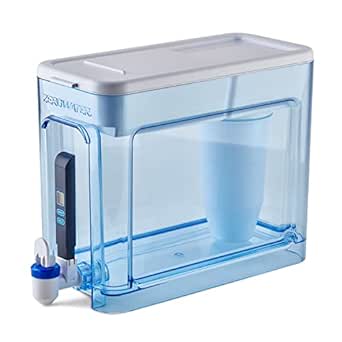 | Best for High-Volume Lead Reduction | Capacity: 32 cups (7.5 liters) | Filtration method: 5-stage ion exchange | Certified contaminant reductions: Lead, chromium, mercury, and PFOA/PFOS | VIEW ON AMAZON | See Our Full Breakdown |
| Brita UltraMax Elite 27-Cup Water Filter Dispenser with 1 Filter, Black |  | Best for Longer Filter Life | Capacity: 27 cups | Included filter: 1 Brita Elite filter | Filter life: Up to 120 gallons or about 6 months | VIEW ON AMAZON | See Our Full Breakdown |
| Brita Large 10-Cup Elite Water Filter Pitcher, White |  | Best for Fridge-Friendly Simplicity | Capacity: 10 cups | Included filter: 1 Brita Elite filter | Lead reduction: 99% | VIEW ON AMAZON | See Our Full Breakdown |
| ZeroWater 10-Cup Ready-Pour Water Filter Pitcher with TDS Meter |  | Best for TDS Monitoring | Capacity: 10 cups | Filtration method: 5-stage ion exchange | Certified contaminant reductions: Lead, PFOA/PFOS, chromium, and mercury | VIEW ON AMAZON | See Our Full Breakdown |
| Culligan ZeroWater 10-Cup Water Filter Pitcher |  | Best Compact Pick for PFAS Reduction | Capacity: 80 fluid ounces (10 cups) | Filtration method: 5-stage; activated carbon and ion exchange | Listed contaminant reductions: Total PFAS, lead, chlorine, and mercury | VIEW ON AMAZON | See Our Full Breakdown |
| Brita Everyday 10-Cup Water Pitcher with Elite Filter, Blue |  | Best for Straightforward Lead Reduction | Capacity: 10 cups | Included filter: 1 Brita Elite filter | Lead reduction: Reduces 99% of lead | VIEW ON AMAZON | See Our Full Breakdown |
| Brita Everyday Elite Water Filter Pitcher, 10-Cup Capacity, Black |  | Best for Easy Refills | Capacity: 10 cups | Included filter: 1 Brita Elite filter | Lead reduction: Reduces 99% of lead | VIEW ON AMAZON | See Our Full Breakdown |
| ZeroWater 22-Cup Ready-Read Water Filter Dispenser | 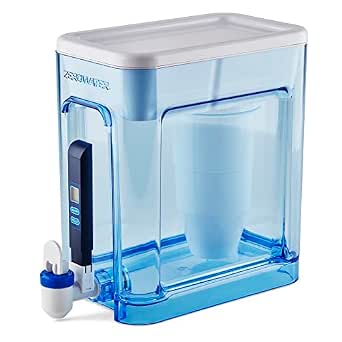 | Best High-Capacity Metered Option | Capacity: 22 cups (5.2 liters) | Filtration: 5-stage ion exchange | Listed reductions: TDS, lead, PFOA/PFOS, chromium, and mercury | VIEW ON AMAZON | See Our Full Breakdown |
| Clearly Filtered 10-Cup Water Filter Pitcher |  | Best for Broad Contaminant Coverage | Capacity: 80 fl oz (10 cups / 2.4 L) | Purification method: Affinity Filtration | Listed reductions: Fluoride, lead, PFAS, arsenic, microplastics, and chlorine | VIEW ON AMAZON | See Our Full Breakdown |
| Waterdrop PT-07B 10-Cup Water Filter Pitcher, Blue |  | Best for Certified Taste and Odor Filtration | Capacity: 2.4 liters (10 cups) | Purification method: Activated carbon and ACF | Listed reductions: PFOA/PFOS, chlorine, odors, and some metal ions | VIEW ON AMAZON | See Our Full Breakdown |
| Brita Metro 6-Cup Water Filter Pitcher with Elite Filter, White | 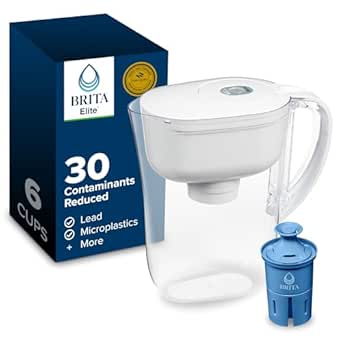 | Best Compact Pitcher for Lead Reduction | Capacity: 6 cups | Included filter: 1 Brita Elite filter | Filter life: Up to 120 gallons or about 6 months | VIEW ON AMAZON | See Our Full Breakdown |
| water filter pitcher for lead removal | Capacity | Dimensions | Material | Filter life |
|---|---|---|---|---|
| ZeroWater 32-Cup Ready-Read 5- | 32 cups (7.5 liters) | 13.13 × 6 × 10.38 inches | Plastic | — |
| Brita UltraMax Elite 27-Cup Wa | 27 cups | 5.19 × 13.94 × 9.67 inches | — | Up to 120 gallons or about 6 months |
| Brita Large 10-Cup Elite Water | 10 cups | 10.94 × 5.59 × 10.47 inches | Plastic; BPA-free | Up to 120 gallons or about 6 months |
| ZeroWater 10-Cup Ready-Pour Wa | 10 cups | 11.63 × 5.93 × 11 inches | BPA-free plastic | — |
| Culligan ZeroWater 10-Cup Wate | 80 fluid ounces (10 cups) | 9.5 × 5 × 10.5 inches | BPA-free plastic and polystyrene | — |
| Brita Everyday 10-Cup Water Pi | 10 cups | 10.7 × 5.4 × 10.1 inches | Polystyrene; BPA-free | 120 gallons or about 6 months |
| Brita Everyday Elite Water Fil | 10 cups | — | Polystyrene; BPA-free | Up to 120 gallons or about 6 months |
| ZeroWater 22-Cup Ready-Read Wa | 22 cups (5.2 liters) | 5.5 × 10.4 × 11.3 inches | — | — |
| Clearly Filtered 10-Cup Water | 80 fl oz (10 cups / 2.4 L) | 10.87 × 5.25 × 11.4 inches | Medical-grade Tritan; BPA-free and BPS-free | Up to 100 gallons; approximately 4 months |
| Waterdrop PT-07B 10-Cup Water | 2.4 liters (10 cups) | 10 × 5 × 10.1 inches | — | Up to 200 gallons or 3 months |
| Brita Metro 6-Cup Water Filter | 6 cups | 9.37 × 4.45 × 9.8 inches | BPA-free plastic | Up to 120 gallons or about 6 months |
More Details on Our Top Picks
ZeroWater 32-Cup Ready-Read 5-Stage Water Filter Dispenser
The 32-cup capacity makes this the strongest fit here for households that want lead-reduction filtration without repeatedly filling a smaller pitcher. Its IAPMO certification for lead reduction is directly relevant to this roundup, and the listed certification also covers chromium, mercury, and PFOA/PFOS. Unlike the Brita UltraMax Elite, which uses activated carbon and has a stated filter life of up to 120 gallons, this ZeroWater model uses five-stage ion exchange and includes a TDS meter to help track dissolved solids and filter replacement. That meter is useful context, but it is not a lead test: a low TDS reading does not confirm lead safety. The tradeoff is a larger countertop footprint and the possibility of frequent filter changes, depending on incoming water quality.
Pros:- IAPMO certified to reduce lead, along with chromium, mercury, and PFOA/PFOS
- 32-cup capacity reduces refill frequency for larger households
- TDS meter helps track dissolved-solids readings and filter changes
- Five-stage ion exchange filtration is distinct from the Brita models’ activated-carbon approach
Cons:- Filter replacement frequency can rise with challenging source water
- Plastic construction may not suit buyers seeking glass or metal
- TDS readings do not directly measure lead
Best for: Households that serve filtered water throughout the day and want a certified lead-reduction dispenser with an at-a-glance TDS check.
Not ideal for: Small kitchens or buyers who prefer a compact, fridge-friendly pitcher; its 32-cup dispenser takes more counter space than the 10-cup models.
- Capacity:32 cups (7.5 liters)
- Filtration method:5-stage ion exchange
- Certified contaminant reductions:Lead, chromium, mercury, and PFOA/PFOS
- Certification:IAPMO certified
- Included components:Dispenser, 1 filter, TDS meter
- Dimensions:13.13 × 6 × 10.38 inches
- Weight:5.5 pounds
- Material:Plastic
Our verdict“Choose this dispenser if serving a large household matters more than a compact footprint and you want IAPMO-certified lead reduction.”
Brita UltraMax Elite 27-Cup Water Filter Dispenser with 1 Filter, Black
The Brita UltraMax Elite is a practical middle ground for buyers who want dispenser capacity but would rather not use ZeroWater’s TDS-driven replacement approach. Its Elite filter is rated for up to 120 gallons or about six months, and the supplied information says it reduces 99% of lead and more than 30 other contaminants. WQA and NSF/ANSI certification gives lead-focused shoppers a clear standard to check, while the spigot makes filling a glass easier than lifting a full pitcher. Compared with the ZeroWater 32-Cup Ready-Read, it holds five fewer cups and uses activated carbon instead of five-stage ion exchange; its advantage is the stated filter-life interval. The main limitation is that it is a sizable freestanding dispenser, and its filter still needs replacement at the rated limit.
Pros:- Reduces 99% of lead and more than 30 contaminants, according to the product information
- WQA and NSF/ANSI certified
- Elite filter is rated for up to 120 gallons or about six months
- Spigot allows dispensing without lifting the full reservoir
Cons:- 27-cup capacity still requires substantial storage space
- Filter must be replaced after its rated life
- For use with potable water only
Best for: Families who want a high-capacity dispenser, a spigot, and a stated filter life of up to six months.
Not ideal for: Buyers with limited refrigerator or counter space, or those who specifically want ZeroWater’s five-stage ion-exchange system and TDS meter.
- Capacity:27 cups
- Included filter:1 Brita Elite filter
- Filter life:Up to 120 gallons or about 6 months
- Filtration method:Activated carbon
- Lead reduction:99%
- Other contaminant reductions:More than 30 contaminants
- Certification:WQA and NSF/ANSI certified
- Dimensions:5.19 × 13.94 × 9.67 inches
Our verdict“Pick the UltraMax Elite if you need a large spigot dispenser and prefer a stated filter-life schedule over a TDS-meter-led approach.”
Brita Large 10-Cup Elite Water Filter Pitcher, White
This 10-cup Brita Elite pitcher suits buyers who want a familiar, fridge-friendly format with a clear lead-reduction claim. The included filter is stated to reduce 99% of lead, and its electronic indicator gives a replacement reminder without asking the owner to monitor a TDS meter. That makes it simpler to manage than the ZeroWater 10-Cup Ready-Pour, whose meter tracks dissolved solids rather than serving as a direct lead measurement. The Brita also reduces chlorine taste and odor and several listed contaminants, while its easy-fill lid keeps routine refills straightforward. The tradeoff is a smaller supply than either dispenser in this group, and the model is not compatible with Brita Stream pitchers and dispensers. Its stated filter life is up to 120 gallons or about six months.
Pros:- Brita Elite filter is stated to reduce 99% of lead
- Electronic filter-change indicator provides a replacement reminder
- Fridge-friendly shape and easy-fill lid suit daily household use
- Also helps reduce chlorine taste and odor and other listed contaminants
Cons:- 10-cup capacity is smaller than the 27- and 32-cup dispensers
- Filter replacement is due after its rated life of up to 120 gallons or about six months
- Not compatible with Brita Stream pitchers and dispensers
Best for: Fridge users who want a 10-cup pitcher with a stated lead-reduction percentage and an electronic filter reminder.
Not ideal for: Households that need dispenser-scale capacity or Brita Stream compatibility.
- Capacity:10 cups
- Included filter:1 Brita Elite filter
- Lead reduction:99%
- Filter life:Up to 120 gallons or about 6 months
- Filtration method:Activated carbon
- Change indicator:Electronic filter-change indicator
- Dimensions:10.94 × 5.59 × 10.47 inches
- Material:Plastic; BPA-free
Our verdict“Choose this Brita if you want a manageable fridge pitcher with a lead-reduction claim and a simple electronic replacement reminder.”
ZeroWater 10-Cup Ready-Pour Water Filter Pitcher with TDS Meter
For shoppers who want a compact pitcher but also want to track dissolved-solids readings, the ZeroWater Ready-Pour pairs 10-cup capacity with a TDS meter and IAPMO-certified reduction of lead. Its five-stage ion-exchange filter also carries listed reduction claims for PFOA/PFOS, chromium, and mercury. Compared with the Brita Large 10-Cup Elite, this model offers a TDS meter rather than an electronic change indicator, giving a different kind of replacement cue. That distinction should not be mistaken for a direct lead test: TDS readings do not establish whether lead is present. The pitcher is a more compact choice than the large dispensers, though it still needs compatible replacement filters and offers no stated filter-life interval in the supplied product details.
Pros:- IAPMO certified to reduce lead, PFOA/PFOS, chromium, and mercury
- TDS meter offers a dissolved-solids reading and replacement cue
- Five-stage ion-exchange filtration differs from the Brita Elite’s activated-carbon method
- 10-cup capacity fits a countertop or many refrigerators
Cons:- TDS readings do not directly indicate lead levels
- Requires compatible replacement filters
- Product details do not state a filter-life interval
Best for: Buyers who prefer a 10-cup pitcher and want a TDS meter to monitor dissolved solids and help decide when to replace the filter.
Not ideal for: People seeking a direct lead-reading device, a stated filter-life schedule, or a larger dispenser for frequent serving.
- Capacity:10 cups
- Filtration method:5-stage ion exchange
- Certified contaminant reductions:Lead, PFOA/PFOS, chromium, and mercury
- Certification:IAPMO certified
- Included components:Pitcher, 5-stage water filter, TDS meter
- Material:BPA-free plastic
- Dimensions:11.63 × 5.93 × 11 inches
- Weight:16 ounces
Our verdict“Choose the Ready-Pour if you want certified lead reduction in a 10-cup pitcher and value TDS monitoring, while recognizing it is not a lead test.”
Culligan ZeroWater 10-Cup Water Filter Pitcher
The Culligan ZeroWater 10-Cup pitcher is the compact choice here for buyers prioritizing stated reductions in both lead and Total PFAS. Its five-stage filtration combines activated carbon and ion exchange, and an included TDS meter plus change indicator provides more guidance than a basic pitcher. Compared with the ZeroWater 10-Cup Ready-Pour, this model lists a maximum flow rate and an ergonomic handle, while the Ready-Pour specifies IAPMO certification for its listed contaminant reductions. The Culligan product details describe lead and Total PFAS reduction as certified, but do not name the certification body, so shoppers who need a particular certification should verify that before buying. Its compact footprint suits small refrigerators, though the 0.18-liter-per-minute maximum flow rate can make refilling a slower routine.
Pros:- Product information states certified reduction of lead and Total PFAS
- Five-stage filtration also reduces chlorine and mercury
- TDS meter and change indicator help track dissolved solids and filter replacement
- Compact dimensions and ergonomic handle suit smaller kitchens
Cons:- Maximum flow rate is 0.18 liters per minute
- Filter replacement is prompted by the TDS reading, which does not directly measure lead
- Certification body is not specified in the supplied product details
Best for: Apartment dwellers or small households who want a compact 10-cup pitcher with stated lead and Total PFAS reduction and built-in filter guidance.
Not ideal for: People who need fast refills or require a specifically named certification standard in the product documentation.
- Capacity:80 fluid ounces (10 cups)
- Filtration method:5-stage; activated carbon and ion exchange
- Listed contaminant reductions:Total PFAS, lead, chlorine, and mercury
- Maximum flow rate:0.18 liters per minute
- Included features:Built-in TDS meter, change filter indicator, ergonomic handle
- Dimensions:9.5 × 5 × 10.5 inches
- Material:BPA-free plastic and polystyrene
- Installation:Countertop
Our verdict“Choose this compact Culligan if lead and Total PFAS reduction are priorities and a slower fill rate is acceptable.”
Brita Everyday 10-Cup Water Pitcher with Elite Filter, Blue
The Brita Everyday with Elite filter is a practical pick for households that want a clear lead-reduction claim in a familiar refrigerator pitcher. Its included filter is listed as reducing 99% of lead, and the SmartLight reminder gives a simple cue for replacement rather than requiring a separate meter. Compared with the ZeroWater 22-Cup Ready-Read dispenser, this Brita takes up less counter space and is easier to chill in the fridge, but it has less capacity and does not offer a TDS reading. The 10-cup size suits routine household use; its 120-gallon or roughly six-month filter life can also mean fewer changes than Waterdrop’s three-month schedule. The tradeoff is that replacement timing still matters, and the filter is not compatible with Brita Stream pitchers or dispensers.
Pros:- Included Elite filter is listed as reducing 99% of lead
- 10-cup capacity fits in most refrigerators
- SmartLight provides a filter-change reminder
- Filter life is up to 120 gallons or about six months
Cons:- Replacement timing depends on the indicator and usage; the filter still needs periodic replacement
- Not compatible with Brita Stream pitchers or dispensers
Best for: Small households seeking a refrigerator-friendly pitcher with a stated 99% lead-reduction claim and a basic replacement reminder.
Not ideal for: Buyers who want a built-in water-quality meter, a large shared dispenser, or a filter compatible with Brita Stream products.
- Capacity:10 cups
- Included filter:1 Brita Elite filter
- Lead reduction:Reduces 99% of lead
- Filter life:120 gallons or about 6 months
- Purification method:Activated carbon
- Change indicator:SmartLight
- Material:Polystyrene; BPA-free
- Dimensions:10.7 × 5.4 × 10.1 inches
Our verdict“Choose this Brita if you want a straightforward, fridge-friendly pitcher with a stated lead-reduction claim and a simple filter reminder.”
Brita Everyday Elite Water Filter Pitcher, 10-Cup Capacity, Black
This black Brita Everyday Elite suits buyers who want the same lead-focused filtration as the blue Everyday model, with an easy-fill lid that simplifies topping up during daily use. The included Elite filter is listed as reducing 99% of lead and also targets several other named contaminants. Its electronic change indicator helps track filter replacement, while the 10-cup body fits most refrigerators. Compared with the Clearly Filtered 10-Cup Water Filter Pitcher, Brita supplies a specific lead-reduction percentage and a longer stated filter life; Clearly Filtered describes a wider contaminant range but calls for replacement at about four months. This Brita does not provide the ZeroWater 22-Cup dispenser’s TDS meter or high capacity, and it remains incompatible with Brita Stream products. The black color is a finish choice, not a different filtration advantage over the blue Everyday.
Pros:- Included Elite filter is listed as reducing 99% of lead
- Easy-fill lid makes routine refilling simpler
- Electronic filter-change indicator helps track replacement
- 10-cup size fits in most refrigerators
Cons:- Filter needs replacement about every six months or up to 120 gallons
- Not compatible with Brita Stream pitchers or dispensers
- Does not provide a built-in TDS reading
Best for: Households that refill a pitcher often and want an easy-fill lid, an electronic reminder, and a stated lead-reduction claim.
Not ideal for: Buyers who need a TDS meter, a dispenser-sized water supply, or compatibility with Brita Stream pitchers and dispensers.
- Capacity:10 cups
- Included filter:1 Brita Elite filter
- Lead reduction:Reduces 99% of lead
- Filter life:Up to 120 gallons or about 6 months
- Filter method:Activated carbon
- Indicator:Electronic filter-change indicator
- Material:Polystyrene; BPA-free
- Temperature range:32–85 °F
Our verdict“Pick this model over the blue Everyday if its easy-fill lid suits your routine; its lead-filtration details are otherwise similar.”
ZeroWater 22-Cup Ready-Read Water Filter Dispenser
For households that draw water throughout the day, the ZeroWater 22-Cup Ready-Read dispenser offers substantially more capacity than the 10-cup Brita Everyday Elite pitchers. Its five-stage ion-exchange filter is described as reducing lead alongside TDS, PFOA/PFOS, chromium, and mercury, while the built-in TDS meter gives a measurable replacement cue: change the filter when the reading reaches 006. That measurement is useful for tracking dissolved solids, but it is not a direct lead test, so it should not be treated as proof of lead concentration. Compared with the Brita Everyday 10-Cup, this model better serves a shared kitchen but needs countertop space and has no stated filter-life duration in the supplied details. Buyers should also be ready to replace the filter when the meter reaches its threshold and accept a plastic dispenser body.
Pros:- 22-cup capacity reduces how often a busy household needs to refill
- Five-stage ion-exchange filtration is described as reducing lead and several other contaminants
- Included TDS meter indicates when its reading reaches 006
- BPA-free materials and IAPMO certification are listed
Cons:- A TDS reading does not directly measure lead concentration
- Countertop dispenser takes more space than a 10-cup refrigerator pitcher
- Filter replacement depends on reaching the 006 reading, with no fixed gallon lifespan supplied
Best for: Families or shared kitchens that want a large countertop water supply and a meter to guide filter changes.
Not ideal for: People with limited counter space or buyers who want a direct lead measurement, a refrigerator pitcher, or a stated gallon-based filter lifespan.
- Capacity:22 cups (5.2 liters)
- Filtration:5-stage ion exchange
- Listed reductions:TDS, lead, PFOA/PFOS, chromium, and mercury
- TDS change point:Change filter when reading reaches 006
- Included:Dispenser, one 5-stage filter, and TDS meter
- Installation:Countertop
- Certifications:IAPMO certified; BPA-free materials
- Dimensions:5.5 × 10.4 × 11.3 inches
Our verdict“Choose this dispenser for shared use and meter-guided changes, not for a direct test of lead levels or a compact fridge fit.”
Clearly Filtered 10-Cup Water Filter Pitcher
The Clearly Filtered 10-Cup pitcher is the broad-coverage choice in this group: its Affinity Filtration technology is described as reducing lead along with fluoride, PFAS, arsenic, microplastics, and chlorine while preserving beneficial minerals. That wider scope may appeal to buyers concerned about several contaminants, not only lead. Compared with the Brita Everyday Elite, it lists more categories of reduction, but Brita supplies a specific 99% lead-reduction figure; the Clearly Filtered details do not give a lead percentage, and its broad claims are not all covered by the listed NSF/ANSI 42 and 372 certifications. Its BPA-free, BPS-free Tritan body and spill-resistant design are useful daily-use features, though the 2.8-pound weight is higher than the 1.3-pound Brita. Plan on a shorter, roughly four-month filter schedule.
Pros:- Affinity Filtration is described as targeting lead and a wide range of other contaminants
- Preserves beneficial minerals, according to the product description
- BPA-free and BPS-free medical-grade Tritan construction
- 80-ounce capacity fits standard refrigerator shelves
Cons:- The supplied details do not state a specific percentage of lead reduction
- Not all listed contaminant claims are covered by NSF certification
- Filter is rated for up to 100 gallons or about four months
Best for: Buyers who want a 10-cup pitcher described as targeting lead plus a broad mix of other contaminants, and who will check the supporting claims.
Not ideal for: Shoppers who prioritize a stated lead-reduction percentage, longer filter intervals, or certification coverage for every advertised contaminant claim.
- Capacity:80 fl oz (10 cups / 2.4 L)
- Purification method:Affinity Filtration
- Listed reductions:Fluoride, lead, PFAS, arsenic, microplastics, and chlorine
- Filter life:Up to 100 gallons; approximately 4 months
- Material:Medical-grade Tritan; BPA-free and BPS-free
- Certifications:NSF/ANSI 42 and 372; independently tested to additional standards
- Dimensions:10.87 × 5.25 × 11.4 inches
- Weight:2.8 pounds
Our verdict“Consider Clearly Filtered if broad contaminant coverage matters more to you than a specific lead-reduction percentage or a longer filter interval.”
Waterdrop PT-07B 10-Cup Water Filter Pitcher, Blue
The Waterdrop PT-07B is a compact everyday pitcher whose strongest documented points are NSF/ANSI 42 and 372 certification and reductions in PFOA/PFOS, chlorine, odors, and some metal ions. For a roundup focused on lead, that wording is less specific than the Brita Everyday Elite, which states a 99% lead-reduction figure; Waterdrop does not supply a lead percentage or name lead explicitly in the provided reduction claims. Its hands-free lid and LED filter indicator make routine filling and replacement tracking convenient, and its 10-cup form is similar in size to the Brita. The stated filter life is up to 200 gallons or three months, so buyers should follow the time limit rather than assume the gallon figure means fewer changes. It also does not reduce TDS, unlike the ZeroWater dispenser.
Pros:- Certified to NSF/ANSI 42 and 372
- Helps reduce PFOA/PFOS, chlorine, odors, and some metal ions
- Hands-free lid and LED filter-life indicator support everyday use
- Compact 10-cup capacity fits a refrigerator routine
Cons:- Provided claims do not specify a lead-reduction percentage or explicitly name lead
- Does not reduce TDS
- Filter replacement is listed at up to 200 gallons or three months
Best for: Buyers who want a compact 10-cup pitcher with listed NSF/ANSI 42 and 372 certifications and features for routine taste-and-odor filtration.
Not ideal for: People choosing specifically for a clearly stated lead-reduction percentage, TDS reduction, or a filter schedule longer than three months.
- Capacity:2.4 liters (10 cups)
- Purification method:Activated carbon and ACF
- Listed reductions:PFOA/PFOS, chlorine, odors, and some metal ions
- Filter life:Up to 200 gallons or 3 months
- Certifications:NSF/ANSI 42 and 372
- Dimensions:10 × 5 × 10.1 inches
- Temperature range:41°F to 100°F
- Maximum flow rate:0.5 gpm
Our verdict“Choose Waterdrop for certified everyday filtration features, but favor Brita Elite if a clearly stated lead-reduction percentage is your priority.”
Brita Metro 6-Cup Water Filter Pitcher with Elite Filter, White
The Brita Metro suits buyers who want a small pitcher with a filter specified to reduce 99% of lead. Its Elite filter is rated for up to 120 gallons or about six months, a longer replacement interval than a frequent-change routine, and the SmartLight indicator gives a reminder without requiring you to track each fill. The compact 6-cup size can fit mini-fridge doors, making it easier to keep chilled than the larger Brita Everyday 10-Cup Elite pitcher. That size is also the main compromise: households that drink a lot of filtered water may need to refill it often, while the Brita UltraMax Elite dispenser offers much more capacity. I’d choose the Metro for a one- or two-person household with limited fridge space, not for a family seeking fewer refills.
Pros:- Filter is specified to reduce 99% of lead and more than 30 other contaminants.
- Elite filter lasts up to 120 gallons or about six months.
- SmartLight indicator provides a replacement reminder.
- Compact dimensions suit many mini-fridge doors.
Cons:- Six-cup capacity can mean frequent refills for households with multiple drinkers.
- The filter still needs replacement after its rated lifespan of up to 120 gallons or about six months.
Best for: One- or two-person households that want a lead-reduction pitcher small enough for a mini-fridge door.
Not ideal for: Families or high-volume water drinkers who would find a 6-cup capacity requires too many refills.
- Capacity:6 cups
- Included filter:1 Brita Elite filter
- Filter life:Up to 120 gallons or about 6 months
- Filtration:Reduces 99% of lead and 30+ contaminants
- Filter reminder:SmartLight indicator
- Material:BPA-free plastic
- Dimensions:9.37 × 4.45 × 9.8 inches
- Certifications:WQA and NSF/ANSI
Our verdict“Choose the Metro if compact storage and a long-life lead-reduction filter matter more than serving a household with fewer refills.”

How We Picked
I compared these 11 pitchers by how directly their available product claims and documentation address lead reduction, then weighed usability factors that affect consistent use: capacity, serving convenience, filter replacement, footprint, and the difference between a pitcher and a countertop dispenser. I gave more weight to model-specific lead-reduction evidence than to broad statements about taste or total dissolved solids, since those measures alone do not establish lead removal.
The ranking favors options with a clearer fit for lead-conscious buyers and practical day-to-day upkeep, while recognizing that the exact cartridge and its current certification or performance sheet matter as much as the pitcher body. Larger dispensers place higher for households that need volume; compact models remain useful for limited space. I do not treat a brand name or shared filter family as proof that every listed configuration has identical performance, so buyers should verify the precise model before purchase.
| water filter pitcher for lead removal | Material |
|---|---|
| ZeroWater 32-Cup Ready-Read 5- | Plastic |
| Brita UltraMax Elite 27-Cup Wa | — |
| Brita Large 10-Cup Elite Water | Plastic; BPA-free |
| ZeroWater 10-Cup Ready-Pour Wa | BPA-free plastic |
| Culligan ZeroWater 10-Cup Wate | BPA-free plastic and polystyrene |
| Brita Everyday 10-Cup Water Pi | Polystyrene; BPA-free |
| Brita Everyday Elite Water Fil | Polystyrene; BPA-free |
| ZeroWater 22-Cup Ready-Read Wa | — |
| Clearly Filtered 10-Cup Water | Medical-grade Tritan; BPA-free and BPS-free |
| Waterdrop PT-07B 10-Cup Water | — |
| Brita Metro 6-Cup Water Filter | BPA-free plastic |
Factors to Consider When Choosing Water Filter Pitcher For Lead Removal
Choosing a pitcher for lead reduction takes more than comparing capacity or counting filtration stages. I would start with evidence for the exact filter, then check whether its upkeep and daily workflow fit the people who will use it.
Verify Lead-Reduction Evidence for the Exact Filter
Look for a current, independent certification or performance sheet that names both the pitcher’s cartridge and lead reduction. A claim to reduce many contaminants does not automatically tell you how much lead is reduced or under what conditions. Check the stated test protocol and the conditions the manufacturer uses, including the cartridge’s rated capacity. Do not infer lead performance from a TDS meter reading, since that measurement does not identify lead specifically. If you cannot match the documentation to the exact replacement filter, pause before treating the product as a lead-control measure. For known contamination, use an accredited water test and follow local public-health guidance alongside any pitcher.
Match Filter Life to Your Household’s Routine
Filter life is not just a maintenance detail: missed replacements can leave you relying on a cartridge beyond its stated service period. Compare the rated gallons or replacement interval with how much water your household drinks and cooks with, then check whether the maker provides a clear reminder method. Heavy use can shorten the calendar time between changes, while a pitcher used occasionally may need attention based on time as well as volume. Avoid assuming every cartridge that fits a brand’s pitcher has the same capacity or lead-reduction claim. Before choosing, confirm replacement filters are readily available and that the ongoing upkeep feels manageable. A simpler setup that you maintain on schedule can make more sense than a feature-rich option you neglect.
Choose Capacity Around Refill Habits, Not Just Household Size
A larger reservoir can cut down on refills, but it also takes more counter or refrigerator space and may be heavier when full. A compact pitcher works well when only one or two people need drinking water, yet frequent refilling can become irritating for a family or shared kitchen. Think about whether you need filtered water for cooking as well as drinking, since that can raise daily demand. Dispensers in this roundup hold more than most pitchers, but they need a stable spot and enough clearance for pouring. Do not assume the advertised capacity equals the amount of ready-to-pour filtered water at every moment; filtration takes time. Pick the size that fits your real refill pattern and available storage.
Separate Lead Claims From Taste and TDS Features
Lead is a specific health concern, while taste and dissolved-solids readings describe different aspects of water quality. A change in flavor may make water more pleasant, but it does not prove a filter has reduced lead. Likewise, a TDS meter can be useful for tracking changes in dissolved solids, yet it cannot identify which substances are present. Treat these features as secondary conveniences after confirming lead-specific evidence. If your main concern is lead from household plumbing, learn whether the likely source is the service line, fixtures, or both; a pitcher addresses water after it reaches the tap, not the plumbing itself. This distinction helps prevent a useful point-of-use filter from being mistaken for a complete remedy.
Check the Practical Cost of Ownership
Compare the replacement cartridge schedule, filter availability, and likely use before settling on a pitcher. A low-effort replacement process can support consistent maintenance, while a less convenient or harder-to-source cartridge may lead to delayed changes. Include the number of cartridges used over a year at your household’s expected consumption rather than judging only the initial setup. Also check whether the product listing specifies which cartridge is included; similar pitcher names can come with different filters. If several household members share the pitcher, clear replacement reminders and an easy-to-fill design can matter more than extra features. The best fit is one that supports both documented performance and sustained use.
Know When a Pitcher Is Not Enough
A pitcher is a point-of-use option for water placed in it; it does not remove lead from pipes or protect water used elsewhere in the home. If testing shows elevated lead, contact local health or water authorities for source-specific advice and ask whether plumbing work or a certified point-of-use system is appropriate. Do not use a pitcher’s broad claims as a replacement for testing, especially where an infant, young child, or pregnant person may be exposed. Follow the cartridge’s instructions closely, including any flushing or storage steps, because setup affects proper use. For uncertain results, first identify the water source and the exact contaminant concern, then choose a filter whose documentation addresses it.
Frequently Asked Questions
How can I tell whether a pitcher is certified to reduce lead?
Check the exact pitcher-and-cartridge combination against the certifier’s current listing or the manufacturer’s performance data, rather than relying on a general brand claim. Look for lead named specifically and confirm the document applies to the replacement cartridge you plan to use. A broad contaminant list or a taste-improvement claim is not the same as lead-reduction evidence. If the documentation is unclear, ask the manufacturer for the current test or certification details before buying. For a known lead concern, arrange water testing as well; a filter selection should not replace finding out what is in your tap water.
Does a TDS meter show whether my water contains lead?
No. A TDS meter reports a combined reading for dissolved substances and cannot identify lead or distinguish it from other minerals. A lower reading after filtration does not prove that lead has been removed, and an unchanged reading does not prove that a filter failed at lead reduction. Use model-specific lead performance documentation to evaluate the filter, and use an appropriate laboratory test to learn whether your water contains lead. The meter may still be useful for tracking a filter system’s general change in dissolved solids, but it is not a lead test.
Should I choose a pitcher or a larger dispenser?
Choose based on how much filtered water your household uses and where you can keep the unit. A compact pitcher is easier to store and move, while a larger dispenser can mean fewer refills for families or shared kitchens. Larger capacity does not by itself mean better lead reduction; the exact cartridge documentation remains the deciding performance evidence. Also account for the space needed to fill, store, and pour from a full dispenser. If the unit is inconvenient to access, a smaller option that gets used consistently may suit you better.
Can a water filter pitcher solve lead coming from my home’s pipes?
A pitcher can filter water poured into it, but it does not repair or remove lead-containing pipes, solder, or fixtures. It also does not treat water used directly from other taps for cooking or drinking. If you suspect lead, have the water tested through an appropriate local or accredited service and ask public-health or water officials about the source and next steps. A pitcher may be one part of a response when its specific lead-reduction performance is documented, but plumbing concerns may call for additional action. Follow local guidance, especially for households with children or pregnant people.
How often should I replace a pitcher filter when lead is my concern?
Follow the exact cartridge’s stated gallon capacity and replacement schedule, using whichever limit the manufacturer specifies. Household consumption can make a filter reach its rated capacity before the calendar reminder, so estimate use for both drinking and cooking. Do not stretch cartridge life because water still tastes fine; taste is not a reliable signal of lead-reduction performance. Keep a written or digital replacement reminder and confirm you are buying the same compatible cartridge covered by the performance documentation. If the manufacturer’s replacement directions are unclear, contact them before relying on the filter for lead reduction.
Conclusion
For the strongest lead-conscious starting point in this lineup, I would choose the Clearly Filtered 10-Cup Pitcher as best overall, while verifying its current, model-specific lead documentation before purchase. The Brita Elite pitchers are a practical fit for buyers who value a familiar pitcher format, and the ZeroWater dispensers make more sense when higher filtered-water capacity matters more than a smaller footprint. For value, compare the full cost and availability of replacement cartridges rather than relying on the pitcher alone. Beginners should pick the size and replacement process they can maintain easily, then confirm the exact filter’s lead claim. For a compact kitchen, the Brita Metro is the space-saving choice; for higher household demand, compare the 22- and 32-cup dispensers. Whichever you choose, use lead-specific evidence, keep up with filter changes, and test your water when lead is a real concern.