This checklist is for home cooks choosing the knives and cutting board they’ll reach for most often. It covers prep, slicing, carving, bread, maintenance, and a useful extra: kitchen shears. Start with your cooking habits and the tasks you do regularly.

Get kitchen gear delivered free with Prime
- Fast, free delivery on millions of items
- Prime Video, Amazon Music and more included
- Member-only deals all year
The sections follow the work from everyday chopping through specialty cuts and upkeep. Each product pick fills a different role, while the shears section offers advice without naming a specific product. Think of each slot as a job, rather than a reason to buy a full set.
Use the notes to compare handle comfort, blade shape, board space, and care requirements with your kitchen and routine. Check dimensions and manufacturer guidance before buying, especially if storage or cleaning compatibility matters. Choose for fit and use, then add pieces as your needs become clear.
Chef’s Knife
A chef’s knife is the everyday workhorse for chopping vegetables, mincing herbs, and portioning many ingredients. The Wüsthof Classic 8″ Chef’s Knife, Black is the pick for this role. An 8-inch blade is a common all-purpose format, but the right length depends on your comfort, counter space, and the size of the foods you prepare. Comfort matters on every cut, so consider how the handle feels in your hand and whether the knife balances well for your grip.
A frequent mistake is choosing by reputation or appearance without considering weight and control. If possible, handle the knife before buying; if shopping remotely, review the listed dimensions and care guidance. Check that your storage method can accommodate the blade and that you are comfortable with the recommended cleaning routine. A knife that feels unwieldy or is awkward to store may not suit your kitchen, even if its role is versatile. Match the blade to your prep and choose a cutting board with enough room to work safely.
What to look for:
- Handle comfort and a secure grip
- Blade length suited to your usual ingredients and workspace
- Balance and weight that feel manageable
- Storage that protects the blade
- Care instructions that fit your routine
Wüsthof Classic 8" Chef’s Knife, Black

The Wüsthof Classic 8-inch Chef’s Knife is a versatile kitchen tool designed for chopping, slicing, mincing, and dicing. Crafted from high carbon stainless steel with precision-forged construction, it offers exceptional sharpness and durability, making it suitable for both home cooks and professional chefs.
Pros:
- Sharp and durable high carbon stainless steel blade
- Ergonomic handle designed for comfort and control
- Versatile for chopping, slicing, and dicing various ingredients
- Made in Germany with high-quality craftsmanship
Cons:
- Premium price may be high for some users
- Heavy for those preferring lighter knives
- Requires proper sharpening to maintain edge
Best for: Home cooks who want a dedicated all-purpose knife
Not ideal for: Anyone who prefers a shorter or lighter-feeling blade
Bottom line: Choose this chef’s knife if its length, grip, and care needs suit your everyday prep.
Paring Knife
A paring knife handles smaller, more controlled jobs such as trimming, peeling, and detail work where a full-size blade can feel cumbersome. The HOSHANHO 3-Piece Kitchen Knife Set – Chef, Santoku, and Paring Knives includes a paring knife alongside two other knife types. Check the paring knife’s fit first if that is the main reason you are considering the set; the product name alone does not specify the individual blade dimensions or handle feel.
A common buying mistake is treating a multi-knife set as automatically useful. Consider whether you have a place to store all three knives and whether the chef and santoku shapes add roles you will actually use. Before buying, confirm the paring knife’s dimensions and care instructions from the product details. Look for a handle you can control during close, precise cuts, and choose storage that keeps the smaller blade protected. Prioritize control for detail work over simply adding more knives to a drawer.
What to look for:
- Paring knife dimensions and blade shape in the product details
- A handle that feels controlled for close work
- Whether the chef and santoku knives have useful roles for you
- Storage that protects all three blades
- Care instructions for the included knives
HOSHANHO 3-Piece Kitchen Knife Set – Chef, Santoku, and Paring Knives
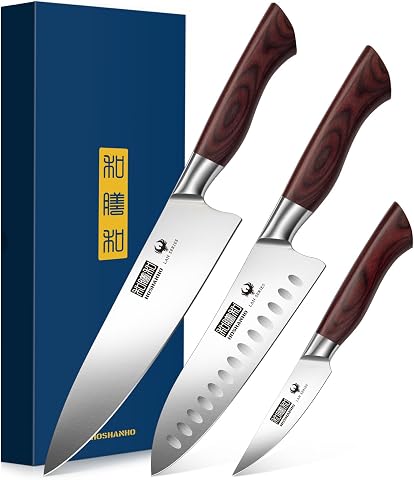
A three-piece knife set featuring an 8-inch chef knife, 7-inch Santoku knife, and 3.75-inch paring knife. Blades are made from high-carbon stainless steel (56±2 HRC) with an ultra-sharp, honed edge and rubberized satin finish that reduces drag and food adhesion.
Pros:
- Complete set covering the three most essential kitchen knives
- Ultra-sharp, high-carbon stainless steel blades with stain resistance
- Ergonomic Colorwood handles offer comfort and a firm grip
- Comes in a gift box, ideal for gifting occasions
Cons:
- No blade guard or sheaths mentioned for storage
Best for: Cooks who want a paring knife with other knife types
Not ideal for: Shoppers seeking only a standalone paring knife
Bottom line: Check the included knives, dimensions, and storage needs before choosing this set for its paring knife.
Bread Knife
A bread knife’s serrated edge is suited to sawing through crusts while helping avoid the crushing pressure a straight edge may require. The Wüsthof Classic Ikon 9″ Double-Serrated Bread Knife is the pick for bread slicing. Its 9-inch blade is a sizable format, so consider whether you have enough board space and a safe place to store it. Blade reach and control go together when working with larger loaves.
One mistake is assuming every serrated knife will suit every loaf or storage setup. Consider the kinds of bread you slice and how much clearance you have around your cutting area. Confirm the listed dimensions and care guidance, and look for a grip that feels secure through a sawing motion. Avoid using a long knife where the board or counter leaves little room to guide it safely. Plan for the full blade length before adding this specialty knife to your kitchen.
What to look for:
- Blade length that suits your loaves and board
- A secure, comfortable handle for a sawing motion
- Enough counter clearance for controlled slicing
- Safe storage for a long serrated blade
- Care instructions that fit your routine
Wüsthof Classic Ikon 9" Double-Serrated Bread Knife

The Wüsthof Classic Ikon 9-inch double-serrated bread knife features a sleek black handle and a precision-forged blade made from high carbon stainless steel. Designed for durability and sharpness, it offers excellent balance and cutting performance, backed by a limited lifetime warranty.
Pros:
- Sharp and durable blade with twice the edge retention
- Ergonomic and balanced design for comfortable use
- Made from high-quality, corrosion-resistant steel
Cons:
- Serrated blade may be less versatile for some tasks
- Premium price may be high for budget buyers
Best for: Cooks who regularly slice whole loaves
Not ideal for: Kitchens with limited board or storage space
Bottom line: Choose this bread knife if its length fits your workspace and storage.
Cutting Board
A cutting board gives knives a stable working surface and defines how much room you have for prep. The Teakhaus Edge-Grain Teak Wood Carving Board with Juice Groove, Extra L is the pick here. Its carving-board format and juice groove may suit cooks who want a surface for carving and collecting juices; confirm the board’s measurements to ensure the extra-large size fits your counter and storage. Available workspace is the key check before choosing a large board.
A common mistake is focusing on surface features while overlooking weight, placement, and cleanup. Check product details for dimensions and care instructions, and consider whether you can lift, move, and store the board comfortably. Make sure it sits securely on your counter and leaves enough room for other prep. The groove also takes up part of the usable surface, so think about how you plan to use the board day to day. Match board capacity to your routine, and keep a separate surface available if your prep tasks call for it.
What to look for:
- Dimensions that fit your counter and storage
- A stable position on your work surface
- Comfortable weight for moving and cleaning
- Usable flat area alongside the juice groove
- Care guidance for the wood construction
Teakhaus Edge-Grain Teak Wood Carving Board with Juice Groove, Extra Large

This extra-large, reversible teak carving board features deep juice grooves and handles, making it ideal for carving, food prep, and serving. Crafted from FSC-certified teak, it is durable, knife-friendly, and designed to last a lifetime with minimal care.
Pros:
- Large size suitable for carving and serving
- Reversible design for versatile use
- Made from durable, moisture-resistant FSC-certified teak
- Deep juice grooves prevent messes
Cons:
- Not dishwasher safe
- Requires regular oiling for maintenance
- Heavy at 15 lbs
Best for: Cooks who want a large carving surface with a groove
Not ideal for: Small kitchens with limited counter or storage space
Bottom line: Confirm the board’s dimensions and care needs before making room for this large carving surface.
Knife Sharpener
A sharpener is part of maintaining knives over time, but the right approach depends on your blades and comfort with the process. The XARILK GEN3 Guided Knife Sharpening System is the pick for this slot. A guided system may appeal to cooks who want a defined sharpening setup; review the product details to understand how it works and what blade types it supports. Compatibility comes before convenience when choosing a sharpening tool.
A common mistake is assuming a sharpener works with every knife or requires no learning. Check the system’s instructions, supported blade types, setup requirements, and storage footprint before buying. Consider whether you are comfortable following its sharpening process and whether it suits the knives you own, including any serrated blades. Do not assume one system will address every knife in the kitchen. Verify each knife’s suitability against the manufacturer’s guidance, and follow the sharpener’s instructions carefully.
What to look for:
- Supported blade types in the system instructions
- Setup steps and space needed to use it
- A process you can follow comfortably
- Storage needs for the full sharpening system
- Guidance for knives the system does not support
XARILK GEN3 Guided Knife Sharpening System

This guided knife sharpening system has an aluminum alloy body and adjustable sharpening angle for sharpening kitchen, outdoor, and folding knives. It includes three diamond plates in 320, 800, and 2000 grit for restoring, refining, and polishing blade edges.
Pros:
- Three grits support edge restoration, refining, and polishing
- Adjustable angle and sharpening pressure
- Aluminum alloy construction
- Suitable for several types of knives
Cons:
- The included stones are limited to three grit levels
- Weighs 4 pounds
Best for: Cooks who want a defined sharpening process
Not ideal for: Anyone whose knives are not supported by the system
Bottom line: Check blade compatibility and operating instructions before choosing this sharpening system.
Kitchen Shears
Kitchen shears can help with tasks that are awkward with a knife, such as opening food packaging or trimming ingredients, depending on the design. Since this checklist has no product pick for shears, focus on how you plan to use them and what the manufacturer says they can handle. Choose for your actual tasks, rather than assuming all shears are interchangeable.
Check whether the blades separate for cleaning, whether the handle feels comfortable, and whether the product is intended for food preparation. Consider how you will store the shears safely and whether they can be cleaned according to your kitchen routine. A frequent mistake is overlooking cleaning access or buying a pair that feels awkward in hand. Confirm the product’s care guidance and use it only for the tasks it specifies. Comfort and cleanability both count for a tool used around food.
What to look for:
- Intended food-preparation uses
- Comfortable handles and a controlled grip
- Cleaning access, including whether blades separate
- Care instructions compatible with your routine
- Safe storage for the blade
If you are building a kit gradually, start with the chef’s knife and a board that fits your workspace. Add a paring knife for detail work, then a bread knife or shears if those tasks come up often. Consider the sharpener once you have checked that it supports your knives. Buy for the jobs you repeat, and confirm dimensions, compatibility, and care before each addition.
A useful kitchen setup is one that feels comfortable, fits your space, and is straightforward to maintain. You do not need every tool at once; let your regular cooking guide what comes next. Make each choice earn its place, and your checklist can grow with confidence.